Christophe Meunier is a researcher specializing in hybrid materials, particularly focusing on biohybrid systems that integrate biological components with inorganic matrices. His work emphasizes environmental applications and biomedical innovations through advanced material design. Key Collaborations: Su, B. L., Michiels, C., Wang, L. Research Themes: Photosynthesis mimicry, cell therapy microcapsules, hybrid alginate-TiO₂ systems Research Focus: Meunier has pioneered the biomimicry of photosynthesis via biosystem immobilization in silica matrices, aiming to create 'living materials' with functional biological-inorganic interfaces. His recent projects explore alginate@TiO₂ hybrid microcapsules for controlled insulin delivery and cell therapy applications, demonstrating high biocompatibility and stability. Academic Contributions: With 34 research outputs spanning material science, biomedical engineering, and environmental applications, Meunier's work aligns with UN Sustainable Development Goals through innovative hybrid material design. His collaboration network includes experts in chemistry, physics, and medical fields.
Professor Ana Mijic is a leading academic in water systems integration at Imperial College London's Department of Civil and Environmental Engineering (Faculty of Engineering). Her work focuses on developing systems tools to balance economic growth with sustainable water use, flood management, and water quality under future uncertainties. She leads high-profile projects like the EPSRC VENTURA initiative and the NERC CAMELLIA impact programme, emphasizing adaptive planning and grey/green infrastructure integration in urban systems. Education: BEng (First Class) in Civil Engineering from the University of Belgrade (Serbia), MSc (Distinction) in Hydrology for Environmental Management, and PhD in Earth Science & Engineering from Imperial College London (2013). Previously served as a teaching assistant in Fluid Mechanics and Hydrometry at Belgrade University. Research interests include whole-water system modelling, socio-hydrological interactions, and nature-based solutions for resilient urban water systems. Her work bridges academia and practice through partnerships with regulators like the UK Environment Agency and global initiatives like the IAHS HELPING programme. Awards include the Satish Dhawan Visiting Chair Professorship (2022) and the 2019 Imperial President’s Award for Excellence in Research (as part of her Hydrology team). She co-leads Imperial’s Transition to Zero Pollution (TZP) Urban Ecosystems theme and serves on editorial boards for journals like Water Security . Her contributions span over 50 peer-reviewed articles (2020–2025), focusing on integrated water management frameworks, AI-driven monitoring, and systemic approaches to urban resilience. She advocates for participatory decision-making and policy coherence in water governance.
Carol Smith is an Associate Professor in the Department of Soil & Physical Sciences at Lincoln University, New Zealand, where she serves as Head of Department since 2017. She has been an elected academic staff member of the Lincoln University Council from 2018-2022. Dr. Smith holds a PhD from the University of Aberdeen, an MSc from the University of Reading, and a BSc(Hons) from the University of Portsmouth, forming the foundation of her expertise in soil science and physical geography. Her research spans both fundamental and applied aspects of pedology. On the fundamental side, she investigates Quaternary pedology and paleoenvironmental reconstruction using loess stratigraphy, geomorphology, and micromorphology, which provides critical data for verifying future climate change predictive models. Applied research focuses on sustainable use of recycled organic matter and rehabilitation of degraded soils. She collaborates internationally on multidisciplinary projects involving paleoclimate reconstruction, paleoliquefaction, Antarctic soils, and viticulture. Dr. Smith is passionate about teaching and science communication, employing experiential learning methods to develop practical field skills in soil science through 'soil judging competitions' in New Zealand and Australia. Her research addresses UN Sustainable Development Goals including Life on Land (15), Climate Action (13), and Quality Education (4). Among her notable recognitions are the Norman H Taylor Memorial award 2020 from the New Zealand Society of Soil Science for outstanding contributions to soil science in New Zealand and Fellowship in the Royal Geographical Society, London. She serves as Associate Editor of Natural Sciences Education and was previously editor of Quaternary Australasia. Dr. Smith has supervised numerous graduate students through research-based supervision, with completed projects covering diverse topics from soil patterns in Southland to Antarctic soil ecology. She teaches advanced courses in field research, soil science, and physical landscapes, and has developed innovative approaches to teaching during the pandemic, including virtual field trips.
Phuong H. Nguyen is an Associate Professor at the Department of Electrical Engineering at Eindhoven University of Technology (TU/e). He leads the digital Power & Energy Systems (digi-PES) lab, focusing on smart energy systems, distributed control, and IoT integration for future energy grids. His research addresses energy transition challenges, including microgrid optimization, flexibility markets, and data-driven grid management. Nguyen holds a PhD from TU/e (2010) and has held visiting researcher positions at Clemson University. His work contributes to UN SDG goals related to affordable and clean energy. Education: Bachelor's in Electrical Engineering, Hanoi University of Science and Technology (2002) Master's in Electrical Engineering, Asian Institute of Technology (2004) PhD in Electrical Engineering, TU/e (2010) Key Research Areas: Smart Grids and Cyber-Physical Systems Distributed Energy Resource Management Local Energy Markets and Flexibility Provision IoT and Big Data in Energy Systems Awards & Recognition: Best Paper Award SEST 2020 Projects & Grants: REACT-D: Reactive Power Management (Project Manager) Al-driven Applications to Smarten Power System Operation (Project Lead) UNIversity Campus as a Self-Regulated Network (Co-Manager) Labs & Teams: The digi-PES lab develops cyber-physical tools for energy transition, including microgrid simulations, flexibility markets, and grid resilience strategies.
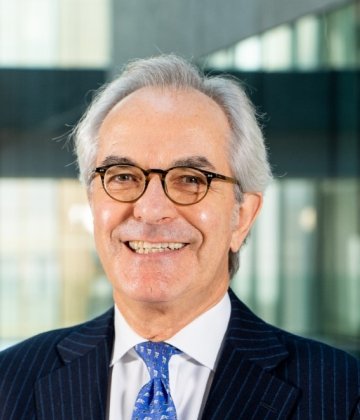
Maurizio Dallocchio is a Full Professor of Corporate Finance at Bocconi University and SDA Bocconi School of Management. He served as Dean of SDA Bocconi (2003–2007) and has held leadership roles in academic and professional institutions, including Chair of the Audit Committee of the European Investment Bank (EIB). His research focuses on corporate valuation, mergers & acquisitions (M&A), and sustainable finance. Dallocchio founded DGPA & Co., a corporate finance consultancy, and advises public and private entities globally. He has taught at leading institutions like London Business School and NYU Stern School of Business. Educational Background: Ph.D. in Business Administration, Bocconi University Advanced studies at London Business School and New York University Stern School of Business Research Interests: Prof. Dallocchio’s work emphasizes corporate restructuring, ESG integration in finance, and strategic valuation methodologies . Recent studies explore environmental performance in emerging markets and the resilience of conglomerates during economic crises. He advocates for sustainable investment strategies that balance financial returns with societal impact. Professional Engagements: Board member roles at Klepierre Management, General Finance, and Podravska Banka Past Director of the Master in Corporate Finance program at SDA Bocconi Labs/Teams: Leads research initiatives at Bocconi’s Corporate Finance and Real Estate Department, collaborating with global institutions on projects involving corporate governance, M&A analytics, and sustainable development.
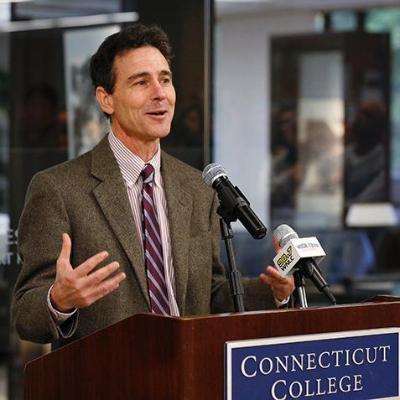
Jeff Moher is an Associate Professor of Psychology and Co-Chair of the Department of Psychology at Connecticut College, where he has been teaching since 2017. He also serves as the Data, Information, and Society Pathway Co-Coordinator, demonstrating his leadership within the institution. His educational background includes a Ph.D. and M.A. from Johns Hopkins University and a B.S. from the University of Michigan. This strong academic foundation has prepared him for his research and teaching career in cognitive psychology. Moher's research focuses on cognitive psychology and cognitive neuroscience, particularly visual attention and cognition in action. His work investigates why distractions occur, when they are likely to arise, and what mechanisms humans can harness to avoid them. He has found that humans employ various cognitive mechanisms to minimize distractions based on explicit knowledge, task goals, object properties, and recent experience, though he has also discovered surprising limitations in attentional selection. His research is particularly relevant given that over 3,000 people are killed annually in the United States from distracted driving. His recent publications show a consistent trajectory examining attentional mechanisms, distraction, and visual processing across different contexts. His work frequently employs sophisticated methodologies to measure both cognitive and motor responses to distractions, revealing how seemingly minor distractions can accumulate to induce serious performance costs. Moher's research is currently funded by grants from the National Science Foundation and the National Institutes of Health, indicating the significance and quality of his work. He likely mentors numerous students through the department's research groups, contributing to their development as researchers. He directs the CAMELab (Center for Attention, Movement, and Embodied Learning), which utilizes multiple methodologies including eye-tracking, electroencephalography, three-dimensional reach-tracking, and psychophysics to approach questions about attention and distraction. Current projects in his lab explore why salient distractors cause people to give up quickly during visual search, the brain mechanisms involved in learning to ignore distractions, how internal distractions impact physical interactions with the world, and how hand movement paths reveal information about attentional processes.
Greg Keoleian is the Peter M. Wege Endowed Professor of Sustainable Systems at the University of Michigan. He co-founded and directs the Center for Sustainable Systems and co-leads the MI Hydrogen initiative. His research focuses on advancing life cycle assessment (LCA) methodologies to evaluate the sustainability of technologies, products, and systems. Key areas include renewable energy systems (e.g., wind, solar, bioenergy), transportation decarbonization, circular economy frameworks, and food/agricultural systems. He teaches interdisciplinary graduate courses on Sustainable Energy Systems and Industrial Ecology, and co-directs the Engineering Sustainable Systems Dual Degree Program and the Rackham Graduate Certificate Program in Industry Ecology. Research interests emphasize integrating environmental, economic, and social metrics into sustainability assessments. Notable contributions include pioneering LCA models for hydrogen energy systems, vehicle lifecycle optimization, and circular economy pathways for automotive materials. His work spans global and regional scales, addressing challenges such as reducing greenhouse gas emissions, optimizing resource efficiency, and promoting sustainable urban infrastructure. Keoleian’s recent work highlights synergies between emerging technologies (e.g., wireless charging, autonomous vehicles) and sustainability goals. He collaborates with policymakers and industry leaders to translate research into actionable strategies for deep decarbonization and circular economy adoption. Initiatives like the State of Michigan Hydrogen Roadmap exemplify his focus on bridging academic research with practical implementation. His interdisciplinary approach ensures comprehensive analysis of energy systems, industrial processes, and consumer behaviors. Keoleian’s teaching and mentorship emphasize systems thinking and cross-sector collaboration. He has shaped curricula that prepare students for leadership roles in sustainable systems design, policy development, and corporate sustainability management. Ongoing projects include optimizing reusable packaging systems, evaluating food waste impacts, and modeling urban energy justice in electric vehicle deployment.
Chendi Zhang is a Professor of Finance at the University of Exeter Business School. He serves as the founding Director of the Exeter Sustainable Finance Centre and Director/Treasurer of the Global Research Alliance for Sustainable Finance and Investment. Previously, he was Associate Dean for Research & Impact (2021-2025) and Director of Research for Finance and Accounting (leading REF2021 submission). He holds affiliations with the Global Systems Institute and Environment and Sustainability Institute, contributing to UN Sustainable Development Goals including Climate Action and Responsible Consumption. Education PhD in Financial Economics from Tilburg University MRes in Finance from Tilburg University MSc in Economics from Tilburg University BSc in International Finance from Shanghai Jiao Tong University Research Focus Professor Zhang's research explores sustainable investing, corporate finance, and behavioral finance with emphasis on ESG integration, climate risk, and stakeholder governance. His work examines how environmental/social factors influence financial markets, corporate decision-making, and asset pricing through empirical and theoretical frameworks. Recent studies analyze biodiversity's financial impact, carbon pricing mechanisms, income inequality disclosures, and ESG resilience during crises (e.g., COVID-19, Ukraine conflict). His research identifies market inefficiencies related to climate sensitivity, gambling sentiment, and dividend policies while exploring corporate governance in state-owned enterprises. Funding and Recognition Research funded by UKRI Natural Environment Research Council, British Academy, BNY Mellon, Royal Bank of Canada, and World Bank. Work featured in The Economist , Wall Street Journal , and Forbes . Articles published in top journals including Management Science and Journal of Financial Economics , cited over 10,000 times. Professional Service Vice Chair of Research Committee for Chartered Association of Business Schools. External examiner for Imperial College London. Previous appointments at University of Cambridge, University of Warwick, University of Sheffield, and Tilburg University.
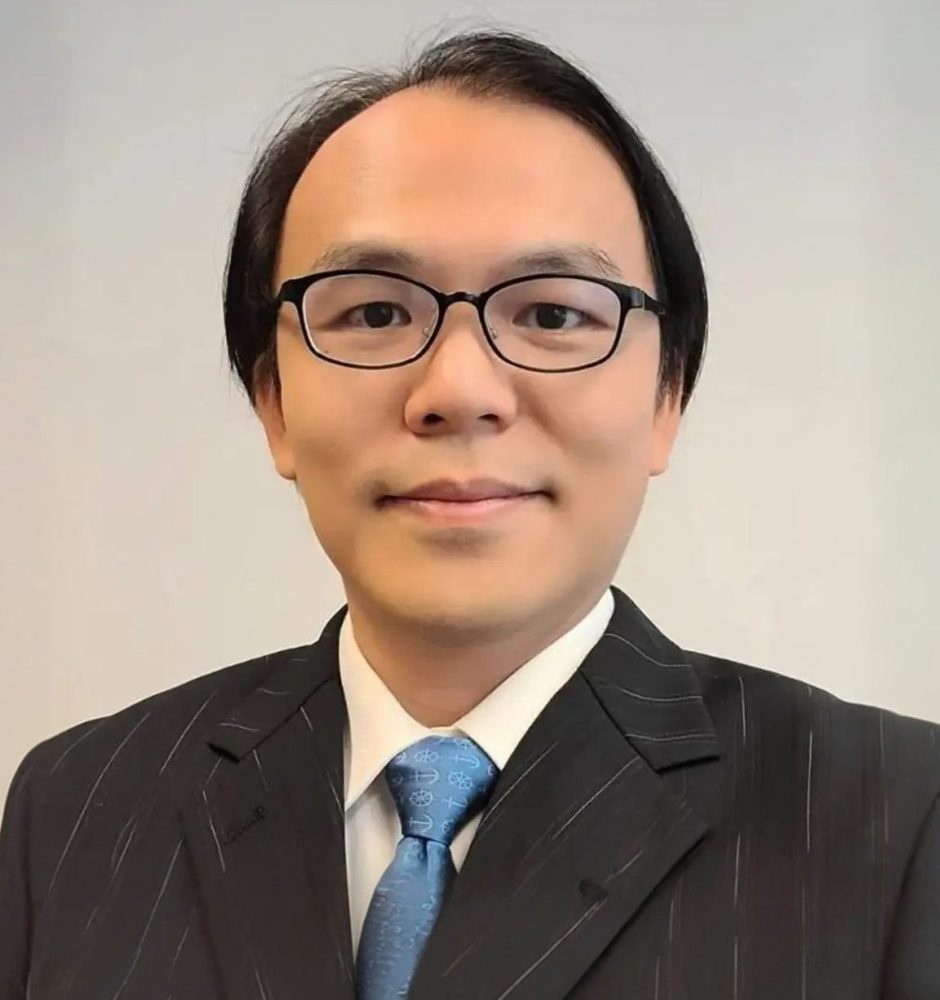
Professor Michael C.L. CHAU serves as Professor and Deputy Area Head of Innovation and Information Management at The University of Hong Kong's Faculty of Business and Economics. He also holds the position of Associate Director at the HKU HKJC Centre for Suicide Research and Prevention, and serves on the HKU Senate and Court. His academic journey includes a Ph.D. in Management Information Systems from the University of Arizona and a B.Sc. in Computer Science (Information Systems) from the University of Hong Kong. Dr. Chau's research spans business analytics, artificial intelligence, web mining, fintech, smart health, and security informatics. His work focuses on applying data/text/web mining techniques to business, education, and social domains. He leads the Artificial Intelligence Research Group at HKU Business School, which has secured significant funding from the Hong Kong Research Grants Council, Food and Health Bureau, and other agencies for projects including 'The Invisible Hand in Crowdfunding' and 'Factors Moderating the Predictive Power of Social Media Sentiment on Stock Returns'. His publication portfolio includes over 150 articles in premier journals like MIS Quarterly, JMIS, and IEEE Transactions, with recent work exploring large language models, hate speech detection, and disaster-related social media analysis. His research demonstrates strong interdisciplinary connections across computer science, information systems, and business applications. INFORMS ISS Design Science Award (2020) IEEE ITSS Leadership Award in Intelligence and Security Informatics (2020) AIS Sandra Slaughter Service Award (2016) HKU Outstanding Young Researcher Award (2014) Faculty Research Postgraduate Supervision Award (2020 & 2025) Cited over 9,400 times (h-index = 47) Dr. Chau actively mentors doctoral students and has supervised numerous PhD graduates who now hold academic positions at institutions including Fudan University, Xi'an Jiaotong-Liverpool University, and the University of Maryland. His research grants portfolio demonstrates sustained funding success across diverse areas including blockchain, mental health applications, and social media analytics. The Artificial Intelligence Research Group he leads maintains strong industry connections through projects with Hong Kong Red Cross and the Hospital Authority.
Prof. Christian Heipke is a distinguished academic serving as Dean of the Faculty of Civil Engineering and Geodetic Science at Leibniz University Hannover, Germany. He also holds the position of Executive Director at the Institute of Photogrammetry and GeoInformation (IPI), one of the leading research institutions in geospatial sciences within the faculty. His leadership extends across multiple committees including the Curriculum and Teaching Committee, Admissions and Examination Boards for Geodetic Science and Geoinformatics, and Navigation and Environmental Robotics. As a Professor at IPI, he maintains active research while overseeing significant academic and administrative responsibilities at the university. Professor Heipke's research spans multiple domains within geospatial sciences, with particular emphasis on: Advanced photogrammetric techniques and algorithms Remote sensing applications for environmental monitoring Computer vision approaches for geospatial data analysis Urban development monitoring using satellite imagery Machine learning applications in geoinformatics Disaster prediction and management systems His recent scholarly output reveals a strong focus on integrating cutting-edge computer vision and deep learning techniques with traditional photogrammetric methods. Analysis of his 15 most recent publications shows a clear trajectory toward more sophisticated AI-driven approaches for processing geospatial data, with particular attention to time-series analysis, uncertainty quantification, and multi-view systems. His work bridges theoretical advancements with practical applications in flood forecasting, deforestation monitoring, urban planning, and construction materials analysis. The geographic scope of his research has expanded significantly, with recent projects focusing on international case studies in the Philippines and tropical regions. Professor Heipke leads the Institute of Photogrammetry and GeoInformation, a major research hub that has celebrated 75 years of contributions to the field. His leadership extends to the Graduiertenkolleg 2159: "Integrity and Collaboration in Dynamic Sensor Networks," where he serves as a professor overseeing doctoral research. The institute maintains state-of-the-art facilities for processing satellite imagery, aerial photography, and developing novel algorithms for geospatial data analysis. Under his direction, the institute has strengthened its international collaborations and interdisciplinary research approaches, particularly in addressing Sustainable Development Goals through geospatial technologies.
Jim Hall is a Professor of Climate and Environmental Risk at the University of Oxford's School of Geography and the Environment, and serves as Director of Research there. He is also a Visiting Fellow at Linacre College and holds leadership roles including Chair of the Science Advisory Committee at IIASA, and Expert Advisor to the UK's National Infrastructure Commission. His work focuses on systemic risk analysis, infrastructure resilience, and policy implications of climate change adaptation. Prof Hall has pioneered methodologies like the National Infrastructure Systems Model (NISMOD) and chairs the Data and Analytics Facility for National Infrastructure (DAFNI). His research spans flood risk management, energy systems decarbonization, and transboundary water resource conflicts in regions such as the Eastern Nile Basin and the Caribbean. Key research areas include robust decision making under uncertainty, info-gap theory applications, and integrated assessments of human-environmental systems. He has contributed to major international assessments, including the IPCC's Fourth Assessment Report, and developed frameworks for multi-hazard stress testing of infrastructure networks. Scientific Awards: George Stephenson Medal (2001), Prince Sultan Prize for Water (2018), Royal Academy of Engineering Fellowship (2010) His advising and grants work includes mentoring a DPhil student Erin Canning and leading projects like MARIUS and ENHANCE. He has also developed innovative modeling tools for coastal erosion prediction and probabilistic assessments of global shipping fuel transitions. Prof Hall’s research groups actively engage in interdisciplinary projects, including the Oxford Martin Programme on Resource Stewardship and the UK Infrastructure Transitions Research Consortium. His work emphasizes bridging scientific analysis with actionable policy solutions for climate adaptation.
Prof. Dr. Nicole Ondrusch is a Professor at Heilbronn University (HHN) within the Faculty of Computer Science. She specializes in teaching methodological fundamentals of software engineering, including ERP systems, Design Thinking, Change Management, and digital transformation. Her research focuses on educational concepts for computer science technologies and future-relevant skills. Key Roles and Projects: Member of BW-CAR doctoral center Organizer of Barcamp Heilbronn, an unconference teaching project fostering student teamwork Principal investigator in funded projects like DigiTrans (digital transformation education) and DEV:GAMES (educational game development) SAP Academic Board DACH spokesperson since 2021 Research Interests: Her work emphasizes innovative teaching methods such as Design Thinking, agile project implementation, and digital experimentation. She explores ethical AI education, interdisciplinary collaboration, and the societal impact of digital transformation. Nicole also develops practical teaching tools like virtual escape rooms and game-based learning frameworks. Grants & Partnerships: Funded by DAAD (DigiTrans), Stiftung Innovation, and others Collaborates with industry partners like SAP and local IT organizations (ConnectIT) Labs & Teams: She leads the Lab:D initiative, developing digital teaching platforms, and co-organizes the Barcamp, a student-led event integrating real-world project management and community building.
Sandy J. Wayne serves as Dean of the College of Business Administration and Professor of Management at the University of Illinois Chicago (UIC), where she leads academic initiatives while maintaining an active research program. An internationally recognized expert in workplace leadership, her work focuses on developing high-performing employees through effective team leadership and organizational practices that enhance motivation and performance. She also investigates systemic barriers affecting the upward mobility of women and people of color in corporate environments. Dr. Wayne earned her academic credentials from: PhD in Management, Texas A&M University MBA, Illinois State University BS in Business Administration, Illinois State University Her research program spans leadership dynamics, organizational behavior, and diversity science. She examines how manager-employee relationships impact engagement and performance, with particular emphasis on work-family balance and career trajectory barriers for underrepresented groups. Her work bridges theoretical rigor with practical applications for organizations seeking to build inclusive, high-performance cultures through evidence-based leadership development. Analysis of her recent publications (2014-2024) reveals three dominant research streams: leader-member exchange theory (particularly LMX differentiation effects), servant leadership measurement and outcomes, and diversity dynamics in advancement pathways. Her work consistently appears in top-tier journals like Journal of Applied Psychology and Academy of Management Journal , demonstrating methodological sophistication through multi-level analyses and cross-cultural investigations. Dr. Wayne's scientific contributions have earned significant recognition: Decennial Influential Article Award for 2015 publication (2025) University Scholar, University of Illinois System (2020-2023) Faculty Impact Award, UIC Business (2019) Fellow, Academy of Management (2019) Decennial Influential Article Award for 2008 publication (2018) As Director of the Institute for Leadership Excellence and Development since 1996, she has cultivated a robust research ecosystem while leading institutional initiatives like the UIC Business Cohort Program and Business Scholars Program. Her administrative leadership extends to faculty development through her former role as Associate Dean for Faculty Affairs (2014-2022), demonstrating sustained commitment to academic excellence and organizational growth.
David L Jordan is the William Neal Reynolds Distinguished Professor in the Department of Crop and Soil Sciences within the College of Agriculture and Life Sciences at North Carolina State University. His appointment consists of 50% Extension, 25% Research, and 25% Academic responsibilities. He serves as a Crop Science Extension Specialist with a focus on peanut production and weed management, working closely with the North Carolina Peanut Growers Association, private consultants, industry representatives, and farmers. Dr. Jordan received his educational background from North Carolina State University and the University of Arkansas: PhD in Agronomy, University of Arkansas, 1993 MS in Crop Science, North Carolina State University, 1988 BS in Agronomy, North Carolina State University, 1985 AS, Chowan College, 1983 Dr. Jordan's research focuses primarily on peanut-based cropping systems, integrated pest management in peanut production, and the applied biology and management of weeds. His work addresses critical challenges in sustainable agriculture, including herbicide resistance management, crop rotation strategies, and aflatoxin mitigation in peanut production. He has developed significant expertise in developing risk tools to assist peanut growers and their advisors manage pests. His international work extends to Africa, where he collaborates with colleagues to develop more effective and sustainable pest management strategies for peanut (groundnut) and to improve food safety through aflatoxin mitigation. His recent publications reveal a strong focus on optimizing agricultural practices for peanut, cotton, and soybean production. Key themes include crop rotation effects on weed populations, nematode management in peanut systems, herbicide resistance evolution in agricultural weeds, and international peanut production practices. His research integrates field studies with practical extension applications to address real-world agricultural challenges across multiple continents. Dr. Jordan has received numerous prestigious awards throughout his career: Fellow of multiple professional societies including the American Society of Agronomy, Crop Science Society of America, Weed Science Society of America, and Southern Weed Science Society William Neal Reynolds Distinguished Professor (2015) Academy of Outstanding Faculty in Extension and Engagement, North Carolina State University (2022) Outstanding Extension and Engagement Award, North Carolina State University (2022) Dow AgroSciences Award for Excellence in Education from the American Peanut Research and Education Society (2010) Dr. Jordan has mentored numerous graduate students, serving as advisor or co-advisor for 3 MCS, 13 MS, and 12 PhD students, and has served on 40 MS, 45 PhD, and 7 MA graduate committees. His grant funding totals over $11.9 million from Louisiana State University Agricultural Center (1993-1996) and North Carolina State University (1996-present). He has led multiple USAID-funded international projects focused on peanut production and aflatoxin mitigation in countries like Ghana, Haiti, and Malawi. Dr. Jordan leads a comprehensive research and extension program focused on peanut production systems. His work involves close collaboration with multiple departments at NC State including Entomology and Plant Pathology and Biological and Agricultural Engineering. Internationally, he works with colleagues across Africa to develop sustainable pest management strategies. His program emphasizes interdisciplinary collaboration among many individuals, disciplines, and institutions with the common goal of improving the quality of life of people through agricultural improvements, education, and science.
Dr. Alyas Widita is an Assistant Professor in the Urban Design program at Monash University, Indonesia. He is actively involved in research and teaching, focusing on urban planning, transportation, and smart city technologies. He serves as the Program Coordinator for Urban Design and teaches courses such as Urban Design Studio: Smart City and Smart City Technologies. Education: Ph.D. in City and Regional Planning, Georgia Institute of Technology, United States Dr. Widita's research centers on the built environment, transportation systems, and urban analytics, with a strong emphasis on developing Asian cities. His work explores congestion impacts of mass transit, ride-hailing effects on vehicle ownership, rural-urban migration, walking behavior, and spatial patterns of MSMEs. He employs advanced data analytics and causal evaluation methods to inform urban policy. His recent publications span high-impact journals such as Transport Reviews , Journal of Planning Education and Research , and Travel Behaviour and Society . The research trend shows a consistent focus on data-driven urban policy, sustainable mobility, and equity in urban development across Indonesia and Southeast Asia. Scientific Awards and Recognition: No specific awards listed, but research widely cited and featured in media outlets. Dr. Widita has secured and contributed to multiple research projects funded by international and national agencies, including the World Bank, Korea Transport Institute (KOTI), Central Bank of Indonesia, and Georgia Department of Transportation. He is currently leading or co-leading projects on Jakarta’s subsidence, flood risk management using remote sensing, and the Citarum River revitalization. He collaborates extensively with researchers across disciplines and institutions. His work contributes to UN Sustainable Development Goals, particularly those related to sustainable cities and communities. He is accepting PhD students interested in the built environment, transportation, and urban analytics in developing Asia. He is involved in key labs and research teams including the Citarum Action Research Program (CARP), Intelligent and Dynamic Remote Sensing for Flood Risk, and interdisciplinary urban analytics initiatives at Monash Indonesia.