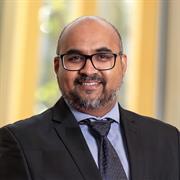
Associate Professor Lasantha Meegahapola is a Deputy Head of Department (Teaching & Learning) at RMIT University's School of Engineering in Melbourne, Australia. He holds an IEEE Senior Membership and serves as an Associate Editor for several prestigious journals, including IEEE Transactions on Power Systems and IET Renewable Power Generation. His research focuses on Power System Stability with Renewable Integration, Microgrid Control, and Smart Grid Technologies, addressing challenges like voltage stability, inverter-based grid dynamics, and renewable energy penetration. He has supervised 16 PhD students to completion and published over 200 articles. Key contributions include identifying stability issues in microgrids and advancing grid-forming inverter control strategies. His work aligns with UN Sustainable Development Goals 7 (Clean Energy), 9 (Infrastructure), and 13 (Climate Action). He is actively involved in IEEE committees, including the PSDP Task Force on Microgrid Stability. Teaching roles include Programme Manager for the Bachelor of Electrical Engineering (HK) and Subject Coordinator for Power System Analysis and Control courses. Collaborations span industry and international research institutions, emphasizing real-world applications of his research in power systems and renewable energy integration.
Jocelyn Davies is a University Fellow at the Faculty of Arts and Society, Northern Institute, Charles Darwin University. She lives and works in Alice Springs and has specialized in arid rangeland environments. As a geographer and predominantly qualitative researcher, she is skilled in participatory action research methods with extensive experience in Aboriginal land management initiatives across Australia. Her research profile demonstrates significant engagement with: Climate change adaptation in arid environments (70% research focus) Land management practices (66% research focus) Protected area management (61% research focus) Rangeland systems (59% research focus) Dr. Davies' scholarly work shows a strong international dimension, with research conducted in sub-Saharan Africa, Vietnam, and Inner Mongolia. Her fingerprint analysis reveals significant contributions to Environmental Impact Assessment (52%) and Ecosystem Function studies (52%). Her publications demonstrate consistent scholarly output with significant impact, particularly her 2020 article on Indigenous adaptation pathways which has received 117 Scopus citations and influenced policy development. Her research has been widely disseminated through platforms like Mendeley with hundreds of readers across multiple publications. Dr. Davies' work contributes substantially to UN Sustainable Development Goals related to climate action, life on land, and reduced inequalities through her focus on indigenous knowledge systems and sustainable land management practices. She maintains active research collaborations across multiple countries and has documented 16 research outputs with significant policy engagement, including references in multiple policy documents and news outlets. Her current work focuses on documenting the 50-year history of the Central Australian Aboriginal Congress through participatory methods.
Mads Albertsen is a Professor in the Department of Chemistry and Life Sciences at the Faculty of Engineering and Science, Aalborg University, Denmark. He leads the Albertsen Lab and is a key member of the Center for Microbial Communities. His research focuses on high-throughput DNA sequencing methods to explore uncultivated microbes and populate the tree of life. He is actively involved in major interdisciplinary projects such as NanoEat , Microflora Danica , and DarkScience , funded by the European Research Council, Villum Foundation, and Poul Due Jensen Foundation. His research interests span metagenomics , long-read sequencing , bioinformatics , microbial ecology , and environmental biotechnology . He develops cutting-edge methods to improve throughput in microbial genome recovery and applies them to diverse areas including wastewater treatment, human microbiome studies, and infectious disease diagnostics. His work has significant implications for public health and sustainability. The recent publications highlight a strong trend in long-read sequencing (Oxford Nanopore), metagenome-assembled genomes (MAGs) , and microbial dark matter . His team has published high-impact papers in Nature , Nature Methods , and Nature Communications , with applications in environmental systems and clinical diagnostics, including SARS-CoV-2 and bloodstream infections. His scientific awards include: The Grundfos Prize (2021) The Fritz Kaufmann Prize (2021) The Rising Star Award by IWA & ISME (2016) Research Result of the Year in Denmark (2015) The Spar Nord Fond Research Prize (2015) Mads Albertsen advises numerous PhD students, leads externally funded research projects, and is involved in technology transfer through his co-founding of DNASense ApS (2014–2020). He also serves on scientific advisory boards and contributes to public policy, including as a member of the Danish SARS-CoV-2 variant risk-assessment group. He teaches courses in Data Science, Bioinformatics, Genomics, and Environmental Microbiology at Aalborg University. His lab, the Albertsen Lab , is part of the Center for Microbial Communities , a leading research center focused on microbial systems biology and environmental applications. The lab collaborates extensively with national and international partners in academia, industry, and public health institutions.
Anne Jamison serves as a Tenure track adjunct faculty in the Department of International Economics, Government and Business at Copenhagen Business School. Her research aligns with UN Sustainable Development Goals, particularly SDG 16 (Peace, Justice and Strong Institutions). Her primary research areas include: International Political Economy Political Risk and Sovereign Credit Populism and Ideational Systems Foreign Direct Investment and Indigenous Communities Energy Projects and Violent Conflict in Fragile States Recent publications (2024-2025) reveal a focus on integrating high-frequency political, environmental, social, and governance (ESG) data to model sovereign credit risk, and examining cross-national variation in populist support through demand-side explanations. She investigates how World Bank-funded infrastructure projects correlate with violent conflict in fragile contexts, advocating for systemic reform in international development finance. Dr. Jamison has supervised three research projects and engaged with global media to disseminate findings on corporate accountability in conflict zones, emphasizing practical policy implications for multilateral institutions.
Allan Sikk is a Professor of Comparative Politics at the School of Slavonic and East European Studies (SSEES), University College London (UCL). He joined UCL in 2007 following a PhD from Tartu University and a tenure as head of the Estonian parliament’s research service. His research focuses on electoral candidates, party switching in parliaments, and party system evolution, with a 2023 co-authored book, *Party People: Candidates and Party Evolution* (Oxford University Press), analyzing party change through candidate data in Central and Eastern Europe. He leads the INSTAPARTY project, a 4-year initiative funded by the Norwegian Research Council, studying party instability in parliaments. Education: PhD, University of Tartu (2006) MA, University of Tartu (2001) BA, University of Tartu (1999) Research expertise spans political science, comparative government, and democratization, with a focus on Europe and Eastern Europe. His work integrates classic comparative models with insights from new democracies. He is fluent in English, Estonian, Danish, Finnish, Spanish, Russian, and reads multiple languages. Grants and Projects: Co-Principal Investigator, INSTAPARTY: Party Instability in Parliaments (Norwegian Research Council) His publications analyze party system volatility, parliamentary behavior, and electoral dynamics, emphasizing candidate turnover and institutional adaptation. He contributes to Sustainable Development Goals 5 (Gender Equality), 10 (Reduced Inequalities), and 16 (Peace, Justice, Strong Institutions).
Dr. Hossein Alizadeh Otorabad is a Research Fellow at the Department of Engineering, School of Computing and Engineering, University of Huddersfield. He joined the Institute of Railway Research (IRR) in 2019 and was promoted to Research Fellow in 2022. His work focuses on finite element analysis, railway engineering, and thermal dynamics in wheel-rail interactions. BSc in Solid Mechanics, Tehran Polytechnic University MSc in Applied Mechanics, Khajeh Nasir Toosi University (2002) PhD in Railway Engineering (2018), focusing on wheel-flat fatigue crack initiation His research expertise spans Railway Engineering , Finite Element Analysis , and Thermal Modeling , with a particular focus on wheel-flat dynamics and fatigue analysis. He has contributed to studies on dynamic load effects in railway crossings, temperature evolution during wheel flat formation, and elasto-plastic behavior in railway wheels. Recent publications show a strong emphasis on Railway Systems (2018-2024), covering topics like: Dynamic load prediction in crossings Thermal analysis of wheel-rail sliding Contact mechanics in flatted wheels Fatigue life evaluation under transient loads His work aligns with UN Sustainable Development Goals for sustainable infrastructure and transportation systems. Scientific Recognition: h-index of 31 (Scopus metrics) 16+ citations for elasto-plastic wheel analysis Contributions to key railway engineering conferences At IRR, he conducts FE analysis, laboratory/field testing of railway assets, hammer testing, and signal processing. He previously received funding from Iran's Ministry of Science for sabbatical research at TU Delft's Material Science and Engineering department.
Thierry Warin is a Full Professor of Data Science for International Business at HEC Montréal, directing the Department of International Business. He holds the Professorship in Data Science for International Business and is a Principal Investigator at CIRANO, leading the World Economy theme. His roles include affiliations with Harvard Business School’s Microeconomics of Competitiveness program and the International Trade and Finance Association presidency (2020-2022). Education: PhD from ESSEC Business School (France, 2000). Professional development includes the Harvard Business Analytics Program (2018-2020) and GIS training at Harvard. Research Interests: Data science applications in global economic transformations, including network theory, natural language processing, and computational methods. Focus areas: algorithmic collusion, platform economies, and metadata-driven analyses. He develops open-source tools like the statcanR package and advocates for reproducible research. Articles Trends: Recent work explores AI regulation, algorithmic competition, climate transition plans, and central bank speech analysis. Methodologies span structural topic modeling, social media analytics, and entropy-based frameworks. Awards: Honored with the Highly Commended Paper Award (2017-2018) and Emerald Literati Award (2018) for reverse innovation research. Recognized for contributions to computational social science and regulatory frameworks. Advising & Grants: Supervised 16 master’s projects since 2019, focusing on data science applications in global business challenges. Active in interdisciplinary initiatives like the St. Lawrence–Great Lakes corridor data hub. Labs & Philanthropy: Founded quantum simulations and leads Ed’Haîti , an NGO addressing education in Haiti. Collaborates on Science des données au féminin en Afrique , empowering 200 African women with data science skills.
Peter Knight is a Professor of American Studies at the University of Manchester , affiliated with the School of Arts, Languages and Cultures (English, American Studies & Creative Writing). He focuses on conspiracy theories and cultural approaches to finance , with over two decades of research grants and leadership in major interdisciplinary projects. UN Sustainable Development Goals (SDG151: United States) Co-editor of Routledge Handbook of Conspiracy Theories His research reconfigures conspiracy theory analysis through cultural lenses, challenging psychological dismissals. Key projects include Everything Is Connected (AHRC, 2016-20) and REDACT (EU CHANSE, 2022-25). Publications span Routledge, Edinburgh UP, and Cambridge UP. Recent work with Clare Birchall and Michael Butter explores coronavirus pandemic conspiracies , while his Reading the Market (2016) examines Gilded Age financial narratives. He co-curated the Show Me the Money exhibition (2014-16), visualizing financial history. Scientific Awards BAAS Book Prize (2017) Peter supervises projects on topics like 19th-20th century American literature , digital conspiracy theories , and financial epistemology . His media commentary (The Conversation, BBC) addresses public understanding of economic and conspiratorial discourse.
Professor Martins Paparinskis is a Professor of Public International Law at University College London (UCL) Faculty of Laws since 2013. He holds multiple international roles, including membership in the UN International Law Commission (2023–present), where he serves as Chair (2025) and previously as Chairperson of the Drafting Committee (2023) and First Vice-Chair (2024). He is also a Senior Global Fellow at the National University of Singapore Centre for International Law and has held visiting positions at the National University of Singapore and University of Bologna. His expertise spans international dispute settlement, investment law, human rights, environmental law, and law of the sea. He earned his LL.B. from the University of Latvia, followed by M.Jur. (Distinction, Clifford Chance Prize), M.Phil (Distinction), and D.Phil. from the University of Oxford. PhD Scientific Board Member, University of Milan-Bicocca Doctoral College Member of the Professorial Council, University of Latvia Faculty of Law Editor-in-Chief of CIL Dialogues Research interests include international arbitration, investment law, environmental law, and human rights. His recent work addresses ISDS reforms, state responsibility, and pandemic-related legal challenges. He has contributed to over 50 articles and book chapters, including landmark publications on treaty interpretation and investor-state dispute mechanisms. Prof. Paparinskis has received the UCL Laws Excellence Award for Teaching (2016) and was nominated for Student Choice Awards (2023, 2024). He advises international bodies like the EU Fundamental Rights Agency and UNECE Water Convention Implementation Committee, and frequently participates in high-level judicial proceedings at ITLOS and the International Court of Justice. He leads editorial roles across 8 international journals, including the Journal of International Economic Law and Journal of World Investment and Trade. His advocacy focuses on harmonizing international investment law with human rights and environmental sustainability, particularly through SDGs 8 (Economic Growth) and 16 (Peace and Justice).
Max Troshkin is an Associate Professor of Economics at the University of Exeter Business School. He holds a Ph.D. in Economics from the University of Minnesota, advised by V.V. Chari and Larry E. Affiliations: University of Exeter Business School, Policy @Exeter Research Network Education: Ph.D. in Economics, University of Minnesota Research Interests: Focuses on macroeconomic and contracting aspects of public policies, including optimal taxation, social insurance, and pension systems. His work bridges micro and macroeconomic frameworks to address policy challenges in fiscal theory, public finance, and economic inequality reduction. Awards: Presidential Merrill Scholar Mentor Award (Cornell University) Edmund S. Muskie Fellowship (U.S. Department of State) Professional Contributions: Organizes research conferences, referees for leading journals (MIT Press, NSF), and contributes to sustainable development goals (SDG 10: Reduced Inequalities; SDG 16: Peace, Justice & Institutions). Engages in policy-related advising and committee memberships. Labs/Teams: Active in Policy @Exeter, a research network addressing public policy challenges through interdisciplinary collaboration.
California State University, Long BeachUnited States
Dr. Angela M. Locks is a Professor and Department Chair in Educational Leadership at California State University, Long Beach (CSULB), within the College of Education. She also serves as the Executive Director of the Center for Evaluation & Educational Effectiveness. Her career spans nearly three decades in higher education, with 16 years at CSULB, where she has held leadership roles in diversity, equity, and inclusion, including Executive Director for Diversity, Equity, and Inclusion in Academic Affairs (2020–2024), and founding roles in undergraduate research programs. Education: Ph.D. in Higher Education (Diversity & Governance), University of Michigan, Ann Arbor M.A. in Education, University of Michigan, Ann Arbor B.A. in Psychology, University of Michigan, Ann Arbor Her research centers on diversity, equity, and inclusion in higher education , with a focus on college access, retention, campus climate, and the experiences of racially and ethnically underrepresented students. She examines how institutional policies and practices affect student outcomes, particularly through intergroup dialogue, high-impact practices, and diversity programming. Her work emphasizes the holistic development of students and the role of equity-mindedness in educational leadership. The recent publications and edited volumes highlight a sustained focus on debunking deficit narratives (e.g., 'grit'), supporting Students of Color, and understanding the structural barriers faced by Latina/o, African American, and first-generation students. Her research bridges theory and practice, often involving longitudinal and qualitative studies that inform institutional strategies for inclusion and retention. Scientific Awards: 2021 Wang Family Excellence Award Outstanding Faculty Service Nominee, CSULB 2014 Outstanding Faculty Mentor for Student Engagement in Research, CSULB Academic Affairs 2014 Most Valuable Professor, College of Education, CSULB Alumni Association Dr. Locks has supervised 18 doctoral dissertations and 23 master’s theses, demonstrating a strong commitment to mentoring the next generation of scholars. She led the Mellon Mays Undergraduate Fellowship Program (2017–2024) and founded the Undergraduate Research Opportunity Program, securing external funding and institutional support for student research. Her leadership extends to national initiatives, including serving as principal investigator for the Truth, Racial, Healing, and Transformation (TRHT) Campus Center with AAC&U. She is actively involved in research centers and programs at CSULB, including the Center for Evaluation & Educational Effectiveness and the Office of Undergraduate Research Services. Her work continues to shape institutional practices around diversity, equity, and student success through research, policy engagement, and community collaboration.
Elena Bacchin is a Professor of Modern History at the University of Vienna’s Faculty of Historical and Cultural Studies, Department of History. She previously held academic positions as Associate Professor (2023-2024) and Assistant Professor (2021-2023) at Ca’ Foscari University of Venice, a Marie Sklodowska-Curie Global Fellow (2019-2022) at Columbia University and Ca’ Foscari, and a Lecturer at Queen Mary University of London (2017-2018). PhD in History, University of Padua (2007-2010) Doctoral Student, Scuola Normale Superiore, Pisa (2011-2015) Her research focuses on the transnational history of the 19th and 20th centuries, particularly political actors such as exiles, foreign fighters, and deportees. She examines the circulation of people, ideas, and practices across borders and their influence on political mobilization, repression, and the development of international solidarity networks. Her work also explores the history of nationalism, cultural history, and the relationship between political and religious identities. She contributes to UN Sustainable Development Goals 10 (Reduced Inequalities) and 16 (Peace, Justice, and Strong Institutions). Recent publications analyze political deportation during the Risorgimento, memory of exiles in Fascist Italy, and transnational humanitarian movements. These studies emphasize forced migration, penal colonies, narrative construction, and the intersection of international law with state security. Marie Sklodowska-Curie Fellowship Fellow at Remarque Institute, New York University Fellow at University of St Andrews Principal Investigator of the PRISON project (Italian Ministry of Research) As Principal Investigator of the PRISON project, she investigates political repression and international solidarity networks. Her academic collaborations include visiting scholar appointments at the University of California San Diego, University of Oxford, and New York University.
Professor Vlad Mykhnenko is Professor of Geography and Political Economy in the University of Oxford Department for Continuing Education, and a Research Fellow in Sustainable Urban Development at St. Peter's College, Oxford. He serves as Academic Director for Social Sciences at Oxford Lifelong Learning and has been with the Department since January 2017, initially taking up an Associate Professorship in Sustainable Urban Development. His academic career spans multiple institutions including the University of Birmingham, Al-Farabi Kazakh National University, the University of Nottingham, the University of Glasgow, and the Central European University. Professor Mykhnenko's educational background includes: PhD in Political Economy from Darwin College, the University of Cambridge (2005) MA in International Relations and European Studies from the Central European University (1999) MA (1998) and BA (1996) in International Relations from Taras Shevchenko National University of Kyiv As an economic geographer specializing in geographical political economy, Professor Mykhnenko challenges conventional wisdom about urban and regional development. His research initially focused on transition economies of Eastern Europe (particularly Polish Upper Silesia and the Ukrainian Donbas) before expanding to cities and regions worldwide. He has produced over 140 research outputs and secured £16 million in external research funding, with £2 million as Principal Investigator. His current research initiatives focus on green steel - rebuilding Ukraine's iron and steel sector post-war without fossil fuels - and sustainable urban development in Kazakhstan. His publication record demonstrates significant scholarly impact across diverse areas including urban shrinkage, post-war reconstruction, geopolitical analysis, and future trends in technology and governance. The breadth of his research interests spans from analyzing spatial economic patterns in African cities to examining the implications of the metaverse for future business practices. Professor Mykhnenko has substantial policy impact, with research quoted in at least 79 policy documents by 49 organizations across 21 countries. His work contributes to UN Sustainable Development Goals, with 30% directly attributed to SDG11: Sustainable Cities and Communities. He has advised governments, intergovernmental organizations, and multinational enterprises, including serving on a UN expert group to shape the New Urban Agenda and providing expert evidence to the UK House of Commons on Ukraine's recovery. In early 2025, he was appointed a commissioner for the Lancet Commission on Ukraine. Professor Mykhnenko has taught over 3,100 students across various institutions and currently contributes to Oxford's MSc in Sustainable Urban Development program. He has supervised numerous doctoral students and received recognition for his teaching excellence, including Fellow of the Higher Education Academy status and a Postgraduate Certificate in Academic Practice. His commitment to research-led teaching has resulted in innovative pedagogical approaches documented in peer-reviewed academic publications.
Prof. Dr. Muhammed Bahattin TANYOLAÇ is a faculty member at the Department of Bioengineering within the Faculty of Engineering at Ege University. His research focuses on agricultural biotechnology, plant biotechnology, and sustainable development goals. He holds a strong academic profile with 61+ citations (WoS) and an H-index of 16. Research Areas: Agricultural Biotechnology Molecular Genetics Field Crops Biotechnology and Genetics Citation Metrics: 3,798 total broadcasts (WoS), H-index 16 (WoS), Average citations 16. Collaborations: Active in-house collaborations with 7+ colleagues. Research spans Agricultural Sciences and Forestry with a core focus on biotechnological applications in agriculture.
Associate Professor Brett Jason Hallam is a Scientia Fellow at the University of New South Wales (UNSW), affiliated with the School of Photovoltaic and Renewable Energy Engineering. His research focuses on advancing solar panel manufacturing, particularly improving efficiency and reducing costs through innovations like selective emitter formation, laser processing, and hydrogen passivation. Key areas include understanding hydrogen passivation mechanisms to address defects in silicon solar cells and developing next-generation technologies such as TOPCon and SHJ cells. Education: PhD in Photovoltaic Engineering (UNSW, 2014), BE (First Class Honours and University Medal) and BSc in Physics/Oceanography (UNSW, 2009). He has held research placements at Fraunhofer Institute (Germany), Oxford University (UK), and IMEC (Belgium). Research Interests: Advanced hydrogenation for solar cells, material challenges for terawatt-scale PV deployment, reducing silver consumption, and sustainable manufacturing. Current projects include ARENA-funded initiatives on high-efficiency solar cell technologies and next-generation selective emitters. Notable Awards: 2018 Scientia Fellow, 2017 NSW Premier Prize for Energy Innovation, and 2016 Ulrich Goesele Young Scientist Award. His work addresses global energy transition goals, aiming for net-zero emissions by 2050. Industry Experience: Consultant for Suntech Power and Technology Transfer Team at UNSW, collaborating with companies like LONGi and Jinko. He advises on silicon solar cell technologies and has 16 patents. Labs/Teams: Active in UNSW’s PV research groups, focusing on scalable solar solutions and material science innovations.