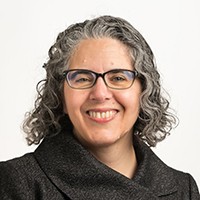
Lillie Padilla is an Assistant Professor of Spanish Linguistics at Sam Houston State University's Department of World Languages and Cultures. Holding a Ph.D. and M.A. in Spanish Linguistics from Arizona State University alongside a Bachelor of Arts from the University of Ghana, her research explores interdisciplinary connections between: Afro-Latinx representation in educational materials Discourse analysis and language ideologies Sociolinguistic studies in Equatorial Guinea Critical race theory applications in language teaching Her work focuses on Spanish subject pronoun expression patterns in multilingual contexts and curriculum development for inclusive pedagogy. Recent publications examine: Representation gaps in Spanish language textbooks Methodological challenges in Equatorial Guinea research Critical discourse analysis of Netflix's Elite series Intersectional representation of Afro-Latinx women Scientific achievements include: Finalist for American Association of Linguistics 2025 award for co-edited volume Representation, Inclusion and Social Justice in World Language Teaching Padilla's research continues to shape conversations about linguistic diversity and marginalized voices in language education through both empirical studies and theoretical frameworks.
Esther Duflo is the Abdul Latif Jameel Professor of Poverty Alleviation and Development Economics at the Massachusetts Institute of Technology (MIT), where she is affiliated with the Department of Economics within the School of Humanities, Arts, and Social Sciences. She co-founded and co-directs the Abdul Latif Jameel Poverty Action Lab (J-PAL) and holds the position of Chaire, Pauvreté et politiques publiques at the Collège de France. Duflo also serves as President of the Paris School of Economics, demonstrating her significant international influence in economic policy and research. Her educational background includes first degrees in history and economics from Ecole Normale Superieure, Paris, followed by a Ph.D. in Economics from MIT in 1999. This strong foundation has enabled her to become one of the most influential economists of her generation. Duflo's research focuses on understanding the economic lives of people living in poverty, with the explicit aim of informing effective social policy design and evaluation. Her work spans critical areas including health, education, financial inclusion, environmental sustainability, and governance. What distinguishes her approach is the rigorous application of randomized controlled trials to evaluate development interventions, bringing scientific precision to poverty alleviation efforts. Her research methodology has revolutionized how economists approach development questions, moving beyond theoretical models to evidence-based policy recommendations. Her scholarly output demonstrates remarkable breadth and impact, with publications spanning from technical academic papers to influential books for general audiences. Duflo's work consistently bridges the gap between academic research and practical policy applications, with recent publications addressing contemporary challenges including climate change adaptation, pandemic response, and economic policy for hard times. Her research trends reveal a deepening commitment to translating complex economic concepts for broader audiences while maintaining scholarly rigor. Sveriges Riksbank Prize in Economic Sciences in Memory of Alfred Nobel (2019, with Abhijit Banerjee and Michael Kremer) Princess of Asturias Award for Social Sciences (2015) A.SK Social Science Award (2015) Infosys Prize (2014) John Bates Clark Medal (2010) MacArthur 'Genius Grant' Fellowship (2009) Member of the National Academy of Sciences (2017) Duflo has supervised numerous graduate students and collaborated extensively with researchers worldwide through J-PAL, which has grown into a global network conducting field experiments across multiple continents. Her grant portfolio includes substantial funding from major foundations and government agencies supporting large-scale development research. Beyond traditional academic advising, Duflo has mentored a generation of development economists through J-PAL's training programs and field research opportunities. Her primary institutional home is the Abdul Latif Jameel Poverty Action Lab (J-PAL), which she co-founded at MIT. J-PAL has grown into a major research center with offices worldwide, connecting academic researchers with policymakers to ensure that program evaluations inform real-world decisions. Duflo also leads research teams at the Collège de France and the Paris School of Economics, creating a transatlantic network focused on evidence-based poverty reduction strategies.
Professor Jo Barraket is a leading academic and researcher in social equity, social innovation, and public policy. As Director of the Melbourne Social Equity Institute and member of the Dilun Duwa Centre for Indigenous Business Leadership, she focuses on improving social equity through organizational innovation, cross-sector collaboration, and policy design. Her research addresses social procurement, health equity, digital inclusion, and employment pathways for marginalized groups. Her work includes landmark projects such as the Australian Digital Inclusion Index and evaluations of Commonwealth Social Enterprise Development Funds. She has secured over $11M in research grants, including multiple ARC grants, and produced over 75 scholarly publications. Her current projects compare social procurement policies in Australia and Scotland, and study youth unemployment in construction via employment-focused procurement. Key research themes include: social enterprise scaling strategies, cross-sector partnerships for policy implementation, and the role of philanthropy in equitable housing. She advises governments and OECD on inclusive employment policies and chairs major research initiatives like the Social Enterprise Impact Lab. Prof Barraket’s transdisciplinary approach combines rigorous academic research with practical outputs like policy guides and digital tools to maximize societal impact. She previously founded the Centre for Social Impact Swinburne, now a global leader in social economy research.
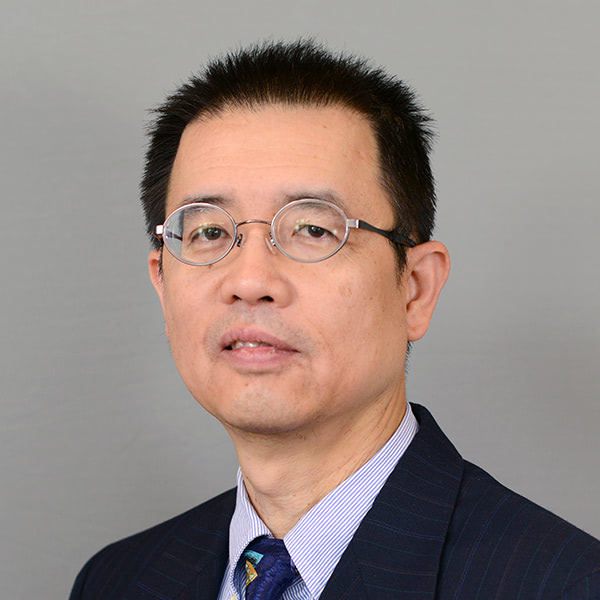
Ronald C. Lasky is a Professor of Engineering at Dartmouth College's Thayer School of Engineering and a Senior Technologist at the Indium Corporation. His academic roles include teaching courses such as ENGM 187: Technology Innovation and Entrepreneurship and ENGS 155: Intermediate Thermodynamics . Dr. Lasky holds a BS in Engineering Physics from Cornell University (1970), an MS in Applied Mathematics from Binghamton University (1974), and a PhD in Materials Science from Cornell University (1986). His research focuses on process optimization, electronic assembly, materials science, and environmental compliance. Notable contributions include work on lead-free solder assembly and Lean Six Sigma methodologies. He received the Member of Technical Distinction Award from the SMTA in 2021. Dr. Lasky actively engages with industry, exemplified by his collaboration with Galanz in China, exploring modern manufacturing practices and infrastructure. His insights on global supply chains and technological advancements highlight his dual academic and professional expertise.
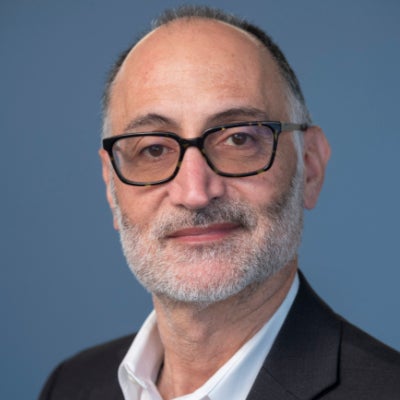
Musa Jouaneh is a Professor in the Mechanical, Industrial and Systems Engineering department at the University of Rhode Island 's College of Engineering . His research spans Robotics, Automation, Mechatronics , and Motion Control systems, with recent work focusing on robotic rehabilitation platforms, fastener extraction, and neural network applications in disassembly processes. Education: Ph.D., Mechanical Engineering, University of California at Berkeley (1989) M.Eng., Mechanical Engineering, University of California at Berkeley (1986) B.S., Mechanical Engineering, University of Louisiana, Lafayette (1984) Research Trends in Jouaneh's recent publications emphasize robotic rehabilitation using magnetic actuation, automated fastener detection via neural networks, and trajectory optimization for servo motor systems. His work bridges mechatronic design with industrial automation , particularly in disassembly and assembly applications. Grants include projects like "Cobots for Outfitting of Hangers" (ONR, 2023) and "Device for Proprioception Training" (RI Commerce, 2024). He leads the Mechatronics Lab and Intelligent Control and Robotics Laboratory , focusing on practical automation solutions.
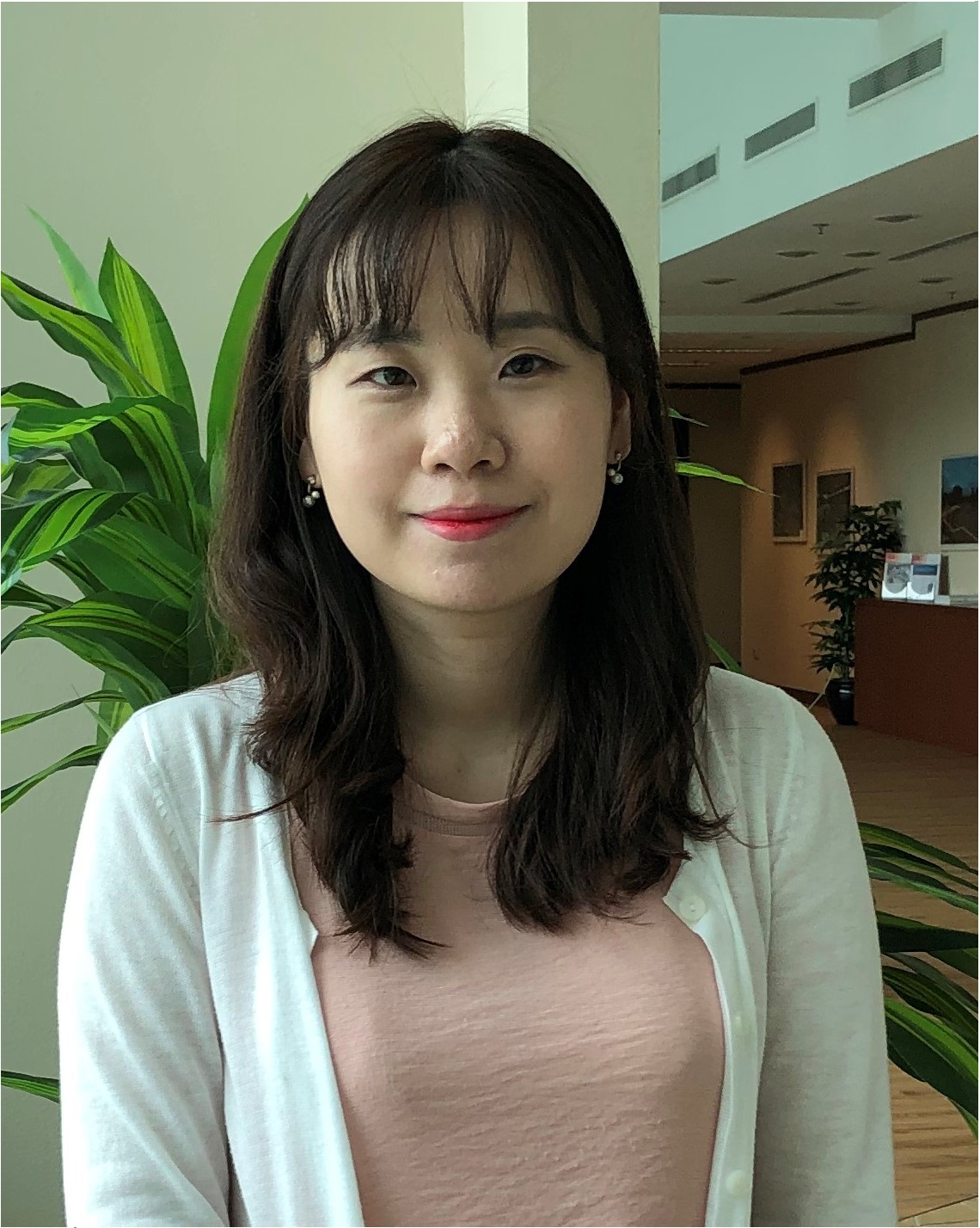
Dr. Kim Jeong Won is a Senior Research Fellow at the Energy Studies Institute (ESI), National University of Singapore, where she has been since March 2019. She holds a PhD in Energy and Environmental Policy from Korea University's Green School, an MPA from Korea University, and a MPP from the Harris School of Public Policy Studies, University of Chicago. Her research focuses on renewable energy and climate change policy, policy diffusion among governments, and quantitative policy evaluation methods. Dr. Kim has extensive experience in policy analysis and project management, including roles at the Korea Environment Institute (KEI), UNWTO ST-EP Foundation, and Global Green Growth Institute (GGGI). Her work emphasizes vertical and horizontal policy diffusion mechanisms, particularly in energy and climate sectors. She specializes in analyzing policy instrument combinations and designing evaluation frameworks for development projects. Her publications explore urban climate adaptation strategies in South Korea, renewable energy investment requirements for developing countries, and comparative analyses of energy storage systems competitiveness. She has contributed to policy reports for South Korean governments and international organizations, focusing on sustainable energy transitions and green growth frameworks. Dr. Kim's research bridges academic rigor with practical policy implementation, emphasizing quantitative methodologies to assess policy effectiveness. She actively participates in international development projects and contributes to global discussions on climate finance and energy policy design.
Amanda Phillips is an Associate Professor at Georgetown University, affiliated with the Departments of English, Film and Media Studies, Women’s and Gender Studies, and American Studies. Their research focuses on feminist and queer theory in digital media, with a particular emphasis on critical game studies and digital humanities. Selected publications include Gamer Trouble: Feminist Confrontations in Digital Culture and co-editing the Queer/Trans/Digital book series. Their scholarship appears in journals such as ROMchip , Feminist Media Histories , and Games and Culture . Research Interests: Digital media and gender politics Queer theory in gaming contexts Decolonial and anti-racist digital humanities Critical analysis of game mechanics Digital labor and precarity Affective histories of gaming Scientific Awards: Mellon/ACLS Dissertation Completion Fellow Academic Leadership: Former chair of the American Studies Association Digital Humanities Caucus Co-founder of the #transformDH Collective Editorial work on special issues of Game Studies and Antares: Letras e Humanidades Previous Institutions: IMMERSe Postdoctoral Fellow at University of California, Davis Ph.D. recipient from University of California, Santa Barbara with emphasis in Feminist Studies
Minh Q. Phan is an Associate Professor of Engineering at Dartmouth College's Thayer School of Engineering. His expertise spans system identification, iterative learning control, model predictive control, robotic swarm control, and intelligent control systems. He holds a BS from the University of California, Berkeley, and MS/M.Phil/PhD degrees from Columbia University in Mechanical Engineering. Dr. Phan has contributed to over 50 peer-reviewed publications and serves as an Associate Editor for the Journal of Guidance, Control, and Dynamics. His research focuses on advancing control theory applications in robotics, structural health monitoring, and sustainable construction materials. Key contributions include the development of OKID (Observer/Kalman Filter Identification) methods and bilinear system identification frameworks. Education History: Bachelor of Science in Mechanical Engineering, UC Berkeley, 1985 Master of Science in Mechanical Engineering, Columbia University, 1986 Master of Philosophy in Mechanical Engineering, Columbia University, 1988 Doctor of Philosophy in Mechanical Engineering, Columbia University, 1989 Research Interests: Advanced control methodologies for dynamic systems Model-based predictive control strategies Applications in robotics and aerospace engineering Structural health monitoring via system identification Machine learning for materials science Teaching Responsibilities include courses like ENGG 149 (Systems Identification), ENGS 145 (Modern Control Theory), and ENGG 148 (Structural Mechanics). His work bridges theoretical control systems with practical industrial applications, including automation in food processing and sustainable construction practices. Dr. Phan has collaborated on projects addressing viral epidemiology in Vietnam and coastal erosion mitigation strategies.
Dr. Hassan Qudrat-Ullah is a Professor at the School of Administrative Studies, York University, and Coordinator of the Certificate in Logistics Management. He holds a PhD in Decision Sciences from NUS Business School and completed a post-doctoral fellowship at Carnegie Mellon University. His research focuses on dynamic decision making, system dynamics modeling, energy planning, and interactive learning environments. He teaches courses on quantitative methods, logistics, and decision analysis, informed by global industry experience across 20+ countries. Research interests include sustainability, climate change, systems thinking, and educational applications of decision sciences. He serves as Editor-in-Chief of the International Journal of Complexity in Applied Science and Technology and is a member of IEEE, DSI, and the International System Dynamics Society. His work has been published in Energy , Decision Support Systems , and others. Key projects include studies on 'structured-debriefing in dynamic decision making' and renewable energy policies in Africa. His recent articles (2023–2025) address AI integration in energy governance, system dynamics for supply chain resilience, and education for sustainability. Hassan advocates for systems thinking in K-12 education and enjoys traveling (visited 129 countries) and bird-watching.
Prof. Kai S. Exner is a Professor of Theoretical Inorganic Chemistry at the University of Duisburg-Essen's Faculty of Chemistry and a member of the Zentrum für Medizinische Biotechnologie (ZMB). His research focuses on electrocatalysis , particularly optimizing electrode materials for energy applications such as batteries, electrolyzers, and fuel cells. He employs computational methods like ab initio calculations and microkinetic modeling to bridge theoretical insights with experimental and industrial applications, emphasizing sustainable catalyst design without relying on noble metals. His work integrates basic research with applied medical biotechnology through ZMB collaborations, though his primary affiliation lies in the Faculty of Chemistry. Exner has pioneered concepts like the electrochemical-step asymmetry index and free-energy span model, which are critical for screening electrocatalysts. His research group, 'Theoretical Inorganic Chemistry,' actively explores mechanisms behind oxygen and chlorine evolution reactions, emphasizing selectivity control and reaction pathway complexity. Exner received the Gottschalk-Diederich-Baedeker-Preis (2024) for advancing the energy transition through foundational electrocatalysis research. He leads Aktuelles Projekt funded by third-party grants and collaborates with facilities like the Analytics Core Facility Essen (ACE) and Imaging Center Campus Essen (ICCE). His advisory role focuses on guiding theoretical and computational approaches in electrochemistry, and he has established a reputation for interdisciplinary research connecting computational chemistry with practical energy solutions.
Alice Reznickova is an Associate Teaching Professor and Capstone Lead in the Masters of Environment (MENV) Program at the University of Colorado. She holds a PhD in Environment and Resources from the University of Wisconsin-Madison, an MS in Chemistry from the same institution, and a BA in Chemistry from Smith College. Her work focuses on sustainability education, food systems, urban design, and policy, with a strong emphasis on equity and community engagement. Previously served as Director of Sustainable Urban Environments at NYU Tandon School of Engineering Worked as Campus Sustainability Director at Ripon College Interdisciplinary Scientist at Union of Concerned Scientists, focusing on sustainable food policy Reznickova pioneered NYC's first urban agriculture census and developed experiential learning programs such as the C40 Students Reinvent Cities competition and Ripon's Sustainability Fellowships. Her research addresses food justice, nutrition security, and inclusive sustainability practices.
Azizjon ALIMOV is a Full Professor at IÉSEG School of Management (University of Lille, France), specializing in Corporate Finance, Mergers and Acquisitions, and Law and Finance. He holds a Ph.D. in Finance from the University of Oregon (2007) and an MBA from Central Michigan University (2001). His HDR (Habilitation) in Management Sciences was awarded by the University of Lille in 2023. His research focuses on corporate governance, cross-border M&A dynamics, and the interplay between legal frameworks and financial decision-making. Key themes include intellectual property rights' impact on corporate debt costs, product market competition effects on corporate cash holdings, and government borrowing influences on acquisition strategies. His work frequently examines global contexts, with studies spanning North America, Asia, and Europe. Notable publications include analyses of IPO staging mechanisms (2024), managerial discipline through trade liberalization (2023), and the role of labor protection laws in loan contracting (2015). His recent work emphasizes reproducibility in management science methodology (2023) and cross-border regulatory challenges in M&A. No scientific awards are explicitly listed; however, his extensive publication record reflects sustained academic contributions. He has advised students across institutions including City University of Hong Kong and the Sauder School of Business, though specific advisee names are not documented here. His professional experience includes roles at the University of Arizona (2008–2010), California State University (2007–2008), and as an HSBC Visiting Assistant Professor at the University of British Columbia (2016–2018). He currently leads the Finance Track at IÉSEG, contributing to programs like the Grande École Master’s in Finance and MSc Corporate Finance courses.
Steven Jackson is a Professor of Information Science and Science and Technology Studies at Cornell University's Bowers College of Computing and Information Science, with additional graduate field appointments in Communication and Public Affairs. Since July 2023, he has served as Vice-Provost for Academic Innovation at Cornell, and previously held leadership positions as Chair of Information Science and Dean of William Keeton House. His work bridges academic research with significant institutional leadership in higher education innovation. Dr. Jackson's research focuses on critical intersections of technology, society, and the environment, with three primary strands: technology ethics, law and policy; maintenance, repair and sustainability; and technology, inequality and global development. His work draws from American pragmatism, political economy, and science and technology studies, integrating methods from sociology, anthropology, philosophy, and media studies. He is particularly interested in how computing practices meet social and material worlds, with implications for infrastructure, collaboration, sustainability, and cultural practice. His recent publications reveal a strong emphasis on repair as both theoretical concept and practical methodology, exploring 'ordinary hope' as a framework for technological engagement and examining unmaking as a necessary counterpart to design. The research spans diverse geographical contexts from the global North to South, addressing caste dynamics in computing, digital authoritarianism, and infrastructure challenges in developing contexts. Dr. Jackson has received significant recognition including an NSF CAREER award and more than twenty paper awards at leading computing and information science venues. His research has been supported by major organizations including the U.S. National Science Foundation, Social Science Research Council, Ford Foundation, Sloan Foundation, World Bank, Intel Research, Atkinson Center for Sustainability, and the Canadian Social Science and Humanities Research Council. As an advisor, Dr. Jackson has mentored numerous graduate students who have gone on to prominent positions at institutions worldwide. He currently advises Jen Liu, Amy Cheatle, Daniel Mwesigwa, Johan Michalove, and Ritik Batra, while his former students include Palashi Vaghela (Assistant Professor at Simon Fraser University), Samir Passi (Responsible AI Researcher at Microsoft), Maggie Jack (Assistant Professor at NYU), and Ranjit Singh (Senior Researcher at Data and Society). Dr. Jackson convenes the Computing On Earth Lab, an experimental collaboration bringing together social scientists, humanists, artists, and engineers to rethink the material and planetary foundations of computing. The lab reflects his commitment to interdisciplinary approaches that address computing's environmental impacts and sustainability challenges.
Dimitrios Skalkos serves as a Professor at the Department of Chemistry, University of Ioannina, holding the specific title of Professor of Innovation Management in Food Businesses. His office is located in building X2, room X2-206c on the Ioannina Campus (45110 Ioannina), and he leads the Food Chemistry Laboratory. He earned his Basic Degree in Chemistry from the University of Ioannina (1980-1985) followed by a Doctoral Degree from the University of Toledo, USA (1986-1989) with dissertation research on "Di- and Tetrahydroporphyrins: Syntheses and Antitumor Activities". Skalkos's research spans Food Business Management, Food Innovation, and Innovation Management, with specialized focus on Innovation & Entrepreneurship, Aromatic Plants, Innovative Foods, and Strategic Marketing. His work bridges academic research with industry applications in food systems, emphasizing Greek agricultural products and pandemic-era consumer behavior. His 36 publications (2020-2024) reveal strong trends in post-pandemic food innovation, consumer perception of traditional Greek foods, functional food development (particularly olive oil, cheese, and grape by-products), and sustainable agri-food supply chains. Key thematic clusters include traceability systems, bioactive properties of novel foods, and economic impacts on food choices. He has actively supervised Master's and PhD students through departmental presentations, directed 23 research programs, and organized 15 seminars and conferences. His laboratory website ( https://foods.chem.uoi.gr ) showcases ongoing food chemistry innovations.
Anette Mikes is an Associate Professor of Accounting at the University of Oxford’s Saïd Business School and a Hertford College Fellow. She specializes in risk management, corporate governance, and sustainability, with a focus on the intersection of ethics and organizational control systems. Her research explores how risk frameworks shape corporate decision-making, particularly in climate change and decarbonization contexts. Education: PhD in Accounting from the London School of Economics (2005) Pre-doctoral work in the City of London (2006–2007) studying Chief Risk Officer roles Research Interests: Behavioral approaches to risk management Management control systems for sustainability Ethics in corporate governance Decarbonization strategies in heavy industries Her 2012 Harvard Business Review article (with Robert Kaplan) on risk frameworks remains influential, while her documentary on the Kursk submarine disaster highlights crisis management failures. Awards: 2025 Honorary Doctorate from Uppsala University 2017 ACA Prize for Risk Management Contributions 2014 Global Risk Forum Film Award Key Contributions: Co-developed Harvard’s Risk Management executive program Leads research on ‘Values at Risk’ and corporate purpose Published widely on climate risk governance and ethical leadership Her recent work emphasizes decarbonization strategies and moral accountability in business, bridging accounting practices with environmental and ethical imperatives.