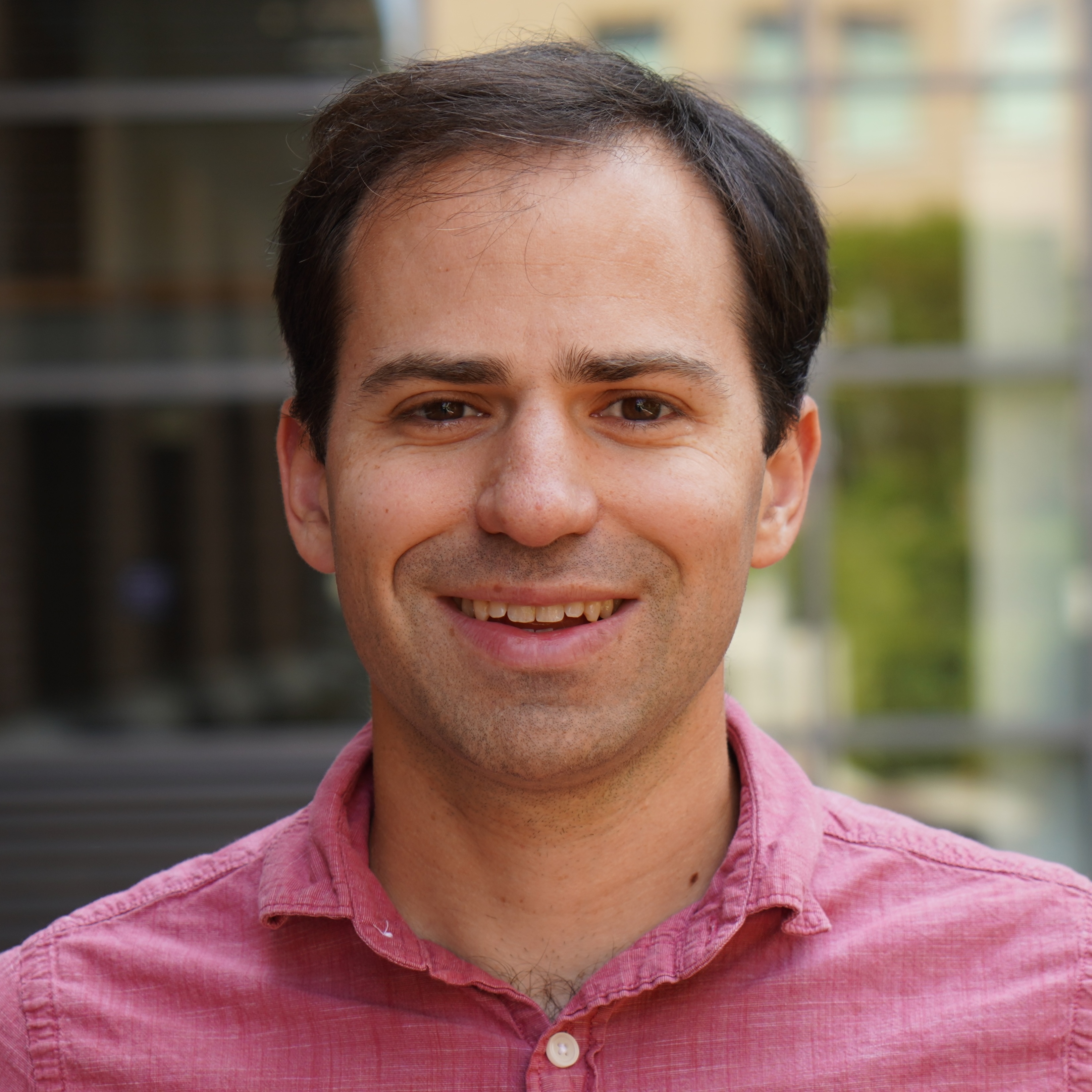
Vittorio Solina is a Researcher at the Department of Mechanical, Energy and Management Engineering (DIMEG) of the University of Calabria, specializing in industrial systems simulation and digital twin technologies. His work spans Industry 4.0/5.0 applications, supply chain optimization, and human-robot collaboration. Affiliation: University of Calabria Academic Role: Researcher (Legge 240/10) Research Focus: Digital twins, simulation modeling, sustainable manufacturing His research emphasizes advanced simulation tools for decision support, including applications in Industry 4.0 , Smart Manufacturing , and Agri-Food Supply Chains . Recent work explores adaptive simulation optimization for Industry 5.0 and 5G-enabled robotics. Key publication trends include: (1) Digital twin integration for supply chain resilience (2024-2025), (2) Simulation automation methodologies (2025), and (3) Human-robot collaboration frameworks (2024).
Massachusetts Institute of TechnologyUnited States
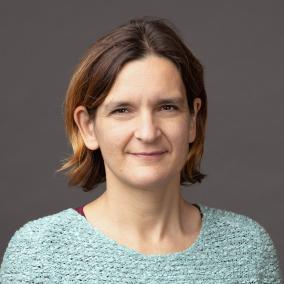
Esther Duflo is the Abdul Latif Jameel Professor of Poverty Alleviation and Development Economics at the Massachusetts Institute of Technology (MIT), where she is affiliated with the Department of Economics within the School of Humanities, Arts, and Social Sciences. She co-founded and co-directs the Abdul Latif Jameel Poverty Action Lab (J-PAL) and holds the position of Chaire, Pauvreté et politiques publiques at the Collège de France. Duflo also serves as President of the Paris School of Economics, demonstrating her significant international influence in economic policy and research. Her educational background includes first degrees in history and economics from Ecole Normale Superieure, Paris, followed by a Ph.D. in Economics from MIT in 1999. This strong foundation has enabled her to become one of the most influential economists of her generation. Duflo's research focuses on understanding the economic lives of people living in poverty, with the explicit aim of informing effective social policy design and evaluation. Her work spans critical areas including health, education, financial inclusion, environmental sustainability, and governance. What distinguishes her approach is the rigorous application of randomized controlled trials to evaluate development interventions, bringing scientific precision to poverty alleviation efforts. Her research methodology has revolutionized how economists approach development questions, moving beyond theoretical models to evidence-based policy recommendations. Her scholarly output demonstrates remarkable breadth and impact, with publications spanning from technical academic papers to influential books for general audiences. Duflo's work consistently bridges the gap between academic research and practical policy applications, with recent publications addressing contemporary challenges including climate change adaptation, pandemic response, and economic policy for hard times. Her research trends reveal a deepening commitment to translating complex economic concepts for broader audiences while maintaining scholarly rigor. Sveriges Riksbank Prize in Economic Sciences in Memory of Alfred Nobel (2019, with Abhijit Banerjee and Michael Kremer) Princess of Asturias Award for Social Sciences (2015) A.SK Social Science Award (2015) Infosys Prize (2014) John Bates Clark Medal (2010) MacArthur 'Genius Grant' Fellowship (2009) Member of the National Academy of Sciences (2017) Duflo has supervised numerous graduate students and collaborated extensively with researchers worldwide through J-PAL, which has grown into a global network conducting field experiments across multiple continents. Her grant portfolio includes substantial funding from major foundations and government agencies supporting large-scale development research. Beyond traditional academic advising, Duflo has mentored a generation of development economists through J-PAL's training programs and field research opportunities. Her primary institutional home is the Abdul Latif Jameel Poverty Action Lab (J-PAL), which she co-founded at MIT. J-PAL has grown into a major research center with offices worldwide, connecting academic researchers with policymakers to ensure that program evaluations inform real-world decisions. Duflo also leads research teams at the Collège de France and the Paris School of Economics, creating a transatlantic network focused on evidence-based poverty reduction strategies.
James A. Robinson is a University Professor at the University of Chicago with joint appointments in the Harris School of Public Policy and Department of Political Science. An economist and political scientist, he conducts influential research on political and economic development, examining how political power, institutions, and prosperity interact through both quantitative economic modeling and qualitative fieldwork methodologies. Robinson's research focuses on institutional analysis and political economy, with deep regional expertise in sub-Saharan Africa and Latin America. He has conducted extensive fieldwork across Bolivia, Colombia, Haiti, Democratic Republic of Congo, Nigeria, Sierra Leone, South Africa, and Zimbabwe, investigating how historical institutions shape contemporary economic outcomes. His interdisciplinary approach integrates economic theory with anthropological and historical case studies to explain patterns of economic divergence and political stability. Recent publications (2023-2025) reveal persistent themes in institutional persistence, state-society dynamics, and the cultural foundations of development. His work increasingly examines the interaction of economic and political inequality, the role of non-institutional factors in leadership strategies, and the historical roots of peripheral development trajectories across diverse global contexts. Scientific recognition includes: 2024 Sveriges Riksbank Prize in Economic Sciences in Memory of Alfred Nobel Fellow, Institute of African Studies at the University of Nigeria, Nsukka Robinson co-authored three seminal books with Daron Acemoglu: Economic Origins of Dictatorship and Democracy (theoretical foundations of regime stability), Why Nations Fail (translated into 41 languages, arguing inclusive institutions drive prosperity), and The Narrow Corridor (analyzing state-society struggles for liberty). He maintained a 28-year summer school at Colombia's University of the Andes (1994-2022) and continues active research collaborations across Africa and Latin America.
Matthew Louis Mauriello is an Assistant Professor in the Department of Computer and Information Sciences at the University of Delaware , where he directs the Sensify Lab . He holds a PhD in Computer Science from the University of Maryland (2018) and completed postdoctoral work at Stanford University (School of Medicine, 2020; School of Public Policy & Environmental Engineering Department, 2019). Research interests span Human-Computer Interaction (HCI), Ubiquitous Computing, and User-Centered Design with applications in: Sustainability Human-Building Interaction Wearable Technology Personal Informatics Educational Game Design Mental Health Interventions Recent publications highlight trends in stress monitoring (skin-like biosensors, workplace wellbeing), energy auditing (thermography systems), and educational technology (block-based programming tools for teachers). His work appears in ACM CHI, ACM Human-Computer Interaction, and Building and Environment. Scientific awards include: Best Paper Honorable Mention, CHI 2016 Best Paper Honorable Mention, CHI 2015 Best of WebSci'18 Teaching at University of Delaware encompasses courses like Educational Game Design Operating Systems Advanced Web Technologies Computing for Social Good with a focus on project-based learning and systems thinking.
Esther Duflo is the Abdul Latif Jameel Professor of Poverty Alleviation and Development Economics in the Department of Economics at the Massachusetts Institute of Technology (MIT). She is also co-founder and co-director of the Abdul Latif Jameel Poverty Action Lab (J-PAL), holds the Chaire, Pauvreté et politiques publiques at the Collège de France, and serves as President of the Paris School of Economics. Her research focuses on understanding the economic lives of people living in poverty to help design and evaluate social policies. Her work spans multiple domains including: Development Economics Poverty Alleviation strategies Health interventions Educational programs Financial inclusion initiatives Environmental policy Governance improvements Duflo revolutionized developmental economics by pioneering the use of randomized controlled trials to test poverty reduction measures. Her empirical approach has challenged conventional opinions about development and has helped improve the efficient use of resources in poverty alleviation programs worldwide. She co-authored the influential books "Poor Economics" and "Good Economics for Hard Times" with Abhijit Banerjee, demonstrating through field experiments how specific interventions (like providing lentils to mothers for child immunization) can dramatically improve social outcomes. Her notable scientific achievements include: Sveriges Riksbank Prize in Economic Sciences in Memory of Alfred Nobel (2019) Princess of Asturias Award for Social Sciences (2015) Infosys Prize (2014) John Bates Clark Medal (2010) MacArthur "Genius Grant" Fellowship (2009) A.SK Social Science Award (2015) Duflo has established J-PAL as a global network of over a hundred affiliated professors who use scientific evidence to inform policy decisions in the fight against poverty. J-PAL has offices across Africa, Europe, Latin America and the Caribbean, North America, and South and Southeast Asia. Her work has demonstrated the crucial importance of information in policymaking, with numerous field experiments showing how carefully designed interventions can have significant impacts on social outcomes across multiple domains including health, education, and economic opportunity.
Professor Jo Barraket is a leading academic and researcher in social equity, social innovation, and public policy. As Director of the Melbourne Social Equity Institute and member of the Dilun Duwa Centre for Indigenous Business Leadership, she focuses on improving social equity through organizational innovation, cross-sector collaboration, and policy design. Her research addresses social procurement, health equity, digital inclusion, and employment pathways for marginalized groups. Her work includes landmark projects such as the Australian Digital Inclusion Index and evaluations of Commonwealth Social Enterprise Development Funds. She has secured over $11M in research grants, including multiple ARC grants, and produced over 75 scholarly publications. Her current projects compare social procurement policies in Australia and Scotland, and study youth unemployment in construction via employment-focused procurement. Key research themes include: social enterprise scaling strategies, cross-sector partnerships for policy implementation, and the role of philanthropy in equitable housing. She advises governments and OECD on inclusive employment policies and chairs major research initiatives like the Social Enterprise Impact Lab. Prof Barraket’s transdisciplinary approach combines rigorous academic research with practical outputs like policy guides and digital tools to maximize societal impact. She previously founded the Centre for Social Impact Swinburne, now a global leader in social economy research.
Massachusetts Institute of TechnologyUnited States
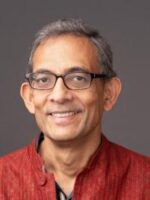
Abhijit Banerjee is a Professor in the Department of Economics at the Massachusetts Institute of Technology (MIT). His research focuses on development economics, public health policy, and social protection programs, particularly addressing poverty and inequality in low- and middle-income countries. He has conducted large-scale experiments evaluating interventions such as conditional cash transfers, universal basic income, and healthcare policies. Key areas of interest include the design and implementation of anti-poverty programs, behavioral economics, and the long-term health impacts of infectious diseases like COVID-19. His work often integrates experimental methods to assess policy effectiveness, with contributions to global health studies and economic development strategies. Notably, his research on the RECOVERY trial evaluates treatments for hospitalized COVID-19 patients, while other studies explore financial spillover effects of electronic government transfers in Indonesia and savings behavior interventions in Chile. Banerjee has collaborated on projects analyzing post-COVID-19 health outcomes, labor market dynamics in India, and the role of trusted messengers in public health communication during crises. Despite the breadth of his contributions, specific details about his educational background, grants, or lab affiliations are not explicitly provided in the source text.
University of Applied Sciences and Arts LucerneSwitzerland
Christina Antonie Reh is a Lecturer at the Lucerne School of Business (HSLU), affiliated with the Institute of Communication and Marketing (IKM MM). Her roles include academic teaching and research in digital marketing and sustainability. She holds a PhD from WHU - Otto Beisheim School of Management and has professional experience in data science and marketing at companies like LOréal and SevenVentures. Education: PhD (tbc 2024), WHU; M.Sc. (2016), LMU Munich; B.Sc. (2013), LMU Munich Her research focuses on digital marketing effectiveness , sustainability in advertising , and consumer behavior . Notable projects include studies on long-term brand equity and sustainable product messaging. Recent work explores the impact of climate pledges on consumer trust. Publications highlight her contributions to media measurement modeling and online coupon strategies. Key awards include the Amazon Research Awards (ARA 2023) and MassChallenge recognition (2024). Advising: No formal students listed; however, co-founded baybies GmbH and Aiko Pet Foods GmbH. Grants: $28,000+ from Amazon Research Awards. Labs/Teams: Co-founder of startups baybies and Aiko Pet Foods, focusing on sustainable consumer products and pet food innovation.
Amanda Phillips is an Associate Professor at Georgetown University, affiliated with the Departments of English, Film and Media Studies, Women’s and Gender Studies, and American Studies. Their research focuses on feminist and queer theory in digital media, with a particular emphasis on critical game studies and digital humanities. Selected publications include Gamer Trouble: Feminist Confrontations in Digital Culture and co-editing the Queer/Trans/Digital book series. Their scholarship appears in journals such as ROMchip , Feminist Media Histories , and Games and Culture . Research Interests: Digital media and gender politics Queer theory in gaming contexts Decolonial and anti-racist digital humanities Critical analysis of game mechanics Digital labor and precarity Affective histories of gaming Scientific Awards: Mellon/ACLS Dissertation Completion Fellow Academic Leadership: Former chair of the American Studies Association Digital Humanities Caucus Co-founder of the #transformDH Collective Editorial work on special issues of Game Studies and Antares: Letras e Humanidades Previous Institutions: IMMERSe Postdoctoral Fellow at University of California, Davis Ph.D. recipient from University of California, Santa Barbara with emphasis in Feminist Studies
Dr. Guillermo Amador is an Assistant Professor in the Experimental Zoology department at Wageningen University & Research. His research focuses on understanding how animals interact with complex environments through locomotion, adhesion, and fluid dynamics. He investigates biological systems like insects, plants, and marine organisms to inspire bio-engineered solutions for robotics, microfluidics, and material science. Amador received his PhD in Mechanical Engineering from Georgia Institute of Technology (USA), followed by postdoctoral research at the Max Planck Institute for Intelligent Systems (Germany) and a Marie Sklodowska-Curie fellowship at TU Delft (Netherlands). His expertise spans biophysics, biomaterials, and biomechanics, with a focus on self-cleaning mechanisms and bioadhesion. He collaborates with the 4TU consortium on Dutch Soft Robotics to develop bio-inspired designs. His work bridges fundamental biology with engineering applications, emphasizing interdisciplinary approaches to solve challenges in robotics and environmental science. Amador teaches courses including Biomimetics and Functional Zoology , integrating his research into education. His research highlights include studies on cuttlefish suction cups, stick insect adhesion, and pollen transport mechanisms in pollinators.
Robert JOLIET is an Associate Professor of Finance at IÉSEG School of Management in France. He holds a Ph.D. in Economics and Management from HEC-ULg Management School (Belgium) and has held various academic leadership roles, including Director of Academic Development and Academic Director of the PGE (MSc in Management). His research focuses on finance, portfolio management, SRI (Socially Responsible Investing), and corporate finance, with a particular emphasis on international expansion, capital structure, and sustainable investment strategies. Education: 2008: Ph.D. in Economics and Management, HEC-ULg Management School, Belgium 2004: Master of Advanced Studies (DEA), Management Sciences (Finance), University of Liège, Belgium 2002: Master of Science in Business Engineering (Finance), University of Liège, Belgium Research interests span SRI fund dynamics, corporate social responsibility valuation, international debt policies, and market liquidity. Notable contributions include analyzing the impact of SRI mutual funds on corporate governance and environmental practices, and exploring the stability of sovereign debt structures in the Eurozone. Awards include the 2005 FORTIS Award (Third Prize) and the 2003 E.G. de Barsy Doctoral Fellowship. He has published extensively in journals like Economics Letters and Journal of Banking & Finance . Academic leadership roles include directing programs and departments at IÉSEG, alongside coordinating the Finance Track and managing academic development initiatives. His teaching focuses on financial data analysis, active portfolio management, and investment strategies in capital markets. He is a member of the LEM (Laboratoire d'Économie Moderne) research group and contributes to interdisciplinary research in finance and economics.
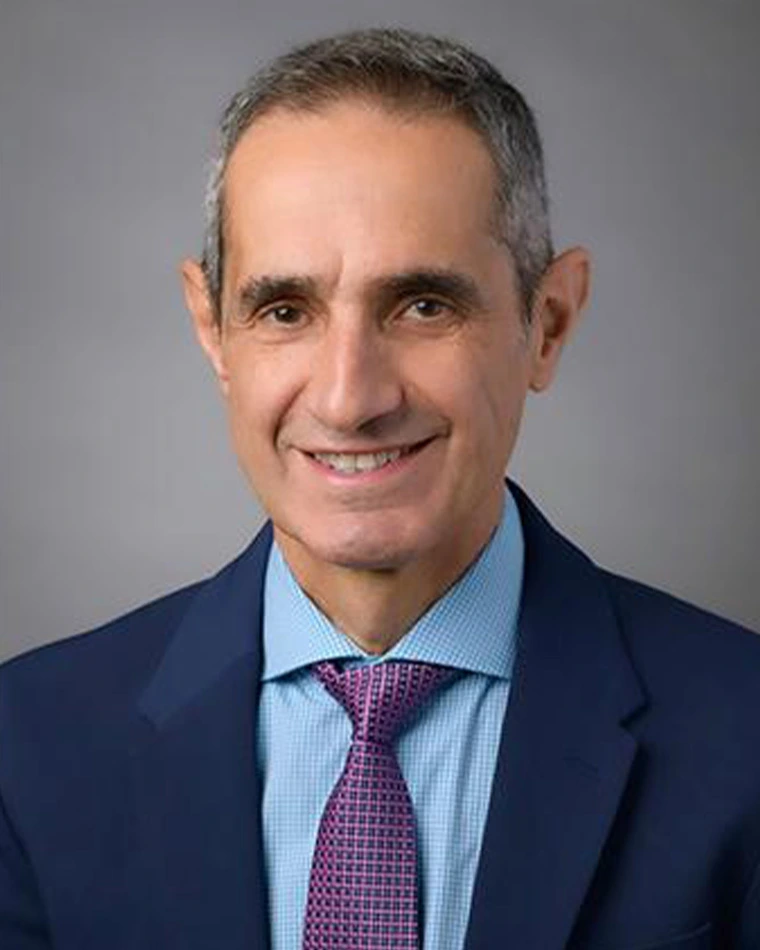
David Noyce is a Professor and Executive Director of the Traffic Operations and Safety (TOPS) Laboratory at the University of Wisconsin-Madison's Department of Civil & Environmental Engineering. He also serves as Associate Director of the Safety Research Using Simulation (SaferSIM) Center, a University Transportation Center. His work focuses on transportation safety, traffic operations, and automated/connected vehicle systems. Key roles include leading over $35M in research since 2003 through the TOPS Lab and advancing technologies like V2V/V2I communication, winter maintenance strategies, and work zone safety. Education: PhD (Texas A&M, 1999), MS (Civil Engineering, UW-Madison, 1995), MBA (UW-Whitewater, 1994), BS (UW-Madison, 1984). Research interests span traffic control devices, driver behavior analysis, crash reconstruction, and multi-modal transportation systems. He pioneered the national implementation of flashing yellow arrow signals and developed the Wisconsin Connected and Automated Transportation Consortium. Current projects include C-V2X localization frameworks, automated vehicle safety testing, and winter maintenance efficiency. Recognized with 20+ awards, including ITE and ASCE Fellowships and the Dr. Arthur F. Hawnn Professorship. His labs offer full-scale driving simulators and field-testing capabilities for real-world validation of innovations.
Daniel Epstein is an Associate Professor in the Department of Informatics at the University of California, Irvine (UCI), where he leads the Personal Informatics Everyday (PIE) Lab. He holds a courtesy appointment in the Department of Computer Science and is affiliated with the Connected Learning Lab, Institute for Future Health, and Accessibility Research Collective. Epstein earned his Ph.D. in Computer Science & Engineering from the University of Washington and a B.S. in Computer Science from the University of Virginia. His research focuses on how personal tracking technology can better serve diverse users' needs, emphasizing ethical design, health equity, and long-term user engagement. Notable areas include pregnancy tracking, wearable technology for children and ADHD management, and AI-driven health chatbots. Epstein has received grants from NSF, Snap Inc., and UCI programs, totaling over $650k in funding. Epstein's work bridges HCI and health informatics, with over 60 peer-reviewed publications. He advises six Ph.D. students and has mentored numerous undergraduates. Awards include the ACM Senior Member distinction (2025), CHI Best Paper (2023), and NSF CAREER Award (2023). Professional service includes program committees for CHI, CSCW, and UbiComp, plus leadership roles in workshops like the Workgroup on Interactive Systems in Healthcare (WISH). Beyond academia, Epstein enjoys hiking, collecting turtle figures, and advocating for accessible technology.
Dr. Hassan Qudrat-Ullah is a Professor at the School of Administrative Studies, York University, and Coordinator of the Certificate in Logistics Management. He holds a PhD in Decision Sciences from NUS Business School and completed a post-doctoral fellowship at Carnegie Mellon University. His research focuses on dynamic decision making, system dynamics modeling, energy planning, and interactive learning environments. He teaches courses on quantitative methods, logistics, and decision analysis, informed by global industry experience across 20+ countries. Research interests include sustainability, climate change, systems thinking, and educational applications of decision sciences. He serves as Editor-in-Chief of the International Journal of Complexity in Applied Science and Technology and is a member of IEEE, DSI, and the International System Dynamics Society. His work has been published in Energy , Decision Support Systems , and others. Key projects include studies on 'structured-debriefing in dynamic decision making' and renewable energy policies in Africa. His recent articles (2023–2025) address AI integration in energy governance, system dynamics for supply chain resilience, and education for sustainability. Hassan advocates for systems thinking in K-12 education and enjoys traveling (visited 129 countries) and bird-watching.
Farzad Mashayek is a Professor and Department Head of Aerospace and Mechanical Engineering at the University of Arizona, College of Engineering. He is a member of the Graduate Faculty and leads the Computational Multiphase Transport Laboratory. His research integrates high-fidelity simulations, machine learning, and experimental validation across diverse domains in fluid dynamics and energy systems. Educational Background: PhD in Mechanical Engineering, State University of New York at Buffalo, Buffalo, NY MS in Mechanical Engineering, Sharif University of Technology, Tehran, Iran BS in Mechanical Engineering, Sharif University of Technology, Tehran, Iran His research interests include turbulent reacting flows, plasma dynamics, electrostatic atomization, solid-ion and lithium batteries, computational fluid dynamics, and machine learning applications in engineering. He employs high-order spectral element methods, phase-field modeling, and deep neural networks to study complex multiphysics phenomena such as drop impact, battery degradation, and turbulence modeling. The recent publications reflect a strong trend toward integrating machine learning with multiphysics simulations, particularly in battery safety (thermal runaway prediction), materials characterization (STEM image analysis), and fluid dynamics (modal analysis of turbulence). His work often involves collaboration with experimental groups to validate models, especially in dental aerosol suppression and electrohydrodynamics. Scientific Awards: Sustained Service Award, American Institute of Aeronautics and Astronautics (AIAA), Spring 2022 Best Presentation Award, The 20th International Conference on Computational Mathematics, Parallel and Distributed Computing, Summer I 2018 Dr. Mashayek has secured funding from NSF (GOALI program) for controlled coating via charged droplet deposition. He advises graduate students and postdoctoral researchers in computational mechanics and energy systems, fostering interdisciplinary research. He has contributed to engineering education, particularly during the pandemic, with active learning strategies in online instruction. He leads a dynamic research team focused on advancing simulation tools and applying them to real-world challenges in energy, manufacturing, and public health.