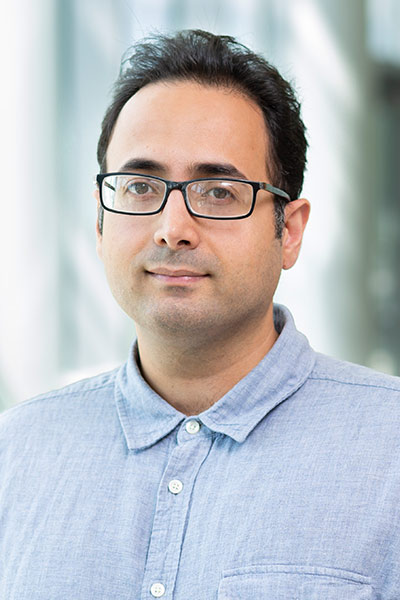
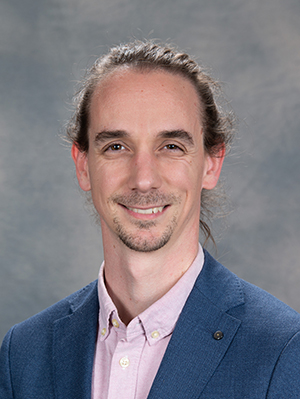
Dr. Mohsen Zaker Esteghamati is an Assistant Professor in Civil and Environmental Engineering at Utah State University, leading the Stochastic Structures (StoStruct) Lab. His research integrates data-driven modeling with traditional engineering approaches to enhance disaster resilience of built environments. Research focuses on: Machine learning for structural performance prediction Risk-informed design methodologies Fire resistance of timber structures Multi-hazard resilience frameworks Recent publications demonstrate innovative applications of explainable machine learning for fire resistance evaluation, comparative analysis of surrogate models, and holistic performance assessment of building systems. Dr. Esteghamati teaches Structural Steel Design and Structural Reliability courses while mentoring graduate students in probabilistic modeling and sustainable infrastructure development.
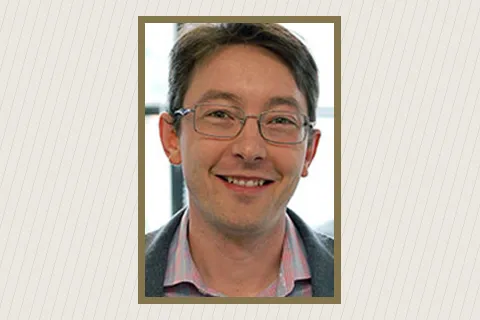
Kevin A. Brown is an active researcher in the field of High Performance Computing with a strong publication record spanning over a decade. His work primarily focuses on HPC network simulation, performance analysis, and optimization of parallel computing systems. He has collaborated extensively with researchers including Christopher D. Carothers, Robert B. Ross, and Satoshi Matsuoka across multiple institutions. Dr. Brown's research interests center around network simulation techniques, particularly Parallel Discrete Event Simulation (PDES) for modeling HPC networks. His recent work explores multi-fidelity network simulation frameworks, surrogate modeling for performance prediction, and machine learning applications for network traffic forecasting. He has made significant contributions to understanding network congestion, quality-of-service mechanisms, and the interference between different types of traffic in HPC environments. His publication record shows consistent output with 19 publications documented between 2014 and 2025, with increased productivity in recent years. The 2023-2025 period shows particularly strong activity with 12 publications, indicating ongoing research momentum. His work appears primarily in top HPC conferences including SIGSIM-PADS, CLUSTER, and ICPP. Notable recent contributions include the development of MFNetSim for multi-traffic modeling of Dragonfly systems, research on zombie packet techniques for hybrid PDES simulation, and work on steady-state fluid models for HPC networks. His research demonstrates a clear trajectory from fundamental network performance analysis toward more sophisticated simulation frameworks incorporating machine learning techniques.
Malak A. Esseili serves as an Assistant Professor at the Center for Food Safety within the University of Georgia's College of Agricultural and Environmental Sciences. Based at the Griffin campus (1109 Experiment Street, Melton Building 182), she leads the Esseili Laboratory for Food Virology conducting critical research on foodborne viral pathogens. Her work bridges virology, food science, and environmental microbiology to address pressing food safety challenges. Dr. Esseili's research program centers on the molecular ecology of human noroviruses and emerging viral pathogens, with particular emphasis on viral stability in food matrices and environmental transmission routes. She investigates how factors like food processing, temperature, and natural compounds affect virus survival, focusing on high-risk items such as berries and leafy greens. Her work examines viral binding mechanisms to food surfaces, inactivation kinetics under gastrointestinal conditions, and the development of practical intervention strategies for foodborne pathogen control. Analysis of her 13 publications (2019-2024) reveals a consistent research trajectory examining SARS-CoV-2 and human norovirus behavior in food systems. Key themes include virus persistence in frozen produce, efficacy of disinfectants and natural compounds (like tea) for viral inactivation, and molecular mechanisms of virus-food interactions. Her studies frequently employ simulated digestion models and environmental sampling to assess real-world transmission risks, contributing significantly to understanding viral foodborne transmission pathways. No scientific awards were documented in the provided profile information. While specific student mentorship details are not listed, Dr. Esseili leads an active research laboratory focused on food virology. Her extensive collaboration network across microbiology, genomics, and food science suggests involvement in multidisciplinary teams addressing antimicrobial resistance and viral pathogen ecology. The laboratory's focus on genomic analysis of foodborne pathogens indicates engagement with advanced molecular techniques for pathogen surveillance.
Sebastian Peitz is Professor (previously Assistant Professor) at Paderborn University's Department of Computer Science, leading the Data Science for Engineering group. He obtained his PhD in Multiobjective Optimization from Paderborn University and MSc in Mechanical Engineering from RWTH Aachen. His research develops computational methods for multiobjective optimization, optimal control, and machine learning with applications in fluid dynamics, autonomous systems, and industrial processes. He leads the BMBF-funded Multicriteria Machine Learning group. Research trends show consistent focus on Koopman operator theory, reinforcement learning applications in control systems, and physics-informed machine learning across publications. Achievements include the 2019 PRECEDE Best Paper Award and leadership in international optimization conferences.
Lianghao Cao is a Research Fellow in the Department of Computing and Mathematical Sciences at the California Institute of Technology. His research bridges machine learning, uncertainty quantification, and computational materials science, with specialized focus on block copolymer self-assembly and Bayesian inverse problems. Dr. Cao develops cutting-edge methodologies including neural operator acceleration, measure transport techniques, and likelihood-free inference for high-dimensional scientific challenges. His materials science work integrates physics-based models with machine learning surrogates to predict copolymer behavior, while his epidemiological research demonstrates cross-disciplinary application of continuum modeling. Key contributions span constitutive law learning, microphase separation theory, and scalable Bayesian inversion frameworks. Analysis of his 2020-2025 publications reveals a clear trajectory toward efficient computational paradigms for infinite-dimensional inverse problems. His work increasingly emphasizes structure-exploiting algorithms like LazyDINO and derivative-informed MCMC, demonstrating how machine learning can overcome computational bottlenecks in materials modeling. The consistent application of Bayesian frameworks across domains highlights his unified approach to uncertainty quantification in complex systems.
Eduardo G. Altmann is a Professor in the School of Mathematics and Statistics at the University of Sydney. His research focuses on mathematical models and computational methods applied to complex systems, data science, and statistical laws. He is part of the Complex Systems and Data Science group and the Computational Social Science Lab, and contributes to interdisciplinary collaborations in areas like urban scaling and language dynamics. Altmann teaches courses such as MATH3076/3976/4076 (Mathematical Computing) and DATA5441 (Networks and High-Dimensional Inference). He serves on editorial boards for journals including the Journal of Statistical Mechanics and New Journal of Physics. His recent work includes studies on Monte Carlo methods for manifold triangulations, generative models for network communities, and statistical laws in complex systems. He has authored a monograph, 'Statistical Laws in Complex Systems,' published by Springer Nature, and frequently engages in academic outreach via platforms like Bluesky.
Stuart Khan is an Associate Professor in the School of Civil & Environmental Engineering at the University of New South Wales. His research focuses on water quality, risk management, and treatment processes for drinking water, wastewater, and recycled water systems. He has co-authored over 100 peer-reviewed publications and actively contributes to national guidelines like the Australian Drinking Water Guidelines and Australian Guidelines for Water Recycling. Currently, he chairs the Australian Water Association’s Water Recycling Network and serves as vice-chair of the IWA Special Interest Group on Water Reuse. Key research interests include emerging contaminants, chemical contaminant fate, and advanced water treatment technologies. His work emphasizes practical applications, such as optimizing ozone disinfection through Bayesian analysis and assessing bioanalytical tools for recycled water safety. Awards include grants from ATSE/AWRCE and the National Water Commission. His research group’s publications span topics like enantiomeric analysis of pharmaceuticals, N-nitrosamine detection, and fluorescence-based monitoring systems. He advises on water quality and policy through roles with the NHMRC and international collaborations through the TUM-IAS Fellowship (2014–2017).
Dr. Jan Petrik is a full-time faculty member at ETH Zürich, affiliated with the Professorship for Advanced Manufacturing. His research focuses on integrating artificial intelligence with manufacturing processes, particularly in deep learning, reinforcement learning, and computer vision applications for metal forming and additive manufacturing systems. Current position: Professor, Advanced Manufacturing, ETH Zürich Research interests: AI-driven manufacturing optimization, microstructural control, and process modeling Recent work: Development of AI frameworks like DeepForge, RLTube, and CrystalMind for metal forming and additive manufacturing
Dr. Zhilang Zhang is a Professor at ETH Zurich, holding the Professorship for Advanced Manufacturing within the Department of New Manufacturing Technologies. His research focuses on computational mechanics, numerical simulation methods (SPH, FEM), advanced manufacturing processes, and process modeling. He specializes in high-fidelity modeling of complex phenomena such as additive manufacturing, material sintering, and fluid-structure interactions. Key research areas include multiscale modeling, CFD-DEM coupling, and novel numerical methods for extreme mechanics problems. His work integrates advanced computational techniques with experimental validations, addressing challenges in manufacturing, materials science, and fluid dynamics. Recent projects involve operando synchrotron tomography for melt pool analysis and parallelized SPH frameworks for large-scale simulations. Notable contributions include developing the Direct FE2 method for multiscale simulations and improving hydroelastic modeling via meshless methods. He actively explores applications of physics-informed neural networks and surrogate models in engineering optimization. His research group collaborates on cutting-edge projects at the intersection of computational engineering and advanced manufacturing, with a focus on sustainable and high-performance materials processing.
Dr. Keyue Ding is an Associate Professor in the Department of Public Health Sciences at Queen's University, with a joint appointment at the Canadian Cancer Trials Group (CCTG). He is also a Senior Biostatistician at CCTG, focusing on the design and analysis of cancer clinical trials. His research emphasizes statistical methodologies in clinical trials, biomarker analysis, and high-throughput data interpretation. Education: PhD in Statistics (1999) — University of Alberta MSc in Statistics (1990) — University of Science and Technology of China BSc in Mathematics (1987) — Anhui Normal University Research Interests: Dr. Ding specializes in statistical approaches for clinical trial design, predictive modeling, and biomarker discovery. His work bridges biostatistical theory with practical applications in oncology, particularly in prostate, lung, and brain cancers. He has contributed to developing survival prediction models and evaluating treatment efficacy. Publications: His research spans high-impact journals, focusing on areas like radiation therapy outcomes, biomarker-driven therapies, and benefit-risk assessment. Key themes include optimizing treatment strategies for metastatic cancers and understanding hormonal therapy resistance. Labs/Teams: As part of the CCTG, he collaborates with multidisciplinary teams to advance cancer clinical trials. His work is integral to the Queen's Cancer Research Institute, where he explores translational statistical methods.
Haijun Fan is an Assistant Professor at the Institute of Sensors, Signals & Systems within the School of Engineering & Physical Sciences at Heriot-Watt University. His research focuses on advanced RF and microwave engineering, with particular emphasis on power amplifier design, antenna systems, and signal processing. He holds affiliations with interdisciplinary research groups specializing in sensor networks and integrated systems. Dr. Fan’s work spans theoretical and applied research, including automated design methodologies for power amplifiers using AI-driven optimization, beamforming in coupled directional modulation arrays, and energy-efficient transceiver systems. His contributions address challenges in multi-beam active antennas, MIMO transmitter design, and wideband filtering solutions. Key technical interests include: RF/microwave circuit design Antenna-transmitter co-design AI applications in electronics Time-modulated arrays Wideband filter development Recent publications (2021–2025) emphasize innovations in: Surrogate model-based optimization for power amplifiers Orthogonal vector techniques for MIMO systems Ka-band antenna design with dual-layer Rotman lenses Low-loss waveguide transitions No academic awards or grants are explicitly listed in the provided information. His research group collaborates internationally on antenna systems and RF component development.
Ralf Zimmermann is an Associate Professor in the Department of Mathematics and Computer Science at the University of Southern Denmark. His research focuses on Numerical Linear Algebra, Matrix Analysis, and Scientific Computing, with a particular emphasis on Reduced Order Modelling and Manifold Geometry. He has contributed significantly to the development of efficient algorithms for dynamical systems and geometric optimization on matrix manifolds such as the Stiefel and Grassmann manifolds. His work bridges computational mathematics and engineering applications, including aerodynamics and model reduction techniques. Key research interests include the theoretical foundations of manifold geometry, algorithm design for high-dimensional data, and the application of these methods to real-world problems. He has published extensively on topics like Riemannian metrics, injectivity radii, and curvature analysis. His recent work explores adaptive probabilistic reduced-order models and gradient-enhanced Kriging methods for high-dimensional systems. Recipient of the Best Paper Award (2021) and DFG Scholarship (2014) Organized workshops such as the Nordic Numerical Linear Algebra Meeting (2024) Contributed to projects like Optimal Structure-Preserving Model Reduction and the Danish Data Science Academy His teaching includes courses on numerical analysis, computational physics, and differential equations. Zimmermann actively collaborates internationally, contributing to conferences and peer review.
Andrew T. Myers is a Professor and Associate Chair for Graduate Studies in Civil and Environmental Engineering at Northeastern University. He leads the Sustainable Structures Group, focusing on offshore wind energy, structural resilience, and probabilistic modeling. His research addresses hurricane risk mitigation, innovative turbine designs (e.g., T-Omega Wind's floating platforms), and multi-hazard assessment for offshore infrastructure. Education: Ph.D., Structural Engineering and Geomechanics, Stanford University (2009) M.S., Civil and Environmental Engineering, Stanford University (2006) B.S., Civil Engineering, Johns Hopkins University (2004) Key Research Interests: Myers investigates fixed and floating offshore wind structures, computational simulation of structural behavior, and probabilistic modeling of extreme environmental conditions. His work emphasizes hurricane risk assessment, cost-effective turbine designs, and sustainable infrastructure solutions. Notable projects include the DOE-funded Academic Center for Reliability and Resilience of Offshore Wind (ARROW) and the National Offshore Wind Research and Development Consortium's hurricane risk mitigation program. Awards & Recognition: 2023 Constantinos Mavroidis Translational Research Faculty Award 2021 College of Engineering Faculty Fellow 2020 Cleantech Open Northeast Winner (T-Omega Wind) 2016 NSF CAREER Award Grants & Collaborations: Myers has secured funding from NSF, DOE, and industry partnerships to advance offshore wind technology. His projects include optimizing thin-walled tube towers, developing multiline anchor systems, and assessing hurricane impacts on wind farms. He collaborates with institutions like UMass Amherst and industry leaders such as T-Omega Wind. Labs & Teams: He directs the Sustainable Structures Group, which bridges academia and industry to tackle challenges in offshore wind energy. The group focuses on structural innovation, risk-based design, and scalable solutions for global energy transitions.
Carlo Fiorina is an Associate Professor of Nuclear Engineering at Texas A&M University, affiliated with the Computational and Data Sciences Applied to National Security and Nuclear Engineering groups. His work focuses on high-fidelity numerical methods, advanced reactor design, and open-source software development for nuclear systems. Fiorina holds a Ph.D. in Energy and Nuclear Science from Politecnico di Milano, alongside M.S. and B.S. degrees in Nuclear and Electrical Engineering. Research Interests Fiorina's research spans thermal-hydraulics simulation, neutronics modeling, and uncertainty quantification for fusion and fission systems. He specializes in multiphysics coupling frameworks (e.g., GeN-Foam, MOOSE) and has pioneered dynamic mesh deformation techniques for fuel performance analysis. His work integrates machine learning for reduced-order modeling, accelerating simulations of complex phenomena like sodium boiling in fast reactors. Awards Early Career Reactor Physicist Award (American Nuclear Society, 2023) Most Cited Paper in Progress in Nuclear Energy (2016) Best Technical Paper in Progress in Nuclear Energy (2013) Research Contributions His publications emphasize reactor safety analysis (e.g., PCMI effects, NECTAR benchmarking) and fusion chamber dynamics. Fiorina has led collaborations on open-source tools like GeN-ROM for molten salt reactors and contributed to international initiatives like IAEA's fast reactor thermal-hydraulics studies. His recent work explores AI's role in nuclear engineering, including surrogate modeling for transient simulations. Labs/Teams Fiorina directs the Computational Nuclear Engineering Lab at Texas A&M, focusing on multiphysics software development and validation against experimental data from facilities like the CROCUS reactor.
Steve Brunton is the James B. Morrison Endowed Career Development Professor in Mechanical Engineering at the University of Washington, with an adjunct appointment in Applied Mathematics. He leads the Brunton Lab, focusing on data-driven discovery of dynamical systems, machine learning, and control strategies for complex systems. His research integrates techniques like dimensionality reduction, sparse sensing, and adaptive controllers in an equation-free context. Key areas include fluid dynamics (turbulence control, bio-locomotion, renewable energy), neuroscience, medical data analysis, and networked systems. Education: PhD in Mechanical and Aerospace Engineering (Princeton University, 2012); B.S. in Mathematics (Caltech, 2006). Awards: APS Fellow (2020) for contributions to fluid dynamics modeling and control. Publications: Over 100 peer-reviewed articles, including influential works on SINDy (Sparse Identification of Nonlinear Dynamics), PySINDy software, and textbooks like Data-Driven Science and Engineering . Lab & Teams: The Brunton Lab develops algorithms for scientific computing and control, with applications in aerospace, energy systems, and biomedical engineering.