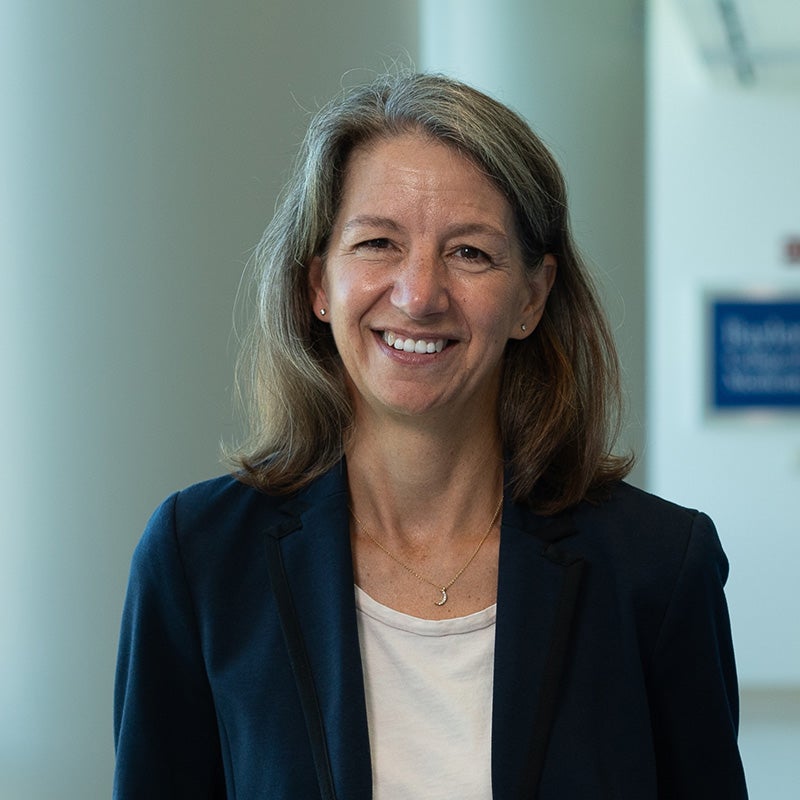
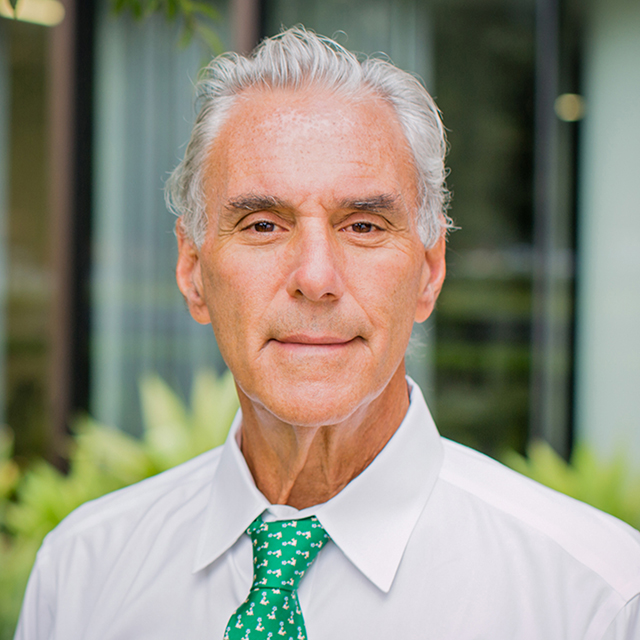
Rebecca Richards-Kortum is the Malcolm Gillis University Professor and Professor of Bioengineering at Rice University, and Co-Director of the Rice360 Institute for Global Health Technologies. Her research focuses on developing low-cost, high-performance medical technologies for low-resource settings, addressing diseases like cervical cancer, neonatal mortality, and malaria. She leads the NEST360 initiative, a $68M global alliance targeting newborn mortality reduction in sub-Saharan Africa. Education: Ph.D. in Medical Physics (MIT, 1990), M.S. Physics (MIT, 1987), B.S. Physics and Mathematics (University of Nebraska-Lincoln, 1985) Affiliations: Collaboration with UT MD Anderson Cancer Center, Baylor College of Medicine, and institutions in Malawi, Brazil, and beyond. Her research integrates optical imaging, nanotechnology, and microfabrication to create tools like high-resolution microendoscopes for early cancer detection. She holds 40 patents and has authored over 315 papers. Awards include the MacArthur 'Genius' Grant (2016), membership in the National Academies of Sciences and Engineering, and the George R. Brown Award for Teaching (2014, 2016). Her labs, including the Optical Spectroscopy & Imaging Lab, emphasize global health equity. Recent work includes a $15M MacArthur grant for NEST360, which deploys 17 neonatal technologies to prevent 85% of African newborn deaths. She also co-founded the Beyond Traditional Borders (BTB) program, an engineering education initiative recognized by Science magazine.
London School of Economics and Political Science (LSE)United Kingdom
Dr. Sunil Kumar is a Professor in the Department of Social Policy at the London School of Economics (LSE). He holds a PhD from University College London and specializes in urbanization, housing, migration, and poverty in the Global South, particularly India. His research critiques urban policies and proposes inclusive alternatives. He served as Dean of Graduate Studies from 2011 to 2017 and is affiliated with the LSE India Observatory and Appropriate Technology Asia. Dr. Kumar's research focuses on urbanization-construction-migration linkages, informal labor markets, and rental housing dynamics. He has led major DFID-funded projects, including studies on South Asian urbanization and housing policies. His work appears in journals like International Journal of Urban and Regional Research and Urban Studies . He is committed to pedagogy, mentoring students, and fostering discussions on race and decolonization in social policy through initiatives like the 'Race Matters' program. His consultancy work includes projects for DFID, UN-Habitat, and the World Bank.
Christopher Julius Nycz is an Adjunct Teaching Professor in the Graduate & Professional Studies program and an Assistant Research Professor affiliated with the Robotics Engineering department at Worcester Polytechnic Institute (WPI). He is also part of the PracticePoint center, which focuses on healthcare cyber-physical systems. His roles include managing industry-academia projects in biomechatronics, image-guided therapy, smart-home environments, and surgical robotics. Dr. Nycz holds a PhD and MS in Robotics Engineering from WPI (2018 and 2016) and a BS in Mechanical Engineering from Clarkson University (2013). His research emphasizes wearable robotics for restoring hand function in individuals with neurological impairments, patient-centric design of assistive devices, and MRI-guided robotic systems for cancer diagnosis/treatment. His research interests span wearable assistive/rehabilitative robotics , image-guided surgery , skeletal biomechanics , and MRI-compatible robotics . Notable projects include the HOPE hand exoskeleton and MRI-guided neurosurgery robots. He collaborates with institutions like Albany Medical College and companies like Boston Scientific. His scholarly work combines biomechanical innovation with clinical needs, evidenced by publications on exoskeleton design criteria, MRI-compatible actuators, and robotic systems for vascular tissue assembly. He holds patents for assistive technologies like the HOPE hand exoskeleton. Dr. Nycz’s lab focuses on translating engineering solutions into clinical applications, emphasizing human-centered design principles and cross-disciplinary collaboration between robotics, medicine, and healthcare systems.
Kevin George Cornwell is an Adjunct Teaching Professor in Biomedical Engineering at Worcester Polytechnic Institute (WPI). Currently serving as Chief Scientific Officer at Helios Cardio Inc., a startup focused on cardiovascular surgery solutions, he combines academic teaching with industry R&D expertise. His research emphasizes extracellular matrix biomaterials, surgical device development, and translational engineering to address clinical challenges in soft tissue repair and cardiovascular surgery. Education: BS in Biomedical Engineering from WPI (2002) and PhD in Biomedical Engineering from WPI/UMASS Medical School (2007). His career includes roles in R&D and product development across medical device companies, focusing on biomaterials for surgical applications. Research interests center on biomaterials behavior post-implantation, comparative studies between bioprosthetic and synthetic materials, and designing devices to enhance surgical outcomes. He collaborates with clinicians and surgeons to develop experimental models that bridge engineering principles with patient needs. Publications span biomaterials analysis in tissue repair, surgical mesh efficacy, and fibrin microthread technologies. His work highlights trends in biomaterials innovation for cardiovascular and soft tissue applications. Currently leads R&D at Helios Cardio, advancing cardiovascular device solutions while maintaining academic engagement through teaching and mentoring students in biomedical engineering and surgical device translation.
Herman Terryn is a Professor at Vrije Universiteit Brussel, specializing in Materials and Chemistry. His primary research focuses on surface analytical techniques, electrochemical reactor design, and corrosion studies of aluminum and magnesium surfaces. He has led over 100 projects and authored 842 publications, demonstrating expertise in coatings, corrosion mechanisms, and material degradation. Expertise: Surface treatments, electrochemical analysis, and corrosion prevention Key Projects: Includes predictive machine learning for corrosion damage and sustainable additive manufacturing His research integrates experimental and computational approaches, such as FEM modeling and sensor-based methodologies. Notable contributions include studies on lithium carbonate inhibitor leaching and hydrogen evolution in EV coolants. Awards: European Corrosion Medal (2014), Fellow CSCP (2019), Franqcui Chair (2016) He supervises PhD students and actively participates in international conferences, showcasing innovations in 3D printing for biomedical applications and corrosion-resistant materials. His work bridges fundamental science with practical engineering solutions, addressing industrial challenges in sustainable materials.
Peter Hsiue, M.D., is a fellowship-trained orthopaedic surgeon at UCI Health and a faculty member at the University of California, Irvine School of Medicine, specializing in hip and knee arthroplasty. He is affiliated with the Department of Orthopaedic Surgery, where he contributes to clinical care, research, and medical education. Education: Medical Degree: David Geffen School of Medicine at UCLA Residency: Orthopaedic Surgery, David Geffen School of Medicine at UCLA Fellowship: Hip and Knee Replacements, Hospital for Special Surgery Dr. Hsiue's research focuses on technology-assisted joint replacements , clinical outcomes after revision surgeries , and medical device design . He has published over 35 peer-reviewed articles and book chapters and has presented his work at major national meetings including the American Academy of Orthopaedic Surgeons and the American Association of Hip and Knee Surgeons. His scientific contributions include research on periprosthetic joint infections through an NIH T32 fellowship, highlighting his strong foundation in musculoskeletal research. He is recognized for academic excellence and compassionate care, having been elected to both the Alpha Omega Alpha and Gold Humanism Honor Societies. Alpha Omega Alpha Medical Honor Society Gold Humanism Honor Society National Institute of Health T32 Musculoskeletal Research Fellowship Dr. Hsiue is actively involved in clinical training and research mentorship, contributing to residency and fellowship programs at UCI. While no specific grants are listed, his NIH T32 fellowship indicates prior competitive research support. He is also engaged in advancing surgical techniques through robotic-assisted and computer-navigated joint replacements, aiming to improve patient outcomes and personalized care. He practices at UCI Health, where he employs a patient-centered approach to tailor treatment plans to individual lifestyle goals. His clinical expertise includes complex and revision joint reconstructions for patients with unique anatomical challenges or prior implant failures.
State University of New York at BuffaloUnited States
David S. Wack is an Associate Professor at the University at Buffalo's Jacobs School of Medicine & Biomedical Sciences, Department of Radiology. His research focuses on medical image analysis and neuroimaging, particularly in auditory processing and parameter estimation from PET, MRI, and CT images. He has held academic positions since 1992, progressing from instructor roles to his current rank. His work includes NIH-funded projects on imaging technologies and collaborations with institutions like Canon Medical Systems and UBNS. Education: PhD in Communicative Disorders and Sciences (SUNY Buffalo, 2010) MA in Applied Mathematics (SUNY Buffalo, 1992) BA in Applied Mathematics and Music Performance (SUNY Buffalo, 1989) Research Interests: Development of parametric maps from medical images Machine learning applications in neuroimaging Neuroimaging of auditory and language processing Dynamic image noise reduction and segmentation algorithms Neural markers of top-down compensation in speech processing Recent Projects: NIH-funded self-collimating SPECT breast tomography system 4D flow MRI for intracranial atherosclerotic disease assessment Machine learning for neuroimage classification Grants & Service: Member of Jacobs School faculty council and UB Faculty Student Association board Editorial roles at Frontiers in Neuroscience (Brain Imaging Methods, Decision Neuroscience) Labs & Teams: Buffalo Neuroimaging Analysis Center Collaborations with UBNS, Canon Medical, and VA Western New York Health Care System
Arya Varthi, MD, is an Associate Professor in the Department of Orthopaedics & Rehabilitation at Yale School of Medicine, where he also serves as the Spine Surgery Fellowship Director. He is a board-certified orthopaedic surgeon specializing in minimally invasive and open spine surgeries of the cervical, thoracic, and lumbar spine, treating conditions including trauma, deformity, tumors, and degenerative disorders. Associate Professor of Orthopaedics & Rehabilitation, Yale School of Medicine Spine Surgery Fellowship Director Board Certified, American Board of Orthopaedic Surgery Member, North American Spine Society Education and Training: BA, Economics, University of Chicago (Phi Beta Kappa) MD, University of Connecticut School of Medicine Residency, Orthopaedic Surgery, Yale New Haven Hospital Fellowship, Spine Surgery, Rush University Medical Center Dr. Varthi's research is centered on spine surgery outcomes, with a focus on minimizing complications and improving patient recovery. His work spans epidemiological studies on spinal injuries, risk factor analysis for surgical complications, and evaluations of emerging treatments such as semaglutide in diabetic patients undergoing spine fusion. He investigates the impact of comorbidities like sickle cell disease, lupus, and obstructive sleep apnea on surgical outcomes, contributing to more personalized and safer care. His 15 most recent publications reflect a strong trend in clinical outcomes research, particularly in anterior cervical discectomy and fusion (ACDF), posterior lumbar fusion, and the management of complex spine pathologies. The articles emphasize patient safety, complication prevention, and the use of national databases and multicenter collaborations to drive evidence-based practice. Key themes include risk stratification, perioperative optimization, and the evaluation of new technologies and pharmacological interventions in spine care. Scientific Awards and Honors: Todd Albert Scholar Award, AANS Spine Summit (2025) Ogilvie Spine Research Award, Yale School of Medicine (2018) Golden Apple Fellow Award, Rush University Medical Center (2017) Yale Power Day Resident Award (2016) AOA Resident Leadership Forum, American Orthopaedic Association (2015) Dr. Varthi is actively involved in clinical education and mentorship as the fellowship director, shaping the next generation of spine surgeons. He collaborates extensively with colleagues such as Dr. Jonathan N. Grauer and Dr. Daniel R. Rubio, contributing to both research and national presentations. He has no reported grants listed in the text, but his research is supported through institutional affiliations and professional society recognition. Labs and Teams: Dr. Varthi is affiliated with the Yale Spine Center and the Spondyloarthritis Program, working within multidisciplinary teams that integrate orthopaedics, neurology, and physical medicine to provide comprehensive spine care. His research is conducted in collaboration with frequent co-authors at Yale, forming a robust clinical research group focused on advancing spinal surgery practices.
Carmel Ferragud Domingo is an Associate Professor in the Department of History of Science at the Universitat de València, affiliated with the Faculty of Medicine and Odontology. She is a member of the HCMT (History of Science, Medicine and Technology) research group and the Inter-university Institute López Piñero, a leading center for historical research on science and medicine. Her research focuses on the social, institutional, and cultural history of medicine and science in the medieval Crown of Aragon, particularly in the Kingdom of Valencia. Key areas include the professionalization of medical practitioners (physicians, surgeons, barbers, apothecaries, farriers), forensic medicine, urban health, the role of medicine in religious practices, and the history of veterinary science. She has extensively studied the impact of the Black Death on medical structures and the integration of Galenic traditions in Iberian societies. Her recent publications reveal a consistent interest in expert medical roles in legal contexts, the material culture of healing, and the transmission of scientific knowledge through vernacular texts. She frequently analyzes archival documents to reconstruct the lives and practices of medieval medical professionals, contributing to broader understandings of healthcare, social hierarchy, and institutional development. She has authored and co-authored significant works on the Libre de la menescalia , a key medieval veterinary text, and has published in leading journals such as Asclepio , Sefarad , and Urban History . Her work bridges social history, legal history, and the history of science, offering nuanced perspectives on medieval Iberian societies.
Prof. Abele Donati is a full professor at the Polytechnic University of Marche (UNIVPM) within the School of Medicine and Surgery , specifically in the Department of Biomedical Sciences and Public Health . His clinical practice is based at Ospedali Riuniti Umberto I - Clinica di Anestesia e Rianimazione Generale Respiratoria e del Trauma Maggiore in Ancona, Italy. Research Focus: Critical care medicine, sepsis, microcirculation, anesthesia, and respiratory failure Key Contributions: Expertise in hemodynamic monitoring, antibiotic resistance, ECMO, and perioperative medicine Publications Trends: Recent work emphasizes antimicrobial therapy for multidrug-resistant pathogens, microcirculatory dysfunction in sepsis, critical care pharmacogenetics, and advanced monitoring techniques during surgeries. His studies frequently involve multicenter collaborations and clinical trials. Contact: Email available at a.donati@univpm.it
University of California, San FranciscoUnited States
Mitchel S. Berger is a Professor of Neurological Surgery at the University of California, San Francisco (UCSF) School of Medicine , serving as Director of the Brain Tumor Center and co-Director of the Adult Brain Tumor Surgery Program . His clinical expertise spans brain and spinal cord tumors, tumor-related epilepsy, and advanced techniques like Gamma Knife radiosurgery and brain mapping. With a focus on glioblastoma and neurosurgical oncology, Berger's work integrates molecular profiling , awake craniotomy , and AI-driven diagnostics . Harvard College (1975) - Bachelor's Degree University of Miami Leonard M. Miller School of Medicine (1979) - Medical Degree His research interests emphasize improving surgical outcomes through precision neurosurgery , metabolic imaging , and targeted therapies . Recent publications highlight applications of 5-aminolevulinic acid , CRISPRoff epigenetic editing , and deep learning algorithms for glioma classification. Trends in his work include multicenter collaboration , standardized tissue sampling , and AI integration in intraoperative decision-making. Berger's leadership roles include UCSF Residency Training and participation in NIH-funded grants such as P01CA118816 and P50CA097257. He contributes to neurosurgical education and clinical trial design , with affiliations to the American Association of Neurological Surgeons and American Board of Neurological Surgery .
University of California, San FranciscoUnited States
Kim Rhoads is a Professor in the Department of Surgery at the University of California, San Francisco (UCSF). She is a colorectal surgeon and clinical researcher with expertise spanning the cancer continuum, including basic science (endothelial cell regulation, angiogenesis), clinical care, health services research in cancer disparities, and health policy. She founded the Community Outreach and Engagement program at the Stanford Cancer Institute before joining UCSF and has been recognized for her work in health equity through awards like the Nusz-Galante Award, Alpha Omega Alpha membership, and NIH grants. University of California, Berkeley: BA in Linguistics (1991) Joint Medical Program with UCSF: MS in Health & Medical Sciences (1996) University of California, San Francisco: MD in Medicine (1998), Residency in General Surgery (2005) Harvard University School of Public Health: MPH in Healthcare Policy & Management (2006) Rhoads' research focuses on cancer disparities , health equity , and community-based participatory research . Her work addresses systemic inequities in cancer care access and quality, particularly in minority-serving hospitals. She has led NIH-funded studies on disparities in multiple chronic diseases and developed interventions like financial reimbursement programs for cancer clinical trials. Rhoads' recent publications emphasize racial disparities in cancer outcomes , community engagement , and health equity interventions . Her research explores the impact of structural factors (e.g., hospital quality, financial barriers) and social determinants (e.g., race, income) on cancer care and survivorship. Scientific Awards : Nusz-Galante Award for outstanding medical students (UCSF, 1998) Alpha Omega Alpha National Medical Honor Society (UCSF, 1998) House staff research award (UCSF Department of Surgery, 2002) House staff award for compassion in care (UCSF Department of Surgery, 2002) Rhoads has served as Principal Investigator on NIH grants (e.g., R21CA161786) and Co-Principal Investigator on U24MD017250, addressing disparities in cancer care quality and clinical trial access. She co-developed the Philip R. Lee Fellow in Health Policy program at UCSF and has a long-standing interest in institutional partnerships to promote health equity.
Anders Stålman is an Adjunct Senior Lecturer and Docent at the Department of Molecular Medicine and Surgery, Karolinska Institutet. He leads the Sports Medicine research group at the Stockholm Sports Trauma Research Center (CIFU), focusing on knee joint injuries in sports, particularly anterior cruciate ligament (ACL) injuries. His work spans injury mechanisms, treatment optimization, rehabilitation strategies, and return-to-sport outcomes, with an emphasis on prevention through pattern analysis. PhD, Department of Clinical Science, Intervention and Technology, Karolinska Institutet (2010) University Medical Degree, Karolinska Institutet (1999) Docent, Karolinska Institutet (2021) Research interests center on Orthopaedics and Sports Medicine , with a focus on Knee Surgery , ACL Reconstruction , Meniscal Repair , and Biomechanics . His studies investigate graft selection, surgical volume impacts, and long-term functional outcomes. Recent articles (2024-2025) analyze ACL graft performance , meniscal repair failure rates , and knee laxity patterns , reflecting trends in Orthopaedics , Sports Medicine , and Clinical Research . Collaborative studies with colleagues across Sweden explore optimal rehabilitation and surgical decision-making. No scientific awards were explicitly mentioned in the provided texts. Advising: Stålman supervises multiple PhD students in projects examining ACL reconstruction, graft effects, and return-to-sport protocols. Key advisees include Daniel Castellanos Dolk, Firathan Koca, and Katarina Lindgren. Labs and teams include the Stockholm Sports Trauma Research Center (CIFU) , collaborating with the Department of Molecular Medicine and Surgery and engaging orthopaedic surgeons, physiotherapists, and researchers.
Jason Chami is a Clinical Associate Lecturer at the Central Clinical School within the Faculty of Medicine and Health at the University of Sydney. His academic appointment focuses on clinical teaching and research in cardiology and medical informatics, with affiliations spanning the Sydney Medical School and Central Clinical School. His research interests center on cardiology, particularly congenital heart disease complexity stratification, registry systems, and medical coding accuracy. He also investigates ophthalmology (glaucoma devices), metabolism (cardiometabolic biomarkers), and neuroscience (pain pathways). His work integrates clinical data analysis with informatics approaches to improve diagnostic precision and patient outcomes. Analysis of his 2020-2025 publications reveals dominant themes in congenital heart disease research, including algorithmic risk stratification, registry optimization, and coding error reduction. Secondary streams include ophthalmology (PreserFlo MicroShunt safety studies), metabolism (Slc16a13 gene impacts), and neuroscience (neuroreceptor changes in pain models), demonstrating cross-disciplinary clinical research methodology.
Tamas Ungi is a Research Associate and Adjunct Assistant Professor at Queen's University, focusing on medical imaging, computer-assisted surgery, and biomedical engineering. His work bridges artificial intelligence applications with clinical needs in oncology, urology, and surgical education. Queen's University His research interests center on: 3D ultrasound imaging Surgical navigation systems Machine learning for medical diagnostics Tumor margin assessment Surgical skill evaluation Image-guided interventions Recent publications highlight advancements in radiation-free pediatric scoliosis assessment, AI-driven surgical evaluation metrics, and real-time ultrasound segmentation for breast-conserving surgery. He also explores electromagnetic tracking systems and NURBS-based surgical planning tools.