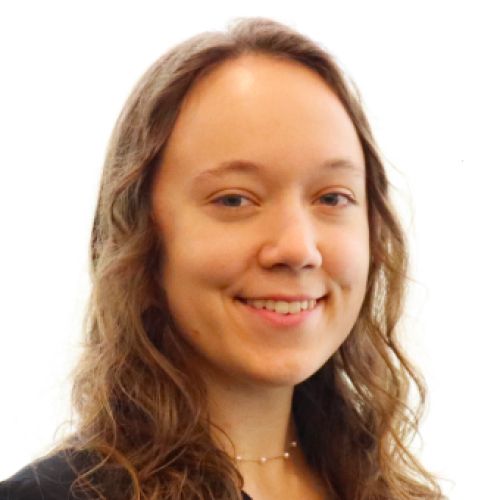
Christiane Barz is a Professor of Mathematics at the University of Zurich's Institute for Business Administration since 2016. Previously, she held academic roles at the UCLA Anderson School of Management, the Chicago Booth School of Business, and the Technical University (TU) Berlin. Her research focuses on stochastic dynamic systems, Markov decision processes, and their applications in revenue management. She emphasizes making mathematical tools accessible and practical for real-world problem-solving, particularly in optimizing decision-making under uncertainty. Education includes a degree in industrial engineering and a doctorate from the University of Karlsruhe (TH), Germany. Her career path includes postdoctoral research at the University of Chicago's Booth School of Business and roles as an Assistant Professor at UCLA. She combines academic excellence with balancing family life, advocating for gender equity in STEM fields. Her research explores risk-sensitive decision-making frameworks, dynamic pricing models for transportation and healthcare, and optimizing resource allocation in complex systems. Recent work includes applications in FlixBus, air cargo networks, and improving patient admission scheduling in hospitals. Barz's teaching philosophy prioritizes demystifying mathematics for students, encouraging critical engagement rather than fear of complexity. She collaborates with industry partners to apply operations research methods to real-world challenges, emphasizing both theoretical rigor and practical relevance.
Gil Serrancoli Masferrer is an Associate Professor in the Department of Mechanical Engineering at the School of Engineering of East Barcelona (EEBE), part of the Polytechnic University of Catalonia (UPC). He is affiliated with the InSup - Research Group in Surface Interaction in Bioengineering and Materials Science and the LAM - Multimedia Applications and ICT Laboratory. His work focuses on biomechanics, computational modeling, and telerehabilitation systems development for clinical applications. Dr. Serrancoli's research spans multisolid dynamics, dynamic optimization, movement simulation, and telerehabilitation systems. His expertise lies in applying computational techniques to solve complex problems in orthopedics, gait analysis, and rehabilitation engineering. His work bridges mechanical engineering with biomedical applications, particularly in musculoskeletal modeling and simulation of orthopedic procedures. He has developed novel computational frameworks for estimating internal musculoskeletal loading and muscle adaptation in various conditions, including hypogravity environments. His recent publications demonstrate a strong focus on in-silico modeling of orthopedic procedures, particularly knee osteotomies (proximal fibular osteotomy versus high tibial osteotomy), with detailed analysis of joint pressure redistribution. He has also pioneered the application of machine learning techniques, particularly recurrent neural networks, to biomechanical problems including cycling biomechanics and running dynamics prediction. His work consistently integrates computational efficiency with clinical relevance. Technical Award - OpenSim+ Advanced Workshop March 2024 Accésit del XLV Congreso de la Sociedad Ibérica de Biomecánica y Biomateriales European Society of Biomechanics Travel Award OpenSim Virtual Workshop - Technical Award OpenSim Visiting Scholar 2017 Enginyers BCN 2018 Dr. Serrancoli leads several competitive R&D projects including 'Muvity: a novel physical telerehabilitation system' for vulnerable populations and 'Simulaciones predictivas in silico para cirugías ortopédicas' (Predictive in-silico simulations for orthopedic surgeries). He collaborates extensively with researchers across Europe, particularly with Jordi Torner, Josep Maria Font Llagunes, and Joan Carles Monllau, and has secured funding from national and regional programs including Plan Estatal de Investigación Científica y Técnica y de Innovación. He is actively involved in the BIOMEC - Biomechanical Engineering Lab and the TecSalut - Research Group in Health Technologies, where he contributes to the development of innovative solutions for healthcare challenges, particularly in the areas of telerehabilitation and computational biomechanics for orthopedic applications.
Carolynn Patten is a Professor in the Department of Neurobiology, Physiology and Behavior at the University of California, Davis, with affiliations in Physical Medicine and Rehabilitation. Her work bridges neuroscience, biomechanics, and clinical rehabilitation to advance neurorehabilitation for individuals with motor impairments. Research Interests: Dr. Patten's research investigates the neural basis of human movement, focusing on motor dysfunction in aging and neurological conditions such as stroke. She employs transcranial magnetic stimulation (TMS), EEG, EMG, biomechanical analysis, and clinical assessments to study motor recovery mechanisms and neuroplasticity. Her work aims to develop biomarkers of recovery and improve rehabilitation efficacy. Publication Trends: Recent publications emphasize computational modeling of musculoskeletal systems, gait analysis post-stroke, and assessment tools for locomotor efficacy. These works reflect a strong trend toward integrating engineering, neuroscience, and clinical practice to enhance rehabilitation outcomes. Scientific Awards: No awards listed in the provided text. Advising and Grants: While specific students and grants are not mentioned, her active publication record suggests ongoing mentorship and externally funded research in neurorehabilitation and translational neuroscience. Labs and Teams: Her research involves interdisciplinary collaboration across neuroscience, bioengineering, and rehabilitation medicine, likely within UC Davis research centers focused on movement disorders and neurorecovery.
Chao Liu is a Research Scientist at CNRS (French National Center for Scientific Research) since 2008, affiliated with the DEXTER team and the Department of Robotics, LIRMM at University of Montpellier, France. He earned his Ph.D. in Electrical & Electronic Engineering from Nanyang Technological University, Singapore (2006). Current research focuses on surgical robotics , haptics , teleoperation , and nonlinear control theory with applications in computer vision. His work addresses challenges in robotic-assisted telesurgery, including: Stable and transparent human-robot interaction through wave variable compensators and passivity filters Physiological motion compensation using spatio-temporal LSTM and dual Kalman filters EMG-based motion recognition for surgical skill assessment 3D soft-tissue reconstruction with stereo-endoscopes and deep learning Dr. Liu leads European and French projects like: TS2RT (CNRS-funded): Safer teleoperation with motion compensation ROBACUS (ANR-funded): Needle positioning with MPC control HaTUMoCo (CNRS-funded): Haptic teleoperation with uncertainty handling ARAKNES (EU-funded): Microrobotic systems for endoluminal surgery Scientific honors include Senior Member of IEEE and Member of Sigma Xi . He supervises Ph.D. and Master's students working on topics such as concentric tube robot optimization, haptic teleoperation, and EMG-based force estimation. Dr. Liu serves on IEEE Technical Committees for Telerobotics and Haptics , and as Technical Editor of IEEE/ASME Transactions on Mechatronics.
Nabil M Issa is a Professor in the Department of Surgery (Trauma and Critical Care) and Medical Education at the Feinberg School of Medicine, Northwestern University. He is a general and acute care surgeon at Northwestern Memorial Hospital, with a focus on minimally invasive techniques including robotic and laparoscopic surgery. Dr. Issa is also a Master Surgeon Educator and holds leadership roles in national surgical education organizations. Dr. Issa's educational background includes: MD: Al Mustansiriya University College of Medicine (1988) FRCS: Fellow of the Royal College of Physicians and Surgeons of Glasgow, Scotland, United Kingdom (1997) FACS: Fellow of the American Board of Surgery with additional qualification in Surgical Critical Care (2007) FCCM: Fellow of the Society of Critical Care Medicine (2007) MHPE: Master's in Health Professions Education, University of Illinois at Chicago (2016) Dr. Issa's research focuses on surgical education , particularly in creating innovative curricula and assessing technical and cognitive skills acquisition. His work spans simulation , team science , and outcome measures in trauma and critical care. He investigates evidence-based practices for surgeon credentialing and emphasizes patient education and quality improvement in acute care settings. His recent publications reflect a strong commitment to diversity in surgical training , trauma outcomes research , and sustainability in surgery . Dr. Issa examines disparities in fellowship training, morbidity in vulnerable populations, and the validation of injury severity metrics. His work bridges clinical care with educational innovation and systems-level improvements in surgical practice. Dr. Issa has received numerous honors and awards, including: Excellence in Teaching Award, Northwestern University Department of Surgery (2023) Professorship in Surgery, Northwestern University (2023) Academy of Master Surgeon Educators, American College of Surgeons (2022) Member in the National Committee on Trauma (COT), American College of Surgeons (2022) Presidential Citation, Surgical Critical Care Program Directors Society (SCCPDS) (2021) Excellence in Teaching Award, Feinberg School of Medicine (2019) Best Trauma/SICU Teacher Award, Department of Emergency Medicine (2019) Presidential Citation, Surgical Infection Society (2012) Excellence in Teaching Award, Feinberg School of Medicine, Surgical Residency Program (2011) Excellence in Teaching Award, Northwestern University (2011) Dean's Award for Teaching Excellence, Feinberg School of Medicine (2011) Presidential Citation, Society of Critical Care Medicine (2010) Excellence in Teaching Award, Feinberg School of Medicine, Surgical Clerkship (2010) Excellence in Teaching Award, Feinberg School of Medicine, Surgical Residency Program (2010) Excellence in Teaching Award, Feinberg School of Medicine, Surgical Clerkship (2009) Excellence in Teaching Award, Feinberg School of Medicine, Surgical Residency Program (2009) Excellence in Teaching Award, Feinberg School of Medicine, Surgical Residency Program (2008) Dr. Issa serves as a faculty mentor for the Surgical Education Research Fellowship (SERF) and has held leadership roles in surgical education committees. His leadership includes: Chair, Association for Surgical Education (2024-Present) Co-chair, Association for Surgical Education (2023-Present) Chair, Development Committee at ASE (2019-Present) Member, Executive committee for ASE Foundation (2019-Present) Chair, Awards Committee- Association for Surgical Education-ASE (2018-Present) Vice President, Chicago Committee on Trauma (2015-Present) Dr. Issa has developed and leads simulation-based educational initiatives at Northwestern Memorial Hospital, focusing on acute care and surgical skills. He collaborates with multidisciplinary teams in trauma, critical care, and surgical education to design curricula that address the continuum of surgical training.
Andrew T Arndt, MD is a Clinical Assistant Professor in the Department of Surgery specializing in Thoracic Surgery at Northwestern University's Feinberg School of Medicine. Board certified by the American Board of Thoracic Surgery, he maintains clinical practice at Northwestern Medicine Central DuPage Hospital and holds active memberships in the Society of Thoracic Surgeons (2023-present) and American Board of Thoracic Surgery (2022-present). His research concentrates on advancing thoracic surgical oncology through investigations into lung cancer resection outcomes, chest wall tumor management, minimally invasive techniques, and pneumothorax recurrence factors. Current work emphasizes evidence-based risk stratification and surgical innovation to improve patient outcomes in complex thoracic pathologies. Recent publications demonstrate consistent focus on surgical registry analysis (2021), consensus development for thoracoscopic training (2021), systematic reviews of rare chest wall malignancies (2023), and identification of lifestyle-related recurrence risks (2021). This trajectory highlights growing contributions to thoracic surgical guidelines and evidence-based practice standards. Dr. Arndt serves as a consultant for Intuitive Surgical, Inc. (2024 disclosures) while maintaining active clinical and academic roles. No formal advisees or research grants are listed in current profile materials. Within Northwestern's Department of Surgery, he contributes to the Thoracic Surgery division's clinical and research missions, particularly in advancing minimally invasive approaches and multidisciplinary management of complex thoracic conditions through collaborative registry studies and consensus initiatives.
Isuru Godage is an Assistant Professor in the Department of Engineering Technology & Industrial Distribution at Texas A&M University's College of Engineering. He holds affiliated faculty positions in Mechanical Engineering and Multidisciplinary Engineering. His work focuses on advanced robotics systems, particularly soft robots, continuum arms, and their applications in surgery and blockchain-based collaboration. He earned a B.Sc. (Hons) in Electronic and Telecommunication Engineering from the University of Moratuwa, Sri Lanka (2007), and a Ph.D. in Robotics, Cognition, and Interaction Technologies from the University of Genova – Italian Institute of Technology, Italy (2013). Research Interests: Soft robots and continuum robots Modular robotic systems MRI-compatible surgical robotics for intracerebral hemorrhage evacuation Motion planning and control of underactuated systems Blockchain-enabled trustless collaboration between humans and robots His publications emphasize dynamic control of soft robotic arms, kinematic modeling of continuum systems, and bio-inspired designs for medical and industrial applications. Recent work explores locomotion strategies for soft quadrupeds and snake-like robots, alongside innovations in decentralized robotic data frameworks. Dr. Godage has secured grants such as the NSF CAREER Award (2021) focused on transformable soft robots and collaborative projects with the National Robotics Initiative (NRI). His research bridges robotics mechanics, control theory, and emerging technologies like blockchain for swarm robotics.
Professor Will Wenmiao Shu is the Hay Chair in Biomedical Engineering and Director of Research at the Department of Biomedical Engineering, University of Strathclyde. He has held positions at prestigious institutions including University of Cambridge (PhD), Heriot-Watt University (Lecturer/Reader), and Stanford University (Visiting Position). His work focuses on 3D biofabrication , bioprinting , and regenerative medicine . PhD in Electrical Engineering & Nanoscience, University of Cambridge His research pioneered the first bioprinting of human embryonic stem cells and induced pluripotent stem cells, enabling animal-free drug testing and 3D printed organs . Current projects include 3D Bioprinting of Vascularised Hepatic Cancer Models and BIOME: Bioplastic Injection-moulding Optimisation . Recent publications address nanometrology and soft tissue resection simulations , reflecting his interdisciplinary approach. Awards include dual Best Presentation Prizes in 2024 for work on microvascular networks and animal-free research. Editorial Board Member, IOP Biofabrication Journal Board Director, International Society for Biofabrication (ISBF) Founding Member (emeritus), Royal Society of Edinburgh’s Young Academy
Dr. Joanna Deaton Bertram is an Assistant Professor in the Thomas Lord Department of Mechanical Engineering and Materials Science at Duke University’s Pratt School of Engineering. She concurrently holds an Assistant Professor appointment in Surgery, underscoring her interdisciplinary commitment to advancing medical robotics. Dr. Bertram leads a research laboratory devoted to the design, modeling, and control of robotic systems for surgical and interventional applications, working closely with Duke’s clinical and engineering communities. Education Ph.D. in Robotics, Georgia Institute of Technology, 2024 M.S. in Mechanical Engineering, Georgia Institute of Technology, 2024 B.S. in Biomedical Engineering, Georgia Institute of Technology, 2018 Research Interests Dr. Bertram’s research program is centered on medical robotics , with particular emphasis on continuum robotics and image-guided interventions . Her work integrates novel mechanical design with advanced control algorithms and smart materials to create robotic systems capable of navigating complex anatomical pathways. A hallmark of her approach is the incorporation of real-time fiber-optic shape and force sensing (using Fiber Bragg Grating technology) to provide surgeons with unprecedented feedback during procedures. Application domains include steerable needles for brachytherapy , robotic guidewires for endovascular surgery , and pediatric neuroendoscopy . Publication Themes Across more than fifteen peer-reviewed articles, Dr. Bertram has systematically advanced the state of the art in surgical robotics , fiber-optic sensing , and robotic system modeling . Her 2024 tutorial on Nitinol and Tungsten tendon attachment techniques provides practical guidance for building highly articulated continuum robots, while her 2023 series on the COAST guidewire robot demonstrates model-based design and simultaneous shape/force sensing for large-deflection medical devices. Earlier work explored 3D-printed patient-specific robotic tools and carbon-nanotube flexible sensors, illustrating a trajectory from fundamental sensor research to full robotic system integration. Scientific Recognition & Collaboration Although no major external awards are explicitly listed, Dr. Bertram’s publications in top-tier venues such as IEEE Robotics and Automation Letters , IEEE Transactions on Medical Robotics and Bionics , and IEEE/ASME Transactions on Mechatronics attest to strong peer recognition. She actively invites motivated graduate students, post-docs, and research staff to join her lab, fostering an open and interdisciplinary environment. Advising & Grants Dr. Bertram’s lab is presently recruiting trainees at all levels. While specific funded grants are not enumerated, her dual departmental appointments and extensive publication record suggest active federal or foundation support. Prospective students and collaborators are encouraged to contact her directly at joanna.d.bertram@duke.edu . Laboratory & Teams Dr. Bertram directs a laboratory within Duke University’s Pratt School of Engineering that collaborates closely with clinicians in the School of Medicine. The group focuses on rapid prototyping of medical devices, in-vitro and ex-vivo validation, and translation of robotic technologies to the operating room.
Stefan Krastanov is an Assistant Professor at the University of Massachusetts Amherst, focusing on quantum hardware design, control, and optimization across multiple layers of quantum computing and networking technologies. His work bridges physical hardware descriptions with logical circuit compilation, emphasizing resilience in noisy quantum systems. Research Interests include Quantum Hardware Design, Entanglement-Based Networking, Quantum Error Correction, and Modeling Software for Quantum Systems. His primary lab is the Quantum Information Lab , with affiliations to the Advanced Classical and Quantum Information Research Lab. Recent work trends highlight advancements in quantum repeater networks, error-corrected compilation, and photonic neural networks. His publications span topics like non-Markovian dynamics simulation, NP-hard optimization in quantum dot arrays, and scalable spin quantum memory control. Labs and Teams: Quantum Information Lab (leading experimental/theoretical work) and collaborations through the Advanced Classical and Quantum Information Research Lab.
Dr. Kate Farrahi is an Associate Professor in the ECS department at the University of Southampton, where she leads research in the Vision, Learning and Control (VLC) Group. Previously, she was a Research Assistant at the Idiap Research Institute and earned her PhD in Computer Science from the Swiss Federal Institute of Technology in Lausanne (EPFL). Her work focuses on the intersection of machine learning and digital health, particularly in developing human sensing methods using vision and wearable technologies. She currently supervises four PhD students in Computer Science and actively accepts new PhD applications. Her research interests span machine learning applications in healthcare, including wearable device analytics, epidemiological modeling via AI, and drug discovery through generative methods. She has been recognized with a Best Paper Award (2022) and contributes to interdisciplinary research groups such as the Institute for Life Sciences and Centre for Machine Intelligence. Her work bridges computational methods with real-world health challenges, emphasizing practical deployment of AI solutions in clinical and public health contexts. Research Groups: Vision, Learning and Control; Institute for Life Sciences; Centre for Health Technologies; Centre for Machine Intelligence Key Collaborations: Cross-disciplinary projects combining computer science with biomedical engineering and public health
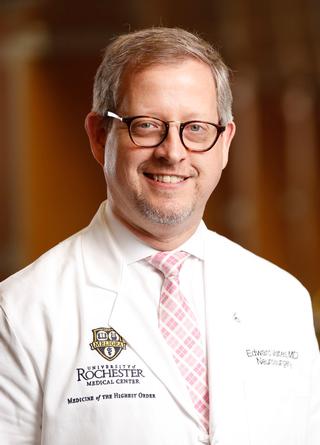
George E. Vates, MD, PhD, is a Professor in the Department of Neurosurgery and the Department of Medicine (Endocrine/Metabolism) at the University of Rochester Medical Center. He serves as neurosurgeon co-director of the University of Rochester Multidisciplinary Neuroendocrinology Clinic and is a key member of the University of Rochester Medical Faculty Group (URMFG), which comprises over 900 providers across 19 departments. Dr. Vates specializes in pituitary tumor surgery, cerebrovascular disorders, and skull base procedures, having performed over 120 transsphenoidal pituitary surgeries. Dr. Vates completed his academic training with exceptional distinction: Duke University: Bachelor's degree, summa cum laude (1988, Phi Beta Kappa) Rockefeller University: PhD in Neuroscience Weill Medical College of Cornell University: MD (1997, Alpha Omega Alpha) University of California, San Francisco: Neurosurgery Residency (1998-2003) Brigham and Women's Hospital, Harvard Medical School: Cerebrovascular/Skull Base Fellowship (2003-2004) His research focuses on pituitary tumor biology, neuroendocrinology, and surgical innovation. He established the Multidisciplinary Neuroendocrinology Clinic as a regional referral center for complex pituitary cases, integrating neurosurgical and endocrinological expertise. Current work emphasizes neuroprotective mechanisms in pituitary adenomas, surgical simulation technology, and optimizing outcomes for elderly glioma patients. Analysis of his 15 most recent publications reveals evolving research trajectories: contemporary studies (2019-2022) concentrate on pituitary tumor management, surgical simulation, and neurosurgical education, while earlier work (2002-2009) explored cerebrovascular anomalies, neural pathway mapping, and vascular malformations. Persistent themes include surgical technique refinement, tumor biology, and clinician training. Dr. Vates' scientific contributions have been recognized through: Phi Beta Kappa (1988) and Alpha Omega Alpha (1991) academic honors Neurosurgery Research and Education Foundation Fellowship (2006) Anspach Award for Cerebral Ischemia Research (2007) AANS Leadership Scholarship and Cone Pevehouse Award (2009) Ongoing service as St. Michael's Hospital Animal Care Committee reviewer As an educator, he mentors neurosurgery residents through clinical supervision and curriculum development, notably publishing on palliative care communication training. His research initiatives, including the 3D-printed cervical laminectomy simulator, demonstrate commitment to advancing surgical education. Current grants focus on neuroprotective strategies in pituitary tumors and resident training methodologies. Dr. Vates co-directs the Multidisciplinary Neuroendocrinology Clinic with endocrinologist Dr. Calvi, fostering collaboration between neurosurgery, endocrinology, and oncology. His clinical team manages complex pituitary cases across Rochester and Hornell campuses, while his research group develops surgical innovations and investigates tumor microenvironment interactions to improve patient outcomes.
Professor Mia Woodruff is a leading academic at Queensland University of Technology (QUT), holding the position of Professor in the School of Mechanical, Medical and Process Engineering within the Faculty of Engineering. She is the Group Leader of the Biofabrication and Tissue Morphology Group and Acting Director of the Herston Biofabrication Institute. Her research focuses on biofabrication, tissue engineering, and 3D printing applications in medicine, particularly in bone regeneration, vascular surgery, and personalized prosthetics. Woodruff holds a PhD in Materials Engineering from the University of Nottingham, UK. She has led over $40 million in external grants, including ARC and Advance Queensland funding. Her work emphasizes translating biofabrication technologies into clinical practice, such as developing patient-specific implants and surgical tools. She has published over 120 peer-reviewed articles and co-founded initiatives like the Herston Biofabrication Institute to bridge clinical, research, and industry collaboration. Key research areas include composite biomaterials, 3D scanning/modelling, electrospinning, and large-animal models for bone regeneration. She has been awarded the QUT Vice Chancellor’s Research Fellowship and ARC Fellowship. Her outreach efforts include promoting STEM through media appearances and school programs, such as the 3D Printing in All High Schools initiative. Grants & Awards $40M Innovation Manufacturing CRC (Co-Investigator) $3.72M ARC Industrial Transformation Training Center (Additive Biomanufacturing) Advance Queensland Fellowships ($1.2M Cluster Grant for Biofabrication) Media & Engagement Featured in SCOPE TV, SBS The Feed , and ABC News Keynote speaker at global conferences (e.g., TERMIS, ORS) Research Infrastructure Herston Biofabrication Institute: Integrates 3D printing, clinical trials, and patient collaboration World-first Biofabrication Master’s program launched in 2014
Professor Denis Doorly is a Professor of Fluid Mechanics in the Department of Aeronautics at Imperial College London's Faculty of Engineering. His research focuses on biomedical fluid mechanics, particularly respiratory and cardiovascular systems, with expertise in computational fluid dynamics (CFD) and aerosol transport. He has published extensively on nasal airflow modeling, cardiovascular MRI simulations, and aerosol dynamics in medical contexts. Key contributions include CFD cohort studies on nasal decongestion effects, benchmarking models for SARS-CoV-2 transmission, and ventilator strategies during the pandemic. Research interests span biological fluid mechanics, biomedical flows, and medical device design. His work integrates computational modeling with clinical applications, addressing issues like tracheal compression, myocardial perfusion, and aerosol extraction during surgeries. Collaborations include studies on isolated heart models and particle deposition in respiratory systems. Affiliations include the Biological Fluid Mechanics and Biomedical Flows groups at Imperial. His publications (139+ articles) highlight interdisciplinary applications of fluid mechanics to healthcare challenges.
Matthew Holden is an Associate Professor in the School of Computer Science at Carleton University. He holds a PhD (2018) and MSc (2014) from Queen's University and a BScH (2012) from Western University. His research focuses on Surgical Data Science, applying machine learning to surgical time-series data from operating rooms and simulations to improve patient outcomes and surgical training. Key areas include real-time decision support, performance assessment, and surgical efficiency through domain-knowledge integration. Research interests emphasize machine learning for surgical workflows, skill assessment via sensor data (e.g., motion tracking, EEG), and computer-assisted interventions. Notable work includes automated proficiency evaluation in cataract surgery, ultrasound-guided procedures, and neurosurgical training. His contributions span medical robotics, surgical education, and clinical decision support systems. Publications highlight advancements in surgical workflow anticipation, tool detection, and skill metrics across domains like ophthalmology, emergency medicine, and neurology. Holden advocates for interdisciplinary approaches combining computational methods with clinical expertise to enhance healthcare delivery.