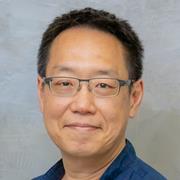
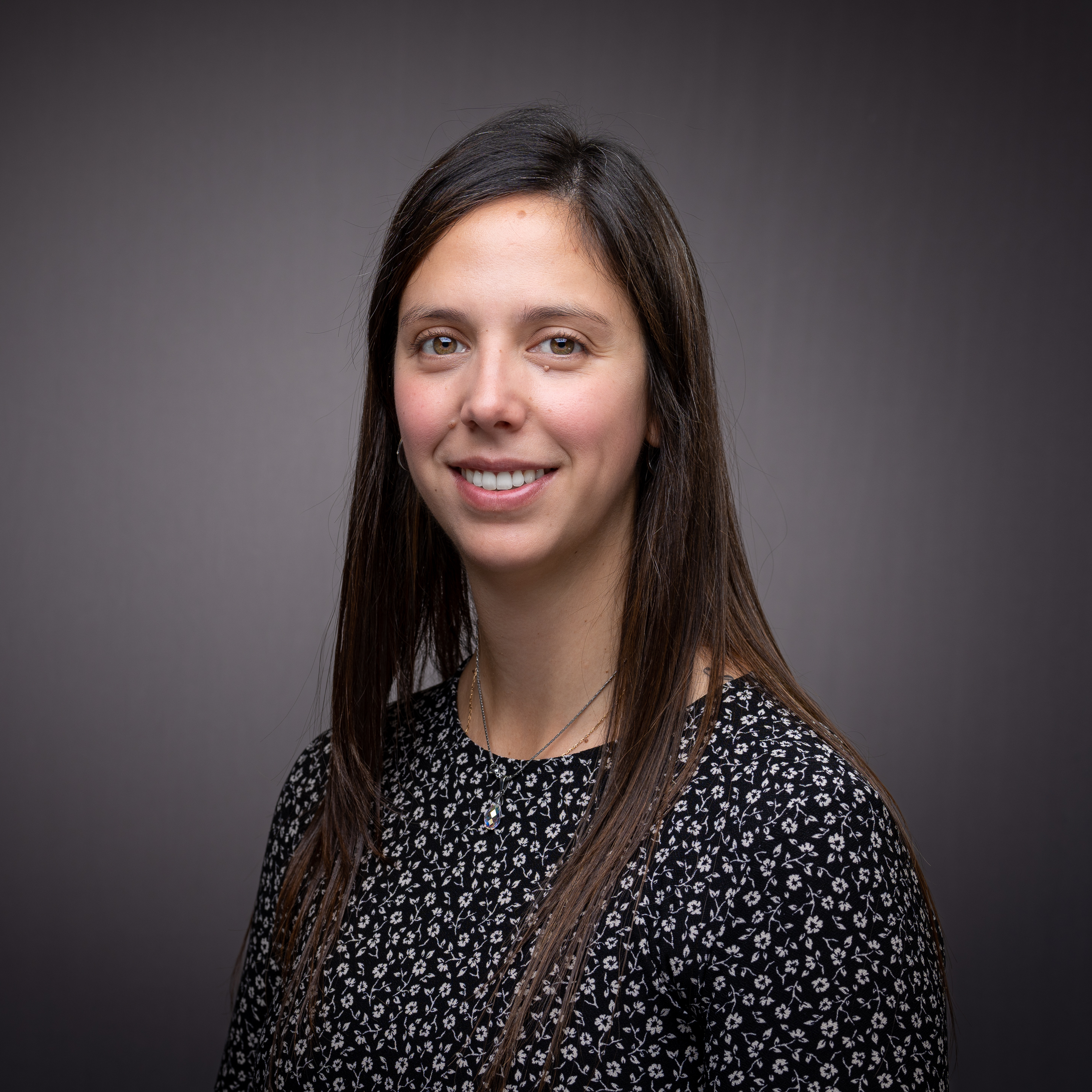
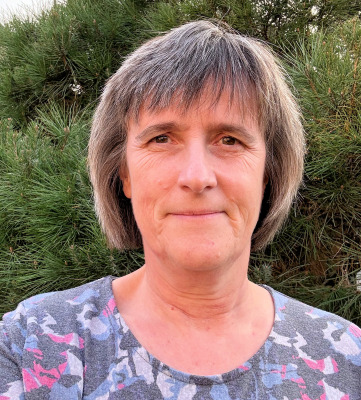
Xifan Wu is a Professor of Physics at Temple University, specializing in computational methods and materials science. His research focuses on first-principles computational approaches, particularly exploring the locality of Wannier orbitals to address physical problems in solids and liquids. Key interests include superlattice design and applications of order-N exact exchange functionals like PBE0 and GW quasi-particle approximations. He has authored numerous high-impact publications in journals such as Physical Review Letters and Physical Review B , covering topics like ferroelectric superlattices, X-ray absorption spectroscopy, and the dielectric properties of electrolyte solutions. His work bridges quantum mechanical models with machine learning potentials, advancing large-scale simulations of complex materials. Education/Background: Not explicitly detailed in the provided text. Grants/Awards: No specific awards listed, but his research is supported by Temple University’s Center for the Computational Design of Functional Layered Materials (CCDM). Labs/Teams: Collaborates with teams focused on computational design and materials modeling, possibly through Temple’s physics department and affiliated research centers. His recent work explores molecular-scale insights into electrical double layers at oxide-electrolyte interfaces and the impact of ions on X-ray spectra, demonstrating expertise in linking theoretical models with experimental phenomena.
Associate Professor Ken Chiang is a faculty member at RMIT University's School of Engineering under the STEM faculty. He holds an Associate Professor rank and has over 20 years of academic and industrial research experience, securing over $12 million in research funding. His work focuses on innovative catalyst technologies, sustainable processes, and liquid metal catalysis for applications in CO2 utilization, hydrogen generation, and environmental engineering. Research Interests Chemical Engineering, Macromolecular and Materials Chemistry, Materials Engineering, Environmental Engineering, and catalytic systems for renewable energy. Key Projects Recent projects include development of next-generation liquid metal catalysts for CO2 reutilization, low-emission hydrogen generation via ammonia utilization, and novel reactor concepts for process intensification. His research also addresses wastewater purification and solar-to-chemical energy conversion. Advising & Grants He has supervised 10 PhD students, 2 Master's students, and 2 industrial trainees. His funding includes government and industry projects totaling over $12 million. Labs & Collaborations Collaborates on decarbonization technologies and liquid metal systems, with contributions to RMIT's research network in sustainable energy and catalysis.
Rocio Lilen Segura is an Assistant Professor in the Department of Civil, Environmental and Sustainable Engineering at Santa Clara University's School of Engineering. She holds a Ph.D. in Civil Engineering from Sherbrooke University (2019) and a B.Sc. in Civil Engineering from Del Comahue National University (2013). Dr. Segura specializes in infrastructure resilience against extreme events and climate change, focusing on probabilistic risk assessment of critical infrastructure systems like dams and levees. Her work bridges civil engineering with machine learning and climate justice, integrating built, natural, and social systems to address environmental challenges. 2023 Severo Ochoa Mobility Programme grant 2019-2022 MITACS Accelerate industrial postdoc scholarship 2019 Léonard de Vinci medal and Scholarship Her research spans seismic risk reduction, surrogate modeling, and uncertainty quantification in dam engineering, with over 10 publications in journals like Advances in Civil Engineering and Water Journal. She previously collaborated with Hydro-Quebec during her postdoctoral research.
Sermet DEMİR is an Assistant Professor at the Faculty of Engineering , Department of Mechanical Engineering , Doğuş University. His work focuses on additive manufacturing, orthotic device design, and mechanical property optimization of composite materials. He teaches courses such as Experimental Engineering, Manufacturing Technology, and Computer-Aided Design. Education : BSc and MSc in Mechanical Engineering from Marmara University; PhD in Mechanical Engineering from Marmara University (2018). Research Interests center on biomedical devices, 3D printing, and structural analysis. His publications often employ the Taguchi method, Response Surface Methodology (RSM), and Quality Function Deployment (QFD) for design optimization. Recent works explore triply periodic minimal surface (TPMS) metamaterials, war bow mechanics, and adhesive joint performance. Scientific Awards are not explicitly mentioned in the text. His projects are sponsored by Doğuş University Scientific Research Projects Coordination Unit (grants 2021–22-D1-B02).
Massimiliano Delferro is a chemist and group leader of the Catalysis Science Program at Argonne National Laboratory, with a concurrent appointment as a Senior Scientist at the Pritzker School of Molecular Engineering (PME), University of Chicago. He leads the Argonne initiative on 'Science for a Circular Economy,' focusing on chemical recycling of plastics and sustainable catalyst development. Ph.D. in Organometallic Chemistry (University of Parma, 2008) Research Associate Professor (Northwestern University, 2010-2016) His research spans catalysis, chemical recycling of plastics, hydrogen production using earth-abundant catalysts, and valorization of shale gas. He is widely recognized for his work on polymer upcycling, organometallic surface chemistry, and metal-organic framework (MOF) catalysis. Recent publications highlight his leadership in converting plastic waste into high-value products (e.g., lubricants, functional polymers), supported by advanced spectroscopic and computational methods. Trends include C–C bond cleavage, MOF-supported catalysts, and redox-tunable systems. AAAS Fellow (2023) RSC ChemComm Pioneering Investigator (2023) R&D100 Award Finalist (2022) Argonne TCP Rising Star (2022) Delferro has published over 150 peer-reviewed articles, holds 30+ patents, and serves on the editorial board of ACS Applied Materials and Interfaces . He has been actively involved in professional societies, including the American Chemical Society and the Catalysis Society, where he served as President and Program Chair.
Prof. Julio Lloret-Fillol is a Group Leader at the Institute of Chemical Research of Catalonia (ICIQ) and an ICREA Research Professor since 2015. His work bridges homogeneous catalysis , material science , and automation to develop sustainable chemical processes and solar fuels. He earned his PhD in 2006 from Universidad de Valencia under Prof. Lahuerta and J. Pérez-Prieto, followed by postdoctoral research at University of Heidelberg (MEyC and Marie Curie Fellowships). Awards: 2024 RSEQ-GEQO Award on Excellence 2023 Fellow of the Royal Society of Chemistry 2022 Ramón Areces Grant 2019 Thieme Chemistry Journals Award 2017 Young Academy of Europe 2015 Young Researcher RSEQ Award Research Interests: Water oxidation catalysis CO₂ reduction to value-added chemicals Artificial photosynthesis Electrocatalytic hydrogen generation Spin-off technologies for green hydrogen and photoreactors Notable Publications: 2024: Angew. Chem. Int. Ed. (electrocatalytic ketones from CO₂) 2024: ACS Catal. (Fe-doped NiO for OER) 2023: ACS Catal. (COF-based cobalt catalysts) 2022: JACS (OER mechanism with cobalt complexes) 2022: Angew. Chem. Int. Ed. (chloroalkane activation) Spin-offs: Treellum Technologies (photoreactors) JOLT Solutions (electrodes for hydrogen production)
Dr. Rico Friedrich is a computational materials scientist leading the "Autonomous Materials Thermodynamics - AutoMaT" research group, jointly operated by the Chair of Theoretical Chemistry at Technische Universität Dresden and the Helmholtz-Zentrum Dresden-Rossendorf (HZDR). His work focuses on data-driven computational design of advanced materials for information technology and energy applications through the DRESDEN-concept research alliance. His research spans several cutting-edge areas: Discovery and design of 2D non-van der Waals materials with novel electronic and magnetic properties Data-driven modeling of high-entropy ceramics based on entropy maximization principles Development of computational methods for accurate thermodynamic stability prediction, particularly the coordination corrected enthalpies (CCE) method Applications of artificial intelligence in materials design Dr. Friedrich's publication record shows a strong trend toward computational materials discovery, with significant contributions to understanding non-van der Waals 2D materials and high-entropy ceramics. His work bridges theoretical developments with practical applications, resulting in publications in high-impact journals including Nature, Nano Letters, and Advanced Electronic Materials. His key scientific contributions include: Development of the coordination corrected enthalpies (CCE) method for accurate formation enthalpy calculations Creation of the AFLOW-CCE module implemented in the AFLOW software ecosystem Discovery of novel 2D non-van der Waals materials with ultra-low exfoliation energies Formulation of the disordered enthalpy-entropy descriptor (DEED) for high-entropy ceramics Dr. Friedrich actively mentors the next generation of materials scientists, currently supervising PhD students and postdoctoral researchers in his AutoMaT lab. His research group collaborates extensively within the DRESDEN-concept research alliance, leveraging computational resources and expertise across multiple institutions to advance materials science and engineering.
Aurélien Bornet is a Lecturer at École Polytechnique Fédérale de Lausanne (EPFL) in the School of Basic Sciences (SB), specifically within the Institute of Chemical Sciences and Engineering (ISIC). He serves as the Platform Leader for the Nuclear Magnetic Resonance Platform at EPFL, where he oversees advanced NMR facilities and research. Dr. Bornet's research focuses on Nuclear Magnetic Resonance (NMR) and Dynamic Nuclear Polarization (DNP) techniques. His work spans several key areas including hyperpolarization methodologies, development of NMR instrumentation, and applications in both chemistry and biomedical fields. His research has led to significant advancements in dissolution DNP, long-lived nuclear spin states, and hyperpolarized metabolite imaging. His recent publication record demonstrates strong activity in developing new NMR techniques and applications, with particular emphasis on hyperpolarization methods that dramatically enhance NMR sensitivity. His work bridges fundamental physics with practical applications in medical imaging and materials science. The research outputs include numerous high-impact publications in journals like Nature Communications, Journal of the American Chemical Society, and Physical Chemistry Chemical Physics, as well as several patents related to NMR technology. Dr. Bornet has received recognition through multiple patents for his innovations in NMR technology, including patents related to polarizing agents, dissolution DNP methods, and NMR instrumentation. His work has important implications for biomedical imaging, particularly in the development of hyperpolarized metabolic imaging for cancer diagnostics and other medical applications. As an educator, Dr. Bornet teaches courses on Basic and Advanced NMR at multiple levels (Level 1 A, Level 1 B, and Level 2) at EPFL and in Sion. His teaching focuses on both theoretical and experimental aspects of NMR, providing students with hands-on experience with modern NMR spectrometers. His academic journey includes completing his PhD at EPFL in 2015 with a thesis on hyperpolarized protons for enhancing NMR sensitivity, advised by G. Bodenhausen and S. Jannin. Prior to this, he completed earlier research on long-lived states as probes of protein stability in 2010 under the supervision of G. Bodenhausen and P. Vasos.
Grigory Mikhalkin is a Full Professor at the University of Geneva, where he has been a faculty member since 2008. He is considered one of the founders of Tropical Geometry, a domain of algebraic geometry governed by (max,+)-calculus where geometric objects degenerate to their piecewise-linear limits. He leads the "ALGEBRA AND GEOMETRY" research group at the university. Mikhalkin studied at Leningrad and Michigan State University under the supervision of Oleg Viro and Selman Akbulut. After receiving his PhD in 1993, he completed postdoctoral training at Princeton, Bonn, Toronto, Berkeley, and Harvard (1993-2000). He served as associate and then full Professor at the University of Utah before moving to the University of Toronto, eventually joining the University of Geneva in 2008. Mikhalkin's primary research areas are Geometry and Topology, with a particular focus on Tropical Geometry. His work bridges algebraic geometry with combinatorial structures, exploring how complex geometric objects can be understood through their piecewise-linear tropical counterparts. This approach has proven fruitful in solving problems in enumerative geometry and has connections to mathematical physics through the study of sandpile models and self-organized criticality. His research group actively explores the connections between tropical geometry, symplectic geometry, and real algebraic geometry, organizing regular seminars including the "Séminaire Fables Géométriques." The recent publications of Professor Mikhalkin demonstrate a strong focus on the intersection of tropical geometry with sandpile models and self-organized criticality. His work has evolved to examine tropical aspects of number theory, lattice sums, and even applications to economics through auction theory. A significant portion of his recent research explores the patterns and structures that emerge in sandpile models across various lattices and dimensions, connecting discrete mathematics with continuum limits through tropical techniques. Prize of the St. Petersburg Mathematical Society (1999) Silver Medal of the Mexican Mathematical Society (2011) Canada Research Chair (2004-2009) Friedrich-Wilhelm-Bessel Research Award of the Alexander-von-Humboldt Foundation (2007-2008) European Research Council Advanced Grant (2010-2015) Chair of Fondation Sciences Mathématiques de Paris (2013-2015) Mikhalkin has successfully advised several PhD students to completion, including Kristin Shaw (2011), Lionel Lang (2014), Nikita Kalinin (2015), Mikhail Shkolnikov (2017), and Johannes Josi (2018). His research has been supported by prestigious grants including the ERC Advanced Grant and the Canada Research Chair. He presented his work at the Bourbaki seminar in 2003 and was selected as a Geometry speaker at the International Congress of Mathematicians in 2006, highlighting the significance of his contributions to the field. Professor Mikhalkin leads the "ALGEBRA AND GEOMETRY" research group at the University of Geneva, which includes current members Thomas Blomme, Francesca Carocci, Aloïs Demory, Gurvan Mével, and Antoine Toussaint. The group has a strong track record of postdoctoral fellows and alumni, including notable researchers such as Ivan Bazhov, Johan Bjorklund, Rémi Crétois, and others. They organize several seminars including the "Séminaire Fables Géométriques" and have historical connections to the Battelle Seminar and Tropical working group Seminar.
BAI Jiaming is an Associate Professor at the Department of Mechanical and Energy Engineering, College of Engineering, Southern University of Science and Technology (SUSTech). His research focuses on additive manufacturing (3D printing) of ceramics, nanocomposites, and functional materials, with applications in energy, biomedical engineering, aerospace, and electronics. Education: PhD (2014), MSc (2009), Loughborough University; BSc (2008), Beijing University of Chemical Technology Research interests: Development of high-speed 3D printing systems, additive design optimization, and industrialization of ceramic/nanocomposite manufacturing. His work bridges material science, structural engineering, and applied technologies. Recent publications highlight advancements in ceramic composites for biomedical and energy applications, graphene-based energy storage systems, and process innovations for zirconia and polymer composites. Key themes include material dispersion, thermal properties, and biomimetic design. Scientific Awards: Fellow of the Institute of Materials, Minerals and Mining (FIMMM); Top 2% Scientists worldwide Advising: Actively recruits postdoctoral fellows, PhD/Master's students, and research assistants. His group has secured over 10 national/provincial research grants. Labs: Affiliated with SUSTech’s Shenzhen Key Laboratory of Additive Manufacturing of High-Performance Materials, which focuses on overcoming industrial bottlenecks in metal/polymer/ceramic AM.
Professor Steffi Krause serves as Professor of Electroanalytical Systems and Director of Academic Standards at Queen Mary University of London's School of Engineering and Materials Science. She leads the Electrochemical Sensors Group and maintains an active research program in electrochemical imaging and sensor development. Her academic career began with a PhD from Humboldt-University of Berlin in 1994, followed by postdoctoral research at Newcastle and Glasgow Universities. She served as Lecturer and EPSRC Advanced Research Fellow at Sheffield University's Chemistry Department from 1997-2004 before joining Queen Mary's Materials Department. Professor Krause's research focuses on photoelectrochemical imaging with high spatiotemporal resolution for functional imaging of living cells. Her group has developed advanced Light-Addressable Potentiometric Sensors (LAPS) and Scanning Photo-induced Impedance Microscopy (SPIM) techniques capable of measuring local changes in surface potential and impedance. Recent work demonstrates applications in cellular imaging, particularly for monitoring cardiomyocyte action potentials, calcium ion detection, and cell surface charge mapping with submicron resolution. Her publication record spans over three decades with recent high-impact work showing a clear trajectory toward increasingly sophisticated biomedical applications. The research demonstrates strong interdisciplinary integration of materials science, electrochemistry, and biomedical engineering principles. Professional distinctions include: Member of the Royal Society of Chemistry (MRSC) Member of the International Society of Electrochemistry Fellow of the Higher Education Academy (FHEA) Professor Krause actively mentors PhD students and has successfully guided numerous doctoral candidates to completion. Her current research is supported by significant funding from EPSRC, EU Horizon 2020, and industry partners including McGowan Sensor Labs Limited. She serves as module organizer for Clinical Sensors and Measurements courses (EMS706P/EMS706U) and delivered her inaugural lecture 'Sensing to seeing: an electrochemical approach' on March 5, 2025. The Electrochemical Sensors Group maintains strong industry and international collaborations, with research directions focused on developing next-generation sensor technologies for biomedical diagnostics and environmental monitoring applications.
Vera Popovich is a researcher in the Department of Mechanical Engineering at Delft University of Technology and a member of Team Vera Popovich. Her work focuses on advanced manufacturing techniques and material behavior analysis. Education: MSc in Engineering (implied PhD) Her research spans additive manufacturing, microstructure engineering, and material degradation mechanisms: Specializes in additive manufacturing processes and their impact on material microstructure. Investigates hydrogen embrittlement in high-strength steels. Pioneers texture control for corrosion resistance in NiTi alloys. Studies fatigue crack propagation in bi-material systems. Recent publications highlight computational modeling of grain structures, interface mechanics in wire-arc additive manufacturing, and advanced characterization techniques for material degradation. She contributes to editorial activities as an editor for Applied Sciences . Scientific Awards: 2012 Poster Prize: X-ray diffraction stress analysis in silicon solar cells She collaborates on projects like the Rhizome initiative (2021-2022) for off-Earth habitat robotics and participates in public engagement, including a 2023 media feature on Delft's 3D-printing lab.
Zeev Rudnick is a Professor of Mathematics at Tel Aviv University, holding the Cissie and Aaron Beare Chair in Number Theory since 2012. He is affiliated with the School of Mathematical Sciences and the Department of Theoretical Mathematics. Education: Ph.D., Yale University, 1990 M.Sc. summa cum laude, The Hebrew University, 1985 B.Sc. summa cum laude, Bar-Ilan University, 1984 Research Interests: Professor Rudnick's work focuses on the interface of Number Theory and Mathematical Physics, particularly Quantum Chaos. His research includes eigenvalue distribution, zeros of L-functions, quantum unique ergodicity, arithmetic problems in function fields, lattice point counting, and spectral statistics. Recent publications explore zeros of modular forms, quantum models, sparse exponential sums, and spectral properties of geometric domains. Awards and Honors: Heilbronn Distinguished Visiting Professor (2019) David Rees Distinguished Visiting Fellowship (2017) Aisenstadt Chair (2014) Invited Speaker at ICM 2014 ERC Advanced Grants (2013–2024) Fellow of the AMS (2012–) AHP Distinguished Paper Award (2011) Erdős Prize (2001) Alon Fellowship (1995) Sloan Dissertation Fellowship (1989/90) Advising and Grants: He has supervised 28 Ph.D. and M.Sc. students in number theory and mathematical physics. His research is supported by an ERC Advanced Grant (RMAST, 2019–2024), following a previous ERC grant (2013–2018). He currently teaches graduate/undergraduate seminars and analytic number theory.
Asif Ali Zaman is an Associate Professor in the Department of Mathematics at the University of Toronto's Faculty of Arts and Science. He specializes in analytic and probabilistic number theory, with applications to algebraic structures and arithmetic statistics. His work intersects prime distribution, zeros of L-functions, Chebotarev density theorem, random multiplicative functions, and binary quadratic forms, extending to elliptic curves, modular forms, and mass equidistribution. PhD in Mathematics (2017), University of Toronto NSERC Postdoctoral Scholar (2017–2019), Stanford University MSc in Mathematics (2012), University of British Columbia BSc in Mathematics (2010), Simon Fraser University His research leverages log-free zero density estimates, Deuring-Heilbronn phenomenon, and Artin's holomorphy conjecture to derive bounds for primes, ℓ-torsion class groups, and equidistribution on modular surfaces. Recent publications (2025–2022) focus on Tauberian theorems, multiplicative chaos, and large sieve inequalities. Grants include sponsored research on L-functions (2022–2027) and computational projects (2025). He supervises Masters and PhD students in number theory and teaches multivariable calculus and cryptology courses.
Federico Bonetto is a Professor at the School of Mathematics , Georgia Institute of Technology. His research spans equilibrium and non-equilibrium statistical mechanics , chaotic systems , and mathematical physics . Research Themes : Fermi surfaces in interacting fermion systems Chaos and large deviations in billiards Fourier's law in anharmonic oscillators Game theory applications to economic models Teaching : Regular instructor of courses like Partial Differential Equations , Linear Algebra , and Probability & Statistics since 2002. Publications : Over 40 works since 1995, focusing on Kac models, thermostatted systems, and statistical mechanics of coupled maps. Recent articles (2019-2025) explore non-equilibrium entropy decay , fermionic criticality , and monetary policy experiments .