François Lagugné-Labarthet is a Professor in the Department of Chemistry at Western University (London, Canada) and the Scientific Director of the university's Nanofabrication Facility. He specializes in nanoscale spectroscopy, particularly Tip-Enhanced Raman Spectroscopy (TERS), and applies this expertise to study 2D materials, biomaterials, and nanomaterials. His research integrates advanced optical techniques with machine learning for data analysis. He has held a Canada Research Chair in Nanoscience (2008–2018) and earned the CNRS Bronze Medal (2004) for his work on polymers and nonlinear optics. Education: PhD in Physical Chemistry (1998, Bordeaux), Postdoc at Queen's University and UC Berkeley. Facilities: Leads the Nanofabrication Facility, an open-user platform for nanoscale science training. Research Focus: TERS, SERS, plasmonics, and nanomaterial characterization. Current projects include 2D material analysis (e.g., transition metal dichalcogenides) and drug detection using gold-patterned surfaces. Collaborates with industry partners like SCATR Inc. on opioid detection technologies. Key Techniques: AFM, Raman microscopy, nanoimprint lithography. Students & Alumni: Mentored over 40 graduate/undergraduate researchers and postdocs, many now in academia and industry. Awards: CNRS Bronze Medal (2004). Grants & Collaboration: Leveraged funding for nanoscience research; active in cross-disciplinary projects with materials science and biomedical applications.
Ken Oakes is an Associate Professor in the Biology Department at Cape Breton University (CBU) and holds the Industrial Research Chair in Environmental Remediation. He specializes in environmental toxicology, nanotechnology, and aquatic ecosystems. With a Ph.D. from the University of Guelph and postdoctoral training at the University of Waterloo, his research focuses on reactive oxygen species, water treatment, and pollution mitigation. He has over 60 peer-reviewed publications and supervised numerous graduate/undergraduate theses. Key research areas include photocatalytic water treatment using TiO₂ composites, surface-enhanced Raman spectroscopy (SERS) for contaminant detection, and transdermal drug delivery via polymeric microneedles. His work addresses industrial effluent impacts on marine ecosystems and sustainable antifouling technologies. Recent studies investigate nanomaterials for environmental remediation and biomedical applications. Dr. Oakes has contributed to projects assessing pulp mill effluent effects on coastal ecosystems, copper-based Fenton chemistry for biofilm removal, and uranium extraction from water. His lab develops innovative solutions for environmental challenges, combining engineering, chemistry, and biology disciplines. Funding sources include industrial partnerships and academic grants focused on clean technologies.
Jason H. Hafner is a Professor of Physics and Astronomy and of Chemistry at Rice University, affiliated with the Rice Space Institute. His research bridges fundamental physics with biological applications through nanoscale phenomena, focusing on light-matter interactions at molecular interfaces. Education: 1993: BS in Physics, Trinity University 1996: MA in Physics, Rice University 1998: PhD in Physics, Rice University (advisor: Richard Smalley) Hafner's work centers on nanophotonics and interfacial biophysics , utilizing Surface Enhanced Raman Scattering (SERS) as a primary tool. His lab pioneers structural analysis of lipid membranes, gold nanoparticle surface chemistry, and vibrational spectroscopy of bioactive compounds including anthraquinones in lichens and flavonoids. Current projects integrate computational modeling with experimental SERS to decode cholesterol structure and analyze environmental particulates from aerospace events. Publications since 2015 reveal a trajectory from foundational nanomaterial studies toward complex biological systems, increasingly combining DFT simulations with experimental Raman data. His work spans astrobiology-relevant molecules to spacecraft-related environmental analysis, demonstrating consistent methodological innovation in vibrational spectroscopy. Major recognitions include: Beckman Young Investigator Award (2002) Norman Hackerman Award for Chemical Research from Welch Foundation (2011) Hafner has mentored multiple PhD students including Aobo (gold nanoparticle surface chemistry) and Mathieu (lipid membrane structure via SERS), while teaching undergraduate physics for nearly a decade. His editorial role at ACS Nano (2010-2017) reflects standing in the nanoscience community. The Hafner Lab maintains an agile, interdisciplinary approach—recently collaborating with planetary scientist Phil Metzger to analyze SpaceX launch debris using Raman spectroscopy, demonstrating real-world application of fundamental research techniques to emerging aerospace challenges.
Paula Mendes is a Professor of Advanced Materials and Nanotechnology at the University of Birmingham's School of Chemical Engineering. She leads the interdisciplinary Mendes Research Group, focusing on nanoscience, biosensors, and nanotechnology applications in healthcare. Her work bridges engineering, chemistry, and biology to address challenges in biofouling, molecular diagnostics, and medical technologies. She is affiliated with the Healthcare Technologies Institute (HTI), advancing translational research in regenerative medicine and diagnostics. Education: MSc (1997) and PhD (2002) in Chemical Engineering from the University of Porto. Postdoctoral research at the University of Birmingham and UCLA under Fraser Stoddart. Academic career at Birmingham since 2006, promoted to Professor in 2013. Research Interests: Development of electrically switchable surfaces for on-demand biosensing Nanomaterials for cancer diagnostics and molecular imprinting Anti-biofouling materials and nanoelectrocatalysts for fuel cells Integration of nanotechnology with biological systems Awards: ERC Advanced Grant (2024), IChemE Global Award (2016), Women in Tech Academic Award (2019), and over 100 published manuscripts. Advising & Grants: Supervises doctoral students in molecular diagnostics and biosensor development. Holds grants including EPSRC Leadership Fellowship and ERC Consolidator/Advanced Grants. Her group collaborates across disciplines to translate nanotechnology into clinical applications. Labs/Teams: Mendes Research Group at the University of Birmingham, part of the HTI network. Active in editorial roles for journals like Responsive Materials and ChemBioEng Reviews .
Kai Leonhard is an Adjunct Professor at the Chair of Technical Thermodynamics , RWTH Aachen University. His research focuses on computational chemistry, thermodynamics, and molecular modeling, particularly in solvent design and reactive chemical processes. Department: Chair of Technical Thermodynamics Email: kai.leonhard@ltt.rwth-aachen.de Prof. Leonhard's work integrates quantum chemistry with computer-aided molecular and process design (CAMD/CAPD), emphasizing solvation thermodynamics, reaction kinetics, and machine learning applications. His projects span biofuel combustion, microgel synthesis, and sustainable solvent development. Recent publications highlight advancements in COSMO-RS-based solvent screening, reaction network exploration via ChemTraYzer-TAD, and multi-fidelity modeling for partition coefficients. He employs machine learning to enhance predictive thermodynamic models and optimize chemical processes.
Kwanghee Jeong is a Research Fellow at the University of Western Australia , affiliated with the Fluid Science and Resources research group within the School of Engineering and Chemical Engineering Department . His work focuses on energy transport, decarbonisation technologies, and flow assurance. Education: PhD in Chemical Engineering (UWA, 2020), BSc in Mechanical Engineering (Dongguk University, 2014) Research Themes include: Flow Assurance for hydrogen, CO2, and natural gas pipelines Carbon Capture & Emissions Management (MOFs, Raman spectroscopy) Cryogenic Hydrogen Process Engineering (liquefaction, boil-off gas) Cold Energy Utilisation and Waste Heat Recovery Hydrate Formation Kinetics via Acoustic Levitation Article Trends reflect expertise in: Using Raman spectroscopy for real-time adsorption and phase transition analysis Developing Joule-Thomson loops to simulate pipeline conditions Optimizing Metal-Organic Frameworks for GHG separation Advancing hydrogen liquefaction efficiency through catalysis Addressing microplastics and hydrate nucleation via spectroscopic methods Scientific Awards : Best Poster Award (2023) - Natural Gas UWA Travel Award (2017) ARC PhD Scholarship (2016) He contributes to UN Sustainable Development Goals via decarbonisation research and has collaborated with Chevron, Woodside Energy, and Curtin University. His technical skills include Aspen HYSYS, OLGA simulations, HAZOP studies, and Differential Scanning Calorimetry (DSC).
John E. Straub is a Professor in the Department of Chemistry at Boston University (BU), where he leads the Straub Lab. His work focuses on molecular dynamics and thermodynamics of complex biomolecular systems, particularly protein aggregation and amyloid formation. He has authored influential books, including Proteins: Energy, Heat and Signal Flow and Mathematical Methods for Molecular Science , and has held leadership roles such as Chair of the Department of Chemistry at BU (2007-2012) and President of the Telluride Science Research Center (2006-2008). Education: BS in Chemistry (University of Maryland, 1982, advisor: Millard Alexander) MA (Columbia University, 1984) MPhil (Columbia University, 1986) PhD in Chemical Physics (Columbia University, 1987, advisor: Bruce Berne) NIH Postdoctoral Fellow in Chemistry (Harvard University, 1987-1990, advisor: Martin Karplus) His research interests span computational methods for enhanced sampling, reaction dynamics, and the interplay between protein structure and aggregation. He has pioneered studies on amyloid precursor proteins and cholesterol interactions in lipid bilayers, emphasizing the role of monomer structural ensembles in aggregation mechanisms. Articles from his lab highlight advancements in understanding lipid phase separation, amyloid fibril formation, and computational techniques like machine learning-derived variables and replica exchange methods. His work bridges theory and experiment, with collaborations across institutions globally. Scientific Awards: NIH Postdoctoral Fellowship (Harvard University, 1987-1990). Professor Straub has advised numerous students, many of whom hold academic positions at leading institutions, including Jianpeng Ma (Rice University) and Nicolae-Viorel Buchete (University College Dublin). His lab actively explores projects in computational biophysics, with ongoing work on lipid mixtures, sterol-derived Raman tags, and membrane protein interactions.
Prof Wen Wang is Professor of Biomedical Engineering and Vice-Principal and Executive Dean for Science and Engineering at Queen Mary University of London, affiliated with the School of Engineering and Materials Science and the Centre for Bioengineering. He is a Chartered Engineer and holds fellowships from the Institution of Mechanical Engineers (FIMechE), Higher Education Academy (FHEA), American Institute for Medical and Biological Engineering (FAIMBE), and the Royal Academy of Engineering (FREng), reflecting his leadership and technical excellence in engineering and biomedical sciences. His research focuses on vascular bioengineering , biomaterial mechanics , and cell biomechanics , with particular emphasis on the endothelial glycocalyx , vascular stem cells , and transmembrane transport . He employs advanced techniques such as AFM nano-indentation, confocal microscopy, and microfluidic platforms to study the mechanical properties, shear stress responses, and structural stability of biological systems. His work spans from fundamental biophysics to translational applications in drug delivery and cardiovascular disease. Prof Wang has led multidisciplinary research projects in the UK and through international collaborations with partners in the US, China, and Japan. His recent publications highlight sustained contributions to understanding microcapsule mechanics , extracellular vesicles , biofluid dynamics , and biomolecular sensing . His work integrates experimental and computational modeling, particularly in microcirculation and cellular transport phenomena. He has received notable scientific recognition through multiple prestigious fellowships and has published extensively in high-impact journals including Nature Communications , Journal of Controlled Release , Biosensors and Bioelectronics , and Journal of Fluid Mechanics . His research demonstrates a strong trajectory in both fundamental discovery and applied biomedical innovation. Prof Wang actively supervises research and collaborates with clinical and engineering partners at Queen Mary and King's College London. His leadership in the School of Engineering and Materials Science underscores his role in shaping academic strategy and research excellence in science and engineering at Queen Mary University of London.
Prof. Dr. Sebastian Schlücker is a full professor in the Department of Physical Chemistry at the University of Duisburg-Essen , where he leads the Molecular Biophotonics and Nanodiagnostics research group within the Faculty of Chemistry. He is actively engaged in research, teaching, and academic leadership, with a strong focus on advanced spectroscopic techniques for biomedical and analytical applications. His research interests lie at the intersection of nanophotonics, plasmonics, and bioanalytical chemistry . Key areas include surface-enhanced Raman spectroscopy (SERS) , single-particle spectroscopy , laser diagnostics , and the design of functionalized metal colloids for biosensing and tumor diagnostics. He emphasizes a theory-guided approach combining simulation and experiment to tailor nanoparticle properties. His recent publications (2023–2025) reflect a strong trend toward quantitative, label-free molecular diagnostics , point-of-care testing , and in situ monitoring of catalytic and biological processes . The work spans fundamental plasmonics to clinical applications, particularly in cancer detection and immunoassays using SERS nanotags. International Raman Innovation Prize He mentors students and researchers, supervises theses, and collaborates widely across disciplines. His group develops advanced instrumentation, including portable SERS readers , fs-laser laboratories , and automated nanoparticle synthesis systems (e.g., BONAPARTE robot). He teaches master’s courses such as NanoBioPhotonics and Optical Spectroscopy , and is involved in STEM outreach.
Naomi J. Halas is a University Professor at Rice University, holding appointments in the Department of Electrical and Computer Engineering, Biomedical Engineering, Chemistry, and Physics & Astronomy. She is the Stanley C. Moore Professor in Electrical and Computer Engineering and serves as Director of both the Smalley-Curl Institute and the Laboratory for Nanophotonics. As a University Professor, she holds Rice's highest faculty rank, a distinction awarded to only 10 individuals (and only the second woman) in Rice's 111-year history. Halas is a pioneering researcher in the field of plasmonics, having created the concept of the "tunable plasmon" and invented a family of nanoparticles with resonances spanning the visible and infrared regions of the spectrum. Her research spans fundamental studies of coupled plasmonic systems as well as applications in biomedicine, optoelectronics, machine learning-enabled chemical sensing of environmental toxins, and plasmon-based photocatalysis. She is the author of more than 400 refereed publications, has over 30 issued patents, has presented more than 600 invited talks, and has been cited more than 130,000 times. Her recent publications demonstrate a strong focus on practical applications of plasmonics, particularly in water purification, environmental toxin detection, and cancer treatment. Her work combines nanotechnology with machine learning approaches to create innovative solutions for pressing global challenges in healthcare, environmental sustainability, and energy. The interdisciplinary nature of her research is reflected in publications spanning journals from Nature Water and PNAS to ACS Catalysis. Benjamin Franklin Medal in Chemistry (2025) - For the creation and development of nanoshells for biomedical and chemical applications Mildred Dresselhaus Prize in Nanoscience and Nanomaterials (2024) American Physical Society Frank Isakson Prize for Optical Effects in Solids Willis E. Lamb Award Wood Prize of Optica National Security Science and Engineering Faculty Fellow (Vannevar Bush Fellow) of the U.S. Department of Defense Halas has co-founded two companies based on her research: Nanospectra Biosciences, developing photothermal therapies for prostate cancer (nearing FDA approval), and Syzygy Plasmonics, a deep decarbonization platform. She has advised numerous students who have gone on to successful careers in academia and industry. Her research has been supported by significant grants from NSF, DoD, and other funding agencies. She serves as an advisor to the Mathematical and Physical Sciences Directorate of the National Science Foundation. Halas leads the Laboratory for Nanophotonics at Rice University, where her team focuses on designing new optically active nanostructures, developing nanofabrication strategies, characterizing physical properties of these materials, and prototyping applications of technological and societal interest. Her group is dedicated to producing PhD research scientists with expanded skill sets who can develop solutions beyond traditional disciplinary boundaries.
Steven Corcelli is a Professor and Interim Dean of the College of Science at the University of Notre Dame, with a joint appointment in the Department of Chemistry and Biochemistry. He has held key leadership roles including Department Chair (2022–2025) and Associate Dean for Interdisciplinary Studies (2019–2022). His research is centered in the Computational Molecular Science & Engineering Laboratory (CoMSEL), where he leads a team exploring molecular and biomolecular systems through advanced simulations. Education: Ph.D. in Chemistry, Yale University, 2001 Sc.B. in Chemistry, Brown University, 1997 His research interests bridge theoretical and experimental physical chemistry, with a strong emphasis on aqueous electrolytes, biomolecular binding, and vibrational spectroscopy . He employs GPU-accelerated molecular dynamics and enhanced sampling techniques to study ion transport in aqueous solutions and the mechanisms of protein-DNA and protein-protein interactions, particularly in immunological contexts such as T-cell receptor binding. His work has significant implications for battery technologies and drug design. The 15 most recent publications reveal a consistent focus on molecular simulation, biophysical chemistry, and spectroscopy , with recurring themes in DNA-ligand binding, ion solvation, and immune recognition. His group develops and applies novel computational methods, such as the coupled local mode approach, to interpret vibrational spectra with high accuracy. Scientific Awards: Thomas P. Madden Award (2020) Rev. Edmund P. Joyce, C.S.C. Award for Excellence in Undergraduate Teaching (2019, 2012) Fellow, American Chemical Society (2016) Sloan Research Fellowship (2009) NSF CAREER Award (2009) Camille and Henry Dreyfus New Faculty Award (2005) Kavli Fellow, National Academies of Science (2011) Corcelli has advised numerous graduate students and postdoctoral researchers, many of whom have gone on to successful careers in academia and industry. His lab collaborates extensively with experimental groups, particularly in spectroscopy and immunology. He has secured substantial research funding and published over 85 peer-reviewed articles. His lab, CoMSEL, benefits from high-performance computing resources through the Center for Research Computing at Notre Dame, enabling large-scale simulations of complex molecular systems. Research Labs and Teams: The Computational Molecular Science & Engineering Laboratory (CoMSEL) is a multidisciplinary research group that combines theoretical chemistry, biophysics, and materials science. The team includes graduate students and staff scientists working on projects ranging from fundamental solvation dynamics to applied biomedical simulations.
Jeremy Baumberg is a Professor at the Cavendish Laboratory, University of Cambridge, leading research in nanoscience and nanotechnology. He specializes in designing nano-materials with unique optical properties, including plasmonic cavities and polymer opals, with applications in catalysis, sensing, and energy. His work bridges academia and industry through collaborations with Hitachi, IBM, and his spin-offs Mesophotonics and Base4. Research interests focus on light-matter interaction in nanoscale systems, quantum plasmonics, surface-enhanced Raman spectroscopy (SERS), and nanocavity engineering. Recent projects include developing plasmonic nanogap reactors, high-energy-density battery materials, and the open-source WaterScope platform for water quality monitoring. Awards : Faraday Medal (2017) Rumford Medal (2014) Young Medal (2013) Royal Society Fellowship (2011) Mullard Prize (2005) His lab, the Ray Dolby Centre, explores optomechanical systems, plasmonic sensors, and nanostructured materials. Baumberg advises ARIA and serves on the EPSRC Council, emphasizing interdisciplinary innovation and scalable nanotechnology solutions.
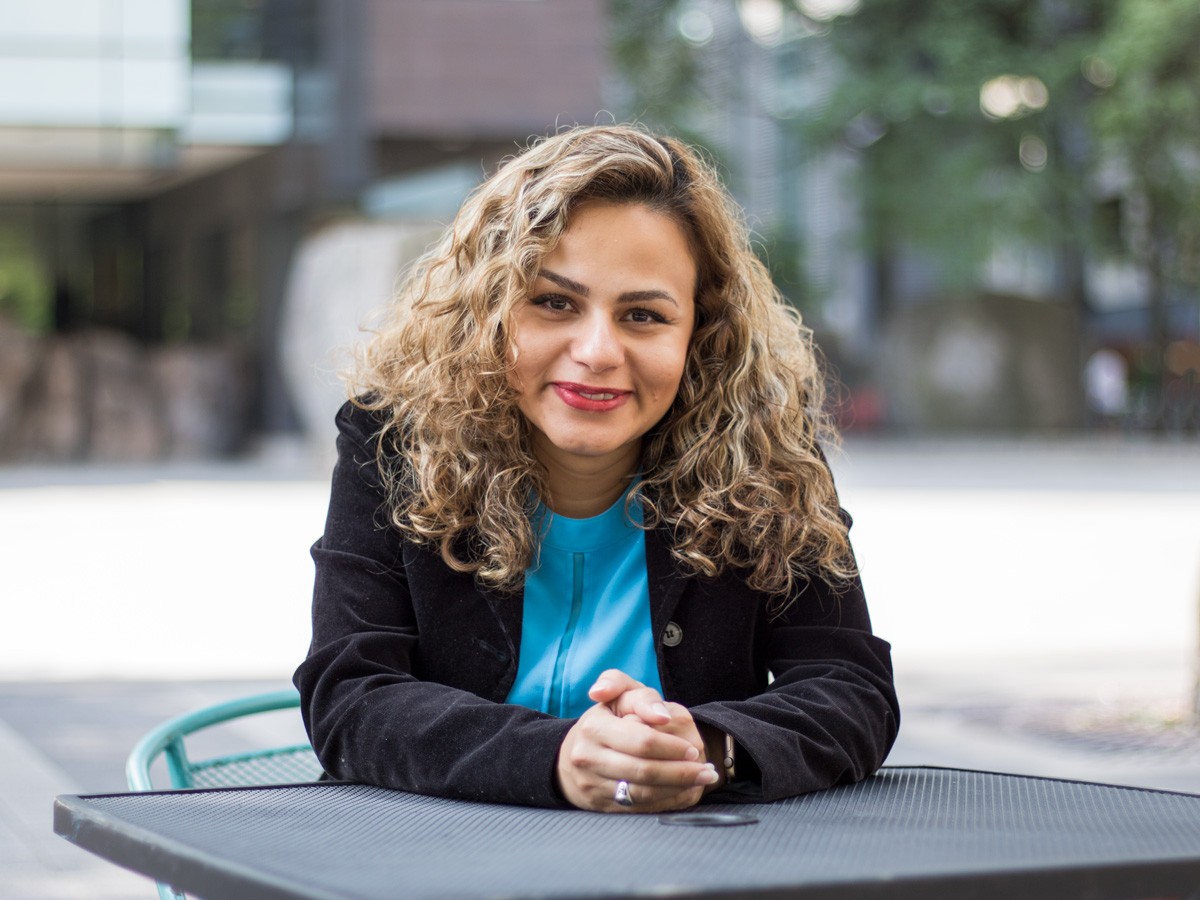
Dr. Hadis Zarrin is an Associate Professor in the Department of Chemical Engineering at Toronto Metropolitan University. Her research focuses on multifunctional nanoengineered materials for clean energy storage, environmental remediation, and wearable biosensors. PhD, University of Waterloo (2014) MSc, Iran University of Science and Technology (2008) BSc, Azad University (2004) Dr. Zarrin’s research spans Clean Energy Storage and Conversion , leveraging 2D nanomaterials (e.g., MXene, hBN, rGO) to advance Hydrogen Production , Fuel Cells , Supercapacitors , and Water Treatment . Her work integrates Nanotechnology with Electrochemistry to develop Smart Coatings and Flexible Electronics . Her recent publications (2024–2025) highlight innovations in MXene-hBN composites for energy devices, self-healing coatings , and environmental remediation via nanofibers. These studies emphasize scalable solutions for hydrogen generation , thermal management , and biomedical sensors . NSERC Alexander Graham Bell Canada Graduate Scholarship (2012–2014) Waterloo Institute of Nanotechnology Fellowship (2012–2014) Waterloo President Graduate Scholarship (2012–2014) As a mentor, Dr. Zarrin encourages students to embrace creativity and risk in problem-solving. She leads the Nano-Engineering Laboratory for Energy and Environmental Technologies , fostering interdisciplinary innovation.
Tihana Bicanic is Professor of Infectious Diseases and Mycology at St George's University of London, holding honorary appointments at the MRC Centre for Medical Mycology (University of Exeter) and serving as Director of the Infection Clinical Academic Group. Her clinical and translational research focuses on invasive fungal infections, particularly cryptococcal meningitis in HIV patients and ICU-acquired candidiasis/aspergillosis. She leads the CandiRes study on Candida resistance evolution and previously directed the AspiFlu project on influenza/COVID-associated aspergillosis. Key research domains: Cryptococcal meningitis pathogenesis and treatment optimization Antifungal resistance mechanisms and prevention strategies Genomic epidemiology of fungal pathogens Immunotherapy for fungal infections Her group's publications demonstrate consistent focus on clinical mycology, antimicrobial resistance, and immunopathology. Recent work emphasizes diagnostic innovation, therapeutic optimization, and translational approaches for critical care mycoses. Awards and recognition include: Fellowship in the European Confederation of Medical Mycology (FECMM) Member of Wellcome Trust's Pathogen Biology and Disease Transmission Discovery Advisory Group Research team includes laboratory technicians and clinical research fellows investigating fungal pathogenesis and treatment strategies across multiple UK ICUs.
Prof. Dr. Georg Garnweitner is a full Professor of Nanomaterials at the Institute for Particle Technology , Faculty of Mechanical Engineering, Technische Universität Braunschweig. He has served as Dean of Studies since 2023, DFG Liaison Lecturer since 2021, and head of the Laboratory for Emerging Nanometrology (LENA) board since 2013. University Professorship in Nanomaterials (2013–present) Junior Professorship in Nanoparticles/Nanocomposites (2007–2013) Research at Max Planck Institute (2005–2006) His research focuses on nanomaterial synthesis , non-aqueous nanoparticle formation , and energy storage materials , particularly for lithium-sulfur batteries. He also explores drug delivery systems using silica aerogels and optofluidic particle analysis . His work combines materials science , surface chemistry , and advanced characterization techniques . Recent publications highlight breakthroughs in solid-state electrolyte design (2023), solvent-free drug loading (2022), and nanoparticle migration dynamics (2020). He contributes to crystal engineering (2021) and population balance modeling (2017) for nanoparticle formation.