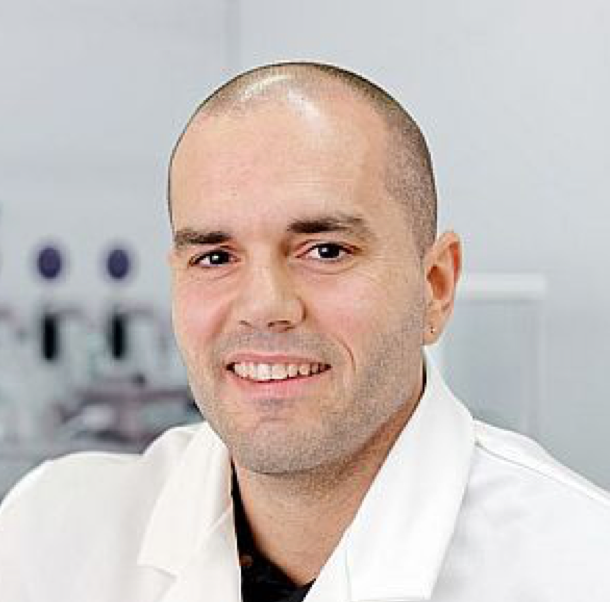
Dr. Rajesh Bera is a Research Fellow at ICFO's Functional Optoelectronic Nanomaterials group specializing in quantum-confined nanostructures. His research examines ultrafast carrier dynamics, excitonic properties, and optoelectronic applications of nanomaterials including quantum dots, nanoplatelets, and hybrid nanostructures. Current investigations focus on intraband transitions in doped nanocrystals, orientation-dependent excitonic behavior in 2D materials, and charge transfer mechanisms in heterostructure devices. Work bridges fundamental photophysics with applications in photodetection, sensing, and energy conversion. Recent publications demonstrate expertise in time-resolved spectroscopy of quantum materials, nanomaterial synthesis via colloidal chemistry, and rational design of optoelectronic devices. Continually develops novel characterization methods to probe ultrafast processes at nanoscale interfaces.
Catalan Institute of Nanoscience and Nanotechnology (ICN2)Spain
Prof. Gustau Catalán is an ICREA Research Professor and Group Leader of the Oxide Nanophysics Group at the Catalan Institute of Nanoscience and Nanotechnology (ICN2). He earned his PhD in Physics from Queen’s University of Belfast (2001) and held postdoctoral positions at IMEDEA (2002–2004), University of Groningen (2004–2005), and University of Cambridge (2005–2009). Since 2009, he has led pioneering research in flexoelectricity, domain wall physics, and strain-engineered oxide materials, supported by an ERC Grant. Education: PhD in Physics, Queen’s University of Belfast (2001) BSc in Physics, Universitat de Barcelona (1997) Research Interests: Gustau Catalán's work focuses on the interplay between ferroelectricity, flexoelectricity, and metal-insulator transitions in oxide materials. His research explores how these properties manifest at reduced dimensions, with applications in nanoelectronics, photovoltaics, and smart mechanical systems. Key areas include polarization dynamics, domain wall engineering, and strain-gradient effects. Recent Publications (2024–2025): The 15 most recent articles highlight advancements in flexoelectricity (e.g., water ice and halide perovskites), domain wall dynamics (e.g., tungsten trioxide), and strain-gradient-induced photovoltaic effects. These studies span materials like PbZrO3, BaTiO3, and BiFeO3, with implications for energy harvesting, memory devices, and nanoscale actuators. Scientific Awards: ERC Grant for flexoelectricity laboratory establishment Advising and Collaborations: While specific students are not listed, Catalán collaborates extensively with researchers across Europe. His group develops novel oxide-based systems and investigates their electromechanical and optoelectronic properties. Laboratory & Team: At ICN2, he established one of the world's first flexoelectricity laboratories, leading a team that explores oxide nanophysics through advanced characterization techniques like AFM, X-ray diffraction, and electrocaloric imaging.
Carme Torras Genís is a Research Professor at the Spanish National Research Council (CSIC), affiliated with the Institute of Robotics and Industrial Informatics (IRI) in Barcelona and the Technical University of Catalonia (UPC). Her career spans over three decades, focusing on robotics, neurocomputing, and artificial intelligence with applications in healthcare and deformable object manipulation. M.Sc. in Mathematics (University of Barcelona, 1978) M.Sc. in Computer Science (University of Massachusetts, 11981) Ph.D. in Computer Science (UPC, 1984) Research Interests : Robotic manipulation of deformable objects (especially textiles) Neurocomputing and machine learning for robotic control Human-robot interaction and assistive robotics Computational topology for cloth state representation Ethics in social robotics and AI Medical applications of robotics for neuromuscular disease assessment Scientific Leadership : ERC Advanced Grant recipient (2016) IEEE and EurAI Fellow Coordinator of Horizon Europe project SoftEnable and former ERC project CLOTHILDE Editorial leadership in IEEE Transactions on Robotics and multiple journals Active in ethics committees and AI policy advisory boards Advisory Committee of Ethics in AI (Catalan Government) Vice-President of CSIC Ethics Committee Member of Royal Academy of Engineering (Spain)
Institute for Bioengineering of Catalonia (IBEC)Spain
Pere Roca-Cusachs Soulere is a Full Professor at the University of Barcelona and Group Leader at the Institute for Bioengineering of Catalonia (IBEC). His research focuses on understanding how cells detect and respond to mechanical signals through physical and molecular mechanisms. He holds significant roles in both academic and research institutions, including leadership in IBEC's Cellular and Molecular Mechanobiology group. Education: PhD in cellular biophysics (2007) from the University of Barcelona Medical School; postdoctoral research at Columbia University (2007–2011). Established his group at IBEC in 2012. Awards include the EMBO Young Investigator Award, City of Barcelona Award, and EBSA Young Investigator Award. Research Interests: Mechanobiology, cellular mechanotransduction, force transmission, nuclear mechanics, and integrin-mediated adhesion. His work bridges biophysics, cell biology, and engineering to study how mechanical forces influence cellular behavior and disease processes. Awards: Recognized for contributions to mechanobiology, including EMBO membership and multiple prestigious awards. His lab develops innovative tools like the MIRO chip to model tumor-immune interactions. Advising & Grants: Leads a multidisciplinary team, collaborating on projects funded by grants focusing on cell mechanics, cancer biology, and tissue engineering. His work integrates experimental and computational approaches to advance understanding of cellular force dynamics. Labs/Teams: Directs the Cellular and Molecular Mechanobiology group at IBEC, a hub for cutting-edge research on mechanosensing and mechanotransduction.
Gil Serrancoli Masferrer is an Associate Professor in the Department of Mechanical Engineering at the School of Engineering of East Barcelona (EEBE), part of the Polytechnic University of Catalonia (UPC). He is affiliated with the InSup - Research Group in Surface Interaction in Bioengineering and Materials Science and the LAM - Multimedia Applications and ICT Laboratory. His work focuses on biomechanics, computational modeling, and telerehabilitation systems development for clinical applications. Dr. Serrancoli's research spans multisolid dynamics, dynamic optimization, movement simulation, and telerehabilitation systems. His expertise lies in applying computational techniques to solve complex problems in orthopedics, gait analysis, and rehabilitation engineering. His work bridges mechanical engineering with biomedical applications, particularly in musculoskeletal modeling and simulation of orthopedic procedures. He has developed novel computational frameworks for estimating internal musculoskeletal loading and muscle adaptation in various conditions, including hypogravity environments. His recent publications demonstrate a strong focus on in-silico modeling of orthopedic procedures, particularly knee osteotomies (proximal fibular osteotomy versus high tibial osteotomy), with detailed analysis of joint pressure redistribution. He has also pioneered the application of machine learning techniques, particularly recurrent neural networks, to biomechanical problems including cycling biomechanics and running dynamics prediction. His work consistently integrates computational efficiency with clinical relevance. Technical Award - OpenSim+ Advanced Workshop March 2024 Accésit del XLV Congreso de la Sociedad Ibérica de Biomecánica y Biomateriales European Society of Biomechanics Travel Award OpenSim Virtual Workshop - Technical Award OpenSim Visiting Scholar 2017 Enginyers BCN 2018 Dr. Serrancoli leads several competitive R&D projects including 'Muvity: a novel physical telerehabilitation system' for vulnerable populations and 'Simulaciones predictivas in silico para cirugías ortopédicas' (Predictive in-silico simulations for orthopedic surgeries). He collaborates extensively with researchers across Europe, particularly with Jordi Torner, Josep Maria Font Llagunes, and Joan Carles Monllau, and has secured funding from national and regional programs including Plan Estatal de Investigación Científica y Técnica y de Innovación. He is actively involved in the BIOMEC - Biomechanical Engineering Lab and the TecSalut - Research Group in Health Technologies, where he contributes to the development of innovative solutions for healthcare challenges, particularly in the areas of telerehabilitation and computational biomechanics for orthopedic applications.
John Kilner is a Senior Research Investigator at Imperial College London, formerly holding the BCH Steele Professorship of Energy Materials and serving as Head of the Department of Materials and Dean of the Royal School of Mines. His research focuses on ionic and mixed-conducting ceramics, particularly for applications in fuel cells, oxygen separators, and sensors. He pioneered isotopic exchange SIMS techniques to study oxygen exchange and diffusion in oxide ceramics, with recent work centered on intermediate-temperature fuel cells and interfacial phenomena in solid electrolytes. Prof. Kilner's academic background includes over 30 years of research in materials science, leading to over 250 publications and multiple patents in fuel cell and gas separation technologies. He co-founded CeresPower Ltd, a successful spinout company. His work bridges fundamental materials science with applied energy technologies, emphasizing solid-state ionics and ceramic electrolyte development. Publications span advancements in garnet solid electrolytes, lithium-ion conductivity enhancement strategies, and in-operando microscopy analysis of battery materials. His contributions to the Journal of Solid State Ionics as European Editor highlight his role in shaping the field's academic discourse. Notably, Kilner advises doctoral research such as William Manalastas Wang’s thesis on ceramic lithium-ion electrolytes. His research team actively explores next-generation battery materials with a focus on improving energy density and stability through advanced ceramic engineering and surface analysis techniques.
Prof. Josep Puigmartí-Luis is a Research Professor at the University of Barcelona (UB) since 2020, following an ERC Starting Grant in 2015 and an ICREA Research Professorship in 2019. He holds a master’s in Chemistry and Food Engineering from IQS (2003) and a PhD in Materials Science from ICMAB. His research focuses on functional materials synthesis, microfluidic technologies, and self-assembly processes, with applications in nanotechnology and biomedical engineering. Key awards include the Premi Antoni de Martí (2009), St. Jordi Award (2006), and ETH Fellowship (2008). His group, ChemInFlow, develops magnetic microrobots and piezoelectric catalytic systems for targeted therapies and environmental remediation. Educations: PhD in Materials Science, Institut de Ciència de Materials de Barcelona (ICMAB) Master in Chemistry and Food Engineering, Institut Químic de Sarrià (IQS), 2003 Research Interests: Synthesis of functional materials in solution/surfaces, microfluidic technologies, non-equilibrium assemblies, magnetic microrobotics, and piezoelectric catalysis. Articles Trends: Recent work emphasizes microfluidics-driven material synthesis, magnetic microrobot navigation, and piezoelectric catalysis for biomedical and environmental applications. Key themes include nanoreactors, targeted drug delivery, and functional MOF/COF materials. Awards: Premi Antoni de Martí i Franquès de Ciències Químiques (2009) ERC Starting Grant (2015) Rising Star Award (IEEE 3M-NANO 2023) Grants & Labs: ERC Starting Grant (2015), ICREA Professorship (2019). The ChemInFlow Group pioneers interdisciplinary approaches in materials synthesis and robotics, with collaborations spanning Europe and Asia. Labs/Teams: Leads the ChemInFlow Group at UB, focusing on microfluidic technologies and biomedical microrobotics.
Maria Pau Ginebra Molins is a Professor in the Department of Materials Science and Engineering at the Barcelona East School of Engineering (EEBE), Polytechnic University of Catalonia (UPC). She leads the BBT Research Group focused on Biomaterials, Biomechanics and Tissue Engineering and is affiliated with the Institute of Research and Innovation in Health. Her educational background, while not explicitly detailed in the provided text, reflects extensive expertise in materials science with a specialization in biomaterials, evidenced by her substantial research portfolio spanning over three decades. Professor Ginebra Molins' research spans biomaterials development, bone tissue engineering, and advanced manufacturing techniques. Her work focuses on calcium phosphate-based materials, 3D printing technologies for bone scaffolds, hydrogel systems, and surface modifications of biomaterials to enhance biological responses. She has pioneered approaches in vat photopolymerization, direct ink writing, and the development of stimuli-responsive biomaterials. Analysis of her recent publications (2024-2025) reveals a strong emphasis on translational research with clinical applications. Her work bridges fundamental materials science with practical medical solutions, particularly in bone regeneration, dental implants, and antimicrobial biomaterials. The publications demonstrate expertise in advanced characterization techniques, including spectroscopy and nanoindentation for biomaterial evaluation. Multiple competitive R&D projects including CEX2023-001300-M Maria Maetzu Centre Ciència i Enginyeria Multiescala 17 documented awards and recognitions Leadership in the Inspiring the next generation of innovators project Patents related to 3D-printed bone grafts Professor Ginebra Molins actively supervises doctoral students, with Johansson, L. completing a thesis on 3D-printed biomimetic bone grafts. Her research group (BBT) collaborates extensively with industry and clinical partners to translate laboratory findings into medical applications. She participates in numerous competitive research projects funded by national and European programs, demonstrating the high impact and relevance of her work in the biomaterials field.
Roger Uceda Molera is an Associate Professor at the Universitat Politècnica de Catalunya (UPC) in the Department of Mechanical Engineering, affiliated with the Barcelona Higher Technical School of Industrial Engineering (ETSEIB). He is a member of the DigiFACT research group, focusing on advanced manufacturing technologies. His expertise spans entrepreneurship, 3D scanning, additive manufacturing, 3D printing, Industry 4.0, IoT, and mechanization. He has contributed to over 25 research activities, including articles, patents, and awards. Roger’s research emphasizes innovative additive manufacturing techniques, such as hybrid multi-material 3D printing and applications in medical prototyping. His work includes developing materials for concrete additive manufacturing and optimizing ceramic sintering processes. He has collaborated with companies like BCN3D Technologies and led projects funded by public-private partnerships. Key awards include the 2019 Premi Nacional al Partenariat Publicoprivat en R+I and the World to NYC Global Industry Challenge (W2NYC). He holds a patent for extrusion systems in cementitious material manufacturing. His research group, DigiFACT, drives advancements in digital factory technologies and industrial innovation.
Jose J. Muñoz is a Professor at the Universitat Politècnica de Catalunya (UPC), affiliated with the Department of Mathematics and the LACÀN research group. His work focuses on computational mechanics, mechanobiology, and inverse problems in biological systems. He holds a PhD in Aeronautics from Imperial College London (2004) and a dual degree in Mechanical Engineering from UPC and Civil Engineering from École Centrale Paris (1997). His research combines finite element methods, vertex models, and optimal control to study tissue morphogenesis, wound healing, and cancer mechanics. Current roles include leading the LACÀN research group and supervising PhD students in projects like optimal control of contractile systems and inverse mechanical analysis. Former students include Ashutosh Bijalwan and Cécilia Olivesi. He teaches Numerical Methods and Computational Mechanics at the UPC's Faculty of Mathematics and Statistics. His research interests span vertex and finite element modeling, cell rheology, and stability analysis of biological tissues. Notable contributions include models for epithelial wound healing, Drosophila embryo development, and mechanical oscillations in tissues. His work often integrates experimental data with computational frameworks to infer non-observable mechanical parameters.
Helena Roco Taboada is an Interim Lecturer in the Department of Pharmacology, Pharmacy and Pharmaceutical Technology at the University of Santiago de Compostela. She holds a PhD from the same institution for her thesis on 'Quality-by-design approach for the development of lipid-based nanosystems for anti-mycobacterial therapy' (2021), supervised by Dr. Mariana Landín Pérez and Dr. Carmen Remuñán López. She is affiliated with the Faculty of Sciences and is part of the Strategic Grouping in Materials (AEMAT) and the ID-FARMA research group focusing on dosage forms and drug release systems. Her research interests center on pharmaceutical technology, drug delivery systems, and nanomedicine, with a focus on applications in anti-mycobacterial therapy, osteoporosis treatment, and bone regeneration. Her work integrates lipid-based nanosystems, targeted drug delivery, and AI-driven formulation strategies. Recent projects include developing lipid nanoparticles for clofazimine delivery and thermosensitive hydrogels for osteoarthritis management. Her publications span topics like nanoparticle functionalization, cryoprotectant optimization in lyophilization, and AI tools for nanostructured lipid carrier design. She is active in interdisciplinary collaborations within materials science and biomedical engineering.
Olga Martin Cadiz is an Associate Professor at the University Carlos III of Madrid, affiliated with the Academic Department of Materials Science and Engineering and Chemical Engineering. She is a member of the Polymers and Composites research group, associated with the Álvaro Alonso Barba Institute of Chemistry and Materials Technology. Her research focuses on polymer composites, nanotechnology, and functional materials for food packaging and industrial applications. Key areas include antibacterial materials, environmental sustainability, and the use of nanomaterials like graphene oxide, carbon nanotubes, and MXene to enhance material properties. Recent publications highlight advancements in active food packaging , metal-polymer hybrids , and catalytic nanomaterials . Her work integrates nanotechnology for biocidal properties, flame retardancy, and catalytic applications. Notable Scientific Awards: Patent: Material compuesto antimicrobiano (2023) Patent: Nanocompuestos de sales dobles de cobre (2021) She supervises research projects on polymer-based antimicrobial materials and has participated in grants from institutions like the Spanish State Research Agency (AEI), Airbus Operations, and the Ministry of Science and Innovation.
Sergio Barbero is an Associate Researcher at the Visual Optics laboratory of the Instituto de Óptica (CSIC), Spain, under the supervision of Prof. Susana Marcos. He holds a BSc in Physics from the University of Zaragoza (1999) and a PhD in Visual Sciences from the University of Valladolid (2004), which earned him the Doctoral Thesis Extraordinary Award (2005). His research focuses on optical aberrations, intraocular lens design, wavefront measurement techniques, and gradient-index modeling of ocular structures. Barbero has collaborated with international groups at Indiana University (USA), University of Houston (USA), and Australian institutions. His work includes pioneering studies on crystalline lens tomography, corneal ablation algorithms, and novel wavefront sensing methods. He has authored 16 peer-reviewed publications and contributed to a US patent on wavefront reconstruction techniques. His research spans three core areas: (1) intraocular lens design using analytical tools, (2) gradient-index modeling of the human eye, and (3) in vivo measurement of crystalline lens aberrations. He has secured grants from the Spanish government (I3P-CSIC), NIH (USA), and Fulbright fellowships. Barbero has presented 33 scientific talks/posters, including invited lectures, and maintains an h-index of 9. His work bridges fundamental optics with clinical applications in ophthalmology.
Miguel Alberto Abelleira Doldán is a Professor in the Department of Architectural Projects, Urban Planning and Composition at the School of Architecture, University of A Coruña (UDC). His teaching portfolio includes several core courses across multiple programs including the Degree in Architectural Studies, University Master in Architecture, and Master's Degree in Industrial Design Engineering. His research interests focus on the History of Architecture , particularly Modern and Contemporary Architecture with special emphasis on Galician Architecture and the History of Design . He has made significant contributions to understanding architectural heritage in Galicia, with particular attention to furniture design, urban development patterns, and the relationship between public spaces and social activities. An analysis of his 15 most recent publications reveals a consistent focus on Galician architectural identity, with strong emphasis on historical preservation, regional architectural styles, and the evolution of design traditions. His work spans from detailed studies of specific architects and buildings to broader examinations of urban development patterns and cultural heritage preservation. Professor Abelleira Doldán actively supervises numerous bachelor's and master's theses on topics ranging from social housing design processes to maritime heritage and urban planning projects. His research has been supported by various funding entities including LOREFAR, SL, TELEVÉS S.L., and the Galician Technology Center for Automotive. He is a member of the Research Group in History of Architecture at UDC, where he contributes to ongoing projects examining Galician architectural heritage, urban development, and design history. His work bridges academic research with practical applications in architectural preservation and urban planning.
CARMEN PADILLA RASCÓN is a Researcher at the Department of Chemical, Environmental and Materials Engineering at the University of Jaén. She obtained her Doctorate in 2022 with the thesis "Production of furfural and bioethanol from olive stones." Education: PhD in Chemical Engineering, University of Jaén (2022) Her research focuses on lignocellulosic biomass valorization through biorefinery systems, particularly using agricultural residues like olive stones and vine shoots for producing biofuels and high-value chemicals. Key techniques include steam explosion, acid/alkaline pretreatments, and microwave-assisted processing. Recent publications highlight integrated biorefinery strategies, furfural production optimization, and recovery of bioactive phenolic compounds. The work often involves process engineering, catalytic transformations, and circular economy principles.