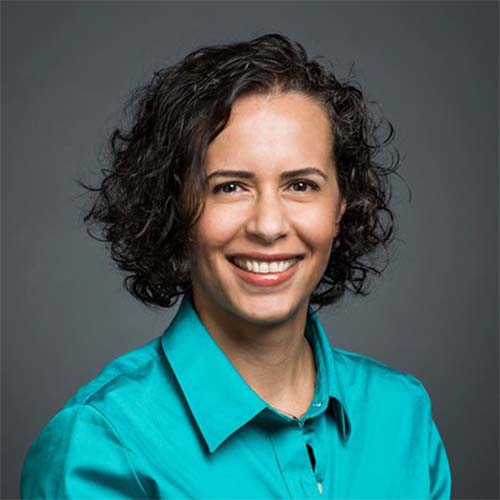
Emily Hannum is a Professor of Sociology and Education at the University of Pennsylvania's College of Arts & Sciences, where she also serves as Associate Dean for Social Sciences. She is affiliated with the Population Studies Center, Center for the Study of Contemporary China, Graduate School of Education, and Penn Development Research Initiative. Education: PhD in Sociology from University of Michigan (1998) Research Focus: Poverty and child welfare, gender and ethnic stratification, sociology of education Projects: Gansu Survey of Children and Families, climate-environment-childhood inequalities in LMICs Workshops: Co-organizer of Penn Education and Inequality Workshop Her research explores childhood poverty in China, demographic impacts on education systems, and climate risks affecting children's welfare. She investigates environmental hazards, educational disparities, and family separation effects across China, India, and low/middle-income countries. Recent publications analyze educational expansion in East Asia, climate crisis impacts on child health, and gender disparities in Latin America. She directs longitudinal studies on rural poverty and collaborates on cross-national projects related to environmental and educational equity. Scientific awards include the Stanley I. Sheerr Term Professorship in Social Sciences.
Ada M. Fenick, MD, is a Professor of Pediatrics (General Pediatrics) at Yale School of Medicine. She holds multiple leadership roles including Associate Director for Pediatrics in the Biopsychosocial Approach to Health clerkship, Medical Director of School-Based Health Centers, and Medical Director of the Medical-Legal Partnership Project. Her clinical practice focuses on economically disadvantaged pediatric populations, emphasizing developmental aspects of child health and addressing toxic stress impacts. Education: BS in Biomedical Sciences (University of Michigan, 1990), MD (University of Michigan, 1993), Pediatric Residency (Weill-Cornell/NY Medical Center, 1996) Research: Centers on pediatric primary care innovations such as group well-child care models, medical-legal partnerships, and obesity prevention. Key themes include health equity, social determinants of health, and curriculum development. Her recent work emphasizes leveraging medical student experiences to improve curricula addressing social drivers of health. Over 20 peer-reviewed publications since 2020 focus on topics like electronic phenotyping algorithms for obesity screening and frameworks for group pediatric care implementation. Awards: Includes Howard A Pearson MD Teaching Award (2013) and multiple institutional recognitions for clinical excellence and innovation. She leads initiatives like the Yale Primary Care Pediatrics Curriculum and collaborates with community organizations to enhance access to early intervention services for vulnerable children. Her work integrates clinical care, education, and policy advocacy to promote holistic child health outcomes.
Grace Lim is an Assistant Professor in the Department of Management at the Nanyang Business School, Nanyang Technological University, Singapore. Her research focuses on inclusion, diversity, and the empowerment of disadvantaged employees in organizations, particularly those from lower social class backgrounds and women. Education: Ph.D. in Business (Organizational Behavior and Human Resources), Singapore Management University B.Sc. in Psychology, National University of Singapore Her research employs a range of methodologies, including field surveys, experiments, archival data, and qualitative methods, to ensure robust and generalizable findings. She investigates how individuals can exercise agency to overcome structural disadvantages in the workplace, contributing to the fields of organizational behavior, human resources, and social psychology. Her recent publications reflect a strong trend in studying diversity, inclusion, and equity, with a focus on social class, gender, leadership, and employee well-being. The research spans interdisciplinary themes, integrating insights from psychology, management, and sociology to understand workplace dynamics. Scientific Contributions: Published in top-tier journals such as Organizational Behavior and Human Decision Processes and Academy of Management Annals Research on social class, gender, inclusion, and leadership has been influential in shaping organizational practices Dr. Lim is actively involved in advancing knowledge in organizational behavior and human resources. She has not supervised any listed students yet but continues to contribute through impactful research and academic engagement. She is a member of the Centre for Leadership and Cultural Intelligence at NTU, collaborating on initiatives related to cultural intelligence and inclusive leadership.
Dr. Amy Damashek serves as Professor in the Department of Psychology at Western Michigan University, teaching undergraduate and graduate courses while mentoring Clinical Psychology doctoral students. She chairs the department's Diversity, Equity, and Inclusion Committee and maintains an active research program focused on vulnerable populations. Education: Ph.D. in Psychology, University of Missouri-Columbia (2007) Postdoctoral Fellowship, University of Oklahoma Health Sciences Center (2009) Research Focus: Her work centers on preventing child maltreatment and unintentional injuries among at-risk youth, with specialized expertise in infant sleep-related deaths and health disparities . She develops culturally responsive parenting interventions for low-income and Spanish-speaking families, emphasizing community-based solutions through home visiting programs. Publication Trends: Recent work (2020-2023) demonstrates consistent focus on pandemic adaptation of family services, safe sleep practices in marginalized communities, and digital intervention strategies. Her mixed-methods approach bridges clinical psychology with public health, prioritizing implementation in real-world settings. Scientific Recognition: Fellow of the American Psychological Association Former President of APA Division 37 (Society for Child and Family Policy and Practice) Grants & Mentoring: Secured federal funding for child injury prevention in underserved communities. Mentors Clinical Psychology doctoral students with emphasis on culturally competent practice, accepting new graduate students for Fall 2025. Her federally funded work directly informs evidence-based home visiting protocols. Research Ecosystem: Collaborates extensively with community health workers, home visiting agencies, and pediatric care providers to implement and evaluate interventions addressing structural barriers in family support systems.
Jasmine Travers Altizer is an Assistant Professor at NYU Rory Meyers College of Nursing, where she conducts research to improve health outcomes and reduce disparities among vulnerable older adults. Her work spans long-term care systems, aging, and health equity, with a focus on both quantitative and qualitative approaches. Education: PhD, Columbia University School of Nursing MHS, Yale University MSN, Stony Brook University (Adult-Gerontological Health) BSN, Adelphi University Her research interests include gerontology, health disparities, workforce diversity, infection control, and policy in long-term care. She investigates how neighborhood disadvantage, staffing levels, and systemic inequities affect care quality in nursing homes and home-based settings. Her recent work has explored antipsychotic medication use, caregiver coping strategies, and the impact of federal programs like the Paycheck Protection Program on staffing. The 15 most recent publications reflect a strong trajectory in health services research, with recurring themes in equity, workforce well-being, and policy evaluation. Her studies frequently use large national datasets and mixed methods to address structural barriers in care delivery for underserved populations, particularly Black and Latino older adults. Scientific Awards and Honors: Rising Star Research Award, Eastern Nursing Research Society (2022) Health in Aging Foundation New Investigator Award (2022) NASEM Committee Member on Quality of Care in Nursing Homes (2020) Scholar, National Clinician Scholars Program, Yale (2020) Jonas Policy Scholar (2019) Douglas Holmes Emerging Scholar Paper Award (2018) Travers is actively involved in mentoring and accepting PhD students. She leads multiple federally funded research projects, including a Robert Wood Johnson Foundation Career Development Award and a National Institute on Aging K76 Beeson Award. She has served on national committees and contributed to high-impact policy reports, demonstrating leadership in translating research into action. Her work is frequently covered in media outlets such as Scientific American , AARP , and Crain's New York . Laboratories and Research Teams: She is affiliated with several active research initiatives, including the NH Explanatory Trials Network and projects examining dementia care workforce experiences, health equity in nursing home quality measures, and culturally sensitive interventions for Black adults with chronic conditions.
Elisabet Langmann serves as Associate Professor and Department Head at Södertörn University, Sweden, specializing in Teacher Training with research bridging educational philosophy and classroom practice. Her work critically examines ethical dimensions of schooling and democratic values implementation. Langmann holds a PhD in Educational Philosophy from Örebro University (2013), where her dissertation explored pedagogical approaches to teaching tolerance while avoiding student marginalization. Her academic journey reflects deep engagement with continental philosophy and didactic theory. Her research centers on ambiguities in democratic values (tolerance, justice, responsibility) and their classroom implications, investigating how value conflicts manifest and how supportive teaching climates emerge. Methodologically, she integrates empirical classroom observations with philosophical analysis, drawing from phenomenology and critical theory to examine sensory, affective, and ethical dimensions of learning environments. Analysis of her 2021-2025 publications reveals three evolving trajectories: sustainability education exploring climate change pedagogy; sensory-phenomenological approaches to classroom climate; and continued refinement of tolerance education frameworks. These strands converge in examining how affective dissonance and bodily experiences shape ethical learning. Langmann actively secures research funding including two Swedish Research Council projects (2020-2023): as project leader for "Forms of Upbringing" investigating bodily dimensions in value conflict resolution, and as co-investigator in "How can schools reduce unequal educational opportunities?" examining school culture in disadvantaged areas. She mentors junior researchers through international networks rather than formal student supervision. She contributes significantly to academic infrastructure as board member of the Nordic Society of Philosophy of Education, co-convenor for NERA/EERA educational philosophy networks, and peer reviewer for 12+ journals including Studies in Philosophy and Education. Her leadership extends to international research collectives like PEDST and SCAPE, focusing on democratic sustainability transitions and cultural conflicts in education.
Professor Julia Race is a leading academic in the Department of Naval Architecture, Ocean and Marine Engineering at the University of Strathclyde’s Faculty of Engineering, where she also serves as Vice Dean (Academic). Her research focuses on the role of pipeline infrastructure in achieving net-zero emissions, particularly through carbon dioxide transport for Carbon Capture and Storage (CCS) and hydrogen energy systems. PhD, University of Cambridge – Carbon diffusion across dissimilar steel welds (1992) BEng, University of Sheffield (1989) Her research interests center on the adaptation of energy infrastructure for decarbonization, combining engineering, risk assessment, and socio-economic analysis. She investigates material specifications for CO₂ and H₂ pipelines, quantitative risk assessments, hydraulic design, and the wider economic impacts of energy transitions. Her work is closely tied to UN Sustainable Development Goals, particularly those related to climate action and sustainable industry. The recent publications reflect a strong trend toward interdisciplinary research at the intersection of engineering, economics, and policy. Her work increasingly emphasizes the socio-economic dimensions of decarbonization, including employment impacts, labour supply constraints, and regional economic benefits of CCS and hydrogen infrastructure. There is a clear focus on UK industrial clusters and the role of Scottish CO₂ transport systems in national and international markets. Julia Race has contributed to several policy briefings and collaborative reports with key stakeholders including the Scottish Government, OEUK, and Storegga. She is actively engaged in research projects funded by EPSRC, NERC, and the British Council, focusing on early-career development, maritime decarbonisation, and engineering education equity. Co-investigator, Strathclyde Engineering Scholars – Equal Outcomes for the Most Disadvantaged (2025) Principal Investigator, EPSRC/NERC CDT in Offshore Renewable Energy (IDCORE 2) (2019–2028) Co-investigator, Empowering Early Career Researchers to Advance Maritime Decarbonisation in Indonesia (2024–2026) Co-investigator, Green Hydrogen Integration at Sullom Voe (2023–2024) She plays a key role in policy outreach and professional engagement, regularly participating in workshops and meetings with government and industry stakeholders. Her leadership extends to diversity and inclusion in engineering education, where she contributes to initiatives aimed at supporting disadvantaged students.
Pearl Subban is an Associate Professor at the School of Curriculum Teaching & Inclusive Education at Monash University. Her work focuses on Inclusive Education , Racial Equity , and Social Justice , contributing to UN Sustainable Development Goals. She has led and collaborated on international projects, including a professional development program for inclusive education in Australia and Malaysia. Key Research Areas: Inclusive pedagogy, differentiated instruction, gifted education, teacher self-efficacy, and systemic equity in education. Recent Projects: Development of inclusive education frameworks, early intervention programs for at-risk students, and collaborative research on dysgraphia and behavior support practices. Her publications analyze inclusive education practices across diverse contexts, with a focus on teacher attitudes, collective efficacy, and culturally responsive frameworks. She actively contributes to media discourse on educational equity and has participated in academic conferences, including the Monash Education Academy Learning and Teaching Conference.
Alessandro Rigolon is an Associate Professor and MCMP Program Coordinator in the Department of City and Metropolitan Planning at the University of Utah, where he has been on the faculty since 2019. A dual-PhD scholar (Design & Planning, University of Colorado Denver; Architecture, University of Bologna), he is internationally recognized for research on environmental justice, green-space equity, and the public-health consequences of urban greening. Education: Ph.D. in Design and Planning, University of Colorado Denver (2015) Ph.D. in Architecture, University of Bologna, Italy (2012) B.Arch. & M.Arch. in Architecture and Urban Design, University of Bologna, Italy (2007) Research Interests: Rigolon’s work sits at the intersection of environmental justice, urban planning, and public health. He investigates four interconnected themes: (1) policy drivers of inequity in green-space provision; (2) the mechanisms and resistance to green gentrification; (3) green infrastructure’s role in equitable climate adaptation; and (4) health impacts of urban nature on marginalized communities. His studies span multiple scales—from census microdata in Miami-Dade County to machine-learning analyses across 263 Chinese cities—deploying mixed-methods, spatial analytics, and community-engaged research. Publications & Impact: Across 89 peer-reviewed outputs, recent work (2024-2025) reveals complex pathways by which gentrification both precedes and follows greening, quantifies disparities in park access among racial/ethnic groups, and evaluates policies aimed at achieving green-space equity. Collectively, these studies highlight the need for fine-scale spatial data, intersectional analyses, and robust procedural justice when designing equitable greening interventions. Scientific Awards & Recognition: Stanford/Elsevier Top 2 % Scientist (2024) Clarivate Highly Cited Researcher (2024) APA-Utah High Achievement Award (2022) Urban Studies Editor’s Featured Articles (2021) University of Utah Celebrate U Researcher Honoree (2020) Arnold O. Beckman Award (2019) Grants & Advising: Rigolon currently leads or co-leads six funded projects totaling over one million dollars from the Center for Equitable Transit-Oriented Communities, Center for Climate Smart Transportation, Prevention Institute, and University of Illinois. These grants support interdisciplinary teams examining transit-oriented green gentrification, climate adaptation for active transportation, and equitable park policy implementation. Graduate students and post-docs are active collaborators on all projects. Teaching & Community Engagement: He teaches graduate courses including Design Ecologies , Plan Making , Professional Project Studio , and Research Design . Through studio courses, students partner with local governments (South Salt Lake City, Liberty Wells Community Council) to produce actionable plans advancing environmental justice.
Karen la Cour is a Professor at the Department of Public Health , University of Southern Denmark (SDU) , leading the Research Unit for User Perspectives & Community-based Interventions . She holds a PhD from Karolinska Institutet (2008) and an MSc in Occupational Therapy from Tufts University (1991) . Her career spans roles as Head of Research Groups , Affiliated Professor at Suunaas Hospital, Norway , and Research Director at REHPA . Academic Degrees: PhD (Karolinska Institutet), MSc (Tufts University) Current Role: Professor, SDU; Focus on community-based cancer rehabilitation and palliative care Research Interests center on coordination of rehabilitation and palliative care , advanced cancer patient quality of life , occupational therapy interventions , and community-based healthcare models . Her work emphasizes social equality , home-life adaptation , and co-production with patients and relatives . Selected Articles highlight her contributions to advanced cancer care , existential support programs , and resource-oriented interventions . Recent studies focus on virtual rehabilitation for dementia , young adult cancer survivors , and environmental restorative potential in palliative settings. Scientific Awards include the Jeppe Juhl Jensen Endowment Grant (2019) , European Cancer Rehabilitation Symposium Poster Prize (2016) , Ropox Prize (2015) , and a Fulbright Scholarship (1989) . Supervision involves mentoring PhD and Master’s students , with seven PhD graduates and four current students. Her projects include YATAC (young adult cancer survivors), COMPAS (socioeconomically disadvantaged cancer patients), and BALanSE (balance and quality of life in cancer care).
Maree Higgins is a Senior Lecturer at the University of New South Wales (UNSW) , affiliated with the Faculty of Arts and Social Sciences and the School of Social Work . She serves as the Social Work Honours Program Convenor and is an Associate of the Australian Institute of Human Rights , with links to the Forced Migration Research Network , Kaldor Centre , and Gendered Violence Research Network . Education : Doctor of Philosophy (Social Work), Australian Catholic University (ACU National) Bachelor of Social Work (Hons First Class), UNSW Research Interests : Maree’s work centers on social justice , human rights , and contextualized lived experience , with a focus on refugee and migrant populations , disability studies , aged care , criminal justice reform , and participatory research methods . Her recent publications emphasize lived experience-led knowledge , co-design practices , and trauma-informed approaches . Grants : She has secured funding for projects like Missing Girls: from childhood runaway to criminalised woman (2022–2025; $204,307) and Ethics and community-based participatory research in refugee studies (2019; $5,000). Supervision : Maree supervises PhD candidates in areas such as intellectual disability and support needs , intimate partner violence , and border policy impacts on asylum seekers . Her completions include honors and master’s theses on autonomy in eating disorder treatment , technology-facilitated abuse , and Aboriginal women in maternity care . Professional Engagement : She collaborates with organizations including STARTTS , Foundation House , Black Dog Institute , and Prince of Wales Hospital , while actively participating in Australian Heads of Schools of Social Work , National Field Educational Network , and African Studies Association of Australasia and the Pacific .
Sabine Seufert is a Full Professor of Management of Educational Innovations at the University of St. Gallen (HSG), where she has held leadership roles including Director of the Institute of Educational Management and Educational Technologies (since 2021) and Director of the Institute of Business Education and Educational Management (2009–2020). She holds a PhD in Information Management (1996) and a Habilitation in Business Education (2006) from the University of St. Gallen, specializing in educational innovation and technology integration. Her research focuses on digital transformation in education, AI applications in learning environments, and competence development in vocational training. She has pioneered initiatives like the Swiss Centre for Innovations in Learning (scil) and contributed to frameworks for hybrid intelligence in education. Her work bridges academic research and practical implementation, emphasizing ethical AI use and teacher preparedness for technological change. Key affiliations include the European Foundation for Management Development (EFMD), the editorial board of the International Journal of Learning Technology , and advisory roles for journals like Empirical Research in Vocational Education and Training . Her recent publications explore AI literacy, social robots in classrooms, and the impact of generative AI on teaching and learning. Her career spans over 25 years, including guest professorships at the University of Southern Queensland and Stanford University, leadership in educational institutions, and policy advisory roles. She is actively involved in shaping future-ready education systems through digital innovation and human-AI collaboration strategies.
Dr. Jan Andres is a faculty member at the University of Bielefeld's Faculty of Linguistics and Literary Studies, specializing in Literary Studies, Romance Studies and Latin. He serves as Dean of Studies, Chairman of the Academic Advisory Board, and has multiple administrative roles including representation for students with disabilities and contact point for disadvantage compensation. His office is located in UHG D4-120 with office hours typically held on Thursdays from 2:30 p.m. to 4 p.m. during lecture periods. Dr. Andres's research focuses on German literary studies with particular expertise in the Stefan George Circle, modern German literature, and cultural criticism. His work explores the intersections of literature, politics, and aesthetics across the 19th and 20th centuries, examining how literary traditions shape and are shaped by historical contexts. He has published extensively on German intellectual history with special attention to aesthetic conservatism, literary networks, and the relationship between literature and political thought. His recent publications (2022-2024) demonstrate continued scholarly engagement with German literary traditions while addressing contemporary concerns such as the Anthropocene in poetry and the concept of trigger warnings in literature. These works maintain his longstanding focus on literary analysis while expanding into new theoretical frameworks that connect historical literary practices with current cultural debates. His research shows remarkable continuity in examining the Stefan George Circle alongside evolving interests in modern poetic expression and contemporary literary criticism. As Dean of Studies and academic leader, Dr. Andres oversees curriculum development and student advising within his department. His administrative roles reflect his commitment to educational excellence and inclusive practices, particularly through his dedicated work supporting students with disabilities and managing disadvantage compensation. His module responsibilities include German-language literature, English-language literature, and specialized philological studies in German and American studies.
Paul Hastings is a Professor of Psychology at the University of California, Davis. He leads the Healthy Emotions, Relationships and Development Lab, focusing on developmental psychophysiology, prosocial behavior, and stress-related mechanisms in child and adolescent mental health. His research integrates neurobiological, psychosocial, and cultural factors to understand resilience and risk in diverse populations, including LGBTQ+ youth, Mexican-origin families, and populations affected by global health challenges like the iLiNS-DYAD-Ghana trial. Research interests include prosocial development, stress physiology, family dynamics, and the biological embedding of social inequities. He has extensively studied the impact of adversity (e.g., poverty, trauma, pandemic stress) on children’s emotional and physiological outcomes. Recent work explores how cultural values, caregiving unpredictability, and nutritional interventions influence developmental trajectories. His articles highlight themes like neurobiological correlates of psychopathology, the role of prosociality in pediatric health, and the intersection of social disadvantage with immune and endocrine systems. Key findings include associations between parasympathetic activity and antiviral gene expression, and how family thriving during crises buffers children’s well-being. Students advised include R. T. Hodge, L. C. Partington, and E. Ugarte. His lab collaborates on international projects such as follow-ups of lipid-based nutrient supplement trials in Ghana and studies of stress responses post-displacement in Jordan. He emphasizes translational research to improve interventions for vulnerable youth, integrating biopsychosocial frameworks with community-focused approaches. Current projects investigate biomarkers of resilience, cultural protective factors, and the neurobiology of moral emotions in ethnic minority children.
Özlem Uzuner is a tenured Professor and Department Chair of Information Sciences and Technology at George Mason University's College of Engineering and Computing. She is an expert in Natural Language Processing and its applications to healthcare and policy, with a focus on translating fragmented clinical narratives into actionable data. Research Interests: Her work spans Health Informatics, Public Health Informatics, Mental Health Informatics, and Computational Social Science. She develops algorithms for information extraction, semantic representation, and applications in phenotype prediction, fraud detection, and topic modeling. Funding & Affiliations: Uzuner's research has been supported by the National Institutes of Health, National Library of Medicine, National Institute of Mental Health, Office of the National Coordinator, and industry partners. She is also a research affiliate at MIT's Computer Science and Artificial Intelligence Laboratory (CSAIL). Scientific Awards: NSF grant for supporting socioeconomically disadvantaged students