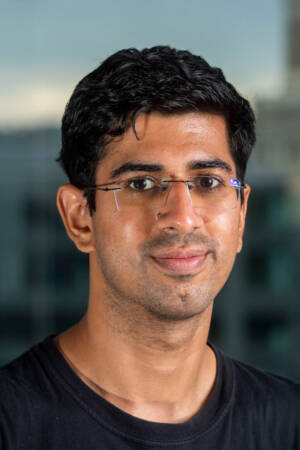
Shubham Tulsiani is an Assistant Professor at Carnegie Mellon University's Robotics Institute, where he leads the Computer Vision group and the Physical Perception Lab. His research focuses on inferring physically and spatially grounded representations from perceptual inputs, with applications in 3D vision, robot manipulation, and neural scene reconstruction. He directs an active research group with multiple PhD and Master's students. Research interests center on 3D scene understanding , robot learning , and generative modeling , with specific emphasis on: self-supervised perception, neural rendering, multi-view geometry, manipulation from visual inputs, and physics-based reasoning. The lab develops methods that leverage physical world constraints as supervisory signals. Recent publications demonstrate strong focus on diffusion models for 3D tasks , sparse-view reconstruction , and robotic manipulation transfer . Key trends include neural inverse rendering, view synthesis from limited observations, and translating human interactions to robot actions. Awards include: Best Student Paper Award at CVPR 2015 Advising includes supervision of 5 PhD students, 4 MS students, and undergraduates. Lab alumni hold positions at Google, Stanford, Meta, and Princeton. The Physical Perception Lab collaborates with FAIR Pittsburgh and the CMU Computer Vision group.
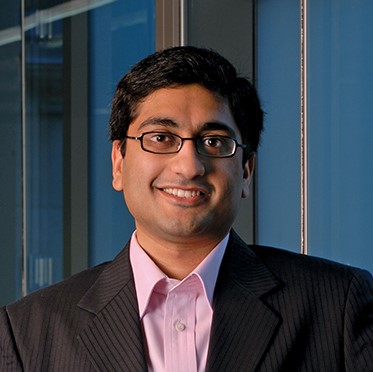
Rahul Mangharam is a Professor in the Department of Electrical and Systems Engineering at the University of Pennsylvania's School of Engineering and Applied Science, with a secondary appointment in Computer and Information Science. He directs the Safe Autonomous Systems Lab (mLAB) and is a founding member of the PRECISE Center. Mangharam serves as Penn Director for the Safety21 DoT National University Transportation Center ($20MM), Director of the Autoware Center of Excellence, and leads the F1Tenth Autonomous Racing Community. Education: Ph.D. in Electrical & Computer Engineering, Carnegie Mellon University M.S. in Electrical & Computer Engineering, Carnegie Mellon University B.S. in Electrical & Computer Engineering, Carnegie Mellon University His research bridges formal methods, machine learning, and control systems with applications in medical devices, autonomous systems, and energy-efficient buildings. Key focus areas include safety verification for autonomous vehicles, real-time control systems, and patient-specific cardiac modeling for clinical applications. Recent work explores conformal prediction for safe perception, differentiable control barrier functions, and explainable autonomous systems. Mangharam's publication trends show strong emphasis on autonomous systems safety (control synthesis, uncertainty quantification) and biomedical applications (cardiac modeling, clinical decision support). His 2022-2023 publications demonstrate cross-disciplinary approaches combining control theory, machine learning, and formal methods for robust autonomous systems. Awards and Honors: Presidential Early Career Award (PECASE) 2016 IEEE Benjamin Franklin Key Award 2014 NSF CAREER Award 2013 Intel Early Faculty Career Award 2012 National Academy of Engineers US Frontiers of Engineering (2012, 2018) Stephen J. Angelo Term Chair (2008-2013) He leads multiple major grants including NSF CAREER, DoT Safety21 Center ($20MM), DoE Energy-Efficient Building Hub ($160MM), and DARPA HACMS. Current PhD students include Zirui Zang. Mangharam founded the F1Tenth autonomous racing platform used globally for education and hosts international competitions through the Autoware Center of Excellence.
Julien Warnan is a researcher at the Catalysis Research Center (CRC) of the Technical University of Munich (TUM). He leads a multidisciplinary research group focusing on renewable energy, particularly artificial photosynthesis and photocatalytic systems for fuel production. His work emphasizes molecular dyes, catalysts, polymers, and hybrid materials to transform CO2 and water into value-added chemicals. He holds the title of Researcher and is actively involved in academic leadership, including co-editing special issues and organizing international conferences like the ECAT conference. His research has been recognized with awards such as the TUM Chemistry Supervisory Award 2021. Recent activities include visiting scientist roles at Imperial College London and collaborations with groups at TUM and other institutions. Research interests encompass MOF-based photocatalysis, biohybrid systems, and sustainable energy conversion. Key achievements include pioneering studies on metal-organic frameworks for CO2 reduction and solar fuel production. His team has published extensively in high-impact journals like Angewandte Chemie and Advanced Materials , with a focus on functional hybrid materials and electrochemical systems. PhD supervision: Nadine Schmaus, Philip Stanley, Johanna Eichhorn, and others Notable collaborations: Shustova Lab, Rieger Group, Fischer Group Labs: Catalysis Research Center (CRC)
Víctor Adrián Braberman is a Full-time Associate Professor at the Department of Computer Science, Faculty of Exact and Natural Sciences, University of Buenos Aires (UBA), and a CONICET researcher. He serves as Co-director of the LaFHIS (Tools and Foundations for Software Engineering) Research Lab at UBA, where he leads significant research in formal methods and software engineering. His academic career demonstrates sustained excellence in both teaching and research within Argentina's premier academic institution. Braberman's research focuses on Formal Verification , particularly Model Checking of Timed Systems, Controller Synthesis, Formal Specification of event-based properties, Aspect-oriented modeling, and Software Architectures. His work also extends to Software Analysis , including Memory Consumption Prediction and Static and Dynamic Program Analysis. These interests position him at the intersection of theoretical computer science and practical software engineering applications, addressing critical challenges in system reliability and performance. His recent publications (2022-2025) reveal a clear trajectory toward integrating artificial intelligence with formal methods , particularly through the application of reinforcement learning to controller synthesis problems and the exploration of Large Language Models for software verification and falsification. The research shows increasing attention to scalability challenges in formal methods and the integration of probabilistic approaches to handle uncertainty in system environments. Automated Reasoning Amazon Research Award (ARA) (2024) Braberman has successfully supervised numerous PhD and Licentiate students, establishing a strong academic lineage in formal methods research in Argentina. His research has been supported by substantial grants including European Community projects (MEALS), ANPCyT PICT grants, UBACyT projects, and Microsoft Research funding. His leadership extends to directing major research initiatives in formal software engineering. As Co-director of LaFHIS, Braberman oversees a vibrant research ecosystem that bridges theoretical computer science with practical software engineering challenges. The lab maintains strong international collaborations, particularly with European institutions, and has secured competitive funding from both national and international sources, demonstrating the global relevance of their work in formal methods and software engineering.
Sofie Haesaert is an Assistant Professor in the Control Systems group at the Department of Electrical Engineering, Eindhoven University of Technology. Her work focuses on formal verification and control synthesis methods for cyber-physical systems, particularly through stochastic simulation relations and temporal logic specifications. Education: BSc (cum laude) and MSc (cum laude) in Mechanical Engineering and Systems & Control from Delft University of Technology; PhD from Eindhoven University of Technology (2017) Experience: Postdoctoral researcher at Caltech (2017-2018), then returned to TU/e as Assistant Professor Her research interests include: Cyber-physical systems verification Stochastic control methods Temporal logic specification Markov decision processes Formal methods in control engineering Model abstractions and simulation relations Recent publications show strong focus on: Stochastic temporal logic control Robust and risk-aware control Multi-agent system verification Formal synthesis via simulation relations AI integration in control systems Software tools for formal control Scientific achievements: Veni Grant recipient (2020) Co-developer of the SySCoRe toolset for stochastic control synthesis Contributor to formal verification benchmarks through ARCH-COMP reports She contributes to education through courses on: Control principles for engineered systems Control challenges in autonomous racing Supervisory control of cyber-physical systems Haesaert collaborates across disciplines including computer science, applied mathematics, and robotics, with over 750 citations and significant contributions to formal control theory for stochastic systems. Her work bridges theoretical developments with practical applications in autonomous systems and complex control architectures.
Jeeseop Kim is an Assistant Professor in the Department of Aerospace and Mechanical Engineering at The University of Texas at El Paso (UTEP), College of Engineering, specializing in robotics, autonomy, and control theory. His research focuses on safety-critical planning and control, with emphasis on bipedal/quadrupedal locomotion, hybrid dynamical system control, and whole-body planning and control. Education: B.S. in Mechanical and Aerospace Engineering, Seoul National University (2014) M.S. in Intelligence and Information (Robotics), Seoul National University (2017) Ph.D. in Mechanical Engineering, Virginia Tech (2022) Postdoctoral Scholar, Mechanical and Civil Engineering, Caltech (2022–2025) His research spans safety-critical control systems for legged robots, including obstacle-aware nonlinear model predictive control (MPC), control barrier functions, and distributed coordination algorithms. Recent work explores adaptive delay estimation, tactile sensing for robotic grasping, and hardware-software co-design for humanoid robots. Key article trends highlight advancements in autonomous inspection robotics, hybrid control architectures, and real-time planning for quadrupedal systems. His work integrates control theory with practical applications in industrial and healthcare domains. Awards: ASME DSCD Rudolf Kalman Best Paper Award (2022) IEEE ICRA Outstanding Paper Award (2023) Jeeseop teaches MECH 4332: Mechanical Computational Applications in Vision and Robotics (Fall 2025). He actively recruits Ph.D. students for Spring/Fall 2026 and seeks motivated undergraduates/MS students with skills in robotics kinematics, programming (C/C++, Python, MATLAB), and CAD design. The AIGIS Lab welcomes applicants with interests in robotics, controls, and autonomous systems.
Ramavarapu S Sreenivas is a Professor in the Industrial and Enterprise Systems Engineering department at the University of Illinois at Urbana-Champaign , with research appointments at the Coordinated Science Laboratory (CSL) and the Information Trust Institute (ITI ). He holds a joint affiliation with the Electrical and Computer Engineering department and serves as the Arthur Davis Faculty Scholar since 2016. Ph.D. , Electrical and Computer Engineering, Carnegie Mellon University (1990) M.S.E.E. , Carnegie Mellon University (1987) B.Tech , Electrical Engineering, Indian Institute of Technology Madras (1985) His research focuses on Discrete-Event/Discrete-State (DEDS) systems , applying Coding Theory, Machine Learning, and Information Theory to develop near-optimal supervisory policies for applications in wireless networks, automated manufacturing, and healthcare systems . He leads the Center for Autonomous Construction and Manufacturing at Scale (CACMS) , established in 2023. Recent publications highlight advancements in liveness enforcement in Petri nets , fault-tolerant control , and IoT-based load scheduling . His work bridges theoretical rigor with practical implementations in Distributed Control, Network Coding , and Reinforcement Learning . UIUC Campus Award for Excellence in Graduate and Professional Teaching (2023) Arthur Davis Faculty Scholar (2016) Senior Member, IEEE (2002) James Franklin Sharp Outstanding Teaching Award in Industrial Engineering (2017, 2012) Sreenivas has taught graduate and undergraduate courses in Control Systems, Integer Programming, and Financial Computing since 1992. He co-instructed courses in Health Technology and contributed to the Master of Science in Financial Engineering (MSFE) program, which ranks 4th nationally.
Dr. Ryan Leduc is an Associate Professor at the Department of Computing and Software within McMaster University's Faculty of Engineering . He holds degrees of B.Eng (Victoria) , M.A.Sc. (Toronto) , and Ph.D. (Toronto) . His research focuses on Discrete-Event Systems (DES) , particularly in Supervisory Control , Hierarchical Structures , Concurrency , and Formal Verification of software and hardware. He has developed the DESpot software tool for hierarchical DES research.
Thomas Carell is a Professor of Organic Chemistry at the Faculty of Chemistry and Pharmacy, Ludwig Maximilian University of Munich, Germany, a position he has held since 2003. He has established himself as a leading researcher in the fields of epigenetics, DNA repair mechanisms, and prebiotic chemistry. His work bridges chemistry and biology, with significant contributions to understanding epigenetic modifications and the origins of life. Dr. Carell's educational background includes chemistry studies at Münster and Heidelberg Universities, where he completed his PhD under Professor Staab. He then pursued postdoctoral research at MIT with Professor J. Rebek, focusing on chemical compound libraries and projects bridging chemistry and biomedicine. Professor Carell's research interests center on the chemical analysis of epigenetic modifications and processes, particularly focusing on DNA/RNA lesion processes using nucleotide analogues, tracers, and high-end mass spectrometry. His laboratory has made groundbreaking contributions to understanding prebiotic chemistry and the origins of life, developing innovative technologies for non-canonical nucleoside and nucleotide synthesis. A significant portion of his work explores the organic chemistry of modified nucleosides and nucleotides, with implications for understanding fundamental biological processes and potential therapeutic applications. His research has evolved from early work on nucleic acid chemistry at ETH Zurich to pioneering studies on photolyase reactions and DNA repair at Marburg, culminating in his current work on epigenetic control mechanisms and prebiotic chemistry at LMU Munich. His extensive publication record demonstrates a consistent trajectory of high-impact research, with articles appearing in top-tier journals including Nature, Science, and Cell. The research themes span from fundamental organic chemistry to biological applications, with a particular emphasis on epigenetic mechanisms and prebiotic chemistry. His most recent work suggests an early RNA-peptide world, potentially revolutionizing our understanding of life's origins, building on his earlier discoveries regarding DNA lesion-induced mutations, DNA repair mechanisms, and epigenetic control via oxidative DNA methylation. Professor Carell's scientific achievements have been recognized with numerous prestigious awards: Supervisory Board member of BASF SE (2019) Alexander Todd-Hans Krebs Lectureship, Royal Society of Chemistry (2017) Windaus Memorial Lecture, Göttingen (2017) Inhoffen-Medal for Excellence in Natural Product Research of the Helmholtz Society (2016) Gait-Lecture Award, Royal Society of Chemistry (2014) Werdelmann Lecture, University-Essen Duisburg (2013) Melvin Calvin Lecture in Organic Chemistry, University of California, Berkeley (2011) Šorm Award of the Academy of Sciences of the Czech Republic (2011) Order of Merit from the Federal Republic of Germany (2010) Van 't Hoff Lecture, Royal Dutch Academy of Sciences (2009) Ferdinand Lecture, University of Sheffield (2008) Otto Bayer Award, Bayer Schering Foundation (2008) Philip Morris Research Award (2006) Gottfried Wilhelm Leibniz Award of the DFG (2004) Lady Davis Award, Technion, Israel (2004) Pasteur Medal of the JCO, Ecole Polytechnique (2001) Professor Carell leads an active research group (the Carell Group) at LMU Munich, supervising numerous PhD and Master's students working at the intersection of chemistry and biology. His laboratory has secured significant research funding to support their innovative work on epigenetic modifications, DNA repair mechanisms, and prebiotic chemistry. The group maintains strong international collaborations, as evidenced by Professor Carell's numerous visiting professorships at institutions worldwide, including University Descartes in Paris, Australian National University, Consiglio Nazionale delle Ricerche in Bologna, and Technion Israel Institute of Technology. The Carell laboratory operates state-of-the-art facilities for organic synthesis, mass spectrometry, and molecular biology, enabling their interdisciplinary research approach. The group consists of chemists, biochemists, and molecular biologists working collaboratively to address fundamental questions in chemical biology. Professor Carell's election to the Supervisory Board of BASF SE in 2019 highlights the translational impact of his research and his standing in both academic and industrial chemistry communities.
Prof. Wan Fokkink is a Full Professor in Theoretical Computer Science at Vrije Universiteit Amsterdam (VU) and holds a part-time position as Professor of Model-Based System Engineering at Eindhoven University of Technology (TU/e). His research focuses on distributed systems, formal analysis of protocols, and supervisory control synthesis. He leads the Theoretical Computer Science group at VU and has authored three influential textbooks: Introduction to Process Algebra , Modelling Distributed Systems , and Distributed Algorithms: An Intuitive Approach . Education: MSc in Mathematics (University of Amsterdam, 1990) and PhD in Computer Science (University of Amsterdam, 1994). Postdoctoral work at Utrecht University and lectureship at Swansea University preceded his leadership roles at CWI (2001–2004) and VU (since 2004). Teaching includes courses on logic, concurrency, and distributed algorithms. He is editor of Logical Methods in Computer Science and co-founder of the Electronic Proceedings in Theoretical Computer Science . Active in professional organizations: co-founder of IFIP WG 1.8 (Concurrency Theory) and steering committee member of the CONCUR conference. Research interests span formal verification, concurrency theory, and practical applications of supervisory control in engineering systems (e.g., traffic management, ship locks). His work aligns with sustainable development goals through contributions to reliable system design and optimization. Recent articles explore model-based specification, distributed control under communication delays, and tools like Eclipse ESCET for supervisory control synthesis. Collaborations span international teams in Europe and beyond.
Stavros Tripakis is an Associate Professor at the Khoury College of Computer Sciences at Northeastern University , where he joined in 2018. He is on sabbatical during the 2024-2025 academic year. His research focuses on the foundations of software and system design , emphasizing formal methods , computer-aided verification and synthesis, with applications to safety-critical, embedded, and cyber-physical systems, security, and trustworthy AI. He leads a group developing theory and tools for designing better systems. Recent publications explore distributed protocol synthesis, neural network verification, and inductive invariant inference, reflecting trends in formal methods for AI and distributed systems. His work often intersects with automated reasoning, model checking, and tool development. Scientific awards include the Distinguished Artifact Award at TACAS 2018 for the Refinement Calculus of Reactive Systems (RCRS) toolset. He advises Derek Egolf , Daniel Melcer , and William Schultz (graduated 2025). Former postdocs include Rômulo Meira-Góes (now Penn State) and Eunsuk Kang (now CMU). Current projects include the NSF FMitF grant (2023-2027) on safe multi-agent reinforcement learning and the NSF SaTC grant (2018-2022) on protocol design.
Dr. Elina Kaarlejärvi is an Academy Research Fellow and University Lecturer in Ecology at the University of Helsinki's Organismal and Evolutionary Biology Research Programme. She is also a Docent in Northern Biodiversity and Ecosystem Functioning, with supervisory roles in the Doctoral Programme in Wildlife Biology. Academy Research Fellow (2022-2027), Academy of Finland University Lecturer in Ecology, University of Helsinki Docent, Organismal and Evolutionary Biology Research Programme As a community ecologist, her research investigates biodiversity's role in ecosystem stability under climate change through observational data and experimental approaches. She has led major projects on: Functional diversity impacts on ecosystem functions (Swedish Academy funding) Arctic tundra plant-herbivore interactions (Umeå PhD thesis) Finnish forest undergrowth dynamics (collaboration with Luke Institute) Bayesian modeling for species distribution predictions (2024 Global Ecology & Biogeography) Her academic contributions include 26 publications and 3 Academy of Finland projects. She supervises multiple PhD/MSc theses and serves on international research committees. 2024 Nature publication on Arctic plant diversity patterns 2025 PNAS study on boreal community homogenization 2024 Environmental Evidence systematic review on herbivory Major awards: Academy Research Fellow (2022-2027) Finnish Cultural Foundation grant Swedish Academy of Sciences funding (2015-2018)
Martin Fabian is a Professor at the Department of Electrical Engineering , Chalmers University . As Head of the Automation research group , he leads research initiatives in automation and discrete event systems. His research focuses on Supervisory control theory Formal verification Cyber-physical systems Robotics Manufacturing automation Recent publications (2024) highlight advancements in timed automata synthesis, smart contract verification, and disturbance-handling controller design. Earlier works (2023-2022) explore compositional algorithms, automated driving safety, and vehicle routing optimization.
Jan Huissoon is a Professor in the Mechanical and Mechatronics Engineering Department at the University of Waterloo, where he previously served as Chair (2013–2020) and founded Canada's first Mechatronics Engineering program. He holds a Ph.D. and Bachelor's in Engineering Science from Trinity College, Dublin. His research focuses on mechatronic design, sensor-based robotics, autonomous vehicles, and microfluidic control, with notable contributions to robotic welding and intelligent transportation systems. Education: 1983: Doctorate in Mechanical Engineering, Trinity College Dublin 1979: Bachelor of Engineering Science, Trinity College Dublin Research Interests: Autonomous vehicle navigation using neural networks Sensor-based control for high-speed robotic welding Microfluidic device development and fluid dynamics Assistive robotics and human motion modeling Intelligent sensing systems (ultrasonic/vision-based) Industrial Experience: Consultant for Paradigm Products Inc. (2005–2007) Expert witness for patent infringement cases (2005–2007) Contract work in mechatronic and machine design (2005–2007) Labs/Teams: While no specific lab names are listed, his work involves collaboration with interdisciplinary teams focusing on robotics, microfluidics, and autonomous systems. He has developed open-source hardware like the µPump for microfluidic applications. Grants/Advising: Currently not accepting graduate students but holds Sole-Supervisory Privilege Status (SSPS). His research has produced over 100 publications and multiple patents, including foundational work in robotic calibration and welding automation.
Claudia Buengeler is a Professor at the Faculty of Economics and Business of Kiel University , Germany. She specializes in HRM and Organization with a focus on leadership, diversity management, and team dynamics. Her research explores intersections of gender, age, and nationality in organizational settings. Current Affiliation: Kiel University Academic Role: Professor of HRM and Organization Research Themes: Leadership, Diversity, Team Performance Her recent publications emphasize leadership behavior in crises , inclusive leadership , and gender dynamics in management . While her work spans theoretical development and empirical studies, no specific scientific awards are listed in the provided data. She collaborates with researchers across Europe on topics like high-reliability organizations and met expectation theory . Editorial Roles: Associate Editor (Organizational Psychology Review), Editorial Board Member (Journal of Business and Psychology) Interdisciplinary Work: Combines organizational psychology with computer science for team dynamics research