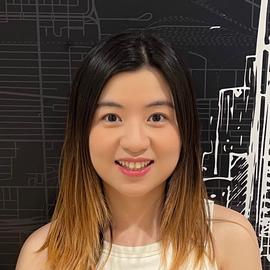
Zhe Zeng is an incoming Assistant Professor in the Department of Computer Science at the University of Virginia starting July 2025. Currently, she serves as a Faculty Fellow in the Computer Science Department at New York University. She earned her Ph.D. in Computer Science from UCLA in 2024 under Professor Guy Van den Broeck, and her B.S. in Mathematics from Zhejiang University in 2018. Research Focus: Dr. Zeng specializes in neurosymbolic AI and probabilistic machine learning, developing methods that integrate symbolic knowledge (logical constraints, graph structures) with probabilistic uncertainty. Her work spans three core areas: Reasoning: Probabilistic inference, tractable probabilistic models Learning: Constrained deep learning, graph ML, weakly supervised learning Trustworthiness: Explainability, uncertainty quantification, domain-knowledge integration Awards & Honors: Rising Star in EECS (2023) Amazon Doctoral Fellowship (2022) NEC Research Fellowship (2021) ICML Travel Award (2018) Outstanding Graduate, Zhejiang University (2018) Advising & Mentoring: Has supervised six students including PhD candidates and undergraduates at UCLA, Tsinghua, and CAS, with placements at Princeton and UT Austin. Academic Service: Regularly reviews for NeurIPS, ICML, ICLR, UAI; served as UAI 2023 discussant; active in WiML mentorship programs.
Luca Sebastiani is a Full Professor in Horticultural Sciences (AGR/03) at Scuola Superiore Sant'Anna in Pisa, Italy, since 2014. He currently coordinates the PhD Course in AgroBioSciences and has previously served as Director of the Institute of Life Sciences (2016-2021). His academic career includes roles as Associate Professor (2002-2014) and Assistant Professor (1998-2002) at the same institution. PhD in Plant Biology from Scuola Superiore Sant'Anna (1996) MSc in Agricultural Sciences from University of Pisa (cum laude, 1991) Postdoctoral research in agricultural biotechnology (1996-1998) Research Interests: Focus on plant-environment interactions, particularly abiotic and biotic stress responses in crops. Key areas include: Physiological and molecular responses to climate change stressors Nutraceutical enhancement of food crops Plant germplasm conservation using molecular markers Agriculture 4.0 integrating AI, IoT, and robotics Phytoremediation using poplar and Brassica species Scientific Contributions: His work bridges molecular mechanisms (aquaporin function, heavy metal transport) with ecosystem-level applications (precision irrigation, contaminant phytoremediation). Recent publications emphasize genome sequencing, stress tolerance modeling, and nutraceutical food development. ISHS Medal for SapFlow Workshop organization (2011) Giovanni Spitali Foundation Award for PhD dissertation (1998) Collaborations: Extensive international collaborations with institutions like Beijing Forestry University, Comenius University, and Purdue University. Currently supervises projects in plant phenotyping, omics technologies, and sustainable crop management.
Duncan Astle is the Gnodde Goldman Sachs Professor of Neuroinformatics at the Department of Psychiatry, University of Cambridge. He serves as a Programme Leader at the Medical Research Council's Cognition and Brain Sciences Unit (MRC CBU) and is a Fellow of Robinson College. Astle heads the 4D Lab (Development, Dynamics, Disorders, Data Science), which provides a research home for approximately 15 Early Career Researchers working at the intersection of developmental cognitive neuroscience and advanced data science methodologies. Astle's research focuses on understanding childhood development through innovative analytical approaches. His work employs transdiagnostic methods to study children with attention, learning, and memory difficulties, moving beyond traditional diagnostic categories. He investigates how neural systems develop in childhood, how they relate to developmental disorders, and how they respond to intervention. His research integrates network science, machine learning, and generative modeling to capture the complexity of neurodevelopmental diversity, examining how cognitive skills, literacy, numeracy, and mental health interrelate over developmental time. His publication record reveals a strong focus on brain connectivity and organization across development. Recent work explores structural and functional neurodevelopmental trajectories, brain wiring economics, and the impact of environmental factors on neural development. Astle's research frequently employs advanced data science techniques to identify sub-populations of children with different cognitive or brain profiles, regardless of diagnosis, and to map non-linear relationships between brain organization and cognitive difficulties. His work has increasingly focused on transdiagnostic approaches to understanding developmental disorders and the application of computational models to developmental neuroscience. Astle actively supervises PhD students and has built a substantial research group that contributes to major projects including the Centre for Attention Learning and Memory (CALM) and Resilience in Education and Development (RED). His work has been supported by prestigious funding bodies including the Royal Society, the British Academy, the Medical Research Council, and the Economic and Social Research Council, as well as multiple charitable foundations. The 4D Lab, under Astle's leadership, utilizes state-of-the-art facilities at the University of Cambridge, including on-site magnetic resonance imaging and magnetoencephalography scanners. The lab contributes to building specialist cohorts such as CALM (800 children with cognitive difficulties plus 200 comparison children) and RED, which study children's development, resilience, and educational outcomes. Astle's team explores how growing up in adverse environments affects children's brains, behavior, and mental health, with the aim of identifying early markers of risk and resilience.
Professor Josef Dick serves as a Professor and Deputy Head in the School of Mathematics & Statistics at the University of New South Wales (UNSW). With a distinguished career in computational mathematics, he has established himself as a leading researcher in numerical integration methods and quasi-Monte Carlo theory. His work bridges theoretical mathematics with practical computational applications across various scientific domains. Dr. Dick earned his PhD in Mathematics from UNSW in 2004 and his MSc in Mathematics from the University of Salzburg in 2001. His academic journey reflects a strong foundation in both theoretical and applied mathematics, which has informed his subsequent research contributions. Professor Dick's research primarily focuses on numerical integration and quasi-Monte Carlo rules , employing techniques from number theory , abstract algebra (particularly finite fields), discrepancy theory , wavelet theory , and statistics . His work provides rigorous analysis of practical algorithms for computational problems, with implementations often provided in Matlab to bridge theory and application. His research has successfully addressed point distributions on the unit cube for numerical integration, completely uniformly distributed sequences for Markov chain quasi-Monte Carlo algorithms, and explicit constructions of uniformly distributed points on the sphere. Analysis of his recent publications (2022-2025) reveals a consistent focus on advancing quasi-Monte Carlo methods, with increasing integration of machine learning techniques and applications to complex computational problems. His work demonstrates strong interdisciplinary connections between pure mathematics, computational science, and practical engineering applications, particularly in uncertainty quantification and high-dimensional numerical integration. Discovery project from Australian Research Council (2012-2014): "Mathematics in the round - the challenge of computational analysis on spheres" Queen Elizabeth II Fellowship from Australian Research Council (2010-2014): "Algebraic methods for Markov Chain Monte Carlo and quasi-Monte Carlo" UNSW Vice Chancellor Fellowship (2006-2009) Professor Dick has supervised numerous PhD and Honours students working on topics including Quasi-Monte Carlo methods, Discrepancy Theory, Markov chain Monte Carlo, and Uncertainty Quantification. His research has been supported by significant grants from the Australian Research Council, including serving as Chief Investigator on multiple projects. Beyond his research, he serves as an Editor for the Journal of Complexity and Journal of Approximation Theory, demonstrating his leadership in the mathematical community. He teaches courses in Algebra and Mathematical Computing for Finance at UNSW.
Dr Shu-Ling Lu is an Associate Professor at the University of Reading , serving as Director of the MSc Project Management Programme and a Member of Senate . Her research spans Innovation Management , Quality Control , and Net Zero Transitions in construction, alongside Heritage Building Integration and Gender Dynamics in built environment sectors. Her academic journey includes a PhD , MSc in Construction Engineering , and a Diploma in Architectural Engineering , all from institutions in Taiwan and the UK, complemented by a Postgraduate Certificate in Higher Education Practice from the University of Salford. Research Interests : Innovation in construction, quality management, heritage conservation, net-zero transitions, gender equity, and system dynamics applications. Article Trends : Focus on defects analysis , heritage integration , gender dynamics , system dynamics , and net-zero strategies across 15 recent publications. Scientific Awards : Fellow of the Chartered Institute of Building (FCIOB) Fellow of Higher Education Academy (FHEA) Full member, Association for Project Management (MAPM) BSI Committee Participation (Quality Management Standards) Supervision & Grants : Mentored 7 PhD students and led/co-led projects funded by Natural Environment Research Council (NERC) , EPSRC , and COST , with total grants exceeding £500,000.
Georges Kaddoum is a Professor at École de technologie supérieure (ÉTS) , specializing in Electrical Engineering. He holds the Canada Research Chair in Unlocking the Power of IoT 6G-Networks and the LACIME – Communications and Microelectronic Integration Laboratory affiliation. His work bridges wireless communications, IoT, and machine learning. Research Interests include wireless communication systems, physical layer security, machine learning for networking, and 6G technologies. He focuses on optimizing network performance in challenging environments (impulsive noise, underwater, non-terrestrial networks) and developing AI-driven solutions for jamming mitigation, resource allocation, and secure IoT frameworks. Recent Publications highlight 6G-enabled vehicular networks, quantum-safe blockchain integration, federated learning for transportation systems, and deep learning-based receivers for chaotic communication systems. His work emphasizes semantic communication, interference management, and digital twin applications. Awards IEEE TCSC Award for Excellence in Scalable Computing (2022) Prix d’excellence de la relève (Université du Québec, 2018) Prix d’excellence en recherche (ÉTS, 2018) Multiple IEEE Exemplary Reviewer and Best Paper Awards (2014–2022) Supervision includes 15+ PhD/Master’s students working on topics like index modulation, physical layer security, UAV communications, and intelligent resource management. Research Units Ultra Research Chair on Intelligent Tactical Wireless Networks LACIME Laboratory Canada Research Chair in IoT 6G-Networks
Prof Nigel Mehdi is the Director of the DPhil in Sustainable Urban Development at the University of Oxford's Department for Continuing Education, where he also serves as a Departmental Lecturer. He is a Fellow of Kellogg College, Oxford, and holds an Honorary Professorship in the School of Computer Science at the University of Birmingham. Additionally, he serves as Programme Director for the UAE National Artificial Intelligence Programme. Education: PhD in Real Estate Economics from London School of Economics Postgraduate qualifications in Software Engineering, Politics, Development and Democratic Education, Sustainable Development, Digital Education, and Professional Education and Training Research Interests: Prof Mehdi's research sits at the intersection of urban economics , digital technologies , and sustainable development . His work focuses on applying advanced technologies like AI and big data analytics to urban challenges. Key areas include: Real estate sustainability and economics Smart cities and intelligent buildings Spatial big data applications in urban planning Digital education for sustainability Urban resilience and governance Property technology (PropTech) innovations Research Trends: His recent publications demonstrate a clear focus on future-oriented urban governance , with multiple 'Executive Outlook' reports examining privacy, governance, money, ESG, and work in 2030+ scenarios. These works bridge academic research with practical policy implications for urban development. His earlier works focus on technological applications in surveying and urban development, showing an evolution from technical implementation to strategic foresight. Awards and Recognition: OUSU Outstanding Tutor (2017) Fellow of the Royal Institution of Chartered Surveyors Fellow of the British Computer Society Fellow of the Higher Education Academy Teaching and Supervision: Prof Mehdi leads the DPhil in Sustainable Urban Development programme and teaches on the Master's in Sustainable Urban Development. He welcomes doctoral applications in areas including: Real estate sustainability Spatial big data and smart cities Digital economies and urban analytics AI applications in urban contexts Urban resilience and governance Professional Roles: He serves as Chair of the UK Education Standards Board for the Royal Institution of Chartered Surveyors and as an Accreditation Team member for the Institution of Engineering and Technology. His consultancy work spans public and private sectors, including governments, NGOs, and global corporations.
Matthew Charles is a Senior Lecturer in Cultural and Critical Theory at the University of Westminster's School of Humanities, where he has taught since 2010. He serves as Senior Tutor for the School of Humanities and is a Senior Fellow of The Higher Education Academy. His academic journey includes previous positions at Kingston University's Centre for Modern European Philosophy and Middlesex University's Department of Philosophy. Charles earned his BA and MA in Philosophy and Literature from the University of Warwick and completed his PhD at Middlesex University's Centre for Research in Modern European Philosophy (CRMEP). His scholarly trajectory reflects deep engagement with Critical Theory, particularly the work of Walter Benjamin and the Frankfurt School. His research bridges philosophical inquiry with educational practice, focusing on how Benjamin's thought informs contemporary pedagogical theory and resistance to neoliberal tendencies in higher education. Charles' extensive publication record reveals a consistent exploration of Walter Benjamin across multiple dimensions. His work demonstrates how Benjamin's early writings on youth and education connect to his later materialist historical concepts. A dominant theme across his scholarship is the application of Benjamin's critical theory to contemporary educational challenges, particularly in developing radical approaches to teaching and learning within the current academic landscape. His research shows particular concern with the impact of market-driven reforms on higher education, as evidenced by his influential 2018 article 'Teaching, In Spite of Excellence: Recovering a Practice of Teaching-led Research.' As an academic leader, Charles has served as Course Leader for the MA in Cultural and Critical Studies at Westminster and as External Examiner for various MA programs at the University of Brighton and University of Nottingham. He has supervised multiple PhD students to completion on topics related to modernist literature and philosophy, and has examined doctoral work at several institutions. He actively participates in the Institute for Modern and Contemporary Culture and Literary Studies research groups at Westminster, maintaining an influential presence in critical theory circles through his website benjaminpedagogy.wordpress.com and ongoing conference participation.
Adam Reed is an Associate Professor in Social Anthropology at the University of St Andrews, School of Philosophical, Anthropological & Film Studies. His research spans multiple interconnected fields including legal anthropology, urban studies, literary anthropology, and the anthropology of ethics. With extensive fieldwork experience in Papua New Guinea, the UK, and Australia, Reed has developed a distinctive approach to understanding social phenomena through ethnographic engagement with diverse communities. His research interests form five interconnected strands: Legal Anthropology focusing on cultures of incarceration in Papua New Guinea Anthropology of the City examining London through walking tour guides and digital journal keepers Anthropology and Literature studying literary societies and reading practices Anthropology of Ethics investigating animal welfare campaigning in Scotland Anthropology of Migration analyzing Papua New Guinean experiences in Western Australia Reed's recent publications reveal a strong trajectory toward ethical subjectivity and human-animal relationships, with numerous 2023-2025 works exploring moral dilemmas in animal protection, silence practices in zoos, and character theory. His work increasingly bridges anthropology with literary studies, philosophy, and environmental science, demonstrating interdisciplinary reach while maintaining ethnographic depth. His scientific recognition includes prestigious awards such as the Junior Research Fellowship at Clare College, Cambridge (1997), Emslie Horniman Award from the Royal Anthropological Institute (1994), and multiple early-career funding awards. Reed has led three major research projects including 'Listening to the Zoo' and 'Compatriot Sociality' focusing on Papua New Guinean migrants. As an active academic, Reed has supervised 9 postgraduate students, participated in 59 scholarly activities including conference organization and invited talks, and maintains strong engagement with both theoretical debates and practical applications of anthropological knowledge, particularly regarding sustainable development goals related to ethical practices and cultural understanding.
Laura Toni is an Associate Professor in the Department of Electronic and Electrical Engineering at University College London's Faculty of Engineering Sciences. She serves as the leader of a research team focused on advanced signal processing and machine learning applications, documented at https://lasp-ucl.github.io . Additionally, she holds prestigious affiliations as an ELLIS (European Laboratory for Learning and Intelligent Systems) Member and Turing Fellow Alumni. PhD in Electrical Engineering, University of Bologna (2009) MS in Electrical Engineering, University of Bologna (2005) Professor Toni's research spans theoretical and applied aspects of machine learning with particular emphasis on graph-based approaches. Her work integrates signal processing techniques with modern AI methodologies to address complex problems in communication systems, multimedia processing, and scientific discovery. She has made significant contributions to reinforcement learning theory, graph signal processing, and their applications across diverse domains including drug discovery and immersive technologies. Analysis of her recent publications reveals a strong focus on graph-based machine learning approaches, with increasing emphasis on reinforcement learning applications. Her work demonstrates a progression from theoretical foundations to practical implementations, particularly in multimedia processing, network science, and drug discovery applications. Many of her recent papers combine graph neural networks with diffusion models and reinforcement learning for complex prediction and generation tasks. Professor Toni has received notable recognition through her ELLIS membership and Turing Fellow Alumni status, which represent significant achievements in the European AI research community. ELLIS (European Laboratory for Learning and Intelligent Systems) Member Turing Fellow Alumni As an academic leader, Professor Toni supervises postgraduate students and leads a research team at UCL, focusing on cutting-edge projects at the intersection of signal processing and machine learning. Her team has secured research funding through various channels including European initiatives and industry partnerships, enabling them to pursue ambitious projects in graph learning, reinforcement learning, and multimedia processing. The team actively collaborates with institutions worldwide, including previous connections with UCSD and EPFL. Professor Toni leads the LASP research group at UCL (https://lasp-ucl.github.io), which focuses on Large-scale Adaptive Signal Processing for intelligent systems. The team comprises researchers working on graph signal processing, reinforcement learning, and multimedia applications, with strong connections to both theoretical foundations and practical implementations across various domains including healthcare, communications, and immersive technologies.
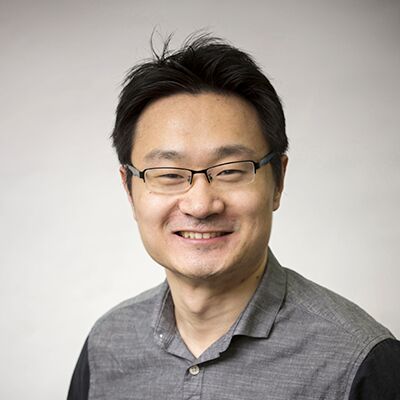
Dr. He Wang is an Associate Professor in the Department of Computer Science at University College London (UCL), affiliated with the Virtual Environment and Computer Graphics (VECG) group and the UCL Centre for Artificial Intelligence. He holds a Visiting Professorship at the University of Leeds and previously served as an Associate Professor and Lecturer there, as well as a Senior Research Associate at Disney Research Los Angeles. His research focuses on computer graphics, vision, and machine learning, with notable contributions to crowd simulation, generative models, and physics-informed neural networks. Dr. Wang earned his BEng from Zhejiang University and his PhD from the University of Edinburgh, followed by postdoctoral work at the University of Edinburgh's School of Informatics. He has been recognized as a Turing Fellow and serves as an Academic Advisor to the Commonwealth Scholarship Council and an Associate Editor of Computer Graphics Forum . His research spans cutting-edge topics including 3D reconstruction, adversarial attacks on motion recognition, and AI-driven groundwater modeling. He has supervised six PhD students to completion and actively engages in collaborative projects, consultancy, and grant evaluations. His lab welcomes students through dedicated recruitment channels.
Buyung Kosasih is a Professor in the School of Mechanical, Materials, Mechatronic and Biomedical Engineering at the University of Wollongong. He has held this position since 2000 and focuses on teaching and research in mechanical engineering, including Machine Dynamics, Finite Element Methods, and Renewable Energy Technology. His research spans fluid dynamics in industrial processes, renewable energy systems, and aqueous lubrication. Key projects include 3D-printed surfboard fin optimization and steel coating dynamics. Research interests emphasize experimental and computational fluid dynamics, particularly in renewable energy turbines and tribological systems. Notable awards include the 2013 Outstanding Contribution to Teaching and Learning Award. He has supervised numerous students and led over 20 funded projects, including ARC grants for steel innovation and renewable energy. Collaborative work includes the Steel Research Hub and HVAC/cool roof efficiency studies.
Nicholas Ruozzi is an Assistant Professor of Computer Science at The University of Texas at Dallas (UTD), affiliated with the Erik Jonsson School of Engineering and Computer Science. His research focuses on machine learning, statistical inference, and probabilistic graphical models, with applications in virtual reality (VR) training, computer vision, and explainable AI. He has contributed to areas such as tractable probabilistic modeling, activity recognition in videos, and user tracking in VR systems. His work often bridges theoretical foundations with practical applications, such as developing algorithms for data privacy in VR training sessions and enhancing deep learning models through hybrid approaches with graphical models. Recent research trends include exploring multimodal interaction, distributionally robust models, and novel instance detection techniques in computer vision. Ruozzi's publications span topics like user identifiability in VR, predictive task guidance in AR, and systematic analysis of device interactions in VR systems. While no specific awards or grants are listed, his contributions reflect a strong emphasis on interdisciplinary applications of machine learning and probabilistic methods.
Dr. Amir Ghanbaripour is a Discipline Lead in Planning, Property, and Project Management at Bond University's Faculty of Society & Design, with a PhD in Construction Project Management (2020). He teaches postgraduate courses and leads the Project Management program. His expertise spans project management methodologies, systems thinking, organizational maturity, and gender equality in projects. He is an active member of the Project Management Institute (PMI) as Associate Director for Academic Outreach. Education: PhD in Construction Project Management (Bond University, 2020), MSc in Civil Engineering (Iran University of Science and Technology, 2012), BSc in Civil Engineering (Amirkabir University of Technology, 2009). Research focuses on project success models, agile methodologies, and technology integration in construction education. He leads research projects on megaprojects, sustainable practices, and gender diversity in the industry. Grants include the 2023 FSD Research Project Grant (focusing on construction project strategies) and the 2023 FSD Deans Award (exploring robotics in manufacturing). He supervises PhD candidates and collaborates with national/international organizations on project management innovation.
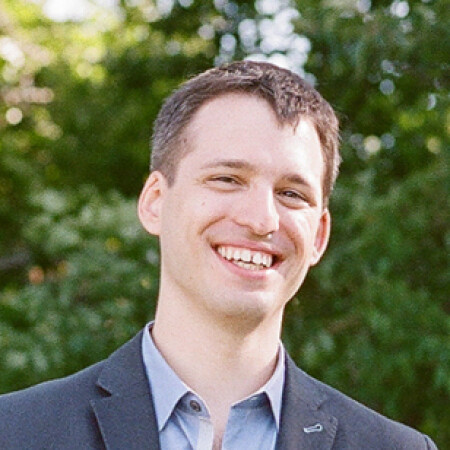
Mathias Niepert is a Professor at the Institute for Artificial Intelligence within the Faculty of Computer Science, Electrical Engineering and Information Technology at the University of Stuttgart. His research focuses on advancing machine learning techniques with applications in scientific computing, graph neural networks, and medical imaging. He is particularly known for contributions to physics-informed neural networks, equivariant models, and graph learning frameworks. Key research areas include: Scientific Machine Learning for PDEs and molecular modeling Graph neural networks and their theoretical limitations Medical vision-language models and multimodal learning Efficient neural network architectures (transformers, FNOs) Domain knowledge integration in deep learning His work often bridges theoretical foundations with practical applications, as evidenced by extensive publications (2018–2025) on topics like adaptive message passing, equivariant networks, and medical imaging systems. He has contributed to benchmark development through initiatives like PDEBench and pioneered methods for equivariant diffusion models and molecular representation learning. His current projects emphasize: Improving generalization in Fourier Neural Operators Addressing oversmoothing in graph networks Combining physics principles with neural architectures Medical AI applications through multimodal fusion