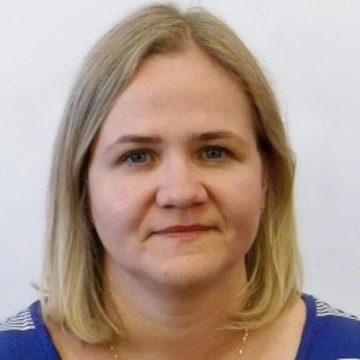
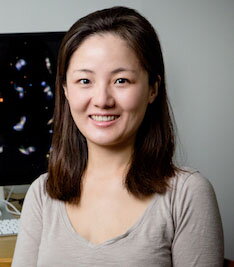
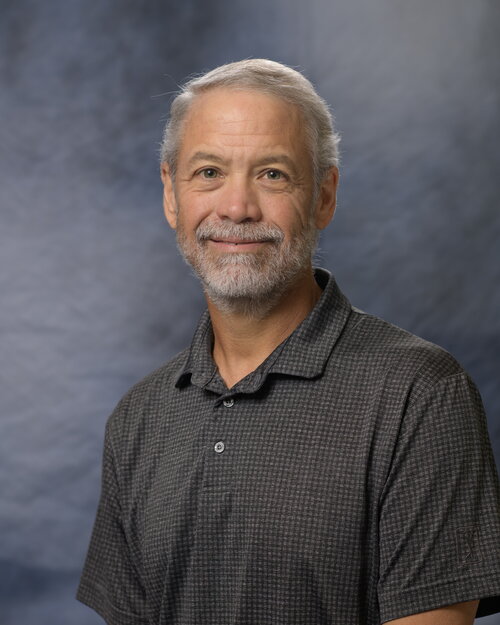
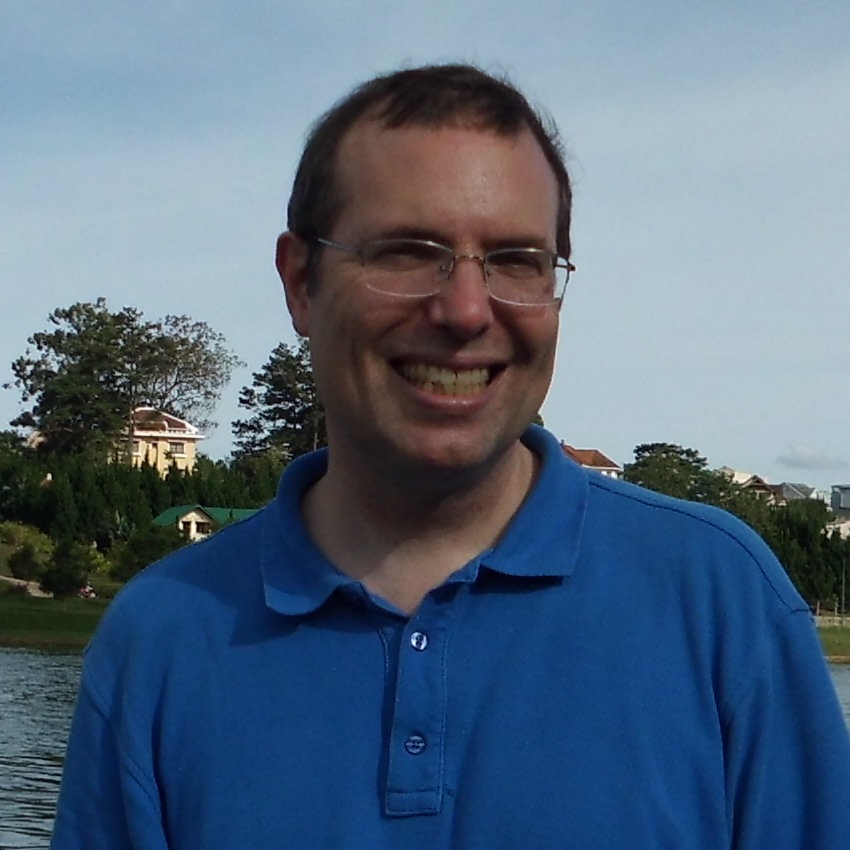
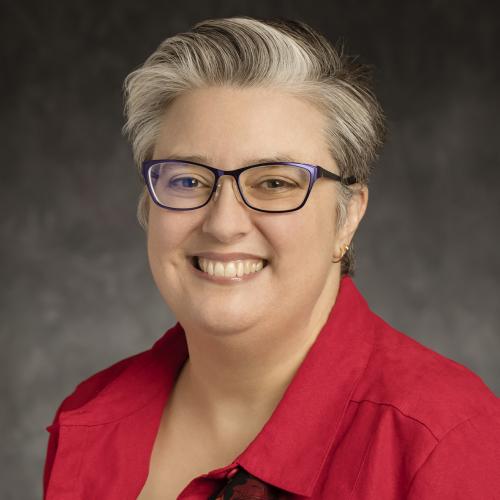
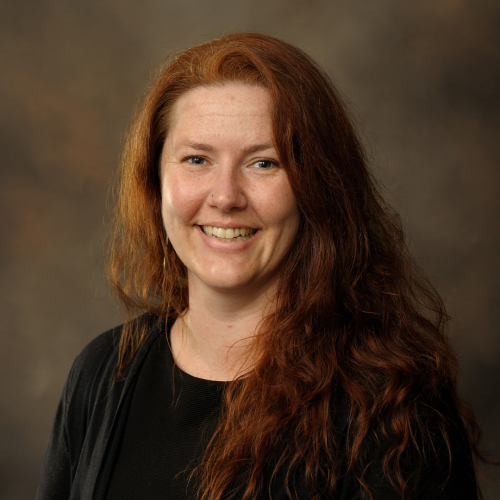
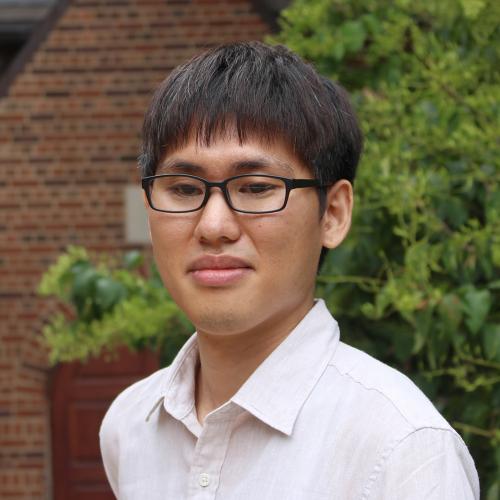
George Heintz is a Research Fellow at the University of Illinois at Urbana-Champaign's College of Liberal Arts & Sciences, affiliated with the Neuroscience Program. He holds dual advanced degrees: a Master of Science in Public Health Informatics from the University of Illinois at Chicago and a Diplom-Ingenieur in Electrical Engineering from the University of Applied Sciences at KL. His research focuses on neuroengineering, computational neuroscience, and machine learning applications in healthcare, with a specialization in biomedical data analysis, digital neurological examinations, and predictive modeling. Education: Public Health Informatics, MSPHI, University of Illinois at Chicago School of Public Health Electrical Engineering, Dipl. Ing., University of Applied Sciences at KL, College of Engineering Heintz's research spans interdisciplinary domains including: Neurological examination digitization AI-driven pediatric disease prediction Neurodegenerative disease modeling Hydrogel lubrication mechanisms Medical informatics systems Tensor-based spatiotemporal analysis Funding Highlights: 2022 Jump Arches Award (3 projects) 2021 Jump Arches Award (2 projects) 2020 FDA AFDO-Managed Retail Program Standards Grant 2020 C3.ai Digital Transformation Institute Grant 2019 UIUC Strategic Research Initiative Awards 2018 UIUC Strategic Research Initiative Award Scientific Recognition: National Center for Supercomputing Applications (NCSA) Fellow (2022) IBM Award for Excellence Achievements (2007) He collaborates with the Coordinated Science Laboratory and Health Care Engineering Systems Center, utilizing 7T MRI imaging, tensor factorization, and secure federated learning techniques in his work.
Anastasia Stoops is a Research Scientist in the Department of Psychology at the University of Illinois at Urbana-Champaign, within the College of Liberal Arts & Sciences. She maintains multiple institutional affiliations including the Center for Artificial Intelligence Innovation (NCSA) and the Psychiatry and Behavioral Medicine department at the University of Illinois College of Medicine Peoria. Her research program focuses on: Language Learning and Reading Development Computational Modeling of visual and linguistic factors Neuroscience of Visual Cognition Attention and Perception in Cognitive Psychology Developmental Psychology aspects of reading Dr. Stoops' recent publications demonstrate a strong interdisciplinary approach combining experimental methods like eye-tracking and EEG with computational modeling to investigate reading processes across different age groups and languages. Her work on naturalistic picture book reading with young children has created valuable resources for the field, including the Stoops-Montag corpus comprising 183 book reading episodes from 12 families. Her notable recognition includes: Fellow, National Center for Supercomputing Applications (NCSA), 2021-2022 Facebook, Global Literacy and Accessibility Challenge Research Award, 2018 Dr. Stoops actively mentors students through the Student Pushing Innovation (SPIN) fellowship and Undergraduate Research Symposium since 2020, with many mentees receiving competitive awards. Her current funding includes the Jump ARCHES 'Voice Vitals' project as collaborator and an NSF grant as co-PI on understanding eye movements in readers. She leads the Learning and Language Lab (LeLaLab), where her team investigates reading development through computational analyses of naturalistic environments, experimental methods, and computational modeling of visual-linguistic interactions.
Xin Liu is an Associate Professor in the Department of Astronomy at the University of Illinois Urbana-Champaign and holds a joint appointment at the National Center for Supercomputing Applications (NCSA). Her research bridges astronomy and data science, focusing on multi-messenger astrophysics, time-domain phenomena, and AI-driven scientific discovery through large-scale astronomical surveys. Her educational background includes: Ph.D. in Astrophysical Sciences, Princeton University (2010) M.A. in Astrophysical Sciences, Princeton University (2008) M.S. in Physics, Tsinghua University (2006) B.S. in Physics, Tsinghua University (2004) Liu's research centers on three interconnected domains: physics-informed machine learning for astronomical data, statistical learning with probabilistic frameworks for uncertainty quantification, and transparent AI models for scientific interpretation. She pioneers methodologies where machine learning integrates with principled astrophysical analysis rather than serving as black-box tools, addressing challenges in big data astronomy through innovative computational approaches. Her recent publications reveal a strong emphasis on dual supermassive black hole systems, active galactic nuclei variability, and time-domain astrophysics. Key themes include leveraging JWST and multi-wavelength observations to identify dual quasars, developing machine learning techniques for survey data analysis, and exploring the connection between black hole growth and galaxy evolution during cosmic noon. Her work frequently combines large datasets from SDSS, Rubin Observatory, and space telescopes with advanced computational methods. Her awards and honors include: Norman P. Jones Professorial Scholar (2023-2026) Excellent Teacher Ranked by Students (2023) NCSA Faculty Fellow (2020, 2023) Liu has secured prestigious fellowships including the NASA Einstein Fellowship and Hubble Fellowship. She teaches advanced courses like ASTR 596 (AI and Big Data in Astronomy) and has received recognition for her teaching excellence. Her research receives support through institutional appointments and competitive fellowships enabling high-impact work in data-intensive astrophysics. As an NCSA Faculty Fellow, Liu leverages world-class supercomputing resources to develop and apply machine learning frameworks for astronomical datasets. Her group fosters interdisciplinary collaboration between astronomy, computer science, and statistics, focusing on creating interpretable AI tools that advance fundamental astrophysical understanding while pushing computational boundaries.
Leslie W Looney is a Professor in the Department of Astronomy at the University of Illinois at Urbana-Champaign and serves as Director of the Laboratory for Astronomical Imaging. His research focuses on the formation of protostars and planetary systems, utilizing advanced observational techniques with instruments like ALMA, JWST, and VLA. College of Liberal Arts & Sciences National Center for Supercomputing Applications (NCSA) His work examines protostars (10,000–100,000 years old), their dust/gas envelopes, and circumstellar disk evolution, including dust grain growth and polarization mechanisms. Recent studies explore magnetic fields in Orion, ice composition in protostellar systems, and disk substructures using millimeter/submillimeter observations. Notable awards include 20 recognitions since 2004 in the "List of Teachers Ranked as Excellent." His research group includes current graduate students Spencer Hulsey and Austen Fourkas, and has mentored 11 PhD graduates since 2008. Collaborations span international teams using SOFIA, ALMA, and JWST for star formation and galactic studies.
Dr. Eliu Antonio Huerta Escudero is an Adjunct Associate Professor at the Department of Astronomy, College of Liberal Arts & Sciences, University of Illinois Urbana-Champaign, and holds leadership roles at Argonne National Laboratory and the University of Chicago. His research bridges theoretical astrophysics, artificial intelligence (AI), and computational science, focusing on multi-messenger astrophysics, gravitational wave detection, and extreme-scale computing. Education: Master of Advanced Study in Applied Mathematics and Theoretical Physics (University of Cambridge), PhD in Theoretical Astrophysics (University of Cambridge) His work pioneers the integration of AI with high-performance computing to address grand challenges in astrophysics, cosmology, and materials science. He has developed open-science supercomputing platforms for applying large foundation AI models across domains like energy storage, gravitational wave detection, and biomedical research. His recent publications highlight AI-driven gravitational wave signal detection, federated learning frameworks, and hybrid physics-informed neural operators for turbulence modeling. Dr. Huerta actively mentors students across academic levels, emphasizing training in AI and computational methods. He leads NSF- and DOE-funded interdisciplinary projects, fostering collaboration between institutions to advance big-data-driven experiments. Affiliated with NCSA, Argonne’s Data Science and Learning Division, and the University of Chicago’s Computer Science Department, he advocates for translational AI research in technology, finance, and industrial applications.
Steven Lumetta is an Associate Professor at the University of Illinois at Urbana-Champaign, affiliated with the College of Engineering's Department of Electrical and Computer Engineering, the Coordinated Science Laboratory, and holds an adjunct appointment in Computer Science. His research spans computational genomics, high-performance computing, network architecture, and reliability validation. Education: Ph.D. in Computer Science, University of California at Berkeley (1998) Research Interests: Computational genomics applications Smartphone-based bioassays Optical and computer network architecture Cluster and parallel computing systems User-level communication frameworks System validation and robustness Scientific Awards: NSF Faculty Early Career Development Award (2000) Best Student Paper Award at SC97 (1997) NSF Graduate Fellowship (1991-1995) Collins Fellow (2000-2002) GE Scholar distinction (1999) Professional Affiliations: Research Associate Professor, Coordinated Science Laboratory Faculty Fellow at National Center for Supercomputing Applications (historical) Member, Center for Excellence in Education's Chicago Board of Directors Teaching Contributions: Instructor for courses covering computer systems engineering, parallel programming, and manycore algorithms Multiple appearances on 'Incomplete List of Teachers Ranked as Excellent' Creator of satirical public speaking guide 'How to Give a Bad Talk'
Dr. Maarit Korpi-Lagg is an Associate Professor in the Department of Computer Science at Aalto University's School of Science. She specializes in High-Performance Computing (HPC), numerical modelling, and astroinformatics, with a focus on solar magnetic activity and dynamo theory. Her work bridges computational methods with astrophysical phenomena. External Positions: Corresponding Fellow, Nordic Institute for Theoretical Physics (2020–2025) Independent Max Planck Research Group Leader, Max Planck Institute for Solar System Research (2016–) Research interests include: High-Performance Computing for astrophysical simulations Solar magnetic field dynamics and sunspot analysis GPU-accelerated code development Stellar convection zones and atmospheric modeling Her recent publications highlight advancements in exascale astrophysics data analysis, solar dynamo simulations, and cross-disciplinary applications like epidemic modeling via computational methods. Key collaborations span Europe and global institutions. Scientific Awards: Grand Challenge Award (2018) for galactic dynamo research Nordita Corresponding Fellowship (2020) She leads multiple projects, including ERC UniSDyn and NEOSC, focusing on cosmic magnetism and GPU-based stencil computations. Her work contributes to UN Sustainable Development Goals, particularly quality education and planetary science.
Catherine Blake is a Professor at the School of Information Sciences and a Health Innovation Professor at the Carle Illinois College of Medicine , University of Illinois Urbana-Champaign. She holds courtesy appointments in the Department of Computer Science and affiliations with the National Center for Supercomputing Applications (NCSA) , Personalized Nutrition Initiative , and Center for Health Informatics . Education : PhD in Information and Computer Science from University of California, Irvine Master's and Bachelor's in Computer Science from University of Wollongong Research Interests : Dr. Blake specializes in biomedical informatics , natural language processing , and evidence-based discovery , focusing on synthesizing evidence from text using the Claim Framework to extract findings from empirical studies. Her work extends to text mining in humanities , socio-technical systems , and FATE principles in data science . Scientific Awards : California Breast Cancer Research Program Dissertation Award (2002-2004) Computing Research Association MRO-W Program (2007-2008) RENCI Faculty Fellows Program (2007-2008) UNC Junior Faculty Award (2007) Teaching & Advising : She teaches database design (IS455) and text mining (IS567) , and has developed the Socio-technical Data Analytics (SODA) specialization . Her advisees include doctoral students Ryan Wang, George Vazquez, Don Keefer, and Jaemin Yang, and former students Jooho Lee (University of Chicago), Henry Gabb (Intel), and Ana Lucic (UIUC Applied Research Institute). Labs & Collaborations : Dr. Blake leads the National Science Foundation's Midwest Big Data Innovation Hub (MBDH) and collaborates with UIUC Extension , CISCO , and John Deere on health data literacy and privacy analysis projects.
Jill Naiman is a Teaching Assistant Professor at the School of Information Sciences (iSchool) at the University of Illinois Urbana-Champaign and a Visiting Scholar at the National Center for Supercomputing Applications (NCSA). She holds a PhD in Astronomy & Astrophysics from the University of California, Santa Cruz, where she studied feedback in star clusters and galaxy formation simulations. Prior to her current role, she completed postdoctoral fellowships at the Harvard-Smithsonian Center for Astrophysics, including the National Science Foundation and Institute of Theory and Computation Fellowships. Her research focuses on data visualization , scientific digitization with machine learning , and image processing , particularly in astrophysics. She develops open-source tools for cinematic and interactive visualization of astrophysical simulations, such as AstroBlend and Ytini, and explores methods to extract insights from historical scientific literature through projects like the Reading Time Machine . Her recent publications highlight expertise in astrophysical data analysis , 3D visualization , and software development using tools like Houdini and Blender. These works span adaptive mesh refinement , scientific graphics , and multiresolution data analysis . NASA grant to digitize astrophysical literature National Science Foundation Postdoctoral Fellowship Institute of Theory and Computation Fellowship She actively mentors students, contributes to educational outreach, and teaches courses in Data Visualization and Data Storytelling at the iSchool, including Fall 2025 offerings in IS389JPN, IS445BCG, IS445BCU, IS457BCG, IS457BCU, and IS589JPN.
JooYoung Seo is an Assistant Professor in the School of Information Sciences (iSchool) at the University of Illinois Urbana-Champaign. He maintains multiple faculty affiliate positions with the Siebel School of Computing and Data Science, Illinois Informatics Institute, National Center for Supercomputing Applications (NCSA), and Beckman Institute for Advanced Science and Technology. Additionally, he is an RStudio double-certified data science instructor and an internationally certified accessibility professional through the International Association of Accessibility Professionals (IAAP). Dr. Seo's educational background includes: Ph.D. in Learning, Design, and Technology from Pennsylvania State University (2021) M.Ed. in Learning, Design, and Technology from Pennsylvania State University (2016) Double B.A. in Education and English Literature from Sungkyunkwan University, Seoul, South Korea (2014) As an emerging learning scientist and information scientist, Dr. Seo's research focuses on making computational literacy more accessible to people with disabilities through multimodal data representation. His work spans accessible computing, universal design, inclusive data science, and equitable healthcare technologies. He has developed open-source data science packages for accessibility and has worked on projects involving web accessibility, human-centered design, inclusive makerspaces, tangible block-based programming, and accessible data science tools. His research bridges learning sciences, information science, and human-computer interaction with a strong emphasis on creating inclusive technologies that serve diverse populations. Analysis of Dr. Seo's recent publications reveals a consistent interdisciplinary focus on accessibility across multiple domains. His work spans human-computer interaction, data science, education, and healthcare technologies, with particular emphasis on creating accessible solutions for people with visual impairments. Key themes include multimodal data representation (sonification, tactualization, verbalization), accessible programming environments, inclusive educational tools, and healthcare technologies designed with universal principles. His research demonstrates a strong integration of learning sciences, computer science, and accessibility studies to develop practical solutions addressing real-world challenges faced by people with disabilities. Dr. Seo has received numerous honors and awards: Early Career Award from the Institute of Museum and Library Services (IMLS), 2023-2026 Teach Access Faculty Award, 2023 Teacher Ranked as Excellent at the University of Illinois (multiple semesters) 2021-2022 Emerging Scholar from the International Society of the Learning Sciences RStudio-Certified Shiny and Tidyverse Instructor Qualcomm Fellowship (2020) Doctoral Dissertation Fellowship from Penn State (2020) Dr. Seo's research is supported by significant funding from national institutes, industrial partners, and academic societies including the Institute of Museum and Library Services (IMLS), National Science Foundation (NSF), National Institute on Disability, Independent Living, and Rehabilitation Research (NIDILRR), Posit Software (formerly RStudio), Teach Access, and the International Society of the Learning Sciences. He currently teaches independent study courses and mentors students through various research projects. His current research projects include developing an AudioTactile Data System for Blind or Low Vision individuals in STEM fields, the MAIDR project for Multimodal Access and Interactive Data Representation, and initiatives to promote Computational Thinking Skills for Blind and Visually Impaired Teens through Accessible Library Makerspaces. Dr. Seo leads the XAbility Lab at the University of Illinois, which focuses on developing accessible computing solutions and conducting research at the intersection of human-computer interaction, learning sciences, and accessibility. The lab brings together interdisciplinary researchers from information sciences, computer science, and education to tackle complex challenges in making technology accessible to all users regardless of ability. Current projects in the lab focus on multimodal data representation, accessible data science tools, and inclusive educational technologies that serve diverse populations.
Volodymyr Kindratenko is a Research Associate Professor at the University of Illinois at Urbana-Champaign and Assistant Director for the Center for Artificial Intelligence Innovation (CAII) at the National Center for Supercomputing Applications (NCSA) . He also holds an Adjunct Associate Professor appointment in the Department of Electrical and Computer Engineering . His academic background includes a D.Sc. in Analytical Chemistry (University of Antwerp, 1997) and an M.Sc. in Mathematics and Informatics (Volodymyr Vynnychenko Central Ukrainian State University, 1993). Dr. Kindratenko's research focuses on High-performance computing (HPC) with computational accelerators Special-purpose computing architectures AI and machine learning systems for scientific applications Cloud computing integration with HPC Transformer-based models for medical imaging Federated learning on heterogeneous resources His work has been funded by NSF, NASA, ONR, DOE, and industry partners. The 15 most recent publications span AI-driven cosmological data analysis, cloud-HPC integration, and GPU-accelerated quantum simulations. Keywords include Machine Learning , High-performance computing , Quantum Chromodynamics , and Cloud Computing , with subfields like Transformers for medical imaging , Federated learning , and GPU clusters . Scientific awards include SRC Award for Excellence in Reconfigurable Computing (2007) Instructure Academic Excellence Award (2025) Outstanding Service Award at the 9th ACS/IEEE Conference (2011) George Anner Excellence in Teaching Award (2022) He serves as department editor of IEEE Computing in Science and Engineering and associate editor of International Journal of Reconfigurable Computing , and mentors students in the SC Student Cluster Competition (2016-2021). Dr. Kindratenko is a Senior Member of IEEE and ACM .
Michael Benjamin Tissenbaum is an Associate Professor affiliated with the Siebel School of Computing and Data Science at the University of Illinois at Urbana-Champaign . He holds appointments in the Departments of Curriculum and Instruction and Educational Psychology , and is an National Center for Supercomputing Applications (NCSA) Affiliate and a member of the Siebel Center for Design . Dr. Tissenbaum's research focuses on collaborative learning , knowledge communities , and the development of computational and STEM literacies in technology-enhanced environments. He designs transformational learning frameworks that integrate physical and digital spaces, emphasizing participatory design and human-centered approaches . His work at MIT’s App Inventor lab introduced the concept of computational action , linking computing education to community impact. Recent publications highlight trends in AI integration ( Co-designing AI with youth partners ), human-centered design methodologies ( Integrating Human-Centered Design into STEM capstone courses ), and collaborative biology tools ( A Plant Simulation Tool for Middle-school Classrooms ). These works span educational technology , student-AI teaming , and digital learning ecosystems . Dr. Tissenbaum collaborates with teams at the Siebel Center for Design and contributes to the Institute for Student-AI Teaming (iSAT) , focusing on equity-centered AI education frameworks. His cross-disciplinary role bridges computing , education , and design thinking .
Celso Luiz Mendes is a Senior Research Programmer at the National Center for Supercomputing Applications (NCSA) at the University of Illinois. His work focuses on High-Performance Computing (HPC), supercomputer reliability, and performance optimization of computational models. Institution: University of Illinois Department: National Center for Supercomputing Applications (NCSA) Research Interests: Celso's research spans GPU architecture, hydrological modeling, and parallel systems. He contributes to optimizing computational performance and scalability in HPC environments. Publications: His recent work on the Blue Waters supercomputer analyzes system reliability and user-support challenges. He also explores performance tuning for environmental models like MGB, targeting multi-core and GPU architectures. Collaborations: Celso works with teams at NCSA and institutions like IEEE, focusing on HPC tools, grid applications, and load balancing solutions.
Weihao Ge serves as a Research Scientist at the National Center for Supercomputing Applications (NCSA) at the University of Illinois, where he leverages computational approaches to address complex biological and public health challenges. His work bridges high-performance computing with domain-specific research across multiple disciplines. Dr. Ge's research spans several interconnected fields with emphasis on systems biology approaches to understand complex biological phenomena. His work demonstrates strong integration of computational methods with experimental biology, particularly in genomic prediction models, disease risk assessment, and molecular pathway analysis. The research portfolio shows consistent focus on developing and validating computational frameworks that address real-world biological questions while maintaining statistical rigor. Analysis of publication trends reveals a clear trajectory toward increasingly complex integrative models, moving from fundamental genetic analysis toward multi-scale systems approaches. Recent work demonstrates sophisticated application of machine learning techniques to epidemiological data while maintaining strong biological grounding. The research shows notable impact through news coverage and social media engagement, particularly in the areas of health disparities and disease modeling. Collaboration appears central to Dr. Ge's research approach, with evidence of productive partnerships across multiple institutions as reflected in co-authorship patterns. The work consistently addresses questions with significant translational potential, particularly in agricultural genomics and public health applications.
Mary Kalantzis is Professor in the Department of Education, Policy, Organization and Leadership at the University of Illinois, Urbana-Champaign. She also holds affiliations as a Faculty Affiliate at the National Center for Supercomputing Applications (NCSA) and as an Affiliate at the Siebel Center for Design. Her academic work spans multiple institutions, with significant research activities conducted in Australia prior to her current position. Professor Kalantzis is a world leader in the 'new literacy studies,' focusing on multimodality and diversity in contemporary communications. Her research crosses disciplines including history, linguistics, education, and sociology, examining themes of immigration, education, ethnicity, gender, culture, leadership, workplace change, professional learning, training, pedagogy, and literacy learning. She has been instrumental in developing the Multiliteracies framework, a decade-long research initiative investigating the dual challenges for literacy teaching posed by cultural diversity and new communication technologies. Her recent scholarly output shows a strong focus on artificial intelligence's impact on education, literacy, and communication. The 15 most recent publications reveal a consistent trajectory examining how AI technologies reshape learning environments, assessment practices, and literacy demands. Her work increasingly explores the intersection of multimodal communication, digital learning environments, and human-AI interaction in educational contexts. Professor Kalantzis has received significant research funding throughout her career, including ten large and four small Australian Research Council grants. Her research activities in Australia involved management of or major participation in 116 research and development projects since 1991. She has collaborated extensively with Bill Cope on numerous publications and research initiatives. She has developed innovative educational technologies including the Learning by Design Project (http://newlearningonline.com/learning-by-design/) and Scholar (http://learning.cgscholar.com/), an online multimodal student workspace supporting peer-to-peer feedback and formative assessment. Her teaching includes courses on machine learning and human learning, new media and learner differences, ubiquitous learning, and assessment for learning.