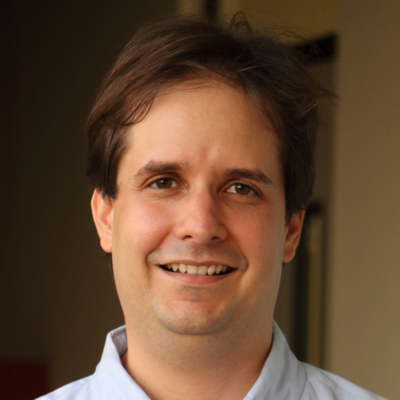
Ronny Aboudi is an Associate Professor in the Management Science department at the Miami Herbert Business School, University of Miami. His research spans economics, operations research, and public policy, focusing on income inequality, social welfare functions, and optimization algorithms. He has contributed to theoretical frameworks for income redistribution and practical applications in industrial logistics and financial market analysis. Key Research Themes Economic inequality and social welfare optimization Stochastic dominance in financial decision-making Operations research for logistics and industrial applications Notable Contributions Mathematical programming models for basic income systems Extensions of Muirhead's Lemma for inequality analysis Tactical fleet planning for car rental businesses
Kerlos Atia Abdalmalak serves as an Assistant Professor in the Department of Signal Theory and Communications at Charles III University of Madrid (UC3M), where he is an active member of the Radiofrequency, Electromagnetics, Microwaves and Antennas Group (GREMA). His research spans multiple engineering disciplines including Electronics, Telecommunications, and Physics, with particular emphasis on high-frequency antenna systems for diverse applications from 5G communications to space observation. Dr. Abdalmalak's research interests focus on advanced antenna design across microwave, millimeter-wave, and terahertz frequencies. His work encompasses dielectric resonator antennas, metasurface structures, circularly polarized systems, and integration of photonic technologies with traditional RF systems. He has made significant contributions to ultra-wideband antenna feeds for radio astronomy, implantable medical devices, satellite communications, and next-generation wireless networks. His innovative approaches often involve standing-wave feeding techniques, 3D printing for antenna fabrication, and novel electromagnetic modeling methods. Analysis of his publication record reveals a strong trajectory in electromagnetic theory and antenna engineering, with increasing focus on interdisciplinary applications connecting communications technology with fundamental physics concepts. His recent work explores analog electromagnetic models of gravitational fields, demonstrating the breadth of his research vision. The publications span high-impact journals including IEEE Transactions on Antennas and Propagation, Physical Review D, and Optica. Young Scientists' Award (URSI, 2017) Best PhD thesis in Aerospace (Madrid, 2022) Best PhD thesis in communications in Spain (IEEE, 2023) AP-S Postdoc Fellowship (IEEE, 2023) Dr. Abdalmalak leads multiple significant research projects with substantial funding, including the WiHEAT-CM-UC3M project (funded by COMUNIDAD DE MADRID, 2024-2026) and participation in several national and international initiatives related to 6G technologies and earth observation systems. His research group collaborates extensively with industry partners including SENER, INDRA, and HUAWEI, as well as with academic institutions worldwide. The GREMA research group provides a robust environment for advancing radiofrequency and electromagnetic technologies through both theoretical modeling and practical implementation.
Dr. Panayotis Mertikopoulos is a CNRS researcher (chargé de recherche) at the Laboratoire d'Informatique de Grenoble, part of Université Grenoble Alpes. He is affiliated with the Inria/LIG joint team POLARIS and has held visiting positions at UC Berkeley, EPFL, LUISS University of Rome, and NKUA. His academic journey includes completing his PhD at the University of Athens in 2010 on "Stochastic perturbations in game theory and applications to networks" and his Habilitation à Diriger des Recherches (HDR) in 2019 on "Online optimization and learning in games: Theory and Applications". Dr. Mertikopoulos' research spans several interconnected fields at the intersection of mathematics, computer science, and economics. His primary research interests include: Game theory and its applications to network design and resource allocation Online learning algorithms and their convergence properties Optimization methods for non-convex and stochastic problems Applications to machine learning, signal processing, and wireless networks Quantum game theory and quantum computing applications His extensive publication record shows a clear evolution from foundational work in game dynamics and learning theory toward increasingly sophisticated applications in machine learning and network optimization. Recent work demonstrates growing interest in quantum game theory, non-convex optimization, and the mathematical foundations of deep learning. His research consistently bridges theoretical insights with practical applications, particularly in communication networks and distributed systems. Among his notable achievements is receiving the INFORMS best paper award in the network analytics section in 2022 for his work on "Robust power management via learning and game design". His publications have appeared in top venues including NeurIPS, ICML, COLT, IEEE Transactions, and leading economics and operations research journals. Dr. Mertikopoulos has supervised numerous PhD students and postdoctoral researchers, though specific names are not listed in the available information. He has secured research funding for projects at the intersection of game theory, optimization, and machine learning, with applications to network design and resource allocation. His collaborative work spans multiple institutions across Europe and North America. As a member of the POLARIS research team at Inria/LIG, he contributes to a vibrant research environment focused on parallel and distributed systems. His work often intersects with colleagues researching optimization algorithms, machine learning theory, and network science, creating opportunities for cross-disciplinary collaboration on complex computational problems.
Giovanni Fantuzzi serves as a W1 Professor (equivalent to Assistant Professor) in the Department of Mathematics at Friedrich-Alexander University Erlangen-Nuremberg. He leads research within the FAU DCN-AvH Chair for Dynamics, Control, Machine Learning and Numerics under the Alexander von Humboldt Professorship framework, holding office in Room 03.318 with contact details including giovanni.fantuzzi@fau.de and +49 9131 85-67134. His educational background includes a PhD and Master of Engineering in Aeronautics from Imperial College London, supplemented by a research position in Engineering Science at the University of Oxford during his doctoral studies. Key academic milestones are documented through his ORCID, Google Scholar, and LinkedIn profiles. Fantuzzi's research program integrates mathematical analysis with computational optimization to solve nonlinear differential equations, focusing on deriving a priori scaling laws for heat transport and developing provable numerical schemes for PDE-constrained optimization. His methodology bridges convex optimization, polynomial optimization, and dynamical systems theory, with recent applications extending to transformer neural networks and sentiment analysis through hardmax mechanisms. Current teaching includes Data-driven methods for dynamical systems and Polynomial optimization and applications for WS 24/25. Analysis of his 15 most recent publications reveals dominant trends in fluid mechanics (particularly convection and heat transfer), polynomial optimization techniques, and data-driven dynamical systems analysis. His work consistently applies convex optimization frameworks to derive rigorous bounds in physical systems while expanding into machine learning applications like transformer model analysis. Geophysical Fluid Dynamics Fellowship at WHOI (2015) EPSRC Doctoral Prize Fellowship (2018) Imperial College Research Fellowship Fantuzzi's research program is supported by prestigious fellowships including the Imperial College Research Fellowship and EPSRC Doctoral Prize. His academic service includes organizing the FAU MoD Lecture & Workshop on AI for maths and maths for AI (June 2025) and co-hosting the #MLPDES25 Machine Learning and PDEs Workshop. He actively supervises research within the FAU DCN-AvH group, focusing on polynomial optimization applications in dynamical systems and PDEs. As core faculty in the FAU DCN-AvH Chair, Fantuzzi collaborates within a multidisciplinary team specializing in dynamics, control, machine learning, and numerical methods. The group maintains strong international connections through workshops like the Oberwolfach Seminar on Polynomial Optimization for Nonlinear Dynamics and participates in conferences including CIN-PDE and Nečas Seminar on Continuum Mechanics, driving innovation at the intersection of mathematics and computational physics.
Daniel Aloise is a Full Professor at the Department of Computer Engineering and Software Engineering, Polytechnique Montréal. He is a member of GERAD (Group for Research in Decision Analysis) and IVADO (Institute for Data Valorization), focusing on data science, optimization, and mathematical programming. His career spans institutions in Brazil and Canada, with significant contributions to clustering, classification, and operational research. Ph.D. in Exact algorithms for minimum sum-of-square clustering (HEC Montréal, 2009) Research Interests include data mining, optimization, mathematical programming, and algorithms. His work addresses challenges in big data, clustering algorithms, and classification models, applying these to diverse fields such as psychology, engineering, marketing, and disaster response. He explores polynomial-time algorithms for complex clustering problems and deep learning frameworks for unsupervised classification. Recent Articles emphasize optimization techniques (Benders decomposition, column generation), wireless signal prediction, bike-sharing inventory rebalancing, and serious games for disaster response data. These works integrate operations research, machine learning, and computational efficiency. Scientific Awards include the 2024 Omega Best Paper Award, 2023 CAPTRS Serious Games Award, and multiple CNPq Productivity Scholarships (2015–2018, 2012–2014). He received distinctions for his Ph.D. thesis and placement in international competitions. Supervision covers 7 Ph.D. and 12 Master's theses completed at Polytechnique Montréal, addressing topics like bug severity detection, anomaly analysis, and vehicle routing optimization. His lab collaborates with industry partners on real-time decision-making systems.
Assistant Professor Aljaž Zalar is affiliated with the University of Ljubljana at the Faculty for Computer and Information Science . His research focuses on Real Algebraic Geometry , Truncated Moment Problems , and Matrix Polynomials , with applications in Operator Theory and Positive Linear Maps . PhD in Mathematics, University of Ljubljana (2017) MSc and BSc in Mathematics, University of Ljubljana (2013, 2011) Zalar's work bridges theoretical mathematics and computational applications, including copositive matrices , positive semidefinite matrix completions , and noncommutative polynomial positivity . His recent projects address truncated moment problems on curves and algebraic structures in optimization . His publications from 2016–2025 span journals like Linear Algebra and its Applications , SIAM Journal on Applied Algebra and Geometry , and Integrable Equations and Operator Theory , emphasizing polynomial operator analysis and matrix inequalities . Zalar supervises postdoctoral and graduate students, including PhD candidate Rajkamal Nailwal and Igor Zobovič, and mentors undergraduate researchers. He leads the ARIS grant project J1-60011 on real algebraic geometry approaches to moment problems.
Adam Kanigowski is an Associate Professor in the Mathematics Department at the University of Maryland. His research focuses on dynamical systems, particularly smooth flows, spectral theory, and mixing properties. Key Research Areas: Ergodic theory, parabolic systems, area-preserving flows, and spectral analysis. Publication Trends: Recent work examines chaotic properties of smooth systems, multiple mixing phenomena, and spectral singularities across surfaces of varying genus. Articles also address arithmetic applications, including prime number theorems for skew products. Technical Themes: Rigidity, slow entropy, Fourier uniformity, and the interplay between deterministic sequences and dynamical systems.
Andrew Donald is a Lecturer at the School of Mathematics, University of Bristol. He holds degrees including an MSci and PhD from the University of Glasgow. His research focuses on 4-manifold topology, L-space knots, and low-dimensional geometric topology. He has collaborated with researchers such as D. McCoy and F. Vafaee on knot theory and manifold invariants. His work includes contributions to Heegaard Floer homology and smooth slicing obstructions. Education: MSci (Glasgow), PhD (Glasgow) His research explores the intersection of topology and knot theory, particularly through the lens of 4-manifold invariants and L-space conjectures. Recent work investigates unknotting arcs in alternating diagrams and applications of the 10/8 theorem to knot concordance.
Borzykh Dmitry Alexandrovich is an Associate Professor at the National Research University Higher School of Economics , affiliated with the Department of Applied Economics under the Faculty of Economic Sciences . He also serves as a Research Fellow at the International Laboratory of Stochastic Analysis and its Applications . With 18 years of scientific and teaching experience since joining HSE in 2006, he teaches advanced courses in probability theory, mathematical statistics, and econometrics at both undergraduate and graduate levels. Education: Candidate of Physical and Mathematical Sciences (2022, HSE), Master's in Economics (2006, HSE), Bachelor's in Economics (2004, HSE) Key research areas: financial econometrics , stochastic analysis , structural breaks in time series , and stochastic volatility models His recent publications focus on stochastic processes , structural break detection , and quantile function applications across financial and economic modeling. He has received multiple institutional awards, including Best Teacher (2014, 2016–2025) and formal gratitudes from HSE departments (2019, 2022). He provides consultations via email and holds office hours at Pokrovsky Boulevard campus (room S517).
Nicolas Ferré is a Professor at Aix-Marseille University, specializing in Theoretical Chemistry. His research focuses on quantum mechanics (QM), molecular mechanics (MM), and hybrid QM/MM methods for systems with radical, photochemical, or magnetic activity. He teaches Quantum Mechanics and Quantum Chemistry at the L3 (Bachelor’s) level. His research spans the development of electrostatic embedding QM/MM techniques, including applications to photoreceptor proteins like rhodopsins and cryptochromes. Recent work explores pH-dependent biomolecular photochemistry, solvent effects on X-ray absorption spectra, and analytic gradients for QM/MM models with periodic boundary conditions. His publications emphasize computational insights into magnetic exchange couplings, bioluminescence mechanisms, and ultrafast photochemical processes. Key collaborations include contributions to the OpenMolcas computational chemistry platform.
Giuseppe Sanfilippo is a Full Professor of Probability (MAT/06) in the Department of Mathematics and Computer Science at the University of Palermo, Italy. He holds the position of FULL PROFESSOR (MATH-03/B) and maintains office hours on Thursdays from 9:00 to 11:00 at DMI, Via Archirafi 34, second floor, Room 213. His academic appointments include teaching positions across multiple schools at the University of Palermo: School of Basic and Applied Sciences (Mathematics program) School of Basic and Applied Sciences (Artificial Intelligence program) Polytechnic School (Statistics for Data Analysis program) School of Basic and Applied Sciences (Computer Science program) Professor Sanfilippo's research focuses on the theoretical foundations of probability theory, particularly exploring the intersection between probability, mathematical logic, and conditional reasoning. His work centers on conditional events, coherence principles, trivalent logics, and connexive logic. He has made significant contributions to understanding the probabilistic interpretation of Aristotelian syllogisms, entropy and extropy measures, and the mathematical structures underlying compound conditionals. His research has important applications in artificial intelligence, uncertainty management, and decision theory, with over two decades of publications showing consistent development of these themes. Professor Sanfilippo has been actively involved in the academic community, organizing and participating in numerous international conferences including SUM (Scalable Uncertainty Management), ECSQARU (European Conferences on Symbolic and Quantitative Approaches to Reasoning with Uncertainty), and specialized workshops on connexive logic and probabilistic reasoning. His work bridges theoretical developments with practical applications in knowledge representation and reasoning under uncertainty, as evidenced by his extensive conference participation from 2014-2024 across Europe. He mentors students through various academic programs and has supervised numerous theses in probability theory and its applications. His teaching portfolio includes core courses such as 'Calculation of Probabilities' across Mathematics, Artificial Intelligence, Statistics for Data Analysis, and Computer Science programs, as well as specialized courses like 'Uncertain Reasoning and Probability,' reflecting his commitment to both foundational education and advanced research training. Professor Sanfilippo maintains an active research laboratory focused on probabilistic reasoning, where interdisciplinary teams explore the mathematical foundations of uncertainty and their applications in artificial intelligence and decision systems. His current research agenda includes extending coherence principles to complex conditional structures and developing scalable methods for uncertainty management in AI systems, as demonstrated by his upcoming conference chair position for SUM 2024 in Palermo.
Sriram Sankaranarayanan is a Professor in the Department of Computer Science at the University of Colorado Boulder and also serves as Associate Dean for Digital Education in the College of Engineering and Applied Science. Since joining the faculty in 2009, he has built an internationally recognized research program that blends programming languages, formal methods, and control theory to reason about cyber-physical systems. Education: Ph.D. in Computer Science, Stanford University, 2005 (advisers Zohar Manna & Henny Sipma) B.Tech., Indian Institute of Technology Kharagpur (President’s Gold Medal, 2000) Research Interests: Prof. Sankaranarayanan’s work centers on hybrid dynamical systems —models that capture discrete software interacting with continuous physical environments—and on developing formal-methods techniques for their verification, control, and synthesis. Specific themes include control-barrier & Lyapunov function synthesis, neural-network verification, stochastic-game models for human-autonomy interaction, and physics-informed machine learning. Application domains range from autonomous robotics and surgical-task planning to safety-critical medical devices such as the artificial pancreas. Recent Publication Trends (2024-2025): His latest papers advance safe control synthesis (successive control barrier functions, piecewise-affine Lyapunov functions) and trustworthy AI (Taylor-model enhanced physics-informed neural networks), while also exploring game-theoretic anticipation for robotic systems interacting with uncertain human operators. Honors & Awards: NSF CAREER Award (2009) Siebel Scholar (2005) President’s Gold Medal, IIT Kharagpur (2000) CU Boulder Dean’s Award for Outstanding Junior Faculty (2012) CU Boulder Outstanding Teaching Award (2014) CU Boulder Provost’s Faculty Achievement Award (2014) Coursera Outstanding Innovation Award (2022) Student Advising & Grants: He has mentored numerous PhD students; recent graduates include Dr. Emily Jensen, Dr. Monal Narasimhamurthy, and Dr. Kandai Watanabe (2024). His group regularly publishes at top venues such as HSCC, POPL, PLDI, CAV, and WAFR, supported by NSF, NIH, and industry grants. Group & Teaching: Prof. Sankaranarayanan leads activities within the Programming Languages & Verification group and teaches graduate and undergraduate courses on programming languages, algorithms, optimization, and formal methods. He is active in conference organization (e.g., PC Chair VMCAI 2025) and maintains open-source courseware and research notebooks on GitHub.
Sharon M. Frechette is an Associate Professor in the Department of Mathematics & Computer Science at the College of the Holy Cross, where she teaches across the undergraduate curriculum and develops innovative interdisciplinary seminars. Her educational background includes: Ph.D. in Mathematics from Dartmouth College (1997), thesis: "Decomposition of Spaces of Half-Integral Weight Cusp Forms" under Thomas Shemanske A.M. from Dartmouth College (1994) B.A. from Boston University (1988) with senior thesis advised by Paul Blanchard Frechette's research bridges number theory and combinatorics, with deep investigations into modular forms, L-functions, multiple Dirichlet series, and hypergeometric functions over finite fields. She explores connections between algebraic combinatorics and representation theory, and examines the relationship between elliptic curves and modular forms. Her work often reveals combinatorial structures within analytic number theory problems, particularly through the lens of Hecke operators and their traces. Analysis of her publication timeline (2000-2018) shows evolution from foundational work on half-integral weight modular forms to sophisticated studies of multiple Dirichlet series and finite-field hypergeometric functions, with consistent emphasis on combinatorial interpretations of number-theoretic objects. As an educator, Frechette has created the distinctive Montserrat cryptology sequence combining historical narrative with mathematical rigor, and regularly teaches advanced courses like Modern Algebra and Number Theory. Her commitment to undergraduate research is evident through supervision of senior theses and development of course-based research opportunities.
Renaud Raquépas is a Phillip Griffiths Assistant Research Professor in the Department of Mathematics at Duke University, where he has been working since 2025 under the mentorship of Professor Jonathan C. Mattingly. Prior to his position at Duke, he was a Courant Instructor in the Mathematics Department of the Courant Institute at New York University (2022-2025), hosted by Professor Lai-Sang Young, and a postdoctoral researcher at CY Cergy Paris Université (2021-2022), working with Professor Armen Shirikyan. His educational background includes a PhD in Mathematics from McGill University and Université Grenoble Alpes (2017-2020), where he was jointly supervised by Professors Vojkan Jakšić and Alain Joye. His doctoral thesis focused on "Tools and results in the study of entropy production." He also earned an MSc in Mathematics and Statistics from McGill University (2016-2017) under the supervision of Professor Vojkan Jakšić, with a thesis on "Heat full statistics and regularity of perturbations in quantum statistical mechanics." His undergraduate studies were completed at McGill University, where he also earned his Master's degree over a period of approximately five years. Raquépas's research primarily focuses on mathematical physics, with particular emphasis on time-dependent aspects of statistical mechanics and entropy production in both quantum and classical systems. His work bridges several mathematical disciplines including probability theory (particularly large deviations and stochastic differential equations), dynamical systems and ergodic theory (covering recurrence, mixing, theory of C*-algebras, and random dynamical systems), and operator theory (focusing on spectra, resolvents, perturbation theory, and one-parameter semigroups). His research addresses fundamental questions about nonequilibrium statistical mechanics, quantum information, and the mathematical foundations of thermodynamics. The most recent publications by Raquépas demonstrate a consistent focus on entropy production, large deviation principles, and the mathematical structure of statistical mechanical systems. His work spans both classical and quantum domains, with particular attention to the connections between information theory, probability, and physics. A significant portion of his research examines return times, waiting times, and their relationship to entropy estimators, while other papers explore quantum measurement processes, fermionic systems, and diffusions with various types of noise. His publications appear in prestigious journals including Communications in Mathematical Physics, Annales Henri Poincaré, and Journal of Mathematical Physics. Raquépas has presented his research at numerous international conferences and seminars, including the IEEE International Symposium on Information Theory, the International Congress of Mathematical Physics, and various departmental seminars at institutions worldwide. His work has been featured at specialized workshops on entropy, dynamical systems, and mathematical physics. As an educator, Raquépas has taught a variety of undergraduate mathematics courses at multiple institutions. At Duke University, he is scheduled to teach Probability in the Fall 2025 semester. Previously at NYU, he taught courses including Ordinary Differential Equations, Introduction to Mathematical Modeling, Linear Algebra, and Applied Complex Variables. He has also taught mathematics courses in French at CY Cergy Paris Université and Université Grenoble Alpes, demonstrating his bilingual capabilities (French is his first language, with fluency in English). Raquépas was born in the 1990s in the Province of Québec and has been involved in mathematical outreach activities, including service on the committee of the Seminars in Undergraduate Mathematics in Montréal and work on the website of the French-language mathematics magazine Accromath.
Professor Paweł Kolwicz is a distinguished academic at Poznań University of Technology, holding a position in the Faculty of Automation, Robotics and Electrical Engineering, specifically within the Institute of Mathematics. His academic title of "prof. dr hab. inż." reflects his habilitation degree and engineering background. With over two decades of scholarly activity, he has established himself as a significant contributor to the field of functional analysis. Professor Kolwicz's research primarily focuses on the geometric properties of function spaces, particularly Orlicz spaces, Banach spaces, and quasi-Banach function spaces. His extensive publication record demonstrates expertise in monotonicity properties, Kadec-Klee properties, and the structural characteristics of Calderón-Lozanovskiĭ spaces and Cesàro spaces. His scholarly work spans theoretical investigations with potential applications in approximation theory and optimization problems. Analysis of his 15 most recent publications (2016-2025) reveals a consistent research trajectory centered on the geometric structure of specialized function spaces. His work frequently examines embedding properties, isomorphic and isometric structures, and monotonicity characteristics across various space types. Recent publications show continued innovation in quasi-normed spaces and their applications. Professor Kolwicz maintains active collaborations with prominent mathematicians including Paweł Foralewski, Henryk Hudzik, and Tomasz Kiwerski. His scholarly output appears consistently in respected mathematical journals such as Results in Mathematics, Bulletin des Sciences Mathematiques, and Mathematische Nachrichten, reflecting the quality and impact of his research within the mathematical community.