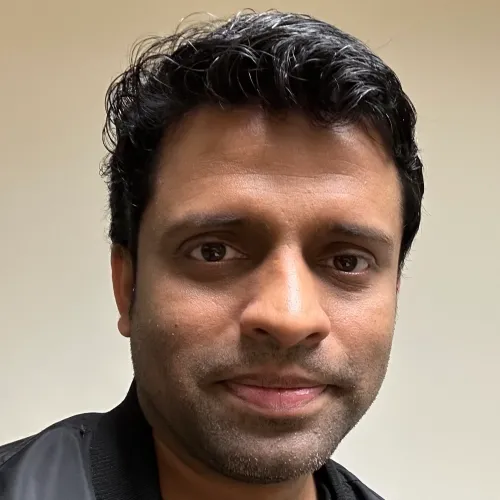
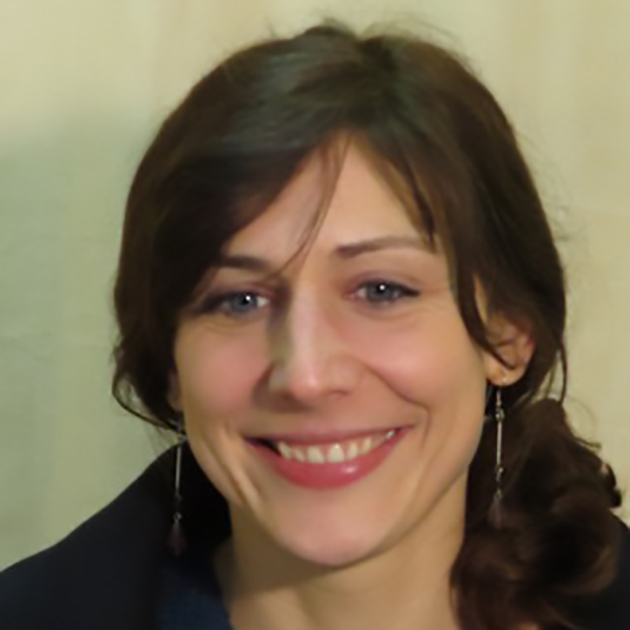
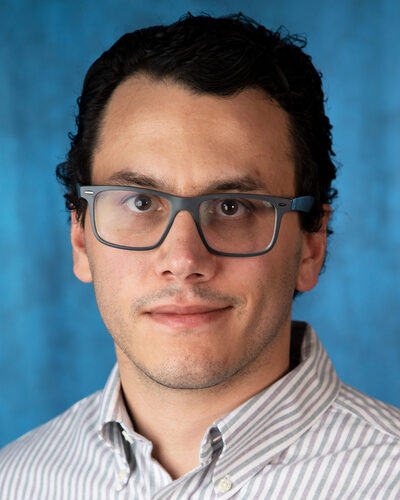
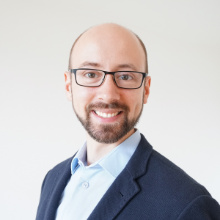
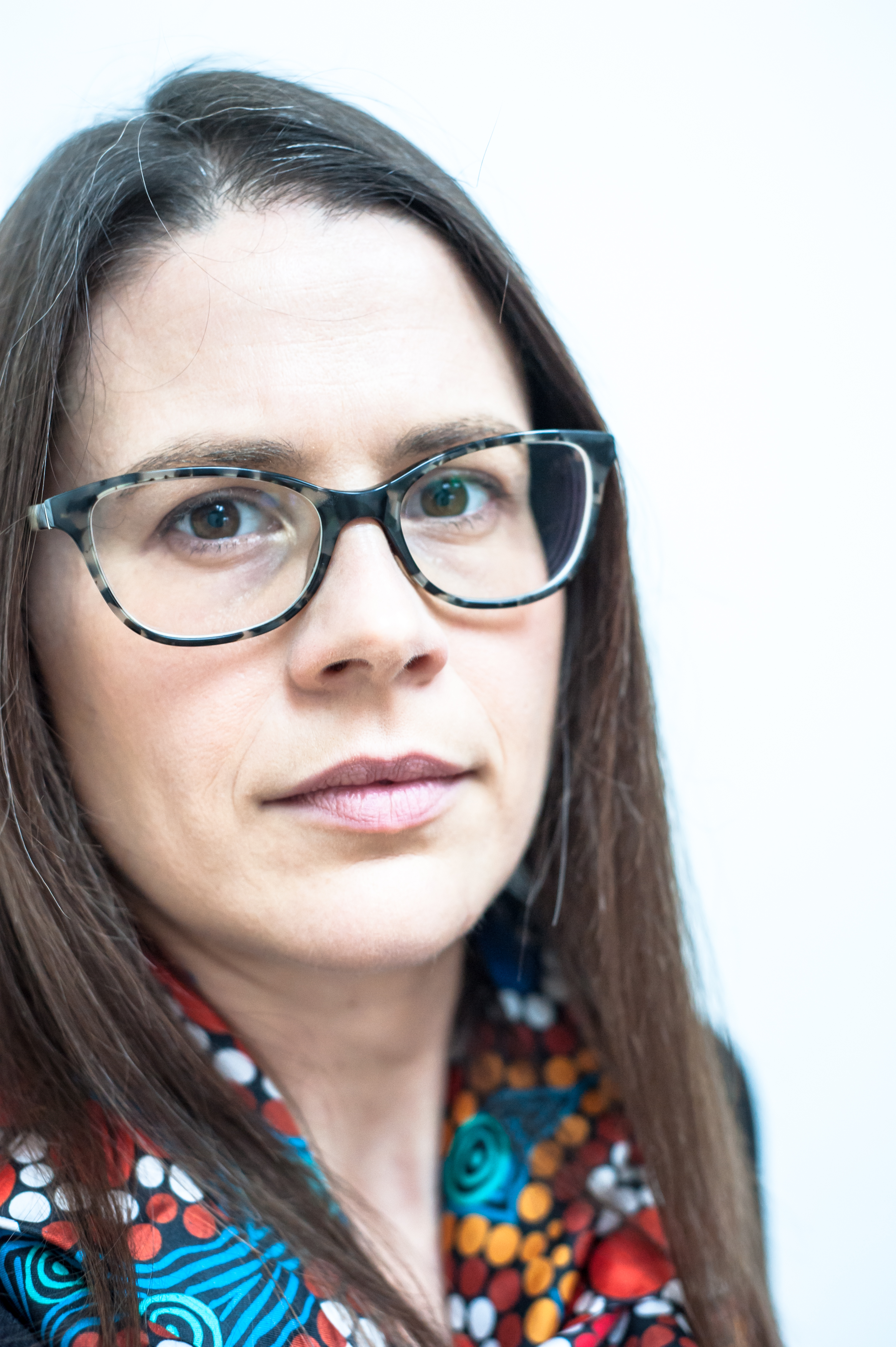
Abhijit Mishra is an Assistant Professor at the University of Texas School of Information, where he teaches courses in Applied Machine Learning, Natural Language Processing (NLP), Deep Learning, and Human-Centered Data Science. He holds a Ph.D. in Computer Science and Engineering from the Indian Institute of Technology Bombay and has previously worked as a research scientist at Apple and IBM Research, focusing on Siri and IBM Watson. Education: Ph.D. in Computer Science and Engineering (IIT Bombay) Bachelor of Technology in Computer Science and Engineering Research Interests: Machine Learning for NLP Large Language Models Cognition-Inspired NLP Multimodal Systems Conversational AI His recent publications focus on privacy-preserving AI, EEG-based text generation, hallucination detection in code summaries, and multimodal reasoning. He has received recognition for outstanding reviewing at EMNLP 2020 and ACL 2017. Abhijit mentors students in projects involving NLP, machine learning, and cognitive science applications, with recent theses on EEG-driven dialog systems and multilingual multimodal models.
Chloé Clavel is a Professor of Affective Computing at Télécom Paris (Institut Polytechnique de Paris) and Senior Researcher at INRIA Paris . She coordinates the Social Computing theme at Télécom Paris and leads research at the intersection of Affective Computing , Artificial Intelligence , and Human-Agent Interaction . Her work spans multiple disciplines including speech processing, natural language understanding, and social robotics. Research Focus: Socio-emotional behavior modeling Applications: Health, Education, Social Robotics Funding: H2020 ITN ANIMATAS, ANR SINNet Her recent publications demonstrate expertise in NLP and AI with topics including: Language model evaluation Contextual word representations Multimodal attention networks Stance detection Emotion recognition Awarded the AAAI-22 Outstanding Student Paper award for her work on the InfoLM metric, she has developed significant resources like the 3MT_French dataset and SILICONE benchmark . Her teaching includes: Master's Degree in Artificial Intelligence Courses on affective computing and NLP Industry training at Allianz and Sagemcom
Luca Cagliero is an Associate Professor (L.240) at the Department of Control and Computer Science (DAUIN) at Politecnico di Torino . He serves as Coordinator of the Interdepartmental Center SmartData@PoliTO - Big Data and Data Science Laboratory and Scientific Advisor for the Partnership Agreement with TIERRA. His research spans Data Science , Machine Learning , and Natural Language Processing , with a focus on Financial Data Mining , Generalized Pattern Mining , and Legal AI . Scientific Branch: IINF-05/A - Information Processing Systems (Area 0009 - Industrial and Information Engineering) ERC Sectors: PE6_7 (Artificial Intelligence), PE6_9 (Human Computer Interaction), PE6_11 (Machine Learning), PE6_10 (Web and Information Systems) His scientific awards include the GiovedìScienza Award (2013), Working Capital PNI (2011), and Optime. Recognition of Merit in the Study (2008). He is a Fellow of ACM (2010-) and Effective Member of IEEE (2010-). As an Associate Editor for journals like Expert Systems with Applications and Machine Learning with Applications , he contributes to academic publishing. His conference roles include Program Committee memberships at ACM SIGMOD 2023, IEEE ICDM 2021, and ACM CIKM 2018. Luca supervises PhD students in areas such as AI-driven Cybersecurity , Conversational AI , and Neural Explainers , including Aurora Gensale, Giuseppe Gallipoli, and Irene Benedetto. His commercial research contracts involve projects like AI for Trend Analysis (Intesa Sanpaolo), Predictive Maintenance , and Legal Document Processing . Key research trends include Retrieval Augmented Generation for visually-rich documents, Bias Mitigation in speech models, and Shapley Value Estimation for model explainability. His work bridges Natural Language Processing with Cybersecurity in automotive systems.
Sekh Mainul Islam is a Research Fellow in the Natural Language Processing section at the Department of Computer Science, University of Copenhagen. His research focuses on Natural Language Processing , a critical subfield of Artificial Intelligence that develops computational models enabling machines to understand, interpret, and generate human language. His work contributes to advancements in language technologies with applications spanning machine translation, sentiment analysis, conversational AI, and text summarization. The Natural Language Processing section operates within DIKU's broader research ecosystem that includes Machine Learning, Pioneer AI, and other computational research areas. Located at Universitetsparken 1 in Copenhagen Ø, the Department of Computer Science hosts multiple research sections including Algorithms and Complexity, Human-Centred Computing, Image Analysis, Computational Modelling and Geometry, and Programming Languages and Theory of Computation. The department maintains strong international collaborations and contributes significantly to Denmark's AI research landscape through centers like the Pioneer Center for Artificial Intelligence.
Şaziye Betül Özateş is an Assistant Professor at the Institute for Data Science and Artificial Intelligence at Boğaziçi University, specializing in Natural Language Processing (NLP) and Machine Learning. She holds a BSc, MSc, and PhD in Computer Engineering from Boğaziçi University, where she was advised by Dr. Arzucan Özgür and Dr. Tunga Güngör. Previously, she was a researcher at the University of Stuttgart’s Institute of Natural Language Processing and a post-doctoral fellow at KUIS AI Center focusing on procedural language learning from natural instructions. Her research interests include natural language processing, computational linguistics, syntactic analysis, and deep learning. She has developed several influential resources, including the BOUN Treebank (9,761 syntactically annotated Turkish sentences), IMST Treebank, and PUD Treebank. Her tools such as BOUN-Pars (a Turkish dependency parser) and the semi-supervised deep dependency parser support morphological and dependency analysis for agglutinative and code-switched languages. Her recent work focuses on historical Turkish NLP, Ottoman Turkish corpus construction, and multilingual BERT-based dependency parsing. She has contributed to code-switching NLP, semi-supervised learning techniques, and sentence similarity kernels for summarization. Her publications span 2016–2025, emphasizing treebanking, parsing optimization, and low-resource language challenges. Key projects include the NakbaTR dataset for Turkish NER, Arabic calligraphy text extraction, and dementia caregiver detection via social media analysis. Her work bridges theoretical linguistics with practical tools, making Turkish NLP resources accessible for global research.
Dr. Anthony Rios is an Assistant Professor in the Department of Information Systems and Cyber Security at The University of Texas at San Antonio (UTSA), affiliated with the Alvarez College of Business. He holds a Ph.D. in Computer Science from the University of Kentucky (2018) and a B.S. in Computer Science from Georgetown College (2011). His research focuses on biomedical informatics, computational social science, natural language processing (NLP), and machine learning, with applications in healthcare and social media analysis. Dr. Rios has published extensively in top venues such as EMNLP, NAACL, AMIA, and JAMIA, and has received awards including a distinguished poster finalist award at AMIA 2014 and a best paper finalist at ICHI 2015. His work includes developing robust NLP systems for electronic medical records (EMR) coding, combating bias in AI systems (e.g., dialect biases in privacy policies), and enhancing cybersecurity through SQL-based threat detection frameworks. He leads the UTSA-NLP team, contributing to projects like ArchEHR-QA and Chemotimelines. Current research explores large language model (LLM) validation, ethical AI, and scalable evaluation of data visualization systems. Education: Ph.D. in Computer Science, University of Kentucky, 2018 B.S. in Computer Science, Georgetown College, 2011 Awards: 2014: Distinguished Poster Finalist Award, AMIA 2015: Best Technical Paper Finalist, ICHI Labs/Teams: UTSA-NLP Lab, focused on NLP applications in healthcare and cybersecurity
R.S.K. (Senthil) Chandrasegaran is an Assistant Professor at the Faculty of Industrial Design Engineering (IDE), Delft University of Technology. His work focuses on integrating computer support tools to enhance collaborative design processes and applying visualization techniques to analyze designer interactions. He is affiliated with the Designing Intelligence Lab (DI_Lab) , where he investigates how visual analytics can model and improve human-AI collaboration in design. Education: Ph.D. in Mechanical Engineering, Purdue University Previous Positions: Postdoctoral Researcher at University of Maryland (HCI Lab) and University of California, Davis (VIDI Lab) Senthil's research interests center on: Visual analytics for understanding collaborative design behaviors AI agents in creative processes Linguistic methods to analyze design discourse Human-AI interaction frameworks His recent publications examine agent conversations, data humanism in design, and computational analysis of design language. The work emphasizes: AI-driven design support systems Visualization of complex design interactions Linguistic markers of creativity and collaboration He teaches courses related to design computing and has contributed to frameworks for integrating electronics into mechanical design education.
Evangelos Kanoulas is a Professor at the Informatics Institute, University of Amsterdam. He holds a PhD in Computer Science from Northeastern University, Boston, USA (2010). His research focuses on information retrieval, machine learning, natural language processing, and conversational systems. He has made significant contributions to topics such as adversarial attacks in retrieval systems, knowledge-enhanced recommendation, and large language model applications in legal and product search domains. Education: PhD in Computer Science (Northeastern University, 2010). His work often bridges theory and practice, addressing challenges in robust retrieval, conversational AI, and multimodal systems. He has organized workshops such as ALTARS (Augmented Intelligence in Technology-Assisted Review Systems) and KEIR (Knowledge-Enhanced Information Retrieval), highlighting his role in advancing interdisciplinary research. Research interests include adversarial machine learning, conversational search, and AI-driven systems for legal and e-commerce domains. His recent work explores efficient training of large language models, robustness against typos, and generative models for query rewriting. His publications span top venues like SIGIR, ECIR, and ACL, with a focus on practical applications of NLP and IR. Despite no explicit mention of awards, his prolific publication record and leadership in organizing conferences reflect his academic impact.
Yulong Chen is a Researcher at the Department of Computer Science and Technology, University of Cambridge. He specializes in Natural Language Processing (NLP), focusing on areas such as large language models (LLMs), constituency parsing, cross-lingual summarization, and dialogue systems. His work bridges theoretical advancements with practical applications, including automated claim verification, multimodal intelligence, and ethical AI considerations. Chen contributes to both teaching and research: he teaches courses on Natural Language Processing at both undergraduate and postgraduate levels. His research emphasizes interdisciplinary approaches, combining machine learning, computational linguistics, and cognitive models. Key projects include developing benchmarks for higher-order theory of mind reasoning in LLMs and designing frameworks to uncover model weaknesses. His publications span foundational surveys (e.g., on LLM hallucinations and text-to-SQL systems) to applied work like MACSum for controllable summarization and Hi-TOM for evaluating social cognition in AI. He collaborates extensively on tools like EASE for efficient data annotation and UniSumm for few-shot summarization, reflecting his commitment to advancing both NLP infrastructure and model capabilities.
Professor Daniel Buschek leads the research group in Mobile Intelligent User Interfaces at the University of Bayreuth's Faculty of Mathematics, Physics and Computer Science. His work focuses on integrating Human-Computer Interaction (HCI) with Machine Learning/AI to design novel user interfaces that enhance the effectiveness, efficiency, and security of digital technology use. He explores both 'AI for better UIs' and 'better UIs for AI,' addressing challenges in interactive systems, generative models, and ethical considerations in human-AI collaboration. His research spans topics such as AI writing assistants, user perception of AI-generated content, and adaptive touch interfaces. Buschek's team includes prominent researchers like Florian Lehmann and Hai Dang, contributing to conferences like CHI and ACM DIS. He has published extensively on topics ranging from generative AI interaction design to behavioral biometrics and continuous authentication systems. Key contributions include frameworks for understanding intelligent systems, tools like SummaryLens and GestureMap, and studies on user behavior in AI-driven environments. Buschek's work emphasizes user-centric design, ethical AI integration, and the societal implications of emerging technologies.
Dr. Tamara Polajnar is a Visiting Researcher at the Department of Computer Science and Technology, University of Cambridge. Her research focuses on computational linguistics and natural language processing, with particular emphasis on distributional semantics and semantic compositionality. Her research interests span multiple areas including computational semantics, distributional models, and semantic composition. She develops tensor-based methods for representing meaning and investigates techniques for semantic analysis of text at different levels from phrases to documents. Her work combines theoretical linguistics with practical machine learning approaches. Her publications primarily focus on compositional distributional semantics, exploring how to effectively combine word vectors to represent larger linguistic units. Recent work examines discourse-level representations and evaluation methods for semantic models. She has contributed datasets and frameworks that advance the understanding of how computational models can capture linguistic phenomena. She actively contributes to the research community through the development of specialized datasets and evaluation resources. Her work on RELPRON provides valuable resources for evaluating compositional distributional models, while her research on short scientific summaries addresses challenges in processing academic text.
Sagnik Ray Choudhury serves as an Assistant Professor in the Department of Computer Science and Engineering at the University of North Texas, with his office located in Discovery Park F264. He maintains regular office hours on Wednesdays from 11:00 am to 1:00 pm and can be contacted via Sagnik.Choudhury@unt.edu. His research centers on Natural Language Processing with emphases on bias analysis in language models, scholarly communication systems, and reproducible research methodologies. Key interests include quantifying gender bias in cross-lingual political contexts, developing retrieval-augmented LLMs for scholarly impact prediction, and creating frameworks for automated limitation extraction from academic texts (BAGELS project). He also investigates model generalizability across NLI and MRC tasks while advancing NLP applications for social good through ethical deployment strategies. Recent publications reveal a strong trajectory in leveraging LLMs for academic writing automation, including Futuregen for future work generation and scholarly impact forecasting. His work consistently bridges computational linguistics with real-world challenges in research transparency, educational technology, and AI ethics—particularly evident in studies on political ideology navigation and gender bias quantification. No scientific awards were documented in the source material. Information regarding student advising, grant funding, laboratory facilities, or research teams was not provided in the available texts.
Charles Steinfield is a Professor at Michigan State University, USA, with a career spanning over three decades in Information Systems and Human-Computer Interaction. His work focuses on enterprise social media, virtual teams, and ICT adoption in rural and organizational contexts. He has collaborated extensively with researchers like Nicole B. Ellison, Robert E. Kraut, and Susan Wyche. Key research themes: Digital Transformation, Social Capital, Telecommunications Notable collaborations: Wietske van Osch, Yanjie Zhao, Cliff Lampe His 2013-2022 publications examine boundary spanning in social media, while 2024+ work addresses knowledge graphs, FAIR data principles, and LLM applications in scholarly infrastructure. Steinfield has contributed to understanding digital divide issues through studies in Kenya and Malawi.
Zheng Ge is an active researcher specializing in computer vision and deep learning, with a prolific publication record spanning from 2018 to 2025. They have authored or co-authored 81 publications in top-tier venues including CVPR, ICLR, ECCV, and NeurIPS, demonstrating consistent research productivity and impact in the field of artificial intelligence. Dr. Ge's primary research interests focus on computer vision with particular emphasis on object detection, 3D perception, and multimodal learning systems. Their work bridges theoretical advancements with practical applications, especially in video understanding, image generation, and large vision-language models. Recent research directions show a strong focus on developing more efficient and capable multimodal systems that can handle complex visual tasks with human-like understanding. The analysis of their recent publications reveals a clear trend toward building more sophisticated multimodal systems that integrate vision, language, and temporal understanding. Their work on video generation, perception modeling, and instruction tuning demonstrates a strategic focus on advancing the capabilities of multimodal large language models while addressing practical challenges in scalability and robustness. While specific awards are not documented in the available publication records, Zheng Ge's consistent presence in top-tier computer vision and machine learning conferences indicates significant recognition within the research community. Their work has contributed to advancing state-of-the-art techniques in multiple subfields of computer vision. Dr. Ge appears to be actively collaborating with a large research team, frequently working with researchers such as Xiangyu Zhang, Jianjian Sun, Chunrui Han, and Liang Zhao. These collaborations span multiple institutions and research groups, suggesting a well-integrated position within the computer vision research ecosystem. While specific grant information isn't available in the publication metadata, the scale and scope of their projects indicate substantial research funding support. Based on publication patterns and technical focus, Zheng Ge appears to be part of a large research organization or lab specializing in computer vision and multimodal AI systems. Their work on technical reports for video foundation models and large-scale multimodal systems suggests involvement in industry-leading AI research initiatives with strong engineering capabilities.
Monica S. Lam is the Kleiner Perkins, Mayfield, Sequoia Capital Professor in the Computer Science Department at Stanford University's School of Engineering, where she has been a faculty member since 1988. She serves as Faculty Director of the Open Virtual Assistant Lab (OVAL) and holds a courtesy appointment in the Electrical Engineering Department. Lam received her B.Sc. from the University of British Columbia in 1980 and her Ph.D. in Computer Science from Carnegie Mellon University in 1987. Her research spans multiple domains with a focus on creating trustworthy virtual assistants based on Large Language Models. She is particularly renowned for her work on the Almond virtual assistant, which emphasizes privacy preservation and open-source development. Her research interests include virtual assistants, natural language programming, machine learning, distributed mobile computing, and compiler technologies. Lam's recent publications reveal a strong focus on addressing key challenges in virtual assistant technology, particularly around hallucination reduction in LLMs, multilingual dialogue systems, semantic parsing, and multimodal interactions. Her work consistently emphasizes privacy preservation, open-source development, and user control over data. Member of the National Academy of Engineering ACM Fellow NSF Young Investigator Award (1992) ACM Most Influential Programming Language Design and Implementation Paper Award (2001) Wikimedia Foundation's Research of the Year Award (2024) for eliminating LLM hallucinations Popular Science's Best of What's New Award in Security (2019) for Almond virtual assistant Lam has advised numerous PhD students who have gone on to prominent positions at institutions like MIT, Harvard, Google, and Amazon. Her research has been supported by significant funding including NSF grants and industry partnerships. She leads the Open Virtual Assistant Lab (OVAL), which focuses on developing open, privacy-preserving virtual assistant technologies that give users control over their data while maintaining functionality.