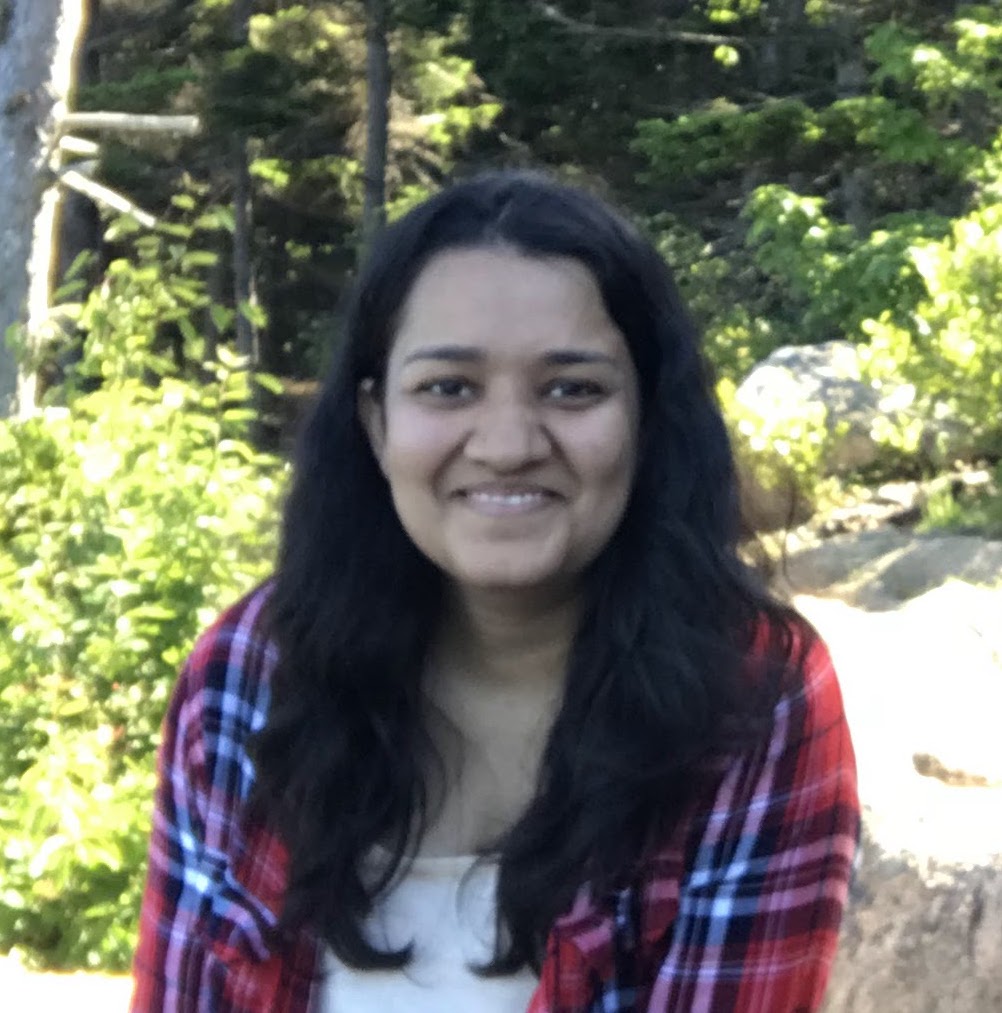
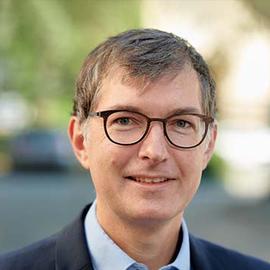
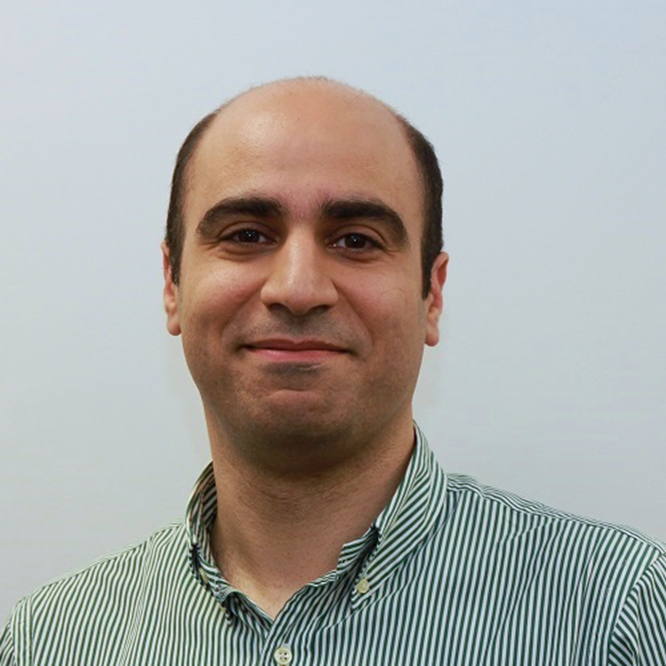
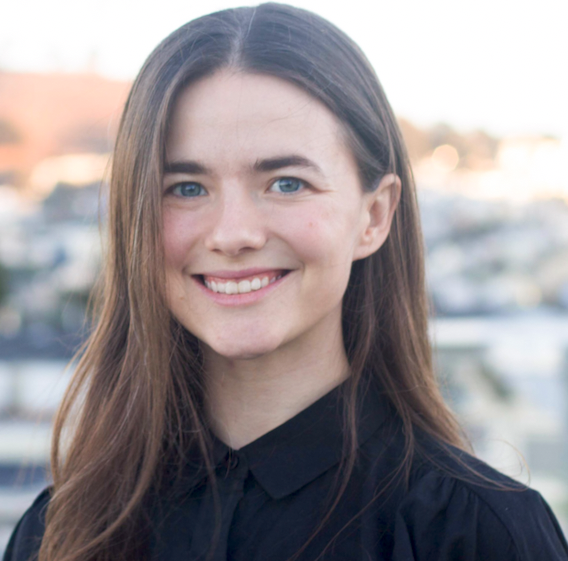
Prof. Dr. Jana Diesner holds the Human-Centered Computing professorship at the TUM School of Social Sciences and Technology, Technical University of Munich. Her research focuses on computational social science, network analysis, and ethical data practices. She explores topics such as gender bias in AI, crisis communication networks, and the societal impact of scientific research. Her work bridges computer science and social sciences, addressing challenges in natural language processing, data ethics, and interdisciplinary collaboration. Notable areas include analyzing coauthorship networks, detecting biases in large language models, and improving disaster response through network data. Recent publications highlight her contributions to understanding structural balance in signed networks, cross-lingual alignment for LLM evaluation, and the societal impact of documentaries. She emphasizes methodological rigor in computational impact detection and ethical considerations in data usage.
Tanya Goyal is an Assistant Professor in the Department of Computer Science at Cornell University. Previously, she was a postdoctoral scholar at the Princeton Language and Intelligence Center (2023-2024) and earned her Ph.D. in Computer Science from the University of Texas at Austin in 2023, advised by Greg Durrett. Her doctoral research focused on evaluation tools for text generation models and won the UTCS Bert Kay Dissertation Award. She holds a B.Tech in Mathematics and Computing from the Indian Institute of Technology, Guwahati (2011-2015). Her research interests center on Natural Language Processing, particularly reliable evaluation frameworks for large language models (LLMs), factuality assessment, and understanding LLM behaviors influenced by training data or alignment strategies. She teaches advanced language technologies (CS 6740) and undergraduate NLP (CS 4740) at Cornell. Notable contributions include the FALTE toolkit for fine-grained annotation, the WildHallucinations evaluation framework, and studies on length optimization in RLHF and reward model dynamics. Recent achievements include three COLM 2024 paper acceptances on topics like reward model dynamics and book summarization, a talk at Weill Cornell Medicine on generative AI, and participation in ICLR 2024. She actively contributes to open-source projects, including repositories for factuality evaluation and dependency-based entailment analysis.
Rafael Garcia Ros is a Professor in the Faculty of Psychology and Speech Therapy at the Universitat de València, Spain. He is affiliated with the Department of Developmental and specializes in Developmental and Educational Psychology. He is an active member of two research groups: INSTECH (Instructional Technology: Designing effective learning environments) and the socializ Research Group, focusing on innovative educational practices and social aspects of learning. His research interests center on educational and developmental psychology, with a particular emphasis on instructional design and learning strategies. His work explores how cognitive and developmental factors influence effective learning, especially through summarization techniques and technology-enhanced environments. These interests are deeply rooted in both theoretical frameworks and practical applications in education. The trends in his scholarly focus—though specific publications are not listed—suggest a long-standing commitment to understanding and improving learning processes through structured strategies and technological integration. His research bridges cognitive development with pedagogical innovation, particularly in higher and instructional education settings. No scientific awards were mentioned in the provided text. While no formal advisees or grants are listed in the available information, his role as a PhD supervisor (having completed his own doctorate under Dr. Antonio Clemente Carrión) and leadership in major research groups imply significant mentorship and research coordination activities over his academic career. Rafael Garcia Ros is actively involved in two prominent research groups: INSTECH, which focuses on designing effective learning environments through instructional technology, and the socializ Research Group, which likely investigates social dimensions of learning and development. These teams underscore his interdisciplinary approach to educational psychology and technology integration.
Jens Kleesiek is a Professor of Translational Image-guided Oncology at the Institute for AI in Medicine (IKIM) in Germany, affiliated with Heinrich Heine University Düsseldorf. He studied medicine in Heidelberg and bioinformatics in Hamburg, earning a Ph.D. in computer science in 2012, followed by radiology certification and habilitation in medical informatics. Research Interests: Self-supervised and weakly supervised learning for clinical pattern recognition Multimodal data integration to enhance decision-making Medical image analysis, segmentation, and body composition modeling AI applications in oncology, radiology, and pathology Explainable AI for real-world clinical implementation Publications highlight his work on diseases like cancer and liver fibrosis, focusing on deep learning, federated learning, and image analysis. Studies include virtual contrast enhancement in MRI, GAN-based data synthesis, and AI in radiology. Education spans medicine (Heidelberg) and bioinformatics (Hamburg), with a Ph.D. in computer science. His clinical training includes radiology and medical informatics at the German Cancer Research Center (DKFZ) and University Hospital Heidelberg. Collaborations involve institutions like the German Cancer Research Center, University Hospital Heidelberg, and Heinrich Heine University Düsseldorf. He co-authored works on medical imaging, language models, and AI ethics in healthcare.
James Henderson is a Senior Researcher at Idiap Research Institute where he heads the Natural Language Understanding group. He currently serves as Action Editor for Transactions of the Association for Computational Linguistics (TACL) and was recently awarded an ERC Advanced Grant for his project 'Interpretable Beliefs and Programmable Knowledge with Bayesian Attention in Large Language Models' (BALM). Previously, Henderson held positions as Chargé de Cours at University of Geneva's Department of Computer Science and Principal Scientist at Xerox Research Centre Europe (now Naver Labs Europe). Henderson's research focuses on machine learning methods for natural language processing, with pioneering work on recurrent neural networks for syntactic and semantic parsing. His current investigations include representation learning for language semantics, graph-to-graph deep learning models, entity induction, and variational-Bayesian attention-based representation learning. His research bridges Bayesian inference, transformer architectures, and structured prediction for NLP tasks. His publication portfolio demonstrates consistent contributions to core NLP methodologies, with recent emphasis on transformer optimization, Bayesian neural methods, efficient model architectures, and graph-based language representations. Research frequently appears in top venues including ACL, EMNLP, ICLR, and NeurIPS. Honors: ERC Advanced Grant (2023) Henderson leads the Natural Language Understanding group at Idiap, currently recruiting PhD students and postdoctoral researchers for his ERC project. He obtained his PhD and MSc from University of Pennsylvania and BSc from Massachusetts Institute of Technology, all in computer science.
Gianluca Demartini is a prominent researcher in human-in-the-loop AI systems, crowdsourcing, and information retrieval. His work spans interdisciplinary collaborations with institutions across Australia, Europe, and Asia, focusing on enhancing media literacy, managing data bias, and improving human-AI collaboration frameworks. Key affiliations include University of Queensland, University of Padua, and University of Basel Research areas: Crowdsourcing, Large Language Model applications, Misinformation detection Research Interests : Bias Management : Developing tools for identifying and mitigating biases in AI systems Misinformation Mitigation : Human-AI strategies for truthfulness assessment Collaborative Knowledge Systems : Hybrid human-machine approaches to data quality LLM Applications : Personas, synthetic data generation, and ethical considerations Publication Trends show a focus on AI ethics, human-AI collaboration, and social media analysis, with recent work exploring LLMs' role in content moderation and misinformation detection. Scientific Awards : 2023 ICTIR Best Paper Award 2020 ISWC Best Demo Award 2013 ISWC Best Paper Nominee 2011 ISWC Best Demo Award 2020 CSCW Honorable Mention Advising : Mentoring junior researchers across multiple institutions in areas like data bias, crowdsourcing, and AI ethics.
Hao Tang is a Lecturer in Speech Technology at the School of Informatics, University of Edinburgh, affiliated with the Institute for Language, Cognition and Computation (ILCC) and the Centre for Speech Technology Research (CSTR). He contributes to cutting-edge research in speech and language processing, with a focus on speech representations and self-supervised learning. PhD, Toyota Technological Institute at Chicago (2017–2020), advised by Karen Livescu Postdoctoral Associate, MIT Spoken Language Systems Group (2020–) Master’s, National Taiwan University, advised by Lin-Shan Lee Hao Tang’s research centers on speech representations, particularly discrete and geometric properties in self-supervised models. He investigates how speech systems encode speaker and phonetic information, and how these representations can be improved for tasks like phone segmentation, acoustic word embedding, and text-to-speech. He also works on text summarization, especially opinion and attributable summarization. His work bridges machine learning, cognitive modeling, and practical speech applications. His recent publications span top venues including Interspeech, ICASSP, ACL, NeurIPS, and IEEE/ACM Transactions. Key themes include self-supervised learning, disentangled representations, predictive coding, and efficient speech modeling. He has co-authored papers on discrete speech units, orthogonality in representations, and context modeling in neural speech systems. Best Student Paper Award, Interspeech 2020 Computational Modeling Prize for Perception & Action, CogSci 2024 Speech and Language Processing Student Paper Award, ICASSP 2016 Best Student Paper of Speech and Language Processing, ICASSP 2016 Best Paper Nominee, ASRU 2015 Hao Tang actively supervises PhD and Master’s students, many of whom have published at leading conferences and gone on to positions at Cohere, Apple, Sesame, and top PhD programs. He serves as Associate Member of IEEE SLTC, Meta Reviewer for ICASSP, Area Chair for ACL ARR, Action Editor for TACL, and Area Chair for ICLR and NeurIPS. He teaches core courses such as Machine Learning (INFR10086) and Automatic Speech Recognition (INFR11033) . Hao Tang leads a research group within ILCC and CSTR, collaborating with researchers like Sharon Goldwater, Jim Glass, and Karen Livescu. His team focuses on developing interpretable, efficient, and scalable models for speech and language understanding.
Amy Pavel is an Assistant Professor in the Department of Computer Science at the University of Texas at Austin. Prior to this role, she was a Postdoctoral Fellow at Carnegie Mellon University and a Research Scientist at Apple. Her research bridges Human-Computer Interaction and Accessibility, focusing on AI-driven systems for efficient and inclusive communication. Education: PhD in Computer Science from UC Berkeley (2019), advised by Björn Hartmann and Maneesh Agrawala. Teaching: Regularly teaches Human-Computer Interaction courses at UT Austin and UC Berkeley. Her work addresses accessibility challenges through systems like Rescribe (audio descriptions), CrossA11y (video accessibility), and GenAssist (image generation). Recent projects explore AI applications for low-vision learners, photosensitivity warnings in VR, and collaborative video editing. Award highlights include 2023 UIST Best Paper 2022 UIST Best Paper 2020 CHI Honorable Mention (twice) 2018 UC Berkeley EECS Outstanding Graduate Student Instructor She advises PhD students like Mina Huh and Yi-Hao Peng, as well as undergraduates and masters students. Her lab collaborates with institutions including Google, Carnegie Mellon, and UC Berkeley.
Arsha Nagrani is a senior research scientist at Google AI Research , focusing on machine learning for video understanding. She earned her PhD at the University of Oxford under Andrew Zisserman with a Google PhD Fellowship , and completed her undergraduate studies at the University of Cambridge with mentorship from Roberto Cipolla and Richard Turner. Research Interests : Self-supervised and multi-modal machine learning Video recognition using sound and text Computer vision for wildlife conservation Cross-modal self-supervision in biometric matching Transformer-based architectures for temporal modeling Zero-shot learning with frozen models Scientific Awards : ELLIS PhD Award Google PhD Fellowship ICASSP 2021 Outstanding Paper Award INTERSPEECH 2017 Best Student Paper Award Service Contributions : Area Chair for CVPR23, ICCV23 Reviewer for top conferences (CVPR, ECCV, ICCV, BMVC, NeurIPS, ICML, AAAI) Organized workshops: Sight and Sound Workshop @ CVPR [2020-2022] VoxSRC Challenges @ INTERSPEECH Video Understanding Pentathlon @ CVPR 2020 Women in Computer Vision (WiCV) Workshops
Robert Frederking is an Associate Dean for PhD Programs and Chair of the Master of Language Technologies program at Carnegie Mellon University's Language Technologies Institute (LTI), part of the School of Computer Science (SCS). With over three decades at CMU, he holds a PhD in Computer Science , specializing in machine translation and computational linguistics . Education : PhD in Computer Science, Carnegie Mellon University Research Interests : Advancing machine translation for low-resource languages Developing speech-to-speech translation systems (Tongues, NineOneOne projects) Building named entity recognition tools for defense applications Creating translingual information retrieval frameworks Designing multilingual processing architectures Scientific Awards : Allen Newell Award for Research Excellence Leadership & Grants : Principal Investigator for NSF KDI Universal Access project Co-PI for NSF/EU Muchmore project Organizer of JGC60 Celebration Representative to NSF-funded LEAP Alliance Labs & Teams : Founding member of CMU's Language Technologies Institute Contributor to evolution of Center for Machine Translation into LTI Key member of Dolphin Communication Project Participant in AMTA leadership (2004-2008)
Yllias Chali is a Professor at the Department of Mathematics and Computer Science, University of Lethbridge, Canada. His research focuses on Natural Language Processing , Artificial Intelligence , and Human Language Technologies , with a focus on text summarization, question answering, and knowledge representation. He has supervised numerous graduate students and secured funding from NSERC for projects in these areas. Teaching : Courses include Fundamentals of Programming I , Artificial Intelligence , and Statistical Methods and Machine Learning . Research Trends : Recent publications emphasize abstractive text summarization using BART, graph attention networks , multi-hop question generation , and faithfulness in NLP models. His work integrates machine learning , syntactic analysis , and semantic modeling . Advising : Collaborates with graduate students on NLP projects, including Narjes Delpisheh and Elozino Egonmwan. Funded by NSERC. Labs & Teams : Leads NLP research initiatives at the University of Lethbridge, contributing to computational linguistics and machine learning advancements.
Shay Cohen is a Reader at the Institute for Language, Cognition and Computation within the School of Informatics at the University of Edinburgh. He teaches advanced courses in Natural Language Understanding, Generation, and Machine Translation, as well as Accelerated Natural Language Processing and Foundations of NLP. His research focuses on the intersection of NLP and machine learning, particularly in text generation, parsing, representation learning, and applications of large language models, neural networks, and probabilistic grammars. His recent work includes advising students on projects like RNA structure prediction via dependency parsing (DEPfold, ICLR), tracking evolution in commercial MT systems (EMNLP 2023), mitigating hallucinations with concept erasure (BlackBoxNLP 2022, EMNLP 2023), and using PCFGs for neural architecture search (ACL 2023). He has also explored polarization trends in review language (LRE) and developed tools like the Rainbow Parser for latent-variable PCFGs. Shay co-organizes outreach programs like the Informatics Circle for teaching computer science to children and has led workshops on LLM scaling behavior (EACL 2024), representation learning (ACL 2017), and vector space modeling (NAACL 2015). He collaborates with institutions such as IBM, Google, and Amazon and has advised postdocs now at Telecom Paris, Naver Labs, and CNRS.
Frank Keller is a Professor in the School of Informatics at the University of Edinburgh, affiliated with EdinburghNLP, the Natural Language Processing Group. His research spans natural language processing, cognitive science, and computational narrative, with dual foci on language-vision integration and narrative modeling. Professor Keller's primary research encompasses natural language processing and cognitive science, specifically investigating language and vision tasks such as image description, visual grounding, video summarization, and visual story telling. His secondary focus involves computational narrative modeling, where he develops frameworks for analyzing characters, plot turning points, and suspense in long-form texts including movie scripts and books—addressing challenges in LLM comprehension of extended narratives. Recent publications (2023-2025) reveal strong trends in multimodal narrative generation, particularly visual story creation with grounded characters and movie script summarization. His work bridges cognitive modeling with practical NLP applications, exploring human reading mechanisms through neural attention models and advancing procedural video understanding through implicit argument prediction. Scientific Awards: EMNLP Best Paper Award (2002) Nominated for ACL Best Short Paper Award (2019) Professor Keller actively supervises eight current PhD students including Anil Batra and Gautier Dagan, and has mentored 26 alumni now at institutions like MIT, Google DeepMind, and Copenhagen University. His research receives substantial funding through the UKRI Centre for Doctoral Training in Designing Responsible NLP, supporting next-generation NLP researchers. As a core member of EdinburghNLP, he leads interdisciplinary teams collaborating with the Pioneer Center for AI and Copenhagen University. Current projects integrate cognitive science with multimodal learning, focusing on narrative structure analysis, visual grounding, and human-AI interaction systems for complex tasks like trailer creation and scientific poster summarization.
Gül Varol is a permanent researcher (equivalent to Associate Professor) at École des Ponts ParisTech, where she is part of the IMAGINE group within the Laboratoire d'Informatique Gaspard-Monge (LIGM). She holds additional affiliations as an ELLIS Scholar and a Guest Scientist at the Max Planck Institute (MPI). Her academic journey includes a postdoctoral position at the University of Oxford's Visual Geometry Group (VGG) under Andrew Zisserman, and a PhD from the WILLOW team at Inria Paris and École Normale Supérieure. Her educational background includes BS and MS degrees from Boğaziçi University, followed by doctoral studies at Inria Paris and École Normale Supérieure. During her PhD, she spent research periods at MPI, Adobe, and Google, gaining diverse industry and academic experience. Dr. Varol's research focuses on the intersection of computer vision and language processing, with particular expertise in video representation learning, human motion synthesis, and sign language technologies. Her work bridges theoretical advances with practical applications, especially in accessibility technologies like audio description for visually impaired audiences and sign language recognition systems. She has pioneered approaches for text-driven 3D human motion generation, sign language translation with contextual cues, and film-grammar-aware audio description generation. Her research often leverages large language models and vision-language models to solve complex multimodal problems without requiring extensive training data. Analysis of her recent publications reveals a clear trajectory toward more sophisticated multimodal systems that integrate temporal understanding, contextual awareness, and fine-grained control. Her work increasingly focuses on practical applications in accessibility, with significant contributions to sign language technologies and audio description systems. She has demonstrated leadership in developing large-scale datasets like BOBSL (BBC-Oxford British Sign Language Dataset) and advancing methods for zero-shot and training-free approaches that can be deployed without extensive fine-tuning. Her scientific achievements have been recognized with several prestigious awards: ELLIS 2020 PhD Award AFRIF 2019 PhD thesis award from the French association for pattern recognition Google Research Scholar award (2023) Best application paper award at ACCV'20 Dr. Varol has received significant research funding including an ANR JCJC project "CorVis" and research gifts from Google and Adobe. She actively mentors students and researchers, with prospective students encouraged to apply through her lab's application form. Her leadership in the academic community is evident through her service as Program Chair for ECCV'24, Senior Area Chair for CVPR 2025, and associate editor for the International Journal of Computer Vision (IJCV). She is a key member of the IMAGINE research group at École des Ponts ParisTech, which focuses on image analysis and computer vision. Her collaborative work extends to multiple institutions including MPI, Oxford, and various industry research labs. She has co-organized numerous workshops on specialized topics including sign language recognition, vision transformers, and foundation models for 3D humans, fostering community building in these emerging research areas.
Bowen Xu is an Assistant Professor in the Department of Computer Science at North Carolina State University, where he leads the SoftMax Lab within the College of Engineering. Previously, he was a postdoctoral researcher at Singapore Management University (SMU), where he also earned his PhD from the School of Computing and Information Systems. His research spans the intersection of machine learning and software engineering, with particular focus on securing AI models for software engineering tasks from both model and data perspectives. Key research interests include AI for Code, Backdoor Attack and Defense on Large Code Models, Code Data Interpretation and Quality, Code Representation Learning, Model Compression, Vulnerability Detection and Repair, and Safety of AI-enabled Software Systems. Xu's publication record shows a strong focus on the security aspects of AI code models, with several recent papers examining backdoor attacks and defenses. His work also explores the application of large language models to software engineering tasks like vulnerability repair, API documentation, and technical question answering. His publications appear in top venues including IEEE Transactions on Software Engineering (TSE), ACM Transactions on Software Engineering and Methodology (TOSEM), and International Conference on Software Engineering (ICSE). Highly Commended Full Paper Award at ESEM 2018 Honorable Mention Award at ACSAC 2022 Nominated for ACM SIGSOFT Distinguished Paper Award at ASE 2022 Xu actively serves the software engineering community through editorial and program committee roles, including serving as Paper Review Co-chair for ICSE 2025 and FSE 2025, and as a member of the Editorial Board for Empirical Software Engineering Journal. He has advised numerous graduate and undergraduate students who have gone on to positions at companies like Microsoft, Marvell Semiconductor, and Barclays.