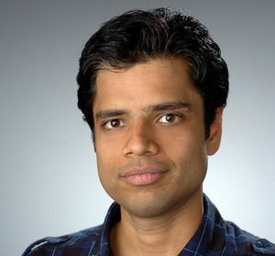
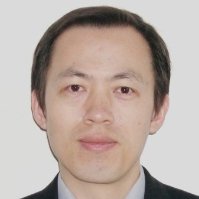
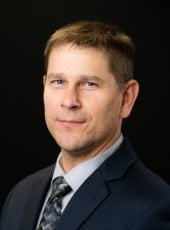
Pranav Soman is an Associate Professor in the Biomedical & Chemical Engineering Department at Syracuse University . His research focuses on 3D printing, hydrogel technology, and biomedical instrumentation. Education : B.S. in Mechanical Engineering (Pune University), Ph.D. in Bioengineering (Pennsylvania State University, 2009) Research Interests include bioprinting, laser-based fabrication, and development of in vitro models for bone and kidney tissues. He integrates optical engineering with biomedical applications to create advanced tissue constructs. Recent Publications highlight his work in hybrid laser platforms for 3D printing, osteocyte signaling in bone adaptation, and organ-on-a-chip systems for glomerular filtration studies. Scientific Awards Satish Dhawan Visiting Chair Professor (2021) E&T Outstanding Innovation in Manufacturing 4.0 (2020) Techconnect Defense Innovation Award (2020) Grants include multiple NIH-funded projects on bone mechanoadaptation, microvascular integration in osteogenesis, and organ-on-a-chip systems, as well as NSF and DARPA collaborations.
Dr Robert Ward is an Industrial Research Fellow at the University of Sheffield's School of Electrical and Electronic Engineering, with a joint appointment at the Advanced Manufacturing Research Centre (AMRC). His work bridges academic research and industrial applications in autonomous manufacturing systems. MEng(Hons) in Avionics and Aerospace Systems, University of Manchester Engineering Doctorate (EngD) in Machining Science and Control Engineering, University of Sheffield Research interests focus on Digital Machining and Machine Tool Control , particularly in CNC trajectory generation, robotic machining, and digital twin technologies. His recent publications emphasize real-time control algorithms, neural network applications for machining optimization, and synchronization of manufacturing systems. As module leader for Rapid Control Prototyping , he teaches advanced control techniques to undergraduate students. He actively supervises both undergraduate and postgraduate students, emphasizing industrial collaboration and professional preparation. Professional memberships include: Chartered Engineer (CEng) Member of Institute of Engineering and Technology (MIET) Member of Institute of Electrical and Electronic Engineers (MIEEE) At AMRC, Ward leads the Control of Subtractive Manufacturing Operations theme within the Digital Machining Research Team, collaborating on both high-TRL industrial projects and low-TRL research funded by HVMC and EPSRC.
Professor Gary J. Cheng is a distinguished faculty member at Purdue University's Edwardson School of Industrial Engineering, with a courtesy appointment in the School of Materials Engineering. He holds numerous prestigious fellowships including AAAS, ASME, SME, RSC, RSA, and ISNM. Dr. Cheng received his PhD in Mechanical Engineering from Columbia University in 2002 and has established himself as a leading researcher in laser-based manufacturing and nanomaterials processing. His research focuses on advanced materials synthesis and processing , specifically in scalable manufacturing of 0D-3D micro/nanostructures, laser matter interaction, and mechanical/physical property enhancement of materials. Applications span energy transport, conversion and storage, load bearing, biomedical devices, and electrical and optical systems. Dr. Cheng heads the Scalable Micro Nano Manufacturing Lab (SMNML) and has secured significant research funding, including an NSF CAREER Award and ONR Young Investigator Award. Dr. Cheng teaches core manufacturing courses including IE370 'Manufacturing Process I', IE 470 'Manufacturing Process II', IE 570 'Advanced Manufacturing Process', and IE 670 'Advanced Topics in Nano-Manufacturing.' His publication record shows consistent high-impact output with over 200 peer-reviewed articles in top journals including Nature Materials, Advanced Materials, and Science Advances, with research trends indicating increasing focus on nanomanufacturing, energy applications, and biomedical materials. Among his numerous accolades are the ASME Milton C. Shaw Manufacturing Research Medal (2022), Purdue College of Engineering Outstanding Faculty Mentor Award (2021), and ASME Blackall Machine Tool and Gage Award (2025). He serves as Associate Editor for the Journal of Manufacturing Science and Engineering and Journal of Manufacturing Process, and as Subject Editor for the Journal of Materials Processing and Technology. Dr. Cheng has successfully mentored multiple PhD students including Maithilee Motlag, Bill Bihlman, and Biwei Deng. His research has been supported by significant grants from NSF, ONR, and other funding agencies, with several projects exceeding $1 million in value. The Scalable Micro Nano Manufacturing Lab continues to innovate in laser-based processing techniques with applications across multiple industries.
Nicholas Hendrickson is Professor of Practice in Manufacturing and Mechanical Engineering Technology at Michigan Technological University. With industrial experience as a machinist and mechanical designer, his teaching focuses on machine tool fundamentals, CAD/CAM, and additive manufacturing processes. Research interests include automation of manufacturing systems and hybrid manufacturing approaches. He advises the Supermileage Systems student enterprise team.
Frank Pfefferkorn is a Professor of Mechanical Engineering at the University of Wisconsin-Madison and Director of the Manufacturing Systems Engineering Program. He holds a Visiting Professorship at TU Wien (Austria) funded by the Austrian Marshall Plan Foundation. His expertise focuses on discrete metal part manufacturing processes, heat transfer in manufacturing, and advanced solid-state manufacturing techniques such as friction stir welding and laser remelting. He has pioneered research in smart manufacturing sensors, additive-subtractive manufacturing, and recycling of metal cutting chips via friction surfacing. Education: PhD (2002) and M.S. (1997) from Purdue University, BS (1994) from the University of Illinois at Urbana-Champaign. Research interests span: Friction stir welding/processing Laser remelting for surface polishing/hardening Additive-subtractive manufacturing Sensor-integrated cutting tools Energy-efficient manufacturing Material flow visualization via X-ray imaging Notable achievements include ASME Fellow (2023), CIRP Fellow (2021), and over 15 prestigious awards including the ASME Manufacturing Science & Engineering Conference Best Paper Awards (2016, 2022). His work bridges academic research with industrial applications, particularly in advancing AM technologies and sustainability. Collaborations include strong ties with TU Wien through his visiting professorship and involvement with the Advanced Manufacturing National Program Office (AMNPO) during his 2015-16 Swanson Fellowship at NIST. Current activities include teaching courses like M E 529 (Smart Manufacturing Processes) and supervising PhD/MS research in additive manufacturing, friction stir processes, and laser-based surface engineering.
Isa Emami Tabrizi is a Lecturer in Manufacturing Engineering at the College of Science and Engineering. Their research focuses on advanced composite materials, structural health monitoring, and mechanical performance analysis of composite and metallic structures. Key areas include damage mechanics, fatigue analysis, and non-destructive evaluation techniques such as digital image correlation, acoustic emission, and thermoelastic stress analysis. Recent work emphasizes automated characterization of fatigue damage in composites, multi-instrumental approaches for damage progression analysis, and failure sequence determination in sandwich structures. They explore hybrid fiber composites, additive/subtractive manufacturing effects on Inconel-718 parts, and buckling/fracture behavior of composite cylinders. Their methodologies integrate experimental and numerical techniques to achieve real-time strain sensing and structural integrity assessment. Publications span conferences like the International Conference on Advances in Experimental Mechanics and journals such as Composites Part A and Composite Structures. Research trends highlight interdisciplinary applications of composite materials in aerospace and mechanical engineering contexts.
Nuria Baladés Ruiz is an Assistant Professor in the Engineering Projects Department at the University of Cádiz (UCA). She holds a PhD in Industrial Engineering from UCA and completed a postdoctoral fellowship at Cranfield University (UK). Her research focuses on Structural and Geotechnical Engineering, with emphasis on additive manufacturing technologies and cost analysis in industrial processes. She contributes to the Structural and Geotechnical Engineering research group at UCA. Her work bridges theoretical advancements with practical applications, particularly in optimizing manufacturing techniques and material integration. Recent studies include comparative analyses of additive vs subtractive manufacturing costs and stiffness optimization in lattice structures. No scientific awards or grants are explicitly mentioned in the provided text. She has supervised no listed advisees, though her teaching role in engineering programs suggests potential academic mentorship.
Luis Segovia Guerrero is a predoctoral researcher at the University of Catalonia's Department of Industrial and Civil Engineering. He holds a Physics and Materials Engineering degree from the University of Seville and a Master's in Distributed Renewable Energy from the University of Córdoba, where he received an extraordinary award. His research focuses on materials, nanotechnology, and renewable energy applications, particularly in additive manufacturing and smart systems. He completed international stays at Cranfield University (UK) and collaborates in teaching engineering programs. Current projects involve optimizing lattice structures and SCADA systems for photovoltaic installations. Key achievements include the 'Extraordinary Award' for his Master's work. His research integrates smart manufacturing techniques with sustainability goals, leveraging advanced materials and energy-efficient technologies.
Ulas Yaman is an Assistant Professor in the Department of Mechanical Engineering at Middle East Technical University (ODTÜ), Ankara, Turkey. He holds a PhD (2014), MSc (2010), and BSc (2007) in Mechanical Engineering from ODTÜ, with a minor in Mechatronics. His academic career includes a Visiting Assistant Professor role at Purdue University (2014-2015) and Research Assistant positions at ODTÜ (2007-2014). Education: PhD, Mechanical Engineering, ODTÜ (2007-2014) MSc, Mechanical Engineering, ODTÜ (2007-2010) BSc, Mechanical Engineering, ODTÜ (2003-2007) Minor in Mechatronics, ODTÜ (2004-2007) Professor Yaman's research focuses on 3D Printing, Additive Manufacturing, CAD/CAM architectures, FPGA-based embedded systems, and computational geometry for manufacturing . His work addresses challenges in dimensional accuracy, interior structure optimization, and command generation paradigms for CNC and 3D printing systems. He developed the LIPRO pipeline, leveraging Python-based scripting and List Processors to reduce G-code file sizes by up to 99.7% in FDM applications. Scientific Contributions: Fundamental advancements in 2.5D curve offset generation using mathematical morphology Innovative shrinkage compensation techniques for FDM 3D printing Hybrid manufacturing systems integrating additive and subtractive processes Query-based CAD/CAM architectures for heterogeneous printing Real-time interpolator implementations on FPGA hardware Awards & Grants: Best Paper Award, IEEE Workshop on Intelligent Solutions in Embedded Systems (2016) TÜBİTAK 1001 Project Grant (2017-2020) for Hybrid Manufacturing Systems TÜBİTAK 3001 Grant (2017-2018) for LIPRO Pipeline Development ODTÜ-BAP Grant (2016) for Dimensional Accuracy Improvement TÜBİTAK PhD Scholarship (2010-2014) As an educator, he has taught advanced courses including ME 533 - Computer-Aided Design and ME 414 - System Dynamics at ODTÜ since 2015. His laboratory leads projects on smart manufacturing systems and develops open-architecture platforms for experimental validation of novel fabrication paradigms.
Dr. Guangxian Li is a Research Fellow in the School of Engineering at RMIT University, specializing in conventional and nonconventional machining. His research focuses on advanced manufacturing technologies, including laser machining, additive-subtractive manufacturing, and tool wear monitoring. He has contributed to studies on superhydrophobic microstructure fabrication, nanomaterials, and thin-wall part machining. His work bridges mechanical engineering, materials science, and robotics, addressing challenges in precision machining and material performance. Notable research areas include the machinability of titanium alloys and stainless steel, with a focus on improving cutting processes and tool longevity through innovative methodologies. Dr. Li’s research interests span manufacturing engineering, nanotechnology, and robotics, with applications in biomedical and environmental fields. Key contributions include optimizing machining parameters for additive-manufactured materials and developing predictive models for tool wear using machine learning. He collaborates on projects involving femtosecond laser applications, surface engineering, and AI-driven algorithms for robotics and fall detection systems. His publications highlight advancements in laser-based surface modification, coating fabrication, and multi-agent deep reinforcement learning for autonomous vehicle control. Despite no explicitly listed awards, his extensive peer-reviewed output demonstrates impactful contributions to manufacturing and materials science.
Hussien Hegab serves as an Assistant Professor in the Department of Mechanical Engineering at the University of Guelph, where he leads research at the intersection of sustainable manufacturing and advanced machining technologies. His work focuses on optimizing industrial processes for environmental and economic viability while addressing challenges in hard-to-cut material processing. Dr. Hegab's research program emphasizes circular economy integration in manufacturing systems, evidenced by his extensive publications on life cycle assessment, sustainable production planning, and eco-design frameworks. He pioneers the application of nanofluid-based cooling strategies—including graphene and Al 2 O 3 additives—for machining titanium alloys and nickel-based superalloys, with experimental validation of thermal performance and tool wear reduction. His methodological approach combines multi-objective optimization, computational modeling, and empirical testing to balance sustainability metrics across environmental, economic, and social dimensions. Analysis of his 2023-2025 publications reveals three dominant research trajectories: (1) circular economy implementation frameworks with quantifiable KPIs, (2) nanofluid-enhanced machining processes for aerospace materials, and (3) hybrid additive-subtractive manufacturing sustainability assessments. His work consistently demonstrates how advanced cooling technologies and process optimization can reduce energy consumption by 15-25% while maintaining surface integrity in difficult machining operations. Scientific Awards: No awards documented in current profile materials Dr. Hegab teaches ENGG*3280 Machine Design at the undergraduate level and ENGG*6290 Special Topics in Mechanical Engineering for graduate students, with course content reflecting his research in sustainable design methodologies. While specific grant funding details and student supervision records aren't provided, his publication velocity (15+ papers annually) indicates active research program management and potential industry collaborations in aerospace and precision manufacturing sectors.
Christopher J. Saldaña serves as the Ring Family Professor at the Georgia Institute of Technology, where he has been a faculty member since 2014. His research focuses on advancing manufacturing science and mechanics of materials, with expertise in additive/hybrid manufacturing, deformation-based surface processing, and Industry 4.0 frameworks. Previously, he held the Harold and Inge Marcus Career Professorship at Penn State University and maintains visiting affiliations with institutions including the US Air Force Research Laboratory and the Indian Institute of Science. His educational background includes: PhD in Mechanical Engineering, Purdue University (2010) MS in Mechanical Engineering, Purdue University (2006) BS in Engineering Science, Virginia Tech (2004) Dr. Saldaña's research establishes foundational processing science for next-generation material systems (alloys, composites, bio-inspired) and manufacturing processes. His group develops integrated frameworks linking process parameters, thermomechanical variables, material structure evolution, and performance outcomes, with emphasis on hybrid additive/subtractive manufacturing qualification and digital manufacturing design tools. They utilize advanced platforms including powder feed directed energy deposition, laser powder bed fusion, and wire-arc deposition systems. Analysis of his recent publications reveals consistent focus on deformation mechanics in manufacturing processes, microstructure evolution under thermomechanical loading, and novel process development for advanced material systems. His work bridges fundamental material behavior studies with applied industrial manufacturing solutions across aerospace, automotive, and biomedical sectors. His distinguished awards include the NSF CAREER Award (2013), Robert J. Hocken SME Outstanding Young Manufacturing Engineer Award (2016), and Georgia Bio Innovation Award (2021). Additional recognitions: Georgia Bio Innovation Award (2021) Gambrinus Fellowship (2018) US Air Force Summer Faculty Fellowship (2017) Research Affiliate of CIRP (2016) NSF CAREER Award (2013) Dow Chemical Sustainability Innovation Challenge Finalist (2013) R&D100 Award (2010) NSF Graduate Research Fellowship (2004) His research program receives substantial support from NSF, DARPA, DMDII, NIST, DOE, ARO, AFRL, and industry partners including Delta Airlines, Volvo, Ford, and Georgia-Pacific. He serves as Associate Editor for IISE Transactions (Design and Manufacturing) and on editorial boards of Manufacturing Letters, Computer Aided Design and Applications, and ASTM Journal of Smart and Sustainable Manufacturing. Dr. Saldaña directs a comprehensive research facility featuring additive manufacturing systems (powder feed directed energy deposition, laser powder bed fusion, hybrid manufacturing, wire-arc deposition), conventional manufacturing equipment, surface/volumetric inspection technologies, and multi-scale characterization tools including SEM/TEM, EBSD, XRD, CT scanning, and nanoindentation capabilities.
Mohit Kumar Gupta is a Senior Lecturer at University West , affiliated with the Department of Engineering Science . He holds a PhD in Production Technology (2015) and serves part-time as an International Coordinator for India at the university. Research focus: Thermal Spraying of Ceramic Coatings , Suspension Plasma Spraying (SPS) for Thermal Barrier Coatings (TBCs) and Solid Oxide Fuel Cells (SOFCs) . Teaching: Advanced Production Technology (XX5797) , Finite Element Analysis (FMB300) , Heat Transfer (VFD900) , and other mechanical engineering courses. Labs: Active in the Division of Subtractive and Additive Manufacturing and Division of Mechanical Engineering , collaborating with industrial partners like GKN Aerospace and Oerlikon Metco . His work bridges thermal spray technology with computational modeling , emphasizing coating microstructure optimization and lifetime assessment for high-temperature applications.
Michael Abildgaard Pedersen serves as an Associate Professor at the Danish School of Media and Journalism (DMJX) within the Media Production and Management department. Holding an Executive MBA and Master in Technology Management from Aalborg University (2013), he bridges academic theory with industry practice through his extensive background in graphic arts and printing technology. His research interests focus on Color Management , Print Production , Quality Management , and Lean Management methodologies . Pedersen has developed expertise in Pantone color systems, CMYK printing processes, and operations management within media production environments. His work demonstrates a strong connection between theoretical management principles and practical applications in the graphic arts industry. Analysis of his recent publications (2023-2025) reveals a significant focus on color science and graphic arts documentation, particularly through his contributions to Denmark's National Encyclopedia. His research shows consistent emphasis on color management standards, printing technology, and media production processes, with increasing attention to sustainable production methods in recent years. Scientific Recognition: Recipient of 2nd Best Scientific Paper award among 25 papers in 2018 Awarded travel grant to Rochester Institute of Technology (USA) for 3 weeks in 2011 Pedersen maintains active engagement with industry through consulting projects and media appearances, demonstrating how academic research directly addresses real-world challenges in media production and management. His recent projects focus on sustainable TV/film production and implementation of management systems in retail companies. As subject expert for LEX.dk (Danish National Encyclopedia), he contributes authoritative knowledge on graphic arts topics, establishing himself as a key knowledge resource in Denmark's media and printing industries.
Håkan Wirdelius is a Professor at the University West , affiliated with the Department of Mechanical Engineering . His research focuses on engineering and production technology, particularly in nondestructive evaluation (NDE) and ultrasonic testing methods. He specializes in advanced techniques like phased array ultrasonics, half-skip total focusing, and simulation-based defect analysis for additive manufacturing components. Research Areas: Nondestructive Evaluation, Phased Array Ultrasonics, Additive Manufacturing, Defect Characterization, Flexible Manufacturing Systems. Publication Trends: Recent works emphasize ultrasonic testing for defect detection in additively manufactured parts, simulation of probability of detection (POD) models, and wave path estimation techniques. Collaborative projects involve Chalmers University of Technology and GKN Aerospace Sweden AB. Labs & Teams: Active in the Division of Subtractive and Additive Manufacturing at University West, contributing to Plug & Produce automation concepts and digital thread integration between product design and manufacturing systems.