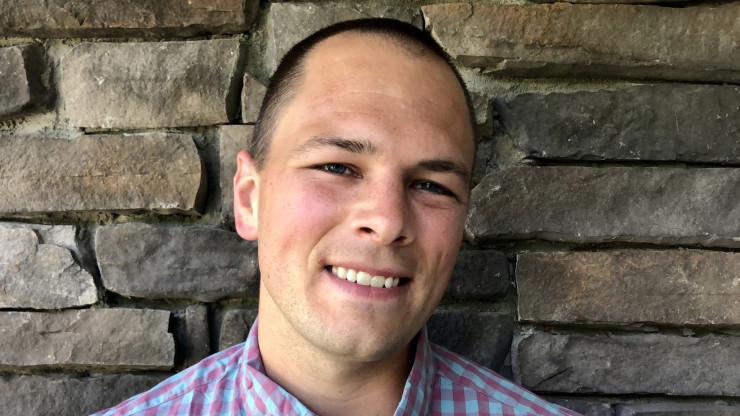
Chi Zhang is an Assistant Professor at the Faculty of Earth Sciences, Geography and Astronomy, Department of Meteorology and Geophysics. Their research spans geophysics, hydrology, and energy systems, with a focus on pore structure analysis, coastal dynamics, and geothermal energy applications. Academic Rank: Assistant Professor Department: Meteorology and Geophysics Research Themes: Subsurface imaging, NMR relaxation modeling, fiber optic sensing, and geothermal well design Chi Zhang's recent publications highlight interdisciplinary approaches in geophysical sciences. Key topics include: Simulation of NMR relaxation in porous media Coastal dynamics monitoring via fiber optic networks Innovative fracture network designs for geothermal wells Research activities include: 6 collaborative projects (2025) 46 total publications (peer-reviewed articles, proceedings, preprints) 53 academic contributions (peer-review, talks, posters) Current funded projects include 'Energy Security in Transition' (2025-2028) with Dr. N. Haneklaus. Chi Zhang has presented at events like the Academic Forum of Yangtze University (2024) and 'From Pore to Watershed' (2025).
Nazaré Couto is an Assistant Researcher at NOVA School of Science and Technology, NOVA University Lisbon, and coordinates the Bioresources and Green Technologies area at CENSE - Centre for Environmental and Sustainability Research. She holds a PhD in Environmental Sciences and Technology from the University of Porto (2011) and focuses on pollution control, soil remediation, and climate change mitigation. Education: Bachelor's, Master's, and PhD in Environmental Engineering/Sciences Leadership: Coordinates CENSE's Bioresources and Green Technologies area Teaching: Courses on soil pollution, management, and climate change Her research spans soil remediation technologies , climate change adaptation , and sustainable resource management , with recent work addressing pesticide contamination, hydrogen storage economics, and agricultural plastic waste valorization. Publications highlight electrochemical remediation , phytoremediation , and nanostructured materials for environmental restoration. Scientific contributions include: Advancing electrodialytic recovery of rare earth elements and phosphorus Developing hybrid remediation technologies for polar and conventional soils Investigating emerging contaminants in wastewater reuse systems
Professor K. Muralidhar of the Department of Mechanical Engineering at Indian Institute of Technology Kanpur specializes in fluid dynamics, thermal sciences, and optical imaging techniques. With over 35 years of academic leadership, his work bridges experimental and computational approaches in transport phenomena. PhD from University of Delaware (1985) 20+ Doctoral students supervised 500+ Publications across 13 research areas Fellow of ASTFE, NAS, and INAE His key research domains include: Drop dynamics on hydrophobic surfaces Heat transfer in porous media Crystal growth visualization Biofluid mechanics in vascular systems Advanced tomographic imaging Cryogenic flow modeling Recent work focuses on CO2 sequestration , solar desalination , and non-invasive medical diagnostics , with significant contributions to Physics of Fluids and International Journal of Heat and Mass Transfer . Scientific awards highlight his global recognition: 2019: Fellow-ASTFE 2014: Keynote speaker, International Heat Transfer Conference 2006: INAE Fellowship 1995: Institution of Engineers Prize 1981: IIT Madras Institute Medal Pioneering optical measurement techniques for convection and phase change processes, he has developed novel approaches in schlieren tomography, interferometry, and digital holography. His laboratory's patent portfolio includes medical devices and fluid control systems.
Moroof Olasunbo Oloruntola serves as a Professor in the Faculty of Science at the University of Lagos, bringing over two decades of expertise in hydrogeology and engineering geology with a focus on urban-coastal environmental systems in Lagos and similar regions. His academic foundation includes: B.Sc. in Geology from Ogun State University (now Olabisi Onabanjo University), completed December 1998 M.Sc. in Geology (Hydrogeology/Engineering Geology option) from University of Ibadan, completed June 2003 Ph.D. in Hydrogeology from University of Ibadan, completed June 2012 Professor Oloruntola's research program centers on critical urban geological challenges through rigorous field investigations and advanced geophysical methods. His work strategically addresses: Aquifer characterization and groundwater resource sustainability Urban infrastructure interactions with subsurface systems Coastal saltwater intrusion dynamics and mitigation Geotechnical evaluation of foundation soils and landfill sites Environmental contamination mapping in densely populated areas His publication record demonstrates consistent methodological innovation using electrical resistivity surveys to solve practical problems across Nigeria's diverse geological settings, from coastal Lagos to basement complex regions. Recent work shows increasing emphasis on climate-resilient urban development through groundwater management. Professional recognition includes: Vice Presidency of the Abeokuta NAH chapter Chairmanship of NAH Ibadan 2025 Technical Committee External examiner role at Olabisi Onabanjo University (2023-2025) Editorial board membership for University of Lagos Faculty of Science Journal (2021-2023) While specific grant details aren't documented, his extensive national collaborations with institutions including Olabisi Onabanjo University, University of Ibadan, and Kogi State University demonstrate strong research network development. His work consistently targets practical applications for improving urban environmental resilience in coastal West Africa.
Hossein Ataei serves as Clinical Professor and Director of both the Undergraduate Studies and Construction Engineering and Management Program within the Civil, Materials, and Environmental Engineering Department at the University of Illinois Chicago's College of Engineering. A registered Professional Engineer in multiple US states and Canadian provinces, he brings extensive industry experience from global engineering-procurement-construction firms to his academic roles. His educational background includes a PhD in Civil Engineering from the University of Southern California, complemented by Master of Business Administration from Concordia University, Master of Construction Management, and Master of Science in Civil Engineering from USC, plus a Bachelor of Science from Sharif University of Technology. This multidisciplinary foundation supports his research in construction management, forensic engineering, and professional ethics. Ataei's scholarly work demonstrates strong focus on construction claims resolution, pandemic impacts on infrastructure projects, and sustainable building practices. His recent publications increasingly integrate machine learning with traditional construction management challenges, particularly in dispute prediction and energy efficiency optimization. This evolving research trajectory reflects industry shifts toward data-driven decision making while maintaining core commitments to ethical practice and risk management. His scientific recognition includes being named 2021 Construction Engineering Person of the Year by ASCE Illinois Section and receiving multiple UIC College of Engineering teaching and advising awards. Additional honors comprise the Harold A. Simon Award for Teaching Excellence and several University-wide teaching recognition awards. Fellow of the American Society of Civil Engineers (F.ASCE) 2021 Construction Engineering Person of the Year Award (ASCE-IL) 2022 Harold A. Simon Award for Teaching Excellence Multiple UIC Teaching and Advising Awards (2018-2024) 2017 Dean's Award for Excellence in Engineering Education As ABET Accreditation Program Evaluator for Civil and Construction Engineering programs, Ataei significantly contributes to educational standards nationwide. His leadership extends to ASCE national committees where he co-chairs major conferences and serves on forensic engineering and claims resolution subcommittees, demonstrating sustained commitment to advancing both academic and professional practice standards. Through the Construction Management Association of America UIC Chapter and active industry consulting, Ataei maintains strong connections between academic research and real-world infrastructure challenges, particularly in construction claims management and forensic investigation of structural failures.
Prof. Avinoam Rabinovich is a faculty member at the School of Mechanical Engineering within The Fleischman Faculty of Engineering at Tel Aviv University. His research focuses on flow phenomena in subsurface formations, particularly related to oil and gas reservoirs, groundwater systems, and CO 2 storage in saline aquifers. His educational background includes dual B.Sc. degrees in Mathematics and Geophysics and Planetary Sciences (both Magna Cum Laude) from Tel Aviv University (2003-2007), followed by an M.Sc. in Geophysics (Magna Cum Laude) with a thesis on "Vorticity inversion and action-at-a-distance in stably stratified shear flow instability" (2007-2009), and a Ph.D. in Mechanical Engineering with research on "Heat and mass flow in heterogeneous media - characterization and effective properties" (2010-2014). Prof. Rabinovich's research interests span multiple areas of subsurface flow physics. His work primarily investigates multiphase flow in porous media , with specific focus on effective properties , upscaling for numerical flow simulations , core characterization , capillary heterogeneity effects , and oscillatory flow . His research approach is predominantly theoretical but incorporates experimental data analysis, with emphasis on developing practical tools for engineers while advancing fundamental understanding of flow mechanics. His publication record demonstrates consistent contributions to understanding subsurface flow phenomena, particularly in the areas of CO 2 storage modeling, effective properties in heterogeneous media, and oscillatory flow applications. His work bridges theoretical fluid mechanics with practical petroleum engineering and environmental applications, showing particular expertise in analytical solutions and upscaling techniques for complex flow scenarios. Prof. Rabinovich teaches graduate-level courses at Tel Aviv University including "Flow in Oil and Natural Gas Reservoirs" and "Reservoir Engineering - Basics of Natural Gas and Oil Production," contributing to the education of future engineers in this specialized field.
Thomas Kalscheuer is a Senior Lecturer and Associate Professor in Applied Geophysics specializing in electromagnetic methods at Uppsala University's Department of Earth Sciences, Geophysics section. He has been with Uppsala University since 2013 and was awarded Docent (Associate Professor) status in 2017. His work focuses on developing advanced geophysical methods for subsurface imaging and characterization. His educational background includes: PhD in Geophysics from Uppsala University (2008) Diplom-Geophysiker from University of Cologne, Germany (2004) Postdoctoral Fellowship at Swiss Federal Institute of Technology, Zurich (2009-2013) Dr. Kalscheuer's research centers on the development of multidimensional numerical forward modeling and inversion schemes for geophysical electromagnetic and potential field methods. He specializes in joint interpretation of EM, seismic, potential field and borehole data, with applications spanning geotechnical engineering, hardrock geology, tectonics, hydrology, geothermal systems, and volcanology. His current work focuses on 3D inversion algorithms for natural and controlled-source EM methods, building on his earlier contributions to 1D and 2D inversion schemes, model error analysis, and resolution studies. Analysis of his recent publications (2018-2025) reveals a strong focus on advancing 3D electromagnetic inversion techniques, with particular emphasis on transfer function data processing, mesh refinement strategies, and integration of multiple geophysical datasets. His work increasingly addresses practical applications in groundwater surveying, fracture zone detection in hard rock environments, and geothermal system characterization, demonstrating the applied value of his methodological innovations. His notable recognition includes: Distinguished University Teacher award from Uppsala University (2024) Dr. Kalscheuer has supervised numerous research projects, particularly those involving collaboration between Uppsala University and international partners. His work often involves field studies in Sweden (including the Äspö Hard Rock Laboratory site), the Okavango Delta in Botswana, and various locations in Europe. He has secured research funding for projects related to electromagnetic method development and their application to geological and hydrological problems, though specific grant details are not provided in the available information. His research is conducted within the Geophysics section of Uppsala University's Department of Earth Sciences, where he collaborates closely with colleagues specializing in seismic methods, potential field methods, and geological interpretation. His work at the Äspö Hard Rock Laboratory demonstrates involvement with a major international research facility for studying deep geological processes and repository technology.
Pietro Rosatti is a Research Fellow at the Department of Industrial Engineering, University of Trento, specializing in electromagnetic systems and artificial intelligence applications. His research focuses on: Antenna Design for automotive radar and communication systems Microwave Engineering and mm-wave technologies Artificial Intelligence integration in electromagnetic problem-solving Inverse Problems and electromagnetic imaging System-by-Design optimization frameworks Real-world applications in medical imaging and radar systems Analysis of his 17 publications (2018-2025) reveals a dominant trend toward AI-driven solutions for electromagnetic challenges, particularly in automotive radar antenna design (77 GHz systems), microwave medical imaging, and ground-penetrating radar. His work consistently employs multi-objective evolutionary optimization and system-by-design methodologies to overcome the curse of dimensionality in inverse scattering problems, with increasing emphasis on real-time deep learning frameworks since 2021.
Kevin Rosso is a Laboratory Fellow and the associate director of the Physical Sciences Division for Geochemistry at Pacific Northwest National Laboratory (PNNL). He received his BS degree in geological sciences from Cal Poly at Pomona, California, in 1992, and his MS and PhD degrees in geochemistry from Virginia Tech in 1994 and 1998. With over 340 publications and an H-index of 63, Dr. Rosso is a leading figure in molecular geochemistry and surface science. Dr. Rosso's educational background includes: Ph.D., Geochemistry, Virginia Polytechnic Institute and State University M.S., Geochemistry, Virginia Polytechnic Institute and State University B.S. Geological Sciences, California State Polytechnic University, Pomona Dr. Rosso is best known for his pioneering research on electron transfer reactions between aqueous ions, mineral surfaces, and bacterial enzymes. His research spans from fundamental topics such as metal sulfide oxidation, bacterial reduction of metal oxides, contaminant interactions with clay minerals, and mechanisms of crystal growth and dissolution, to applied areas including geologic carbon sequestration, stress corrosion cracking in alloys, performance optimization of lithium battery materials, and the design of semiconductor materials for solar photocatalysis. His work has been instrumental in establishing the field of molecular geochemistry through the application of advanced tools like scanning probe microscopy, quantum mechanical molecular simulations, and massively parallel supercomputers. Analysis of Dr. Rosso's recent publications (2022-2023) reveals a continued focus on mineral-water interfaces, electron transfer processes, and materials for energy applications. His research spans multiple disciplines including geochemistry, materials science, surface chemistry, and computational chemistry. Key themes include aluminum speciation in alkaline solutions, mineral dissolution and precipitation mechanisms, electron transport in metal oxides, and the development of advanced characterization methods for understanding complex geochemical systems. Dr. Rosso has received numerous prestigious awards recognizing his contributions to geochemistry: Science Innovation Award (Stumm Medal), European Association of Geochemistry, 2020 Geochemistry Fellow, 2020 Member, Washington State Academy of Sciences, 2019 Visiting Distinguished Scholar, Durham University, 2019-2020 Life Fellow of the Mineralogical Society of America Life Fellow of The Geochemical Society Life Fellow of The European Association of Geochemistry Mineralogical Society's Hallimond Lectureship, 2016 Mineralogical Society of America Award, 2004 Dr. Rosso leads the U.S. Department of Energy's major fundamental geochemistry program at PNNL and is the founding director of the Center for Understanding Subsurface Signals and Permeability (CUSSP), a multi-institutional DOE Energy Earthshot Research Center launched in 2023. He has mentored a research group of approximately 35 PhD students, postdoctoral fellows, and staff scientists. His laboratory work is supported by significant DOE funding for research on geochemical processes relevant to energy production, environmental remediation, and nuclear waste management. Dr. Rosso directs the Center for Understanding Subsurface Signals and Permeability (CUSSP), which focuses on understanding subsurface processes critical for carbon sequestration, nuclear waste disposal, and geothermal energy. His team combines experimental and computational approaches to study mineral-fluid interactions at multiple scales, from molecular to field levels. The laboratory maintains state-of-the-art facilities for surface characterization, spectroscopy, and high-performance computing simulations.
Grant Ferguson is a Professor at the University of Saskatchewan with a joint appointment in the School of Environment and Sustainability, and holds adjunct professor positions at the University of Arizona and the University of Waterloo. He earned his B.Sc. from the University of Waterloo and Ph.D. from the University of Manitoba, establishing a foundation in hydrogeological sciences. His research centers on deep groundwater systems, regional hydrogeology, and sustainable groundwater resource development. These investigations address critical water security challenges through advanced modeling of subsurface flow dynamics and resource management frameworks under climate change pressures, contributing significantly to global water policy discussions. Dr. Ferguson's scholarly impact is recognized through prestigious honors including: IAH CNC’s Long-Term Service Award AGU Editors’ Citation for Excellence in Refereeing Hydrogeology Journal Editor’s Choice designation AGU Research Highlights recognition Groundwater Highly Cited Paper status 2025 National Ground Water Association Darcy Lecturer appointment As an active mentor, he guides graduate students in hydrogeological research while serving the international community through leadership roles. Currently Vice President for North America at the International Association of Hydrogeologists (IAH), he spearheads initiatives connecting Canadian, US, and Mexican groundwater chapters while expanding the Early Career Hydrogeologists Network across the continent.
Zhulu Lin serves as an Associate Professor in the Department of Agricultural and Biosystems Engineering at North Dakota State University with a 40% teaching and 60% research appointment since December 2008. His instructional duties span from freshman introductory courses to advanced graduate-level instruction. His educational background includes: Ph.D. in Soil and Water Resources from the University of Georgia M.S. in Statistics from the University of Georgia M.S. in Environmental Engineering from East China University of Science & Technology B.S. in Environmental Engineering from East China University of Science & Technology Dr. Lin's research program centers on sustainable soil and water resource management through large-scale agricultural and hydrological system modeling. His primary expertise encompasses surface and subsurface hydrology, environmental systems analysis, and soil-water resource management, with expanding investigations into climate/land-use change impacts, machine learning applications for water resources, food-energy-water nexus dynamics, and risk assessment frameworks. His methodological approach integrates numerical modeling with field-scale conservation practice evaluation. His distinguished recognition includes: Outstanding Oral Presentation Award at LASOSU2021 International Forum (2021) H. Roald and Janet Lund Excellence in Teaching Award (2023) North Dakota Water Resources Research Institute Water Fellowship (2025) Dr. Lin currently leads three major research initiatives: an International Water Institute project evaluating agricultural conservation practices in the Red River Basin ($32,294, 2023-2027); a North Dakota Irrigation Association statewide irrigation reconnaissance study ($96,084, 2024-2025); and a USDA-NIFA collaborative grant examining drought impacts on soybean/corn supply chains ($800,000, 2024-2027) where he serves as co-PI. His teaching portfolio includes ABEN 110, 377, 444/644, 747, and 765 covering finite element analysis, transport processes, and watershed hydrology.
Mette Haubjerg Nicolaisen is an Associate Professor in the Department of Plant and Environmental Sciences at the University of Copenhagen, specializing in Microbial Ecology and Biotechnology. Her research focuses on plant-microbe interactions, particularly in the rhizosphere, examining how microbial communities influence plant health, growth, and stress responses. Dr. Nicolaisen's research interests span several key areas in environmental microbiology: Microbial ecology in agricultural systems Plant-microbe interactions in the rhizosphere Soil microbiome composition and function Molecular mechanisms of bacterial colonization of plant roots Microbial contributions to plant stress tolerance Application of microbial communities for sustainable agriculture Her recent publications demonstrate a strong focus on how specific bacterial traits (particularly in Pseudomonas species) influence plant-microbe interactions, with emphasis on wheat as a model system. She investigates how microbial communities vary across plant genotypes and how these variations relate to disease resistance and other plant traits. Her work often employs advanced molecular techniques including metagenomics and functional gene analysis. Dr. Nicolaisen has established significant international collaborations, as evidenced by her co-authorship on papers with researchers from multiple countries. Her work on synthetic microbial communities has been published in high-impact journals including Nature Microbiology.
Ty P.A. Ferre is Professor of Hydrology and Water Resources at University of Arizona's Department of Hydrology and Atmospheric Sciences. His research focuses on subsurface hydrology, groundwater systems modeling, and sustainable water resources management. Research emphasis areas: Groundwater flow and transport modeling Field-scale hydrological measurement techniques Uncertainty quantification in hydrologic systems Integrated water resources assessment He maintains active field research programs investigating aquifer dynamics and vadose zone processes. Ferre's work bridges theoretical modeling with practical water resource challenges.
Dr. Babak Hejrani is a Visiting Research Fellow at the Research School of Earth Sciences (RSES), Australian National University (ANU). He holds a PhD in Geophysics from Aarhus University (2014) and has held roles including PostDoc fellow at RSES, Visiting Researcher at ETH Zurich, and affiliations with Geoscience Australia. His research focuses on 3D Earth imaging, upper mantle tomography, earthquake source physics, and machine learning applications in seismology. Education: PhD in Geophysics, Aarhus University, Denmark (2014) MSc in Geophysics, University of Tehran, Iran (2010) BSc in Pure Mathematics, University of Kurdistan, Iran (2007) Research interests include probabilistic Bayesian inversion for earthquake source complexity, seismic tomography, and structural tectonics. Recent work addresses fault rupture dynamics, volcanic eruption modeling, and improving tsunami warning systems via W-phase data analysis. He supervises projects on megathrust rupture processes and seismic moment tensor inversion. Publications span geophysical journal articles and conference abstracts, emphasizing 3D seismic wave modeling and lithospheric structure analysis. Collaborations include AusArray continental-scale seismic projects and development of high-performance computational tools like HiPerSeis. His research contributes to understanding deep earthquakes, subduction zone processes, and integrating machine learning (CNN-based seismic arrival classification) into seismological workflows.
Max Dahlquist is an Assistant Professor of Geology at Sewanee: The University of the South. His research focuses on geomorphology, erosion mechanisms, and landscape evolution, particularly exploring the role of glacial lake outburst floods (GLOFs) in shaping Himalayan river valleys. He collaborates with institutions like the University of Southern California and uses innovative methods such as stream tables to simulate real-world geological processes. Dahlquist emphasizes undergraduate research involvement, fostering student engagement in projects like climate-driven erosion studies and rock fracturing analysis. His work bridges field observations, experimental modeling, and theoretical frameworks to address environmental and geological challenges. Research Interests: Dahlquist investigates how extreme events like GLOFs influence river morphology and valley geometry, as well as the interplay between climate, rock fracturing, and landscape stability. His studies in the Himalayas and Antarctic McMurdo Dry Valleys highlight the impact of environmental parameters on rock degradation and erosion dynamics. He advocates for standardized field methods to advance fracture-focused research and integrate climatic variables into geomorphological models. Publications: His recent work includes studies on rock memory of extreme temperatures, environmental controls on bedrock weathering, and subcritical fracture propagation. These contributions underscore the importance of understanding geological processes in the context of climate change and natural hazard mitigation. Advising & Grants: Dahlquist actively engages undergraduates in research, offering hands-on opportunities in fieldwork and laboratory analysis. His projects often involve collaborations with national agencies like the National Science Foundation, leveraging grants to explore topics such as debris flow dynamics and tectonic boundary structures.