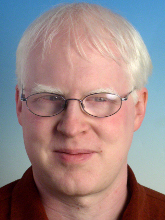
Krishna Pagilla is the Ralph & Rose Hoeper Engineering Professor and Foundation Professor at the University of Nevada, Reno, where he serves as Director of the Nevada Water Innovation Institute. His research focuses on advanced water treatment technologies, pathogen removal, and sustainable water reuse systems. Key affiliations include leadership in water innovation initiatives and interdisciplinary collaboration. Research interests center on: Pathogen detection/removal in water systems Disinfection byproduct formation and control Aquifer storage and recovery optimization Wastewater-based epidemiology Emerging contaminant treatment Articles demonstrate consistent focus on: Water reclamation technologies Viral transport mechanisms Treatment process optimization Environmental monitoring techniques
Elisabetta Vannoni Thäler is a researcher affiliated with the Department of Groundwater and Hydromechanics at ETH Zürich, a leading institution in science and technology. Her work focuses on groundwater systems and hydromechanical processes, contributing to environmental engineering and water resource management. Research Interests: Groundwater Hydrology, Hydromechanics, Subsurface Hydrology, Fluid Dynamics, and Sustainable Water Resources Management. Contact: evannoni@ethz.ch
Professor Phil Cummins is an Adjunct Professor at the Research School of Earth Sciences (RSES), The Australian National University (ANU), with a PhD in Geophysics from UC Berkeley (1988). He specializes in earthquake seismology, tsunami modeling, and seismic hazard assessment, focusing on Indonesia and the Asia-Pacific region. His research addresses earthquake mechanisms, tsunami generation, and basin effects on seismic waves. He collaborates with Geoscience Australia to enhance disaster risk reduction capabilities in developing nations. Research Interests: Earthquake source characterization and fault dynamics Tsunami forecasting and warning systems Basin amplification effects in seismic zones Historical seismicity and paleoseismic studies Seismic hazard assessment for urban areas like Jakarta and Bandung Key Projects: Finite Fault inversion using W-Phase data Improving tsunami warning systems via rapid source modeling Seismic microzonation studies in Indonesia Basin structure imaging via ambient noise tomography His work integrates geodetic, seismological, and numerical modeling techniques to advance understanding of geohazards. Recent studies include analyses of the 2022 Cianjur and 2018 Lombok earthquakes in Indonesia, and the 2013 Bohol earthquake in the Philippines.
Marta D'Elia is an Adjunct Professor at Stanford's Institute for Computational and Mathematical Engineering (ICME), specializing in Scientific Machine Learning and nonlocal modeling. Her research develops data-driven algorithms for multiscale/multiphysics simulations, integrating numerical analysis, uncertainty quantification, and fractional calculus. Core applications include subsurface transport, turbulence modeling, image processing, and materials science. She leads innovations in nonlocal operator regression, physics-informed neural networks, and fractional Laplacian formulations. Current work focuses on embedded machine learning for constitutive modeling, Bayesian uncertainty frameworks, and computational homogenization. D'Elia pioneered approaches for nonlocal-to-local model coupling and fractional Helmholtz decompositions, advancing simulation capabilities for anomalous transport phenomena. Her Ph.D. in Applied Mathematics (Emory University) underpins rigorous mathematical foundations, while collaborations with national labs address high-performance computing implementations. Research contributes to open-source scientific software and computational mathematics education through ICME courses on numerical methods and machine learning.
Armando Espindola Carmona is a Research Fellow at Princeton University , currently serving as a Postdoctoral Research Associate in the Theoretical & Computational Seismology and Global Geophysics groups. His work focuses on seismic tomography, numerical simulations of wave propagation, and waveform inversion. He is affiliated with Guyot Hall, where he can be reached at office 314 via phone (609-258-3933) or email. Education: Ph.D. in Earth Science and Engineering from King Abdullah University of Science and Technology (KAUST) M.S. in Geophysics from Universidad Nacional Autónoma de México (UNAM) B.E. in Geophysics from UNAM Research Interests: Full-Waveform Inversion (FWI) techniques, particularly anelastic FWI with source encoding 3-D seismic wave propagation models Global and regional-scale seismic tomography Marine seismic data analysis with multicomponent ocean-bottom-node systems Trade-off analysis in inversion methodologies His recent work addresses critical challenges in crustal and mantle structure imaging, including the Red Sea's Zabargad Fracture Zone and the Arabian plate. He also investigates earthquake mechanisms, such as the 2023 Kahramanmaraş-Syria seismic events. Publications: His articles emphasize anelastic FWI, marine acquisition strategies, and earthquake dynamics. Key themes include optimizing global FWI workflows, analyzing inversion resolution, and applying adjoint tomography to volcanic complexes like Colima. Grants/Advising: No information on grants, advising, or mentorship roles is explicitly provided in the text. Labs/Teams: Engages with the Theoretical & Computational Seismology and Global Geophysics groups at Princeton, focusing on computational seismology and field deployments like the Red Sea Ocean Bottom Seismometer network.
Sajjad Foroughi is a Senior Postdoctoral Researcher at the Department of Earth Science & Engineering , Faculty of Engineering , Imperial College London. He is affiliated with the Imperial-Shell Digital Rocks Program , where he focuses on pore-scale and continuum-scale modeling of multiphase flow in porous media. His research addresses critical challenges in energy transition technologies, including geological CO2 storage , hydrogen storage , electrochemical devices , and subsurface energy systems . Research Focus Dr. Foroughi's work bridges fundamental physics of porous media with applied energy systems. Key research areas include: Optimization of electrochemical devices (batteries, fuel cells) Hysteresis and trapping mechanisms in hydrogen storage Ostwald ripening effects on displacement processes Multiscale modeling of capillary pressure and relative permeability Applications in carbon capture and storage (CCS) and geothermal energy Technical Expertise His methodologies combine: Micro-CT imaging for pore-scale characterization Lattice Boltzmann simulations Network modeling of heterogeneous carbonates Deep learning for uncertainty quantification Image segmentation and contact angle measurement
Suihong Song is a Research Fellow at Stanford University's Energy Resources Engineering department, affiliated with the Stanford Center for Earth Resources Forecast (SCERF). He collaborates closely with Professor Tapan Mukerji, focusing on integrating machine learning with geosciences. His work emphasizes reservoir characterization, geomodelling using generative adversarial networks (GANs), physics-informed neural networks (PINNs), and applications in subsurface flow simulations, CO2 storage, and hydrocarbon exploration. Education includes a Ph.D. from China University of Petroleum (2021), a visiting Ph.D. at Stanford (2020), and earlier degrees from China University of Petroleum-Beijing (B.Eng. 2013, M.Eng. 2017). His research bridges computational methods with geoscience challenges, notably through the GANSim framework, widely adopted by companies like ExxonMobil. Key research areas include machine learning-driven reservoir modeling, porous media flow simulations, decision-making under uncertainty, and geological interpretation of well logs and seismic data. His publications highlight advancements in stochastic modeling, neural operator applications, and interdisciplinary approaches between geophysics and geology. Contact: suihong@stanford.edu .
Barbara Teichert is a Researcher at the Department of Geosciences, Westfälische Wilhelms-Universität Münster, affiliated with the Faculty of Mathematics and Natural Sciences. She has held roles including Visiting Professor at the University of Vienna (2013) and Research Associate at multiple institutions since 2002. Her research focuses on hydrobiogeochemistry of mine waters, isotope geochemistry of mine gases, sulfur turnover processes, and geodata modeling. She has extensive experience in sedimentary and marine geochemistry, with contributions to understanding methane seep systems, isotopic fractionation mechanisms, and authigenic carbonate formation. Education: PhD (Dr. rer. nat.) in Geosciences, Christian-Albrechts-Universität zu Kiel (2002) Habilitation in Geosciences, Universität Münster (2019) Diplom in Geology-Paleontology, Ruprecht-Karls-Universität Heidelberg (1999) Research Interests: Her work integrates field observations, laboratory analyses, and modeling to address biogeochemical processes in marine and subsurface environments. Key areas include sulfur cycling in methane-dominated systems, isotopic tracers in porewater and carbonates, and the application of geostatistical methods to hydrogeological data. Current projects explore mine water geochemistry and isotopic signatures of gas emissions. Key Contributions: Over 30 peer-reviewed publications since 2003, including seminal studies on clathrate deposits, calcium isotope fractionation, and microbial carbonate formation in seep environments. Her work bridges sedimentology, geochemistry, and environmental science, with implications for resource exploration and climate change research. Grants & Advisory: Coordinated the DFG-funded ODP-IODP program (2005-2008) and led research teams in Germany, Austria, and international collaborations. Active mentorship of early-career researchers through interdisciplinary projects funded by German Research Foundation grants. Labs & Collaborations: Engaged with the Post-Mining Research Center (THGA) and the GEOMAR Helmholtz Centre for Ocean Research Kiel. Her work leverages advanced analytical techniques including SIMS microscopy and isotope geochemical modeling.
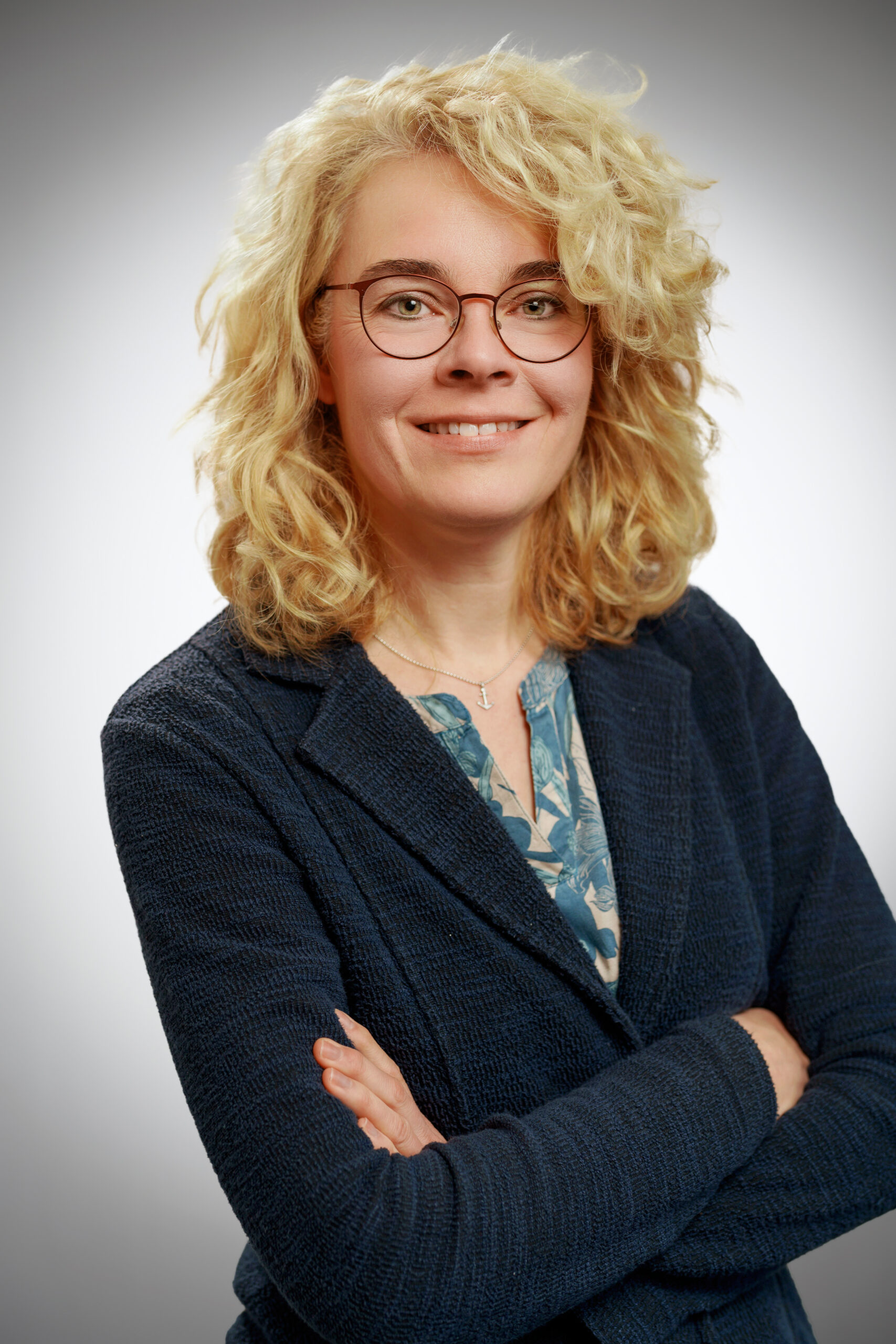
Fronefield Crawford is the Charles A. Dana Professor of Physics and Astronomy at Franklin and Marshall College (F&M), serving as Director of Grundy Observatory since 2017. He holds a Ph.D. from MIT (2000) and B.A. from Williams College (1994). His research focuses on pulsar astronomy, gravitational wave detection via the NANOGrav consortium, and landmine detection technology. He leads the NANOStars program, enabling undergraduate research in pulsar timing arrays. Previously, he chaired F&M's Department of Physics and Astronomy (2020–2022) and served as a technical consultant for Raytheon and an investment firm. Research Highlights: - Pulsar surveys (e.g., PALFA, Parkes 70cm re-analysis) - Detection of fast radio bursts (FRBs) including four historic discoveries from archival data - Gravitational wave studies using millisecond pulsars as cosmic clocks He has co-authored over 50 publications and received prestigious awards including the 2025 Bruno Rossi Prize. His work bridges astrophysics and applied science, including NATO-sponsored landmine detection projects in collaboration with international teams.
Volker Böder was a Professor of Practical Geodesy and Hydrography at the Department of Geomatics at HafenCity University Hamburg (HCU), serving from 2006 until his tragic death in 2012. His academic journey included a Diplom in Surveying Engineering from Leibniz University Hannover (1994), a PhD in Geodesy (2002), and extensive professional experience in hydrographic positioning and sensor integration. He specialized in precision GPS applications, multi-sensor systems for hydrographic surveys, and international educational initiatives like the VASSIVIERE Erasmus program. His research focused on optimizing hydrographic sensor networks, real-time positioning, and integrating terrestrial LiDAR with underwater systems. He held leadership roles at HCU, including heading the Hydrography department and serving on academic committees. Böder was also actively involved in professional societies such as the German Hydrographic Society and the German Society for Surveying. His legacy includes pioneering work in sensor fusion for marine environments and contributions to certified hydrographic education programs. Education: Diplom in Surveying Engineering (1994), Leibniz University Hannover PhD in Geodesy (2002), Leibniz University Hannover Research Interests: Precision positioning, hydrographic multi-sensor systems, GPS/INS integration, international survey education, and marine geomatics. Awards: Best Presentation Awards at ION GPS conferences (2001 and 2000). Administration: Led HCU's Hydrography unit, chaired examination committees, and contributed to curriculum reforms. His untimely passing in 2012 left a significant void in hydrographic research and academia, with colleagues mourning his dedication and expertise.
Diana Grisolía Santos holds the position of Researcher at the University of Las Palmas de Gran Canaria (ULPGC). She completed her Marine Sciences degree at ULPGC in 1989 and earned a Ph.D. in Physics in 1999, with part of her doctoral work conducted at the University of Rhode Island (URI) under Dr. Malcolm Spaulding's guidance in oil spill modeling. Her research focuses on oceanographic modeling, including regional models, oil spill simulations, Lagrangian models, and air-sea interaction with mesoscale oceanic structures. Key projects involve studying mid-ocean anticyclonic eddies' Lagrangian evolution and eddy-wind interactions. She has contributed to numerous regional, national, and European research initiatives. Publications highlight expertise in ocean-atmosphere coupling, eddy dynamics, sea-breeze fronts, and numerical simulations. Notable works include studies on the Cape Verde Frontal Zone, South Atlantic zonal flows, and the North Icelandic Irminger Current. Her work integrates observational and computational approaches to understand marine and atmospheric processes. Her research has addressed diverse topics such as tropical storm impacts on Canary Islands meteorology, oil spill dispersion modeling, and mesoscale convective systems. Diana has collaborated internationally, with a focus on regional oceanography and climatic dynamics in the Canary Archipelago and surrounding Atlantic regions.
Jerome A. Neufeld is a Professor of Earth and Planetary Fluid Dynamics at the University of Cambridge, affiliated with the Centre for Environmental and Industrial Flows (CEIF) and the Department of Applied Mathematics and Theoretical Physics (DAMTP). He holds a joint appointment in the Department of Earth Sciences (DES). His research focuses on fluid dynamics in Earth and planetary systems, including glacial hydrology, magma oceans, carbon sequestration, and mountain-building processes. He teaches advanced courses such as 'Physics of the Earth as a Planet' and 'Fluid Dynamics of the Solid Earth' at the graduate level. Neufeld's work integrates mathematical modeling, laboratory experiments, and field observations. Key areas include tidal modulation of ice streams, solidification of planetary cores, and CO2 dissolution in porous media. He collaborates extensively, advising PhD students across DES and DAMTP. Recent projects involve modeling CO2 storage dynamics and dynamo generation in asteroids. His research has been published in top journals like Journal of Fluid Mechanics and Earth and Planetary Science Letters . Neufeld’s lab group spans multiple departments, reflecting interdisciplinary collaboration. Past students and postdocs now work at institutions like UCL, Leeds, and Tsinghua University. His work bridges fluid dynamics with planetary science, addressing global challenges from climate change to lunar evolution.
Victorien Paumard is a Research Fellow at the University of Western Australia (UWA), affiliated with the School of Earth and Oceans and the UWA Oceans Institute. He specializes in seismic stratigraphy and seismic geomorphology, focusing on siliciclastic and carbonate systems. His work contributes to UN Sustainable Development Goals related to climate action and sustainable cities. Education: PhD in Seismic Stratigraphy / Basin Analysis, UWA (2018) MSc in Petroleum Geosciences, UniLaSalle (2013) BSc in Geosciences, UniLaSalle (2011) His research interests include quantitative methods for 3D seismic analysis, sequence stratigraphy, and sedimentology of modern deltas. He investigates shelf-margin architectures, sediment transfer mechanisms, and the interplay between tectonics and sedimentation. Victorien leads the Quantitative Reservoir Analogues (QRA) consortium and is the Australian Global Ambassador for SEPM. Key projects include the National Seismic Derived Bathymetry Asset (Geoscience Australia) and collaborations on carbonate margins and Gondwana breakup dynamics. His work has produced datasets like the North West Shelf high-resolution bathymetry model and seismic-derived compilations for Australia’s margins. Grants & Funding: Beyond the Mining State Symposium (Australian Academy of Science, 2025) QRA-Conoco (ConocoPhillips Alaska, 2024–2026) National Seismic Derived Bathymetry Asset (Geoscience Australia, 2021–2023) Victorien has received awards such as the 2022 School of Earth Sciences Early-Career Research Award and the 2020 Research-led Teaching Award. His contributions span academic research, industry partnerships, and international collaborations in sedimentology and marine geoscience.
Andreas Dedner is an Associate Professor at the University of Warwick's Department of Mathematics, serving as Director of Studies for the MASDOC Doctoral Training Centre and a core developer of the DUNE Project. His work focuses on numerical analysis, scientific computing, and higher-order methods for nonlinear evolution equations, with applications in geophysical flows, magnetohydrodynamics, and software engineering. He leads research on discontinuous Galerkin methods, grid-based numerical schemes, and parallel computing. He has organized numerous workshops, including the Dune School at Warwick (2012) and conferences on geometric multigrid methods. His software contributions include the DUNE-FEM module and ALU-Grid Library, emphasizing efficient adaptive grid techniques and parallelization. Key research grants include EPSRC projects on finite element methods and NERC-funded weather modeling initiatives. His research spans computational fluid dynamics, surface PDEs, and interdisciplinary applications like radiation magnetohydrodynamics. Recent publications address stabilization techniques, virtual element methods, and coupled flow models. Dedner’s work bridges theoretical analysis with practical software development, impacting both academic and applied scientific computing landscapes.
Dr. Andreas Brotzer is a Researcher at the Department of Earth and Environmental Sciences, Ludwig Maximilian University of Munich (LMU), affiliated with the Geophysical Observatory. He is currently conducting a research stay at the University of British Columbia (UBC) in Vancouver, Canada. His work focuses on seismology, geophysics, and advanced instrumentation, particularly involving rotational ground motion observations. Key projects include the ROMY ring laser array, which explores multi-component geophysical measurements and atmospheric influences on rotational data. His research interests encompass seismicity analysis, instrumental calibration, and environmental geophysics. He has contributed to studies on sediment depth mapping, atmospheric pressure effects on sensors, and high-resolution geodetic observations. Brotzer collaborates internationally and maintains active social media profiles on ResearchGate and LinkedIn for professional networking. Recent publications highlight innovations in rotational sensing technologies, seismic array applications, and theoretical noise models. His work bridges fundamental geophysical research with practical instrumentation development, advancing understanding of Earth's dynamic processes.