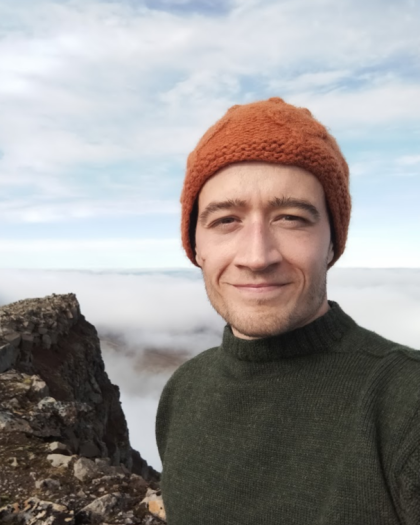
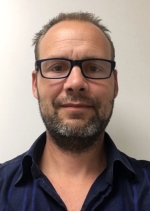
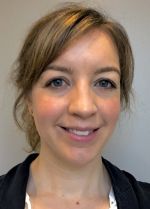
Mohammad Masoudi is a Postdoctoral Fellow at the University of Oslo , Department of Geosciences, Section for Environmental Geosciences. His research focuses on CO2 and H2 storage , water-rock interactions , and pore-scale modeling of reactive transport in subsurface environments. Education PhD in Geosciences (University of Oslo, 2021) M.Sc. in Reservoir Engineering (University of Tehran, 2016) B.Sc. in Reservoir Engineering (Petroleum University of Technology, 2014) His work addresses salt precipitation , mineral nucleation , and permeability-porosity relationships during carbon and hydrogen storage. Recent publications highlight microfluidic experiments , thermodynamic modeling , and environmental implications of subsurface energy systems. Key projects include Hystorm (hydrogen storage in petroleum reservoirs), SaltPreCO2 (salt precipitation kinetics), and Polish-Norwegian CCS Network (carbon capture technologies). He collaborates with the CO2 Storage research group at UiO.
Jo Eidsvik is a Professor at the Department of Mathematical Sciences, Norwegian University of Science and Technology (NTNU). He holds a MSc in applied mathematics from the University of Oslo (1997) and a PhD from NTNU (2003). His research focuses on spatio-temporal statistics, computational statistics, and their applications in Earth sciences, including geophysics and oceanography. He leads projects like the Center for Geophysical Forecasting (SFI-CGF) and Maritime Autonomous Sampling and Control (MASCOT). Eidsvik has supervised over 60 graduate students and is an associate editor for *Mathematical Geosciences* and *Statistics and Computing*. His work bridges theory and practice, addressing challenges in data assimilation, value of information analysis, and autonomous systems for environmental monitoring. **Education & Background**: MSc (University of Oslo), PhD (NTNU). Industry experience includes roles at Statoil and the Norwegian Defense Research Establishment. Visiting scholar at Stanford University, Duke University, and SAMSI. **Research Themes**: Spatio-temporal modeling, machine learning for irregular time series, and decision analysis in geological contexts. Key projects include geophysical forecasting, CO₂ storage monitoring, and autonomous underwater vehicle (AUV) sampling strategies. His book *Value of Information in the Earth Sciences* (Cambridge Press) synthesizes methodologies for optimizing data-driven decisions. **Awards & Recognition**: While no specific awards are listed, his editorial roles and project leadership reflect scholarly impact. His work emphasizes interdisciplinary collaboration, with applications in climate science, energy systems, and robotics. **Advising & Grants**: Supervised 60+ MSc students and 12 PhD students. Active in NTNU’s Physics and Mathematics program and Industrial Mathematics initiatives. Projects funded by SFI, EU, and industry partners. **Teams & Labs**: Involved with NTNU’s GEOPARD (data assimilation in geological models), Havvarsel (oceanographic data assimilation), and ML4ITS (machine learning for irregular time series). Collaborates with international institutions like Stanford and Duke.
Julius Parulek is an Adjunct Associate Professor at the University of Bergen's Department of Informatics, specializing in molecular visualization and computational methods for biomolecular structures. His work focuses on developing tools and techniques for interactive exploration of protein dynamics, ligand transportation, and large-scale biological datasets. He collaborates with domain experts in biochemistry and structural biology to create visualization solutions for complex molecular processes. Research interests include: Interactive visualization of protein tunnels and cavities Multiscale rendering of biomolecular complexes Geological modeling and sketch-based visualization Agent-based modeling for biochemical processes Key contributions include: Development of the cellVIEW tool for large-scale biomolecular visualization Pioneering work on continuous levels-of-detail for molecular surfaces Techniques for unfolding protein tunnels to analyze their dynamics His research bridges computer graphics with structural biology, enabling scientists to better understand molecular mechanisms through advanced visualization approaches.
Jo Brendryen is a Researcher at the Department of Earth Science, University of Bergen. His work focuses on Quaternary geology, ice sheet dynamics, and paleoclimatology, with emphasis on interactions between marine and terrestrial processes. He is involved in projects like RISES (studying Greenland Ice Sheet dynamics) and ferry-free E39 (fjord infrastructure geohazards). His research spans sedimentology, geohazards, and ocean-ice sheet interactions, particularly in the Norwegian Sea and Arctic regions. Key research interests include past climate variability, sediment stability, and geohazard assessments for offshore infrastructure. Brendryen has contributed to understanding meltwater pulses, ice sheet collapse mechanisms, and Eemian climate events. He employs tephrochronology and information transfer analysis to disentangle climate system interactions. Major projects include RISES (2018–2021) and INTERACT (2012–2017), funded by the Bjerknes Centre and Norwegian Research Council. His work integrates field data, geophysical surveys, and numerical modeling, addressing both fundamental and applied challenges in climate science and geohazard mitigation.
Robert Law is a Postdoctoral Fellow (Research Fellow) at the Department of Earth Science, University of Bergen, affiliated with the Quaternary Geology and Paleoclimate research group. His work focuses on glaciology, planetary science, and cryosphere dynamics, with a particular emphasis on understanding ice dynamics in polar regions and icy moons. He employs advanced techniques such as fiber-optic sensing, borehole observations, and numerical modeling to study processes like hydrofracture mechanisms, subglacial hydrology, and ice sheet stability. Key research projects include investigations into Greenland Ice Sheet outlet glaciers, temperate ice dynamics, and the application of models like ELSA v2.0 for ice layer tracing. His interdisciplinary approach combines fieldwork, remote sensing, and computational methods to address climate-related questions. Law has contributed to significant datasets, including ice temperature profiles and subglacial sediment analysis, furthering our understanding of glacial systems.
Elco Luijendijk is an Associate Professor in Hydrogeology at the Department of Earth Science, University of Bergen (UiB). His research focuses on the interplay between groundwater systems, geological processes, and climate change impacts. He is affiliated with the Geodynamics and Basin Studies research group and the Bjerknes Centre for Climate Research. His work emphasizes understanding drainage density dynamics, subsurface flow processes, and the role of groundwater in landscape evolution. Key contributions include developing coupled models of groundwater flow and surface processes, particularly highlighted in his 2022 study on transmissivity's influence on drainage density. His research spans hydrogeological modeling, thermochronology, and environmental applications like coastal groundwater nutrient dynamics and nuclear waste repository safety assessments. Elco has authored over 50 peer-reviewed articles, with recent work addressing global groundwater recharge patterns, climate sensitivity, and subterranean estuary biogeochemistry. His interdisciplinary approach bridges geology, hydrology, and computational modeling, contributing to both theoretical advancements and practical challenges in water resource management and environmental safety.
Lars Struen Imsland is a Professor at the Department of Engineering Cybernetics, Norwegian University of Science and Technology (NTNU) since 2009. He holds a PhD and MSc in Engineering Cybernetics from NTNU, with research focusing on nonlinear model predictive control, offshore drilling automation, and power systems. His career includes roles at Cybernetica AS, SINTEF ICT, and NTNU as a PostDoc and doctoral student. Research interests span control systems engineering, CO2 capture technology, and estimation in automotive applications. He chairs committees for international conferences like DYCOPS-CAB and ACOOG, and serves as Associate Editor for IEEE Transactions on Control Systems Technology. Key achievements include the Arch T. Colwell Merit Award (2008) and Automatica Outstanding Reviewer recognition (2004). He has advised over 10 PhD committees and contributed to pioneering work in MPC for wind farms, hybrid energy systems, and oil well modeling. Publications emphasize interdisciplinary applications of control theory, with recent focus on Bayesian optimization for wind farms, physics-informed neural networks for oil well monitoring, and stochastic MPC for renewable energy integration.
Jon Kleppe is a Professor in Petroleum Engineering at the Norwegian University of Science and Technology (NTNU) since 1981. He has held leadership roles such as Center Director of SFI IO (2007-2015), Department Head for ~20 years, and Dean of Earth Sciences (1990-96). He has also served as a Visiting Professor at Stanford University (1988-1989) and a Visiting Researcher at Elf (1996-1997). Education: Ph.D. in Petroleum Engineering, Texas A&M University, 1974 M.Sc. in Mechanical Engineering, South Dakota School of Mines and Technology (SDSMT), 1971 B.Sc. in Mechanical Engineering, SDSMT, 1970 Research Interests: Kleppe's work focuses on Petroleum Engineering , Reservoir Simulation , Enhanced Oil Recovery (EOR) , CO2 Storage , and Fractured Reservoirs . His recent publications emphasize surfactant flooding, single-well chemical tracer tests, and geochemical interactions in carbonate reservoirs. Scientific Awards: Oilman of the Year 2014 (SPE Norway) Regional Distinguished Achievement Award for Petroleum Engineering Faculty 2015 NTNU's Internationalization Award 2015 Advising & Grants: He has supervised numerous doctoral students, including Mkinga Oras Joseph (2020), Cheng Xiaoqian (2019), and Jahanbani Ghahfarokhi Ashkan (2012). His research has involved collaboration with institutions like Stanford University and Elf, as well as industry projects in Saudi Arabia and Norway.
Volker Oye is an Associate Professor in the Department of Meteorology and Oceanography at the University of Oslo . His work spans seismology, geophysics, and applied machine learning, with a focus on seismic hazard assessment, induced seismicity from subsurface fluid injection, and ambient seismic noise analysis. He actively contributes to CO 2 storage safety, geothermal energy monitoring, and urban seismic risk mitigation. Research Interests: Seismology, Geophysics, CO 2 Storage Monitoring, Fault Reactivation, Ambient Noise Analysis, Machine Learning Applications. Recent Publications highlight trends in seismic event relocation, induced seismicity from geothermal and CO 2 projects, urban construction monitoring with low-cost sensors, and planetary acoustic signal detection. His work integrates field observations, laboratory experiments, and advanced signal processing. Scientific Contributions: No explicit awards listed, but his collaborative projects and peer-reviewed articles demonstrate leadership in seismic risk assessment and geophysical technology innovation.
Karianne Staalesen Lilleøren is a Senior Lecturer at the University of Oslo, affiliated with the Department of Physical Geography and Hydrology. Her research focuses on glaciology, permafrost dynamics, geomorphology, and climate change impacts. She contributes to the Centre for Integrated Earth System Education (iEarth) and the Geomorphology and Geohazards research group. Her work integrates field observations, remote sensing, and computational modeling to study cryospheric processes. Key projects include analyzing rock glaciers, permafrost degradation, and geomorphometric features using InSAR and machine learning techniques. She has also explored glacial-permafrost interactions in Norway and Iceland, contributing to climate change adaptation strategies. Publications span topics like ribbed moraine detection, thermal regime modeling of permafrost terrain, and regional slope movement inventories. Her educational efforts include innovative methods to introduce undergraduate students to scientific disciplines through researcher interviews. Research groups: Centre for Integrated Earth System Education – iEarth Geomorphology and Geohazards
Øyvind Lund Aardal is an Associate Professor at the Centre for Space Sensors and Systems, University of Oslo. His research focuses on radar systems for biomedical applications, including medical radar imaging for cardiac/respiratory monitoring, UWB communication for implantable devices, and remote sensing technologies. He has contributed to understanding radar sensitivity to physiological signals and developing models for subsurface analysis and in-body communication. His work spans signal processing, electromagnetic theory, and healthcare technology integration. Publications highlight advancements in radar-based vital sign detection, non-invasive monitoring, and propagation modeling in medical contexts. Key areas include FMCW radar for subsurface sensing, phase distortion correction in respiration monitoring, and experimental validation of UWB path loss models in biological systems. His research bridges electrical engineering and biomedical engineering, with applications in both clinical and environmental monitoring domains.
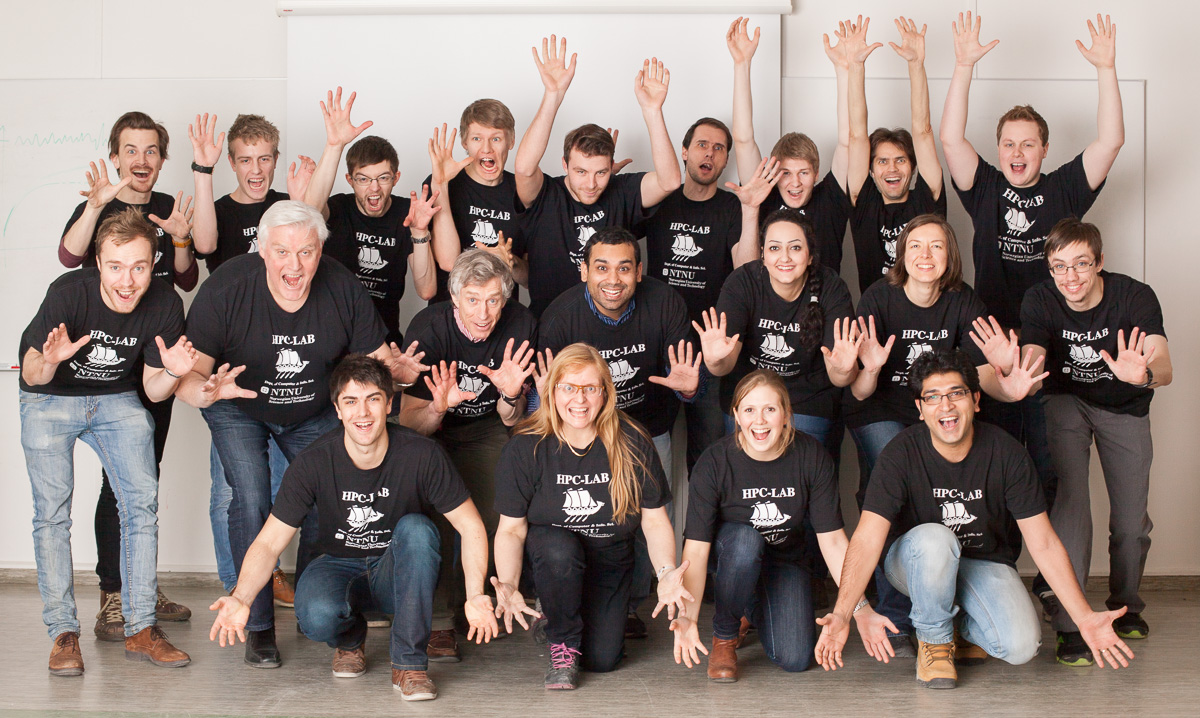
Prof. Anne C. Elster is a Professor of Computer Science at NTNU's Department of Computer & Information Science (IDI), leading the HPC-Lab. She specializes in High-Performance Computing (HPC), GPU acceleration, and heterogeneous systems. Her work spans HPC applications in medical imaging, seismic processing, and oil & gas simulations, with collaborations at CERN, NVIDIA, and Schlumberger. Elster holds a PhD in Electrical Engineering from Cornell University (1994) and is an IEEE Senior Member since 2000. She has supervised over 70 master students and numerous PhD candidates, emphasizing GPU computing. Her teaching includes courses like Parallel Computing and Compilers , with a focus on programming and problem-based learning. She leads EU projects like CLOUDLIGHTNING (2015–2018) and has organized major conferences (e.g., ISC, SC, PARA). Her HPC-Lab is a CUDA Research and Teaching Center, and she advocates for HPC infrastructure investments in Norway through policy engagement.
Helge Hellevang is a Professor at the Section for Environmental Geosciences , Department of Geosciences, University of Oslo. His research focuses on CO2 storage , mineral kinetics , and gas-liquid-mineral reactions in subsurface environments, with significant contributions to understanding porous media dynamics and diagenetic processes in energy and climate contexts. University of Oslo Department of Geosciences Environmental Geosciences Hellevang's work bridges fundamental geochemical processes with applied energy solutions, including hydrogen storage in geological formations and CO2 mineralization in basaltic systems. His projects address global challenges like climate change mitigation through carbon capture and storage (CCS) and clean energy development via rock cavern technologies. Recent publications reveal a strong emphasis on porous media and mineral precipitation impacts across diverse contexts—from CO2 storage in saline aquifers to hydrogen mobility in clay minerals. Collaborative studies span microfluidic experiments, computational modeling of wettability effects , and field-scale reservoir analysis in China and the North Sea. His research involves interdisciplinary collaboration with institutions in Norway, China, and Spain, contributing to planetary analog studies for Mars exploration and terrestrial climate initiatives in Malawi and Tanzania. Current work also explores enthalpy-driven mineralization and nano-pore fluid behavior using advanced simulation techniques.
Malin Waage is a geoscientist at UiT The Arctic University of Norway's Department of Geosciences within the Faculty of Science and Technology, specializing in high-resolution seismic investigations of Arctic marine systems. Her research focuses on fluid flow mechanisms, gas hydrate systems, and CO 2 storage monitoring using advanced P-Cable 3D/4D seismic technologies. Her research interests center on Arctic geophysical processes with emphasis on seismic imaging of fluid migration pathways , gas hydrate stability in warming oceans , and monitoring subsurface changes for carbon storage verification . Waage's work integrates field data from the Barents Sea and Fram Strait regions to understand methane seepage systems, contourite drift evolution, and seafloor crater formation mechanisms. Waage's publication record demonstrates consistent advancement in high-resolution seismic methodologies, particularly through time-lapse (4D) applications for detecting subsurface changes at meter-scale resolution. Her research spans geological timescales from Pleistocene stratigraphic evolution to contemporary fluid flow processes, with strong emphasis on Arctic climate change impacts on subseafloor systems. Her scientific contributions include significant findings on: Geological controls enabling giant crater formation through gas hydrate dissociation Development of non-permafrost related gas hydrate pingos on Arctic shelves Feasibility of P-Cable systems for CO 2 leakage monitoring Crustal processes sustaining abiotic gas hydrate systems Waage actively collaborates with leading Arctic research institutions and has contributed to multidisciplinary studies examining connections between geophysical processes and biological communities at cold seep sites. Her methodological innovations in high-resolution seismic acquisition and processing continue to advance capabilities for shallow subsurface characterization in polar marine environments.
Mauro Passarella is a Research Fellow at the University of Bergen (UiB), affiliated with the Department of Earth Science and the SEAS project (Shaping European Research Leaders for Marine Sustainability). His research focuses on experimental simulations of rock-fluid-gas interactions under extreme conditions to advance CO 2 storage solutions in mafic/ultramafic rocks. He is part of the Centre for Deep Sea Research/Geochemistry and Geobiology Group, contributing to projects like the EU-funded SEAS initiative. Education: PhD in Geology from Te Herenga Waka-Victoria University of Wellington (2021). Research interests include supercritical fluid dynamics, mineral trapping mechanisms, and decarbonization strategies through experimental geochemistry. His work bridges geology and environmental science, addressing climate change mitigation. Notable projects include the Meditations on the Deep Sea audio-visual initiative, collaborating with artists and scientists to create immersive deep-sea experiences. Awards include Best Paper at the 2016 New Zealand Geothermal Association Conference for pioneering experimental approaches to basalt-fluid interactions. Publications span experimental geochemistry, hydrothermal systems, and volcanic fluid dynamics, with a focus on high-temperature and high-pressure conditions. Collaborations include interdisciplinary teams addressing ocean sustainability, geothermal energy, and deep-sea ecosystems.