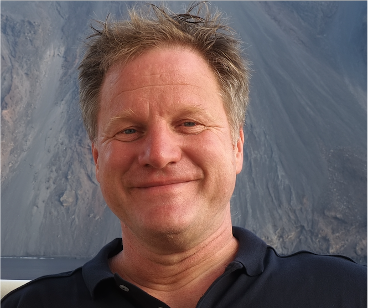
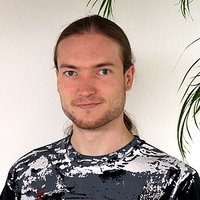
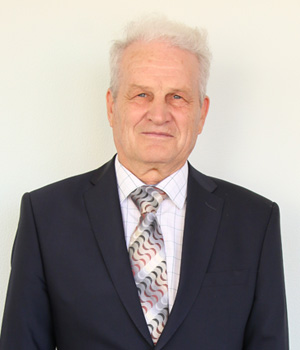
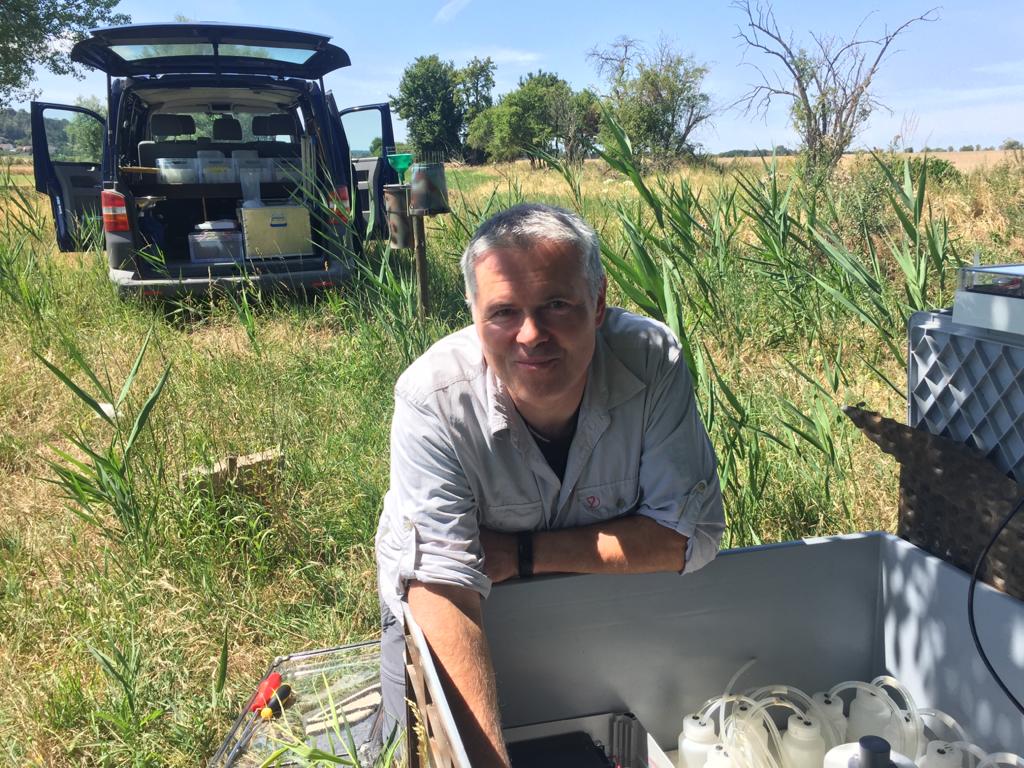
Dr. Janine Felden is a Group Leader at the PANGAEA Data Publisher for Earth & Environmental Science under the Alfred Wegener Institute (AWI). Her primary role involves advancing scientific data management and ensuring adherence to FAIR principles (Findable, Accessible, Interoperable, Reusable) for multidisciplinary datasets. She leads efforts to integrate georeferenced data from polar and marine research into PANGAEA's repository, supporting open science and data accessibility. Her research focuses on enhancing data interoperability and metadata standards, particularly in marine geosciences and environmental studies. Key contributions include developing frameworks for seismic data archiving, metadata concepts for OBS (Ocean Bottom Seismometers), and strategies to safeguard endangered datasets (e.g., NOAA data rescue initiatives). Recent projects include organizing workshops on data retrieval and integration with Jupyter Notebooks. Felden’s work bridges technical and scientific domains, emphasizing collaboration across disciplines. Her team actively participates in international initiatives like the World Data System and contributes to policy discussions on polar contaminants and deep-sea mining impacts. PANGAEA’s infrastructure, managed by her team, serves as a cornerstone for global Earth system research, enabling reproducible science and long-term data preservation.
Christian Berndt is a Professor of Marine Geophysics at the University of Kiel, leading the Marine Geodynamics Research Unit at GEOMAR Helmholtz Centre for Ocean Research Kiel. He holds additional roles as Honorary Professor at Aarhus University (2024–present) and Visiting Professor at the University of Southampton (2013–present). His work focuses on fluid migration in marine sediments, volcanic hazards, and climate development. He has conducted extensive marine expeditions globally, including the Gulf of California, South China Sea, and the Mediterranean. Education: Diploma in Geophysics from Christian-Albrechts-University of Kiel (1989–1994), followed by a Doctoral degree (Dr. Scient.) in Geophysics from the University of Oslo (2000). He has held research and managerial positions at institutions like the National Oceanography Centre, Southampton, and managed Oceansurv Ltd. (2006–2021). Research interests include submarine slope stability, seismic imaging of fluid pathways, and the interplay between geological processes and climate. His recent publications highlight advancements in understanding submarine landslides, hydrothermal systems, and volcanic margin evolution. Key projects include the Multimarex (2024–2027) and MetaSeis (2024–2025) initiatives. Berndt leads teams in GEOMAR’s Dynamics of the Ocean Floor research area and collaborates internationally on oceanographic expeditions.
Aron Stubbins is a Professor at Northeastern University, holding appointments in Marine and Environmental Sciences, Chemistry and Chemical Biology, and Civil and Environmental Engineering. He is a Center Member at The Plastics Center and leads interdisciplinary research on the global carbon cycle and environmental plastics. His work spans field studies in oceans, rivers, glaciers, and hydrothermal vents, emphasizing human impacts on natural systems. Stubbins earned his PhD in Marine Biogeochemistry from Newcastle University (2002) and held academic positions at Old Dominion University and Skidaway Institute before joining Northeastern in 2018. He teaches Earth’s Changing Cycles (ENVR 2200), exploring human-altered biogeochemical cycles and plastics as a novel global cycle. His research focuses on dissolved organic carbon (DOC) dynamics, microplastic distribution, and climate feedbacks. Notable projects include NSF-funded studies on plastic-derived DOC interactions with marine carbon pumps and microplastic accumulation in floodplains. He has secured over $1.3M in grants and is a Fellow of the Association for the Sciences of Limnology and Oceanography. Key Research Themes: Carbon cycle, biogeochemistry, microplastics, climate change, and environmental chemistry. Recent Highlights: Co-authored 2024 Science paper on plastics in Earth’s systems; featured in media for discoveries of ocean microplastic smog and global plastic pollution treaty advocacy. Stubbins collaborates internationally, including contributions to U.S.-based and global initiatives addressing plastic pollution and carbon cycle processes.
Dr. Hoang Nguyen is a Research Fellow in the School of Earth and Planetary Sciences (EPS) at Curtin University, affiliated with the Faculty of Science and Engineering. His work focuses on geophysical instrumentation, electromagnetic systems, medical device modeling, and materials science applications. He contributes to the Office of the Provost, demonstrating interdisciplinary engagement in academic governance. Research interests include seismic data acquisition systems, electromagnetic vibrator development, medical catheter modeling, and luminescent solar concentrators. His work bridges geophysics with engineering innovations, emphasizing cost-effective solutions for field applications. Recent studies involve CO₂ gas monitoring and high-power seismic source design. Publications highlight technical advancements in seismic instrumentation, medical physics, and materials engineering. Though no awards are listed, his prolific output (8+ publications since 2015) underscores active research engagement. No student advisement or grant details are provided in the profile. Dr. Nguyen's portfolio includes roles in both technical research and institutional support, reflecting a dual commitment to scientific innovation and academic administration.
Prof. Sabina Bigi is a faculty member at the Department of Earth Sciences, Sapienza University of Rome, where she conducts research in geological sciences. Her work focuses on field-based and analytical approaches to geological processes and environmental applications. Research Interests: Her primary expertise spans geological mapping, tectonics, and environmental applications of geoscience. Key research domains include: Quantitative analysis of fracture networks for CO2 storage Remote sensing applications in structural geology Development of environmental monitoring tools Marine ecosystem responses to geochemical changes Geogenic hazard assessment and mitigation Publication Focus: Recent articles demonstrate strong emphasis on fracture characterization across scales (aerial to subsurface), environmental monitoring of CO2 storage sites, marine biogeochemical processes near hydrothermal vents, and geogenic radon risk quantification. Her research consistently integrates field data with computational modeling approaches. Collaborations: Actively collaborates with institutions including the National Institute of Oceanography, British Geological Survey, and National Civil Protection Department. Her network includes 89+ co-authors across multidisciplinary projects.
Dr. Josef Vlček is affiliated with the University of Alaska Fairbanks , University of Iceland, Reykjavik , and the National Research Council of Italy . His work spans geophysics , seismology , and geothermal energy . Dr. Vlček's research includes earthquake swarm dynamics , geothermal reservoir characterization , and CO2 degassing in mofette systems . His recent publications highlight fieldwork in Iceland and the Czech Republic, focusing on seismic activity and geothermal exploration. 2024 : Real-time monitoring of tectonic graben formation in Iceland 2023 : Hydraulic injection tests in Czechia's EGS borehole 2023 : Analysis of fast-migrating sequences in earthquake swarms 2022 : Pressure perturbations affecting CO2 degassing in Hartoušov, Czech Republic Collaborations include researchers from the University of Pardubice, Seismik, and the Multidisciplinary Digital Publishing Institute. No explicit awards or student advisement details are provided.
Dr. Martin Zimmer is a geoscientist actively engaged in research projects related to geothermal systems, volcanic activity, and gas geochemistry. His collaborative work spans institutions such as the National Institute of Geophysics and Nucleo de Investigación en Recursos Renovables. Zimmer conducts interdisciplinary studies involving geochemical analysis, microbial processes, and drone-based remote sensing. Current research focuses on: Understanding degassing structures in volcanic environments (e.g., La Fossa cone, Vulcano, Italy) Geochemical dynamics in geothermal wells during production cessation Microbial impacts on geothermal energy systems Atmospheric gas composition in rift zones (e.g., Eger Rift, Czech Republic) Zimmer's publications highlight his expertise in integrating field observations with laboratory analysis to address subsurface energy systems and volcanic hazards. He collaborates with an extensive network of 82 co-authors across Europe and South America, including notable researchers like Thomas R. Walter and Heiko Woith.
Elke Kossel is a Researcher in Marine Biogeochemistry at GEOMAR Helmholtz Centre for Ocean Research Kiel, Germany, where she has worked since 2009. Her research focuses on marine gas hydrates, microplastics in marine sediments, and marine carbon dioxide storage. She is affiliated with Research Division 2: Marine Biogeochemistry and Research Unit Marine Geosystems within the institution. Dr. Kossel's educational background includes: PhD in Physics from University of Ulm (1999-2004), promoted to Dr. rer. nat. in 2005 Physics studies at University of Hamburg (1992-1998) Her primary research interests center around marine biogeochemical processes , with specific focus on: Marine gas hydrates and their potential as energy resources Microplastic pollution in marine environments and sediments Carbon capture and storage (CCS) in marine settings Biogeochemical processes in marine sediments Dr. Kossel employs advanced techniques including magnetic resonance imaging and high-pressure flow-through experiments to investigate these topics at both micro and macro scales. Analysis of Dr. Kossel's recent publications reveals a strong dual focus in her research. The first trajectory centers on gas hydrate systems, examining CH 4 -CO 2 exchange processes, hydrate formation/dissociation dynamics, and the geomechanical properties of hydrate-bearing sediments. The second trajectory investigates microplastic pollution in marine environments, with emphasis on detection methods, spatial distribution patterns, and ecological impacts in the Baltic Sea and North Atlantic regions. Her work bridges fundamental science with practical applications for environmental monitoring and energy resource development, demonstrating consistent interdisciplinary approaches throughout her publication record. Dr. Kossel has secured funding for and participated in multiple significant research projects: GEOSTOR I-II (2022-2027) - Focused on geological storage of CO 2 LABPLAS (2022-2024) - Investigating microplastics in marine environments HOTMIC (2020-2023) - Studying microplastics in the ocean STEMM-CCS (2018-2020) - Sub-seafloor carbon dioxide storage SUGAR I-III (2009-2018) - Submarine gas hydrate resources At GEOMAR, Dr. Kossel works within the Marine Geosystems research unit, utilizing specialized laboratory facilities for high-pressure experiments related to gas hydrates and sediment analysis. Her work often involves extensive international collaborations with researchers across Europe and beyond, as evidenced by her publication co-authorship patterns. She has developed expertise in magnetic resonance imaging applications for studying subsurface processes and has contributed significantly to the development of monitoring strategies for carbon dioxide storage sites, with her research having practical implications for both environmental protection and energy resource management.
Jörg Bialas is a Senior Scientist in the Marine Geodynamics Research Unit at GEOMAR | Helmholtz Centre for Ocean Research Kiel, Germany. He has been a key figure in marine geophysics research since joining the institution in 1995, with a long-standing focus on ocean floor dynamics, fluid migration, and marine resources. His primary research interests lie in marine geophysics, particularly high-resolution seismics, gas hydrates, cold seeps, submarine landslides, and the development of advanced geophysical equipment such as tiltmeters and deep-towed streamers. He has led and coordinated major projects like PERBAS (CO2 storage in basalt) and SAFAtor (smart cables), demonstrating leadership in both academic and applied marine science. His work integrates seismic, electromagnetic, and geoacoustic methods to study fluid flow systems in diverse settings including the Black Sea, New Zealand’s Hikurangi Margin, and the Chilean continental margin. The 15 most recent publications reflect a strong trend in gas hydrate systems, fluid migration pathways, and seafloor deformation, with significant contributions to understanding gas chimney dynamics, slope stability, and the interplay between tectonics and fluid flow. His research often employs 3D seismic imaging and multi-method geophysical integration, particularly in the Danube deep-sea fan and accretionary complexes. Senior Scientist, GEOMAR (1995–present) Scientific Associate, IFM-GEOMAR (1993–1995) Diploma in Geophysics (1987) Doctorate (1993) He has extensive experience mentoring and collaborating on international expeditions and scientific parties, though no formal advisees are listed. He participates in major research cruises and leads data acquisition efforts, contributing to both academic knowledge and potential energy resource applications. Bialas is actively involved in laboratory and field-based research, working within teams focused on gas hydrate monitoring, seafloor imaging, and geohazard assessment. His lab work emphasizes data interpretation from ocean-bottom seismometers and controlled source electromagnetics, often in coordination with international partners.
Prof. Michael C. Drews holds the Professorship of Geothermal Technologies at the TUM School of Engineering and Design , Technical University of Munich (TUM). His research focuses on quantifying pressure and stress states in Earth's crust to mitigate risks in deep geothermal projects, particularly in the Bavarian Molasse Basin. He combines interdisciplinary methods for analysis and monitoring of subsurface conditions. Education: Bachelor/Master's in Geology at Johannes Gutenberg University Mainz PhD (2012) from Newcastle University (UK), funded by the hydropower industry Research Interests: Deep geothermal energy exploration Subsurface stress and overpressure dynamics Geomechanical modeling for drilling risk assessment Interdisciplinary approaches in basin analysis Recent Research Trends: His publications emphasize pore pressure prediction, tectonic stress regimes, and post-drill analysis in geothermal reservoirs. Work focuses on optimizing drilling safety and energy extraction efficiency in SE Germany's key geothermal regions. Labs/Teams: Not explicitly mentioned, but likely involved in TUM's geothermal research initiatives and the Bavarian Geothermal Alliance.
Tobias Stacke is a Scientist in the Department of Climate Dynamics at the Max Planck Institute for Meteorology (MPI-M) in Hamburg, Germany, working within the Climate-Biosphere Interactions group. His research focuses on Earth system modeling, particularly land surface hydrology in Arctic regions, including permafrost, soil hydrology, and wetlands. Research Interests: Dr. Stacke specializes in simulating the Earth's hydrological cycle, with emphasis on Arctic processes and their atmospheric interactions. He contributes to the development of the ICON-LAND model and the creation of sustainable, high-resolution model infrastructure for Arctic landscape representation. Publication Trends: His recent work (2021–2025) centers on permafrost dynamics, global hydrological modeling, climate feedbacks, and Earth system model evaluation. His publications frequently appear in high-impact journals such as Nature Communications , Geophysical Research Letters , and Geoscientific Model Development , often involving large international collaborations and model intercomparisons (e.g., CMIP, ISIMIP). Scientific Roles: Research Scientist, Scientific Programmer, Model Developer Model Development: HydroPy, ICON-LAND, ESMValTool contributions Advising and Grants: There is no public information indicating that Tobias Stacke has supervised students. His research has been supported through major projects such as CRESCENDO, MiKlip, Q-Arctic, and CMIP6 coordination activities at MPI-M, indicating involvement in significant funded initiatives, though specific grants are not listed. Labs and Teams: He is embedded in the Climate-Biosphere Interactions group at the Max Planck Institute for Meteorology, contributing to large collaborative modeling efforts including the development and evaluation of Earth system models. He has also been involved with the IMPRS-ESM (International Max Planck Research School for Earth System Modeling), suggesting engagement with academic training and research coordination.
Dr. Johannes Raff is Head of the Terrestrial Microbiology Group at the Institute of Resource Ecology, Helmholtz-Zentrum Dresden-Rossendorf (HZDR) since 2025. He serves as a consultant/expert for the International Atomic Energy Agency (IAEA) since 2021 and has held guest lecturer positions at University of Granada (since 2016) and Technische Universität Dresden (since 2015). PhD in Biology (2002), University of Leipzig Diploma in Biology (1996), University of Bayreuth His research focuses on molecular mechanisms of radionuclide-microbe interactions, uranium speciation in contaminated waters, and biotechnological applications of S-layer proteins for metal recovery and biosensing. Key areas include: Actinide speciation and bioavailability Fungal/bacterial metal binding mechanisms Development of S-layer-based biosensors Phytoremediation of radioactive contaminants Microbial processes in nuclear waste repositories Recent publications emphasize: Eu(III)/U(VI) uptake in plants/fungi Uranium-diatom-bacteria interactions IAEA-relevant bioremediation strategies Microspectroscopic characterization of metal-microbe systems Projects include RENA (uranium remediation), BioVeStRa (radiation protection), and S-Sieve (metal recovery). He has contributed to advanced methodologies for: Impedance biochips for microbial diagnostics Uranium biosorption using biocers Nanoparticle synthesis via S-layer proteins Actinide speciation modeling
Oleg Zakirovich Khalimov is an Associate Professor at the Department of Construction and Economics within Khakass Technical Institute (KhTI), a branch of Siberian Federal University . With 52 years of professional experience , he specializes in geotechnical engineering, construction lifecycle management, and real estate assessment. His academic credentials include a Candidate of Technical Sciences degree and a qualification as Civil Engineer from Tomsk Civil Engineering Institute (1972). Academic Degree: Candidate of Technical Sciences Specialties: Construction (08.03.01, 08.04.01, 08.05.01) Research Focus: His work addresses geotechnical challenges in construction, particularly in environments with high groundwater levels. He has contributed to methodologies for engineering surveys, structural monitoring, and real estate valuation frameworks. Recent professional training highlights include digital education technologies and quality management systems. Scientific Output: Khalimov has authored over 150 publications , including three major monographs covering geotechnical lifecycle support, engineering surveys for historical buildings, and real estate depreciation assessment. His research demonstrates consistent engagement with practical construction challenges and educational innovation. Scientific Awards: Certificate of Honor (2016, 2023) Honored Builder of Khakassia Republic (2022) Honorary Worker of Science and Technology (2006)
Prof. Dr. Kay Knöller serves as an Isotope Geochemist and Hydrogeologist and Head of the Isotop Tracer Group within the Catchment Hydrology Department at the Helmholtz Centre for Environmental Research (UFZ) in Halle, Germany. His research focuses on high-frequency isotope monitoring and dynamic water-nutrient transport processes across catchment scales. His primary research interests span travel time distributions in subsurface systems, isotope pattern analysis in mesoscale river catchments, and element cycling (C, N, S) in contaminated aquatic environments. Key methodologies include automated high-resolution sampling, stable isotope tracing, and integration with radioactive tracers like 222 Rn for groundwater-surface water exchange studies. Research systems under investigation include: Lignite/metal mining landscapes with acid mine drainage Agricultural aquifers affected by diffuse contamination Petroleum-hydrocarbon contaminated near-surface aquifers His work addresses critical objectives such as delineating contaminant sources, assessing natural attenuation potential, and modeling hydrological extremes' impacts on nutrient mobilization. Collaborative frameworks include integration with TERENO observatories and the Robust Pictures of the Future platform for climate-resilient landscape modeling.
Professor Matthias Braun is a distinguished academic in the field of physical geography, specializing in remote sensing and GIS applications for glaciology and polar research. He holds a professorship at the Institute of Geography at Friedrich-Alexander University Erlangen-Nuremberg (FAU), where he leads the Chair of Geography (Remote Sensing and GIS) and serves as Chairman of the Examination Board for B.Sc./M.Sc. Physical Geography and BA/MA Cultural Geography since 2022. His research focuses on monitoring glacier dynamics, ice sheet changes, and climate impacts in polar and mountainous regions using advanced remote sensing techniques. Professor Braun has held several significant leadership positions including Chairman of the International Doctoral Program 'Measuring and Modelling Mountain Glaciers in a Changing Climate' in the Bavarian Elite Network funded by the Bavarian Ministry of Science & Art since 2022, and Coordinator of the DFG SPP Antarctic Research since 2017. His academic journey includes an Associate Professor position at the University of Alaska Fairbanks (2010-2011) and extensive field experience leading multiple Arctic and Antarctic expeditions since 1994/95, with research stays in Alaska, South America, West & East Africa, Himalaya & Karakorum. His research interests span glaciology, remote sensing, geographic information systems, climate change impacts, land use change, polar regions, and high mountain environments. Professor Braun's work integrates microwave and optical remote sensing data from satellite and airborne platforms to derive geobiophysical parameters and their spatiotemporal variations. He employs advanced digital image processing, pattern recognition, SAR interferometry, and polarimetry techniques in his research. His laboratory maintains active participation in major research initiatives including the TanDEM-X and TanDEM-L Science Teams since 2010. Professor Braun's extensive publication record demonstrates a clear progression from foundational work on glacier monitoring to sophisticated applications of machine learning and deep learning for glacier feature extraction. His recent work focuses on calving front detection using SAR imagery, glacier velocity mapping, and integration of multi-sensor data for comprehensive glaciological analysis. Key research themes include glacier mass balance, ice sheet dynamics, supraglacial hydrology, and climate change impacts on cryospheric systems across diverse regions including Antarctica, Patagonia, the Himalayas, and the European Alps. Among his notable recognitions is the 2009 Science Award for Physical Geography from the Prof. Dr. Frithjof Voss Foundation for Geography and his Habilitation at the Mathematical-Natural Science Faculty of the University of Bonn in 2009. He serves as an Associate Editor for Frontiers in Earth Sciences – Cryospheric Sciences and reviews for numerous peer-reviewed journals. Professor Braun has mentored numerous doctoral students to completion, with recent graduates including Dr. Christian Sommer (2022), Dr. David Farias Barahona (2021), Dr. Stefan Lippl-Seifert (2020), and Dr. Peter Friedl (2019). Several students are currently completing their dissertations under his supervision. His research is supported by various funding mechanisms including the Bavarian Elite Network, DFG research programs, and international collaborations. He maintains strong connections with national and international research institutions including membership in the International Glaciological Society (IGS), German Society for Photogrammetry, Remote Sensing and Geoinformation (DGPF), German Society for Polar Research (DGP), and German Society for Geography (DGfG).