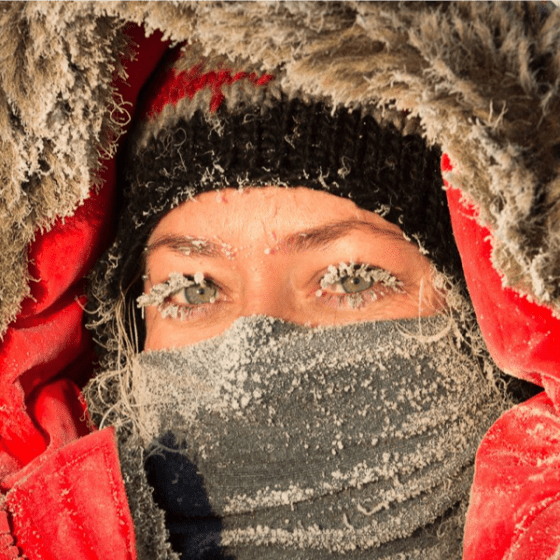
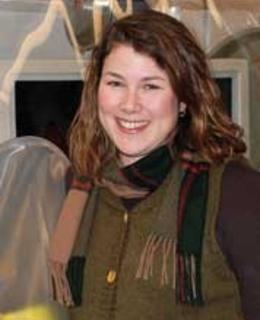
Britney Schmidt is Associate Professor in Earth and Atmospheric Sciences and Astronomy at Cornell University, where she leads the Planetary Habitability and Technology Lab. She develops robotic tools like the Icefin underwater vehicle to study Earth's ice shelves and glaciers, providing insights into climate change and analogs for ocean worlds like Europa. Her research bridges glaciology, planetary science, and astrobiology. Research focuses on ocean world habitability, ice-ocean interactions, and Antarctic climate systems. Fieldwork includes extensive campaigns in Antarctica and the Arctic using robotic explorers. Recent publications explore Europa's habitability, Thwaites Glacier dynamics, microbial communities in hypersaline environments, and planetary analog studies. Technical developments include novel instrumentation for under-ice exploration. Awarded the 2024 Blavatnik National Award for groundbreaking research. Leads multiple international collaborations including NASA's Europa Clipper mission and Thwaites Glacier projects.
Robert M. Holt is a Professor in the Department of Geology and Geological Engineering at the University of Mississippi. His research focuses on geological CO2 sequestration, fluid transport in porous media, and hydrogeological characterization for nuclear waste disposal. Holt investigates how fluid behavior in heterogeneous geological formations impacts environmental processes ranging from carbon storage to groundwater contamination. His work examines the fundamental physics governing multiphase flow through porous and fractured geological media, with applications to contaminant transport, energy resources, and waste isolation. Holt has developed experimental methods for visualizing and modeling fluid behavior in heterogeneous subsurface environments, improving understanding of capillary processes and flow dynamics. Holt's research includes field studies of evaporite karst systems, geochemical assessments of aquifer systems, and investigations of hydraulic properties in low-permeability mudrocks. His work on CO2 injection monitoring has contributed to safer implementation of carbon sequestration technologies.
Jennifer C. McIntosh is a Professor and University Distinguished Scholar in the Department of Hydrology and Atmospheric Sciences at the University of Arizona (UA), with a joint appointment in the Department of Geosciences. She is also an Adjunct Professor at the University of Saskatchewan. Her academic roles include teaching advanced hydrogeology courses and advising graduate students. She holds a BA in Geology-Chemistry from Whitman College, MS and PhD in Geology from the University of Michigan, and completed a postdoctoral fellowship at Johns Hopkins University. Her research focuses on the interplay between hydrology, geochemistry, and microbiology in the Earth’s crust, spanning micro-to-macro scales. Key projects include studying subsurface fluid dynamics, microbial methane production, and the impacts of climate and human activities on groundwater systems. She has applied these methods to critical zones, sedimentary basins, and oil/gas reservoirs, with fieldwork in the Colorado Plateau, Paradox Basin, and Western Canada. McIntosh has received numerous awards for research and teaching, including the Blitzer Award for Excellence in Teaching Physics-Related Sciences (2019) and the UA Distinguished Scholar Award (2017). She actively serves on national committees for the US EPA, National Academies, and Nuclear Waste Technical Review Board. Education: BA (Whitman College), MS/PhD (University of Michigan), Postdoc (Johns Hopkins University) Notable Awards: GSA Fellow (2019), CIFAR Earth 4D Program (2019), Morton K. Blaustein Fellowship (2004) Labs/Teams: Jemez River Basin Critical Zone Observatory, Siljan Impact Structure Research Group Future Works: Investigating anthropogenic impacts on deep groundwater systems and astrobiology of subsurface microbes
Christopher Lawson is an Assistant Professor in the Department of Chemical Engineering and Applied Chemistry at the University of Toronto, affiliated with the Faculty of Applied Science and Engineering. He serves as Principal Investigator of the Microbiome Engineering Lab and is part of BioZone – the Centre for Applied Bioscience and Bioengineering. His research focuses on engineering anaerobic microbiomes for resource recovery from waste streams using systems biology, synthetic biology, and machine learning approaches. B.A.Sc., M.A.Sc. (University of British Columbia) Ph.D. (University of Wisconsin-Madison) Postdoctoral Training (Berkeley Lab) Lawson's work addresses the challenge of controlling complex microbial interactions in engineered systems to enable scalable biotechnologies for renewable energy, chemicals, and materials. His lab develops high-throughput methods integrating automation and computational tools to optimize microbiome assembly and metabolic fluxes. Recent publications highlight advancements in metabolic modeling , isotope tracing , and systems-level analysis of anaerobic microbiomes, with applications in wastewater treatment , anammox granules , and bioenergy production . His research bridges fundamental microbiology with industrial-scale bioprocess engineering. Scientific Awards ISME/IWA BioCluster Rising Star Award (2022) Jacobs Engineering Group/AEESP Outstanding Doctoral Dissertation Award (2020) Wesley Eckenfelder Graduate Research Award (2019) WEF Canham Graduate Studies Scholarship (2018) NSERC Post-Graduate Scholarship – Doctoral (2014) Lawson actively mentors students and postdocs, emphasizing technical rigor, communication skills, and independence. His lab collaborates within BioZone and with industry partners to advance "team science" principles. Current projects focus on creating engineered microbiomes for commercial-scale waste valorization.
Charu Gupta Kumar is a Research Professor in the Department of Bioengineering at the University of Illinois Urbana-Champaign, affiliated with the Neuroscience program. Her research focuses on systems and computational biology, integrating computational genomics, bioinformatics, and systems biology approaches to study microbiome/pathogen dynamics, neurological diseases, and evolutionary processes. She leads the Systems and Computational Biology Group, emphasizing interdisciplinary methodologies to address complex biological questions. Her academic roles include a zero-time appointment in the Department of Neuroscience (2013–present) and service as an admission reviewer for the Carle Illinois College of Medicine (2020–2022). She advises a diverse cohort of undergraduate and graduate students engaged in bioengineering and computational biology projects. Her work bridges environmental microbiology with human health, exploring astrocyte roles in neurological disorders like glioblastoma and autism, and investigating evolutionary mechanisms of metabolic networks across species. Publications highlight contributions to bovine genomics, microbial community analysis in subsurface environments, and computational tools for genomic data management. Her research trends emphasize translational applications of computational biology to environmental and clinical challenges, with recent focus on microbiome-disease interactions and astrocyte signaling pathways. Advising spans mentoring over 18 students across bioengineering and computer science disciplines, with notable alumni advancing to institutions like MIT and Johns Hopkins. She collaborates with跨学科 teams in bioengineering and neuroscience, contributing to the broader Grainger College of Engineering research ecosystem.
Kathy Fontaine serves as Senior Lecturer in Information Technology and Web Science at Rensselaer Polytechnic Institute and Program Manager for the RPI-IBM AI Research Collaboration. She joined RPI in 2014 after 25 years at NASA Goddard Space Flight Center where she developed international data access policies through CEOS WGISS, GEO, and USGEO. Her educational background includes: B.S. in Physics with Astrophysics Option from New Mexico Institute of Mining and Technology (1984) M.A. in Science, Technology and Public Policy from The George Washington University (2002) Ph.D. in Public Policy and Public Administration from Walden University (2013) Dr. Fontaine's research integrates data science policy with ethical frameworks, focusing on international data sharing cultures and volunteer organization dynamics. She develops courses like Big Data Policy and Ethical Informatics that address data scientists' societal responsibilities. Her work examines how policy implementations affect global earth observation systems and research data ecosystems, with particular attention to cross-cultural collaboration challenges in scientific consortia. Analysis of her publications reveals strong interdisciplinary connections between earth sciences and computer science, with emerging trends in data dexterity training, knowledge graph applications for social equity, and mineral inventory data legacies. Her research increasingly bridges technical data infrastructure with ethical considerations in data sharing. Dr. Fontaine actively contributes to scientific communities through the Earth Science Information Partners (ESIP), where she serves on GEO's Programme Board, and maintains affiliations with AGU, ACM Web Science, IEEE GRSS, and IEEE SSIT. Her current leadership in the RPI-IBM AI Research Collaboration extends her mission to develop responsible AI frameworks.
Prof. Dr. Oliver Schilling is an Assistant Professor of Hydrogeology at the University of Basel and affiliated with Eawag , the Swiss Federal Institute of Aquatic Science and Technology. He leads research on surface water-groundwater interactions using integrated surface-subsurface hydrological models (ISSHM) and novel tracer techniques including dissolved atmospheric noble gases, environmental DNA, and radioactive tracers. Research Focus : Surface-subsurface hydrology, ecohydrology, groundwater-surface water interactions, tracer hydrogeology, climate change adaptation in water systems Key Projects : Integrated Hydrological Modeling for Operational Forecasting, Sustainable Nitrogen Fertilization, Slow Water Initiatives, Cryosphere-Groundwater Connectivity in Alpine Regions Scientific Contributions include developing HGS-PDAF (modular data assimilation framework), advancing microbial transport algorithms in HydroGeoSphere, and pioneering online flow cytometry for microbial analysis in high-turbidity environments. His work addresses drinking water production via bank filtration along alluvial rivers, critical for 30% of Swiss and 50% of European drinking water supply. Scientific Leadership : Editor, Hydrogeology Journal (since 2025) Associate Editor, Frontiers in Water (since 2021) Coordinator, Swiss Water-Earth Systems (WES) PhD School (2020–2022)
Prof. Dr. Andreas Kappler is a Professor of Geomicrobiology at the University of Tübingen's Applied Geosciences department. He leads the Geomikrobiologie workgroup and holds an honorary professorship at Aarhus University. His research focuses on microbial interactions with iron, sulfur, and carbon cycles in environments ranging from permafrost thaw zones to ancient ocean analogs and extraterrestrial settings like Enceladus. Education: Ph.D. in Environmental Microbiology (2000, University of Konstanz) Diploma in Chemistry (1997, University of Konstanz) Postdoctoral work at Caltech (USA), EAWAG/ETH Zurich (Switzerland), and the Marine Biological Laboratory. Research Interests: His work explores microbial-driven mineral formation (e.g., pyrite, siderite), iron and sulfur biogeochemistry, permafrost thaw impacts on greenhouse gases, and ancient ocean geochemistry. He investigates how microbial processes shape Earth's element cycles and potential biosignatures for astrobiology. Key Contributions: Recent studies include iron-carbon interactions in thawing permafrost, nitrate-reducing Fe-oxidizing microbes, and microbial mineralization pathways under Enceladus-like conditions. His ERC-funded research examines Fe-oxidizing bacterial communities in modern/ancient systems. Awards & Recognition: Terry Beveridge Award (2012) ERC Starting Grant (2012) Fellow of the American Society of Microbiology Member of Akademie der Wissenschaften zu Göttingen Grants & Advising: Recipient of multiple grants including the prestigious ERC Starting Grant. Advises on microbial processes in extreme environments and collaborates internationally on astrobiology and climate change projects. Labs/Teams: Leads the Geomikrobiologie group at University of Tübingen, specializing in biogeochemical process analysis using state-of-the-art microscopy and geochemical techniques.
Professor Frederic Coulon holds the position of Professor of Environmental Chemistry and Microbiology at the Cranfield Water Science Institute, part of Cranfield University's School of Management. His work focuses on transdisciplinary environmental science, including soil and water chemistry, bioremediation, wastewater treatment, and risk assessment. He leads research on microbial interactions in engineered systems, biodegradation of petroleum hydrocarbons, and emerging contaminants. His professional interests span soil and water chemistry, fate of chemicals in environmental systems, hazardous waste site remediation, and policy-influencing research. Key collaborators include BBSRC, NERC, Defra, and the European Commission. He has advised on contaminated land management and developed solutions for pragmatic risk-based remediation strategies. Research activities include microbial adaptations in cold environments, environmental monitoring technologies, and anaerobic digestion optimization. Over 200 peer-reviewed articles highlight his contributions to environmental engineering and science, with a focus on bioremediation, bioaerosol risk assessment, and sustainable waste management. Current projects address challenges in low-carbon remediation, landfill mining, and antimicrobial resistance in agricultural environments. He supervises multiple PhD students and collaborates internationally on initiatives like the UK-India vWa project and the REGENERATIS program for metallurgical site regeneration.
Jill F. Banfield serves as a Professor at the University of California, Berkeley with dual appointments in the Department of Earth and Planetary Science and Department of Environmental Science, Policy, and Management , plus an affiliation with the geochemistry group at Lawrence Berkeley National Laboratory. Her research program centers on geomicrobiology and environmental microbiology, investigating microbial community dynamics through field-intensive studies at: Iron Mountain, northern California Angelo Coast Range Reserve, northern California Rifle and East River sites, Colorado Crystal Geyser, Utah Employing cultivation-independent genomic and proteomic methodologies, her group examines: Microbial mineral dissolution and precipitation processes Biogenic nanoparticle formation and reactivity Microbial community ecology and evolutionary mechanisms Shale weathering and clay mineral transformations Riparian zone sediment, soil, and deep subsurface microbial processes The team develops specialized bioinformatics pipelines for genome-resolved analysis of environmental 'omics' data to decode microbial functional capacities and environmental impacts. While the available documentation confirms active laboratory operations and field collaborations with Lawrence Berkeley National Laboratory, it omits specifics regarding student advisement, grant portfolios, and training programs.
Dr. Dirk de Beer is the leader of the Microsensor Group at the Max Planck Institute for Marine Microbiology in Bremen, Germany. His research focuses on the structure and function of marine sediments, investigating how microbial conversions (e.g., photosynthesis, chemoautotrophy, anaerobic nitrogen/carbon/sulfur cycling) are controlled by transport processes and how microbial species distributions are regulated in hot spots like seeps, microbial mats, and biofilms. His group employs advanced techniques such as microsensors and planar optodes to study high-resolution geochemical dynamics in marine systems. Key research areas include: Biogeochemical cycling of oxygen, sulfur, and carbon Microbial community interactions in sediments and mats Environmental regulation of microbial processes Reactive oxygen species in marine environments Coral bleaching and ocean acidification Recent publications highlight collaborations on arsenic cycling, hydrogen peroxide dynamics, and microbial respiration in extreme environments. Dr. de Beer's work is central to understanding how microbial processes influence global elemental cycles and climate regulation.
Susan E. Burns is a Professor at the School of Civil and Environmental Engineering , Georgia Institute of Technology. She holds multiple administrative roles, including Interim Associate Vice President for Research Operations and Infrastructure and Associate Chair for Administration and Finance. Burns earned all her degrees (B.C.E., M.S., Ph.D.) in civil engineering from Georgia Tech. NSF CAREER Award (2000) Arthur Casagrande Professional Development Award (ASCE) Edmund Friedman Young Engineer Award (ASCE) Class of 1969 Teaching Scholar (Georgia Tech) Fellow, American Society of Civil Engineers (2013) Her research focuses on geoenvironmental engineering , emphasizing waste material reuse (dredged sediments, fly ash), stormwater treatment , soil erosion control , and microbially induced calcite precipitation (MICP) . Recent publications analyze microplastic transport, arsenic speciation in fly ash, and LCA of dredged sediment reuse. Funding sources include NSF, DOE, US Army Corps of Engineers, and state departments of transportation. Professor Burns has led major conference proceedings (e.g., IS Atlanta 2008, ICSE-5) and served on editorial boards like ASCE's Journal of Geotechnical and Geoenvironmental Engineering. Her administrative roles include chairing graduate committees, overseeing curriculum changes, and managing geosystems group operations.
Steven Hall is an Assistant Professor and Extension Specialist in the Department of Plant and Agroecosystem Sciences at the University of Wisconsin-Madison (UW-Madison), College of Agricultural & Life Sciences. Previously, he held roles as Assistant and Associate Professor in the Department of Ecology, Evolution, and Organismal Biology at Iowa State University. His research focuses on agroecosystem water quality, soil carbon dynamics, and nutrient management in agricultural landscapes, with an emphasis on how redox conditions, geochemical factors, and microbial communities influence carbon sequestration and greenhouse gas emissions. He obtained a PhD in Ecosystem Science from UC Berkeley and MS/BS degrees from UW-Madison in Environment and Resources/Botany, respectively. His educational background includes studies at the University of California-Berkeley (PhD, Ecosystem Science), University of Wisconsin-Madison (MS, Environment & Resources; BS, Botany). Research priorities include evaluating conservation practices, crop diversification, and novel fertilizer technologies for environmental benefits. The Hall Lab employs mesocosm experiments, isotopic tracing, and continental-scale datasets to address challenges in climate-smart agriculture and water quality preservation. Research highlights include groundbreaking work on iron-driven carbon decomposition mechanisms, microbial controls on lignin mineralization, and nitrous oxide emissions from tile-drained soils. Recent studies emphasize the role of poorly drained depressions as nutrient leaching hotspots and the unexpected carbon losses from anaerobic soils, challenging existing biogeochemical models. Advising and grants involve mentoring current graduate students (Moira Keith, Hariom Yadav) and undergraduate researchers. Opportunities to join his lab depend on funded projects. Collaborations include the International Soil Radiocarbon Database (ISRaD) and partnerships with institutions like the Savanna Institute. The lab is situated in Moore Hall, Plant Sciences Building, with outreach activities through UW-Madison's extension programs. Key infrastructure includes automated gas flux measurement systems and soil block mesocosms. Ongoing work integrates machine learning with NEON soil data to model organic carbon dynamics, while field studies explore digestate amendments and biochar impacts. His research bridges laboratory experiments with landscape-level observations to inform sustainable agricultural practices.
Lisa Gieg is a Professor in the Department of Biological Sciences at the University of Calgary, where she leads research in environmental microbiology. She holds a B.S. in Microbiology from the University of Alberta (1991) and Ph.D. in Microbiology from the same institution (1996). Her laboratory investigates microbial processes in energy environments, focusing on anaerobic hydrocarbon biodegradation pathways and applications in bioremediation and energy recovery. Dr. Gieg's research examines how anaerobic microorganisms metabolize hydrocarbons and related compounds in contaminated environments and natural reservoirs. Her work elucidates novel biodegradation pathways under sulfate-reducing and methanogenic conditions through cultivation, analytical chemistry, and molecular biology approaches. Current applications include anaerobic bioremediation, enhanced methane recovery from marginal oilfields, biocorrosion mitigation, paraffin treatment, heavy oil recovery, oil sands tailings reclamation, and souring control. Her recent publications demonstrate advances in understanding microbiologically influenced corrosion mechanisms, naphthenic acid biodegradation, piezophile microbiology, and enzyme biotechnology for oilfield applications. This research bridges fundamental microbial ecology with practical solutions for energy industry challenges. Gieg teaches Microbial Physiology (CMMB 443) and Petroleum Microbiology (CMMB 545), training students in environmental microbiology concepts and techniques.
Elizabeth A. Edwards is a University Professor at the University of Toronto in the Department of Chemical Engineering and Applied Chemistry , with cross-appointments to the Department of Cell & Systems Biology . As Director of BioZone and Canada Research Chair in Anaerobic Biotechnology, she leads groundbreaking research in microbial bioremediation of groundwater pollutants and industrial wastewater treatment through anaerobic digestion. Ph.D. in Environmental Engineering (Stanford, 1993) M.Eng. and B.Eng. in Chemical Engineering (McGill, 1985/1983) Licensed Professional Engineer (P.Eng.) Her research focuses on anaerobic microbial communities that degrade pollutants like chlorinated solvents and aromatic hydrocarbons. Using advanced molecular biology, genomics, proteomics , and biochemical pathway analysis , her lab investigates functional interactions in microbial consortia and translates discoveries to commercial applications such as the KB-1® bioproduct . Recent studies examine enzyme activity, lignocellulose degradation, and granulation dynamics in anaerobic reactors. Scientific Recognition: 2020 Killam Prize in Engineering 2016 Canada Research Chair (Tier 1) 2014 Royal Society of Canada Fellow 2011 Canadian Academy of Engineering Fellow 2011 AAAS Fellow 2008-2010 Killam Research Fellowship She supervises extensive graduate student projects spanning enzyme discovery, bioremediation optimization, and microbial consortium analysis. Her lab collaborates with GeoSyntec Consultants and SiREM Labs for field implementation of bioremediation strategies.