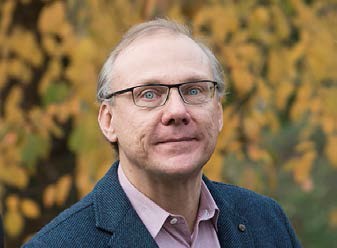
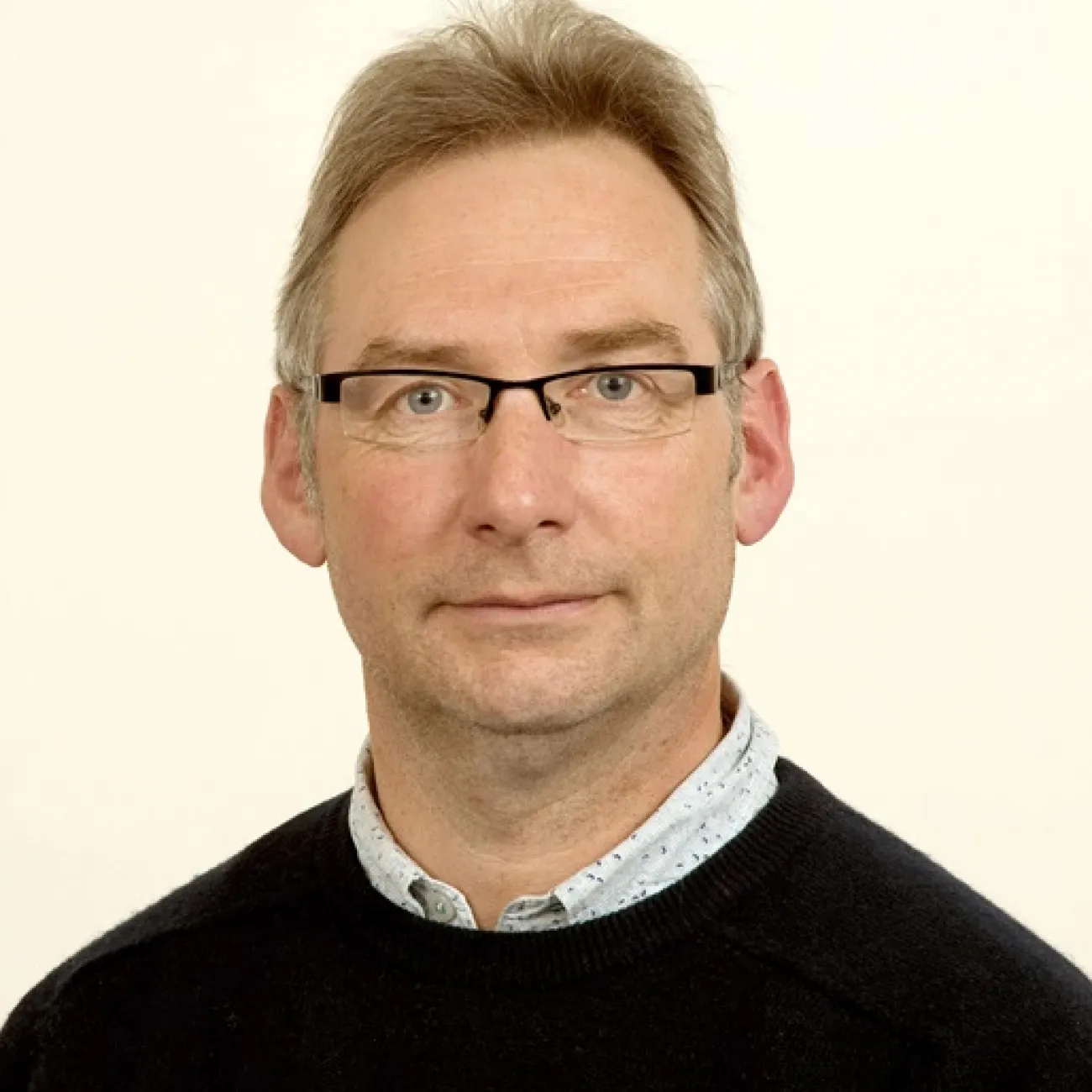
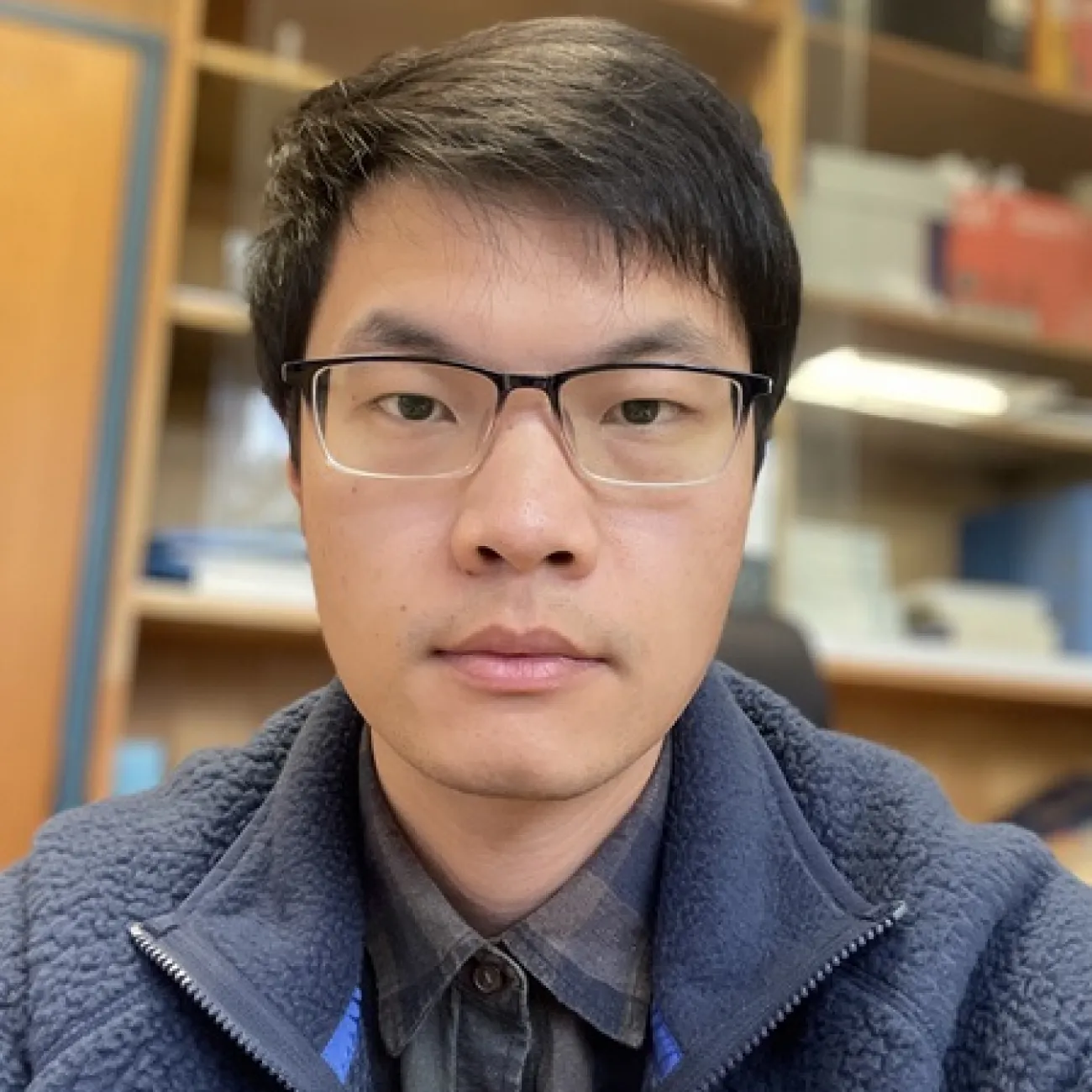
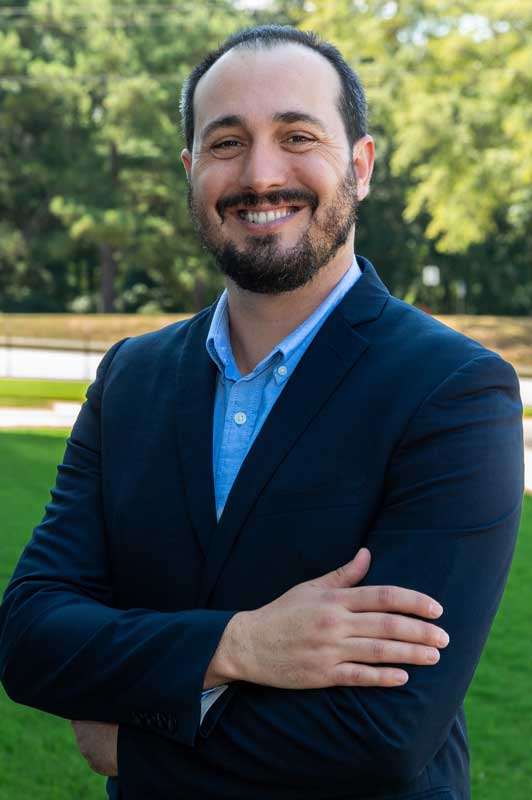
Dante Fratta is a Professor in the Department of Civil & Environmental Engineering at the University of Wisconsin-Madison, where he has been actively involved in research and teaching since 2000. His work focuses on geotechnical engineering, environmental monitoring, and fiber optic sensing technologies. Education: PhD (1999) – Georgia Institute of Technology M.A.Sc. (1995) – University of Waterloo Diploma (1993) – Universidad Nacional de Córdoba Research Interests: Geomaterial process evaluation using elastic and electromagnetic waves, fundamental physical behavior of soils and rocks, geophysical assessment of near-surface environments, and distributed fiber optic sensing methods. Recent Publication Trends: He has pioneered applications of Distributed Acoustic Sensing (DAS) and fiber optic technologies for geotechnical, environmental, and energy infrastructure monitoring, including wind turbines, geothermal systems, and mining operations. Scientific Awards: Benjamin Smith Reynolds Award for Excellence in Teaching (2012) Chi Epsilon Excellence in Teaching Award (2008) Best Paper Award, GeoCongress Sensing Methods and Devices Track (2006) Distinguished Alum, Universidad Nacional de Córdoba (2013) Multiple keynote and invited speaking engagements Teaching: Fratta teaches graduate and undergraduate courses in geotechnical engineering, including Foundations, Applied Geophysics, and Pre-Dissertator Research, with active involvement in Spring 2025 classes.
Dr. Jonathan Frame is an Assistant Professor of Artificial Intelligence/Machine Learning in Geological Sciences at the University of Alabama (2024–present) and a Faculty Fellow at the Alabama Water Institute (2024–2027). He holds a PhD in Geological Sciences from the University of Alabama (2022), an MS in Civil Engineering from the University of California, Irvine (2011), and a BS in Earth Systems Science, Technology, and Policy from California State University, Monterey Bay (2010). His research focuses on advancing hydrologic modeling through machine learning, including deep learning for streamflow forecasting, geospatial modeling, and flood prediction systems. Notable projects include improving the National Water Model with LSTM networks and developing rapid inundation mapping techniques using satellite data. He has contributed to over 30 peer-reviewed publications and actively participates in conferences like AGU and NeurIPS. His engineering experience spans flood risk mitigation, groundwater analysis, and pipeline transient modeling across California, Texas, and Washington. Research Interests Machine learning integration in hydrological systems Operational flood forecasting and inundation mapping Data-driven approaches for ungauged basins Climate nonstationarity and model adaptability Hydraulic transient analysis in water infrastructure Recent Contributions Frame’s recent work emphasizes NextGen water modeling frameworks, combining physics-based models with AI to enhance predictive accuracy. His 2025 paper on heterogeneous water modeling frameworks and 2024 studies on rapid inundation mapping highlight innovations in integrating satellite observations with hydrologic models. He also explores topics like mass conservation constraints in rainfall-runoff models and evapotranspiration prediction using deep learning. Grants & Projects FEMA partnership for near-real-time flood damage prediction systems NOAA-funded research on AI in environmental sciences NASA snowpack analysis for water resources forecasting Development of the Tarsier environmental modeling framework Labs & Collaborations Frame collaborates with the Alabama Water Institute and contributes to interdisciplinary teams advancing hydrologic AI. His work intersects with climate science, environmental engineering, and computational hydrology to address global water challenges.
Prof. Dr. Roland A. Müller serves as Department Head of Systemic Environmental Biotechnology at the Helmholtz Centre for Environmental Research - UFZ in Leipzig, Germany, and holds an Honorary Professorship for Integrated Wastewater Resource Management at Leipzig University of Applied Sciences (HTWK) since 2016. With over three decades of experience at UFZ, he has held progressively senior positions including Head of Department SUBT since 2013, Speaker of the Department from 2010-2012, and Head of Infrastructure Unit from 1996-2010. His educational foundation includes university studies in Technical Microbiology at the Carolo-Wilhelmina Technical University of Braunschweig (1984-1990). This technical microbiology background has informed his interdisciplinary approach to environmental biotechnology. Prof. Müller's research pioneers the integration of ecological principles into urban water management systems, particularly focusing on Multifunctional BlueGreen Water Infrastructures for Water Sensitive Cities. His work spans Decentralized Rainwater & Wastewater Treatment, Ecological Engineering, and Resource-efficient Wastewater Treatment systems, with special attention to applications in water-scarce regions like Jordan. He has developed innovative approaches for implementing nature-based solutions that simultaneously address urban flooding, water scarcity, and climate adaptation challenges. His research combines engineering, ecology, and urban planning to create resilient water systems that enhance urban sustainability. Analysis of his recent publications reveals a consistent focus on implementing the 'Leipziger Modell Blau-Grün' - a comprehensive approach to integrated blue-green infrastructure in urban settings. His work demonstrates how nature-based solutions can simultaneously address stormwater management, irrigation needs, and urban greening. A significant portion of his research examines decentralized wastewater treatment systems, with particular attention to their application in arid and semi-arid regions where water resources are constrained. His publications increasingly emphasize participatory planning approaches involving municipal authorities, housing associations, and research institutions to co-design water-sensitive urban developments. 2018: German Environmental Award for solving a central water problem in a decentralized manner in Jordan 2016: Winner of UFZ Knowledge Transfer Award for contributions to Jordanian wastewater policy framework 2014: UFZ Technology Transfer Award for development of vertical filter systems for groundwater purification 2014: Finalist for Hugo Junkers Prize for innovative groundwater purification research Prof. Müller has been instrumental in advising on water policy frameworks, particularly in Jordan where he served as the German representative in the National Implementation Committee for decentralized Wastewater treatment. His work directly influenced the development of national certification standards for wastewater treatment systems with capacities up to 5,000 PE in Jordan. He leads the 'Leipziger BlauGrün' project, a German model city initiative for resource-efficient urban districts that demonstrates practical implementation of his research concepts. His department collaborates with international partners on projects addressing water challenges across diverse climatic conditions. As head of the Systemic Environmental Biotechnology department at UFZ, Prof. Müller oversees research at the intersection of environmental engineering, microbiology, and urban planning. His department is actively involved in the Technical Biogeochemistry Integration Platform, which focuses on 'Tapping Nature's Potential' for sustainable water management solutions. The department maintains strong international partnerships, particularly with institutions in water-stressed regions, to develop and implement decentralized wastewater management concepts that are both scientifically sound and practically implementable in resource-constrained settings.
Professor Justin Dix is a Professor in Marine Geology & Geophysics at the University of Southampton, specializing in marine geotechnics, submarine systems, and offshore energy infrastructure. He leads research on marine cable thermal modeling, benthic biodiversity assessment, and submerged archaeological landscapes. His work integrates geophysical data analysis with engineering solutions for marine renewable energy and cultural heritage preservation. He holds affiliations with the Centre for Maritime Archaeology and Southampton Marine and Maritime Institute. His research projects include BEcoWIND (biodiversity assessment for offshore wind energy), eSWEETS3 (subsea cable systems), and ACROSS (Australasian colonization studies). He has secured funding from EPSRC, English Heritage, and the European Union. PhD supervision focuses on archaeology and engineering topics. Key collaborations involve interdisciplinary teams from geology, engineering, and marine robotics. Developed novel methods for submarine cable ampacity modeling and autonomous geotechnical surveying. His research bridges geoscience and engineering, addressing challenges in marine infrastructure sustainability and submerged cultural heritage management. Active in both academic publications and industry partnerships, he contributes to advancing marine technology and environmental stewardship.
Dr Yuting Zhang serves as a Research Fellow within the Department of Civil, Maritime, and Environmental Engineering at the University of Southampton's Faculty of Engineering and Physical Sciences. He is an integral member of the Royal Academy of Engineering Chair Centre of Excellence for Intelligent & Resilient Ocean Engineering (IROE), focusing on machine learning applications for geotechnical site characterization. His educational background includes a Bachelor's degree and MPhil in Geotechnical Engineering from Wuhan University, China, followed by a 2024 PhD from the University of Newcastle, Australia, specializing in probabilistic calibration of resistance factors for piling designs. Zhang's research centers on probabilistic geotechnics and reliability-based design methodologies, with particular emphasis on data-driven site characterization techniques. His work bridges machine learning algorithms with geotechnical and geophysical data analysis to enhance foundation engineering practices, especially in offshore and marine environments. Current projects investigate spatial soil variability effects on pile group reliability, optimization of resistance factors, and innovative data augmentation approaches for rock fracture prediction. His publication record demonstrates consistent output in high-impact journals since 2022, with recent 2025 publications indicating active research momentum. The articles reveal strong thematic focus on probabilistic methods for pile design, integration of diverse geotechnical data sources, and machine learning applications in subsurface characterization. As part of the Infrastructure Group and Southampton Marine and Maritime Institute, Zhang contributes to ocean energy research initiatives while maintaining active collaborations with international researchers including Jinsong Huang, Jiawei Xie, and Anna Giacomini. His work supports the development of more resilient offshore infrastructure through advanced geotechnical reliability frameworks.
Dr. Junlin Yuan is an Associate Professor in the Department of Mechanical Engineering at Michigan State University, within the College of Engineering. Her research focuses on large-scale numerical simulations of complex turbulent shear flows, particularly addressing non-equilibrium turbulence, wall roughness, and fluid-structure interaction. Applications span engineering, environmental, and bio-locomotive systems. She has secured funding from NSF, ONR, and industry partners. Education: Ph.D. Mechanical Engineering, Queen's University, Canada (2015) M.S. Mechanical Engineering, Queen's University, Canada (2011) B.Eng. Aerospace Engineering, Northwestern Polytechnical University, China (2009) Research Interests: Dr. Yuan's work emphasizes understanding turbulence in complex geometries through direct numerical simulations (DNS) and developing physics-based models. Key areas include roughness sublayer dynamics, adverse pressure gradient effects, hyporheic exchange modeling, and turbulence-induced noise prediction. Her lab, the Turbulence Simulation & Modeling (TSM) Lab, bridges fundamental turbulence physics with practical engineering challenges. Grants & Advising: She secured a $400k NSF grant (CC* Compute) for high-memory computing infrastructure and a $490k NSF award on biomimetic fluid-structure interaction. Advised PhD students include Guangchen Shen, Saurabh Pargal, and Sai Mangavelli. Students have received fellowships such as the Richard H. Brown Endowed Fellowship and CFD Society of Canada scholarships. Labs & Teams: Directs the TSM Lab, which employs DNS and CFD tools to explore turbulence in environmental and engineered systems. Collaborates on projects involving sediment-water interface dynamics and rough wall aerodynamics.
Martin Andersen is an Associate Professor with the Water Research Laboratory and School of Civil and Environmental Engineering at the University of New South Wales (UNSW). His research focuses on hydrogeology, groundwater dynamics, and surface water-groundwater interactions, with particular emphasis on coastal zone processes and reactive flow and transport modeling. Dr. Andersen's research interests span several critical areas in hydrogeology and environmental science. His work on reactive flow and transport modeling examines how chemical reactions affect water movement through geological formations. He investigates geochemical processes and groundwater dynamics in coastal zones, which is crucial for understanding saltwater intrusion and managing coastal aquifers. His research on surface water-groundwater interactions helps inform sustainable water resource management, particularly in Australia's diverse hydrological environments. Andersen has made significant contributions to understanding how climate variability affects groundwater recharge processes and the implications for water security in arid and semi-arid regions. Analysis of Dr. Andersen's recent publications reveals a strong focus on understanding complex hydrological systems through innovative methodologies. His work spans multiple disciplines including hydrogeology, climate science, biogeochemistry, and computational modeling. A key trend in his research is the investigation of groundwater dynamics in various environmental contexts - from arid zone aquifers to coastal wetlands and fractured rock systems. He employs diverse approaches including field monitoring networks, laboratory experiments, statistical modeling, and paleoclimate reconstructions to address pressing water resource challenges. His research has significant implications for sustainable groundwater management, climate adaptation strategies, and ecosystem conservation. Dr. Andersen is actively involved in several research teams and laboratories. As an Associate Director in the School of Civil and Environmental Engineering at UNSW, he contributes to the Water Research Laboratory's mission of advancing water science and engineering. His work often involves interdisciplinary collaborations across hydrology, geology, environmental science, and climate research. Through his leadership in establishing monitoring networks and conducting field experiments, he has helped build valuable infrastructure for ongoing water research in Australia.
Dr. TÓTH Csaba is an Associate Professor at the Department of Highway and Railway Engineering, Budapest University of Technology and Economics (BME), Faculty of Civil Engineering. He teaches courses such as Highway and Railway Structures (BMEEOUVAI41) and Pavement Structures (BMEEOUVMU63), while previously teaching Pavement Analysis and Design (BMEEOUVDT81) and Project Management in Transportation (BMEEOUVMU-4). His research focuses on asphalt technology, pavement diagnostics, and sustainable road construction. Phone: +36 1 463 1154 Room: ÉL. ép / 206/E Research Interests: His work emphasizes non-destructive evaluation methods (e.g., Ground-Penetrating Radar), rheological modeling of asphalt binders, recycled asphalt pavement applications, and climate-adapted pavement design. Key methodologies include the Ramberg-Osgood model for dynamic modulus prediction and the virtual inertial point method for structural diagnostics. Scientific Contributions: Recent research trends highlight sustainable road rating systems, thermal stress analysis in asphalt pavements, and advanced diagnostic techniques for infrastructure monitoring. Scientific Awards: Magyar Felvételi Scholarship (#építő250)
Alberto Godio is a Full Professor at the Politecnico di Torino, affiliated with the Department of Environmental, Land and Infrastructure Engineering (DIATI). He coordinates Latin America relations under the University Strategic Plan and is a member of the Interdepartmental Center Photonext for Applied Photonics. His research focuses on Applied Geophysics, Geophysical Data Integration, and Glaciology. He graduated in Mining Engineering (1988) and earned a PhD in Underground Resources Engineering (1993). He has been an Associate Professor (2005-2024) and Full Professor (2024-present) at PoliTO, leading projects funded by EU (FP7, LIFE, Horizon), MIUR (PRIN, FIRB), and regional bodies. His recent publications explore geophysical methods for subsurface modeling, glacial systems, and environmental remediation, with keywords spanning Geophysics, Hydrology, and Climate Science. His work emphasizes ground-penetrating radar, seismic noise analysis, and hybrid modeling techniques. Scientific awards include the Best Paper Award at the Near Surface Geoscience Conference (2008). He has supervised PhD students on fiber optic sensors and GPR optimization, advised projects on digital twins, and led EU-funded research on biogas enhancement in landfills.
Jack Montgomery is an Associate Professor of Civil and Environmental Engineering at Auburn University's College of Engineering, specializing in Geotechnical Engineering. He holds a Ph.D., M.S., and B.S. in Civil Engineering from the University of California-Davis and California Polytechnic State University. His research focuses on Geotechnical Earthquake Engineering, Landslides, Dam Engineering, Sinkholes, and Advanced Site Characterization. He has received the prestigious NSF CAREER award for his work on piping mechanisms in unsaturated soils. His projects include developing landslide warning systems for Alabama highways, studying liquefaction effects in earthquakes, and integrating geophysics into infrastructure assessments. He collaborates with agencies like ALDOT and the U.S. Nuclear Regulatory Commission on critical infrastructure resilience. His lab work includes centrifuge modeling, geotechnical reconnaissance, and advanced numerical simulations. Education: Ph.D. Civil Engineering, University of California-Davis M.S. Civil Engineering, University of California-Davis B.S. Civil Engineering, California Polytechnic State University Research emphasizes landslide prediction, dam stability, and seismic risk mitigation. Recent efforts include machine learning applications for foundation design and sinkhole tracking via media reports. Key Awards: NSF Faculty Early Career Development (CAREER) Program Award Advising and Grants: Collaborates with federal agencies on $1M NRC-funded advanced nuclear reactor research and leads Auburn’s geotechnical engineering outreach. His work appears in 20+ peer-reviewed articles and field investigations. Labs/Teams: Active in Auburn’s Advanced Structural Engineering Lab and Highway Research Center, contributing to Alabama’s transportation infrastructure resilience.
Dr. Paul Leahy is a Lecturer in Wind Energy Engineering at University College Cork (UCC) and a funded investigator in the SFI MaREI Centre for Energy, Climate, and Marine Research. He leads research on wind energy, circular economy applications for decommissioned turbine blades, and climate change impacts. His work includes the Re-Wind project, a transdisciplinary initiative funded by SFI, NSF, and Northern Ireland's Department for the Economy. He co-supervises six PhD students and has examined over 20 theses globally. Education: BE Electrical Engineering (1995), PhD Electrical Engineering (2001), Postgraduate Certificate in Teaching & Learning in Higher Education (2018). Research & Awards: Research focuses on wind energy forecasting, energy storage, and greenhouse gas emissions. Notable awards include the Environmental Research Letters' 2013 Highlight and an ISI Highly Cited Paper (2012). He contributed to IPCC Special Reports on climate change mitigation and co-edits Renewable & Sustainable Energy Reviews. Grants & Projects: Secured €320,000 for Re-Wind and led multiple EU, EPA, and industry-funded projects. Current research includes lifecycle assessments of repurposed turbine blades and hydrogen production via offshore wind. Teaching & Outreach: Coordinates modules like NE6003 Wind Energy Engineering and contributes to energy systems education. Engages in public lectures and policy initiatives like Energy Cork Cluster leadership. Labs & Teams: Collaborates with multidisciplinary teams on infrastructure repurposing (e.g., BladeBridges) and climate adaptation strategies for agriculture and peatlands.
Dr. Lisa Star is Professor in the Civil Engineering and Construction Engineering Management Department at California State University, Long Beach. She holds BS, MS, and PhD degrees in Civil/Geotechnical Engineering from UCLA. Research specializes in soil-structure interaction effects during seismic events, employing large-scale field testing and advanced instrumentation. Key research areas include: Dynamic soil-foundation response characterization Geotechnical sensor implementation for infrastructure projects Tunneling-induced ground movement prediction Applied projects involve Los Angeles Metro tunneling operations, where she evaluates excavation impacts and ground behavior in complex soil conditions.
Yawar Hussain is a Researcher in the Department of Sustainable Earth Systems Sciences at the University of Texas at Dallas (UTD). He holds a Visiting Professor appointment at the University of Brasília (Brazil, 2024) and has held postdoctoral fellowships at institutions including Sapienza University of Rome (Italy, 2022), University of Liège (Belgium, 2021), and Clemson University (USA, 2020). His work focuses on near-surface geophysics, geohazards, and karst systems, employing digital twin technology and multiparametric monitoring. Professional preparation includes a Junior Researcher role at the University of Brasília (2019) and postdoctoral research with Brazil's Chico Mendes Institute for Biodiversity Conservation (2018). He has earned teaching certifications from UTD’s Center for Teaching and Learning (2025) and secured grants such as the CAPESPrint mobility grant and Wallonia-Brussels International Excellence Grants. Research interests emphasize integrating seismic, electrical, and remote sensing techniques for monitoring landslides, subsurface dynamics, and anthropogenic seismicity. He pioneered a 2025 UTD seminar course using nodal seismometers to analyze infrastructure health, engaging students in hands-on data collection and analysis. His editorial work highlights Latin American geophysical applications, education, and societal impact. Awards include NSF travel grants and teaching certificates. Current projects involve multiparametric landslide monitoring, Einstein Telescope site geophysical analysis, and groundwater exploration using frequency selection methods.
Dr. Rob Schincariol is a Professor in the Department of Earth Sciences at Western University. His research focuses on hydrogeology, groundwater flow, geothermal energy, and permafrost hydrogeology. He holds professional geologist (P.Geo.) credentials and has authored notable publications in Groundwater and Cold Regions Science and Technology . He teaches courses including Hydrogeology (Earth Sciences 4440B) and Global Water Sustainability (Earth Sciences 3240F/G). Dr. Schincariol’s work addresses critical issues like groundwater sustainability, low-temperature geothermal systems, and permafrost thaw impacts. He is currently not accepting new graduate students. Research interests span thermal regimes in hydrogeology, geothermal system dynamics, and environmental applications of groundwater science. He collaborates on projects involving pipeline thermal interactions in cold regions and permafrost degradation mitigation. His office is located in BGS 0174, and his lab in BGS 1008.
Steven M. Gorelick is the Cyrus F. Tolman Professor in the Department of Earth System Science at Stanford University and a Senior Fellow at the Woods Institute for the Environment . He has been on Stanford’s faculty since 1988 and currently directs the Global Freshwater Initiative , focusing on water resources vulnerability in India, Mexico, Vietnam, Jordan, and the US. His work integrates groundwater management, ecohydrology, and policy analysis. PhD, Stanford University (1981) in Hydrology (Hydrogeology) MS, Stanford University (1977) in Hydrology (Hydrogeology) BA, New College (1975) Research Interests span coupled human-natural systems modeling for water security, with focus on climate, land-use, and demographic changes affecting urban and agricultural regions. He develops tools for sustainable water management in stressed areas and investigates contaminant transport, aquifer geophysics, and global oil supply dynamics. His Global Freshwater Initiative addresses drought impacts through policy simulations involving taxes, quotas, and water markets. Publication Trends reveal expertise in transboundary water conflicts, arsenic contamination mechanisms, climate-water-food-energy nexus analysis, and ecohydrologic modeling. His work combines field observations with computational models to explore groundwater-surface water interactions, contaminant mobilization, and policy-driven resource allocation. Scientific Awards include: US National Academy of Engineering (2012) AAAS Fellow (2016) Guggenheim Fellow (2005) AGU Fellow (1990) James B. Macelwane Medal (1990) Excellence in Teaching Award (2018) Advising includes serving as Doctoral Dissertation Advisor for Ankun Wang and Reader for Brian Rogers, and mentoring postdoctoral fellows Zhi Li and Qing Yang. He leads the Stanford Center for Aquifer Simulation and has held visiting positions at ETH Zurich, University of Cambridge, and CSIRO.