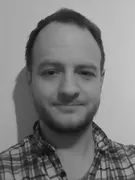
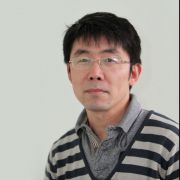
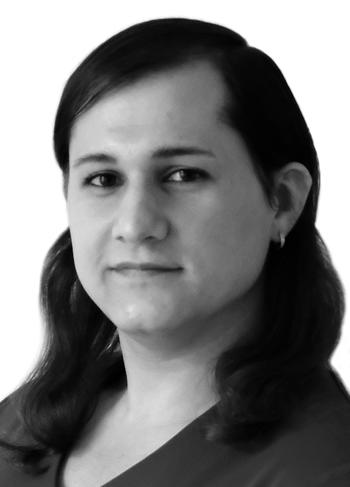
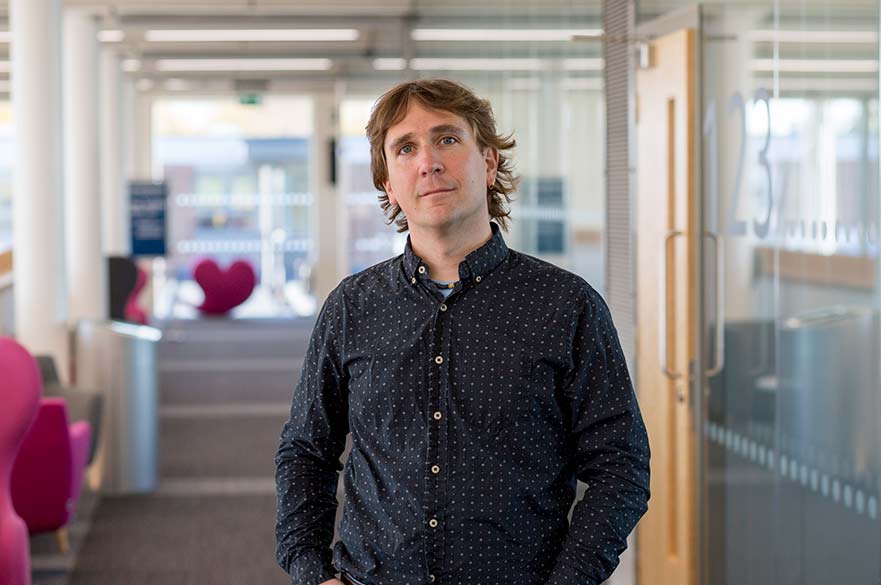
Dr. Ronald Pijnenburg is a Project Manager at the Faculty of Geosciences , Utrecht University , specializing in Structural Geology and Reservoir Geomechanics . He is affiliated with the European Plate Observing System - Netherlands (EPOS-NL) , a national research infrastructure involving Utrecht University, TU Delft, and KNMI, aimed at addressing geo-societal challenges such as geo-energy resource exploration , subsurface storage , and natural/induced earthquakes . University: Utrecht University Faculty: Geosciences Department: Earth Sciences Email: r.p.j.pijnenburg@uu.nl His research focuses on the mechanical behavior of sandstones in seismogenic reservoirs, particularly in the Groningen Gas Field , with emphasis on inelastic deformation , induced seismicity , and subsurface energy resource management . He has conducted experimental studies on grain-scale deformation mechanisms , clay film influence , and 4D X-ray tomography of reservoir rocks. His recent publications highlight multi-scale deformation analysis , synchrotron imaging , and compaction creep in sandstones . He contributes to European research infrastructure (EPOS) development and data transparency in solid earth science.
Michael Welch is a Senior Researcher at the Danish Offshore Technology Centre (Technical University of Denmark) specializing in Geology and Geophysics. His research focuses on fracture mechanics, fluid flow dynamics, and geomechanical modeling in subsurface environments. Research Interests: Welch investigates fracture propagation across material interfaces, subcritical crack growth, and fluid flow variations in fractured reservoirs. His work integrates seismic data analysis, discrete fracture networks (DFN), and phase-field modeling techniques. Key areas: Fracture network validation, geomechanical controls on chalk/marl reservoirs, mechanical failure risk assessment for CCS operations Methodologies: Linear Elastic Fracture Mechanics (LEFM), poroelastic modeling, photogrammetry hardware development Collaborations: Active in international projects related to North Sea geology, Netherlands diapir structures, and Danish Central Graben analysis.
Prof. Jiří Zahradník is a faculty member at Charles University in Prague , affiliated with the Faculty of Mathematics and Physics and the Department of Geophysics . He is based in Room A 1138 (1210) on the 11th floor of the Cathedral building at V Holešovičkách 747/2, Prague 8. His research focuses on geophysical phenomena, including seismology, wave propagation, and subsurface imaging. Contact: Phone 95155 2546 | Jiri.Zahradnik@mff.cuni.cz | Homepage
Václav Bucha is a research geophysicist at the Department of Geophysics, Faculty of Mathematics and Physics, Charles University in Prague. Since 1998, he has been contributing to seismic modeling, data processing, and computational geophysics. Education: 1985: Graduated from Faculty of Science, Charles University, Prague (Geophysics, equivalent to MSc) – diploma thesis on seismodynamic characteristics of the Kladno-Rakovnik basin. 1987: RNDr degree, Charles University, Prague (Geophysics). 1993: PhD, Czech Academy of Sciences – thesis on discrimination between earthquakes and explosion sources in North Western Bohemia. Research Interests: His work spans seismic modeling , including ray tracing and migration techniques, data processing for seismic exploration, and computer graphics for 3D visualization. He focuses on anisotropic wave propagation, particularly in triclinic and orthorhombic media, and develops computational tools for seismic imaging. Publications & Trends: His recent work (2012-2023) emphasizes Kirchhoff prestack depth migration in anisotropic models, advancing imaging techniques for complex subsurface structures. Earlier contributions include finite-difference modeling and source discrimination studies. Contact: bucha@seis.karlov.mff.cuni.cz | Office: (+420) 22191 1423 | Location: T 035, Troja Lecture Hall Building, Prague 8.
Lars Houpt is a Researcher at the Geophysical Institute (GPI) of the Karlsruhe Institute of Technology . He holds a doctorate in physics from the Free University of Berlin, with a focus on seismic monitoring of CO2 storage in depleted gas reservoirs. Prior to his current role, he spent eight years in the oil and gas industry. His research interests include: Processing and imaging of seismic data Finite-difference modeling of seismic waves Inversion of seismic waveforms Geothermal heat storage potentials in rift zones Key publication trends highlight his work on: Seismic monitoring for CO2 storage projects (e.g., CLEAN) Structural analysis of the Upper Rhine Graben Conductivity anomalies in European geological formations Integration of 3D-seismic and borehole data He contributes to teaching through: Geophysical field exercises (summer semester) Seismic Data Processing courses (summer semester) Lectures on Seismics (winter semester)
Johannes Großmann is a researcher at the Technical University of Munich associated with the Assistant Professorship of Geothermal Technologies . His work focuses on seismic interpretation, structural balancing, near-surface geophysics, and 3D geological modeling, particularly in Bavarian geological contexts. Education: M.Sc. and B.Sc. in Geosciences from Georg-August University Göttingen Professional History: 2016–present at Bavarian Environment Agency; 2013–2015 project geologist at Midland Valley Expl. Ltd. His research integrates geophysical data with geological modeling, addressing topics like neotectonics , maar volcano exploration , and geomechanical investigations . Publications span 3D modeling, geothermal resource assessment, and geophysical methods in landslide and volcanic structure analysis. Collaborative projects include Geothermal Alliance Bavaria and World Pressure Map , with contributions to basin analysis, heat reserve estimation, and legal compliance in subsurface modeling. No scientific awards or formal advising roles are documented in the provided text.
Dr. Przemysław Mroczek is an Associate Professor at the Department of Geomorphology and Paleogeography within the Faculty of Earth and Environmental Sciences at Maria Curie-Skłodowska University in Lublin, Poland. He serves as a member of the Scientific Council of the Institute of Earth and Environmental Sciences and holds leadership positions in multiple academic societies including the Lublin Scientific Society and the Lublin Branch of the Polish Geographical Society. His academic profile includes significant editorial responsibilities as an academic editor for PLOS ONE journal. Dr. Mroczek's research program centers on Quaternary paleogeography with particular emphasis on loess-palaeosol sequences. His methodological approach integrates microscopic techniques, laser diffraction analysis, and sediment chromaticity parameters to reconstruct past environmental conditions. His fieldwork spans across Poland and Ukraine, with special focus on the Dnieper River Valley region where he leads international collaborations. Beyond his core geological research, he explores interdisciplinary connections including the history of Lublin, astrotourism, e-learning applications in natural sciences, and intellectual property protection in academic settings. Analysis of Dr. Mroczek's publication record reveals a strong focus on Quaternary geology, particularly loess studies, paleoenvironmental reconstruction, and geoarchaeology. His work demonstrates sophisticated interdisciplinary integration of geological, archaeological, and climatological approaches to understand landscape evolution during the Pleistocene. Recent publications show methodological innovation in sediment analysis and expanding international collaboration, particularly with Ukrainian researchers studying the Dnieper River Valley region. Dr. Mroczek has earned recognition through various professional appointments: Academic editor for PLOS ONE journal Member of the Committee of Quaternary Paleogeography of the Polish Academy of Learning (2020-2024) Member of the European Geosciences Union (since 2006) Member of the Polish Quaternary Union POLQUA (since 2024) Coordinator of websites for the Institute of Earth and Environmental Sciences As an educator, Dr. Mroczek supervises multiple students working on engineering theses related to military geography and crisis management. His teaching portfolio includes diverse courses on topography, geographical systems, modern measurement techniques, and intellectual property protection. He maintains an active research laboratory that combines field investigations with advanced analytical techniques to study Quaternary sediments and their environmental significance.
Dominique J.M. Ngan-Tillard serves as Associate Professor of Engineering Geology within the Department of Geo-engineering at Delft University of Technology's Faculty of Civil Engineering & Geosciences. With expertise spanning subsurface modeling and non-destructive testing techniques, Dr. Ngan-Tillard has established a distinctive research profile that bridges engineering geology with cultural heritage applications. Dr. Ngan-Tillard specializes in modeling the subsurface in terms of structure and material properties, with particular focus on conceptual modeling of soil microstructures supported by multi-scale, multi-physics data fusion. Their fingerprint reveals strong connections to Netherlands geology, soils, clays, computed tomography, and X-radiation research areas, reflecting their technical expertise in subsurface characterization. Analysis of their recent publications shows a clear trend toward interdisciplinary research that applies engineering geology techniques to archaeological and cultural heritage contexts. Their work increasingly combines advanced imaging technologies like computed tomography with traditional geotechnical approaches to solve problems in both civil engineering and heritage conservation fields. European Heritage Award for Scanning for Syria project Dr. Ngan-Tillard maintains an active research program with significant contributions to both academic and practical applications. Their work with the Centre for Digital Heritage demonstrates commitment to preserving cultural artifacts through advanced imaging techniques, while their participation in geoscience conferences shows continued engagement with core engineering geology communities. The supervised work listed indicates mentorship activities, though specific students are not named in the available information. Through projects like the Scanning for Syria initiative and research on archaeological materials from South Africa to the Netherlands, Dr. Ngan-Tillard has built collaborative networks that span engineering, archaeology, and cultural heritage preservation, operating at the intersection of multiple scientific disciplines.
Lingzhong Guo is a Lecturer in the Department of Automatic Control and Systems Engineering at the University of Sheffield , affiliated with the Insigneo Institute for in silico Medicine and Neuroscience Institute . His research bridges signal processing, nonlinear systems identification, and biomedical applications. PhD from Bristol Robotics Laboratory (UWE Bristol) Specializes in spatio-temporal system identification, PDE control, and machine learning for medical imaging Recent work focuses on deep learning applications for muscle segmentation in MR images and EIS analysis for oral disorder detection. Collaborations with Zilico Ltd. and participation in Horizon2020 projects highlight his translational research. Scientific Recognition SANO Centre grant (H2020, £2.5M) for computational diagnostics SPINe: Numerical and Experimental Repair strategies (H2020 European program, €1.58M) Innovate UK KTP for EIS-based medical diagnosis (£190K) His publications span nonlinear dynamics , multiscale modeling , and biomedical signal processing , with methodological contributions to Volterra series and coupled PDE-ODE systems.
Dr. Takeshi Kurotori is a Research Associate in the Department of Chemical Engineering within the Faculty of Engineering at Imperial College London. Based at the South Kensington Campus, his research utilizes advanced imaging techniques to study subsurface processes critical for energy sustainability and carbon management. Research Focus: Dr. Kurotori specializes in experimental and computational methods for analyzing fluid transport in complex geological systems. His research integrates: Multiphase flow dynamics in fractured porous media Geological carbon sequestration mechanisms Reactive transport modeling in shale formations Advanced tomography (X-ray CT/PET) for subsurface characterization Machine learning applications for reservoir property inversion Publication Trends: His recent work (2020-2025) demonstrates consistent focus on pore-scale to field-scale modeling of subsurface processes. Dominant themes include fracture-matrix interactions in shale caprocks, imbibition dynamics, permeability heterogeneity quantification, and chemo-mechanical coupling in geological formations. Over 75% of publications leverage tomographic imaging for experimental validation. Affiliations: As part of Imperial College's Chemical Engineering department, Dr. Kurotori collaborates extensively with subsurface engineering researchers. His work contributes to Imperial's initiatives in sustainable energy solutions and subsurface resource management.
Kisa Edson Mwakanyamale-Gilkie is an Associate Research Scientist at the Illinois State Geological Survey , focusing on geophysics and environmental science. Key research areas include groundwater-surface water interactions, sediment mapping, and coastal dynamics. Research Interests His work spans geophysical methods (electrical resistivity, distributed temperature sensing) to study: Lake Michigan shoreline sediment thickness Volcanic layering and porosity Glacial sediment distribution Methane dynamics in peatlands Non-invasive agricultural monitoring Recent Publications Recent studies highlight applications of TEM/ERT for coastal sediment analysis (2020), fiber-optic sensors for groundwater mapping (2013), and interdisciplinary collaborations across 17 outputs. Geographical Collaborations Active in Illinois and Hanford (Washington) with international partnerships in environmental geophysics.
Willi Freeden is a Professor affiliated with the Mathematics Department at the University of Kaiserslautern . He specializes in Mathematical Geodesy , Inverse Problems , and Potential Theory with applications in Gravimetry , Magnetometry , and Geothermal Exploration . 1970s-1980s: Mathematics and Geography studies at RWTH Aachen, habilitation in 1980 1980s: Visiting Professor at Ohio State University Since 1994: Leads the Geomathematics Group at University of Kaiserslautern Research Focus : Geomathematics as a key technology for geothermal energy and earth resource exploration . His work bridges geodetic measurements with mathematical modeling using spherical harmonics , wavelets , and mollifier methods . Scientific Awards : No specific awards mentioned in the provided text.
Donna Caraway Willette is a Principal Research Scientist in Geochemistry at the Illinois State Geological Survey, affiliated with the Prairie Research Institute (University of Illinois). Her work focuses on reservoir rock characterization, thermal maturity assessment, and organic geochemistry within Paleozoic basins, particularly the Illinois Basin. Geochemical analysis of organic-rich shales (New Albany, Maquoketa) Development of maturity proxies and TOC estimation techniques Investigations into gas generation kinetics and fluid-rock interactions She has contributed to 17 research outputs including peer-reviewed articles and conference proceedings. Her work often involves high-resolution imaging of pore spaces and sealing capacity analysis for carbon storage projects. As a PRI Fellow, she has received recognition for her scientific contributions. Her recent publications (2015-2025) demonstrate expertise in shale gas plays, thermal maturity indicators, and energy storage systems. Keywords across her work include geochemical characterization, organic matter maturation, and basin evolution studies. Scientific Awards: PRI Fellow
Alicia Neesemann serves as a Scientific Staff Member within the Planetary Sciences and Remote Sensing working group at Freie Universität Berlin's Institute of Geological Sciences. Her research focuses on high-precision imaging and coregistration techniques applied to planetary surfaces, particularly through involvement in NASA's Dawn mission to Ceres and Mars exploration projects. Her research interests center on planetary geology with specialization in impact crater analysis, topographic mapping of dwarf planets, and remote sensing of surface processes. Key areas include cryovolcanism on Ceres, Martian aeolian features, and the geological evolution of airless bodies. Her work integrates stereo photogrammetry, crater counting chronology, and compositional analysis to unravel planetary histories. Neesemann's publication record since 2017 demonstrates consistent contributions to major planetary science journals including Geophysical Research Letters , Icarus , and Nature . Her research shows a pronounced focus on Ceres' geological features - particularly Occator crater's faculae formation mechanisms, crater chronology, and volatile-driven surface processes. Recent work extends to ExoMars landing site characterization and high-precision topographic mapping for Mars 2020 mission support. No scientific awards or major honors are documented in the available materials. Her collaborative research involves extensive work with international teams including Dawn mission scientists and planetary geologic mappers. Neesemann maintains active participation in planetary mapping initiatives and contributes to ongoing analysis of Ceres and Mars datasets. Her laboratory work involves advanced digital terrain modeling and stereo imaging processing within the Planetary Sciences and Remote Sensing group at FU Berlin.
Lucas Goehring is a Professor in the Physics and Maths department at Nottingham Trent University (NTU), where he leads an experimental research group studying pattern formation and complex fluids. His work spans fundamental physics of mechanical instabilities to interdisciplinary applications in geophysics and biophysics. He teaches condensed matter physics, forensic image processing, and first-year physics labs, with prior teaching experience in environmental physics, non-linear dynamics, and soft matter physics. Goehring's educational background includes a PhD from the University of Toronto on columnar joints (e.g., Giant's Causeway), followed by postdoctoral research at the University of Cambridge studying colloidal drying and cracking. He later habilitated while teaching at the University of Göttingen during his tenure as a research group leader at the Max Planck Institute for Dynamics and Self-Organisation. His research centers on complex fluids and solids – multi-phase materials where microscopic structure determines macroscopic properties. Key themes include: Mechanical instabilities (fractures, wrinkling, buckling) Geophysical pattern formation (salt polygons, columnar joints, mud cracks) Colloidal dispersion dynamics (drying paint, biogenic systems) Cross-scale physics connecting nano/micro to macro behavior This work addresses fundamental questions about structural emergence in nature, applying solid mechanics and complex systems theory to diverse phenomena from reptile scales to Martian permafrost. Analysis of his 15 most recent publications reveals dominant trends in porous media convection (salt lakes, dry soils), biophysical pattern formation (cyanobacteria mats), and colloidal drying mechanics . These span interdisciplinary fields including geophysics, soft matter physics, and active matter, with consistent focus on experimental validation through microfluidics and advanced imaging techniques. Goehring actively supervises PhD students including P.S. Atkinson (2024) and M. Emerse (2023), with research opportunities available in MPhil/PhD programs at NTU. His major international collaborations include Bernard Cabane (ESPCI ParisTech), Ran Holtzman (Hebrew University), Eleni Katifori (University of Pennsylvania), and Max Planck Institute researchers in biophysics. He maintains an affiliated position at the Max Planck Institute for Dynamics and Self-Organisation and serves on the editorial board of Proceedings of the Royal Society A , while leading an experimental lab focused on pattern formation in complex materials.