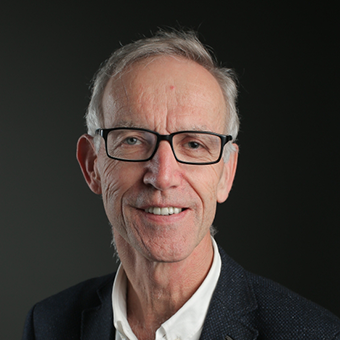
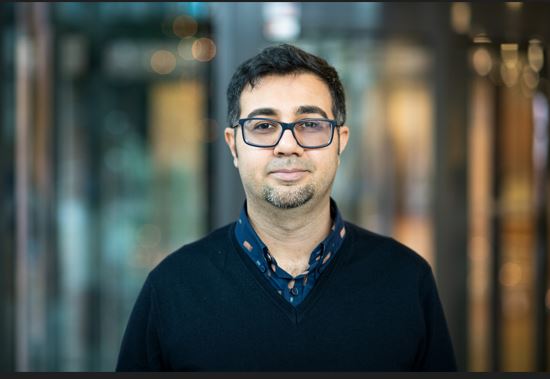
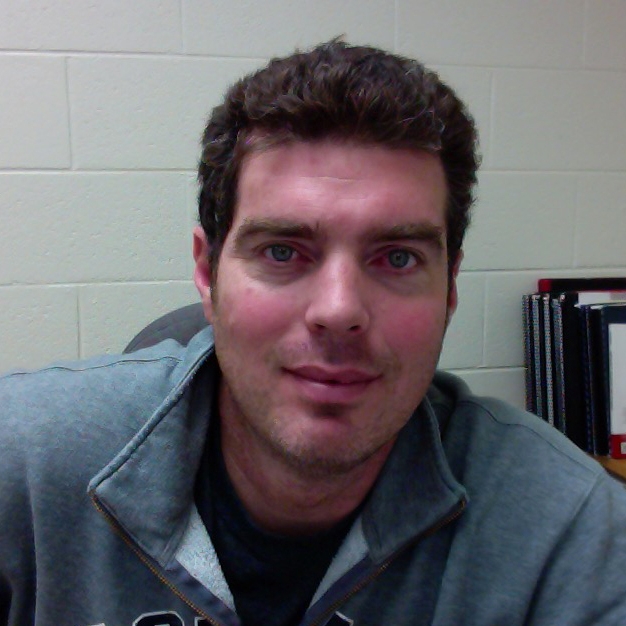
Dr. Nicolas Francois is an Associate Professor in the Department of Materials Physics at Australian National University (ANU), specializing in experimental geomaterials physics, soft matter, and fluid hydrodynamics. He leads the X-ray Tomography and Applications Research Group, combining curiosity-driven and applied research in out-of-equilibrium systems. ARC Industry Fellow (2024-2030): Improving Australian iron ore comminution for green steel production ARC DECRA Fellow (2016-2018): Biofilms in two-dimensional turbulent flows His research spans fundamental questions in: Fragmentation of solid materials Autonomous devices powered by chaotic flows Hydrodynamic waves Stochastic thermodynamics Granular matter Polymer rheology and applied areas in: Comminution of geomaterials Mechanics of fractured rocks Wave-energy conversion Environmental fluid mechanics Publications reveal a trajectory focused on X-ray tomography applications, granular dynamics, and turbulence-driven systems. He utilizes advanced imaging techniques to study material failure mechanisms and fluid-structure interactions, contributing to fields ranging from green steel production to biofilm dynamics. Current student projects and grants emphasize sustainable resource processing and fundamental fluid physics.
Prof. Bernd Domer is an Associate Professor at the Geneva School of Landscape, Engineering and Architecture (HES-SO) specializing in Building Information Modeling (BIM) , Geographic Information Systems (GIS) , and digital transformation of civil engineering . He leads multiple ongoing research projects including CU_OFROU_PAB (CHF278,844) focused on BIM-GIS workflows for noise barriers, and SousEtoile (CHF50,000) developing subsurface prediction models for urban planning. His work addresses critical challenges in software interoperability and point cloud processing for infrastructure digital twins. BA HES-SO in Architecture (HEPIA) BSc Civil Engineering (EPFL) BSc HES-SO in Civil Engineering (HEPIA) MSc HES-SO in Engineering (HES-SO Master) His research explores digital workflows for infrastructure projects, with over 15 recent publications examining topics like: Semantic segmentation of point clouds (2024) IFC standard optimization (2023) Underground confidence level modeling (2021) Swiss BIM implementation frameworks (2020) Construction waste management platforms (2018) He serves as Head of the MIC Group and co-directs the CAS in BIM Coordination . Active in international committees like EG-ICE and Bauen digital Schweiz , his work bridges academic research with practical implementation through collaborations with HEPIA , HEIG-VD , and institutions like the Swiss Federal Roads Office (OFROU) .
Joel Johnson is a Professor in the Department of Earth Sciences at the University of New Hampshire. He teaches courses in Earth History, Structural Geology, Sedimentology, Geotectonics, Geological Oceanography, and research-focused classes. With a Ph.D. in Geological Oceanography from Oregon State University and an M.S. in Structural Geology & Tectonics from the University of Illinois at Urbana-Champaign, his research spans gas hydrate systems, sedimentology, and methane cycling in marine environments. Ph.D., Geological Oceanography, Oregon State University M.S., Structural Geology & Tectonics, University of Illinois at Urbana-Champaign B.S., Geology, University of Minnesota Duluth His work examines gas hydrate dynamics in settings like Hydrate Ridge (Cascadia margin) and Svyatogor Ridge (Fram Strait), focusing on crustal processes , fluid flow mechanisms , and authigenic carbonate formation . Studies in the Gulf of Mexico and Indian continental margins analyze hydrate accumulation controls, while Arctic lake research explores methane emission temperature sensitivity and microbial influences . Collaborative projects include 3D seismic analysis , tectonic stress modeling , and monsoon-driven sedimentation in the Bay of Bengal and Andaman Sea. Recent publications highlight earthquake-enhanced carbon cycling in deep sediments (2023), primary deposition controls on gas hydrate reservoirs (2022), and crustal-scale methane systems in Arctic regions (2022). His 15 most recent articles span 2023-2014, emphasizing gas hydrate systems , methane seepage , sedimentary diagenesis , and tectonic influences on fluid flow. Subfields include authigenic carbonate formation , 3D seismic imaging , isotopic geochemistry , and late Quaternary climate reconstructions . Contact: Joel.Johnson@unh.edu
Peter K. Kang serves as Associate Professor & Gibson Chair of Hydrogeology in the Department of Earth & Environmental Sciences at the University of Minnesota. His research is affiliated with the St. Anthony Falls Laboratory and the Kang Research Group. Dr. Kang's research focuses on the physics of flow and reactive transport in porous and fractured media. His work combines theory, high-performance numerical simulations, machine learning, and visual laboratory experiments to understand how coupled processes control mixing and reactive transport across spatial scales (from pore to field scale). His research has applications in groundwater management, subsurface energy systems, and environmental protection. Current research opportunities include undergraduate projects in microfluidics laboratory experiments to visualize groundwater processes and fieldwork to characterize fractured aquifers. Dr. Kang is actively accepting both undergraduate and graduate research students into his research group. His methodological approach integrates multiple disciplines, with particular emphasis on developing predictive models for practical environmental applications through the innovative combination of computational methods and experimental validation.
Catherine Neish is an Associate Professor in the Department of Earth Sciences at The University of Western Ontario. She serves as the Associate Director of Research for Western Space and is a Co-Investigator on NASA's Dragonfly mission to Titan. Her research focuses on planetary radar observations, impact cratering processes, and the geological evolution of planetary surfaces, particularly on the Moon, Titan, and other Solar System bodies. Ph.D. in Planetary Sciences, University of Arizona (2008) B.Sc. in Combined Honours Physics and Astronomy, University of British Columbia (2004) Her recent publications highlight studies on lunar impact crater thermophysics, Titan's impact melt dynamics, and radar-based analyses of planetary surfaces. She has contributed to missions including Lunar Reconnaissance Orbiter (Mini-RF), Cassini RADAR, and Dragonfly. Scientific Awards: College of New Scholars, Royal Society of Canada (2021) Early Researcher Award, Ontario (2017) Minor Planet 16972 Neish (2017) AGU Ron Greeley Award (2014) NASA Postdoctoral Fellowship (2012) NASA Group Achievement Award (2010) NSERC Postgraduate Scholarship (2005-2008) Julie Payette-NSERC Research Scholarship (2004-2005) Dr. Neish supervises a dynamic lab with current and former students investigating planetary geology, impact cratering, and remote sensing. Her work bridges field studies (e.g., Earth analogs), laboratory experiments, and spacecraft data analysis.
Davin Wallace is an Associate Professor at the University of Southern Mississippi's School of Ocean Science and Engineering, where he investigates coastal and marine system responses to storms, sea-level rise, and sediment dynamics across timescales ranging from days to millennia. His research employs field observations, laboratory analyses, and numerical modeling, with active sites across the Gulf of Mexico, Bermuda, and the Philippines. Education: Ph.D. in Earth Science, Rice University (2007-2010) B.S. in Geology and German, Tulane University (2003-2006) Research Focus: Dr. Wallace's work bridges paleotempestology, coastal geomorphology, and sedimentary processes. His research examines hurricane impacts on sediment structures, barrier island resilience under sea-level rise, and Holocene coastal evolution. He specializes in reconstructing historical storm patterns using geologic proxies and assessing anthropogenic influences on coastal erosion. Publication Trends: His recent articles demonstrate interdisciplinary approaches to coastal vulnerability, combining geophysical data, machine learning, and multiproxy sediment analysis. Work consistently addresses climate change impacts, with emphasis on sedimentation mechanisms during extreme events and Quaternary landscape evolution. Scientific Recognition: No major awards documented in provided sources. Academic Leadership: Leads the USM Coastal Evolution and Hazards Research Lab, supervising field campaigns and collaborative projects. Secured grants for Gulf Coast studies from NSF and NOAA. Mentors graduate students in geological oceanography programs and coordinates international research teams across field sites.
Professor Gary Hampson is a Professor of Sedimentary Geology at the Department of Earth Science & Engineering, Faculty of Engineering, Imperial College London. His roles include Director of Undergraduate Studies (2023–present) and former Director of the Petroleum Geoscience MSc course. He holds affiliations with the Energy Futures Lab, Grantham Institute, and NORMS research groups. Hampson's research focuses on depositional systems, stratigraphy, and subsurface reservoir characterization, with applications to CO2 storage and fluid flow dynamics. Education: PhD in Sedimentology and Sequence Stratigraphy, University of Liverpool (1991–1995) BA in Natural Sciences (Geology), University of Cambridge (1988–1991) Research Interests: His work integrates sedimentology, stratigraphy, and reservoir modeling to understand subsurface fluid dynamics. Key areas include sediment dispersal patterns, stratigraphic architecture, and the impact of heterogeneity on reservoir performance. Recent studies emphasize CO2 storage potential in sedimentary systems and the application of advanced modeling techniques. Articles Trends: Recent publications highlight CO2 storage mechanisms, sedimentological heterogeneity in reservoirs, and the use of machine learning in geological analysis. His work bridges theoretical stratigraphy with applied reservoir engineering, particularly in carbonates and fluvio-deltaic systems. Awards: 2020 IAMG Best Paper Award 2016 AAPG Bennison Lecturer 2010 SEPM Excellence Awards Advising & Grants: Hampson has advised numerous students and led projects on reservoir characterization. His editorial roles include co-chief editor of the Journal of Sedimentary Research and guest editorships in Petroleum Geoscience. Labs/Teams: Active in the Energy Futures Lab and NORMS initiative, focusing on novel reservoir modeling and simulation for subsurface energy systems.
Keith D. Paulsen is the MacLean Professor of Engineering at Dartmouth College’s Thayer School of Engineering and holds the title of Professor of Radiology & Surgery at the Geisel School of Medicine. He serves as Scientific Director of the Center for Surgical Innovation at Dartmouth-Hitchcock Medical Center and Co-Director of the Translational Engineering in Cancer Research Program at the Norris Cotton Cancer Center. His roles emphasize interdisciplinary collaboration between engineering, medicine, and oncology. Paulsen earned a BSc in Biomedical Engineering from Duke University (1981), followed by MS (1984) and PhD (1986) degrees in Engineering Sciences from Dartmouth College. His research focuses on biomedical imaging, cancer therapeutics, and image-guided surgery, with particular expertise in optical and electromagnetic methodologies. He has pioneered technologies such as fluorescence-guided surgery, quantitative scatter imaging, and non-linear image reconstruction techniques, aiming to enhance surgical precision and cancer diagnosis. His awards include fellowships from OSA, SPIE, AIMBE, IEEE, and the National Academy of Inventors. Paulsen’s work has led to startups like CairnSurgical (where he serves as CTO) and InSight Surgical Technologies, translating research into clinical tools. Key projects include intraoperative imaging systems for brain and spine surgery, microwave imaging for breast cancer, and optical molecular imaging for real-time surgical guidance. Paulsen teaches advanced computational methods (ENGS 205, 105) and courses on medical device innovation (ENGM 189.1/2). His lab, part of Dartmouth’s Optics in Medicine cluster, collaborates with radiology, surgery, and oncology departments to develop clinical technologies funded by NIH, NCI, and DoD grants.
Professor Brett Harris is a faculty member at Curtin University, affiliated with the School of Earth and Planetary Sciences (EPS) within the Faculty of Science and Engineering. He holds a prominent role in the Office of the Provost. His research focuses on subsurface resource technologies, including mineral exploration, CO2 sequestration, and geothermal energy. He has led major initiatives like the DET CRC and MinEx CRC projects, advancing in-hole electromagnetic sensing and distributed acoustic sensing techniques. His expertise spans hydrogeology, geophysics, and environmental geoscience, with notable contributions to aquifer characterization, fault zone dynamics, and CO2 storage monitoring. He coordinates undergraduate courses in electromagnetism, potential fields, and environmental geophysics, while supervising multiple PhD students. Key collaborations include work with government agencies on fractured aquifer detection and geothermal systems. Recent research emphasizes innovative sensor technologies for subsurface imaging, CO2 leakage monitoring, and groundwater sustainability. His work bridges geophysics with applied engineering solutions for resource exploration and environmental stewardship.
John Dolbow is a Professor in the Thomas Lord Department of Mechanical Engineering and Materials Science at Duke University, with secondary appointments in Civil and Environmental Engineering and Mathematics. He is a Bass Fellow and holds leadership roles as Associate Vice President for Research & Innovation since 2024. Education: B.S.M.E. (University of New Hampshire, 1995), M.S. (Northwestern, 1998), Ph.D. (Northwestern, 1999) Research Focus: Computational fracture mechanics, phase-field modeling, hydrogels, and multiphysics problems in geomechanics and biomedical engineering His recent work advances phase-field methods for fracture nucleation, hydraulic fracturing in geothermal systems, and laser lithotripsy simulations. Dolbow leads Duke's Computational Mechanics Laboratory, integrating civil, mechanical, and materials science approaches. Key contributions include: Erratum corrections for computational mechanics frameworks Nitsche-stabilized methods for interface constraints Phase-field models for surfactant-driven particle raft fracture Multi-resolution approaches for hydraulic fracture simulation Embedded FEM techniques for moving boundary problems Scientific Recognition: R. H. Gallagher Young Investigator Award (2005) Robert J. Melosh Medal for Finite Element Analysis (1999) DOE Computational Science Graduate Fellowship (1997) DOE CSGF Steering Committee Chair
Scientia Professor David Waite is a leading academic at the University of New South Wales (UNSW) , affiliated with the School of Civil and Environmental Engineering . He serves as Executive Director and CEO of the UNSW Centre for Transformational Environmental Technologies (CTET) and leads the Biogeochemical Engineering, Management and Systems (BioGEMS) research group . With over 15 PhD students and 10 research fellows in his lab, he has supervised 37 PhD graduates. His research spans water quality engineering , environmental nanotechnology , and metal redox chemistry in aquatic systems , focusing on sustainable solutions for water treatment, contaminant degradation, and biogeochemical relationships. His work includes advanced oxidation processes , membrane technologies , and reactive oxygen species dynamics . Scientific awards include the Royal Australian Chemical Institute Environment Medal , Scientia Professorship , and multiple international visiting scholar recognitions. He has secured significant grants, including $720,000 from ARC Linkage and $360,000 from ARC Discovery programs. Professional affiliations encompass Fellowships in Royal Society of Chemistry and US National Academy of Engineering membership .
Christine Stumpp is a Professor at the Institute of Soil Physics and Rural Water Management , affiliated with the University of Natural Resources and Life Sciences Vienna (BOKU) . Her work integrates hydrology , soil physics , and stable isotope analysis to address critical issues in groundwater recharge , climate change impacts on water systems , and microplastic transport in soils .
Dr. Pouyan Ahmadi is a Researcher in the Department of Hydrogeology at the Helmholtz Centre for Environmental Research - UFZ, focusing on computational fluid dynamics (CFD), microplastic transport, and multiphase flow in porous media. He holds a PhD in Hydrogeology (2023) and M.Sc. in Reservoir Engineering (2017) from institutions including UFZ and Shiraz University. His research addresses environmental challenges such as microplastic distribution in lakes and the hyporheic zone, supported by projects like the TRACER PhD college and Helmholtz International Research School. Education: 2024–current: Researcher, UFZ Hydrogeology 2019–2023: PhD in Hydrogeology, UFZ & University of Bayreuth 2017–2018: Reservoir Engineer, Shiraz University 2014–2017: M.Sc., Reservoir Engineering, Shiraz University Research interests span CFD modeling, microplastic fate, and rock-fluid interactions. His work contributes to initiatives like the Sonderforschungsbereich 1357 on microplastics, emphasizing interdisciplinary approaches to environmental sustainability.
Ryan M. Pollyea is an Associate Professor in the Department of Geosciences at Virginia Tech’s College of Science. His research focuses on geofluids, energy resources, and geologic CO2 sequestration, with expertise in numerical modeling of fluid flow in porous media and geospatial analysis. He leads the VT Hydrogeosciences Lab, investigating processes like CO2 sequestration in basalt reservoirs and fluid-induced seismicity linked to wastewater injection. Education: Ph.D., University of Idaho (2012); B.S., University of Dayton (1999). His team includes PhD student Wu Hao and MS student Gradyon Konzen, studying topics like capillary pressure uncertainty and hydraulic effects of wastewater injection. Research interests span coupled thermal-hydro-chemical-mechanical modeling, fracture network characterization via LiDAR, and reservoir-scale permeability changes. He emphasizes applying computational methods to address energy and environmental challenges, with a focus on carbon storage and induced seismicity mitigation. Teaching includes courses like Groundwater Hydrology, Reactive Transport Modeling, and Engineering Geology. His work integrates high-performance computing and machine learning to analyze large datasets, exemplified by collaborations on exascale simulation frameworks and semantic interaction tools for ensemble analysis. Current projects include the Virginia SWIFT initiative, assessing aquifer recharge risks, and evaluating carbon storage potential in basaltic formations. His lab’s research underscores the interplay between subsurface fluid dynamics and geological processes, with applications to sustainable energy and environmental management.
Dr. Lateef Akanji is a Senior Lecturer in the Department of Petroleum Engineering at the School of Engineering, University of Aberdeen, where he has been contributing since 2014. He previously served as Lecturer and Head of the Petroleum Technology Research Group at the University of Salford, Assistant Professor at King Saud University, and Visiting Lecturer at the University of Leoben. His academic journey includes a PhD from Imperial College London and degrees from the University of Ibadan. University: University of Aberdeen School: School of Engineering Position: Senior Lecturer, Petroleum Engineering Email: l.akanji@abdn.ac.uk Education: PhD, Petroleum Engineering, Imperial College London M.Sc., Petroleum Engineering, University of Ibadan B.Sc. (Honours), Petroleum Engineering, University of Ibadan DIC (Diploma of Imperial College) Research Interests: Dr. Akanji's research centers on multiphase flow in porous and permeable media, with applications in enhanced oil recovery (EOR) in clastic, carbonate, and unconventional shale reservoirs. His work integrates theoretical, experimental, and computational fluid dynamics, utilizing platforms like Python, C++, and Fortran. He is pioneering the application of artificial intelligence in petroleum engineering, particularly in EOR screening and production optimization. His research includes pore-scale modeling, gas-lift systems, and nuclear reactor flow dynamics. Publication Trends: His recent publications (2025–2021) reflect a strong focus on fluid displacement in porous media, shale reservoir characterization, AI applications in energy, and nuclear safety. Notable themes include computational modeling of multiphase flow, biosurfactant EOR, and advanced numerical methods for reservoir simulation. Scientific Awards and Honors: Fellow of the Higher Education Academy (FHEA) Chartered Engineer (CEng) Chartered Petroleum Engineer European Engineer (Eur Ing) Member of the Energy Institute (MEI) Advising and Grants: Dr. Akanji supervises numerous PhD students in areas such as AI-based production optimization, permeability upscaling, and biosurfactant EOR. He leads research funded by PTDF, TETFUND, Sonangol, and Elphinstone, focusing on high-pressure high-temperature flow loops, gas-lift pilot rigs, and neuro-fuzzy screening systems. His collaborative projects involve institutions in the UK, Austria, and Australia. Laboratories and Research Platforms: He contributes to the development of the Complex System Modelling Platform (CSMP++), a C++-based API for simulating multi-physics flow in porous systems, co-developed with ETH Zurich and Montanuniversität Leoben. He also leads a technology innovation platform for EOR, including experimental rigs for biosurfactant screening and gas-lift stability testing.