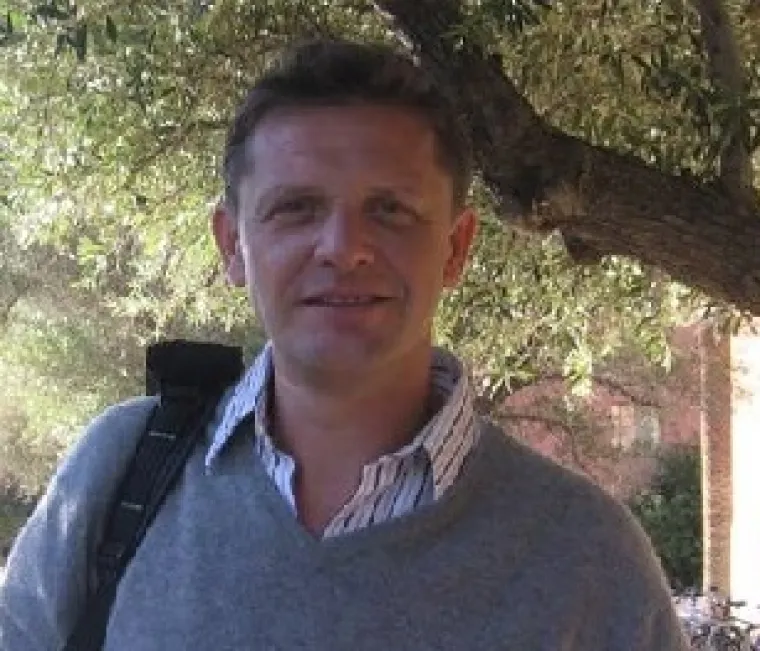
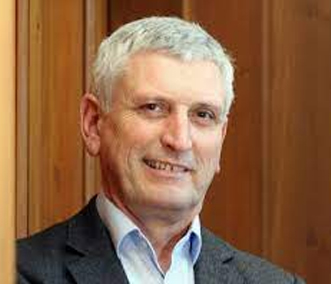
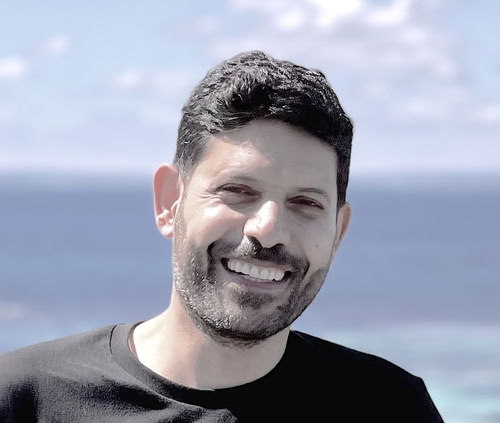
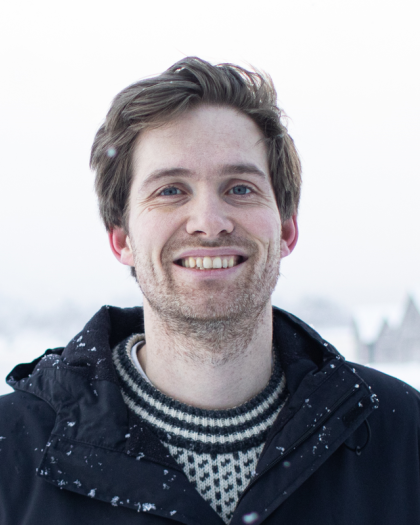
Dr. Sanghyun Lee is an Associate Professor of Mathematics specializing in computational methods for multi-physics problems in porous media. His research develops mathematical frameworks for coupled thermo-hydro-mechanical-chemical processes. Core research areas include: Phase-field fracture propagation in complex media Enriched Galerkin methods with local conservation properties Data assimilation for subsurface flow systems Recent publications present novel techniques for fracture modeling in porous media and thermo-poroelasticity simulations. Applications span energy resource recovery, geological storage, and environmental engineering. The research integrates high-performance computing with finite element methods to model multi-scale phenomena. Dr. Lee develops open-source simulation tools for scientific and industrial applications.
Peter A. Troch is Professor and Head of the Department of Hydrology and Atmospheric Sciences at the University of Arizona, holding the Agnese Nelms Haury Endowed Chair in Environment. He serves as Science Director of Biosphere 2. Research focuses on catchment hydrology, hillslope processes, and landscape evolution. Primary investigations develop experimental and modeling approaches to understand water partitioning, biogeochemical cycling, and landscape development. Current projects examine isotope tracers in hillslope systems, soil microbial dynamics, and weathering processes in model landscapes. Leadership roles include directing the Landscape Evolution Observatory at Biosphere 2, a large-scale experimental facility for studying ecohydrological processes. Research integrates field observations, controlled experiments, and numerical modeling across scales. Recent publications advance understanding of hydrologic transport processes, soil microbial responses to landscape changes, and carbon sequestration through weathering. Work consistently bridges hydrological theory with landscape evolution dynamics.
Dr. Lijie Zhang is an Assistant Professor in the Department of Chemistry and Environmental Science at New Jersey Institute of Technology (NJIT). Their research focuses on interfacial processes controlling the fate and transformation of environmental pollutants and resources in natural and engineered systems. Dr. Zhang leads the NJIT Environmental Biogeochemistry and Engineering (EBE) Lab, which investigates topics such as mercury methylation, contaminant adsorption, and geochemical processes in subsurface systems. Educational Background: Ph.D. in Energy, Environmental & Chemical Engineering from Washington University in St. Louis (2018) B.S. in Environmental Science and Engineering from Tsinghua University (2012) Research Interests: Environmental geochemistry of mercury and other heavy metals Biogeochemical transformations in aquatic and soil systems Advanced materials for contaminant remediation Machine learning applications in environmental monitoring Subsurface engineering for CO₂ and hydrogen storage Key Contributions: Developed novel methods to characterize mercury methylation by methanotrophs Investigated phosphonate- and phosphate-driven mineral dissolution under subsurface conditions Pioneered electric-magnetic-responsive hydrogels for forward osmosis Advanced understanding of biogeochemical drivers in Arctic wetland soils Honors & Awards: 2020 Outstanding Post-Graduate Researcher Award (Oak Ridge National Lab) 2018 Doctoral Student Research Award (Washington University) 2018 Student Travel Award (American Chemical Society) Lab & Collaborations: Directs the NJIT EBE Lab (https://sites.google.com/view/njitebp) Active in Arctic fieldwork and geochemical modeling collaborations Focuses on bridging molecular-scale mechanisms with field-scale environmental engineering solutions
Johannes Pistrol is an Assistant Professor at TU Wien's Department of Geotechnical Engineering, Soil and Rock Mechanics, within the School of Civil Engineering. His research focuses on geotechnical engineering applications in infrastructure, including soil dynamics, compaction technology, railway construction, and geothermal energy integration. He has contributed to projects involving long-term monitoring of geothermal systems in urban infrastructure, vibratory roller compaction mechanics, and dynamic track stabilization. Key areas of expertise include the optimization of construction equipment for soil compaction, thermal energy utilization in civil structures, and sustainable infrastructure development. His work frequently addresses practical challenges in railway engineering and urban geothermal systems, such as the Taborstrasse metro station project in Vienna. He has supervised multiple theses on topics like ballast condition determination and plate compactor motion analysis. Publications highlight advancements in machine-ballast interaction analysis, vibratory roller vibration control, and the integration of geothermal energy into infrastructure. His research bridges theoretical geomechanics with applied construction technologies, emphasizing long-term performance and sustainability.
Dr. Umer Saleem is a Lecturer in the Department of Mechanical and Aerospace Engineering at the University of Strathclyde. He holds a PhD in Mechanical Engineering from Heriot-Watt University (Edinburgh, UK), with additional degrees in Mechanical Engineering. His postdoctoral research focused on computational fluid dynamics (CFD) and carbon capture and storage (CCS), contributing to the EU-funded STEMM-CCS project. He teaches Thermodynamics, Fluid Mechanics, and related subjects, and is a Fellow of the Higher Education Academy (FHEA). His research emphasizes numerical modeling of CO2 dispersion in marine sediments, CFD, and renewable energy systems like concentrated solar power and steam turbines. Key affiliations include the American Society of Mechanical Engineers (ASME) and the Institution of Mechanical Engineers (IMechE). He has published widely in journals such as Renewable and Sustainable Energy Reviews and International Journal of Greenhouse Gas Control , with notable work on CO2 leakage detection and sub-seafloor storage integrity. Awards include Chartered Engineer status from IMechE and a Registered Engineer credential from PEC.
Dr. Paul Gerard Tuohy is a Lecturer in Mechanical and Aerospace Engineering at the University of Strathclyde, specializing in energy systems and low-carbon technologies. He holds a PhD in Strategies for Low Carbon Buildings (2013), an MSc in Energy Systems and the Environment (2004), and an MSc in Microelectronic Systems (1986). His research focuses on renewable energy integration, energy storage, building performance optimization, and passive house standards. He has contributed to projects such as the GigaWattHour Subsurface Thermal Energy Storage (STEaM) initiative and the East Ayrshire National Energy Research Demonstrator (NERD). PhD: University of Strathclyde (2013) MSc Energy Systems & Environment: University of Strathclyde (2004) MSc Microelectronic Systems: University of Edinburgh (1986) Research areas include occupant behavior impacts on energy use, district heating systems, and model predictive control of solar thermal systems. He has collaborated on thermal energy storage in mine shafts and grid balancing solutions. Current roles include co-investigator on projects like Innovatium and the Louisville Climate Action Plan.
Professor Hywel Thomas is a Distinguished Research Professor in the School of Engineering at Swansea University, specializing in Geo-Energy and Geo-environmental Engineering. His research focuses on coupled processes such as Thermo/Hydraulic/Chemical behavior, with applications in waste disposal, ground contamination cleanup, geothermal energy, and carbon storage. He holds prestigious fellowships from the Royal Society and Royal Academy of Engineering, and serves as President of the Learned Society of Wales. Education & Affiliations: Swansea University, School of Engineering (current position) Research Interests: His work addresses critical challenges in subsurface engineering, including radioactive waste management, geoenergy systems, and environmental remediation. Key areas include: Thermo-hydraulic-chemical-mechanical-biological (THMCB) coupled processes Numerical modeling of porous media behavior Subsurface microbial processes and reactive transport Recent Research Trends: Publications span advanced modeling techniques (e.g., machine learning for heat transfer) and practical applications like mine water utilization for district heating. His work bridges computational methods with real-world environmental and energy challenges. Awards & Recognition: Fellow of the Royal Society Fellow of the Royal Academy of Engineering Member of Academia Europaea President of the Learned Society of Wales Grants & Supervision: Supervised multiple PhD students on topics like deep foundation construction simulation and porous media deformation. Active in collaborative projects involving reservoir simulation integration and stress-sensitive permeability studies. Labs & Teams: Leads interdisciplinary teams within Swansea University, focusing on geotechnical and environmental engineering challenges. Collaborates with institutions on projects involving computational modeling and subsurface energy systems.
Dr. Stefanie Kuenzel is a Senior Lecturer in the Department of Electronic Engineering at Royal Holloway University of London, serving as Head of the Power Systems group. She holds an editorial role at the Journal of Modern Power Systems and Clean Energy . Her research focuses on HVDC transmission systems, wind energy integration into AC grids, smart meter technology, and subsurface flow batteries. Her work aligns with UN Sustainable Development Goals related to affordable and clean energy. Dr. Kuenzel has led multiple projects funded by the Engineering and Physical Sciences Research Council (EPSRC), including PrivIoT (privacy risks in IoT homes) and Impact of Smart Meters on Privacy . She collaborates internationally on energy ethics, digital harm mitigation, and geoscientific energy storage solutions. Notable research outputs include studies on elderly technology adoption, smart grid ethics, and innovative energy infrastructure in China. Her projects bridge engineering with humanities, such as Developing Creative Methods of Sensing Air , integrating geo-humanities and earth sciences perspectives. She emphasizes interdisciplinary approaches to address modern energy challenges while prioritizing ethical considerations and societal impacts.
Ali Saeedi is an Associate Professor and Deputy Head of School at the WA School of Mines: Minerals, Energy and Chemical Engineering (WASM-MECE), Curtin University. He holds a BEng (Mining Engineering), MSc (Reservoir Engineering), and PhD (CCUS) from Curtin University. His research focuses on CCUS, multiphase flow in porous media, and fluid-rock interactions. He leads the Multiphase Flow in Porous Media Research Group and has contributed to over 100 peer-reviewed publications. He teaches courses on CCUS, reservoir engineering, and fluid flow in porous media. Research Interests: Carbon Capture and Storage, Enhanced Oil Recovery, Multiphase Flow Dynamics, Special Core Analysis, Underground Energy Storage (Hydrogen/Natural Gas), and Relative Permeability Modifiers. Recent Work: Studied CO2-brine-rock interactions in saline aquifers, developed methods to mitigate water blockage in sandstone reservoirs, and explored hydrogen storage integrity in depleted gas reservoirs. His work combines experimental studies with advanced simulation and geochemical modeling. Leadership: Served as Director of Learning & Teaching (2021–2022) and currently oversees WASM-MECE as Deputy Head of School. Collaborates with industry on commercial projects related to reservoir engineering and energy storage.
Professor Klaus Regenauer-Lieb is a leading academic in the School of Minerals, Energy and Chemical Engineering at Curtin University. His research focuses on multiscale, multiphysics processes in subsurface systems, including geothermal energy, fluid-rock interactions, and porous media dynamics. He holds a professorial position and contributes to the Office of the Provost. His work integrates computational modeling, experimental techniques, and theoretical frameworks to address challenges in energy, environmental, and geological systems. Key research areas include the thermodynamics of geological processes, compaction band formation, and the mechanics of deformation in porous media. He has pioneered studies on reaction-diffusion waves as precursors to earthquakes and developed innovative models for geothermal energy storage. His publications span interdisciplinary topics such as shale pore structure analysis, carbon sequestration, and nanoscale sorption mechanisms. Collaborations include projects on geothermal batteries for renewable energy storage, subsurface fluid dynamics, and advanced materials characterization. He actively contributes to international initiatives in geophysics and energy systems, emphasizing the application of multiscale modeling to real-world engineering and environmental problems.
Associate Professor Masood Mostofi is affiliated with Curtin University's WASM School of Minerals, Energy and Chemical Engineering, where he leads research in drilling engineering and related technologies. His academic role includes teaching courses such as Drilling Engineering Fundamentals, Advanced Drilling Practices, and Offshore Platforms. His primary research focuses on bit/rock interaction, drilling optimization, fluid dynamics, and wellbore stability, with notable contributions to diamond bit wear analysis and eco-friendly drilling fluid development. Mostofi holds a patent for 'Drilling Fluids and Uses Thereof' (2018) and has contributed to over 30 peer-reviewed publications since 2010, addressing topics like CO2 sequestration, shale gas recovery, and drilling efficiency. His work bridges practical drilling challenges with advanced materials science and computational modeling. Research Interests: Bit/rock interaction of diamond bits Drilling optimization and efficiency Drilling fluid rheology and fluid loss control Borehole stability mechanisms CO2 sequestration and gas recovery Eco-friendly drilling technologies Publications highlight trends in sustainable drilling solutions, advanced fluid systems, and experimental studies on tool performance. His work intersects with energy exploration, environmental engineering, and materials science, reflecting a multidisciplinary approach to solving industry challenges.
Christian Haug Eide is a Professor of Sedimentology at the Department of Earth Science, University of Bergen. His research focuses on clastic sedimentology, sedimentary basin dynamics, and geohazard analysis. He leads projects like the ISBAR and FueBAR initiatives studying the Barents Sea's Triassic sediment routing systems. His work integrates geophysics, reservoir modeling (e.g., GEOPARD algorithm), and climate change impacts. He advises numerous graduate students and collaborates on offshore wind site surveys and CO2 storage feasibility studies. Key roles include co-leader of the offshore wind geological survey project and work package leader for reservoir modeling initiatives. Teaching includes advanced sedimentology courses and fieldwork in the Spanish Pyrenees and Utah's Book Cliffs.
Professor Graham Nathan is a leading academic at The University of Adelaide's School of Electrical and Mechanical Engineering within the Faculty of Sciences, Engineering and Technology. He holds prestigious fellowships from the Academy of Technological Sciences & Engineering and the Combustion Institute, and is an ARC Discovery Outstanding Researcher Awardee. His research focuses on clean energy technologies, particularly high-temperature processes involving combustion, solar thermal systems, and hydrogen-enabled industrial decarbonization. Professor Nathan leads major initiatives such as the $215M Heavy Industry Low-carbon Transition Cooperative Research Centre and the Australian Solar Thermal Research Initiative. He has pioneered innovations like the Gyrotherm low-NOx burner and contributed to reducing CO₂ emissions in alumina production through solar thermal hybridization. His work spans over 300 peer-reviewed publications, 17 patents, and collaborations with industry giants like Alcoa and Calix. Key research areas include solar-driven industrial processes, carbon capture via mineral carbonation, and hydrogen production systems. He actively advises on clean energy transitions and has led landmark projects for low-carbon technologies in heavy industries. Major Roles: Director of the Centre for Energy Technology, Research Director of the Heavy Industry CRC, Node Leader in Solar Fuels Program Notable Achievements: Sydney Olympic Torch Combustion System Design, ISF Workshop Co-founder, HiTeMP Forum Chair Industry Partnerships: Alcoa, Hatch, Calix, Rio Tinto, BHP
John Verbeek is a Visiting Fellow in the Department of Geology and Geochemistry at Vrije Universiteit Amsterdam's Faculty of Science. His research focuses on carbon capture and storage (CCS), particularly the sequestration of CO2 in saline formations. He has contributed to studies on geological formations such as the Paleogene and Lower Cretaceous layers, leveraging seismic data for subsurface analysis. His work addresses climate change mitigation through CCS innovations, expanding beyond traditional depleted fields to new offshore regions. Collaborations include interdisciplinary projects in environmental geology and energy systems. No awards or grants are explicitly mentioned, though his research aligns with global climate initiatives.
Dr. Cody S. Sheik is an Associate Professor in the Department of Biology at the University of Minnesota Duluth. His research integrates microbial ecology, biogeochemistry, and genomics to study freshwater and subsurface ecosystems. He leads interdisciplinary projects funded by NOAA, NSF, and the Army Corps of Engineers, focusing on climate impacts on cyanobacterial blooms, bioremediation, and deep biosphere processes. Research Focus: Sheik investigates microbial controls on elemental cycles (sulfur, iron, carbon, nitrogen) in environments ranging from Lake Superior to terrestrial subsurface fractures. His work emphasizes metagenomic approaches to uncover metabolic networks in low-energy systems, harmful algal bloom dynamics, and adaptive responses of microbial communities to environmental change. Publication Trends: Recent articles reveal a focus on cryptic biogeochemical cycles, subsurface microbiome diversity, and freshwater cyanobacterial ecology. His team employs cutting-edge omics tools to explore microbial interactions in extreme or anthropogenically impacted environments, with implications for ecosystem management and climate resilience. Grants & Projects: NOAA-funded study on synergistic climate impacts on Great Lakes harmful algal blooms (2022–2026) Peat-based chromium removal from industrial stormwater (2018–present) NSF-supported global survey of subsurface microbiomes (2024–2028) Army Corps collaboration on clay technology for algal bloom mitigation (2024–2025) Collaborations: Sheik works with the Great Lakes Observing System, international subsurface microbiology consortia, and environmental agencies, using facilities like the Lake Superior Ecological Observatory to advance long-term ecological monitoring.