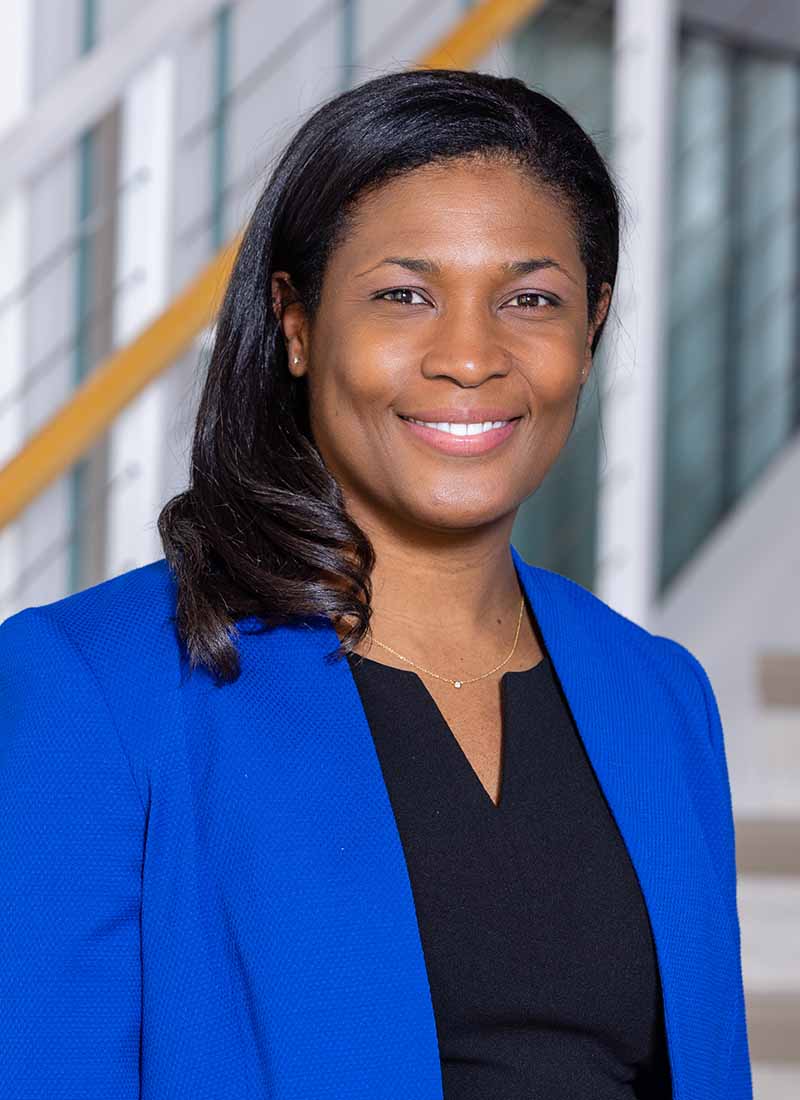
Tamar Rodney is an Assistant Professor at the Johns Hopkins University School of Nursing , specializing in psychiatric mental health. She serves as the DNP Advanced Practice Psych Mental Health Track Coordinator and is affiliated with the Center for Community Programs, Innovation, and Scholarship (COMPASS) and the Center for Infectious Disease and Nursing Innovation . Dr. Rodney’s research focuses on PTSD and traumatic brain injury (TBI) in military personnel and veterans. Her work explores biomarkers , inflammatory responses , and meaning theory to improve diagnosis and treatment planning for mental health conditions. She also investigates telehealth , dementia care , and social isolation in vulnerable populations. Recent publications highlight her expertise in PTSD prevalence among nurses, telehealth applications , biomarker analysis , and community-based interventions for cognitive impairments. Her work bridges neurobiology and psychiatric nursing to inform military health policy . 2022 Coeur de Catherine – St. Catherine University 2021 AMERSA Marianne Marcus Award Multiple scholarships/fellowships (2010–2022) Dr. Rodney’s clinical practice, research, and advocacy address substance use disorders , resilience , and global health challenges. She actively contributes to policy development and education in psychiatric nursing.
Univ-Prof. Dr. med. Malek Bajbouj serves as Director of the Institute for Affective Neuroscience and Emotion Modulation at Charité – University Medicine Berlin's Campus Benjamin Franklin (CBF), operating within the Department of Neurology, Neurosurgery and Psychiatry (CC 15). His position integrates clinical leadership with translational neuroscience research focused on severe mental illnesses. Dr. Bajbouj's research program centers on affective neuroscience and emotion dysregulation mechanisms in psychiatric disorders, particularly schizophrenia spectrum conditions and depression. He pioneers multimodal intervention approaches combining neuromodulation (tDCS), oxytocin augmentation, mindfulness therapies, and digital health tools. His work emphasizes translational biomarker development using neuroimaging, machine learning, and physiological stress parameter analysis to personalize treatment for treatment-resistant populations. Analysis of his 2023-2025 publications reveals three dominant research trajectories: (1) novel treatment combinations for negative symptoms in schizophrenia (oxytocin + mindfulness, yoga therapy); (2) real-world implementation of neuromodulation (at-home tDCS protocols, technical efficacy monitoring); and (3) global mental health responses to crises (pandemic impacts on vulnerable groups, culturally adapted refugee interventions). His methodology consistently employs rigorous randomized controlled trials with embedded biomarker studies. As director of his eponymous institute, Dr. Bajbouj leads a multidisciplinary team conducting neuroimaging studies, clinical trials, and international collaborations focused on emotion modulation pathways. The institute coordinates research across CC 15's clinical infrastructure at CBF Building V, with particular emphasis on bridging laboratory neuroscience with clinical psychiatry through the DepressionDC and OXYMIND trial frameworks.
Dr. Ariel Lang is a Professor In Residence in the Department of Psychiatry at the University of California San Diego (UCSD) and holds an Adjunct Professor position in the Department of Family Medicine and Public Health. She serves as Co-Director of the Experimental Psychopathology Track in the SDSU/UCSD Joint Doctoral Program in Clinical Psychology, and directs the VA San Diego Healthcare System (VASDHS) Center of Excellence for Stress and Mental Health (CESAMH). She co-leads the VASDHS Advanced Fellowship in Women's Health and specializes in evidence-based psychotherapeutic approaches for anxiety and trauma-related disorders in military populations. Education: Bachelor of Arts (BA), Psychology, Stanford University (1991) Master of Arts (MA), Clinical Psychology, UCLA (1994) Doctor of Philosophy (PhD), Clinical Psychology, UCLA (1998) Master of Public Health (MPH), Public Health (Biometry), SDSU (2007) Research Interests: Dr. Lang's work centers on assessing and treating PTSD, anxiety disorders, and trauma-related conditions with a focus on complementary and integrative approaches. Her studies frequently intersect with military/veteran populations, women's health, and public health issues such as systemic racism and environmental exposures. She has pioneered interventions like Compassion Meditation , Adaptive Disclosure , and Mantram Repetition Program , often using randomized controlled trials (RCTs) to evaluate efficacy. Her research also addresses co-occurring disorders (e.g., PTSD and substance use), pregnancy/postpartum mental health, and intergenerational trauma effects. Publications Trends: Her recent articles emphasize trauma-focused treatments, integrative health modalities, and veteran-specific healthcare challenges. Over 50% of her recent work involves clinical trial methodologies, particularly RCTs evaluating novel interventions. She consistently explores interdisciplinary topics like the intersection of mindfulness and clinical psychology, and the impact of systemic stressors on mental health outcomes. Awards: In 2022, she was honored as the UCSD Dept of Psychiatry Faculty Champion of Diversity . Grants/Advising: She is Principal Investigator on NIH grants exploring compassion meditation and yoga interventions for veterans, and has led projects funded by the VA and DoD. Her role in the 2023 VA/DoD PTSD Clinical Practice Guideline underscores her influence in shaping national healthcare policies. Labs/Teams: Her work is anchored in the VASDHS CESAMH, a multidisciplinary research center focused on stress-related mental health conditions. She collaborates extensively with researchers in public health, neurology, and military medicine, evidenced by frequent co-authorships in these domains.
David D. Vachon is an Associate Professor in the Department of Psychology at McGill University. His research focuses on individual differences in deviance across the lifespan, emphasizing the role of personality in externalizing disorders and the absence of internal controls like empathy and constraint. He explores clinical psychology, social/personality dynamics, and developmental science. Research Interests: His work spans Personality etiology of psychopathy, antisocial personality disorder, and narcissism Deviant behaviors (substance use, aggression, crime) as natural outcomes without internal controls Developmental psychopathology and its intersection with race/criminal status Publications: His articles analyze empathy-aggression relationships, psychopathy prevalence, and DSM-5 critiques, reflecting themes of behavioral prediction and forensic psychology. Advising & Grants: No formal advisees or grant details listed. His work is supported by collaborative research networks in clinical and developmental psychology.
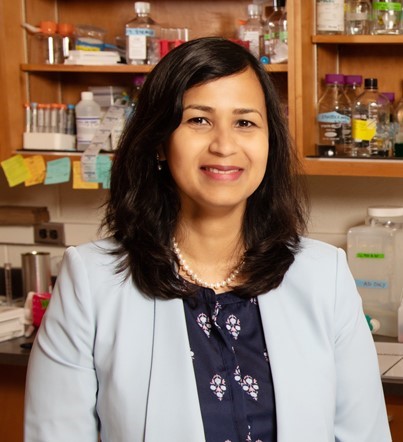
Aditi Das is a Full Professor in the School of Chemistry and Biochemistry at the Georgia Institute of Technology, College of Sciences. She leads the Das Laboratory, which focuses on the biochemistry and chemical biology of lipids, particularly studying cytochrome P450 enzymes and their role in lipid metabolism, endocannabinoid systems, and inflammatory pathways. Her educational background includes: B.Sc. in Chemistry from St. Stephen's College M.Sc. in Chemistry from Indian Institute of Technology, Kanpur (I.I.T) Ph.D. in Chemistry from Princeton University Postdoctoral research at Northwestern University (NSF-NSEC fellow) and Beckman Institute for Advanced Science and Technology, University of Illinois UC Professor Das's research interests center around understanding the physiological role of lipids in sustaining homeostasis and their implications in disease states such as neurodegenerative disorders, cancer, and cardiovascular diseases. Her laboratory specializes in: Enzymology of cytochrome P450s, particularly CYP2J2 epoxygenase Metabolism of ω-3 and ω-6 fatty acids and their derivatives Minor cannabinoid metabolism by cytochrome P450 enzymes Discovery of novel anti-inflammatory lipid metabolites and endocannabinoids Mechanistic studies of membrane proteins using nanodisc technology Her work bridges biochemistry, chemical biology, and pharmacology to uncover novel therapeutic targets related to lipid signaling pathways. Analysis of Professor Das's recent publications (2023-2025) reveals a strong focus on cannabinoid metabolism by cytochrome P450 enzymes, with particular emphasis on how these metabolic processes generate bioactive compounds that interact with the endocannabinoid system. Her research increasingly explores the therapeutic potential of omega-3 derived endocannabinoid epoxides in inflammatory and neurodegenerative conditions. The use of nanodisc technology for studying membrane proteins in near-native environments remains a consistent methodological thread throughout her work, enabling detailed mechanistic insights into enzyme function. Professor Das has received numerous prestigious awards recognizing her research excellence and teaching: 2024 NIH Outstanding Researcher Award (MIRA R35) for established investigators 2024 Vasser Woolley Faculty Fellowship 2023 Plenary Lecture at the International Society of the Study of Xenobiotics (ISSX) 2021 E.L.R. Stokstad Award 2019-2021 List of Teachers Ranked as Excellent 2019 Eicosanoid Research Foundation Young Investigator Award 2019 Zoetis Research Excellence Award 2019 Mary Swartz Rose Young Investigator Award 2015 National Scientist Development Award from the American Heart Association 2022 El Sohly Award from the American Chemical Society Professor Das actively mentors a diverse group of students and postdoctoral researchers, with several former lab members now holding faculty positions or working at prestigious institutions. Her laboratory has secured significant funding from NIH, NSF, and other sources to support research on lipid metabolism, cannabinoid pharmacology, and membrane protein biochemistry. Notable grants include an NIH R35 Outstanding Investigator Award (MIRA), an NIH R21 grant from NIDA, and multiple collaborative grants with other research groups. The Das Laboratory operates within the Petit Institute of Bioengineering and Biosciences (IBB) at Georgia Tech, utilizing state-of-the-art facilities for biochemical and biophysical studies. The lab specializes in nanodisc technology to study membrane proteins in near-native environments, with particular expertise in cytochrome P450 enzymes and their interactions with lipid substrates. Recent work has expanded into collaborative projects involving lipidomics, structural biology, and translational applications of lipid signaling research.
Ahmed Hassoon is an Assistant Research Professor at the Johns Hopkins Bloomberg School of Public Health, with a primary appointment in the Department of Epidemiology and joint appointments in the Department of Neurology at the School of Medicine and the School of Engineering. He is affiliated with several key research centers, including the Welch Center for Prevention, Epidemiology and Clinical Research, the Center for Diagnostic Excellence, and the Center for Humanitarian Health. MPH, Johns Hopkins Bloomberg School of Public Health, 2014 MD, Baghdad College of Medicine, 2004 Dr. Hassoon’s research is centered on leveraging data science and artificial intelligence to improve healthcare quality and safety, particularly in diagnostic accuracy. His work spans applications in lung cancer, stroke, and emergency medicine, with a strong emphasis on reducing diagnostic errors using frameworks like symptom-disease pair analysis (SPADE). He is deeply engaged in developing AI models that reason across multiple clinical modalities to enhance patient outcomes. His recent publications highlight a strong trend in diagnostic safety, AI-driven interventions, and epidemiological analysis of misdiagnosis harms. Key themes include the validation of computable phenotypes, measurement of diagnostic error burden, and the impact of mental health on acute care diagnostics. Hubert Humphrey Fellowship Award, U.S. Department of State (2010) US President Appreciation Certificate, The White House (2011) Atlas Corps Award (2012) Sommer Scholarship Award (2013) State of Maryland Cigarette Restitution Fund Faculty and Translational Research Awards (2016–2017) Institute for Healthcare Improvement (IHI) Fellowship (2024) Dr. Hassoon is a recipient of the AHRQ K08 Career Development Award focused on improving cancer diagnostic safety at Johns Hopkins Hospital. He co-instructs graduate-level courses in data science and AI with Professor Brian Caffo, contributing to the training of the next generation of public health data scientists. He has not formally advised students listed in the provided texts. His collaborative research spans multiple institutions and has been widely disseminated through policy, news, and social media, indicating significant real-world impact. His work is deeply integrated with the Welch Center and the Center for Diagnostic Excellence, where he contributes to translational research initiatives aimed at improving clinical decision-making and patient safety through innovative data-driven approaches.
University of California, San FranciscoUnited States
Sarah Woolf-King is an Assistant Adjunct Professor in the Department of Medicine at the University of California, San Francisco (UCSF), School of Medicine. She is a licensed clinical psychologist (CA PSY28178) whose research bridges psychology and health, with a strong focus on substance use, HIV, and mental health in families affected by congenital heart defects. Her educational background includes a B.S. in Psychology from Arizona State University (2002), an M.S./Ph.D. in Clinical Psychology from Syracuse University (2010), an M.P.H. in Epidemiology from UC Berkeley (2011), a clinical internship in Behavioral Medicine at VA Palo Alto (2010), and a T32 Postdoctoral Fellowship at UCSF’s Center for AIDS Prevention Studies (2013). Dr. Woolf-King’s research centers on two primary areas: (1) the impact of alcohol use on HIV treatment and prevention, particularly among HIV-positive men who have sex with men (MSM) and in East African populations, and (2) the mental health needs of parents of children with critical congenital heart defects (CHD). Her work employs diverse methodologies, including daily data collection, qualitative interviews, randomized trials, and biomarker validation (e.g., PEth). She aims to develop integrated behavioral interventions to improve health outcomes for individuals and families coping with chronic illness. Her recent publications (2023–2025) reflect a consistent focus on alcohol use in the context of HIV, with studies on counseling interventions, digital screening, remote biomarker collection, and behavioral mechanisms. There is also growing attention to mental health in vulnerable populations, including college students and parents of children with genetic or cardiac conditions. Her work is increasingly interdisciplinary, combining psychology, epidemiology, public health, and global health. Scientific Awards: Hellman Fellow, Hellman Fellows Fund (2015–2017) Mentored Research Scientist Development Award (K01), NIH/NIAAA (2013–2018) Loan Repayment Program in Clinical Research, NIH/NIAAA (2011–2016) Ruth L. Kirschstein National Research Service Award (F31), NIH/NIAAA (2008–2010) Mentored Scientist Award in HIV/AIDS, UCSF CFAR (2012–2014) Dr. Woolf-King has served as Principal Investigator on NIH-funded projects, including an R34 grant for a brief ACT intervention for HIV-positive hazardous drinkers and a K01 grant on alcohol and sexual risk behavior. She collaborates extensively with researchers at UCSF and in East Africa, particularly Uganda. While her adjunct title suggests a part-time or non-tenure-track role, she maintains an active research program with significant grant support and a robust publication record. There is no indication of retirement or former staff status.
Laura Robinson is a Senior Lecturer at the School of Psychology , University of Wollongong. She holds a Doctor of Philosophy in Psychology and extensive teaching experience in behavioral sciences, statistics, and applied psychology. Education : PhD in Psychology (2017), Postgraduate Diploma in Psychology (2010), Bachelor of Psychology (2009), and Bachelor of Aviation (2004) Her research focuses on vulnerable populations, particularly women and youth, with expertise in substance use disorders, eating disorders, mental health comorbidity, and health equity. She has published extensively on residential treatment outcomes, continuing care interventions, and stigma reduction in mental healthcare. Recent publications highlight longitudinal analyses of psychological distress, weight stigma, and integrated approaches to substance use and physical health. She supervises PhD students on topics like veterans' mental health, methamphetamine use, and suicide prevention. Laura has received funding from internal and external sources, including grants for stimulant use interventions and health literacy studies. She serves on committees like the Australasian Professional Society for Alcohol and Drugs and contributes to peer-reviewed journals as a reviewer.
Nick Bansback is an Honorary Visiting Professor in the School of Population and Public Health at the University of British Columbia (primary affiliation) and affiliated with NUS Saw Swee Hock School of Public Health. His research focuses on maximizing healthcare value through economic evaluation, patient preference measurement, and decision analysis. He holds a PhD in Health Economics and Decision Sciences (University of Sheffield, 2010), an MSc in Health Economics (2004), and a BSc in Mathematics (2001). Key research areas include health technology assessment, patient-reported outcomes, and cost-effectiveness analysis of treatments for chronic conditions like rheumatoid arthritis and multiple sclerosis. He has pioneered methods for incorporating patient preferences into healthcare decisions, including developing decision aids and discrete-choice experiments. His work has been recognized with awards such as the UBC Killam Research Award (2020) and the Canadian Agency for Drugs and Technology in Health Rising Star Award (2016). He has contributed to over 30 peer-reviewed publications, emphasizing practical applications of health economics to improve healthcare resource allocation and patient-centered care. Prof. Bansback’s career spans postdoctoral research at UBC, health economics roles at the Centre for Health Evaluation and Outcomes Sciences, and early research at the University of Sheffield. His interdisciplinary approach bridges clinical practice, policy, and quantitative methods to address complex healthcare challenges.
Jennifer D. Oliva is a Professor of Law at Indiana University Maurer School of Law where she holds the Val Nolan Faculty Fellow position. She maintains significant interdisciplinary affiliations as a Research Scholar at Georgetown University Law Center's O'Neill Institute for National & Global Health Law and as a Senior Scholar with the UCSF/UC Law Consortium on Law, Science & Health Policy. Her academic work bridges legal scholarship with practical health policy development, focusing on the intersection of constitutional protections, public health needs, and modern surveillance technologies. Professor Oliva's research interests center on health law, privacy law, and drug policy with particular expertise in prescription drug monitoring programs (PDMPs), health information privacy, and the legal dimensions of the opioid crisis. Her scholarship critically examines how law enforcement surveillance of prescription data impacts patient privacy rights, particularly for vulnerable populations including those with substance use disorders. She has developed significant expertise in how constitutional privacy protections apply to health data in the digital age, especially following the Supreme Court's decision in Carpenter v. United States. Her recent publications reveal a growing focus on algorithmic regulation in healthcare, examining how risk scoring systems and coverage algorithms can perpetuate health disparities. She has published extensively on the intersection of reproductive rights and health data privacy in the post-Dobbs landscape, analyzing how prescription monitoring systems could be weaponized against individuals seeking reproductive healthcare. Her work consistently connects doctrinal legal analysis with public health realities, advocating for evidence-based policy approaches that prioritize patient privacy and health equity over punitive enforcement. Dosing Discrimination: Regulating PDMP Risk Scores (2022) The "New" Drug War (2024) Prescription Drug Policing: The Right to Health Information Privacy Pre- and Post-Carpenter (2020) Opioid Multidistrict Litigation Secrecy (2019) Surveillance, Privacy, and App Tracking (2020) Professor Oliva actively engages with policymakers and has contributed to amicus briefs in significant cases including Ruan v. United States. Her scholarship has been cited in legal proceedings and she regularly presents at major academic conferences including the Association of American Law Schools Annual Meeting. She has collaborated with scholars across disciplines including public health researchers, medical ethicists, and data scientists to address complex challenges at the intersection of law, technology, and healthcare.
University of California, Los AngelesUnited States
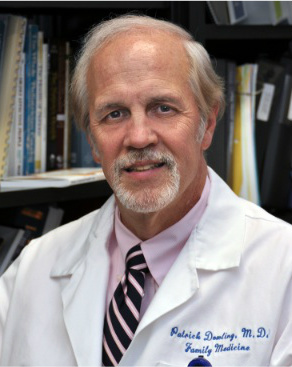
Patrick T. Dowling, M.D., M.P.H., is the Kaiser Permanente Endowed Professor of Community Medicine and Chair of the UCLA Department of Family Medicine. He holds dual degrees from the Medical College of Ohio (1974) and the University of Michigan School of Public Health. Dr. Dowling's career spans over four decades in family medicine, residency training, and health policy advocacy, with a focus on underserved populations. He has directed residency programs at Cook County Hospital, Brown University, and Harbor-UCLA Medical Center before leading UCLA's Family Medicine department since 1998. His research emphasizes health policy, chronic disease management, cross-cultural medicine, and integrating substance abuse treatment into primary care. He co-founded UCLA's IMG pathway program to train bilingual (English-Spanish) international medical graduates for underserved areas. Dr. Dowling has advised the National Health Service Corps and LA County Public Health Commission, and currently serves on Drew University's Board of Trustees. Publications highlight systemic barriers to healthcare access, physician practice location determinants, opioid epidemic responses, and community-based participatory research. His work bridges medical education innovation with socioeconomic health equity, reflecting lifelong commitment to universal healthcare access inspired by his early work with Cesar Chavez's United Farm Workers Clinics.
John Monterosso is an Associate Professor of Psychology at the University of Southern California, specializing in addiction, motivation, and decision-making research. His work explores the neurocognitive mechanisms underlying impulse control and reward processing, with particular focus on substance use disorders and behavioral interventions. Monterosso's research integrates behavioral experiments with neuroimaging to examine decision-making processes in addiction contexts. His lab investigates how immediate rewards influence behavior and how cognitive control mechanisms can be harnessed for addiction treatment. Recent work examines the impact of e-cigarette flavors on appeal and sensory perception, obesity medication perceptions, and neural correlates of value representation. With collaborations spanning public health and neuroscience, his publications demonstrate consistent focus on translating basic psychological research into clinical applications. The methodological progression shows increasing sophistication in neuroimaging techniques and large-scale behavioral studies examining substance use patterns across diverse populations.
Roxane de la Sablonnière is a Full Professor in the Department of Psychology at the University of Montreal, affiliated with the Faculty of Arts and Sciences. She directs the CSI—Laboratory on Social Change and Identity and is a member of the CÉCD—Centre for the Study of Democratic Citizenship and the CIRCA—Interdisciplinary Research Centre on the Brain and Learning. Her research focuses on social change, cultural identities, intercultural relations, and the psychological impacts of crises like the COVID-19 pandemic. She has advised over 20 graduate students and led numerous research projects funded by agencies such as the Fonds de recherche du Québec (FRQ) and the Social Sciences and Humanities Research Council (SSHRC). Education & Research Focus : Her work examines how rapid societal changes affect individuals, particularly in contexts of immigration, policy shifts (e.g., multiculturalism, secularism), and Indigenous communities. Recent studies include longitudinal analyses of pandemic-related behaviors, identity integration processes, and the role of cognitive strategies in managing conflicting identities. Grants & Collaborations : She leads projects like "S'engager pour mieux aller!" (FRQS-funded) and contributes to strategic networks such as the Centre pour l'Étude de la Citoyenneté Démocratique (CÉCD). Her research integrates psychology with sociology, leveraging mixed methods (e.g., text mining, longitudinal tracking) to address societal challenges. Labs & Teams : As CSI director, she oversees projects on social change dynamics and identity reconstruction. Her work bridges academic and applied domains, influencing policy debates on integration, public health, and community resilience.
Catherine Marco, MD, is a Professor in the Department of Emergency Medicine. Her work focuses on emergency care delivery, medical ethics, and residency training. She has contributed to over 187 peer-reviewed publications and actively addresses issues like healthcare civility and gender disparities in medical salaries. Research interests include emergency department operations, patient-provider communication, and ethical challenges in emergency settings. Her recent work explores cannabis-related symptom discordance and the moral imperative of civility in healthcare. Recipient of the 2024 Dean's Award for Excellence in Teaching Co-author of influential studies on residency training outcomes and trauma assessment protocols
Jacqueline Woerner is Associate Professor in Sociology and Psychology at the University of Central Florida, where she directs the Social Theory, Relationships, and Interpersonal Violence Exposure (STRIVE) Lab. Her research examines the intersection of gender-based violence, substance use, and health risk behaviors. Education includes: PhD in Social Psychology from Wayne State University BS in Psychology from Appalachian State University Her NIH-funded research investigates how violence victimization relates to health behaviors through motivational frameworks. Current projects examine technology-facilitated sexual violence on dating apps and alcohol's role in intimate partner cyber abuse. She employs diverse methods including surveys, experiments, and daily diaries. As member of the Violence Against Women Faculty Cluster, she develops prevention strategies addressing sexual violence and health disparities. Funded projects include NIJ grants examining transitional housing models for domestic violence survivors. Honors include Rising Star Award for undergraduate mentoring and multiple teaching awards. She serves on editorial boards for Psychology of Violence and leads NIH-funded projects on dating app-facilitated violence.