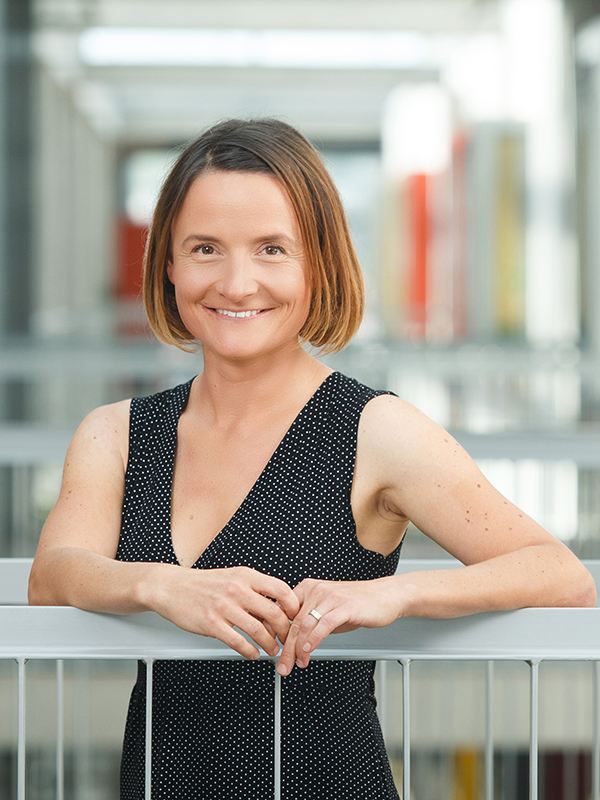
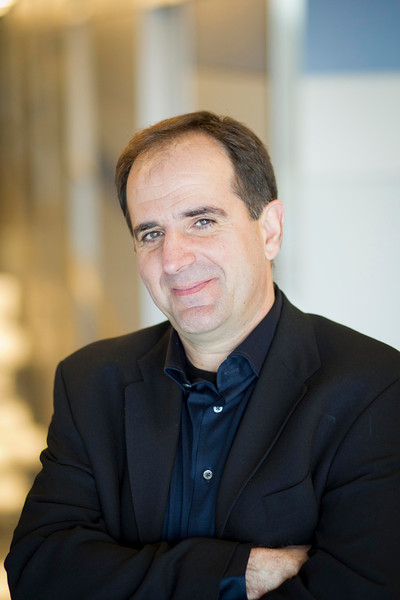
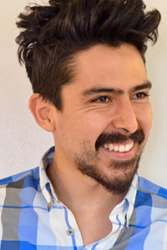
Dr. LIU Quanying is an Associate Professor in the Department of Biomedical Engineering at the Southern University of Science and Technology (SUSTech), where she has been a faculty member since September 2019. She serves as the Principal Investigator of the Neural Computing and Control Laboratory (NCC lab) and is a doctoral supervisor. Prior to joining SUSTech, she earned her PhD in Biomedical Engineering from ETH Zurich and conducted postdoctoral research at Caltech. Education: PhD in Biomedical Engineering, ETH Zurich (2013-2017) Master in Computer Science, Lanzhou University (2010-2013) Bachelor in Electrical Engineering, Lanzhou University (2006-2010) Research Interests: Dr. Liu’s research integrates neuroscience, machine learning, and control theory. Her work focuses on multi-modal neural signal processing (EEG, sEEG, fMRI, DTI), explainable AI for neuroscience, and optimization techniques for neuromodulation (tES, TMS). She has developed high-density EEG source localization algorithms and data-driven brain network modeling frameworks, aiming to enhance precision in neural stimulation and control. Scientific Awards: The New Brain 30 (2023) AAIC Travel Award (2019) Estes Stars Award (2018) 深圳市孔雀人才计划C类 Laboratory and Team: As the PI of the NCC lab, Dr. Liu leads a team focused on machine learning algorithms, neurocomputational modeling, and neurofeedback control. The lab actively recruits graduate students, postdocs, and visiting researchers, emphasizing interdisciplinary collaboration in neuroscience and AI.
Cédric HERZET is a Permanent Member of CREST at INRIA Rennes, focusing on statistical learning theory, optimization, and inverse problems. His work bridges theoretical analysis with practical algorithm development. Primary affiliation: INRIA Rennes (French National Institute for Research in Digital Science) Research Interests: Statistical Learning Theory, Optimization algorithms, Operational Research, Inverse Problems. His work particularly addresses sparse approximation, compressed sensing, and iterative thresholding methods. Key Contributions: Development of Bayesian pursuit algorithms, geometric analysis of subspace clustering with outliers, and analysis of state evolution in dense graph message passing. His theoretical work has direct applications in signal/image processing and machine learning. Software: Created MATLAB implementations of sparse approximation algorithms and Bernoulli-Gaussian Lab toolbox for Bayesian pursuit simulation.
Stefano Marchesiello is a Full Professor of Applied Mechanics at the Polytechnic University of Turin, Department of Mechanical and Aerospace Engineering (DIMEAS), a position he has held since 2019. His academic work spans theoretical studies, numerical applications, and experimental tests within the field of Applied Mechanics. He maintains active roles in doctoral education, serving on mechanical engineering doctoral colleges from 2013/2014 through 2024/2025, and teaches courses including Dynamics and Identification of Nonlinear Systems, Dynamics of Mechanical Systems, Vibration Mechanics, and Machine Mechanics for Aerospace Engineering. Marchesiello's research focuses on modal analysis and identification, damage diagnosis in structures and construction materials, damping systems, mechanical vibrations, and nonlinear dynamics. His primary research lines include vehicle-bridge dynamic interaction, dynamic identification techniques in linear and nonlinear fields, damage identification, vibrations of continuous systems with non-proportional damping, innovative vibration damping devices, diagnostics and monitoring of rotating systems, and pantograph-catenary dynamic interaction. His work bridges theoretical mechanics with practical engineering applications, particularly in transportation infrastructure and mechanical systems. His recent publications demonstrate a strong focus on nonlinear system identification, structural health monitoring, and vibration analysis across various mechanical and aerospace applications. Marchesiello's research shows increasing integration of machine learning techniques with traditional mechanical engineering approaches, particularly in system identification and damage detection. His work spans from fundamental nonlinear dynamics to practical applications in railway systems, rotating machinery, and structural components. Certificate of reviewing awarded by Journal of Sound and Vibration - Elsevier, Netherlands (2013) Certificate of Excellence in Reviewing - Mechanical Systems and Signal Processing 2013 awarded by Elsevier, Netherlands (2013) Marchesiello serves as Scientific Director for multiple commercial research contracts, particularly with Officina Fratelli Bertolotti SpA, focusing on vibration damping systems for railway catenaries and rotor dynamics modeling. He has led research projects from 2008 through 2023, demonstrating sustained research leadership and industry collaboration. His editorial work includes membership on the Editorial Board of SHOCK AND VIBRATION since 2018, and he has served on program committees for the International Conference on Damage Assessment of Structures (DAMAS) across multiple years. He is actively involved with the Dynamics of Mechanical Systems and Identification research group (DIMEAS), which focuses on developing advanced methods for analyzing and identifying mechanical systems with both linear and nonlinear behaviors. His research integrates computational modeling, experimental validation, and practical applications across multiple engineering domains.
Polona Oblak serves as a Full Professor at the Faculty of Computer and Information Science, University of Ljubljana, where she is an integral member of the Laboratory for Mathematical Methods in Computer and Information Science. Her teaching responsibilities span foundational courses including Linear Algebra, Mathematical Modelling, and multiple levels of Mathematics instruction, reflecting her dual expertise in theoretical mathematics and computational applications. Her research centers on advanced Matrix Theory and Graph Theory, with pioneering contributions to Spectral Graph Theory and Inverse Eigenvalue Problems. She investigates structural properties of commuting matrices, nilpotent matrix centralizers, and tropical semiring algebra, extending theoretical frameworks to practical applications in computer vision and statistical analysis. Recent interdisciplinary projects like "DeepBeauty" demonstrate her ability to bridge pure mathematics with industry-relevant solutions in fashion technology. Analysis of her 15 most recent publications (2021-2025) reveals a dominant focus on spectral graph phenomena, particularly the inverse eigenvalue problem across diverse graph structures including trees, block graphs, and unicyclic graphs. Her work on tropical matrix factorization (e.g., Faststmf algorithm) provides efficient computational tools for sparse data, while theoretical breakthroughs like the "liberation set" concept redefine boundaries in spectral graph theory. This research trajectory shows increasing integration of algebraic methods with machine learning applications. Professor Oblak has secured substantial research funding through the Slovenian Research Agency (ARRS) and international collaborations, including the ongoing "Computer Vision" program (2019-2024) and bilateral projects with Bosnia and Herzegovina on nilpotent orbits. Her leadership in computationally intensive statistical methods (2016-2019) and deep generative models for the beauty industry (2020-2023) demonstrates consistent ability to translate theoretical advances into funded research initiatives, though specific student supervision details remain unlisted in available sources. Within the Laboratory for Mathematical Methods in Computer and Information Science, she contributes to a synergistic research environment where algebraic techniques directly inform computational solutions. Her work on Laplacian-integral graphs and tropical factorization algorithms exemplifies the laboratory's mission to develop mathematical foundations for next-generation information systems, with recent outputs showing heightened emphasis on algorithmic efficiency for real-world data challenges.
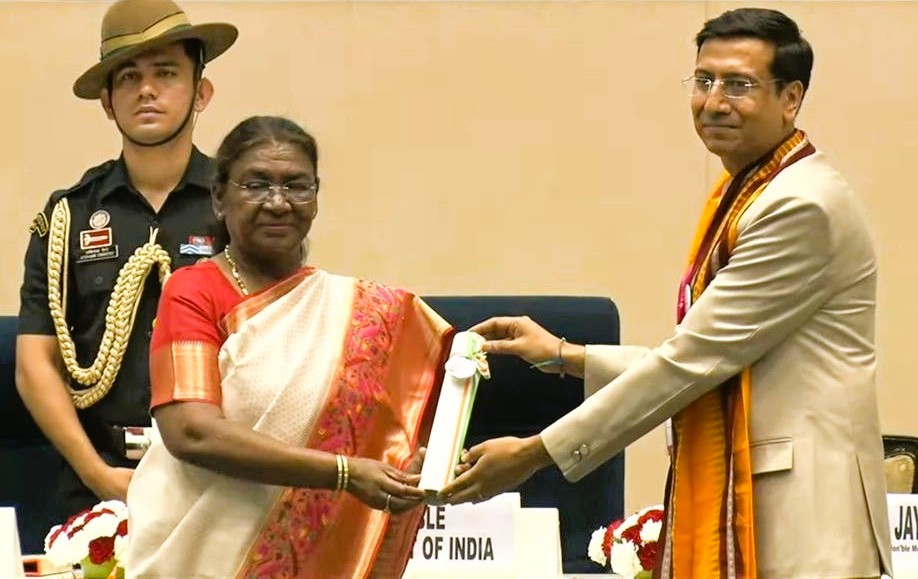
Prof. Kapil Ahuja is a Full Professor in the Department of Computer Science & Engineering at the Indian Institute of Technology Indore (IIT Indore), where he heads the Mathematics of Data Science and Simulation (MODSS) research lab. After completing dual Master's degrees and a Ph.D. from Virginia Tech (USA) followed by postdoctoral work at the Max Planck Institute in Germany, he has held visiting positions at UT Austin, IMT Atlantique, Sandia National Labs, TU Dresden, and TU Braunschweig. His administrative roles include founding Dean of International Affairs and former Head of Computer Science & Engineering at IIT Indore. Education: Ph.D. in Mathematics, Virginia Tech (2011) M.S. in Mathematics, Virginia Tech (2009) M.S. in Computer Science, Virginia Tech (2007) B.Tech. in Mechanical Engineering, IIT (BHU) Varanasi (2001) Research Focus: Prof. Ahuja's work bridges theoretical advances with real-world applications, emphasizing machine learning algorithms for plant/cancer studies, game-theoretic poverty reduction models, exascale climate modeling solvers, and drone trajectory optimization. His interdisciplinary approach integrates numerical linear algebra with network science to solve complex systems problems across healthcare, agriculture, and climate science, supported by 4.85 Crores INR in external funding. Publication Trends: Recent work demonstrates growing emphasis on AI-driven optimization for physical systems (drones, climate models) and biomedical applications (cancer classification). His publications increasingly feature cross-disciplinary collaborations between computer science, biology, and economics, with notable contributions in explainable AI for healthcare and resource allocation algorithms for social networks. Scientific Recognition: National Teacher's Award (2024) from the President of India Five-time recipient of IIT Indore's Best Teacher Award (2013-2023) Best Poster Award at International Workshop on Game Theory & Networks (2019) Steeneck Graduate Research Fellowship (Virginia Tech, 2011) Multiple SIAM travel awards for international conferences Mentorship & Service: Prof. Ahuja has graduated 5 Ph.D. and 4 M.S. (Research) students while mentoring 75 B.Tech. projects. He serves as Associate Editor for Applied Intelligence Journal (Springer Nature) and Knowledge and Information Systems, organizes international conferences, and reviews for 35+ academic sources. His administrative leadership significantly expanded IIT Indore's global partnerships through the Research Park initiative. Research Infrastructure: The MODSS lab maintains active collaborations with Oak Ridge National Lab, Sandia National Labs, and European institutions. Current projects include AI-optimized drone swarms for agricultural monitoring and game-theoretic models for poverty intervention, utilizing high-performance computing resources for large-scale simulations.
Klaus Mueller is a Professor in the Department of Computer Science at Stony Brook University, where he also serves as Interim Chair of the Department of Technology and Society. He holds adjunct faculty positions in the Biomedical Engineering Department and Radiology Department, and is a Senior Scientist at the Computational Science Initiative at Brookhaven National Laboratory. His research spans visualization, visual analytics, explainable AI, computational fairness, and medical imaging, with significant contributions to volume rendering, GPU computing, and virtual reality. Dr. Mueller received his educational credentials from prestigious institutions: PhD in Computer and Information Science, The Ohio State University, 1998 MS in Computer and Information Science, The Ohio State University, 1996 MS in Biomedical Engineering, The Ohio State University, 1990 BS in Electrical Engineering, Polytechnic University of Ulm, Germany, 1987 Professor Mueller's research focuses on making complex data accessible and understandable through innovative visualization techniques. His work in visual analytics empowers users to explore high-dimensional data spaces, while his contributions to explainable AI help bridge the gap between complex machine learning models and human understanding. In medical imaging, he has pioneered GPU-accelerated reconstruction techniques that significantly improve CT imaging while reducing radiation exposure. His recent work explores the intersection of large language models with visualization, creating tools that enhance data understanding through natural language interaction. His extensive publication record shows a consistent focus on visualization techniques, with recent work increasingly incorporating AI and machine learning components. The trend shows a progression from foundational visualization techniques to more complex applications involving explainable AI, fairness in algorithms, and medical imaging applications. His work often bridges theoretical advances with practical implementations, particularly through GPU acceleration. Dr. Mueller's scientific achievements have been recognized with numerous prestigious awards: US National Science Foundation CAREER award (2001) SUNY Chancellor Award for Excellence in Scholarship and Creative Activity (2011) Inducted into the National Academy of Inventors (2018) Golden Core Award, IEEE Computer Society (2016, 2022) Meritorious Service Certificate, IEEE Computer Society (2016) IEEE Fellow (2024) Best Paper Award, IEEE Visual Data Science Symposium (2019) His research has been generously supported by major funding agencies including the National Science Foundation (NSF), National Institutes of Health (NIH), Department of Energy (DOE), and Department of Homeland Security (DHS), as well as private industry partners. As Editor-in-Chief of IEEE Transactions on Visualization and Computer Graphics (2019-2022), he has shaped the direction of visualization research globally. He has advised numerous PhD students whose work has advanced the field of visual analytics and medical imaging. Dr. Mueller directs the Visual Analytics and Imaging (VAI) Lab at Stony Brook, which focuses on developing innovative visualization techniques for complex data analysis. The lab has been instrumental in creating tools for medical imaging, security applications, and data science. His team has developed frameworks for smoke and fire simulation, visual analytics for healthcare, and GPU-accelerated medical imaging algorithms. The lab fosters interdisciplinary collaboration between computer scientists, medical researchers, and domain experts to solve real-world problems through visualization.
Bin Gao is an Associate Professor at the Academy of Mathematics and Systems Science (AMSS), Chinese Academy of Sciences. He holds a Ph.D. in Applied Mathematics (2019, University of Chinese Academy of Sciences) and a B.Sc. in Mathematics (2014, Sichuan University). His postdoctoral experience includes positions at UCLouvain (2019-2021) and the University of Münster (2021-2022). Research Interests: Riemannian optimization, tensor computation, parallel/distributed algorithms for orthogonality constraints, machine learning applications. Key Contributions: Development of retraction-free methods on Stiefel manifolds, preconditioned Riemannian algorithms, and geometric frameworks for symplectic eigenvalue problems. Article Trends: Recent work focuses on overcoming the curse of dimensionality via manifold-based optimization, including distributed algorithms for Stiefel manifolds, graph-regularized tensor completion, and second-order methods for symplectic structures. Keywords span numerical analysis, quantum information, and machine learning. Scientific Awards: 2021 Zhong Jiaqing Mathematics Award 2018 Best Student Paper Award (CSIAM) 2018 CAS Special President Scholarship 2017 National Scholarship for Doctoral Students (China) 2016 Honor Student Award (International Workshop on Modern Optimization and Application) Advising & Collaborations: Collaborates with researchers from UCLouvain, University of Münster, and AMSS. Mentors students in Riemannian optimization and tensor computation. Leads the popman research group.
Wataru Kameyama is a Professor in the Department of Communications and Computer Engineering at Waseda University’s School of Fundamental Science and Engineering. Since 2014 he has held a full-time faculty position at Waseda; he previously served as Professor at GITS (2002–2014) and Associate Professor at GITI (1999–2002), both within Waseda University. He received his M.E. and Ph.D. in Electronics Engineering from Waseda University in 1987 and 1990 respectively. Education: Ph.D. in Engineering, Waseda University, 1990 M.E. in Electronics Engineering, Waseda University, 1987 B.E. in Electronics Communication Engineering, Waseda University, 1985 Research Interests: Prof. Kameyama’s research spans information communication systems, multimedia information processing, content distribution architectures, Named Data Networking, digital rights management, and high-dimensional data mining. His recent work emphasizes proactive content-caching for mobile video, producer mobility in NDN, and outlier-detection algorithms for large-scale datasets. Publications Trend: Across 85 peer-reviewed papers (h-index 9) his recent articles focus on next-generation networking (NDN, ICN), mobile multimedia delivery using transportation infrastructure, and data-mining techniques for high-dimensional outliers, often validated through large-scale field experiments. Awards & Honors: International Cooperation Award, ITU Association of Japan (2012) IEEE/IEICE Distinguished & Outstanding Contribution Awards (2009, 2007) Best Author/Best Paper Awards, Institute of Image Information and Television Engineers (2009, 2006) Professional Memberships: ACM, IEEE, Institute of Image Electronics Engineers of Japan, Information Processing Society of Japan, Institute of Electronics, Information and Communication Engineers, Institute of Image Information and Television Engineers.
Mahdi Khodadadzadeh is an Assistant Professor in the Department of Geo-information Processing, specializing in machine learning, data mining, and geospatial analysis. His work bridges traditional and deep learning methods with applications in mineral exploration, environmental modeling, and circular economy initiatives. Research outputs include novel cross-validation techniques for geospatial machine learning (Spatial+, dissimilarity-adaptive methods), hyperspectral mineral mapping for ore characterization, and hybrid models combining artificial neural networks with optimization algorithms. He actively contributes to open-access datasets and methodologies, particularly in drill-core analysis and multi-source data fusion. Collaborations with researchers like R. Zurita-Milla and R. Gloaguen are evident through co-authored publications and shared datasets. His work impacts domains such as mineral exploration, geospatial modeling, and sustainable resource management, with a focus on robust statistical evaluation frameworks and spectral-spatial analysis.
Dimitris A. Pados is a Professor and I-SENSE Fellow at Florida Atlantic University, holding the prestigious Charles E. Schmidt Eminent Scholar in Engineering position. He serves as Director of both the Center for Connected Autonomy and Artificial Intelligence and the ExtremeComms Laboratory within the Department of Electrical Engineering and Computer Science in the College of Engineering. Prior to joining FAU in 2017, he spent 20 years at the University at Buffalo, where he held positions ranging from Assistant Professor to Clifford C. Furnas Chair Professor. Professor Pados' research spans two primary domains: Communications Theory and Systems, and Machine Learning and Adaptive Signal Processing. His work in communications includes Cognitive Software-defined Radios and Networks, Interference Avoiding Networking, Secure Wireless Communications, Underwater Cognitive Hi-rate/Long-distance Acoustic Communications, and Autonomous/Unmanned System Communications. In signal processing, he specializes in L1-norm Principal-component Analysis (L1-PCA), Robust Feature Extraction from Faulty Data Sets, Digital Data Embedding/Hiding, and Compressed-sensed Imaging and Video. His research has resulted in numerous high-impact publications and several best paper awards. His recent publications demonstrate a strong focus on robust signal processing techniques, particularly L1-PCA methods, and applications in wireless communications, video processing, and secure transmissions. The research shows consistent contributions to both theoretical foundations and practical implementations, with increasing emphasis on cognitive radio networks, underwater communications, and autonomous systems. 2013 ISWCS Best Paper Award in Physical Layer Communications and Signal Processing 2003 IEEE Transactions on Neural Networks Outstanding Paper Award IEEE ICT 2001 Best Paper Award 2010 IEEE ICC Best Paper Award in Signal Processing for Communications I-SENSE Fellow Charles E. Schmidt Eminent Scholar in Engineering Professor Pados has secured significant research funding through sponsored projects, particularly in wireless communications, signal processing, and autonomous systems. His work on software-defined radio platforms, underwater acoustic networks, and cognitive networking demonstrates strong industry and government interest. He has successfully translated theoretical research into practical implementations, as evidenced by his team's win in the Internet of H2O competition. As Director of the ExtremeComms Laboratory, Professor Pados leads a research group focused on communication systems for challenging environments. The laboratory provides opportunities for graduate students to work on cutting-edge projects in cognitive radio, underwater communications, and autonomous systems. His leadership of the Center for Connected Autonomy and Artificial Intelligence further expands research opportunities across multiple disciplines at Florida Atlantic University.
Dr. Laxima Niure Kandel is an Assistant Professor in the Department of Computer, Electrical, and Software Engineering at Embry–Riddle Aeronautical University. Her research spans wireless security, UAV detection, and cybersecurity, with a strong focus on AI-driven solutions for aviation and IoT systems. Her core research interests include: Wireless sensing and localization Machine learning applications in cybersecurity GPS spoofing detection for aviation RF fingerprinting for device authentication Adversarial resilience in deep learning models Recent publications (2025) demonstrate a dominant focus on transformer-based security models, UAV protection systems, and explainable AI. Over 80% of her latest work involves deep learning techniques applied to real-world threats like GPS spoofing, ADS-B attacks, and adversarial patches in autonomous vehicles.
Dominique Orban is a Full Professor in the Department of Mathematics and Industrial Engineering at Polytechnique Montréal. He holds a Ph.D. from FUNDP Namur and INP Toulouse and has established himself as a leading researcher in numerical optimization. His academic affiliations include the Institute for Data Valorization (IVADO) and the Decision Analysis Study and Research Group (GERAD). Professor Orban's research focuses on numerical mathematics, particularly continuous nonlinear optimization, nonlinear systems of equations, and numerical linear algebra. His work involves designing specialized numerical algorithms for optimization problems, with particular interest in degeneracy and ill-posed problems. His research spans theoretical development of algorithms, their implementation in software, and applications to real-world problems such as image reconstruction, optimal structure design, and optimization under differential constraints. Analysis of his recent publications (2021-2025) reveals a strong focus on developing practical optimization algorithms with theoretical guarantees. His work spans multiple areas including nonsmooth optimization, iterative methods for linear systems, regularization techniques, and software implementation in Julia. A notable trend is his increasing focus on developing open-source software tools that make advanced optimization methods accessible to practitioners. Over 160 publications including journal articles, conference papers, and technical reports Multiple publications in top optimization journals each year through 2025 Strong emphasis on both theoretical foundations and practical implementation Increasing focus on Julia-based optimization software development Professor Orban has successfully supervised 9 doctoral students and 13 master's students to completion, demonstrating his commitment to mentoring the next generation of researchers. His supervision style appears to balance theoretical depth with practical implementation skills, preparing students for both academic and industry careers. His research has been supported through various institutional and collaborative grants, enabling him to maintain an active research program with multiple ongoing projects. His contributions to the field include significant software developments such as Krylov.jl, JSOSuite.jl, and DCISolver.jl, which have made advanced optimization techniques more accessible to the broader scientific community. These tools reflect his philosophy of bridging theoretical optimization with practical computational implementation.
Dr. Ali Sekmen serves as Professor and Chair of the Department of Computer Science within the College of Engineering at Tennessee State University, where he has held leadership positions since joining in 1998. He additionally contributes to university governance as a member of the Tennessee State University Board of Trustees. His academic credentials include dual Ph.D. degrees from Vanderbilt University in Electrical Engineering (2000) and Mathematics (2012), complemented by an MS in Mathematics (2009) from Vanderbilt and undergraduate/postgraduate engineering degrees from Bilkent University. This unique interdisciplinary background fuels his research at the intersection of theoretical mathematics and practical computing. Dr. Sekmen's research program centers on Approximation Theory, Sampling Theory, High-Dimensional Data Analysis, Machine Learning, and Robotics, with particular emphasis on subspace segmentation algorithms and their real-world implementations. His work demonstrates a consistent pattern of bridging abstract mathematical concepts with tangible engineering applications, especially in robotics systems and data analysis frameworks. The publications spanning 2012-2019 reveal increasing focus on deep learning integration with traditional mathematical approaches for handling complex datasets. As an active Principal Investigator, Dr. Sekmen has secured substantial funding from major agencies including NSF, NASA, USDA, and the Department of Defense. His current projects include USDA-funded water infrastructure robotics and Army-sponsored subspace segmentation research, demonstrating sustained competitiveness in federal grant acquisition. His teaching portfolio spans foundational computer science courses to specialized topics in machine learning and robotics, reflecting his commitment to both theoretical and applied education.
Daniel Pimentel-Alarcón is an Assistant Professor in the Department of Biostatistics and Medical Informatics at the University of Wisconsin–Madison. His research focuses on machine learning and mathematical optimization for biomedical applications, including matrix completion, subspace clustering, and computer vision. He earned his PhD in Electrical and Computer Engineering from the University of Wisconsin–Madison. His work addresses challenges in handling incomplete data through innovative algorithms like Deep-Union Completion and Grassmannian-based visualization techniques. Recent projects explore contrastive learning, neural network architectures, and topological data analysis. For more details, visit his lab's website at https://danielpimentel.github.io .
Berker Peköz serves as Assistant Professor in the Department of Electrical Engineering and Computer Science at Embry-Riddle Aeronautical University's College of Engineering. His expertise spans wireless communications, artificial intelligence security, and hardware systems, with significant contributions to 5G/6G technologies and aerospace applications. His educational foundation includes: B.S. in Electrical & Electronics Engineering M.S. in Electrical Engineering Ph.D. in Electrical Engineering Research focuses on cutting-edge intersections of communications and AI, particularly transformer model security, antenna-based authentication, and error-correction for emerging hardware. His work bridges theoretical innovation with practical aerospace implementations, evident in patents for antenna array geometries and publications addressing real-world challenges like contested IoT environments and spectral efficiency. Recent publications (2019-2025) show accelerating output with increasing emphasis on AI security frameworks. Scientific recognition includes: National Academy of Inventors membership (2019) Tau Beta Pi honor society induction (2018) Funding is evidenced through patent activity and consistent publications, though specific grants aren't detailed. He mentors students through undergraduate courses (EE 307 Avionics I, EE 327 Electrical Engineering Fundamentals) with likely graduate research supervision in communications security. His interdisciplinary approach connects electrical engineering fundamentals with next-generation AI and aerospace systems, positioning students for careers in secure communications and hardware innovation.