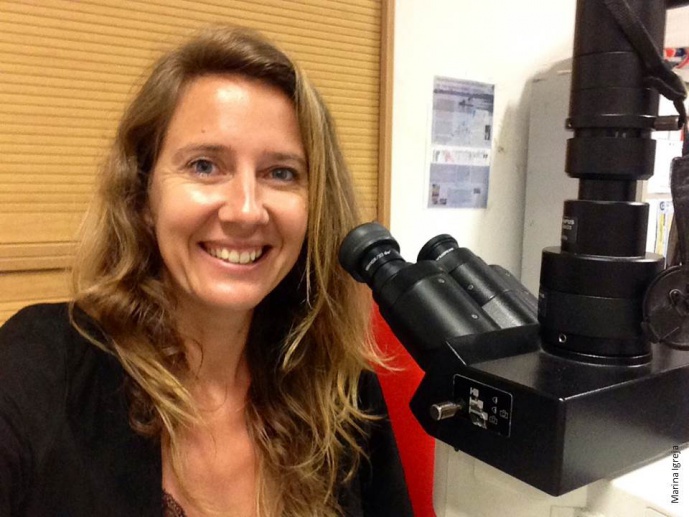
Marina de Araújo Igreja is an Auxiliary Researcher at the CIBIO-InBIO (Centro de Investigação em Biodiversidade e Recursos Genéticos) under the University of Porto , with a focus on stone tool use-wear analysis and Middle Stone Age (MSA) archaeology . She is also associated with the UMR 7269 CNRS laboratory in France. PhD in Archaeology (2005, University of Aix-en-Provence, France) Specializes in use-wear analysis of prehistoric stone tools Key research areas include cultural adaptation , human dispersal , and technological innovation during the MSA and Howiesons Poort phases. Her research bridges lithic technology and environmental interactions , examining how ecological factors shaped subsistence strategies and tool functionality . She employs molecular archaeology and microscopic techniques to study hafting adhesives and microwear patterns . Notable findings include the first molecular identification of Podocarpus resin in MSA contexts. Marina has contributed to 15 peer-reviewed publications (including 10 in high-impact journals like Journal of Archaeological Science and Southern African Humanities ), focusing on technological transitions , organic residue analysis , and cultural evolution . Her work has been supported by grants from FCT , Marie Curie IOF , and international collaborations with institutions in France, South Africa, and Syria. Scientific Awards: FCT Post-doctoral Grant (2006-2012) Marie Curie Individual Fellowship FCT Investigador FCT contract She collaborates with the Diepkloof Rock Shelter excavation team and contributes to understanding regional MSA traditions . Her recent projects explore cultural transmission mechanisms and early modern human adaptation .