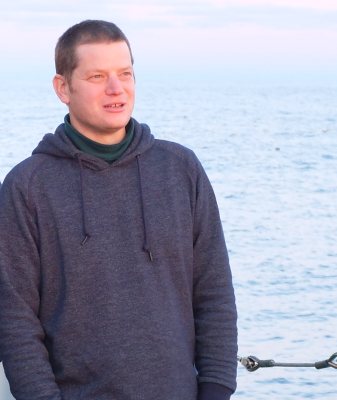
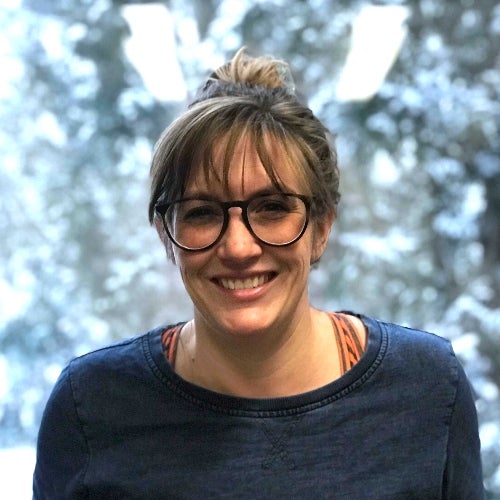
Dr. Peter Holtermann is a researcher in Physical Oceanography at the Leibniz Institute for Baltic Sea Research (IOW) in Rostock, Germany. His work focuses on small- and mesoscale processes, particularly mixing and transport in stratified marine systems. He leads projects combining field measurements (using microstructure profilers, current profilers, and numerical modeling with GOTM/GETM) with biogeochemical analyses, emphasizing oxygen dynamics and anoxia mitigation. Current projects include the STB initiative on shallow water zones and autonomous vehicle integration in field measurements. His research interests span turbulence, coastal engineering, and climate impacts on marine systems. Key contributions include studies on nitrogen cycling, greenhouse gas dynamics in coastal peatlands, and turbulence observations in the Baltic Sea. Holtermann collaborates on observational systems like the Baltic Sea Observatory and develops methodologies for dissipation rate measurements using shear probes. Publications highlight his work on submesoscale processes, gravity currents, and hydrodynamic modeling. His interdisciplinary approach integrates physical, chemical, and biological data to address challenges in marine sustainability and climate change.
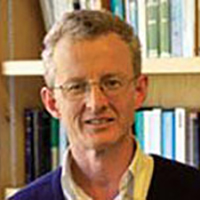
William R. Young is a Professor at the Scripps Institution of Oceanography, UC San Diego. He specializes in Physical Oceanography, Climate Sciences, and Geophysical Fluid Dynamics. His research focuses on Internal Waves, Ocean Mixing, Submesoscale Processes, and Turbulence Dynamics. Education: B.S., M.S. (Australian National University); Ph.D. (MIT) Affiliations: CLIMATE/ATMOS SCI/PHY OCEANOG department at Scripps Institution of Oceanography Key Research Areas: Near-Inertial Waves, Geostrophic Turbulence, and Ocean Circulation Models His work spans theoretical and applied oceanography, including studies on wave-turbulence interactions, climate modeling, and submesoscale processes. Recent publications address topics like vertical mixing effects, surface wave dynamics, and Parkinson's gait analysis. Collaborations include leading institutions globally.
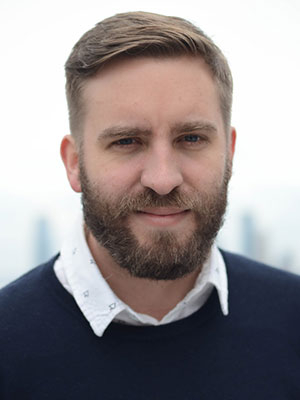
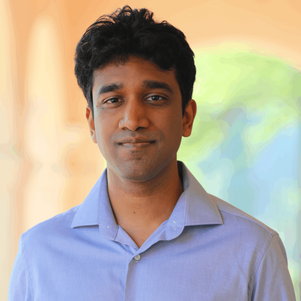
Ryan Abernathey is an Associate Professor of Earth and Environmental Sciences at Columbia University, affiliated with the Lamont Doherty Earth Observatory (LDEO). He holds a Ph.D. from MIT (2012) and a B.A. from Middlebury College, and joined Columbia in 2013 following a postdoctoral fellowship at Scripps Institution of Oceanography. His research focuses on physical oceanography, particularly the role of mesoscale turbulence (eddies, waves, jets) in Earth’s climate system, with a regional emphasis on the Southern Ocean. He develops high-resolution numerical models and leverages satellite remote sensing, while advocating for open-source software, open data, and reproducible science. His research integrates computational methods like machine learning to analyze ocean satellite observations, as seen in collaborations with Prof. Tony Jebara (Computer Science) and Dr. Joaquim Goes (LDEO). He has received prestigious awards including the Alfred P. Sloan Fellowship (2016), NSF CAREER Award, and NASA New Investigator Award. His work also explores cloud-native data repositories and computational ecosystems like Pangeo for geosciences. Abernathey’s studies address key topics such as eddy-driven transport of heat and tracers, Southern Ocean dynamics, and the impact of lateral mixing on climate variability. His recent publications emphasize submesoscale processes, Lagrangian connectivity, and machine learning applications in oceanography. Labs/Teams: Pangeo Ecosystem, LDEO Research Group Grants: NSF CAREER, Sloan Fellowship, NASA, Columbia RISE Grant
Dr Andrew Kiss is a Research Professor at the Research School of Earth Sciences (RSES), The Australian National University. He specializes in ocean dynamics, climate modeling, and fluid dynamics, with a focus on the role of ocean currents and their response to climate perturbations. He holds a PhD (2001) and BSc (Hons Physics, 1994) from ANU. His research emphasizes high-resolution ocean modeling, including contributions to the ACCESS-OM2 and ACCESS-OM3 models under the COSIMA consortium. He explores topics such as mixed layer depth variability, Southern Ocean dynamics, and Antarctic Bottom Water circulation. He has published extensively on ocean-atmosphere interactions, mesoscale currents, and climate feedback mechanisms. Key areas of interest include the impact of eddies on climate, numerical mixing in ocean models, and the role of topography in submesoscale dynamics. His work integrates observational data with advanced simulations to address critical questions in climate science and oceanography.
David Cade is a Postdoctoral Scholar at Stanford University's Hopkins Marine Station, specializing in the intersection of oceanography, marine biology, and biomechanics. His research focuses on predator-prey dynamics in marine ecosystems, particularly the foraging behaviors of large whales such as blue, humpback, and minke whales. He develops innovative bio-logging technologies and computational workflows to study how these organisms interact with their environment. Dr. Cade holds advanced degrees including a Ph.D. in Biology (Stanford, 2019), M.Sc. in Oceans and Atmospheric Science (Oregon State University, 2014), and a B.A. in Mathematics (Brown University, 2002). His work bridges ecological, physiological, and engineering disciplines, with notable contributions to understanding whale energetics, prey distribution, and the impacts of anthropogenic activities. He has been recognized with the Early Career Award from the International Bio-logging Society for his contributions to bio-logging science and education. His outreach efforts include collaborations with institutions like the American Museum of Natural History and the California Science Center to engage K-12 students in science through data-driven projects. Key research themes include the use of acoustic and imaging tools to track whale movements, the role of oceanographic fronts in prey aggregation, and the biomechanical constraints of filter-feeding in marine giants. His work emphasizes interdisciplinary approaches to address conservation challenges and improve educational access for underrepresented students.
Hugo Peyre is a Professor of Child Psychiatry at the Montpellier University Hospital and an associated member of the Laboratory of Cognitive Sciences and Psycholinguistics. His work spans interdisciplinary research in oceanography, atmospheric science, and climate dynamics. Research Interests Peyre's research focuses on: Ocean surface turbulence and Lagrangian dispersion mechanisms Atmospheric response to sea surface temperature anomalies Submesoscale and mesoscale ocean-atmosphere interactions Stratospheric plume dynamics from wildfires and volcanic eruptions Geophysical fluid dynamics and baroclinic instabilities Three-dimensional ocean current reconstruction from surface data Publication Trends His recent articles (2025-2021) emphasize nonlinear dynamics in oceanic and atmospheric systems, with a focus on Lagrangian transport, internal wave interactions, and climate-scale feedback mechanisms. Key topics include the role of ageostrophic motions in turbulence predictability, stratospheric vortex behavior, and satellite-based ocean-atmosphere modeling using SWOT mission data.
María Dolores Pérez Hernández is an Associate Professor and permanent researcher at the Institute of Marine Sciences of the Canary Islands (IOCAG), University of Las Palmas de Gran Canaria. She holds a Ph.D. in Physical Oceanography (2015) and previously worked at Woods Hole Oceanographic Institution (2015-2018) and the Marine and Freshwater Research Institute in Iceland (2017-2019). She currently serves as Secretary of IOCAG. Education: Bachelor's in Marine Science, University of Las Palmas de Gran Canaria (2009) Master's in Oceanography (2011) Ph.D. in Physical Oceanography (2015) Research Interests: Focuses on ocean circulation dynamics under climate change, boundary currents, inter-gyre exchanges, and Meridional Overturning Circulation. Integrates observational techniques (satellite data, autonomous platforms) with numerical models. Recent Work: Her publications analyze Atlantic Ocean circulation patterns, transport mechanisms, and climate system interactions using multi-decadal datasets. Key contributions include studies on North Atlantic zonal circulation and South Atlantic interbasin exchanges. Awards & Grants: Awarded the Viera y Clavijo contract for excellent researchers (2019). Her work has been supported through international collaborations and institutional grants. Labs/Teams: Leads oceanographic field campaigns and data synthesis projects at IOCAG, collaborating with institutions like the National Oceanography Centre (UK) and Scripps Institution of Oceanography.
Melissa Omand is an Associate Professor of Oceanography at the University of Rhode Island, specializing in physical oceanography and biogeochemical processes. Her work focuses on observational techniques to study carbon export, submesoscale dynamics, and the development of low-cost ocean instruments. She leads research on mechanisms driving the biological pump and has contributed to major field campaigns like EXPORTS and S-MODE. Education : Ph.D., Physical Oceanography, Scripps Institution of Oceanography (2004–2011) B.Sc. (Honors) in Physics, University of Guelph (1999–2003) Research Interests : Dr. Omand develops novel instrumentation to quantify carbon fluxes and study physical-biological interactions. Her projects include deploying MINION floats, GelCam sediment traps, and advancing airborne remote sensing for submesoscale processes. She explores how eddies, turbulence, and stratification influence nutrient distribution and plankton dynamics in coastal and open-ocean environments. Articles Trends : Her recent work emphasizes interdisciplinary methods, combining Lagrangian floats, DNA sequencing, and holographic imaging to track carbon pathways. Key themes include salp-mediated carbon export, impacts of extreme weather on ocean biogeochemistry, and advancing open-source ocean technologies. Publications span from submesoscale dynamics to instrument calibration and virtual reality applications in ocean education. Grants & Collaboration : PI on NSF CAREER grant for sensor development Co-lead on Twilight Zone Observation Network project Contributions to multi-institutional EXPORTS and S-MODE initiatives Labs/Teams : Affiliated with URI's Graduate School of Oceanography (GSO), leading teams in ocean technology and biogeochemical process studies. Collaborates with Scripps, NOAA, and international groups on field deployments and data synthesis.
Mohamed Iskandarani is a Professor in the Department of Ocean Sciences at the Rosenstiel School of Marine, Atmospheric, and Earth Science, University of Miami. His research focuses on oceanographic modeling, data assimilation, and uncertainty quantification in geophysical fluid dynamics. He specializes in developing advanced numerical methods for climate and ocean circulation studies, including polynomial chaos frameworks, Gaussian process regression, and spectral element models. His work integrates machine learning techniques with traditional oceanography to improve predictions of submesoscale structures, storm surges, and hurricane impacts. Iskandarani has contributed to understanding Loop Current dynamics in the Gulf of Mexico, fish larval connectivity in Florida Keys, and the propagation of uncertainties in coupled atmosphere-wave-ocean systems. Key research areas include: (1) High-resolution ocean velocity field reconstruction using Lagrangian drifter data, (2) Quantifying uncertainties in biophysical and climate models, (3) Developing statistical interpolation codes for ocean forecasting, and (4) Exploring multiscale ocean-atmosphere interactions. His methods are applied to real-world challenges like hurricane forecasting, oil spill trajectory modeling, and coastal engineering design criteria. Collaborations involve institutions such as NOAA, NASA, and international oceanographic consortia. Published extensively in journals like Journal of Marine Science and Engineering and Monthly Weather Review , his work bridges computational science with environmental applications. Recent projects analyze submesoscale turbulence, drifter-based velocity field reconstructions, and ensemble-based statistical emulators for ocean current predictions.
Nauzet Hernández Hernández is a postdoctoral researcher at the Oceanography and Global Change Institute (IOCAG) , University of Las Palmas de Gran Canaria (ULPGC). His work focuses on understanding how submesoscale ocean dynamics and anthropogenic factors like ocean acidification influence primary production and plankton community structure. Key projects include mesocosm experiments on carbon fluxes and studies in the Canary Upwelling region. Research Interests: Submesoscale processes, ocean acidification, primary production, microbial ecology, biogeochemical cycles, and upwelling systems. Publications Trends: His research spans mesocosm-based climate intervention studies, carbon cycling in coastal and open-ocean upwelling systems, and the interplay between physical oceanography and biological productivity. He frequently examines microbial responses to environmental stressors like elevated CO2 and nutrient shifts. Key Collaborations: Active in the KOSMOS mesocosm experiments, contributing to studies on ocean alkalinity enhancement and artificial upwelling impacts. His work bridges observational oceanography with experimental approaches.
Dr. Jun-Hong Liang is an Associate Professor in the Department of Oceanography & Coastal Sciences at Louisiana State University, with a joint appointment at the Center for Computation and Technology. He holds a PhD in Atmospheric and Oceanic Sciences from UCLA and conducts research in physical oceanography and ocean biogeochemical dynamics. His research focuses on: Air-sea gas exchange processes Upper ocean turbulence and mixing Marine particle dynamics Gulf of Mexico environmental issues Ocean-atmosphere-wave interactions Dr. Liang teaches courses including Introduction to Oceanography and Physical Oceanography. His publications primarily focus on ocean modeling, air-sea interactions, and turbulence parameterization, with recent work incorporating machine learning approaches. Awards and honors: NSF CAREER Award (2020-2025) LSU Rising Faculty Research Award (2020) NASA Earth System Science Fellowship He leads a research group with several graduate students and postdoctoral researchers focusing on ocean dynamics modeling and collaborates with national and international research teams on field studies.
Dr. Ivan Kuznetsov is a Researcher in Climate Dynamics at the Alfred Wegener Institute (AWI) . His work focuses on Arctic Oceanography, numerical modeling, and integrating AI-driven tools for climate science. He actively contributes to major projects like the MOSAiC Expedition and develops models such as FESOM-C for coastal and global climate studies. Research Interests: - Climate dynamics and Arctic system interactions - Development of coupled physical-biogeochemical models - Application of Language Learning Models (LLMs) to enhance climate data analysis and dissemination - Coastal processes and sea-ice dynamics - Submesoscale and mesoscale ocean variability Notable Projects: - MOSAiC:OCEAN : Modeling the central Arctic Ocean's winter dynamics. - ClimSight : AI-powered climate information system. - FESOM-C : Coastal ocean model for high-resolution studies. Key Contributions: - Over 30 peer-reviewed articles on Arctic Oceanography, model development, and climate change impacts. - Lead in analyzing MOSAiC expedition data to understand Arctic mixed layer dynamics and sea-ice interactions.
Joaquín Tintore Subirana is a Research Professor at the Mediterranean Institute for Advanced Studies (IMEDEA) , a joint research institute of the Spanish National Research Council (CSIC) and the University of the Balearic Islands (UIB) . He serves as Director of SOCIB (Balearic Islands Coastal Observing and Forecasting System) since 2009 and as Institutional Coordinator of CSIC in the Balearic Islands since 2006. His career spans over 35 years in physical oceanography and operational oceanography. Education : Grade in Physics (1984), University of Barcelona PhD in Physics (1988), University of Barcelona Awarded CSIC Research Professor (2000) Research Interests : Specializing in ocean observing systems , his work focuses on mesoscale and submesoscale eddies , coastal ocean dynamics , and climate change impacts on marine environments. His research integrates glider-based microstructure measurements , high-frequency radar , and satellite data to study Western Mediterranean processes . Recent publications examine turbulence datasets , greenhouse gas distributions , and extreme weather impacts on coastal zones. He has developed digital twin tools for coastal adaptation planning and contributed to international marine policy frameworks. Scientific Awards : 2003 National Research Award 'Alejandro Malaspina' for mesoscale oceanography contributions Advising & Leadership : Supervisor of 10 PhD theses , he has led major multi-platform oceanographic campaigns like AlborEX and SMART missions . As director of IMEDEA (1999-2008), he coordinated 55 peer-reviewed projects and shaped Spain's marine infrastructure policy . Labs & Collaborations : Leads the Marco Zavatarelli Lab at IMEDEA, collaborating with European research networks including Euro-GOOS , Euro-Argo ERIC , and Science Europe Working Group . His work integrates with Copernicus Marine Service and OceanGliders programs.
Mukund Gupta is an Assistant Professor in the Department of Geoscience and Remote Sensing at Delft University of Technology (TU Delft), Faculty of Civil Engineering and Geosciences, where he has been serving since November 2023. He holds a Ph.D. in climate science from the Massachusetts Institute of Technology (2020) and conducted postdoctoral research in physical oceanography and sea ice dynamics at the California Institute of Technology. His research centers on the coupled interactions between the ocean, cryosphere, and carbon cycle. He investigates processes ranging from global-scale ocean currents to kilometer-wide turbulence and individual sea ice floes. His methodological toolkit includes Large Eddy Simulations, Discrete Element Models, Global Climate Models, and remote sensing data analysis. These approaches allow him to study complex phenomena such as sea ice melt dynamics, nutrient transport in subtropical oceans, and climate responses to volcanic activity. His recent publications, appearing in top-tier journals like Geophysical Research Letters , Proceedings of the National Academy of Sciences , and Journal of Geophysical Research: Oceans , demonstrate a strong focus on polar and oceanic systems, with emerging themes in climate modeling and Earth system feedbacks. His work bridges observational data with high-resolution modeling to improve understanding of climate change impacts. Eddy-induced dispersion of sea ice floes at the marginal ice zone (2024) A nutrient relay sustains subtropical ocean productivity (2022) Regimes of sea‐Ice floe melt: ice‐ocean coupling at the submesoscales (2022) Sea-ice melt driven by ice-ocean stresses on the mesoscale (2020) The effect of Antarctic sea ice in limiting Southern Ocean carbon outgassing (2020) The climate response to multiple volcanic eruptions mediated by ocean heat uptake (2018) Mukund Gupta teaches in the CW1 Climate Modelling program at TU Delft, contributing to the education of future geoscientists. He is actively involved in research and has not been indicated as retired, deceased, or former staff. No specific information about advisees, grants, or awards is available in the provided text. He is affiliated with the Geoscience and Remote Sensing (GRS) Laboratory at TU Delft, which focuses on atmospheric science, Earth system science, and geodetic remote sensing. The lab supports advanced computational and observational research, and Gupta’s work likely contributes to its mission of understanding environmental change through integrated modeling and remote sensing techniques.
Christine Dow is an Associate Professor and Canada Research Chair (Tier 2) in Glacier Hydrology and Ice Dynamics at the University of Waterloo. Her research combines numerical modeling, remote sensing, and in situ data to study subglacial hydrology's impact on ice dynamics across Antarctica, Greenland, and Yukon glaciers. Key Research Areas: Subglacial lake stability, Greenland's seasonal hydrology, Yukon surge-type glacier dynamics, and Antarctic ice shelf stability Methodologies: Numerical modeling, remote sensing, geophysical data integration, and fieldwork with dGPS networks and borehole drilling Her recent work focuses on ice-climate feedbacks, grounding line stability, and supraglacial river systems. Student supervision spans glacial hydrology, ice dynamics, and data collection techniques. Notable awards include the Canada Research Chair Tier 2 Fellowship. Her publications (2020-2023) demonstrate interdisciplinary approaches to understanding glacier responses to climate change.