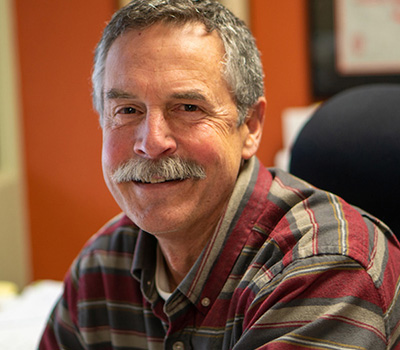
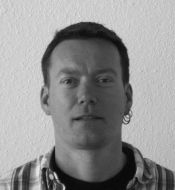
Dr. Nuno Serra is a Research Scientist at the Institute of Oceanography, University of Hamburg, within the Center for Earth System Research and Sustainability (CEN). He has been affiliated with the University since 2011, focusing on modeling the carbon cycle in the Earth system. His research explores physical processes in the North Atlantic and Arctic systems, dense water overflows, ocean current instabilities, and numerical ocean models. He holds a PhD in Physics (Physical Oceanography) from the University of Lisbon (2004) and a Diploma in Geophysical Sciences from the University of Lisbon (1997). His work emphasizes climate modeling, data assimilation using adjoint methods, and Arctic oceanography. Key contributions include studies on Arctic sea level variability, ocean kinetic energy dynamics, and barrier layers in the tropical Atlantic. He has authored over 45 publications in journals like Journal of Geophysical Research and Ocean Science . Dr. Serra collaborates on projects involving observing systems and climate change impacts, with a focus on sustainable development goals related to climate action (SDG 13). His research integrates advanced numerical simulations and visualization techniques, including VR tools for climate data.
Jody Klymak is a Professor in the School of Earth and Ocean Sciences and Department of Physics and Astronomy at the University of Victoria. His research focuses on physical oceanography, particularly small-scale ocean flows and their impacts on larger circulation patterns, including waves, turbulence, fronts and eddies. Research interests center on ocean mixing processes driven by topography and mesoscale stirring, coastal transport dynamics, and energy dissipation mechanisms. Current projects include C-PROOF, SWOT Balance/Imbalance studies, and International Year of Salmon physical oceanography research. Education: PhD in Physical Oceanography, University of Washington MSc in Physical Oceanography, University of Washington BSc in Mathematics and Physics, University of Victoria Research employs seagoing data collection, numerical experiments, and innovative instrumentation to understand energy dissipation pathways and mixing processes. Active projects investigate submesoscale streamers, internal wave generation, and turbulent mixing across diverse oceanic environments from Arctic channels to subtropical fronts. Scientific Awards: Award for Research Excellence, University of Victoria (2010) Editors' Citation for Excellence in Refereeing, Journal of Geophysical Research (2010) The Ocean Physics Group collaborates with the Institute of Ocean Sciences on instrumentation development and maintains extensive field observation programs using gliders, current meters, and other autonomous platforms to study coastal and open-ocean processes.
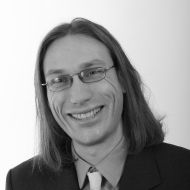
Simen Ådnøy Ellingsen is a Professor in the Department of Energy and Process Engineering at NTNU. His research focuses on fluid dynamics, particularly wave-turbulence interactions, remote sensing of ocean currents, and free-surface turbulence. He holds dual PhDs in War Studies (King's College London) and Quantum Physics (NTNU). Ellingsen has received prestigious awards including the ERC Consolidator Grant (2023-2027) and was recognized as an Outstanding Academic Fellow at NTNU (2018-2022). His work bridges experimental and theoretical approaches, with recent studies exploring vortex structures and gas transfer across air-water interfaces. Education: MSc in Technical Physics, NTNU (2001–2006) PhD in War Studies, King's College London (2006–2009) PhD in Quantum Physics, NTNU (2007–2011) Awards and Affiliations: Member, Royal Norwegian Society of Sciences and Letters Former member, Young Academy of Norway (2019–2023) Exxon Mobil Prize for Best PhD Thesis in Basic Research (2011) Research Trends: Recent publications emphasize experimental and computational studies of wave-current interactions, turbulence effects on surface deformations, and remote sensing techniques. His work addresses challenges in oceanography, environmental fluid dynamics, and geophysical fluid mechanics. Grants and Advising: Led the WaTurSheD project under the ERC Consolidator Grant Collaborations include interdisciplinary teams studying fluid dynamics and remote sensing Ellingsen’s contributions span academic and artistic domains, including his role in the prog rock band Shamblemaths, reflecting his creative dual identity.
David Siegel is a Professor in the Department of Geography at the University of California, Santa Barbara. He serves as the Science Lead for NASA/NSF's EXPORTS field campaign, focusing on marine ecosystems, satellite remote sensing, and ocean biogeochemistry. His research spans marine bio-optics, pelagic microbial diversity, and coastal kelp dynamics, with recent emphasis on marine carbon dioxide removal (mCDR) strategies. Education details are not explicitly provided but inferred through his academic role. His research interests include satellite-derived ocean color analysis, carbon sequestration via seaweed cultivation, and particle flux dynamics. Recent work explores the efficacy of kelp biomass sequestration and storm impacts on marine particle behavior. Scientific awards are not listed. He advises five graduate students and collaborates on projects like EXPORTS. His work integrates remote sensing, field campaigns, and modeling to address climate mitigation and ocean health. Labs/teams include the EXPORTS campaign and interdisciplinary collaborations on mCDR strategies.
Christopher Horvat is an Assistant Professor in the Department of Earth, Environmental & Planetary Sciences at Brown University. He leads the Antipodal Oceanography Group, focusing on rapid climate change in polar and tropical regions. His research integrates applied mathematics, physical oceanography, and remote sensing to study sea ice dynamics, ocean turbulence, and climate modeling. Key areas include sea ice fracture mechanics, wave-ice interactions, and machine learning applications in climate science. Horvat's work leverages satellite data (e.g., ICESat-2) and computational models to address challenges in polar and tropical climate systems. His recent studies emphasize improving sea ice concentration estimates, analyzing extreme climate events, and understanding ecological responses to environmental shifts. His methodologies include novel parameterizations of ocean turbulence, floe size distribution models, and algorithm development for satellite data interpretation. His research group collaborates on projects like the NASA ABoVE campaign and utilizes advanced tools such as WIFF1.0—a machine learning-based sea-ice fracture parameterization. While his publications highlight interdisciplinary approaches, his current efforts aim to bridge observational data with predictive climate models to inform Arctic and Antarctic resilience strategies.
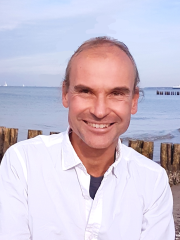
Ulf Gräwe is a researcher at the Leibniz Institute for Baltic Sea Research , focusing on coastal and estuarine dynamics, with expertise in particle transport, wave-flow interactions, and Baltic Sea hydrology. His work bridges numerical modeling and empirical analysis of marine systems. Key research areas: Particle Dynamics, Coastal Circulations, Wave-Flow Coupling Primary affiliation: Leibniz Institute for Baltic Sea Research (Warnemünde, Germany) Email: ulf.graewe@io-warnemuende.de Research Trends : Recent publications emphasize extreme sea level events , storm surge uncertainties , machine learning applications in discharge forecasting, and military legacy contamination in the Baltic Sea. His studies integrate 3D hydrodynamic modeling , Lagrangian transport analysis , and climate change impact assessments on coastal systems. Projects : Involved in M-LAB (sea level rise impacts on coastal defenses) and BMIP (Baltic Sea model intercomparison), with a focus on anthropogenic interventions like channel deepening and ecosystem responses to stratification and salinity changes.
Nicolas Cassar holds the Lee Hill Snowdon Professor of Biogeochemistry at Duke University's Nicholas School of the Environment. His research focuses on environmental biogeochemistry and physiology, particularly mechanisms governing ocean carbon cycles, productivity, and climate interactions. Education: Ph.D. (2003) from University of Hawaii, Manoa; B.S. (1997) from McGill University His interdisciplinary approach combines field observations, laboratory experiments, and data science to study topics like ocean carbon budgets, nitrogen fixation, and air-sea gas exchange. Recent work examines Southern Ocean dynamics, dust-driven blooms, and submesoscale biophysical features. Scientific contributions include the development of high-frequency measurement systems for dissolved gases and co-principal investigator roles in NSF-funded projects. Awards highlight his early career achievements (NSF CAREER 2014) and his 2025 recognition as a Bass Chair.
Dr. Jen-Ping Peng is a physical oceanographer and researcher at the Ocean Graduate School, University of Western Australia, focusing on advanced marine dynamics and turbulence studies. His work contributes to understanding critical ocean processes through cutting-edge technologies like the SWOT satellite. PhD from University of Rostock with magna cum laude distinction Active in 6+ international collaborations (Leibniz Institute, University of Southampton, UK) Recipient of $40,000 in research grants (UWA, UA-DAAD) Research Interests: Specializing in submesoscale dynamics, marine turbulence, and nonlinear internal wave phenomena. His work addresses diurnal effects on ocean energy cycles and climate dynamics through field campaigns and numerical modeling. Publication Trends: Most recent papers focus on Southern Ocean dynamics, SWOT satellite validation, and diurnal variability in coastal regions. Key contributions include boundary layer processes, kurtosis analysis, and freak wave prediction models. Awards & Roles: 2022 UWA Research Collaboration Award 2021 AGU Excellence in Refereeing Guest Editor for Remote Sensing (IF:5.3) Peer Reviewer for major oceanography journals Global Impact: Collaborations span 4+ countries with fieldwork in Indian/Southern Oceans. Research aligns with UN SDG 13 (Climate Action) through ocean-climate-SDG linkages.
Darren McKee is a Postdoctoral Research Associate at the University of Virginia, affiliated with the research group led by Dr. Doney. His work focuses on physical oceanography, particularly on intraseasonal processes influencing primary productivity. Education : Ph.D. in Earth & Environmental Sciences, Columbia University / Lamont-Doherty Earth Observatory (2019) B.A. in Earth & Environmental Sciences (Major) and Mathematics (Concentration), Columbia University (2010) McKee's research explores submesoscale ocean dynamics, including phytoplankton biomass variability in eddy straining regions and continental shelf processes along the western Antarctic Peninsula. He utilizes biogeochemical Argo floats, remote sensing, and Community Earth System Model simulations to study these phenomena. His current projects emphasize the breakdown of geostrophic balances and the role of ageostrophic vertical velocities in marine ecosystems.
Knut Klingbeil is a physicist and researcher at the Leibniz Institute for Baltic Sea Research (IOW) in Rostock, Germany, affiliated with the University of Rostock’s Department of Physical Oceanography. His primary focus is on numerical ocean model development, particularly in hydrodynamic modeling and coupling techniques. He leads the ECOP working group and contributes to projects like TRR181 and MOSSCO, advancing scientific model development and high-resolution simulations. Research Interests: Klingbeil specializes in consistent numerical techniques for ocean models, coupling hydrodynamics with environmental processes (e.g., waves, atmosphere, sediment), and accurate online model analyses. His recent work emphasizes future model systems for two-way nested simulations in shallow water and the Baltic Sea scale. He actively develops coastal ocean models (GETM), turbulence models (GOTM), and ecosystem frameworks (FABM, MOSSCO). Advising & Grants: He supervises PhD students in Physics and Mathematics, focusing on topics like water mass transformation, coupled atmosphere-ocean models, and numerical methods. Notable grants include funding for reducing spurious mixing in ocean models (€169k–228k). Labs/Teams: Leads the ECOP group at IOW and collaborates across universities and institutions. He organizes conferences (e.g., COMMODORE workshops, EGU sessions) and serves as a reviewer for journals and agencies (e.g., ANR, NERC, JAMSE).
Lars Umlauf is a Senior Researcher at the Leibniz-Institute for Baltic Sea Research (IOW) in Warnemünde, Germany, and a Privatdozent (Lecturer) at Rostock University. He leads the "Turbulence and Small-Scale Processes" research group at IOW and serves as an editor for the Journal of Geophysical Research. His work focuses on physical oceanography with emphasis on turbulence, mixing processes, and small- to meso-scale dynamics in marine environments, particularly in the Baltic Sea. Dr. Umlauf's educational background includes: 1991-1997: Department of Mechanics / Mechanical Engineering at TU Darmstadt (Germany) and UC Berkeley (USA) 1997-2001: PhD at TU Darmstadt (Germany) 2001-2003: Post-Doc at Ecole Polytechnique Fédéral de Lausanne (EPFL, Switzerland) 2013: Habilitation at Rostock University His research interests center on turbulence, mixing, and small- to meso-scale processes in the ocean. Dr. Umlauf investigates small-scale processes near surface-layer fronts, atmosphere-ocean feedbacks induced by diurnal warm layers and rain layers, the dynamics of rotating bottom gravity currents, internal-wave mixing, and boundary mixing processes in stratified basins. He also collaborates with colleagues from other disciplines to understand how small-scale physical processes affect biogeochemical interactions, particularly in regions with large redox gradients. A special interest of his is the development of marine turbulence models, including contributions to the public domain turbulence toolbox GOTM (www.gotm.net). Dr. Umlauf's recent publications reveal a consistent focus on turbulence and mixing processes in stratified marine environments, particularly in the Baltic Sea. His work spans observational, theoretical, and numerical approaches to understanding small-scale ocean dynamics. A significant portion of his recent research examines diurnal warm layers, boundary mixing, and the role of turbulence in biogeochemical processes. His collaborative work extends across multiple institutions and countries, reflecting the international nature of oceanographic research. Among his recognitions: Young Scientist Outstanding Poster Award at EGU General Assembly 2010 Dr. Umlauf actively contributes to the scientific community through editorial work, conference organization, and collaborative research projects. He has been involved in numerous international research collaborations and has served as a guest scientist at institutions including Oregon State University and the University of Victoria. His work often bridges the gap between physical oceanography and other marine science disciplines, particularly in understanding how physical processes influence biogeochemical cycles. At the Leibniz-Institute for Baltic Sea Research, Dr. Umlauf leads the "Turbulence and Small-Scale Processes" research group, which focuses on understanding the fundamental mechanisms of ocean mixing and their implications for larger-scale ocean dynamics and biogeochemical processes. The group employs a combination of observational, theoretical, and numerical approaches to tackle questions related to turbulence and mixing in marine environments.
Peter Jan Van Leeuwen is a Professor specializing in data assimilation methodologies with applications across geophysical sciences. His research develops advanced techniques for high-dimensional systems with particular emphasis on particle filtering approaches. His research innovations include: Development of implicit equal-weights particle filters for high-dimensional systems Nonlinear data assimilation frameworks using particle flow filters Ensemble methods for model error estimation Advanced Bayesian inference techniques for geophysical applications Novel approaches for causal discovery in complex systems Recent publications demonstrate wide applications from oceanography and atmospheric science to flood forecasting and astrophysics. His work consistently addresses fundamental challenges in high-dimensional uncertainty quantification and nonlinear system behavior. Research contributions include significant methodological advances in: Particle filter efficiency for ocean and atmospheric models Time-correlated model error estimation Riemannian data assimilation frameworks Causal inference in non-intervenable systems Preconditioning strategies for 4D-Var assimilation Dr. Van Leeuwen has collaborated extensively on projects including the SEASTAR satellite mission concept for ocean submesoscale dynamics and contributed to major data assimilation initiatives like MERCATOR and MERSEA.
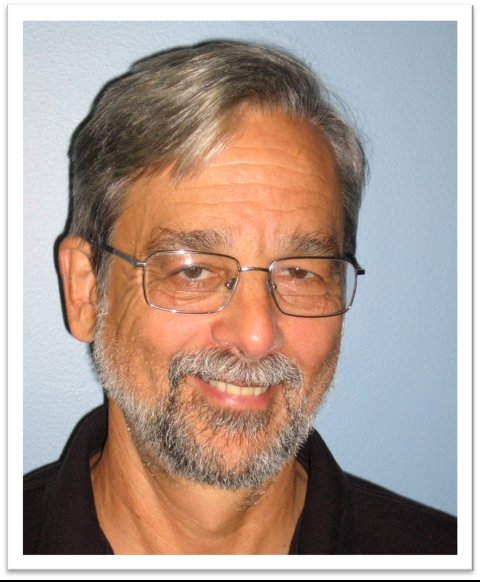
John Klinck is a Professor at Old Dominion University (ODU) in the College of Sciences. His research focuses on analytical and numerical modeling of physical and biological processes in oceanic, coastal, and estuarine environments. He holds a Ph.D. in Marine Science (North Carolina State University, 1980), an M.S. in Physics (University of North Carolina, 1975), and a B.S. in Physics (Clemson University, 1972). Dr. Klinck has led numerous grants totaling millions in funding, including studies on Antarctic Peninsula glacial melting, Ross Sea dynamics, and the impacts of climate change on marine ecosystems. His work integrates oceanography with ecological modeling, addressing issues like surfclam population dynamics, offshore wind energy impacts, and disease transmission in shellfish. His recent publications (2024–2019) explore topics such as Antarctic Circumpolar Current dynamics, climate-driven species range shifts, and the interplay between ocean models and paleoenvironmental reconstructions. Key themes include submesoscale instability, benthic warming effects, and management strategies for fisheries amid environmental change.
Nauzet Hernández-Hernández is a postdoctoral researcher at the Biological Oceanography Group (GOB) within the Oceanography and Global Change Institute (IOCAG) at Universidad de Las Palmas de Gran Canaria. His work focuses on understanding the complex interactions between physical oceanographic processes and marine ecosystems. Specializes in submesoscale processes' effects on primary production Conducts ocean acidification mesocosm experiments Investigates carbon fluxes in the Canary Upwelling region Research spans critical marine biogeochemical processes, including: Phytoplankton community structure dynamics Vertical motion in mesoscale eddies and fronts Extracellular enzyme activity patterns Organic matter cycling in oligotrophic systems His recent publications highlight advancements in experimental oceanography, with key contributions to: Comparative analysis of primary production estimates Microbial responses to ocean alkalinity enhancement Carbon cycling in Eastern Boundary Upwelling Systems Dust deposition impacts on tropical Atlantic plankton Active participant in KOSMOS mesocosm experiments across multiple geographic locations including Bergen, Gran Canaria, and Peru.
Robert (Bob) Cowen is a Professor and the Director of the Hatfield Marine Science Center at Oregon State University. His research focuses on biological oceanography, plankton ecology, and larval fish biology, with a strong emphasis on using advanced in-situ imaging technologies to study marine ecosystems. He has published extensively on topics such as plankton community dynamics, larval fish dispersal, and the role of gelatinous zooplankton in marine food webs and carbon cycling. Research Interests: Biological Oceanography and Plankton Ecology Larval Fish Biology and Dispersal Marine Ecosystem Connectivity In-Situ Marine Imaging and Classification Zooplankton Dynamics and Trophic Interactions Oceanographic Drivers of Marine Life Distribution His recent work includes studies on anchovy trophodynamics in the California Current, imaging-based analysis of mixotrophic protists, and the ecological roles of doliolids and filter feeders in coastal upwelling systems. He has also contributed to technological advances in edge computing for real-time plankton classification at sea. Scientific Contributions: Over 100 peer-reviewed articles in marine science and oceanography Leadership in collaborative research on plankton size spectra and trophic links Development and application of high-throughput in-situ imaging systems Studies on fine-scale plankton distributions and predator-prey interactions Affiliations and Leadership: Director, Hatfield Marine Science Center, Oregon State University Professor, College of Earth, Ocean, and Atmospheric Sciences Active in interdisciplinary marine research and education initiatives




.jpg)