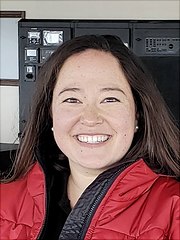
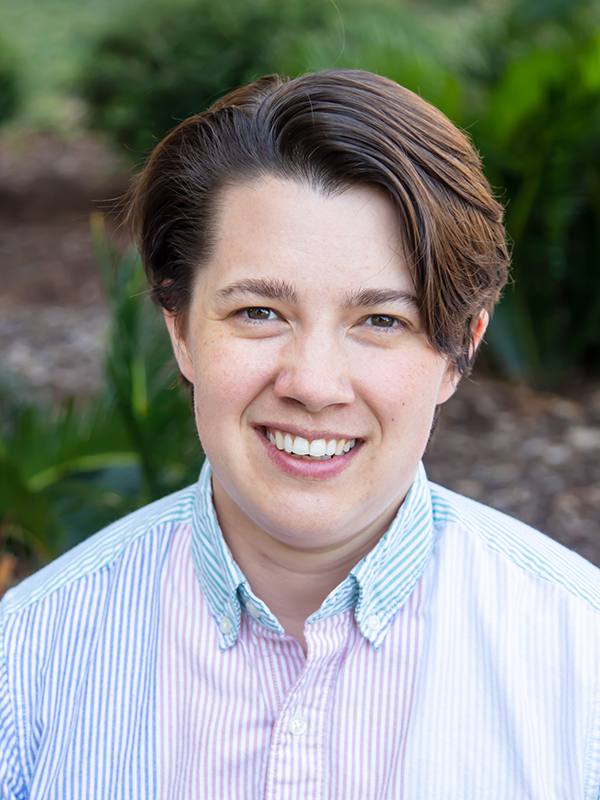
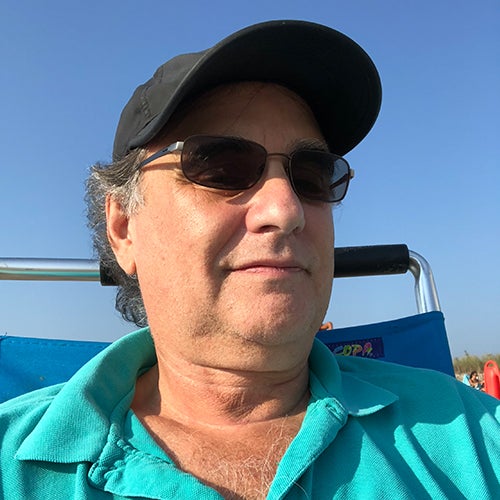
Professor Eleanor Frajka-Williams heads Experimental Oceanography at Universität Hamburg, investigating ocean dynamics using observational data from gliders, moorings, and satellites. Her research focuses on Atlantic circulation patterns and climate impacts. Research Focus: Atlantic meridional overturning circulation (AMOC), Labrador Sea convection processes, and climate-relevant ocean transport. Leadership: Principal investigator for TERIFIC (ERC) and EPOC projects, using autonomous vehicles for ocean monitoring. Honors: Nicholas P. Fofonoff Award (2021) ERC Starting Grant (2018) EGU Early Career Scientist Award (2017)
Andrew Stewart serves as Professor in the Department of Atmospheric and Oceanic Sciences at the University of California, Los Angeles (UCLA), directing the Dynamical Oceanography Group. His research centers on high-latitude ocean circulation physics with specialized focus on Antarctic margin dynamics and climate system interactions. Research interests span dynamical oceanography, Antarctic ice-ocean-atmosphere coupling, and submesoscale processes in polar regions. The group employs advanced simulation methodologies to investigate ocean circulation behavior and its responses to environmental forcing, particularly emphasizing Southern Ocean dynamics and ice sheet interactions. Recent publication trends reveal concentrated investigation into Southern Ocean energy cascades, Antarctic meltwater feedbacks, and global ocean eddy dynamics. Work integrates satellite observations, numerical modeling, and experimental approaches to address climate-relevant oceanographic phenomena. Scientific Awards: No awards documented in provided materials Advising and Grants: Professor Stewart supervises eight graduate researchers including Garrett Finucane, Kaylie Cohanim, and Cheng-Yang (Sunny) Yeh as evidenced by the 2025 group roster. External funding sources remain unspecified in available documentation though research scope implies National Science Foundation and climate-focused grant support. Labs and Teams: The UCLA Dynamical Oceanography Group maintains experimental facilities including rotating tank systems for dynamical studies. Current team composition reflects interdisciplinary collaboration across ocean modeling, satellite data analysis, and polar field research domains.
Spencer Jones is an Assistant Professor at Texas A&M University, specializing in Physical Oceanography. His research focuses on ocean dynamics, particularly the Meridional Overturning Circulation (MOC), heat and tracer transport, and the application of scalable analysis tools. He holds a PhD in Oceanography from Scripps Institution of Oceanography (2018) and a MPhys in Physics from the University of Oxford (2011). Research Interests: Ocean Transport Mechanisms Isopycnal and Vertical Mixing MOC Geometry and Variability Climate Dynamics Paleoceanography Selected Awards: Lamont Postdoctoral Fellowship (2018-2020) His recent work integrates machine learning (e.g., neural networks) with ocean modeling to analyze sea surface kinematics. He explores interbasin salt and heat exchanges, emphasizing the Atlantic-Pacific contrast and Last Glacial Maximum circulation changes. Collaborations with institutions like Columbia University and the University of Oxford strengthen his interdisciplinary approach. Spencer Jones' research bridges theoretical oceanography with computational methods, contributing to climate modeling and understanding oceanic roles in global heat redistribution.
Jacob Wenegrat is an Assistant Professor in the Department of Atmospheric and Oceanic Science at the University of Maryland, College Park. His research focuses on submesoscale ocean processes (0.1-10 km scales), combining theory, high-resolution numerical simulations, and observational data. Key research areas include ocean submesoscale dynamics, air-sea interaction, boundary layer turbulence, and multi-scale fluid dynamics. He teaches courses such as Physical Oceanography (AOSC420/670) and Oceanography of the Chesapeake and Mid-Atlantic (AOSC421). His group actively collaborates with observationalists and large-scale modelers to bridge fundamental dynamics with interdisciplinary applications like climate science and marine ecosystems. Wenegrat advises a diverse group of graduate students and postdocs working on topics including submesoscale turbulence, coastal oceanography, and numerical modeling. His lab utilizes advanced computational tools and field data from initiatives like the Sub-Mesoscale Ocean Dynamics Experiment (S-MODE). Recent research highlights include studies on marine heatwaves in the Chesapeake Bay, turbulent dynamics of submesoscale vortices, and the role of submesoscale processes in global ocean boundary layers. His work emphasizes connecting small-scale physics to broader environmental and climate systems.
Lewis M. Rothstein is a Professor at the University of Rhode Island's Graduate School of Oceanography. His career spans mechanical engineering, ocean engineering, and physical oceanography with research focusing on climate change, ocean dynamics, and numerical modeling. Ph.D. in Physical Oceanography (University of Hawaii, 1983) M.S. in Physical Oceanography (UH, 1979) M.S. in Ocean Engineering (University of Massachusetts, 1975) B.S. in Mechanical Engineering (University of Bridgeport, 1973) Rothstein's research explores climate change impacts on ocean circulation, submesoscale oceanic fronts, tropical cyclone-induced heat fluxes, and coupled biogeochemical modeling. He employs numerical simulations and satellite data to study coastal and open-ocean processes. His publications over the last decade (2003–2013) examine climate-ocean interactions, mode water dynamics, and coastal circulation patterns. These works bridge broad disciplines like physical oceanography, climate science, and ecological modeling. Rothstein teaches graduate courses in Geophysical Fluid Dynamics (OCG 610, 611) and co-teaches undergraduate oceanography for specialized students. As Science Director of the Metcalf Institute for 8 years, he emphasized science communication and journalist training. While no scientific awards are listed, his work has secured significant NSF funding, particularly for climate impact studies. He mentors graduate students with a focus on increasing female representation in oceanography.
Dr. Taka Ito is a Professor in the School of Earth & Atmospheric Sciences at the Georgia Institute of Technology. His research focuses on biogeochemical cycles, ocean circulation, and climate dynamics, with emphasis on carbon sequestration and oxygen variability in the world's oceans. He holds a Ph.D. from MIT (2005) and has received multiple awards, including the Carl-Gustaf Rossby Award (2006) and teaching excellence recognition (2003). Education: Ph.D. in Earth, Atmospheric, and Planetary Sciences, MIT (2005) Postdoctoral Research at University of Washington (2004) His research interests include: Carbon cycle modeling in the Southern Ocean and North Pacific Climate-driven ocean deoxygenation and hypoxia Role of mesoscale eddies in nutrient supply and carbon sequestration Glacial-interglacial CO2 variability and biogeochemical feedbacks Recent work highlights: Projection of global ocean deoxygenation patterns Impact of anthropogenic iron deposition on marine ecosystems Climate sensitivity of oxygen minimum zones Awards: Carl-Gustaf Rossby Award (2006) MIT Excellence in Teaching Award (2003) Geophysical Fluid Dynamics Fellowship (Woods Hole, 2003) His work integrates advanced ocean modeling with observational datasets to address critical challenges in climate science and marine biogeochemistry.
Dr. Amandine Schaeffer is a Senior Lecturer at UNSW Sydney's School of Mathematics & Statistics, specializing in physical oceanography, marine heatwaves, and jellyfish trajectory modeling. Her research integrates mathematical tools with observational data to study coastal dynamics, boundary currents, and climate extremes. PhD in Physical Oceanography (2010), Mediterranean Institute of Oceanography MSc in Physical Oceanography (2006), University of Toulon Masters in Marine Engineering (2006), SeaTech, Toulon Her research focuses on the East Australian Current's influence on marine heatwaves, submesoscale eddies, and bluebottle drift dynamics. By analyzing HF radar data, Lagrangian drifters, and glider observations, she explores how ocean stratification, wind forcing, and boundary current variability shape coastal climate extremes and ecological processes. The 15 most recent publications reveal trends in marine heatwave drivers, biophysical interactions in boundary currents, and jellyfish transport mechanisms. Key keywords span physical oceanography, climate science, and marine ecology, with sub-fields like eddy dynamics, coastal upwelling, and ocean observing systems. She supervises PhD students Youstina Elzahaby (marine heatwaves), Daniel Lee (bluebottle drift), and Natacha Bourg (boundary current dispersion). Her teaching includes mathematics and statistics courses for life sciences, as well as specialized marine science topics. As leader of the BluebottleWatch project, she bridges academic research with public safety initiatives, leveraging UNSW's oceanographic expertise to address coastal hazards through interdisciplinary collaboration.
Mostafa Bakhoday Paskyabi is an Associate Professor at the Geophysical Institute , University of Bergen. His research focuses on offshore wind energy , environmental impacts of turbines , wind-wave-turbulence interaction , and climate change effects on wind parks . He employs Large Eddy Simulation (LES) and data assimilation for digital twin development. Teaching: Course responsible for ENERGI322 and ENERGI101; lecturer for ENERGI321 and ENERGI360. Supervision: Advises PhD candidates like Maria Krutova, Xu Ning, and Øystein Husevåg Døskeland, alongside master’s students including Fahim Masud Ahmed and Tord Nylan Malmei. His research explores physical oceanography (ocean mixing, Lagrangian particle tracking), air-sea interaction , and reduced-order modeling for offshore energy systems. Recent work examines swell wave impacts on turbulence and LiDAR-based data assimilation for transient event forecasting. Projects include LESWIND , WindSys , HIPERWIND , and Wind3D , addressing offshore wind design, ecosystem impacts, and climate operability. Collaborations span institutions like NTNU, NORCE, and IMR.
Professor John Ryan Taylor is a faculty member in the Department of Applied Mathematics and Theoretical Physics at the University of Cambridge, part of the Faculty of Mathematics. His research focuses on fluid dynamics of the ocean, particularly ocean turbulence, mixing processes, and their impacts on microorganisms and climate modeling. He is affiliated with the Atmosphere-Ocean Dynamics and High-Reynolds-Number Fluid Flow research groups. His work addresses small-scale ocean dynamics ( Recent publications span topics such as submesoscale activity detection via machine learning, ice shelf-ocean boundary currents, and stratified turbulence. His research emphasizes resolving unresolved mechanisms in ocean models to enhance climate predictions. Taylor collaborates widely, with notable contributions to understanding double-diffusive convection, internal waves, and kelp forest fluid dynamics.
Prof. Felix Ament is a University Professor at the University of Hamburg's Meteorological Institute within the Faculty of Earth System Sciences. He leads the "Atmospheric Measurements and Process Modeling" group and co-leads the MPI-M's Boundary Layer Measuring and Modeling group and the Integrated Climate Data Center (ICDC). His academic career includes a PhD from the University of Bonn (2006) and postdoctoral research at MeteoSwiss and the Max Planck Institute. Research focuses on land-surface interactions, atmospheric boundary layers, and remote sensing of precipitation. Education: PhD in Meteorology (2006), University of Bonn Diplom in Meteorology (2001), University of Bonn Key Roles: Head of Atmospheric Measurements/Process Modeling Group Co-Head of ICDC (Climate Data Center) Research emphasizes urban climate, cold pool dynamics, and high-resolution radar observations. Notable projects include FESSTVaL (submesoscale field experiment) and contributions to Hamburg's weather radar network analysis. Collaborations span institutions like MPI-M and CEN. Publications (71 total) address socio-ecological urban risks, Arctic atmospheric rivers, and precipitation modeling. Current work integrates observational data with advanced modeling for climate and weather prediction.
Annie Bourbonnais is an Associate Professor in the School of the Earth, Ocean & Environment at the University of South Carolina, part of the College of Arts and Sciences. Her research focuses on marine biogeochemical processes, particularly nitrogen cycling and its implications for climate and ocean productivity. Her research interests include Marine Biogeochemistry , Marine Nitrogen Cycle , Stable Isotopes , Molecular Microbial Ecology , and Oxygen Minimum Zones . She uses stable isotope techniques (δ 15 N, δ 18 O) and molecular tools to investigate nitrogen transformations in marine systems. Her work also examines trace gases like nitrous oxide (N 2 O), a potent greenhouse gas, and their sources and sinks in the ocean. The 15 most recent publications reflect a strong focus on nitrogen cycling in low-oxygen marine environments, including the use of isotopic tracers, microbial genomics, and novel sensor development. Key themes include denitrification, anammox, nitrogen fixation, and the role of eddies and hydrothermal systems in biogeochemical cycling. Her work often involves interdisciplinary collaborations and field-based studies in regions like the Peruvian upwelling system and the Juan de Fuca Ridge. She leads the Marine Stable Isotope Biogeochemistry Laboratory and is actively recruiting graduate students. She has no scientific awards listed in the provided text. Annie Bourbonnais advises students in marine science and biogeochemistry, though specific advisees are not named. She has been involved in multiple research grants and collaborative projects, as evidenced by her extensive co-authorship on peer-reviewed publications. Her lab develops and employs innovative methods for measuring nitrogen species and dissolved gases in marine environments.
Franziska Schwarzkopf is a Researcher at the GEOMAR Helmholtz Centre for Ocean Research in Kiel, Germany, with a focus on Ocean Dynamics . She has been actively involved in high-resolution Ocean Modeling and Climate Dynamics since 2019, contributing to projects like WHIRLS (ocean whirls' impact on climate) and SPACES initiatives. Her work spans multiple disciplines, including Physical Oceanography , Climate Modeling , and Marine Ecosystems . Research Interests High-resolution modeling of ocean circulation Oxygen Minimum Zones (OMZs) in tropical oceans Atlantic Meridional Overturning Circulation (AMOC) Agulhas Current system dynamics Marine heatwaves and climate feedback Interaction between ocean currents and marine ecosystems Publication Trends reveal a focus on Modeling ocean-climate interactions Decadal variability of currents Deep-sea and benthic circulation Climate change implications in ocean dynamics Eddy-resolving simulations Marine ecosystem connectivity Projects include WHIRLS , SPACES , Nordatlantik , and R'EDDY , with collaborations across institutions in Germany, Africa, and beyond. Her Education features a Dr. rer. nat. (2016) and Diplom (2008) in Physical Oceanography from Kiel-based institutions.
Abigail Bodner is an Assistant Professor at the Massachusetts Institute of Technology with a joint appointment between the Department of Earth, Atmospheric and Planetary Sciences in the School of Science and the Department of Electrical Engineering and Computer Science. Her educational background includes: BSc in Mathematics and Earth Sciences from Tel Aviv University MSc in Atmospheric Sciences from Tel Aviv University ScM in Applied Mathematics from Brown University PhD in Earth, Environmental and Planetary Science from Brown University (2021) Professor Bodner's research spans climate science, physical oceanography, geophysical fluid dynamics, and turbulence. She investigates multi-scale turbulent interactions in the upper ocean from O(100 km) to O(1 m) using a combination of theoretical approaches, high-resolution numerical simulations, climate models, and machine learning techniques. A key focus of her work is understanding the dynamic interplay between ocean submesoscales and boundary layer turbulence, with recent interest expanding to coastal sea level drivers. Her research has significant implications for improving climate models by better representing unresolved physics associated with submesoscale turbulence. Her scientific contributions have been recognized with several prestigious awards: NASA Transform to Open Science Training Award (2023) Simons Society Junior Fellow (2021) Community Earth Systems Model Graduate Student Award Professor Bodner is passionate about teaching computational tools for climate science and co-founded Climatematch Academy, an online program dedicated to building a global and diverse climate science community equipped with computational tools to address climate challenges. She is actively involved in mentoring students and has an open postdoctoral position focused on implementing data-driven approaches in ocean modeling. Her research is conducted through collaborations with the Multiscale Machine Learning In Coupled Earth System Modeling (M²LInES) initiative, where she works on developing data-driven parameterizations for submesoscale processes in climate models.
Yan Feng is a Principal Atmospheric Scientist at Argonne National Laboratory and holds secondary appointments at the Consortium for Advanced Science and Engineering (University of Chicago) and Northern Illinois University. She earned a Ph.D. in Atmospheric Science (2005) and an M.S. in Computer Science and Engineering (2002) from the University of Michigan. Research Focus: Global and regional modeling of aerosols, clouds, and their interactions with the Earth system, extreme events, hydrological cycles, and biogeochemical cycles. Leadership Roles: Associate Editor for the Journal of Advances in Modeling Earth Systems (JAMES) (2021–present), committee member for AGU James R. Holton Award (2021–2024) and Science For Solutions Award (2024–). Scientific Contributions: With over 61 peer-reviewed publications (including Nature Geoscience , PNAS ), 6600+ citations (H-index 34), and co-authorship of three book chapters, Yan has advanced understanding of black carbon, brown carbon, and iron solubility in aerosols. Her work includes key developments in the DOE E3SM model and studies on wildfire impacts on climate. Scientific Awards: Wiley Top Cited Article (2022–2023) Argonne Impact Award (2021)
Dani Jones is an Associate Research Scientist at the Cooperative Institute for Great Lakes Research (CIGLR) within the University of Michigan's School for Environment and Sustainability (SEAS). They lead the Great Lakes Artificial Intelligence Laboratory, focusing on applying machine learning and artificial intelligence to environmental challenges, particularly climate change adaptation in coastal regions. Education: Ph.D. in Atmospheric Science (Oceanography), Colorado State University (2013) M.S. in Mathematical Sciences, Georgia Southern University (2009) M.S. in Physics, University of Kentucky (2007) B.S. in Physics, Georgia Southern University (2005) Dani's research program centers on data science, machine learning, and artificial intelligence as applied to physical limnology, weather forecasting, water cycle predictions, and observing system design. Their work aims to advance societal adaptations to climate change effects, including coastal and river flooding. With a background in physical oceanography, they specialize in adjoint modeling for sensitivity analysis and unsupervised classification techniques, previously applied to the North Atlantic and Southern Ocean. Dani is establishing CIGLR's Artificial Intelligence Laboratory, leveraging the institute's observing assets, datasets, and partnerships. Analysis of Dani's 15 most recent publications reveals a strong interdisciplinary focus at the intersection of machine learning and environmental science. Their work consistently applies unsupervised classification and neural network techniques to oceanographic and climate problems, with particular emphasis on the Southern Ocean, North Atlantic, and Great Lakes regions. A notable trend is the increasing application of AI to climate adaptation challenges, alongside continued fundamental research in physical oceanography. Scientific Awards: Laws Prize, British Antarctic Survey (2021) UKRI Future Leaders Fellowship (2020-2023) Going the Extra Mile (GEM) Award, British Antarctic Survey (2020) Best Student Presentation Award, Colorado State University Research Symposium (2010) Dani has supervised undergraduate, graduate, and postdoctoral researchers across multiple institutions including Georgia Southern University, University of Cambridge, and British Antarctic Survey. Their supervision spans oceanography, physics, and mathematics, with focus on computational techniques for environmental science. They have received significant research funding including the UKRI Future Leaders Fellowship (SO-WISE project) and have been involved in numerous collaborative projects including C-STREAMS, OceanBound, and DeCAdeS. Dani is also Co-chair of the Observing System Design Capability Working Group for the Southern Ocean Observing System. Dani leads the Great Lakes Artificial Intelligence Laboratory at CIGLR, which integrates machine learning expertise with environmental observation systems. They are also affiliated with the Department of Mathematical Sciences at Georgia Southern University as Affiliate Faculty and holds an Honorary Researcher position at the British Antarctic Survey. Their work bridges computational science with practical environmental applications, particularly in climate change adaptation.