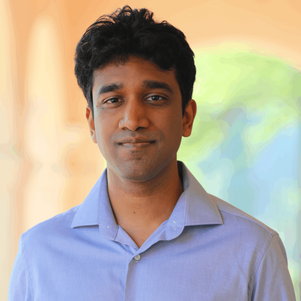
Dr. Jun-Hong Liang is an Associate Professor in the Department of Oceanography & Coastal Sciences at Louisiana State University, with a joint appointment at the Center for Computation and Technology. He holds a PhD in Atmospheric and Oceanic Sciences from UCLA and conducts research in physical oceanography and ocean biogeochemical dynamics. His research focuses on: Air-sea gas exchange processes Upper ocean turbulence and mixing Marine particle dynamics Gulf of Mexico environmental issues Ocean-atmosphere-wave interactions Dr. Liang teaches courses including Introduction to Oceanography and Physical Oceanography. His publications primarily focus on ocean modeling, air-sea interactions, and turbulence parameterization, with recent work incorporating machine learning approaches. Awards and honors: NSF CAREER Award (2020-2025) LSU Rising Faculty Research Award (2020) NASA Earth System Science Fellowship He leads a research group with several graduate students and postdoctoral researchers focusing on ocean dynamics modeling and collaborates with national and international research teams on field studies.
Joaquín Tintore Subirana is a Research Professor at the Mediterranean Institute for Advanced Studies (IMEDEA) , a joint research institute of the Spanish National Research Council (CSIC) and the University of the Balearic Islands (UIB) . He serves as Director of SOCIB (Balearic Islands Coastal Observing and Forecasting System) since 2009 and as Institutional Coordinator of CSIC in the Balearic Islands since 2006. His career spans over 35 years in physical oceanography and operational oceanography. Education : Grade in Physics (1984), University of Barcelona PhD in Physics (1988), University of Barcelona Awarded CSIC Research Professor (2000) Research Interests : Specializing in ocean observing systems , his work focuses on mesoscale and submesoscale eddies , coastal ocean dynamics , and climate change impacts on marine environments. His research integrates glider-based microstructure measurements , high-frequency radar , and satellite data to study Western Mediterranean processes . Recent publications examine turbulence datasets , greenhouse gas distributions , and extreme weather impacts on coastal zones. He has developed digital twin tools for coastal adaptation planning and contributed to international marine policy frameworks. Scientific Awards : 2003 National Research Award 'Alejandro Malaspina' for mesoscale oceanography contributions Advising & Leadership : Supervisor of 10 PhD theses , he has led major multi-platform oceanographic campaigns like AlborEX and SMART missions . As director of IMEDEA (1999-2008), he coordinated 55 peer-reviewed projects and shaped Spain's marine infrastructure policy . Labs & Collaborations : Leads the Marco Zavatarelli Lab at IMEDEA, collaborating with European research networks including Euro-GOOS , Euro-Argo ERIC , and Science Europe Working Group . His work integrates with Copernicus Marine Service and OceanGliders programs.
Mukund Gupta is an Assistant Professor in the Department of Geoscience and Remote Sensing at Delft University of Technology (TU Delft), Faculty of Civil Engineering and Geosciences, where he has been serving since November 2023. He holds a Ph.D. in climate science from the Massachusetts Institute of Technology (2020) and conducted postdoctoral research in physical oceanography and sea ice dynamics at the California Institute of Technology. His research centers on the coupled interactions between the ocean, cryosphere, and carbon cycle. He investigates processes ranging from global-scale ocean currents to kilometer-wide turbulence and individual sea ice floes. His methodological toolkit includes Large Eddy Simulations, Discrete Element Models, Global Climate Models, and remote sensing data analysis. These approaches allow him to study complex phenomena such as sea ice melt dynamics, nutrient transport in subtropical oceans, and climate responses to volcanic activity. His recent publications, appearing in top-tier journals like Geophysical Research Letters , Proceedings of the National Academy of Sciences , and Journal of Geophysical Research: Oceans , demonstrate a strong focus on polar and oceanic systems, with emerging themes in climate modeling and Earth system feedbacks. His work bridges observational data with high-resolution modeling to improve understanding of climate change impacts. Eddy-induced dispersion of sea ice floes at the marginal ice zone (2024) A nutrient relay sustains subtropical ocean productivity (2022) Regimes of sea‐Ice floe melt: ice‐ocean coupling at the submesoscales (2022) Sea-ice melt driven by ice-ocean stresses on the mesoscale (2020) The effect of Antarctic sea ice in limiting Southern Ocean carbon outgassing (2020) The climate response to multiple volcanic eruptions mediated by ocean heat uptake (2018) Mukund Gupta teaches in the CW1 Climate Modelling program at TU Delft, contributing to the education of future geoscientists. He is actively involved in research and has not been indicated as retired, deceased, or former staff. No specific information about advisees, grants, or awards is available in the provided text. He is affiliated with the Geoscience and Remote Sensing (GRS) Laboratory at TU Delft, which focuses on atmospheric science, Earth system science, and geodetic remote sensing. The lab supports advanced computational and observational research, and Gupta’s work likely contributes to its mission of understanding environmental change through integrated modeling and remote sensing techniques.