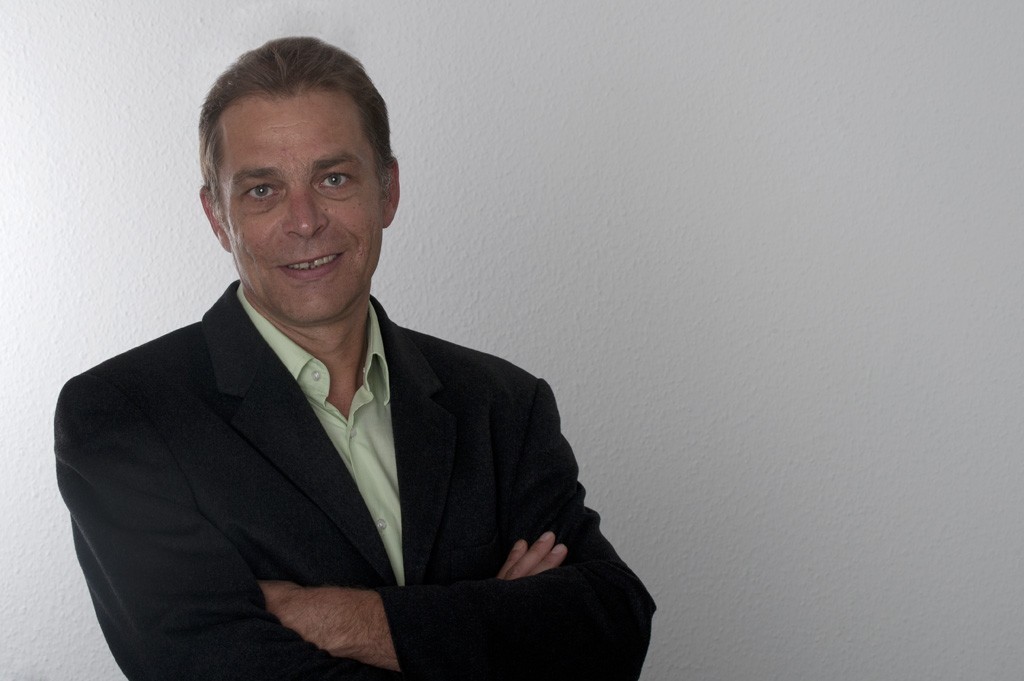
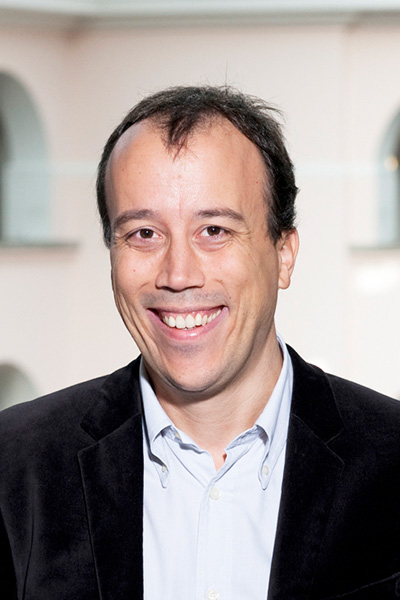
Prof. Dr. Axel Mecklinger is a leading cognitive neuroscientist at Saarland University , specializing in the neurocognition of memory and language through spatiotemporal brain imaging (EEG/MEG/fMRI). His career spans over three decades, with significant contributions to understanding visual working memory , associative recognition , and memory development . Key research areas: Memory binding, ERP subsequent memory effects, novelty detection, and cognitive aging Major grants: DFG Research Groups, Collaborative Research Centers, and international collaborations with the Chinese Academy of Sciences Scientific leadership: Organized conferences, edited journals, and served as speaker for research training groups His recent work explores unitization in memory formation , cross-cultural differences in memory processing , and theta neurofeedback interventions . Awards include the Early Career Award of the German Psychophysiology Society (1992) and the European Federation of Psychophysiology Societies' Federation Prize (1994). Current projects investigate the neural mechanisms of semantic surprisal and memory plasticity in aging populations.
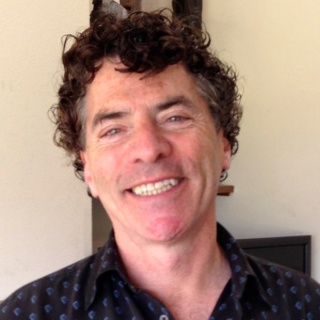
James Abbas serves as Professor of Biomedical Engineering at the University of Arkansas College of Engineering, where he develops neural engineering solutions for medical rehabilitation and exercise. His work integrates neurotechnology design, computational modeling, and human subject experimentation to advance rehabilitation systems. His academic background includes: B.S. in Bioelectrical Engineering from Brown University M.S. and Ph.D. in Biomedical Engineering from Case Western Reserve University Postdoctoral Fellowship at Shriners Hospital in Philadelphia, PA Dr. Abbas' research centers on neural engineering for rehabilitation , with expertise in neurotechnology development , computational modeling of neuromuscular systems , and experimental evaluation of rehabilitation technologies . His work bridges engineering innovation with clinical applications, particularly for Parkinson's disease and spinal cord injury rehabilitation. Key methodologies include intrafascicular electrode design, stimulation waveform optimization, and haptic feedback systems for prosthetic control. Analysis of his 2021-2025 publications reveals dominant trends in selective peripheral nerve stimulation , neural interface engineering , and personalized rehabilitation robotics . His work consistently addresses clinical translation challenges, with increasing focus on wearable military rehabilitation systems and AI-driven personalization of neurorehabilitation protocols. Professional recognition includes: Senior Member of the National Academy of Inventors Senior Member of IEEE Dr. Abbas maintains significant editorial leadership as Associate Editor for IEEE EMBS and Neural Engineering Conferences, while serving on the Editorial Boards of the Journal of Neuroengineering and Rehabilitation and Frontiers in Neuroengineering. He contributes to national initiatives as a Steering Committee member for the NIH SPARC Initiative's Data Resource Center. Though specific grant details aren't provided, his active research program and editorial roles indicate substantial funding and collaborative networks. No student advisees are listed in the source material. His research operates at the intersection of the Biomedical Engineering department and clinical rehabilitation partners, with emphasis on translating neural engineering innovations into practical rehabilitation solutions through interdisciplinary teams.
Ramana Vinjamuri is an Associate Professor in the Department of Computer Science and Electrical Engineering at the University of Maryland, Baltimore County (UMBC). He holds a secondary appointment as Visiting Professor at the Indian Institute of Technology, Hyderabad, India. His academic journey includes a Ph.D. in Electrical Engineering from the University of Pittsburgh (2008), M.S. in Bioinstrumentation from Villanova University (2004), and B.Tech. in Electrical and Electronics Engineering from Kakatiya University (2002). Dr. Vinjamuri's research focuses on Brain-Machine Interfaces (BMIs) for upper-limb prostheses control , neuroprosthetics and exoskeletons , machine learning in motor control , and neurophysiological signal processing . His work extends synergy-based models to control 37-dimensional hand movements, addresses human-robot interaction through emotionally intelligent systems, and develops neurotechnologies for substance use disorder using wearable sensors and AI. NSF CAREER Award (2019) NSF IUCRC BRAIN Center Planning Grant (2020) Harvey N Davis Distinguished Teaching Assistant Professor Award (2018) His publications demonstrate expertise in EEG and EMG signal analysis , deep learning for motor decoding , synergy modeling , and humanoid robot control . The Vinjamuri Lab at UMBC involves graduate, undergraduate, and high school researchers, with international collaborations in India and the US.
Christian Timmerer is a Professor at the Institute of Information Technology, Alpen-Adria-Universität Klagenfurt. His research focuses on adaptive video streaming , energy efficiency , MPEG standardization , and quality of experience (QoE) , with significant contributions to HTTP Adaptive Streaming (HAS), multi-codec optimization, and immersive media systems. Email: christian.timmerer@aau.at Office Hours: Monday 3:00-4:00 PM (by appointment) Projects: CD-Labor ATHENA, GAIA, SPIRIT His research integrates machine learning and generative AI to enhance video encoding, super-resolution, and voice dubbing, while prioritizing sustainability through energy-aware algorithms and open-source tools like GREEM and VEED. Current work emphasizes latency reduction and dynamic bitrate adaptation in live streaming environments. Recent publications address VVC optimization , multi-resolution encoding , and perceptual quality modeling , reflecting interdisciplinary efforts in networking , computer vision , and human-computer interaction . Awards include leading funded projects on adaptive streaming and green video systems.
Prof. Dr. Thomas Stäcker is a Part-time Professor for Digital Humanities at the Department of Information Sciences, University of Applied Sciences Potsdam. He serves as Director of the University and State Library Darmstadt (since 2017) and Deputy Director of the Herzog August Library Wolfenbüttel (since 2009). His career spans roles as a librarian at Herzog August Bibliothek (since 1998) and Johannes a Lasco Library in Emden (1997-1998). Education: Master's degree in History of Philosophy and Latin (1991), doctorate (1994) from TU Braunschweig, University of Essex, and University of Osnabrück Research: Digital Humanities, digitization of early printed books, XML/TEI encoding, OCR technologies, and cultural heritage preservation Leadership: Key roles in major digitization projects (e.g., VD17, Dünnhaupt Digital) and digital library development His work bridges library science with scholarly research, emphasizing open access, digital editions, and metadata standards. He has authored/co-authored numerous monographs, including the 2015 'Grenzen und Möglichkeiten der Digital Humanities' and the 2016 Festschrift chapter on open access. Stäcker co-edited digital editions like Christoph Heidmann's Oratio de Bibliotheca Julia (2013) and maintained active engagement through blogs like 'dhd-blog.org' (2015 post on humanities research data).
Nicolas Godbout is a Full Professor and Department Director of the Department of Engineering Physics at Polytechnique Montréal. He holds a Ph.D. from Polytechnique Montréal and serves as Head of the Fiber Optics Laboratory and as a Researcher at the Center for Optics, Photonics and Lasers (COPL). His academic leadership extends to teaching courses including Fundamentals of Photonics, Waveguide Optics, Lasers, Quantum Optics, and Current Subjects in Photonics. Dr. Godbout's research spans multiple areas of photonics with particular emphasis on optical fiber components, quantum cryptography, quantum information, optical telecommunications, and nonlinear optics. His work bridges fundamental theoretical investigations with practical applications in telecommunications, biomedical imaging, and quantum technologies. He has made significant contributions to photonic lantern development, quantum key distribution systems, and optical fiber component design. Analysis of his recent publications reveals a strong trend toward interdisciplinary research combining photonics with biomedical applications, quantum information processing, and advanced computational modeling. His work demonstrates consistent innovation in optical fiber technology, with increasing focus on quantum applications and biomedical instrumentation over the past decade. The development of open-source tools like SuPyMode and PyMieSim highlights his commitment to advancing research methodology in the field. $377,000 awarded for Quantum Photonics Quebec projects (2022) Appointment as director of INTRIQ (2019) Dr. Godbout has supervised an extensive number of graduate students, with 9 completed Ph.D. theses and 21 Master's theses under his guidance, plus one currently in progress. His research has been supported by significant funding, including semiconductor research initiatives that received $120 million from the Canadian government as recently as July 2024. He actively collaborates with industry through Castor Optics, a company he co-founded with Professor Caroline Boudoux that specializes in optical fiber components. As Head of the Fiber Optics Laboratory and researcher at COPL, Dr. Godbout leads a dynamic research team focused on advancing photonics technology. His laboratory work spans from fundamental quantum optics research to practical applications in telecommunications and biomedical imaging. Recent activities include significant contributions to semiconductor research initiatives at Polytechnique Montréal, reflecting his leadership in positioning the institution at the forefront of advanced technology development.
Jonathan Schooler is Distinguished Professor in the Department of Psychological and Brain Sciences at UC Santa Barbara, where he directs the META Lab and Center for Mindfulness and Human Potential. His research integrates empirical psychology with philosophical inquiry, examining: Meta-awareness and its role in regulating thought Creative benefits of mind-wandering Belief in free will and its behavioral consequences Anomalous cognition phenomena Meditation-induced cognitive changes Schooler leads multiple large-scale projects including research on digital attention training for adolescents and the neuroscience of creativity. His work has been supported by Templeton Foundation, National Institute of Mental Health, and Bower Foundation.
Nancy A. Lynch is the NEC Professor of Software Science and Engineering and Professor of Electrical Engineering and Computer Science at the Massachusetts Institute of Technology, where she heads the Theory of Distributed Systems (TDS) group within CSAIL. Research Interests Distributed computing algorithms and lower bounds Real-time and fault-tolerant systems Formal modelling and verification Wireless network algorithms Biological distributed algorithms Neural computation and spiking networks Across her work, Lynch blends rigorous theoretical analysis with practical relevance, tackling problems ranging from consensus and leader election in unreliable networks to modelling decision-making circuits in the brain. Publications & Trends Since 2020 she has published extensively on distributed algorithms , swarm robotics , neuromorphic architectures , and biologically-inspired computation . Notable recent directions include hierarchical concept learning in spiking neural networks, nanobot locomotion modelling for cancer detection, and superconducting nanowire platforms for energy-efficient neural hardware. Scientific Awards & Honors Best Paper Award, OPODIS 2018 Best Paper Award, IEEE NCA 2014 Highlight Paper, Neuromorphic Computing and Engineering 2022 Teaching & Advising Lynch teaches core graduate and undergraduate subjects at MIT including 6.042J Mathematics for Computer Science , 6.852J/18.437 Distributed Algorithms , and 6.885/6.006 Algorithms . She has supervised dozens of PhD students and post-docs whose names are listed on her Past Students page. Laboratory & Teams She leads the Theory of Distributed Systems (TDS) Group , a vibrant research team within MIT CSAIL . TDS is part of the larger Theory of Computation group and hosts weekly seminars, reading groups, and collaborative projects with partners across MIT and worldwide.
Cécile Bishop is an Assistant Professor in the Department of Liberal Studies at New York University, specializing in postcolonial francophone literatures and visual culture. Her research critically examines representations of race in French-speaking contexts, with emphasis on the Caribbean and sub-Saharan Africa. She challenges politicized interpretations in postcolonial studies through formalist approaches. Her research explores intersections of aesthetics, race, and power dynamics. Key interests include: Francophone literatures; photography as a tool of racial representation; colonial and postcolonial visual archives; and the role of aesthetic form in shaping perceptions of dictatorship and identity in Africa and France. Bishop's publications analyze how visual media (photography, portraiture) encode racial identities. Her 2014 book Postcolonial Criticism and Representations of African Dictatorship argues that political interpretations paradoxically foster new formalism. Current project Forms of Blackness investigates material and interpretive practices that make race 'visible' in France. No scientific awards, grants, or supervised students are mentioned in available sources.
Or Patashnik is a Senior Lecturer at the School of Computer Science , Tel Aviv University . His research lies at the intersection of Computer Graphics , Computer Vision , and Machine Learning , focusing on Generative Models for Image/Video Generation , Semantic Editing , and Personalization with controllable user intent. PhD in Computer Science from Tel Aviv University under Daniel Cohen-Or His work addresses challenges in localizing shape variations in text-to-image diffusion models, developing prompt-mixing techniques and attention-based localization methods. Recent projects include Sharp-It for 3D synthesis, Stable Flow for training-free editing, and LCM-Lookahead for encoder-based personalization. Key publication trends span Diffusion Models , Generative Adversarial Networks (GANs) , Attention Mechanisms , and Text-to-Image Manipulation . Collaborations include researchers like Daniel Cohen-Or, Rinon Gal, and Dani Lischinski across institutions such as Stanford and Carnegie Mellon.
Philippe Tobler is a Professor of Neuroeconomics and Social Neuroscience at the University of Zurich's Department of Economics. He leads the Zurich Center for Neuroeconomics and focuses on neural mechanisms underlying decision-making, reward learning, and social behavior. His research employs fMRI, pharmacological interventions, and behavioral methods to investigate how the brain processes economic and social parameters like risk, delay, and probability. Teaching roles include courses such as 'Decision Neuroscience,' 'Introduction to Neuroeconomics,' and 'Neuroeconomics Seminar.' He collaborates extensively with researchers like Ernst Fehr and Christian Ruff, contributing to interdisciplinary studies on social neuroscience and neuroeconomics. Tobler's work examines dopamine's role in value processing, individual vs. social learning systems, and the neural basis of fairness and efficiency trade-offs. His research has implications for understanding psychiatric disorders, aging, and economic decision-making processes.
Laura Lupo is a Research Fellow (SSD L-FIL-LET/10) at the Department of Humanities, University of Catania, working on XML/TEI-based annotated digital editions of 19th-century Italian literature within the EU-funded Extended Partnership Changes – Spoke 3 project (PE0000020, CUP E63C22001960006). Concurrently, she has held a permanent high school teaching position in literary subjects and Latin (Competition Class A011) since 2022, following her success in the national Ordinary Competition for teaching staff. Education: PhD in Interpretation Sciences (2023, University of Catania, cum laude), Master's in ITALS (2018, Ca' Foscari), Specialization in Special Education (2022, Kore University of Enna), and advanced degrees in Modern Philology (2016, LM-14) and Modern Literature (2015, University of Catania). Her research focuses on Verismo, particularly Giovanni Verga's short stories, with a specialization in digital philology, gender studies, and Sicilian cultural context. She has contributed to projects like the TEI-encoded Mastro-don Gesualdo edition and collaborated with the Verga Foundation (2017-2019) on archival cataloging and 19th-century text digitization. Scientific contributions include publications in journals like Annali della Fondazione Verga (Class A) and proceedings for international conferences such as the MOD Society's Literature & Anthropology (2019) and ADI's Literature & Power (2021). She has presented at venues including the University of Debrecen's North/South Italy literary dynamics seminar (2020) and organized events like the National ADI Congress (2021) and Verga-themed Literacy Day (2022). Her methodological approach bridges formal stylistic analysis with contemporary sociological and gender perspectives, examining brief narrative forms in dialogue with European literary traditions. Current work includes digital editions of Verga's texts and studies on post-unification Italian women's roles in media and literature.
Alan Bovik is a Professor at The University of Texas at Austin, holding the prestigious Cockrell Family Endowed Regents Chair in Engineering. He serves as Director of the Laboratory for Image and Video Engineering (LIVE) and maintains dual faculty appointments in the Department of Electrical and Computer Engineering and the Institute for Neuroscience. His extensive contributions have established him as a leading authority in visual information processing with global impact. Dr. Bovik's research spans multiple domains with a primary focus on image and video processing, digital television and digital cinema, computational vision, and visual perception. His work has fundamentally advanced the understanding of human visual perception, leading to practical applications in video quality assessment and image processing systems. With over 800 technical publications cited more than 75,000 times and an H-index above 100, his research has had extraordinary impact across academia and industry. He is recognized as a Highly-Cited Researcher by Clarivate Analytics, placing him among the most influential researchers globally. Analysis of Dr. Bovik's recent publications reveals a strong emphasis on video quality assessment for emerging applications like user-generated content, high-motion streaming, and adaptive video delivery. His work seamlessly integrates deep learning approaches with traditional signal processing techniques to develop perceptually accurate models. There's a clear trend toward addressing practical challenges in video streaming quality, compression artifacts, and the unique characteristics of modern video content. His research bridges theoretical foundations with real-world applications, making significant contributions to both academic understanding and industry standards. Dr. Bovik's exceptional contributions have been recognized with numerous prestigious awards: IEEE Fourier Award (2019) for seminal contributions to perception-based image and video processing Edwin H. Land Medal (2017) from The Optical Society Primetime Emmy Award for Outstanding Achievement in Engineering Development (2015) Norbert Wiener Society Award (2013) Claude Shannon / Harry Nyquist Technical Achievement Award (2005) Multiple best paper awards from IEEE, EURASIP, and Picture Coding Symposium As an educator and mentor, Dr. Bovik has guided numerous students through his leadership at LIVE. His professional service includes founding and serving as Editor-in-Chief of the IEEE Transactions on Image Processing (1996-2002) and chairing the inaugural IEEE International Conference on Image Processing in 1994. His industry impact is substantial, evidenced by his Primetime Emmy Award and frequent consultation with major institutions. Dr. Bovik is also a registered Professional Engineer in Texas, demonstrating his practical engineering expertise alongside theoretical contributions. Dr. Bovik leads the Laboratory for Image and Video Engineering (LIVE), which maintains strong affiliations with multiple research centers including the Wireless Networking and Communications Group (WNCG), Center for Perceptual Systems, Telecommunications and Signal Processing Research Center, and Institute for Computational Engineering and Sciences. These interdisciplinary connections enable research that bridges engineering, neuroscience, and computer science to advance our understanding of visual perception and processing.
Kjell Brunnström serves as an Adjunct Professor in the Department of Computer and Electrical Engineering (DET) at Mid Sweden University, based in Sundsvall. He maintains active affiliation with the STC Research Centre, contributing to cutting-edge research in multimedia quality assessment and immersive technologies through extensive international collaborations. His research centers on Quality of Experience (QoE) with specialized focus on 3D video systems , virtual reality environments , and augmented teleoperation interfaces . He pioneers methodologies for subjective and objective video quality evaluation, particularly examining human factors in sports broadcasting (Video Assistant Referee systems), mining applications, and automotive displays. His work bridges theoretical psychophysical models with industrial implementations through standards development like ITU-T Rec. P.919. Analysis of his 15 most recent publications reveals consistent investigation into latency effects, distortion impacts, and viewing condition variables across emerging media formats. Key application domains include sports video refereeing, 360-degree video systems, VR simulators for remote machinery control, and adaptive streaming protocols, demonstrating strong industry-academia translation. Scientific Awards: No awards documented in source material. Advising and Grants: Student supervision and grant funding details were not disclosed in available documentation. Labs and Teams: Brunnström operates within Mid Sweden University's STC Research Centre framework, collaborating with global institutions including Royal Institute of Technology (Sweden), University of Surrey (UK), and multiple European research consortia. His work directly informs ITU standardization efforts and industrial implementations in broadcast and automotive sectors.
Prof. Philippe Tobler is an Associate Professor of Neuroeconomics and Social Neuroscience at the Department of Economics, University of Zurich. His research focuses on the neural mechanisms underlying decision making, reward learning, and social behavior, particularly studying brain structures like the dopaminergic midbrain, striatum, and prefrontal cortex. He employs functional magnetic resonance imaging (fMRI) and pharmacological interventions to investigate how economic reward parameters (e.g., risk, delay, probability) are processed in the brain. His work also explores individual differences in reward processing and the implications for conditions like schizophrenia and bipolar disorder. Tobler has authored numerous peer-reviewed publications, including studies on social threat learning, testosterone's impact on social behavior, and the role of neurotransmitters in decision-making processes. He collaborates with institutions like the Zurich Center for Neuroeconomics and teaches courses on decision neuroscience and neuroeconomics.