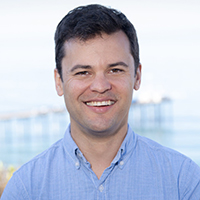
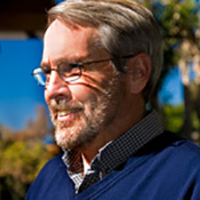
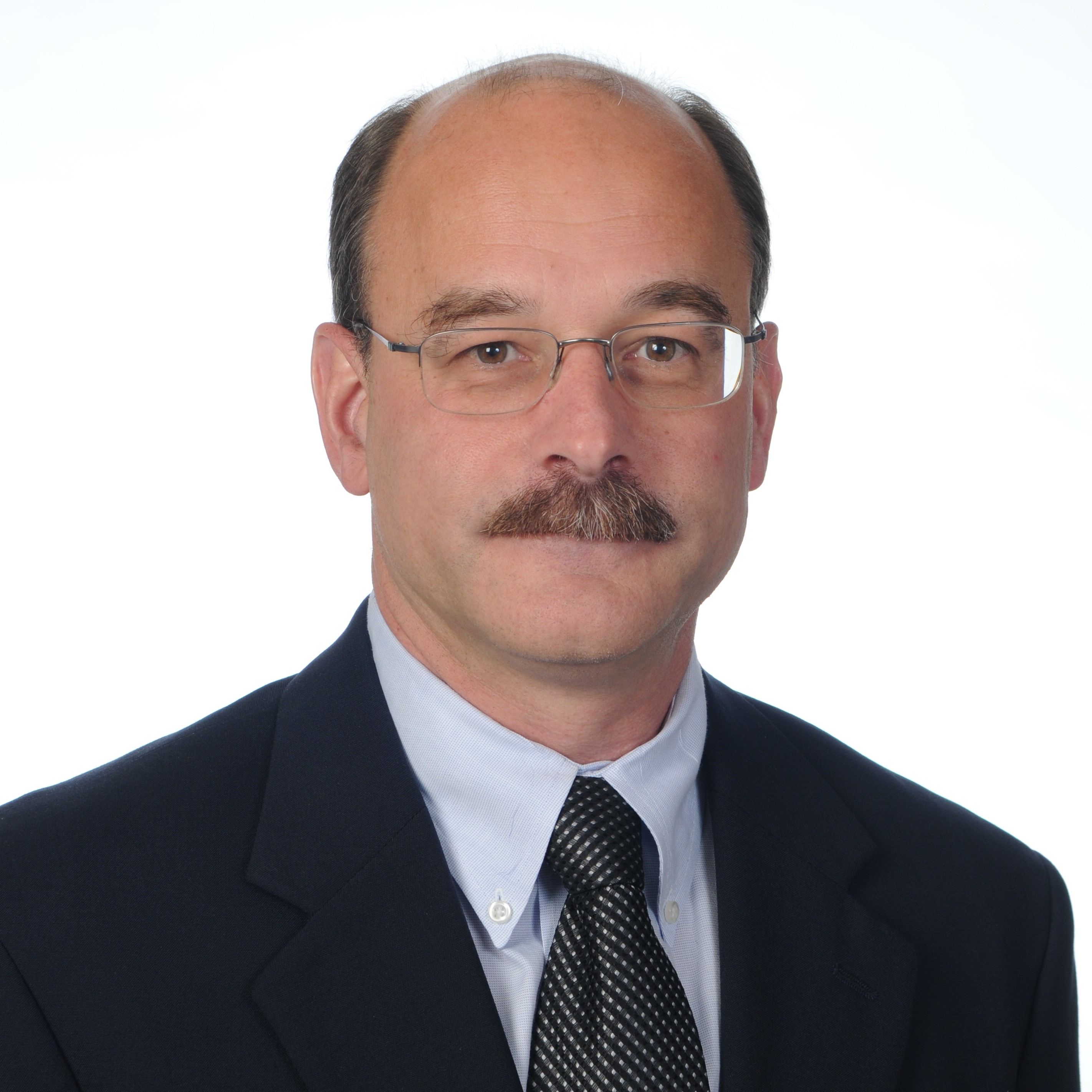
Michael Harrower is Professor of Archaeology and Director of Undergraduate Studies for Archaeology at Johns Hopkins University. He directs the Spatial Observation Lab for Archaeological Research (SOLAR), pioneering GIS and satellite remote sensing applications for landscape archaeology. Research focuses on ancient civilizations in Ethiopia, Oman, and Yemen. Field projects include the Southern Red Sea Archaeological Histories Project (Ethiopia) and Archaeological Water Histories of Oman Project. Discoveries include the Aksumite town of Beta Samati with its early Christian basilica. Research integrates spatial analysis with excavation to understand water management, trade networks, and state formation. Publications analyze Bronze Age towers in Oman, Aksumite settlement patterns, and irrigation's role in ancient states. Award-winning book 'Landscape History of Hadramawt' received the AIA McCann Award. Research funded by NASA, NEH, and NSF.
Dr David W. Rees Jones is a Lecturer and Director of Teaching in the School of Mathematics and Statistics at the University of St Andrews. His research focuses on geophysical fluid dynamics, particularly magma dynamics and sea ice formation. He holds a PhD from the University of Cambridge (2010-2014) and a MMath from the same institution (2006-2010). Previously, he held postdoctoral positions at the University of Cambridge (Bullard Laboratories) and University of Oxford (FoaLab and Physics Department). His research combines mathematical analysis and computational simulations to study fluid flows involving melting/solidification processes, such as magma transport and sea ice dynamics. Key projects include modeling subduction zone geodynamics, reactive flow instabilities in magmatic systems, and frazil ice formation in polar oceans. He develops open-source simulation tools (e.g., PETSc-based codes) and collaborates internationally on climate-related geophysical challenges. Notable publications include studies on magma channelization, Arctic sea ice thermodynamics, and glacial cycle impacts on mid-ocean ridge magmatism. His work contributes to UN SDGs related to climate action and sustainable ecosystems. Dr Rees Jones is actively involved in supervising postgraduate research and mentoring early-career scientists through software development initiatives.
Professor John Foden is a faculty member at the University of Adelaide specializing in isotope geochemistry and tectonic evolution. His research focuses on magmatic processes, Proterozoic crustal evolution, and continental dynamics, with significant contributions to understanding arc magmatism, metal behavior in magmatic systems, and supercontinent reconstructions. His work spans global regions including Madagascar, the Arabian Shield, and the Australian continental margin. Key research interests include Fe-Sr-Pb isotopic variations in arc lavas, granite genesis, and the application of zircon isotopes to trace crustal evolution. He has published extensively on Proterozoic tectonic events, sediment provenance, and the interplay between magmatism and tectonics. His recent work examines the closure of the Mozambique Ocean and the evolution of Gondwana. Publications highlight innovative use of isotopic systems (e.g., Fe, Ti, Ca) to address fundamental questions in geochemistry and tectonics. While no specific grants or awards are listed, his active research profile suggests involvement in funded projects related to continental evolution and mineral systems. No lab or team affiliations are explicitly mentioned in the provided texts.
Prof. Paul Mason is a Professor of Petrology and Director of Education in the Department of Earth Sciences at Utrecht University. His research focuses on Archean-Paleoproterozoic Earth systems, greenstone belt geology, and the co-evolution of early life with environmental conditions. He leads projects like the CLIMET initiative investigating Arctic lake methane cycling and the BASE project probing early terrestrial environments in the Barberton Greenstone Belt. Education Programs: Involved in the Earth Sciences and Earth Structure & Dynamics programs. Teaching: Courses include Advanced Petrology, Mineralogy & Petrology, and Geochemical Evolution of the Earth. Research Interests: Mason explores ancient environments through stable isotope geochemistry, microanalytical techniques, and field studies in key regions like South Africa and the Guiana Shield. His work bridges petrology, geochemistry, and geobiology to understand crustal evolution and early Earth processes. Funding & Collaborations: Principal investigator on NWO-funded CLIMET project. Collaborates internationally on projects like BASE and studies of Anatolian magmatism. Labs/Teams: Leads the Petrology research group and participates in interdisciplinary teams studying Arctic lakes and Precambrian iron formations.
Martyn Unsworth is a Professor of Physics in the Faculty of Science at the University of Alberta. He holds a BA (1986) and PhD (1991) from Cambridge University. Previously, he served as Research Professor at the University of Washington (1993–2000) and Associate Professor at the University of Alberta (2000–2004) before assuming his current role in 2004. His research focuses on electromagnetic geophysics, plate tectonics, volcanology, and geothermal energy. He has conducted extensive studies on crustal structure using magnetotelluric imaging, including work in Arctic regions (e.g., Devon Ice Cap), volcanic systems (e.g., Mount Meager), and subduction zone dynamics. His recent projects address geoelectric hazards linked to space weather and geomagnetically induced currents in power networks. Unsworth teaches courses such as EAS 210 (Engineering Earth Science) and GEOPH 424/524 (Electromagnetic Methods in Geophysics). His work integrates multidisciplinary geophysical techniques to explore subglacial environments, mantle processes, and geothermal energy potential. He has collaborated on projects in Canada, Peru, Chile, and Antarctica, contributing to understanding crustal evolution and natural resource systems.
John Adam is an Honorary Research Fellow at Macquarie University's School of Natural Sciences, specializing in experimental petrology and geochemistry. His research focuses on magma dynamics, crust-mantle interactions, and the evolution of magmatic systems. With a career spanning over four decades, he has contributed to understanding processes such as melt-rock interactions, arc volcanism, and the genesis of continental crust. Research Highlights: Experimental studies on magma storage, differentiation, and evolution in volcanic systems like White Island, New Zealand. Investigations into adakite formation and crust-mantle interactions in postcollisional settings like the Tibetan Plateau. Key contributions to understanding volatile (e.g., water, sulfur) behavior in magmas and their role in mantle-crust transfer. Leadership in the Deep Earth Melt Network project (2019), advancing methodologies for studying magma transport. Collaborations: Active collaborations with institutions globally, including projects on Tonga arc magmatism, Tibetan plateau dynamics, and Hadean greenstone geochemistry.
Stephen Foley is an Honorary Professor at the School of Natural Sciences, Macquarie University, affiliated with the ARC Centre of Excellence for Core to Crust Fluid Systems. His research focuses on mantle processes, magmatic systems, and geochemical evolution, with a strong emphasis on experimental petrology. Foley investigates carbon cycling, mantle metasomatism, and the origins of alkaline and carbonatite magmas, often linking these processes to crustal evolution and ore-forming systems. His work integrates field studies, geochemical analyses, and high-pressure experimental techniques to unravel mantle dynamics and magmatic evolution. Key Projects: Australian Virtual Experimental Laboratory (geoscience facility) Macquarie University Planetary Research Centre ARC Centre of Excellence for Core to Crust Fluid Systems Research Themes: Mantle melting and metasomatism Carbonate-silicate interactions Alkaline and carbonatite magmatism Metallogenesis of Ni and Au deposits Subduction zone geochemistry His recent work highlights the role of hydrous minerals and carbonated melts in shaping mantle fertility and crustal evolution. Collaborations span global regions, including India, Africa, and Australia, with a focus on continental margins and ophiolite belts. Foley’s experimental studies on mantle-derived melts provide critical insights into trace element behavior and redox processes. Grants & Funding: Multiple ARC grants, including the ARC Laureate Project (2019–2023) focused on deep Earth cycles of carbon, water, and nitrogen. Labs/Teams: Active in the ARC Centre of Excellence for Core to Crust Fluid Systems and the Macquarie Planetary Research Centre.
Tracy Rushmer is an Honorary Professor and Academic Casual in the School of Natural Sciences at Macquarie University, affiliated with the ARC Centre of Excellence for Core to Crust Fluid Systems. Her research spans magma systems, mantle dynamics, and planetary formation, leveraging experimental petrology and geochemical analysis. Her work explores processes like partial melting in subduction zones, crustal growth, and metal segregation in meteorites. Notable projects include the 'Global Fireball Observatory' and studies on magma evolution at White Island Volcano. She leads 29 active and completed research projects, often involving interdisciplinary collaborations. Research interests: Magma evolution, mantle melting, crustal differentiation, experimental petrology, and planetary formation mechanisms. Key contributions: Developing models for melt segregation in TTG magmas, analyzing fluid transport in the mantle, and investigating the origins of metal in chondrites. Her articles reflect a focus on experimental and observational studies of magmatic systems, mantle processes, and meteorite composition. No scientific awards are explicitly listed, but her h-index of 3361 highlights significant scholarly impact. Grants & Projects: Lead researcher in 29 projects, including 'Embedded Sensing System for Concrete Pavement Cracks' (Transport For NSW-funded) and 'Rehydration of the Lower Crust.' Contributions to facilities like the Macquarie Deformation-DIA synchrotron facility. She collaborates with institutions globally and contributes to the Macquarie University Planetary Research Centre, advancing understanding of Earth's crustal evolution and planetary processes.
Ritske S. Huismans is a Professor and Head of the Geodynamics and Basin studies Group at the Department of Earth Science, University of Bergen. Her research focuses on geodynamic processes at rifted passive margins, orogen dynamics, and the interplay between tectonics, surface processes, and climate. She leads projects totaling over 220 million NOK, including international collaborations like the IODP drilling expedition on the Mid-Norwegian margin and the COLORS project. Her work combines computational modeling (e.g., finite element methods) with field observations to address questions about continental rifting, mantle exhumation, and glacial erosion. Key collaborations include researchers from institutions such as the University of Oslo, Oxford University, and GFZ Potsdam. Recent publications highlight breakthroughs in understanding mantle exhumation mechanisms, the role of frictional shear zones in rifted margins, and the impact of surface processes on mountain building. She has supervised multiple PhD students and postdocs, contributing to advancing numerical geodynamic models. Notable grants include the PALMAR project (2023–2026) studying Paleogene basins and leadership of the IODP Expedition 396 on breakup volcanism. Her research bridges lithospheric-scale mechanics with surface processes, providing insights into Earth’s dynamic systems.
Matthew G. Jackson is a Professor in the Department of Earth Science at UC Santa Barbara. His research focuses on the long-term geochemical evolution of the Earth, particularly the connections between the Earth's surface and deep mantle. He investigates how subducted oceanic lithosphere is recycled back into the mantle and sampled at oceanic hotspots. Jackson leads a lab exploring the origins of mantle heterogeneity, with a focus on isotopic tracers (e.g., Sr, Nd, He, W) and their implications for mantle dynamics. His work bridges geochemistry with seismology and geodynamics, aiming to constrain the mantle's compositional structure. Affiliations: UC Santa Barbara, Earth Science Department Education: Ph.D. in Geochemistry/Petrology (not explicitly listed in text) Research interests include the fate of subducted materials, early Earth evolution, and the geochemical signatures of recycled crust in hotspot lavas. Jackson collaborates widely, integrating data from fieldwork, geochemical analyses, and computational modeling. His lab has identified ancient geochemical reservoirs in mantle plumes, such as the Samoan and Icelandic plumes, linking them to the Earth's earliest crustal processes. Key projects include studying the Samoan plume's interaction with the Tonga trench, the geochemical structure of mantle plumes using machine learning, and the role of recycled sediments in mantle heterogeneity. His work has been featured in Nature , Science , and PNAS , with over 150 publications. Jackson advises graduate students and collaborates internationally, contributing to expeditions like the NOAA Okeanos Explorer mission to American Samoa. Grants include NSF funding totaling over $8 million, supporting research on mantle plumes, subduction zones, and isotopic tracers. His outreach includes educational initiatives in Samoa and the Cook Islands, engaging local communities in volcanic and geochemical studies.
Michael J. Krawczynski is an Associate Professor in the Department of Earth, Environmental, and Planetary Sciences at Washington University in St. Louis. He leads the Experimental Geochemistry Lab, affiliated with the Experimental Studies of Planetary Materials (ESPM) group, the Institute of Materials Science and Engineering (IMSE), and the McDonnell Center for the Space Sciences (MCSS). His research focuses on experimental approaches to study planetary formation, magma dynamics, and high-pressure/temperature geochemical processes. Education: PhD in Geochemistry from the Massachusetts Institute of Technology (MIT). Research interests include: Experimental geochemistry of planetary materials Igneous petrology of terrestrial and extraterrestrial systems Magma mixing and pre-eruptive volcanic processes Early solar system evolution via planetesimal cooling studies Core-mantle differentiation in planetary bodies like the Moon Volcanic processes at subduction zones His lab combines high-temperature experiments with advanced analytical techniques, leveraging Washington University’s facilities for detailed geochemical analysis. While no specific articles or awards are listed, his work bridges laboratory experiments with field studies at volcanoes and planetary materials analysis. Lab affiliations include the ESPM group, IMSE, and MCSS, emphasizing interdisciplinary collaboration in Earth and space sciences.
Dave May is an Associate Professor in the Geophysics department at the Scripps Institution of Oceanography, University of California, San Diego, with primary affiliation at the Institute of Geophysics and Planetary Physics. Education B.Sc in Mathematics, Monash University B.E. in Mechanical Engineering, Monash University PhD in Applied Mathematics, Monash University Research Interests Dr. May develops novel computational methods and scalable algorithms for Earth sciences, leveraging massively parallel high-performance computing infrastructure. His work bridges Earth sciences, mathematics, and computer science to model physical planetary processes. Current research applies non-intrusive reduced order modeling to analyze thermal structure variability in subduction zones, focusing on geodynamic simulations and computational efficiency. Scientific Awards No scientific awards mentioned in the provided text Advising and Grants No information regarding student advising or research grants is provided in the source material. Labs and Teams Dave May conducts research through the Institute of Geophysics and Planetary Physics at Scripps Institution of Oceanography, utilizing large-scale computational facilities for geophysical modeling.
Ross Parnell-Turner is an Associate Professor at the Institute of Geophysics and Planetary Physics (IGPP), Scripps Institution of Oceanography, UC San Diego. His research focuses on mid-ocean ridge processes, mantle dynamics, and marine geophysical imaging. He holds a PhD in Geophysics from the University of Cambridge and an MEarthSc. from the University of Oxford. Research interests include magmatic and tectonic crustal accretion, mantle convection, transient plume behavior, and seismology. He leads projects involving hydrothermal vent systems, submarine landslide monitoring, and crustal structure analysis. Notable expeditions include IODP Expedition 395, which targeted the Reykjanes Ridge to study mantle convection and climate links. His work integrates seafloor mapping, seismic reflection imaging, and autonomous underwater vehicle (AUV) surveys. Key areas of exploration include the East Pacific Rise (9°50'N), Mid-Atlantic Ridge, and Mid-Cayman Spreading Center. Parnell-Turner collaborates on global initiatives like the US InterRidge program and has secured grants including a NSF CAREER Award. Publications emphasize hydrothermal fluid dynamics, microseismicity patterns, and sedimentation records. He advises on projects linking mantle plumes, seafloor deformation, and deep biosphere studies. His team operates within Scripps' Marine Geophysics group, advancing understanding of oceanic crust formation and geohazard mechanisms.
David T. Sandwell is a Professor of Geophysics at the Institute of Geophysics and Planetary Physics within Scripps Institution of Oceanography, University of California, San Diego. His research integrates satellite remote sensing, geodesy, and marine geophysics to study Earth's dynamic processes. Research Interests: Sandwell specializes in marine gravity anomaly mapping from satellite altimetry, predicted and measured seafloor topography, synthetic aperture radar interferometry (InSAR), thermal and mechanical structure of the oceanic lithosphere, geodynamic applications of satellite altimetry, and tectonics on Venus. His work bridges planetary science with terrestrial geophysics, focusing on crustal deformation, earthquake mechanics, and ocean basin evolution. He teaches courses including Introduction to Geodynamics, Satellite Remote Sensing, and Physics of Surfing. His recent publications demonstrate a strong trend toward high-resolution seafloor mapping, interseismic deformation analysis, and advanced InSAR techniques for earthquake cycle studies. Key themes include satellite-derived bathymetry, fault creep monitoring along major plate boundaries like the San Andreas Fault, and tectonic applications of gravity field recovery. His research increasingly incorporates multi-satellite data fusion and computational geophysics for modeling lithospheric behavior. Scientific Awards: While specific awards aren't detailed in the source material, Sandwell's extensive publication record (over 200 papers) and leadership in major projects like the SRTM15+ global bathymetry model reflect significant recognition in geophysics. Advising and Grants: Sandwell has advised 17 Ph.D. students since 1988, with recent graduates (2016-2023) focusing on seafloor geodesy, InSAR applications, and lithospheric mechanics. His research is supported by NASA, NSF, and USGS grants targeting satellite geodesy, earthquake cycle modeling, and marine gravity field recovery. Current projects include meter-scale seafloor deformation monitoring and absolute phase recovery in InSAR processing. Labs and Teams: He leads research within Scripps' Institute of Geophysics and Planetary Physics, collaborating with the GPlates development team for 3D tectonic visualization and contributing to NASA's Earth Surface and Interior focus area. His group develops open-source radar interferometry software (GMTSAR) and maintains global gravity and bathymetry databases used worldwide.
Mark Hannington is a Full Professor in the Department of Earth and Environmental Sciences at the University of Ottawa. He holds the Goldcorp Chair in Economic Geology and previously served as Chief Editor of Economic Geology (2001–2008). His research focuses on submarine volcanoes, hydrothermal systems, and ore deposits, combining modern seafloor studies with ancient volcanic environments. Hannington has conducted over 29 research cruises exploring underwater volcanoes globally, including the East Pacific Rise and Mid-Atlantic Ridge. His work bridges marine geology with land-based mineral exploration, advancing models for gold and VMS deposits. He leads the Ottawa-Carleton Geoscience Centre and collaborates with institutions like GEOMAR and Carleton University. Key contributions include understanding seafloor metal loading, gold-rich hydrothermal systems, and the link between ancient and modern hydrothermal processes. Education: BSc (1983), MSc (1986), and PhD (1989) from the University of Toronto. Former Research Scientist at the Geological Survey of Canada (1989–2005). Research interests include economic geology, submarine volcanism, marine geology, and hydrothermal ore deposits. His projects span NSERC grants on metallogeny, CAMIRO partnerships, and international cruises to Papua New Guinea, Iceland, and Antarctica. Professional roles include Adjunct Professorships at Carleton and Laurentian Universities and membership in the Society of Economic Geologists. His work has led to discoveries of new seafloor mineral types and improved exploration models for land-based deposits.