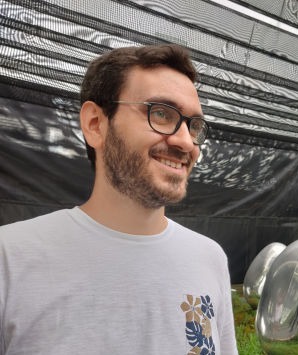
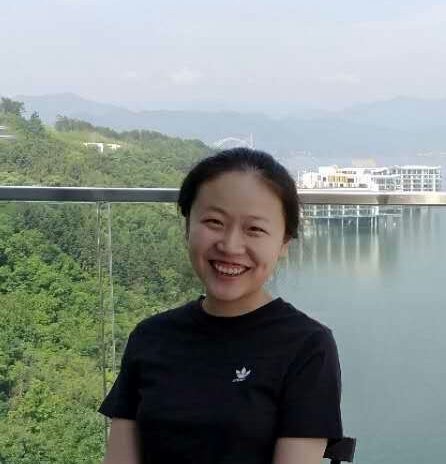
Ludovic Sacchelli is an Inria researcher (CR) affiliated with the McTAO team at the Centre Inria d'Université Côte d'Azur and the Laboratoire J.A. Dieudonné of Université Côte d'Azur. His research spans control theory, sub-Riemannian geometry, and mathematical neuroscience, focusing on optimal control, observers, and estimation problems. His work on sub-Riemannian manifolds and control systems includes stabilization techniques for non-uniformly observable systems and applications to UAV control, neural fields, and bioprocess modeling. He has contributed to heat kernel analysis, line fields interpolation, and geometric models for sound processing. His recent publications address topics like distributed state estimation in neural models, polynomial state-affine control systems, and geometric algorithms for orientation field interpolation. He has also explored observability singularities in bilinear systems and stabilization of weakly contractive systems. Teaching roles include instructing Measure Theory , Stochastic Processes , and applied mathematics at institutions such as Université Côte d'Azur, Polytech Nice, Lehigh University, and École Polytechnique. His mentorship includes supervising a Masters research project on numerical implementation of line fields interpolation in 2019.
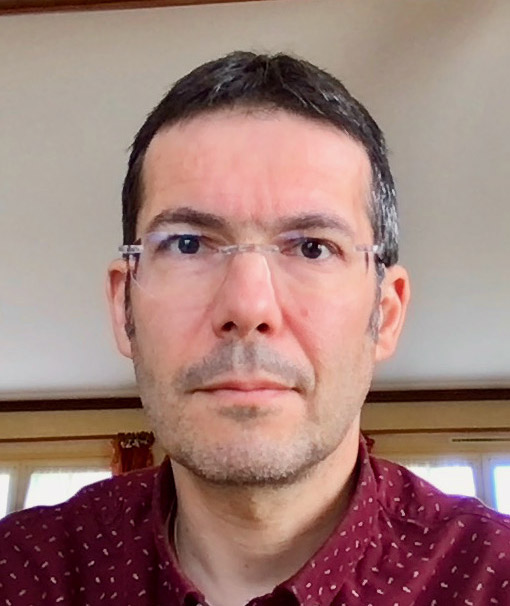
Ludovic Rifford is a Professor of Mathematics at University Côte d'Azur and holds the CNRS-AIMS Chair in Mathematics at AIMS Senegal. He serves as Secretary for Policy of the Commission for Developing Countries within the International Mathematical Union and previously as Executive Director of CIMPA (2016-2020). Education: PhD in Mathematics, Université Lyon I (2000) Habilitation à diriger des recherches, Université Paris XI (2005) Rifford's research focuses on Sub-Riemannian Geometry, Optimal Transport, and Geometric Control Theory. His work addresses the Sard Conjecture for sub-Riemannian structures, measure contraction properties, and regularity of solutions to Hamilton-Jacobi equations. Recent projects explore convex integration techniques and singular minimizing geodesics. The 15 most recent publications highlight advancements in geometric analysis, including the Sard Conjecture, optimal transport on manifolds, and dynamics of geodesic flows. Key subtopics include curvature analysis, mixed convex integration, subanalytic distributions, and applications to dynamical systems. Scientific Honors: Distinguished invited Professor at Universidad de Chile (2015) Eisenbud Professor at Mathematical Sciences Research Institute (2013) Junior member of Institut Universitaire de France (2011-2016) Rifford actively supports international collaborations through workshops and research schools in Africa, organizing funding for conferences like the Workshop on Geometry and Topology at AIMS-Cameroon (2025) and mentoring mathematicians across sub-Saharan universities.
Yanyan Li is a Distinguished Professor of Mathematics at Rutgers, The State University of New Jersey, affiliated with the Department of Mathematics. His research focuses on nonlinear analysis, partial differential equations (PDEs), and their applications to fluid dynamics, geometric analysis, and conformal geometry. He has contributed extensively to topics including Navier-Stokes equations, Monge-Ampère equations, and the Nirenberg problem. His work bridges theoretical mathematics and applied problems, such as conductivity in composite materials and microRNA's role in glioma cell behavior. Recent research emphasizes singularity analysis in PDEs and the development of comparison principles for degenerate elliptic equations. Notable contributions include studies on compactness theorems for conformal metrics and the classification of axisymmetric solutions to Navier-Stokes equations. Prof. Li’s articles frequently address boundary value problems, geometric PDEs, and the interplay between nonlinear operators and physical phenomena. His methodologies span variational principles, viscosity solutions, and geometric techniques, reflecting a synthesis of analytical rigor and interdisciplinary application. While no specific awards are listed here, his tenure as a Distinguished Professor underscores his scholarly impact. He advises students in mathematical analysis and related fields, though explicit student listings are not provided in the source text.
Emmanuel Trélat is a Professor at Sorbonne Université since 2011, affiliated with the CaGE team at Inria Paris. He has held leadership roles as Director of the Paris Mathematical Sciences Foundation (2015–2019) and Director of Laboratoire Jacques-Louis Lions (2020–present). Previously, he served as Professor at Université d'Orléans (2006–2011) and Associate Professor at Université Paris-Sud (2001–2006). Education: PhD in Mathematics (University of Burgundy, 2000), supervised by B. Bonnard Habilitation à diriger des recherches (Paris-Sud, 2005) Agrégation de Mathématiques (1998) École Normale Supérieure de Cachan (1995–1999) His research focuses on optimal control , particularly aerospace applications, sub-Riemannian geometry , and control theory for PDEs, including stabilization and sensor/actuator optimization. He has contributed to interdisciplinary collaborations with institutions like CNES, INRIA, and ONERA. Scientific Awards: 2018 Invited speaker at International Congress of Mathematicians 2016 Grand Prix Mme Victor Noury 2014 Blaise Pascal Prize 2012 Félix Klein Prize 2006 SIAM Outstanding Paper Prize
Professor Josef Dorfmeister is a faculty member at the Technical University of Munich , affiliated with the TUM School of Computation, Information and Technology and the Department of Mathematics . His research focuses on differential geometric methods and integrable systems. Research Interests : Differential Geometry of Surfaces Integrable Systems Loop Group Method Publication Trends : Dorfmeister’s recent work (2022–2015) explores minimal surfaces in non-Euclidean geometries (e.g., Heisenberg group), Willmore surfaces in spheres, and integrable systems via loop groups. Key themes include conformal geometry, Lagrangian submanifolds, and symmetry-preserving surface deformations. Office Information : Email: josef.dorfmeister@tum.de Location: Groups Kuttler and Zimmer (MI building 04, 3rd floor), Group Müller (MI building 06, 2nd floor)
Alessio Martini is a Full Professor of Mathematical Analysis at the Department of Mathematical Sciences "GL Lagrange" (DISMA), Polytechnic University of Turin, where he has been serving since 2025. He is actively involved in teaching and research, contributing to doctoral programs and undergraduate courses in aerospace and mathematical engineering. Full Professor of Mathematical Analysis, Polytechnic University of Turin (2025–present) Associate Professor of Mathematical Analysis, Polytechnic University of Turin (2022–2025) Senior Lecturer (Associate Professor), University of Birmingham (2019–2021) Lecturer in Mathematical Analysis, University of Birmingham (2014–2019) Postdoctoral Fellow, University of New South Wales and Christian-Albrechts-Universität zu Kiel Education: PhD in Mathematics, Scuola Normale Superiore (2010) Licentiate Degree in Mathematics, Scuola Normale Superiore (2007) Master’s Degree in Mathematics, University of Pisa (2006) Alessio Martini's research focuses on harmonic analysis, functional calculus, and analysis on Lie groups and sub-Riemannian manifolds. His work explores spectral multipliers, sub-Laplacians, singular integral operators, and Hardy spaces, with applications to geometric and analytic problems on non-Euclidean spaces. He is particularly interested in multi-parameter analysis, Grushin operators, and Riesz transforms on discrete and continuous structures. His recent publications demonstrate a consistent focus on sharp multiplier theorems, spectral theory of sub-elliptic operators, and harmonic analysis on manifolds and homogeneous spaces. The articles span topics such as optimal regularity, maximal characterizations of function spaces, and spectral cluster bounds, reflecting a deep engagement with both theoretical and structural aspects of modern analysis. Scientific Affiliations and Skills: ERC Sectors: PE1_8 (Analysis), PE1_6 (Geometry and Global Analysis), PE1_5 (Lie Groups), PE1_9 (Operator Algebras), PE1_11 (PDEs) Research Groups: Functional Analysis and Differential Geometry (DISMA) Research Areas: Analysis on Manifolds and Lie Groups, Harmonic Analysis and Discrete Differential Geometry Alessio Martini supervises PhD students in the Mathematical Sciences program at Politecnico di Torino and teaches a range of courses including Mathematical Analysis I, Functional Analysis, and advanced topics such as Modern Singular Integral Theory. He has no listed scientific awards in the provided text. He is not part of any lab but contributes to research groups within DISMA. His work continues to advance the understanding of harmonic analysis in non-Euclidean settings.
Luca Rizzi is a Full Professor at International School for Advanced Studies (SISSA) in Trieste, Italy, where he serves as the Coordinator of the PhD program in Mathematical Analysis, Modeling, and Applications and Principal Investigator of the ERC Starting Grant Project GEOSUB (2022-2026). His research focuses on Geometric Control Theory and Sub-Riemannian Geometry, with significant contributions to the geometric analysis of spaces with non-holonomic constraints. His research interests include: Geometric Control Theory Sub-Riemannian Geometry Optimal Control Problems Geometric Analysis Rizzi leads the GEOSUB project developing geometric and functional interpolation inequalities for sub-Riemannian manifolds, with implications for geometric analysis on non-smooth spaces, hypoelliptic operators, and geometric measure theory. His work bridges theoretical mathematics with applications in control theory and geometric structures. His scientific recognition includes: ERC Starting Grant for Project GEOSUB (2022-2026) Rizzi mentors PhD students Dario Sterzi and Daniele Tiberio, and supervises postdocs Samuel Borza, Giorgio Stefani, and Ye Zhang. He organizes the Geometric Structures seminar at SISSA and manages a sub-Riemannian community mailing list with over 200 subscribers. He has organized numerous conferences including the Workshop on Geometric Variational Problems in Sub-Riemannian Geometry (2025), Riemann 200: Mathematics and Physics (2026), and the XXXV Convegno Nazionale di Calcolo delle Variazioni (2026). As a member of the editorial board of the Journal of Dynamical and Control Systems, Rizzi actively contributes to advancing research in his field through academic service and international collaboration.
Juan J. Manfredi is a Professor of Mathematics at the University of Pittsburgh's Department of Mathematics, part of the Dietrich School of Arts and Sciences. He holds a PhD from Washington University in St. Louis, focusing on quasiregular mappings and partial differential equations. His research emphasizes elliptic and parabolic PDEs of p-Laplacian type, sub-Riemannian manifolds, and game-theoretic interpretations of equations like the infinity Laplacian. He explores regularity properties of p-harmonic functions and their applications in stochastic processes and signal processing. His work spans nonlinear potential theory, subelliptic equations, and geometric analysis. Notable contributions include studies on Monge-Ampère equations, viscosity solutions, and the interplay between stochastic games (e.g., tug-of-war) and PDEs. He has collaborated on topics like Carnot groups, Heisenberg group geometry, and Riemannian approximations in sub-Riemannian settings. Recent publications highlight advancements in asymptotic mean-value formulas, BMO estimates for solutions, and convergence principles for dynamic programming. His research bridges pure analysis and applied problems, including mass transport and optimal control. While no formal awards are listed, his extensive bibliography and academic roles reflect significant scholarly impact. Manfredi maintains an active online presence with resources like the QuasiWorld page, offering lecture notes and computational tools. His work often intersects with probability, geometric analysis, and numerical methods, positioning him at the forefront of modern nonlinear PDE research.
Jeremy Tyson is a Professor of Mathematics at the University of Illinois at Urbana-Champaign (UIUC), affiliated with the College of Liberal Arts & Sciences and the Department of Mathematics. He holds the Helen Corley Petit Professorial Scholar title (2008-2009) and is a Fellow of the American Mathematical Society (2013). His research focuses on analysis in metric spaces, geometric mapping theory, fractal geometry, and sub-Riemannian geometry, with an emphasis on differential calculus in non-Euclidean settings. Education: PhD in Mathematics from the University of Michigan (1999). His work bridges geometric function theory and nonsmooth metric spaces, addressing topics like quasiconformal maps and Carnot group structures. He has contributed to foundational studies in sub-Riemannian geometry and fractal analysis. Awards include the LAS Dean's Award for Excellence in Undergraduate Teaching (2012), reflecting his commitment to education. His recent publications (2020–2025) explore stability theorems in Carnot groups, quasiconformal distortions, and conformal Markov systems in geometric contexts. He is actively involved in departmental activities and serves as an editor for mathematical journals. Tyson’s research intersects pure mathematics and applied analysis, with implications for geometric modeling and nonlinear systems.
David Herron is a Professor of Mathematics at the University of Cincinnati since 1999. His roles include former Graduate Program Director (2004-2006) and extensive service on academic committees. He holds a PhD in Mathematics from the University of Michigan (1984) and a BS in Mathematics (High Honors) from the University of Delaware (1977). His research focuses on geometric analysis, geometric function theory, quasiconformal mappings, and conformal geometry, with significant contributions to metric space analysis and hyperbolic geometry. Education: PhD: University of Michigan, Ann Arbor, MI (1984) BS (High Honors): University of Delaware, Newark, DE (1977) Research Interests: Geometric analysis in metric spaces Quasiconformal and conformal mappings Hyperbolic and potential theory Conformal invariants and Möbius geometry His work explores intrinsic distances, uniformization, and the interplay between geometric and analytic properties of metric spaces. Grants include NSF awards (e.g., DMS-1500454, DMS-1313141) and a Charles Phelps Taft Memorial Fund Fellowship (2012). He has held visiting positions at institutions worldwide, including Massey University (New Zealand), University of Jyväskylä (Finland), and Mittag-Leffler Institute (Sweden). Service contributions include committee roles in graduate advising, textbook selection, and editorial work for journals like Journal of Geometric Analysis and Annales Scientifiques de l’École Normale Supérieure .
Gautam Pai is a postdoctoral researcher at the Eindhoven University of Technology , affiliated with the School of Mathematics and Computer Science . His work focuses on geometric learning, differential geometry, and the application of partial differential equations (PDEs) to machine learning and computer vision. Research Interests : Geometric Deep Learning, Optimal Transport, Cartan Connections, Lie Group Theory, Biomedical Image Analysis, and Structural Health Monitoring. Collaborations : Active in interdisciplinary projects involving mathematics, computer science, and biomedical engineering. Awards : No explicit scientific awards mentioned in the provided data. Advising : No students or advisees listed in the available records. Recent research output highlights his expertise in designing geometrically equivariant neural networks and applying optimal transport methods to real-world problems like crack detection in steel bridges and vascular tree tracking in retinal imaging. His publications span peer-reviewed journals and conference proceedings, emphasizing the intersection of mathematics and machine learning.
Ioannis Papadoperakis is a Professor at the Agricultural University of Athens , affiliated with the School of Environment and Agricultural Engineering and the Department of Natural Resources Management and Agricultural Engineering. His academic work spans mathematics, geometry, and differential equations, with a focus on theoretical and applied mathematical analysis. Teaches Partial Differential Equations (Postgraduate, 5 Teaching Units) Teaches Applied Mathematics Topics (Undergraduate, 4 Teaching Units) Teaches Introduction to Infinite Calculus and Linear Algebra (Undergraduate, 4 Teaching Units) His research interests include: General Keywords: Mathematics, Geometry, Mathematical Analysis Sub-fields: Hilbert Geometry, Conical Singularities, Geodesic Flows, Mapping Class Groups, Handlebody Theory, Hyperbolic Surfaces Explore his publications on Google Scholar and Web of Science .
Francesco Serra Cassano is a Full Professor at the Department of Mathematics, University of Trento, Italy. His research focuses on Calculus of Variations and Geometric Measure Theory in sub-Riemannian (Carnot/Heisenberg) metric structures. Laurea in Mathematics, University of Pisa (1986) PhD studies, University of Pisa (1988-1991) Scholarship at Université Paris VI (1991) His research explores intrinsic geometric objects in Carnot groups, including finite perimeter sets, Lipschitz surfaces, area formulas, and minimal surfaces. Recent work addresses Bernstein problems and regularity of solutions to vector field-dependent PDEs. Key trends in his 15 most recent publications include: Advances in intrinsic graph theory and minimal surfaces in Heisenberg groups Gamma-convergence of functionals depending on vector fields Poincaré-type inequalities in sub-Riemannian settings Approximation theorems for weighted Sobolev spaces Applications to two-phase transition models He has organized major schools/conferences including: Analysis and Geometry on Metric Spaces (Trento-Levico Terme, 1999-2019) Italian Meeting of Calculus of Variations (Levico Terme, 2001-2018) Sub-Riemannian Geometry and Beyond (Jyvaskyla, 2019) As an advisor, he has supervised 10 PhD students and 8 postdocs, including collaborations with international institutions like the University of Jyvaskila (Finland) and Scuola Normale Superiore (Pisa). He currently coordinates the local research group "Geometric measure theory and variational problems in Riemannian and Sub-Riemannian metric structures" under the national PRIN project.
Lingxiao Zhang is an Assistant Research Professor at the University of Connecticut, mentored by Guozhen Lu and Vasileios Chousionis. He holds a Ph.D. from the University of Wisconsin-Madison, advised by Brian Street. His research focuses on harmonic analysis, linear/multilinear singular integrals, sub-Riemannian geometry, geometric measure theory, and spectral multipliers for partial differential equations. His academic journey includes work on topics such as multi-parameter singular Radon transforms and spectral multipliers for subelliptic operators. He has contributed to peer-reviewed journals like Transactions of the American Mathematical Society and Mathematische Zeitschrift . No scientific awards or grants are explicitly listed, though his research demonstrates significant contributions to his field. His current office is located in MONT 410, and he maintains a research website at https://sites.google.com/view/lingxiaozhang/home .
Andrea Marchese is an Associate Professor in Mathematical Analysis at the University of Trento, Department of Mathematics. His research focuses on geometric measure theory, calculus of variations, and optimal transportation networks. He actively participates in organizing academic events such as the Analysis seminar and international workshops on geometric measure theory and partial differential equations. His work addresses topics like minimal surfaces, modulo p problems, and singular set analysis in geometric flows. Marchese collaborates with leading institutions and frequently presents at conferences worldwide, including recent talks in Munster and upcoming events in Pisa and Trento. Education: Completed his Ph.D. in 2014 with a thesis on optimal irrigation networks. Professional activities include seminar organization across multiple academic years and participation in high-impact international conferences. His research interests bridge pure mathematics with applied problems in network optimization and geometric analysis. Scientific contributions include over 38 publications in top journals like Journal of Functional Analysis and Communications on Pure and Applied Mathematics . His work emphasizes rigorous analysis of geometric variational problems and their applications to real-world transportation models.