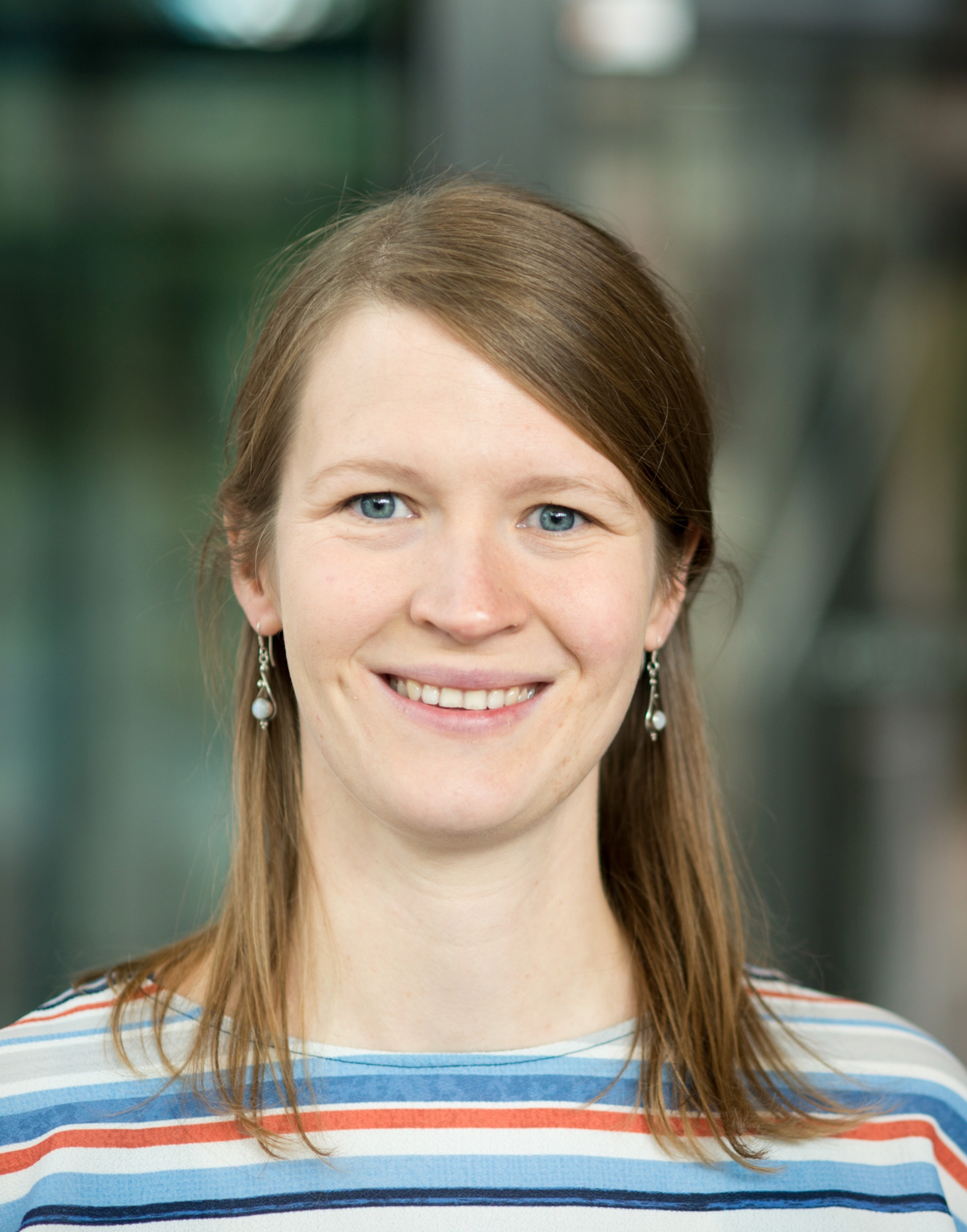
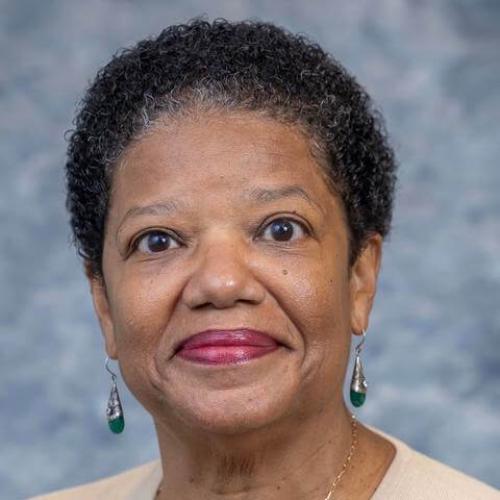
Mathieu Poirier is an Associate Professor at York University's School of Global Health and Director of the Global Strategy Lab, where he also holds the York Research Chair in Global Health Equity. His work spans global health equity, social epidemiology, and policy analysis, with a focus on quantifying health inequities and evaluating international laws and treaties. Director, Global Strategy Lab York Research Chair in Global Health Equity Member of WHO Collaborating Centre on Global Governance of Antimicrobial Resistance His research interests include: Quantitative methods for measuring health inequities Tobacco control and policy analysis Antimicrobial resistance governance Global legal epidemiology Vector-borne disease research His recent publications analyze trends in antimicrobial resistance frameworks, chikungunya vaccination impact, and socioeconomic drivers of health inequalities. Awards include the York Research Chair in Global Health Equity. Dr. Poirier supervises PhD students and leads initiatives like the Grounded Project's documentary More Than Migrants . He also supports the Las Nubes EcoCampus study abroad program and employs experiential learning in his teaching.
Maria Navarro is a Teaching Professor at the University of Georgia's College of Agricultural & Environmental Sciences, specifically within the Department of Agricultural Leadership, Education & Communication. She holds a Ph.D. in Agricultural Education from Texas A&M University (2004) and a BS/MS equivalent in Agricultural Engineering from Universitat Politècnica de Catalunya, Spain (1992). Ph.D., Agricultural Education, Texas A&M University (2004) BS/MS, Agricultural Engineering, Universitat Politècnica de Catalunya (1992) Her research focuses on High-Impact Practices (HIPs), interdisciplinary education, and integrating STEM with social sciences to create globally conscious curricula. She has led transformative projects in curriculum operations, faculty development, and student equity, with recent work emphasizing sustainable food systems and biocultural diversity. 2018 Fellow, Association for International Agricultural and Extension Education 2017 D.W. Brooks Faculty Award for Excellence in Teaching 2016 Outstanding Graduate Faculty Mentor Award 2014 UGA Richard B. Russell Award for Excellence in Undergraduate Teaching Dr. Navarro has secured competitive grants totaling over $1.1 million from USDA-NIFA-HEP for projects like 'Interdisciplinary graduate research and education in sustainable food systems' and 'Integrating humanistic studies into engineering education.' Her teaching includes international study-abroad programs, graduate seminars, and first-year courses, with a focus on experiential learning and curriculum innovation.
Michael O'Dea is a Senior Lecturer in the Department of Computer Science at the University of York, United Kingdom. He has held previous academic positions at York St John University, Beijing University of Technology, University of Hull, and Waikato Institute of Technology, bringing extensive international experience in computer science education. He is actively engaged in pedagogical scholarship and leadership in higher education innovation. Senior Lecturer, Department of Computer Science, University of York Senior Lecturer in Computer Science, York St John University Lecturer in Software Engineering, Beijing University of Technology, China Lecturer in Computer Science, University of Hull Lecturer in Information Technology, Waikato Institute of Technology, NZ Dr. O'Dea earned his Ed.D. in Computer Based Learning from the University of Leeds. His research centers on the integration of artificial intelligence into educational practices, with a strong emphasis on AI literacy, the effectiveness of generative AI in teaching and learning, and the evolving landscape of technology acceptance in higher education. He investigates how AI tools can enhance student learning, faculty development, and institutional policy. His recent publications span topics such as AI literacy assessment, the future of online and blended learning, the application of machine learning in earthquake prediction, and international study abroad effectiveness. These works reflect a broad interdisciplinary approach, combining computer science, educational theory, and policy analysis. His scholarship is increasingly focused on the transformative potential of generative AI in academic settings, as evidenced by his leadership in special journal issues and funded research projects. Dr. O'Dea holds significant editorial responsibilities as Associate Editor and Lead Guest Editor for the Journal of University Teaching and Learning Practice and as Guest Editor for a special issue in Education Sciences on generative-AI-enhanced learning. He is also an Invited External Academic Affiliate at the King's Institute for Artificial Intelligence, King's College London. Associate Editor - Special Issues, Journal of University Teaching and Learning Practice Lead Guest Editor, Special Issue on Technology Acceptance Models, JUTLP (2024) Guest Editor, Special Issue on Generative-AI-Enhanced Learning, Education Sciences Principal Investigator, QAA Collaborative Enhancement Project on Graduate Attributes in the Era of GenAI (2025) He has delivered numerous invited talks and workshops at institutions such as the University of York, Queen Mary University of London, and international conferences including the Academy of Management and the International Conference on Artificial Intelligence in Education. His work bridges research, practice, and policy in higher education, with a strong commitment to inclusive and innovative teaching methodologies.
Sharon Radd is a Professor in the MA-Organizational Leadership program at St. Catherine University. She holds additional roles as an Equity Fellow with the Midwest and Plains Equity Assistance Center at IUPUI, Founder and Lead Consultant of ConsciousPraxis, and Senior Partner at The 5 Practices Group. With over 20 years of experience in public education, her career spans school administration, social work, and professional development. Bachelor of Arts in Liberal Arts, UW-River Falls Bachelor of Science in Social Work and Master of Science in Educational Leadership, Minnesota State Mankato Doctor of Education (Ed.D.) in Educational Leadership, University of St. Thomas Radd's research focuses on leadership and social justice, emphasizing equity-focused practices in education. She teaches courses like Research Design, Inclusive Leadership, and study abroad programs. Her work integrates practical leadership strategies with systemic equity challenges, highlighted in her co-authored book Five Practices for Equity-Focused School Leadership . Notable awards include the 2006 Bush Leadership Fellowship and the 2010 Best Dissertation Award. She actively advises through her consulting firm and collaborates with teams to advance equitable educational systems.
Gabriel P. Weisberg is a distinguished Professor of Art History at the University of Minnesota, specializing in 19th and Early 20th Century European Art with particular expertise in graphic art, design history, and visual culture from 1780-1920. His career spans over forty years, during which he has curated major international exhibitions, published extensively, and mentored numerous PhD students who have gone on to academic positions. Professor Weisberg's research focuses primarily on Art Nouveau, Japonisme (Japanese influence on Western art), Naturalist painting, and the intersection of photography and painting. His scholarly work has significantly contributed to the reappraisal of late 19th century art historical issues, particularly through his examination of artists like Jules Adler, Albert Besnard, and Art Nouveau figures. His recent work includes major exhibitions such as 'Illusions of Reality: Naturalist Painting, Photography and Cinema, 1875-1918' and 'The Orient Expressed: Japanese Influence on Western Art, 1854-1918.' His publications reveal consistent engagement with Japonisme, Art Nouveau, and Naturalist painting across decades. The trend shows deepening specialization in Japanese influence on Western art, with numerous publications on Japonisme from 2014-2021, including serving as managing editor of the Journal of Japonisme. His work bridges art historical scholarship with museum practice through major exhibition catalogues. Member of the Institute for Advanced Study (Princeton) Guggenheim Foundation Fellowship Senior Fellowship at CASVA (National Gallery of Art) Regents Professor, National Museum of American Art Van Gogh Museum and University of Amsterdam Visiting Fellow (2010) Professor Weisberg has mentored numerous PhD students who have contributed to exhibition catalogues and scholarly publications. His research has been supported by major institutions including the Van Gogh Museum, Smithsonian Institution, and National Gallery of Art. He has organized international symposia and study programs, including a notable two-week course in Dutch museums for University of Minnesota students. As Reviews Editor for Nineteenth Century Art Worldwide and co-founder of the Journal of Japonisme, he continues to shape scholarly discourse in his fields of expertise.
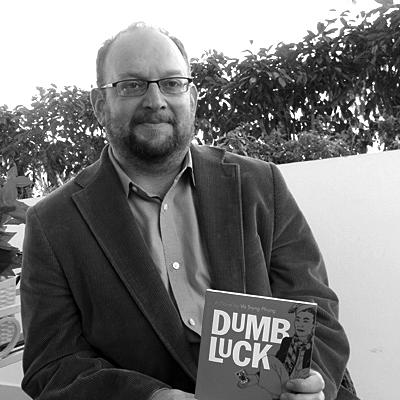
Peter B. Zinoman is a Professor of History at the University of California, Berkeley specializing in Southeast Asian history with primary focus on Vietnam. His academic career spans over two decades with significant contributions to colonial and revolutionary Vietnamese history. His educational background includes a PhD from Cornell University and a BA from Tufts University, establishing foundational expertise in historical methodology and Southeast Asian studies. Zinoman's research centers on Vietnamese colonial history, prison systems, literary history, and Cold War-era political movements. His work critically examines French colonial structures, revolutionary intellectual networks, and the interplay between literature and political dissent. He is renowned for his revisionist interpretations of key historical events including land reform movements and intellectual purges. His publication record spanning 1995-2016 reveals persistent engagement with primary source analysis and interdisciplinary methodology. Articles consistently explore themes of colonial incarceration, literary resistance, and political transformation, with increasing focus on Cold War dynamics and memory politics in later works. His scholarly recognition includes: Association of Asian Studies, Harry J. Benda Prize for Southeast Asia Studies (2003) American Historical Association, John King Fairbank Award for East Asian History (2001) Professional service demonstrates deep institutional commitment through co-editing the Journal of Vietnamese Studies since 2005, co-directing the UC Berkeley History-Social Science Project since 2003, and former leadership roles including Chair of the Center for Southeast Asia Studies (2003-2008) and Resident Director of the UC Education Abroad Program in Vietnam (2001). No public records indicate graduate student advising or grant-funded research projects. His work operates primarily through editorial and institutional frameworks rather than laboratory settings, with significant influence through academic journals and Southeast Asia research centers.
Amy E. Stich is an Associate Professor of Higher Education and Director of Graduate Studies at the Louise McBee Institute of Higher Education at the University of Georgia. She also serves as an affiliate faculty member with the Interdisciplinary Qualitative Studies program and as a Research Fellow at the Georgia Policy Labs. Dr. Stich employs sociological perspectives and qualitative methodologies to investigate mechanisms that stratify and reproduce inequality in higher education. Her research interests include: Sociology of education Qualitative research methodologies Social theory applications Higher education inequality Educational stratification systems Postsecondary tracking mechanisms Class dynamics in educational settings Dr. Stich's scholarly work reveals consistent themes around how social structures and institutional practices create and maintain educational inequalities. Her publications demonstrate sophisticated applications of Bourdieusian theory to analyze educational tracking, social reproduction, and efforts to democratize access to higher education. Recent work examines democratic research practices, school counseling responses to dual enrollment policies, and the relationship between middle-class aspirations and higher education pathways. Her significant research contributions have been recognized through: 2016 National Academy of Education/Spencer Foundation Postdoctoral Fellowship Exemplary Reviewer Recognition by the Journal of Higher Education (2025) Dr. Stich serves on the editorial boards of the British Journal of the Sociology of Education, The Journal of Higher Education, and The Review of Higher Education. As Director of Graduate Studies, she plays a pivotal role in mentoring graduate students and shaping academic programs. She teaches advanced courses in qualitative research and social theory (EDHI 8990, EDHI 8930, EDHI 9060) that emphasize critical analysis of educational inequality. Current research includes a William T. Grant Foundation-funded project examining postsecondary debt repayment inequalities and an NSF-funded study on geographic influences on experiential learning opportunities.
Jule Thober is a Scientific Manager at the Helmholtz Centre for Environmental Research - UFZ , leading Topic 5 "Landscapes of the Future" in the Helmholtz Program and managing the Integration Platform "Robust Pictures of the Future". She contributes to cross-disciplinary research in Smart Models / Monitoring and Computational Hydrosystems , focusing on agent-based models, sustainable land management, and climate risk analysis. Roles : Scientific Manager (2022–), Postdoc (2017–2021), PhD Student (2013–2016) Projects : Copernicus Contract Ulysses 2, LandYOUs Game Development Research Interests center on socio-environmental systems, integrating agent-based models with ecological economics. Her work explores decision-making under climate uncertainty, land use policy, and resilience of pastoral systems through computational methods. Publication Trends (15 most recent) span ecological complexity, environmental informatics, and computational hydrosystems. Key themes include agent-based land use models , climate risk mitigation , and participatory decision support tools . Collaborations involve UFZ departments, international institutions, and interdisciplinary teams in Germany and abroad. She contributes to Helmholtz POF IV programs and EU-funded initiatives like 4DHydro.
Hani Henein is a Professor in the Department of Chemical and Materials Engineering at the University of Alberta's Faculty of Engineering. He obtained his MEng from McGill University (1975) and PhD from UBC (1981), later joining Carnegie-Mellon University before moving to the University of Alberta in 1989. His research integrates ICME, machine learning, and physical modeling to study additive manufacturing, rapid solidification, pipeline steels, and thermophysical properties. Research Focus: Dr. Henein leads projects on ultrasonic atomization, Al-Ce/Al-Sc alloy solidification, hybrid investment casting, and in-situ composite formation for wear-resistant applications. His work emphasizes microstructure control in high-temperature processes and industrial collaborations with Syncrude, EVRAZ, and space agencies (ESA/DLR). Awards & Leadership: Killam Research Fellowship and 5 best paper awards Fellow of 5 major societies (CIM, ASM, CAE, TMS, IOM3) 2019 President of AIME and 2014 President of TMS Education Initiatives: Founded international work-abroad programs (80+ students placed since 2002) and a Dual Degree Program with Université de Lorraine. Currently advises 6 PhD and 7 MSc students on projects spanning rapid solidification, pipeline welding, and lattice composites.
Dr. Dixee Bartholomew-Feis serves as Dean of the School of Liberal Arts and Professor of History. She holds degrees from West Virginia University (B.A.), College of William and Mary (M.A.), and The Ohio State University (Ph.D.). Her research focuses on modern Vietnamese history, World War II, and the Holocaust. Currently, she is writing a biography of Holocaust survivor Phil Gans and directs the university’s Study Abroad Program. Courses taught include World Civilizations, Asian Civilizations, the Vietnam Wars, and Modern East Asian studies. Education: B.A., West Virginia University M.A., College of William and Mary Ph.D., The Ohio State University Her academic contributions include The OSS and Ho Chi Minh (2006) and an entry on Vo Nguyen Giap in The Encyclopedia of Military Science (2013). Her work bridges historical analysis with contemporary global education initiatives.
Ruth W. Dunnell is a Professor of History at Kenyon College, where she has held the James P. Storer Professorship in Asian History since 1989. She is affiliated with the Department of History and contributes to interdisciplinary programs in Asian and Middle East Studies and International Studies. Dunnell was instrumental in founding the Asian Studies Program at Kenyon in 1991. Ph.D. in History, Princeton University (1983) M.A. in History, University of Washington (1975) B.A. in History, Middlebury College (1972) Her research centers on premodern East Asia, particularly the 11th to 14th centuries, with a focus on the Tangut Xia state, the Mongol Empire, and the social history of foreign administrators under Mongol rule. She has taught courses on East Asian family structures, Tibet, Vietnam, and Korea, expanding the regional scope of East Asian studies at Kenyon. Her scholarly work bridges Chinese, Inner Asian, and comparative North Asian history. Dunnell's publications reflect deep engagement with the political and cultural dynamics of the Mongol era, including a biography of Chinggis Khan (2009) and contributions to authoritative volumes such as the Cambridge History of the Mongol Empire . Her current projects include a new English translation of a 13th-century Daoist travel diary from Central Asia, highlighting trans-Eurasian religious and intellectual exchange. She served as the resident director of the Oregon University System study abroad program in Beijing during 1999–2000 and continues to travel regularly to East Asia for research and academic engagement. While no formal list of advisees or awards is provided, her leadership in curriculum development and scholarly contributions underscores her significant role in advancing Asian historical studies in the United States.
Professor Gabriel Kuperminc is a faculty member at Georgia State University’s College of Arts & Sciences, Department of Psychology, with a secondary appointment in the School of Public Health. He serves as Chair of the Community Psychology Program and a member of the Developmental Psychology Program. His research focuses on resilience in adolescence, community-based prevention programs, and cultural factors influencing health and development. He collaborates with non-profits to evaluate youth programs and has expertise in mentoring interventions, substance abuse prevention, and immigrant youth studies. Education: Ph.D., University of Virginia, 1994. Research interests include understanding how cultural contexts shape youth development and health behaviors. His work emphasizes collaboration with marginalized communities, including immigrant families and organizations addressing systemic inequities. Notable projects include studies on group mentoring effectiveness (funded by DOJ), photovoice methodologies for trauma recovery, and interventions targeting acculturative stress among Latino youth. Key affiliations include the Center for Latin American and Latino Studies, Center for Human Rights and Democracy, and Center for Research on School Safety. Since 2009, he leads a Maymester Study Abroad Program on Human Rights in Argentina. Grants and collaborations include DOJ-funded research on juvenile justice system interventions and CDC evaluations of public health programs. He directs the Social Ecology and Adolescent Development Lab, focusing on youth resilience and community health interventions.
David R. Davis is an Associate Professor in the Department of Political Science at Emory University, serving as Honors Program Director and former Associate Chair. He holds a Ph.D. from the University of Colorado, Boulder (1992) and a B.A. from the University of Maryland (1985). His research focuses on international relations, political violence, human rights, and the political economy of development, with emphasis on ethnic conflict, crisis escalation, and domestic-international conflict linkages. He has held visiting roles at Sciences-Po (Paris) and the University of the Witwatersrand (South Africa). Davis co-directs the Institute for Human Rights at Emory and founded the European Politics Summer Study Abroad Program. His teaching spans research methods, human rights, and global politics. His publications analyze transnational advocacy networks, human rights INGOs, and the consequences of military interventions. Awards include grants from NSF and Emory’s University Research Committee, totaling over $120,000 in funding. Davis has served on numerous university committees, including the International Studies Major and Emory Study Abroad programs. Key contributions include advancing methodologies for conflict resolution networks and linking domestic-political vulnerabilities to international disputes. His work bridges theoretical and applied scholarship, influencing policy on human rights advocacy and peacebuilding strategies.
Cassandra Rachel Veney, Ph.D., is the Executive Director of the Center for Women, Gender, and Global Leadership at Howard University, affiliated with the College of Arts & Sciences. She has previously held leadership and faculty roles at Case Western Reserve University and the United States International University-Africa in Nairobi, Kenya, where she chaired the Department of International Relations. Education: Ph.D. in Political Science, University of Missouri-Columbia, 1995 M.A. in African Studies, Howard University, 1988 B.A. in Political Science, Syracuse University, 1982 Her research and teaching focus on African international relations, forced migration, gender and human rights, U.S.-Africa relations, and global development. She has authored and edited several influential books and contributed to academic journals and policy discussions. Her work emphasizes the role of African agency in international affairs, the impact of U.S. foreign policy in Africa, and the experiences of the African diaspora. Her recent publications cover a wide range of topics including U.S.-Africa diplomacy, post-conflict reconstruction in Africa, refugee crises, and transnational racial discourse. These works reflect a deep engagement with political economy, democratization, and human rights across the African continent and its global diaspora. Scientific Awards and Honors: Outstanding Professor Award, African Student Association, Illinois State University, 2003 Phi Sigma Alpha, Outstanding Teaching in Political Science Award, Illinois State University, 2000 Who’s Who of American Women, 2000-2001 College of Arts and Sciences Teaching Initiative Award, Illinois State University, 1999 Rotary International Group Study Exchange to India, January-February 1995 University of Missouri Dissertation Travel Grant, 1993 Dr. Veney has served on editorial boards such as African Studies Review and Journal of Asian and African Studies , and has been active in faculty governance, curriculum development, and mentorship. She has organized and presented at international conferences on refugee migration, U.S.-Africa relations, and gender in global politics. While her current role is administrative, her academic contributions remain central to the fields of African studies and international relations. She has also contributed to public discourse through multimedia appearances, including Voice of America and SpiceFM, discussing U.S. politics and global perspectives.
Mia Fuller is the Gladyce Arata Terrill Distinguished Professor of Italian Studies at the University of California, Berkeley. A cultural anthropologist and urban-architectural historian, she explores connections between physical space and political power, particularly in the context of Italian colonialism and fascism. Her work has earned the International Planning History Society book prize. Current projects include a revised Italian edition of Moderns Abroad and a new book Monuments and Mussolini . On sabbatical leave during Fall 2024. Research focuses on: Colonial architecture and urban planning in Italian colonies (Libya, Ethiopia, Eritrea) Memory studies and fascist-era monuments Discourse on modernism under authoritarian regimes Cultural identity formation through built environments Postcolonial mobility and architectural legacies Her recent publications (2015-2025) analyze Italian colonial cities, fascist architecture, and postcolonial urban studies, demonstrating consistent engagement with architectural history, urban planning, and political power dynamics. Key themes include colonial memory, modernist design's politicization, and spatial manifestations of authoritarianism. Scientific awards: International Planning History Society book prize for Moderns Abroad: Architecture, Cities, and Italian Imperialism Contact: miafull@berkeley.edu