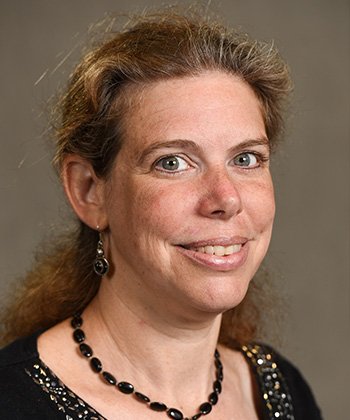
Dr. Ellen Posman is a Professor and Chair of the Department of Religion at Baldwin Wallace University, Ohio. She also chairs the Faith & Life program and holds a Ph.D. from the University of California, Santa Barbara (UCSB), an M.T.S. from Harvard Divinity School, and a B.A. from Stanford University. Her research focuses on comparative religion, particularly Asian religions and Judaism, with specialties in exile/diaspora studies, Buddhism, and religious violence. She has conducted ethnographic research in India, Nepal, Israel, Palestine, Turkey, Taiwan, Thailand, and Sri Lanka, exploring topics like Theravada Buddhist nuns' ordination rights and the intersection of religion with globalization. Posman’s teaching spans introductory religion courses to specialized topics such as Asian religions, religion and violence, and women in religion. She led a study-abroad initiative to India (2007–2008) examining religion’s role in poverty and development. Her work emphasizes civic engagement pedagogy, including contributions to the Spotlight on Teaching section of Religious Studies News. She co-edited a special journal issue on religious communities in exile and has published widely on Buddhism, interfaith dialogue, and religious pedagogy. Posman’s research has been funded by grants, including an NEH summer seminar on classical Buddhist texts. She is featured in the documentary Bhikkhuni: Buddhism, Sri Lanka, Revolution , highlighting her expertise on Theravada nuns. Her academic service includes roles as a reviewer for the American Academy of Religion and collaborative projects on transnational pedagogy and interfaith engagement.
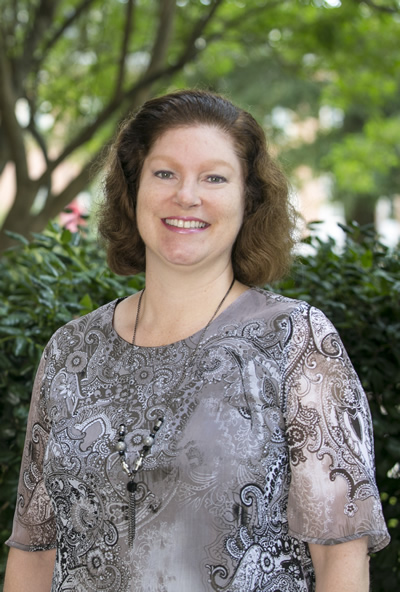
Heather A. West serves as Associate Professor of French in the Department of World Languages and Cultures at Samford University's Howard College of Arts and Sciences, where she directs the Critical Languages Program and sponsors the French Club and Delta Upsilon chapter of Dobro Slovo (National Slavic Honor Society). Education: BA in French, Birmingham-Southern College BA in Spanish, Samford University MA in French, Mississippi State University MAEd, University of Alabama at Birmingham PhD in Romance Languages, University of Alabama at Tuscaloosa Research Interests: Dr. West specializes in contemporary Quebec literature and culture, with significant contributions to Caribbean literary studies across French, Spanish, and English traditions, particularly focusing on Haitian diaspora narratives within broader Romance language frameworks. Her interdisciplinary approach bridges Francophone, Hispanophone, and Anglophone cultural studies through postcolonial and diaspora lenses. Scientific Awards: Chevalier de l’ordre des Palmes académiques (Knight of the Order of Academic Palms) from the French government (2015) Advising and Grants: As campus representative for major international programs, Dr. West administers the David L. Boren Awards, Critical Languages Scholarship, College Language Association's Carroll Mills Young Scholarship, and American Society of French Academic Palms Summer Scholarship. She also serves as non-certifying advisor for the Benjamin Gilman International Scholarship Program, facilitating extensive student study abroad opportunities. Professional Leadership: Dr. West acts as Alabama state administrator for the National French Contest (Le Grand Concours) and serves as secretary of the National Association of Self-Instructional Language Programs, demonstrating institutional commitment to language education advancement.
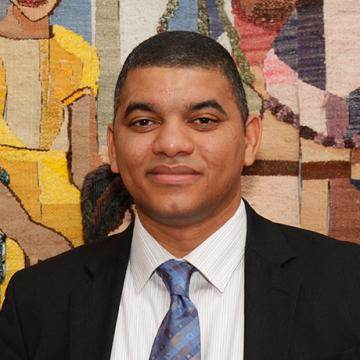
Abel Djassi Amado is an Associate Professor in the Department of Politics and Policy at Simmons University, where he has taught since 2016. He holds a PhD in political science/African studies from Boston University, following undergraduate studies in international relations (Technical University of Lisbon) and political science (University of Massachusetts, Boston). Prior to Simmons, he taught at multiple institutions in Massachusetts and Rhode Island and co-directed the University of Rhode Island Summer Abroad in Cabo Verde. He serves on the board of the West African Research Association (WARA). His academic credentials include: BA in International Relations, Technical University of Lisbon, Portugal BA in Political Science, University of Massachusetts, Boston PhD in Political Science/African Studies, Boston University Amado's research centers on Portuguese-speaking African countries (PALOP), with three interconnected pillars: (1) language policy-democracy dynamics in post-colonial states, examining how linguistic distance undermines governance; (2) historical institutionalism of anti-colonial nationalism, particularly the PAIGC movement in Guinea-Bissau and Cabo Verde; and (3) foreign policy analysis, focusing on the militarization of U.S.-Cabo Verde relations. His work bridges political science, linguistics, and African studies to address enduring colonial legacies. His 15 most recent publications (2020-2024) demonstrate consistent focus on Cabo Verde, with recurring themes including Creole language's role in state legitimacy, diplomatic history, and anti-colonial movement impacts. A clear interdisciplinary trend connects language policy, democratic quality, and historical junctures across his scholarship, emphasizing how post-colonial linguistic choices shape contemporary governance. Professionally, Amado co-directs international education programs and actively contributes to WARA's mission of fostering transatlantic academic collaboration on West Africa. He also engages with the Cabo Verdean diaspora through community organizations and the 'Political Matter' blog, where he analyzes Cabo Verdean political affairs.
Janice McGregor is an Associate Professor of German Studies at the University of Arizona, affiliated with the College of Humanities and the Interdisciplinary PhD program in Second Language Acquisition and Teaching (SLAT). She holds a PhD in German Applied Linguistics from Penn State and previously served as Assistant Professor of German at Kansas State University (2012–2018). Her research focuses on three core areas: ideologies in language learning/teaching, discourses around intercultural learning in study abroad, and reflexive qualitative research methods in applied linguistics. She emphasizes the importance of examining social interactions and authentic language use patterns across communities. Her work critiques traditional methodologies in study abroad research, advocating for more reflexive and decolonized approaches. Notable contributions include analyzing interactions in study abroad contexts, the role of authenticity in language learning, and the ethical dimensions of global mobility programs. Current courses include GER 244 (Real Talk: Why Language Matters) and GER 508 (Approaches to German Studies). Her research methodologies often integrate autoethnography and critical discourse analysis. McGregor’s articles consistently address themes of agency, authenticity, and methodological innovation. Recent work explores ungrading practices and the use of technology in L2 learning. She actively participates in academic discourse through her contributions to conferences like the Tucson Humanities Festival and her involvement in curricular decolonization initiatives.
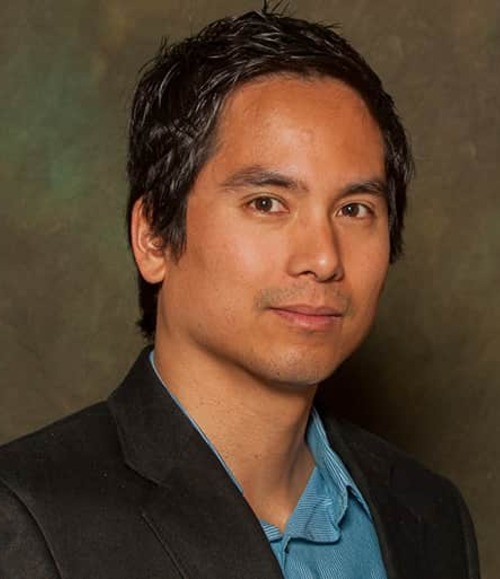
Bruno Takahashi is the Brandt Endowed Professor of Environmental Communication at Michigan State University, holding a joint appointment in the School of Journalism and AgBioResearch. He serves as Research Director of the Knight Center for Environmental Journalism and maintains affiliations with the Health and Risk Communication Center, the Environmental Science and Policy Program, and the Center for Latin American and Caribbean Studies at MSU. Born and raised in Lima, Peru, Dr. Takahashi earned his bachelor's degree in communication from Universidad de Lima, followed by M.S. and Ph.D. degrees in Environmental Science from SUNY ESF. Bachelor's in Communication, Universidad de Lima, Peru M.S. in Environmental Science, SUNY ESF Ph.D. in Environmental Science (specializing in environmental communication and participatory processes), SUNY ESF Dr. Takahashi's research program focuses on news coverage of environmental issues, environmental journalism practices in Latin America and U.S. Latino media, and identity in science communication. His work emphasizes counter-hegemonic environmental discourses in Latin American contexts, examining complex networks of actors, media, and communication processes embedded in post-colonial and social and environmental justice dynamics. He has conducted extensive field research in Peru, Bolivia, and Puerto Rico, with particular attention to environmental communication during disasters and in Indigenous communities. His recent scholarly output reveals a strong trend toward examining climate change communication through diverse cultural lenses, with significant attention to Latin American perspectives, immigrant experiences in the United States, and identity factors in science communication. His publications frequently address decolonial approaches to environmental communication and the need for more inclusive international scholarship that centers Global South perspectives. Scientific awards and recognitions include: 2024 AEJMC First Place in Latin American Communication Research 2021 Fellow of the Institute for Diverse Leadership, AEJMC 2019 Knudson Latin America Book Prize Multiple top paper awards from ICA and AEJMC conferences Dr. Takahashi actively mentors a diverse research team of Ph.D. students, post-doctoral associates, and MA students, with former students now holding positions at universities including University of Nevada, University of Minnesota, and Emory University. His research is supported by significant grants including a $2.8 million NSF grant for the SciComm Identities Project, funding from the Climate and Land Use Alliance, and multiple State Department and Embassy grants for environmental journalism training in Latin America. He has developed and led education abroad programs to Peru (2018, 2024) and the Netherlands/Belgium (2022), providing experiential learning opportunities for students in environmental communication. As Research Director of the Knight Center for Environmental Journalism, Dr. Takahashi leads initiatives supporting environmental journalists globally. His current projects include examining environmental discourses in the Peruvian Amazon related to oil spills affecting Indigenous communities, studying decolonial environmental journalism practices in Bolivia and Peru, and co-leading Working Group 5 on Public Engagement and Governance for The Lancet Countdown Latin America, which has generated significant media coverage in outlets like CNN and El País.
Jan Oskar Engene is an Associate Professor in the Department of Comparative Politics at the University of Bergen, Norway. His academic career spans several decades with significant contributions to both terrorism studies and heraldry research. Engene's research interests have evolved significantly over time, beginning with a strong focus on terrorism, political violence, and European security. His early work centered on the TWEED (Terrorism in Western Europe: Explaining the Trends) dataset, which documented terrorist incidents across Western Europe from 1950 onward. Over the years, his research expanded to include political symbolism, heraldry, and flag history, particularly regarding Norwegian political symbols and their evolution. His work demonstrates a unique interdisciplinary approach, bridging political science with historical and symbolic analysis. Analysis of Engene's publication trends reveals a clear evolution from predominantly terrorism-focused research in the 1990s and early 2000s toward increasing engagement with heraldry, political symbolism, and Norwegian historical identity markers in recent years. The earlier works focus on quantitative terrorism analysis, counterterrorism policy, and European security frameworks, while more recent publications examine municipal heraldry, county coats of arms, and historical political symbols. This shift demonstrates Engene's ability to apply political science methodologies to diverse research areas while maintaining a consistent focus on political symbolism and identity. Engene has supervised numerous Master's theses at the University of Bergen, primarily in the areas of terrorism studies, European politics, and political identity. His supervision record includes students researching topics such as state responses to terrorism in Italy, Nordic political systems, and regional identity in Western Europe. While specific grant information isn't detailed in the available materials, his TWEED project represents a significant research undertaking that likely involved external funding. Engene maintains active engagement with public discourse through media appearances, having participated in numerous television and radio programs discussing terrorism, security policy, and political symbolism. His work with the TWEED project established him as a leading expert on European terrorism patterns, while his more recent heraldry research has positioned him as a specialist in Norwegian political symbolism and historical iconography.
Maxime Decout is a Professor in 20th and 21st century French literature at Aix-Marseille University since 2019. Previously, he served as a Senior Lecturer (tenured) at Lille University (2012–2019) and held teaching roles in Lyon (2009–2012; 2005–2009). His research focuses on French literature, Jewish studies, Holocaust studies, and textual analysis, with a particular emphasis on authors like Albert Cohen and Georges Perec. He has been elected as a junior member of the Institut Universitaire de France (IUF) in 2018. Decout is a co-founder of scholarly associations including InterCriPol (2017) and LIEJ (Literature and Jewishness) (2019), and has organized international symposia and seminars on French Jewish writers. His academic contributions include over 60 peer-reviewed articles, 25 chapters in edited volumes, and 13 edited books. Notable Publications : Albert Cohen: les fictions de la judéité (2011) Écrire la judéité. Enquête sur un malaise dans la littérature française (2015) En toute mauvaise foi. Sur un paradoxe littéraire (2015) Qui a peur de l’imitation? (2017) Pouvoirs de l’imposture (2018) Album Romain Gary (2019) Éloge du mauvais lecteur (2021) Decout has presented 50 papers at symposia (23 invited), delivered 60 invited lectures (22 abroad), and contributed to radio programs and editorial projects, including editing Georges Perec’s works for Gallimard’s Bibliothèque de la Pléiade (2017). His research explores themes of lies, bad faith, imitation, and imposture in literature.
Jeanna Matthews is a Full Professor of Computer Science at Clarkson University and an affiliate at Data and Society. She holds a PhD from UC Berkeley (1999) and teaches courses ranging from operating systems to cybersecurity. Her research focuses on algorithmic transparency, AI ethics, and societal impacts of automated systems. Matthews is a prominent ACM leader, serving on multiple committees including the Technology Policy Subcommittee on AI Accountability. She has pioneered work on forensic software analysis in criminal justice systems and delivered DEF CON presentations on virtualization security and adversarial testing. Awards include ACM Distinguished Speaker and Fulbright Specialist roles. Her work emphasizes open-source tools and critical thinking in education, extending to global service learning programs in the Dominican Republic and Brazil. Education: PhD in Computer Science (UC Berkeley, 1999), B.S. in Math/Computer Science (Ohio State, 1994), B.A. in Spanish (SUNY Potsdam, 2016). Research Interests: Cybersecurity vulnerabilities, algorithmic accountability frameworks, automated decision systems in justice contexts, and ethical AI design. Recent projects include investigating bias in DNA forensic software through a Brown Institute grant and analyzing political polarization on social platforms. Awards & Recognition: ACM Distinguished Speaker (2018-present) Fulbright Specialist (2018-present) 2018-2019 Brown Institute Magic Grant ACM SIGOPS Chair (2011-2015) ACM Special Interest Group Governing Board Chair (2016-2018) Teaching & Outreach: Designed courses integrating open-source tools and critical inquiry, including abroad programs in Mexico, Brazil, and the Dominican Republic. Advocates for lifelong learning strategies and questioning underlying assumptions in computing systems. Key Projects: Forensic Software Accountability: Examining discrepancies in DNA analysis tools Algorithmic Transparency: Frameworks for auditing automated systems Cybersecurity Education: Adversarial testing methodologies for justice software
Joel Westerdale is an Associate Professor of German Studies at Smith College, where he also serves as Chair of German and Italian. He is affiliated with the Film and Media Studies and Comparative Literature programs, with courses cross-listed in Jewish Studies and the History of Science. Ph.D. and A.M. from Harvard University B.A. from University of Michigan His research focuses on 19th-21st century German literature, intellectual history, and early cinema. He examines intersections between language, technology, and cultural expression, particularly in works like Nietzsche’s Human, All Too Human and early German films such as The Cabinet of Dr. Caligari . Recent scholarly contributions include analyses of Nazi-era film historiography and Nietzschean philosophical themes in literature. He has conducted extensive research at institutions in Germany, including University of Freiburg and Center for Literary and Cultural Research (ZfL) in Berlin. Grants from the Alexander von Humboldt Foundation, U.S. Fulbright Commission, and Whiting Foundation have supported his work. He co-directed Smith’s Kahn Liberal Arts Institute Evil project (2011–12) and led the study abroad program at University of Hamburg (2015–16).
Brendan Regan is an Associate Professor of Spanish & Linguistics at Texas Tech University, directing the Sociolinguistics & Bilingualism Research Lab. He coordinates Hispanic Linguistics programs at both undergraduate and graduate levels. His research focuses on sociolinguistics, sociophonetics, and language variation, employing mixed-methods approaches including experimental design, corpus analysis, and discourse analysis. Education: Ph.D., The University of Texas at Austin (2017) M.A., Temple University B.A., University of Richmond Research Interests: His work addresses sociolinguistic variation, bilingualism, SLA, dialect contact, and language attitudes. Recent studies explore phonetic variation in Andalusian Spanish, language ideologies in heritage speakers, and place-name variation in Texas. Lab & Collaborations: The lab focuses on language variation in West Texas, offering research opportunities for students. Collaborative projects include corpus-based analyses of Spanish dialects and experimental studies on listener perception.
Adriana Chira is an Associate Professor of Atlantic World History at Emory University. She holds a Ph.D. from the University of Michigan, an M.A. from Cornell University, and a B.A. from Cambridge University (UK). Her research focuses on race, law, and property in Cuba and Puerto Rico during and after slavery. Her award-winning book Patchwork Freedoms examines how enslaved and free Afro-descendants navigated legal systems to claim land and freedom in 19th-century Cuba. Dr. Chira’s work has been supported by the National Endowment for the Humanities and fellowships at Yale and Harvard. She teaches courses on global history, Cuba, Puerto Rico, and the Caribbean. She also leads a study abroad program in Cuba focused on food sovereignty and environmental history. Her current research includes projects on labor markets in 18th-century Cuba/Colombia, land ownership theories in Cuba, and 20th-century Puerto Rican land policies. She has published widely in journals like the American Historical Review and Law and History Review , and her work has earned multiple prizes, including the James A. Rawley Prize and Elsa Goveia Prize. Education: B.A. Cambridge University (2005), M.A. Cornell (2008), Ph.D. University of Michigan (2016) Key Awards: Outstanding First Book Prize (ASWAD), James A. Rawley Prize (AHA), Peter Gonville Stein Award (ASLH) Teaching: Courses include Human Trafficking in World History , Globalization: The Atlantic World , and Cuba in World History
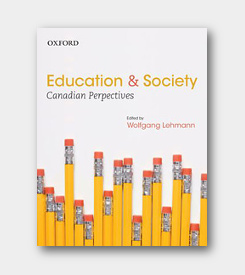
Wolfgang Lehmann is a Professor and Acting Chair of the Department of Sociology at Western University, where he also serves as Undergraduate Program Chair and Assistant Dean for Student Experience in the Faculty of Social Science. He holds a Ph.D. in Sociology from the University of Alberta, an MBA from the City University of New York, and additional degrees from the University of Toronto/OISE and the University of Mannheim. His research focuses on social inequality, social class, and educational transitions, particularly examining how class impacts access to education and employment opportunities. Lehmann’s academic career includes extensive grant funding, including SSHRC grants totaling over $750,000 for studies on youth apprenticeships, first jobs, and educational inequality. He has supervised numerous graduate students and authored/edited influential books such as Education and Society: Canadian Perspectives (Oxford University Press) and Choosing to Labour? School-Work Transitions and Social Class (McGill-Queen’s University Press). His research highlights the challenges faced by working-class students in higher education and their transitions to employment. Key contributions include analyses of social capital, habitus, and vocational training systems. Lehmann has received recognition for his teaching, including multiple USC Teaching Honour Roll placements and a nomination for the USC Teaching Award. Lehmann’s work extends to international collaborations and policy advocacy, addressing issues like skilled labor shortages and the status of vocational education in Canada. He actively participates in academic leadership roles, including editorial boards for journals like the British Journal of Sociology of Education and the International Journal of Lifelong Learning .
Phoenix Kenney is an Associate Chair of the Nepal MA in International Education program at SIT Graduate Institute and a current PhD candidate in Education at the University of Cambridge. Her research focuses on youth development in Nepal, emphasizing informal peer-led learning, disaster recovery, and decolonization of research methodologies. She holds an MPhil from the University of Cambridge and a BA in History and Women’s Studies from Vassar College. Her academic interests include adolescent sexual and reproductive health, the hegemony of English in education, and youth climate activism. She actively supports student research capacity-building in Kathmandu, blending activism with pedagogy. Her recent publications explore qualitative research ethics and youth activism's intersection with development frameworks. Kenney’s fieldwork includes studying Sherpa women’s community roles in Solukhumbu and analyzing NGOs’ post-earthquake roles. She coordinates the SIT Study Abroad Program on Nepal’s development dynamics, integrating gender and social change themes.
Vladimir Tikhonov is a Professor at the Department of Culture Studies and Oriental Languages, Faculty of Humanities, University of Oslo. Specializing in Korean history, his research focuses on Korean Buddhism, nationalism, modernity in East Asia, and labor movements. He holds a PhD from Moscow State University (1996) and has taught at KyungHee University (1997-2000). Current roles include co-leadership of the 'Militarism and Religions in Modern Asia' project and responsibility for the MA program in East Asian Culture and History. Research interests span colonial-era Korean perceptions of Japan and Russia, religious militarism, and the intersection of nationalism with Buddhist thought. Notable works include Buddhism and Violence (2012) and Modern Korea and Its Others (2015). Ongoing projects explore Korean communist movements and critical biographies of nationalist figures like Han Yongun. Teaching covers East Asian culture, history, and politics, with courses like EAST4510 and KOR4504. His publications combine historical analysis with transnational perspectives, addressing topics from colonial-era intellectual debates to contemporary South Korean military chaplaincy dynamics.
Emily Lynn Osborn is an Associate Professor in the Department of History at the University of Chicago, specializing in African history with a focus on precolonial and colonial West Africa. She holds a PhD from Stanford University and a BA from UC Berkeley. Her research explores gender, technology transfer, colonialism, and the Anthropocene in African contexts. Education: PhD in History, Stanford University, 2000 AB, University of California, Berkeley Research Interests: Osborn’s work bridges historical analysis with interdisciplinary themes such as gender and statecraft, technology diffusion, and environmental history. She has published extensively on topics like the role of intermediaries in colonial rule, the cultural significance of color in the Atlantic world, and the Anthropocene in Africa. Her current book project examines artisans and technology transfer in West Africa. Awards and Fellowships: Quantrell Award for Excellence in Teaching (2016) Fulbright IIE and Fulbright-Hays Fellowships American Council of Learned Societies and Social Science Research Council grants Affiliations: Osborn serves as Faculty Director of the Senegal study abroad program and the Social Sciences Postdoctoral Teaching Fellows program. She is affiliated with the Center for Gender and Sexuality Studies, the Pozen Family Center for Human Rights, and the Center for International Social Science Research. Teaching: She teaches courses on African history, gender studies, and the Atlantic world, emphasizing oral history, slavery, and interdisciplinary approaches to the Anthropocene.