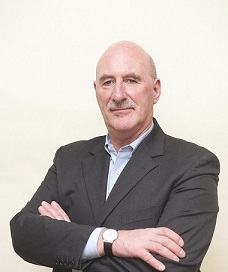
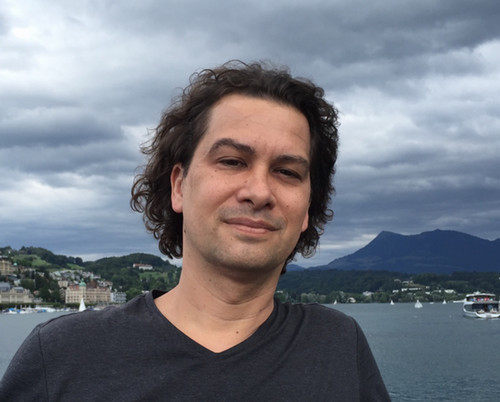
Niall Kirkwood is the Charles Eliot Professor of Landscape Architecture at Harvard University's Graduate School of Design (GSD), where he has been a faculty member since 1991. He holds concurrent roles as Deputy Editor-in-Chief of Landscape Architecture Journal and is affiliated with institutions worldwide, including Tsinghua University and Chulalongkorn University. His research focuses on post-industrial landscape regeneration, brownfield remediation, and climate-resilient urban design. Education: BArch from University of Manchester (UK), MLA from University of Pennsylvania (USA), and honorary doctorates from Harvard and University of Ulster (2009). Research interests emphasize innovative technologies for polluted land remediation, environmental justice, and the intersection of design with ecological systems. Notable projects include the Tar Creek Superfund Site regeneration, DMZ reclamation in Korea, and brownfield revitalization in Mumbai. Publications include influential works like Principles of Brownfield Regeneration (2010) and PHYTO: Site Remediation and Landscape Design (2015). Awards include AAAS membership (2024) and FASLA fellowship (2009). Teaching spans design studios addressing global challenges like Bangkok's climate resilience and Ireland's urban transformation. He led GSD's Academic Affairs as Associate Dean (2019-2024) and founded the Center for Brownfield Research at Tsinghua University. Labs/Initiatives: Co-founded the Center for Brownfield Research (Tsinghua), directed the Center for Environment and Technology (GSD 1997-2017), and collaborates with the Harvard Global Health Institute.
Doug L. James is a Full Professor of Computer Science at Stanford University since 2015, following roles as Associate Professor at Cornell University (2006-2015) and Assistant Professor at Carnegie Mellon University (2002-2006). He holds a PhD in Applied Mathematics from the University of British Columbia (2001), alongside earlier degrees from the same institution and the University of Western Ontario. His research focuses on computer graphics, sound synthesis, and physically-based modeling, with notable contributions to fluid simulation, cloth animation, and medical modeling. Key achievements include the 2012 Technical Achievement Award from the Academy of Motion Picture Arts and Sciences for 'Wavelet Turbulence,' and the 2013 Katayanagi Prize. He serves as a consulting Senior Research Scientist at Pixar Animation Studios and has led roles like Technical Papers Chair at SIGGRAPH 2015. His work integrates physics-based principles with interactive systems, emphasizing real-time applications and data-driven methods. Research interests span sound synthesis for animations (e.g., cloth, water, impact sounds), deformable models for medical simulation, and tools like 'svMorph' for virtual surgery planning. His publications reflect a blend of algorithmic innovation and practical applications in film, gaming, and healthcare.
Casey Reas is a Professor in the Department of Design Media Arts at the University of California, Los Angeles (UCLA), where he also co-directs UCLA Social Software. He holds a Master's in Media Arts and Sciences from MIT and a Bachelor's from the University of Cincinnati's College of Design. A pioneering figure in generative art and digital media, Reas co-founded the open-source programming language Processing, revolutionizing computational creativity for artists and designers. His work spans software installations, prints, and collaborative projects exhibited globally at institutions like the Centre Pompidou and the Whitney Museum. His research explores intersections of technology, art, and pedagogy, reflected in books such as Compressed Cinema and Making Pictures with Generative Adversarial Networks . Reas' practice emphasizes algorithmic processes and machine learning, exemplified in series like Untitled Film Stills and Compressed Cinema . He actively contributes to initiatives like UCLA’s Game Lab and the Conditional Studio, fostering interdisciplinary innovation. His work balances technical rigor with aesthetic exploration, bridging art, science, and technology.
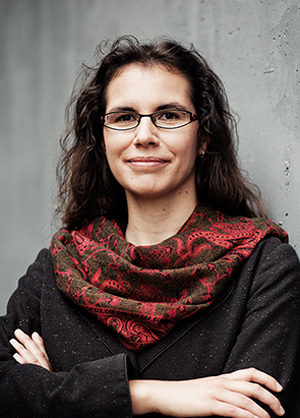
Prof. Dr. Andrea Dreyer is a full-time Professor of Art and its Didactics at the Bauhaus University Weimar , where she has served since 2013. She is Vice Dean for Strategic Development within the Faculty of Art and Design and actively participates in academic governance, including roles in graduation committees, teacher training advisory boards, and curriculum commissions. Her research focuses on teacher professionalization, architectural pedagogy, and digital art education, emphasizing interdisciplinary approaches and qualitative social research methodologies. First and Second State Examination for Teaching at Grammar Schools in Art Education and Social Studies (1994–2000, 2004–2006) Andrea Dreyer’s publications span topics such as Bauhaus-inspired pedagogy, urban-rural spatial education, and digital integration in art teaching. She has led initiatives like DigiProSMK and Denkraum.Bauhaus , and her work often bridges art, architecture, and societal transformation. She has served as Dean of Studies and Vice-Rector for Studies and Teaching at Bauhaus University, advocating for phase-transcendent teacher networks and reflective professional practices. Her recent articles address participatory architectural psychology, interdisciplinary curriculum design, and digitalization in art education. Despite extensive committee involvement and editorial contributions, no specific scientific awards are highlighted in the provided texts. She mentors students and collaborators within the kunst:pädagogik | netz:werk platform and maintains active partnerships with institutions like the Thuringian Ministry of Education and Friedrich-Schiller University Jena.
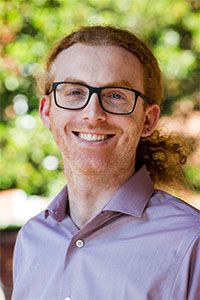
Maxwell Tfirn is a Lecturer and Director of Creative Studies at Christopher Newport University , Department of Music, Theatre and Dance, where he teaches Music Composition, Sound Synthesis, and Music Technology. His research focuses on real-time recursive compositions and data sonification for scientific analysis. PhD in Composition and Computer Technologies - University of Virginia M.A. in Music Composition - Wesleyan University His work bridges music composition with bacterial behavior studies through NSF-funded research on Data Sonification of Bacterial Chemotaxis . Notable performances include works at ICMC, SEAMUS, and Subtropics Music Festival. Collaborations with ensembles like Jack Quartet and Loadbang highlight his impact in contemporary music circles. Key Trends in Publications: Articles span real-time algorithmic compositions, sensor-based live performance tools, and interdisciplinary sonification projects merging microbiology with auditory analysis. Subfields include neural network integration, audiovisual data mapping, and glitch-based performance aesthetics. Scientific Awards: Best Use of Sound (Academic) - ICAD (2023) Research Collaborations: National Science Foundation grant exploring bacterial chemotaxis sonification. Mentorship roles include advising students at Christopher Newport University and contributing to experimental music festivals globally.
Dr. Froukje Sleeswijk Visser is an Associate Professor in Service Design at Delft University of Technology's Industrial Design Engineering department, part of the Human-Centered Design group. She works part-time and focuses on public service design, empathy-driven methodologies, and co-design approaches. Her research emphasizes societal challenges, user participation, and empathic design practices. She advises ContextQueen, a consultancy firm, and collaborates on projects like MyFutures Lab (winner of the 2018 Hans Sauer Award). Education: PhD in Design Engineering (2009, TU Delft), Master’s in Industrial Design Engineering (Delft). Key roles include teaching courses like 'Contextmapping Skills' and 'Human-Centered Design and Beyond'. Research projects involve Innovation in Services, Empathic Future Visions, and Bubble Games exploring empathy design. Publications span over 50 peer-reviewed works since 2003, focusing on empathic design frameworks, service design deliverables, and collaborative research impacts. She advocates for bridging design research and industry practice, with notable contributions to contextmapping and empathic method taxonomies. Labs/Studios: Active in StudioLab (cross-pollination of research/education) and MyFutures (tools for personal future planning). Current projects explore VR for empathy-building and interdisciplinary design labels.
Professor Lisa Zamberlan serves as Pro Vice-Chancellor International within the University Office of Global Affairs at the University of New South Wales (UNSW). She holds a prominent leadership position in the Division of the Vice Chancellor and President, overseeing international strategy and global affairs for the university. Her academic background is deeply rooted in design education and architecture. Professor Zamberlan's research examines three interrelated themes: discipline identity in architecture; the practice of learning and teaching in the design studio; and the future of design practice. Her scholarly work has focused on transformative learning in design education and the evolving landscape of contemporary design practice. Professor Zamberlan's recent publications reveal a strong focus on creativity in design education, peer learning dynamics in studio environments, and the development of entrepreneurial capacity within design disciplines. Her work consistently addresses how design education can adapt to prepare students for an uncertain professional future, emphasizing collaboration, innovation, and new forms of design knowledge. The recurring themes across her publications include design pedagogy, creative processes, interdisciplinary learning, and educational innovation within built environment disciplines. Professor Zamberlan has secured multiple research grants supporting her work, including the 2016 BE Research Start Grant for "Homeland, returning, remembering re-imagining," 2015 SOTL Research Grant for "A review of the BIA peer tutor program," and several others focused on design education and creativity. Her grant portfolio demonstrates a sustained commitment to educational innovation and design research. Within the academic community, she has contributed significantly to curriculum development and educational innovation at UNSW's Faculty of Built Environment, particularly in the areas of interdisciplinary learning and peer tutoring programs for design students. Her leadership extends to shaping faculty-wide educational initiatives and enhancing the quality of design education through evidence-based practices.
Christopher Lukasik is an Associate Professor in the Department of English at Purdue University, with affiliations in American Studies and the School of Interdisciplinary Studies (SIS). His research focuses on the intersection of American literature, visual culture, and illustration studies in the 18th and 19th centuries, with a particular interest in intermediality and cultural history. Ph.D., English, Johns Hopkins University, 2002 His scholarly work examines how visual practices shaped social and political identities, as seen in his monograph Discerning Characters: The Culture of Appearance in Early America (2011). Current research includes The Image in the Text: Intermediality, Illustration, and Nineteenth-Century American Literature , exploring literary annuals' role in developing mass visual culture. His publications span topics like biometric surveillance in early America, abolitionist visual media, and the pedagogy of drawing books. Articles highlight intermedial relationships between text and image, racial visuality, and the cultural capital of illustration. Scientific honors include: Rockwell Center Society of Fellows (2017-2019) Fulbright Specialist Grant (2018) NEH Summer Stipend (2016) Lillian Gary Taylor Fellowship (2013-14) Fulbright Scholar Grant (2009-10) NEH Long-Term Research Grant (2004-05) Lukasik actively participates in academic conferences, including upcoming presentations at SHARP 2025 and SEA 2025. He has also led Fulbright liaison training sessions and symposiums on illustration research.
Professor Isabelle Doucet is a Professor of Architecture and PGR Lead at the School of Architecture and Landscape, University of Sheffield, having joined in February 2025. Previously, she held professor positions at Chalmers University of Technology in Sweden (2018-2024) and the Manchester Architecture Research Group at the University of Manchester (2009-2018). Her academic journey began with PhD studies at Delft University of Technology in The Netherlands. Her educational background includes PhD, Masters and Bachelor degrees in Architecture from Delft University of Technology. She has been a visiting scholar at Yale University (2022), University of Sydney (2018), University of Queensland (2017) and the Brussels Centre for Urban Studies (2015). Doucet's research sits at the intersection of architecture, environmental humanities, and feminist theory. Her work centers on expanded histories of architecture and activism after 1968, women as role models in architecture, and environmental (multispecies) storytelling. She approaches these topics through historical cases (particularly post-1968), theoretical revisiting, and innovative methods of inquiry. Her research combines oral histories of women in architecture with critical revisiting of emancipatory theories from an intersectional perspective. Her extensive publication record shows a consistent focus on critical architectural practice, urban activism, and environmental storytelling. Over the past fifteen years, her work has evolved from examining specific historical cases in Brussels to broader theoretical frameworks connecting feminist theory, environmental humanities, and architectural practice. Recent publications increasingly engage with multispecies encounters and ecological storytelling in architecture. Member of the Steering Group of the Architectural Humanities Research Association (AHRA) Advisory board member for Dimensions: Journal of Architectural Knowledge and CLARA Architecture/Recherche Former editor for Architectural Histories (until 2023) Doucet actively supervises doctoral students and has developed international PhD courses. Her grant portfolio reflects her research interests in women in architecture, environmental storytelling, and architectural activism. She has co-supervised multiple doctoral students to completion and served as an external examiner for students at prestigious institutions worldwide.
Dr. Judith Grant Long is an Associate Professor of Urban and Regional Planning and Sport Management at the University of Michigan with a joint appointment. She holds a PhD in Urban Planning from Harvard University, where she previously directed the Urban Planning Program. Her research focuses on strategic investments in sport venues and tourism infrastructure, examining public-private partnerships, mega-event legacies, and host city outcomes. Dr. Long's work spans Olympic Games infrastructure, NFL stadium development, and sport district planning. She is a certified city planner with over 20 years of academic and industry experience, including board roles at Juego de Pelota and Coliseum. Her research has been funded by the National Science Foundation and HUD. Dr. Long teaches courses on sport real estate development and Olympic infrastructure planning, mentoring students through collaborative projects. Education: PhD in Urban Planning (Harvard University, minor in Economics) MDes in Real Estate Development (Harvard Graduate School of Design) Undergraduate degrees in Economics and Urban Planning Research Interests: Dr. Long bridges sport management and urban planning to address challenges in venue financing, post-event infrastructure utilization, and urban development through sport-driven initiatives. She emphasizes cost-effectiveness and long-term success for host cities, leveraging data from over 120 major league venues and Olympic projects. Grants & Awards: Funded by NSF, HUD, and the Canada Mortgage and Housing Corporation. Her work has been featured in the New York Times, Wall Street Journal, and BBC Radio. Student Collaboration: Leads teams of researchers investigating Olympic venues, sport districts, and former major league facilities. Current and former students include Sarah Perrigo (MURP '22), Stephanie Gerretson (PhD '20), and Robert Sroka (PhD '21).
Aleksandra Raonic is an Associate Professor at the Norwegian University of Science and Technology (NTNU), affiliated with the Department of Architecture and Technology under the Faculty of Architecture and Design. She previously held an Associate Professorship at Xi'an Jiaotong-Liverpool University (XJTLU) in China from 2014 to 2020, where she led Year 3 architecture programs and collaborated with the University of Liverpool. Raonic is also the founder and principal architect of RAUM, an award-winning architectural studio known for research-driven design projects. Her work spans architectural education, urban design, and innovative residential/commercial projects, with a focus on sustainability and community engagement. Her research emphasizes experimental pedagogy and the integration of design practice with academic teaching. Notable projects include the Stubline Kindergarten (2017 S.ARCH Award) and the Central Greenmarket in Negotin (2019 DANS International Award). Raonic has received over 25 design and teaching awards, including the Jiangsu Province Tutor Award (2018) and the Suzhou Excellent Educator Award (2016). She has supervised numerous student projects recognized at national and international levels. Raonic’s teaching philosophy combines theoretical rigor with hands-on practice, evident in her co-authored publications like Framing Indeterminacy (2019). Her recent exhibitions, including Barnas Katedral (2023) and Work in Progress (2023), highlight her commitment to experimental design and public space innovation. She actively collaborates across institutions, such as the Threads of Innovation project with CEPT University in India (2021). Education Background: Professional journey began with early architectural competitions (e.g., 1998 student award for urban design in Pancevo). Formal training includes studies at the Städelschule in Frankfurt, influencing her experimental design ethos. Awards Overview: Over 25 awards spanning teaching excellence, design competitions, and architectural innovation, including Grand Prix (Leonardo 2005) and multiple jury-selected projects. Grants & Projects: Leads applied research initiatives like NTNU’s Threads of Innovation , focusing on space interventions and cross-cultural academic partnerships. Raonic’s architectural practice and academic roles are deeply intertwined, reflecting her belief in education as a platform for advancing architectural discourse and societal impact.
Lynn Helding serves as Professor of Practice in Voice and Vocal Pedagogy at the University of Southern California's Thornton School of Music, where she also coordinates the Vocology & Voice Pedagogy program. She is a distinguished author, most notably of The Musician's Mind: Teaching, Learning and Performance in the Age of Brain Science , and was appointed Editor-in-Chief of the Journal of Singing in 2023. With decades of experience as both a performer and pedagogue, Helding bridges the gap between voice science and artistic practice, advocating for cognitive science as the "Third Pillar of Voice Science" alongside physiology and acoustics. Helding's educational background includes: Master's Degree in Vocal Pedagogy with Distinction from Westminster Choir College of Rider University (2005) Artist Diploma from Indiana University (1988), where she was the first singer ever accepted into this prestigious program Completion of the Summer Vocology Institute at the National Center for Voice and Speech Helding's research focuses on the application of cognitive science to voice pedagogy, with particular emphasis on motor learning theory and expertise studies from social psychology. She pioneered the concept of cognitive science as the "Third Pillar of Voice Science," arguing that understanding the brain's role is essential for effective voice teaching. Her work challenges traditional approaches by emphasizing the "how" of teaching over the "what," advocating for science-informed (rather than science-based) pedagogy that respects both scientific findings and artistic tradition. Helding's research has significant implications for addressing performance anxiety, optimizing practice methods, and developing more effective teaching strategies that account for how musicians actually learn. Her scholarly contributions demonstrate a consistent focus on bridging cognitive science with practical voice teaching. Rather than treating voice science as purely technical knowledge, Helding examines how this information can be effectively communicated to students, recognizing that the delivery method is as important as the content itself. This approach has led to innovative frameworks for evidence-based voice pedagogy that consider both physiological realities and cognitive processing limitations. Helding's significant recognition includes: Lifetime Achievement Award from the Contemporary Commercial Music (CCM) Vocal Pedagogy Institute at Shenandoah University (2020) Van L. Lawrence Fellowship, jointly awarded by the Voice Foundation and the National Association of Teachers of Singing Foundation (2005) Induction into the prestigious American Academy of Teachers of Singing (2022) Recognition as a "legendary figure in the field of voice pedagogy" As an educator, Helding maintains a thriving studio with private clients including members of the Los Angeles Opera and Los Angeles Master Chorale. Her USC Thornton voice students have earned fellowships to prestigious programs including the Aspen and Tanglewood Music Festivals. She has presented masterclasses described as "life-altering" at major voice conferences throughout the United States, Europe, and Australia. Helding previously served twenty-two years as Associate Professor of Voice and Director of Performance Studies at Dickinson College, and four years as voice faculty at Vanderbilt University's Blair School of Music. Helding is actively involved with the USC Voice Center at Keck Medicine of USC as a team member, where she applies her vocology expertise to help singers with functional vocal issues and those recovering from voice surgery. She is a co-founder of the NATS Science-Informed Voice Pedagogy Institute and frequently collaborates with voice scientists and medical professionals to advance the field of vocology.
Dr Rosemary Stott is a faculty member at the University of East London, serving as Dean of the School of Arts and Creative Industries. She holds a PhD in Film from Reading University, an MA in Film from Westminster University, and a BA from Oxford University. Education: BA (Oxford), MA (Westminster), PhD (Reading) Leadership roles at UEL, London Metropolitan University, and Ravensbourne University London Research focus: East German film (DEFA), cultural transference, inclusive learning design, digital education Her research explores the intersection of film history, pedagogy, and educational technology. Key projects include World on our Doorsteps (2022-2025, Arts Council England) and Embedding Mental Well-Being in the Curriculum (2020-21). Earlier work involved a Horizon 2020 wearable technology project and Jisc-funded initiatives for dyslexic students. Recent publications analyze Critical Race Theory in film education, DEFA film legacy, and digital pedagogy innovations. Awards include funding from Jisc, HEFCE, and HEA for educational technology projects. She supervises PhD students in German film, media practice, and transnational cinema.
Dr. Kylie Budge is a Senior Research Fellow (Urban Living and Society) and Adjunct Researcher at Western Sydney University's Institute for Culture and Society. Her research focuses on intersections of technology, culture, and society, with emphases on digital/material cultures of art/design, cultural institutions, and social media engagement. She holds a PhD from the University of Melbourne (2014) and a Master of Arts in Education from Macquarie University (1998). Her work critically examines how creative producers, audiences, and social media shape urban spaces and cultural narratives. Key themes include visual culture's role in identity construction via platforms like Instagram, and the evolving role of museums in digital engagement. She previously worked in Australia and Japan within universities and the GLAM sector (Galleries, Libraries, Archives, Museums). Publications span journals like Australian Geographer , Continuum , and Curator: The Museum Journal , reflecting interdisciplinary engagement with cultural geography, media studies, and art education. Research highlights include analyzing 'makerspaces' as urban innovation hubs and the agency of museum objects in digital contexts. Dr. Budge serves on the Advisory Board of the Australasian Consortium of Humanities Research Centres, reflecting her commitment to advancing cultural research networks.
Associate Professor Stefan Meisiek is an academic specializing in leadership and business innovation at the University of Sydney Business School. He holds a PhD from the Stockholm School of Economics and has visiting roles at Copenhagen Business School, Hong Kong University, NYU Stern, and others. His research explores how leadership influences innovation, with a focus on creativity, improvisation, and organizational theatre. He teaches courses like Leading Business Innovation and Global Management Practice. Education: PhD in Management, Stockholm School of Economics Studies at Freie Universität Berlin, Université de Reims Champagne-Ardenne, and Justus-Liebig Universität Giessen Research Interests: Creative leadership practices Design thinking and studio-based education Improvisation in extreme organizational contexts Material-discursive practices in strategic change His work bridges art and management, emphasizing symbolic interventions to drive innovation. Grants & Awards: 2020: Defense Innovation Benchmarking Grant (Australian Army) 2019: RAN Innovation Grant and Sydney Business School educational grants Senior Fellow of the Higher Education Academy (SFHEA) Advising: Supervises PhD students on topics like quantum technology commercialization and innovation in state-owned enterprises. Labs/Teams: Leads the Business Studio initiative, integrating design thinking into executive education. Collaborates with global institutions on innovation ecosystems and crisis management research.