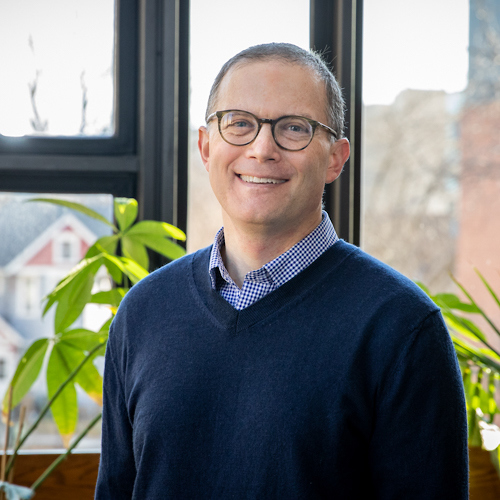
Robert M. Weikle, II is a Professor in the Charles L. Brown Department of Electrical and Computer Engineering at the University of Virginia, with a courtesy appointment in the Department of Physics. He earned his B.S. from Rice University (1986), M.S. (1987), and Ph.D. (1992) in Electrical Engineering from Caltech, followed by postdoctoral work at Chalmers University of Technology (1992). His research focuses on millimeter-wave and terahertz electronics , applied electromagnetics, integrated antennas, low-noise sensors, and heterogeneous integration of compound semiconductors. His work bridges electronics and photonics for spectrum access, with applications in astronomy, spectroscopy, and metrology. He has published extensively on micromachined silicon substrates, superconducting materials, and emerging technologies. Scientific Awards: IEEE Microwave Prize (1993) David A. Harrison III Award (1999) University of Virginia All-University Outstanding Teaching Award (2000) Edlich-Henderson Innovator of the Year (2016) Fulbright Scholar (2001) As Chief Technology Officer and co-founder of Dominion Microprobes, Inc., he commercializes micromachined wafer probes for high-frequency metrology. His lab, located in E220 Thornton Hall and the Jesse W. Beams Physics Building, has produced 15+ recent publications on submillimeter-wave devices, THz probes, and calibration techniques.
JuHyun Lee is an Associate Professor of Architecture and Computational Design in the School of Built Environment at the Faculty of Arts, Design and Architecture (ADA), University of New South Wales (UNSW) Sydney, where they also hold the prestigious title of Scientia Academic. With a professional background in architecture and construction (1998-2002), they have held academic positions across Australia including a five-year post-doctoral fellowship at the University of Newcastle (2012-2017) and a senior research fellowship at the University of South Australia (2018), following earlier research and teaching roles in South Korea (2003-2011). Lee specializes in architectural design computing, design cognition, and urban complexity, integrating computational methods, cognitive science, and architectural theory to advance architectural intelligence and human-centered design. Their research spans architectural visualization, analysis and design methods, algorithm/protocol design, and data visualization with computational approaches. They have established a strong research program examining the intersection of language, culture, and design cognition, particularly focusing on cross-cultural design communication between Australia and Korea. Lee's recent publications demonstrate a clear trajectory toward increasingly sophisticated integration of computational methods with architectural design theory, particularly in the areas of shape grammar, space syntax, and machine learning applications. Their work shows consistent focus on practical applications of computational design methods to real-world architectural problems, with growing emphasis on cross-cultural collaboration and intelligent design systems. The research portfolio reveals a deepening engagement with AI and machine learning techniques applied to architectural design assessment and generation. Scientia Academic at UNSW Sydney Associate Fellow of the Higher Education Academy (AFHEA, 2020) As an educator, Lee develops cutting-edge courses in computational design and Building Information Modeling (BIM), integrating experiential learning and industry engagement. They have secured over $11 million in research funding, including multiple ARC Discovery Projects and an Australia-Korea Foundation grant. Lee co-directs the Advanced Architectural Analytics Laboratory (A 3 LAB), leading interdisciplinary research on design automation, spatial analysis, and machine learning applications in architecture, while also leading cross-cultural initiatives like the Australia-Korea Architects' Network (AKAN). Lee supervises multiple HDR students working on culturally sustainable urban design, socio-spatial patterns in public housing, and computational layout generation. Their research has significant implications for improving design communication across cultural boundaries and developing more coherent, clear, and accessible built environments through computational design approaches.
Dr. Gan Sheuo Hui serves as Lecturer in Animation at LASALLE College of the Arts, Singapore, with extensive international engagement through visiting positions at National University of Singapore (NUS), Kyoto Seika University, and the Sainsbury Institute for the Study of Japanese Arts and Cultures. Her academic profile bridges Japanese animation scholarship with Southeast Asian cultural contexts through fieldwork-driven research. Her educational qualifications include: PhD in Human and Environmental Studies from Kyoto University, Japan Master of Communication (Screen Studies) from University of Science Malaysia Bachelor of Communication (Film Studies) from University of Science Malaysia Dr. Gan's research examines Japanese anime, manga, and popular culture through lenses of authorship, censorship, and cultural hybridity, with particular focus on transnational adaptations in Southeast Asia. She integrates theoretical frameworks with empirical fieldwork involving creators, curators, and fans across Asia and the West, emphasizing practical production aspects alongside critical analysis. Her interdisciplinary approach connects film studies, media theory, and cultural anthropology. Her scholarly trajectory reveals consistent exploration of animation aesthetics (especially limited/selective animation), historical evolution of Japanese animation, and hybrid cultural forms in Southeast Asia. Key thematic threads include re-evaluating animation techniques beyond Western paradigms, analyzing global anime circulation, and documenting local adaptations of manga in Malaysia. This body of work demonstrates strong methodological integration of archival research, industry analysis, and ethnographic observation. Scientific recognition includes: Two-year Japan Society for the Promotion of Science (JSPS) Grant for postdoctoral research on Japanese anime history Sainsbury Institute for the Study of Japanese Arts and Cultures Fellowship Dr. Gan has secured competitive research funding including the JSPS grant, and maintains active international collaboration through invited lectures at institutions like Sorbonne, Tokyo University, and Keio University across 20+ countries. Her teaching innovations include NUS modules incorporating Japan-based field studies, reflecting her commitment to experiential learning in Japanese visual culture. While specific student advising isn't detailed, her pedagogy emphasizes creator-fan industry ecosystems. Her research network spans the Archive Center for Anime Studies (Niigata University), Kyoto Seika University's Manga Department, and global symposia, facilitating cross-institutional knowledge exchange on animation history and contemporary media practices.
Dr Jan Woudstra is an Honorary Professor at the University of Sheffield's School of Architecture and Landscape. With a PhD in Landscape Architecture from University College London and a background in landscape design, horticulture, and conservation, he has taught landscape architecture and history since 1995 and part-time at the Architectural Association School of Architecture from 1988-2005. Education: PhD, MA (Conservation), Dip Hort (Kew) Research Focus: History and theory of modern movement landscape architecture, planting design, hard landscape detailing, and international design trends Supervision: Claudia Leticia Martínez Velarde, Lei Gao, Kairan Li, Sang Jung Yoon, Vivienne Rose Parrott, Jijun Zhao, Manoochehr Salahi Moghadam, Hossein Donyavi, Sally O’Halloran Contact: j.woudstra@sheffield.ac.uk | Arts Tower, Floor 12, Western Bank, Sheffield, S10 2TN His research emphasizes landscape conservation, sustainability, and social equitability, with case studies on designers like Christopher Tunnard, Peter Shepheard, and Robert Marnock. He explores the tension between memory and innovation in historic landscapes. Recent publications address Buddhist pilgrimage sites, Scandinavian design, and historical planting techniques. Collaborations with Peter Blundell Jones and others analyze the interplay between architecture and landscape.
Andrea Wollensak is Professor of Art at Connecticut College, where she has taught since 1993. She is an interdisciplinary artist and designer whose work explores the convergence of place, identity, and history through site-based artworks that combine new media technology with traditional design and fabrication. Her educational background includes a B.F.A. from the University of Michigan and an M.F.A. from Yale University. She has held visiting faculty positions at numerous institutions including the University of Gothenburg, Nova Scotia College of Art and Design, Concordia University, Rhode Island School of Design, and the Estonian Academy of Arts. Wollensak's research focuses on social design and place-based storytelling, employing collaboration with community partners, computer scientists, musicians, poets, and scientists. Her work addresses themes of place-based narratives, environment, and memory through forms including audio/video, interactive installations, data visualization, artist books, and digitally fabricated works. She examines how design can be used as a tool for social impact and civic participation. Her most recent projects include Mapping Your Journey to School (2023), which engages Estonian and Ukrainian refugee students in creative writing workshops; Water Stories: Visual Poetics and Collective Voices (2022), a year-long artist residency at the Anchorage Museum; and Open Waters (2019-2020), an interactive installation examining Arctic environmental change. U.S. Fulbright Scholar in Estonia (2023) Artistic Excellence Award in Digital Art from Connecticut Office of the Arts Artist residency at Hafnarborg Contemporary Art Museum in Iceland (2011) Connecticut Commission on Culture and Tourism Grants in New Media (2010, 2006) IASPIS International Artist Studio Program in Sweden (2007) Rockefeller Study and Conference Center residency (2000) Wollensak has advised numerous students in design and new media projects, often collaborating with community partners. She served as Director of the Ammerman Center for Arts and Technology at Connecticut College from 2014-2020 and currently serves on the Advisory Council of the Winterhouse Institute and the Advisory Board for Digital Media Connecticut. Her teaching emphasizes design as an interdisciplinary practice that prepares students to be creative problem solvers who can use design to create positive social impact. Her work has been exhibited internationally at venues including the Göteborg International Contemporary Art Biennial, Nova Scotia Art Gallery, Brno Design Biennial Moravian Gallery, Center for Visual Art in Denver, Brown University's Granoff Center Gallery, and the Burchfield Penney Arts Center in Buffalo.
Dr. Sam Ferguson is a Senior Lecturer at the School of Computer Science, University of Technology Sydney (UTS), with a multidisciplinary background in music performance, cognitive science, and psycho-acoustics. His research explores the intersection of sound, music, and human experience through creative coding, machine learning, and interactive systems. Key Research Areas: Sound and Music Computing, Human-Computer Interaction, Creative Coding, Cognitive Science, Installation Art, and Acoustics. Current Projects: ARC Linkage project on creative coding and multiplicitous media; industry collaborations on IoT-based audiovisual systems. Recent Publications: Focus on spatial audio complexity, gestural interaction with networked sound, music emotion recognition frameworks, and robotic performance through genre-based cultural platforms. Leadership Roles: Director of Teaching & Learning Engagement; former Deputy Head of School (Teaching and Learning); active in ACM Creativity and Cognition Steering Committee. Teaching: Courses like Digital Media Studio , Prototyping Physical Interaction , and Data Processing using R within UTS's interdisciplinary Software Development Studio.
Prof. Dr. Katja Thoring is a Full Professor of Integrated Product Design at the Technical University of Munich (TUM School of Engineering and Design). She holds a doctorate in Design Research from Delft University of Technology and has previously served as Professor of Integrated Design at Anhalt University of Applied Sciences in Dessau from 2009–2022. Her research bridges product design, architectural space, and technology, focusing on how physical environments stimulate creativity and design processes across functional, emotional, and cognitive dimensions. Key areas include generative AI applications in design, innovative research methodologies, and creative workspace design. She developed methods like the 'Delphi Design Sprint' and contributed to frameworks such as the FOD (Future-Oriented Design) model. Thoring is a member of prominent design societies (DGTF, Design Society, DRS) and a founding member of the Academy of Design Innovation Management (ADIM). Notable awards include the 'Best Paper Award' at ADIM Conference (2017) and recognition as a top early-career researcher (2019). Her work integrates design education innovation, with studies on pedagogical spaces and cross-cultural design thinking. She has published extensively on design knowledge models, creative environments, and future-oriented design strategies.
Erin Manning is a Professor in the Department of Studio Arts within Concordia University's Faculty of Fine Arts, holding a research chair in Speculative Pragmatism, Art and Pedagogy. Her work bridges philosophy, aesthetics, and politics through alter-pedagogical and alter-economic practices, with deep engagement in participatory art and theoretical inquiry. Manning's research centers on process philosophy, neurodiversity, research-creation, and the ProTactile movement for DeafBlind culture. She explores material complexity through textile-based relational art, emphasizing sideways perception and textural engagement with life. Her practice investigates Black Studies, ecology, radical pedagogy, and choreographic experimentation, often manifesting in tactile propositions using tufting, hooking, and weaving techniques that challenge conventional sensory hierarchies. Her recent publications and exhibitions reveal a trajectory toward the transversality of three ecologies—social, environmental, and conceptual—through the 3Ecologies Project. This work trends toward interdisciplinary collaborations that dissolve boundaries between art, philosophy, and activism, with increasing focus on more-than-human encounters and collective fabulation in social dreaming. Manning leads the 3Ecologies Project (3e), which includes a land-based initiative north of Montreal for experimenting with living and learning. Legacies of SenseLab inform her approach to crafting collectivity through experimental pedagogy. She co-edits the Inflexions journal and the 3E Books imprint, fostering platforms for research-creation that integrate theoretical and artistic practices.
Michelle Laboy is an Associate Professor in the School of Architecture at Northeastern University, with affiliate appointments in Civil & Environmental Engineering and the School of Public Policy and Urban Affairs. She holds a Master of Architecture and Urban Planning from the University of Michigan (2005) and a Bachelor of Science in Civil Engineering from the University of Puerto Rico (2001). Her research focuses on transdisciplinary design methods that integrate socio-ecological systems with built environment resilience, emphasizing material circularity and long-term sustainability. Key projects include the Boston LightWells initiative and Common SENSES, which explore community-driven solutions for urban resilience. Laboy has received prestigious awards including the Latrobe Prize (2017 and 2022) and Excellence in Teaching (2020). She co-founded FieLDworkshop, a design research practice addressing ecological and cultural regeneration in cities. Her work bridges architecture, engineering, and policy through projects funded by NSF, DOE ARPA-E, and Autodesk. Research themes include green infrastructure planning, climate-resilient building systems, and participatory modeling for equitable urban development. Laboy has authored/co-authored books such as *The Architecture of Persistence* and over 30 peer-reviewed articles in journals like *Journal of Industrial Ecology* and *Journal of Architecture*. Her teaching spans comprehensive design studios and systems integration courses, emphasizing transdisciplinary collaboration. Education: MArch/MUP, University of Michigan, 2005 BSc Civil Engineering, University of Puerto Rico, 2001 Key Awards: 2022 Latrobe Prize (AIA College of Fellows) 2020 Excellence in Teaching Award (CAMD) 2017 Latrobe Prize (AIA College of Fellows) Grants & Projects: Principal Investigator: Boston LightWells (Autodesk/ Boston Groundwater Trust) Co-PI: Community Resilience in Extreme Temperatures (Northeastern) DOE ARPA-E grant for carbon-negative timber construction Laboy’s practice, FieLDworkshop, operationalizes research into built projects ranging from residential designs to urban-scale interventions. Her scholarly contributions highlight the interplay between technical innovation and social equity in achieving sustainable urban futures.
Peter Wardrip is an Assistant Professor of STEAM Education at the University of Wisconsin-Madison School of Education. His research focuses on bridging informal and formal learning environments, professional learning communities, formative assessment strategies, and making/tinkering pedagogy. He holds a PhD in Learning Sciences and Policy from the University of Pittsburgh, an MS in Human Ecology, and a BS in Latin Education from UW-Madison. Education Background: PhD in Learning Sciences and Policy (University of Pittsburgh, 2014) MS in Human Ecology (Centre for Human Ecology, 2004) BS in Latin Education (University of Wisconsin-Madison, 1997) Research Interests: Peter's work emphasizes collaborative learning frameworks, educator professional development, and innovative assessment methods in makerspaces. He has developed national frameworks for museum and library makerspaces, and co-designed observation tools for maker educators. His research often explores how educators use data to inform instruction and how informal learning spaces can enhance traditional education systems. Recent Article Trends: Recent publications focus on pandemic-era educational adaptations, assessment challenges in makerspaces, and role evolution of librarians/museum educators. He has contributed to foundational texts on maker pedagogy including Handbook of Research on Educational Communications and Technology and Makeology . Awards: INSPIRE Fellow (2018-2019), Research+Practice Collaboratory Fellow (2016), DML Design Research Committee Member (2014-2015) Grants & Advising: Peter has led projects funded by the Institute of Museum and Library Services, co-authored a national framework for museum makerspaces, and advised on digital badge systems in educational settings. He actively collaborates with institutions like the Children’s Museum of Pittsburgh and Carnegie Mellon’s Learning Media Design Center. Labs/Teams: Involved with the University of Pittsburgh’s UPCLOSE research group and the MIT Teaching Systems Laboratory through his INSPIRE fellowship. His work bridges university, museum, and K-12 partnerships to create scalable educational tools and frameworks.
Dr. Ben Swift is a Senior Lecturer at the School of Cybernetics, ANU, specializing in AI, computational art, and cybernetics. He leads the Cybernetic Studio, an interdisciplinary collective exploring cybernetic systems through hardware/software/people collaborations. As a livecoding artist, he performs globally and co-founded the ANU Laptop Ensemble. His research spans generative AI, open-source tools like Extempore, and UX design. Education: PhD in Computer Science (ANU) Projects: Australia's Digital Economy (2022), The Augmented Web (2019) Research focuses on AI creativity, biofeedback interfaces, and computational music. His work bridges technical innovation with artistic expression, evident in projects like TSPNet and adversarial camera systems. Key contributions include Extempore’s development and studies in live coding disruption. Awards unspecified but recognized internationally for interdisciplinary impact.
Henrik von Coler is an Assistant Professor at Georgia Institute of Technology's School of Music within the College of Design. His work bridges engineering, electronic music, and empirical research, focusing on spatial audio systems, live electronics, and human-computer interaction in musical contexts. He joined Georgia Tech in 2023 after serving as director of the TU Studio for Electronic Music at Technische Universität Berlin from 2015 to 2023, where he founded the Electronic Orchestra Charlottenburg (EOC) to explore live electronic ensembles in multichannel environments. His research emphasizes the integration of sound, space, and HCI to enhance compositional and performative expressiveness. Notable projects include immersive audio installations, virtual instrument design, and AI-assisted composition. Coler has performed globally on immersive audio systems and curated international concerts. His technical contributions span spatial sound synthesis algorithms, networked music systems, and real-time signal processing tools. Key areas of exploration include volumetric music performances in metaverse environments, hybrid spatial interaction via ARCube, and statistical models for spectral synthesis. He has developed open-source systems like Orchestra (for metaverse performances) and SPRAWL (for ensemble interaction). Coler’s work often combines empirical research with artistic practice, aiming to redefine the boundaries of live electronic music through technological innovation. His academic output spans over 30 peer-reviewed articles since 2011, with recent focus on metaverse applications, AI-human collaboration, and immersive audio design. While no formal awards are listed, his leadership roles and project outcomes highlight significant contributions to music technology and spatial audio engineering.
Katherine Fama is a tenured Assistant Professor of American Literature in the School of English, Drama and Film at University College Dublin (UCD). She holds leadership roles including Deputy Head of School (2024–2027), former Director of Graduate Research (2021–2024), and Co-Director of the Fictional Spaces research substrand under UCD’s Thresholds of Knowledge research initiative. She co-founded the Single Lives Research Group and helped establish the International Singles Studies Association (ISSA). Her work bridges literary studies, feminist theory, architectural criticism, and creative pedagogy. Dr. Fama earned her PhD in English and American Literature from Washington University in St. Louis in 2013, with a certificate in American Culture Studies. She also holds an MA from New York University and a BA from Swarthmore College. Her postgraduate training includes a Digital EDI Ambassador Badge and participation in the Research Supervisor Support and Development programme at UCD. Her research centers on singleness, architecture and narrative, feminist theory, sexuality studies, and the history of emotions in modern American literature. She explores how domestic spaces shape identity, particularly for single women, and investigates the emotional and material dimensions of literary form. Her book project, The Architecture of Singleness , examines early 20th-century novels, domestic architecture, and the figure of the single woman in America. Her interdisciplinary approach is reflected in collaborations across film, media, and studio arts. Her recent publications span journals such as Emotions: History, Culture, Society , MELUS , Studies in American Naturalism , and Journal of Modern Literature . She co-edited Single Lives: Modern Women in Literature, Culture, and Film (Rutgers University Press, 2022), and her work increasingly integrates creative practice, including printmaking and community art projects focused on environmental regeneration. College of Arts and Humanities Teaching Excellence Award (2024) Marie Skłodowska-Curie Research Fellow Volkswagen Foundation Postdoctoral Fellow NEH Research Fellow W.M. Keck Foundation Fellow Everett Helm Visiting Fellow Katherine Fama supervises PhD and MA students, including Chloe Green, whose research examines illness in the contemporary workplace novel. She founded the Graduate Futures workshop to support PhD candidates in academic and non-academic career development. Her funded research projects include 'Architecture and Narrative: The Built Environment in Modern Culture' and 'Print Exchanges: Site-specific Creative-Critical Responses to Extractivist Landscapes'. She has received grants from the NEH, Winterthur Museum, Huntington Library, Smith College, and the Marie Curie programme. She co-directs the Fictional Spaces substrand of the Thresholds of Knowledge research strand and collaborates with Dr. Jorie Lagerwey on the Single Lives Research Group. She is also active in the UCD Centre for Gender, Feminisms & Sexualities and has held leadership roles in the Irish Association for American Studies.
Lauri Väkevä is a Professor in the Department of Education at the University of Helsinki, specializing in educational sciences with a focus on performing arts, music education, and STEAM pedagogy. He actively supervises doctoral students in the Doctoral Programme in School, Education, Society, and Culture and leads the SKAPA project (2024–2026) on developing study paths in arts education. His research explores the intersection of artificial intelligence, creativity, and multimodal learning environments. Key Affiliations: Department of Education, Sibelius Academy collaboration, Gaudeamus publishing network Research Themes: AI in music education, safe spaces for artistic expression, responsible AI pedagogy, historical evolution of Finnish music institutions Recent Work Highlights : 2025: Generative AI as a Collaborator in Music Education (Action-Network Theory application) 2025: Voicing Responsible AI Pedagogy (Ethical frameworks for arts education) 2024: Changing Role of Sibelius Academy (Historical analysis of Finnish music education) Leadership & Engagement : Project Manager for SKAPA, organizing committee member for the 2024 Ainedidaktinen Symposium, and active participant in AI research events.
Jillian Holt is a Senior Lecturer at Swinburne University of Technology, affiliated with the School of Social Sciences, Media, Film and Education. She holds a PhD in Practice-led Research (2015), a Master of Design in Multimedia Design (2005), and brings over two decades of professional experience as a film editor across feature films, documentaries, and television. She has held leadership roles including Academic Leader and Course Director for the Bachelor of Film and Television (Honours), and has significantly contributed to the internationalization of Swinburne’s film programs through CILECT and ASPERA affiliations. Her research centers on the intersection of creative practice, phenomenology, and pedagogy in film editing. Key interests include intuition in editing, embodied cognition, rhythm, and the teaching of creativity in postproduction. She has developed influential educational resources such as The Art of Editing: Australian Screen Editors Discuss Creativity in Editing . The recent publications reflect a consistent focus on creative editing, documentary storytelling, and pedagogical innovation. Her works span academic articles, creative documentaries, and thesis-based practice research, highlighting a blend of scholarly and artistic contributions in screen and digital media. Scientific Awards: Vice-Chancellor's Teaching Award, Swinburne University of Technology (2007) Supervision and Grants: She is actively co-supervising multiple PhD candidates on topics involving cultural identity, Indigenous research, and community-based documentaries. She has secured competitive grants, including a 2022–2023 research contract with the Australian Vietnamese Women's Association for a documentary project celebrating multicultural communities. Professional Engagement: She has held leadership roles in the Australian Screen Editors Guild (ASE), and served on committees for ASPERA and CILECT, reinforcing her national and international impact in film education and practice.