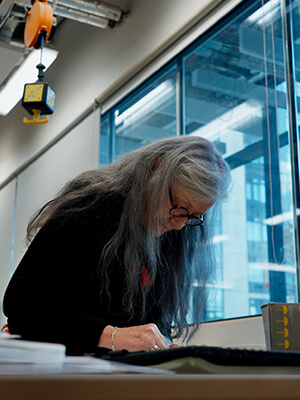
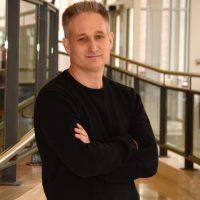
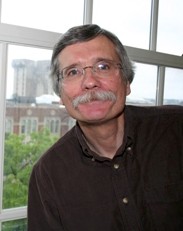
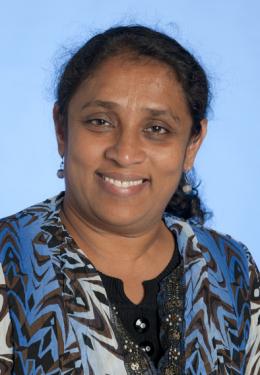
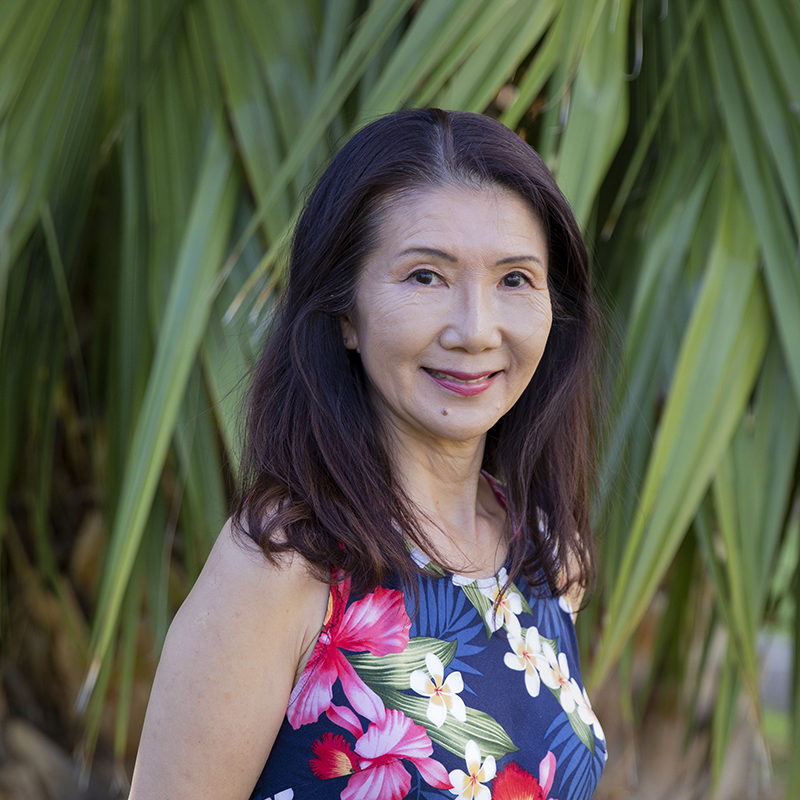
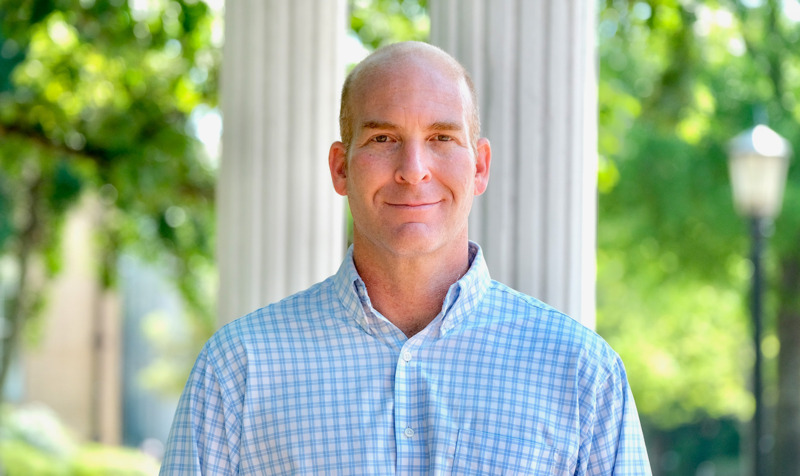
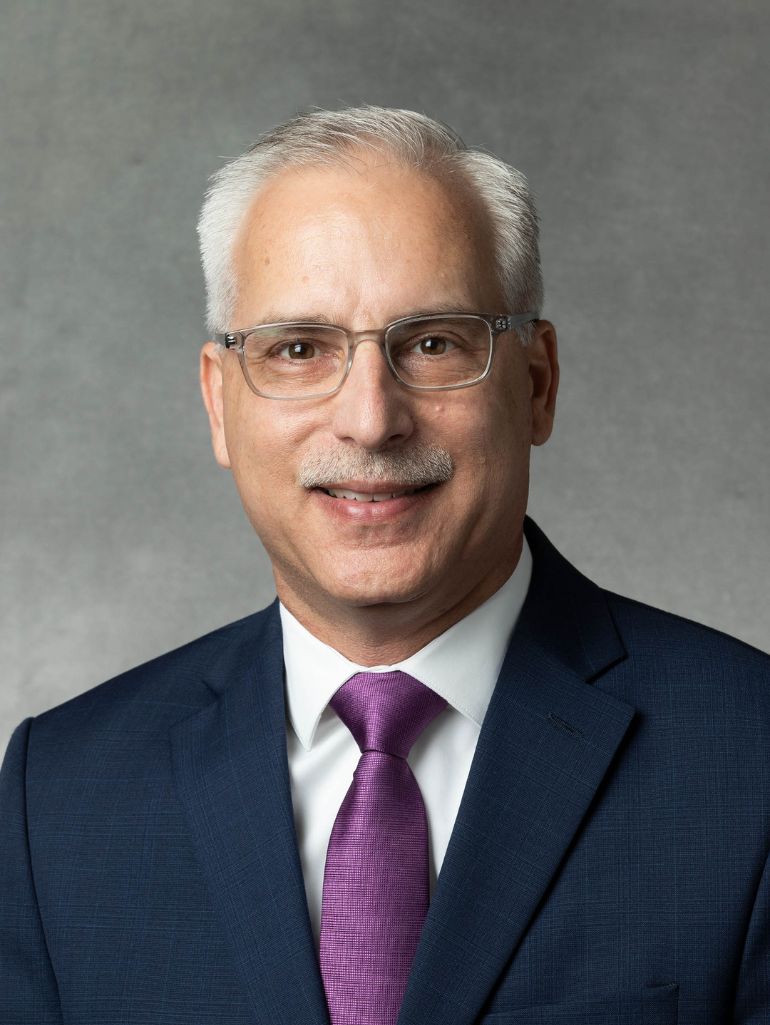
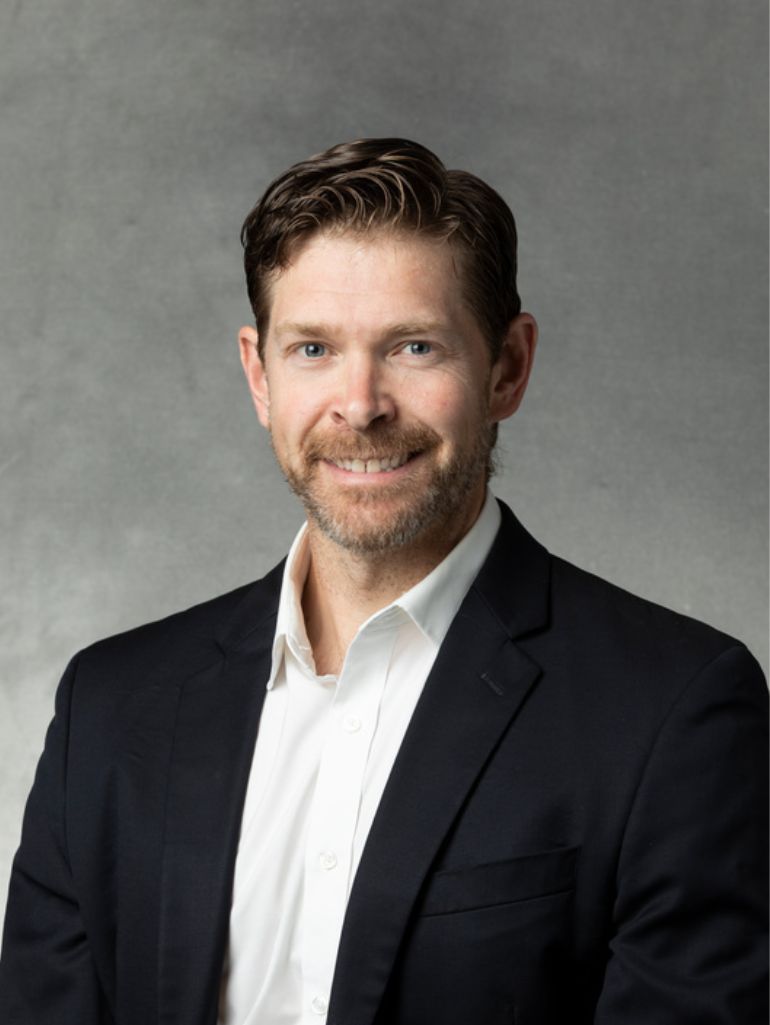
Jennifer Young is a Full-Time Lecturer at Stony Brook University, currently affiliated with the Program in Writing & Rhetoric. She holds an office in Humanities 2113 and emphasizes student advocacy, inclusion, and engagement in her work. Her teaching and research focus on professional/technical communication, writing pedagogy, and media literacy. Education: Advanced Graduate Certificate in Southampton Arts (Stony Brook University) MA in Liberal Studies (School of Professional Development, Stony Brook University) BA in English (State University of New York College at Cortland) Her professional activities include creative writing, copy editing for local newspapers, and querying fiction/nonfiction manuscripts. No specific grants, labs, or awards are documented in the provided text.
Christopher G. Wright is Associate Professor, Associate Dean for Diversity Equity and Inclusion, and PhD Program Director in Drexel University's School of Education. His research investigates equity in STEM education through frameworks like culturally sustaining pedagogies, with focus on identity formation for underrepresented groups in engineering contexts. Research examines racial and gender equity in engineering education, identity development in STEM, and culturally responsive teaching practices. Recent publications analyze teacher identity formation, counter-narratives of Black female educators, and engineering design pedagogy in urban elementary settings. Articles consistently explore themes of racial equity, identity negotiation, and transformative learning environments. Education: PhD (Tufts University) MS (University of Maryland) B Arch (Hampton University) Funded Grants: Workshop for Writing Grants for Early Career Scholars in STEM and Learning Sciences Focused on Racial Equity (NSF #2133577) Collaborative Research: Using Culturally Sustaining Learning Environments to Explore Computational Learning & Identity (NSF #1842272) CAREER: Investigating the Engineering Expansive Learning Spaces for Boys of Color (NSF #1554194)
Dr. Mary O'Neill serves as Associate Head (Education) and Programme Leader for Fine Art at De Montfort University's School of Arts, Design and Architecture within the Faculty of Arts, Design and Humanities. Holding an AHRC-funded PhD in Ephemeral Art: Mourning and Loss from Loughborough University (2007), she is a Senior Fellow of the Higher Education Academy with extensive leadership in art education and research. Her academic journey includes significant professional development through prestigious awards including the AHRC Doctoral Award (2003) and Higher Education Academy Teaching Fellowship (2008). Her educational background culminated in a PhD focused on the intersection of ephemeral art and concepts of mortality, establishing the foundation for her ongoing research trajectory. Dr. O'Neill's research is fundamentally interdisciplinary, exploring how contemporary artworks engage with significant cultural issues. Initially focused on ephemeral art and concepts of mortality and immortality, her work has evolved to investigate intangible culture, particularly the lost skills embodied in museum objects. Her current project, 'Re-creative Practice: Learning from the Past,' examines how historical objects can inform contemporary artistic practice. She identifies key research areas including Ephemeral Practice, Collaborative Practice, Art and Society, Art Activism, Science Art, and Re-creative Practice. Her work bridges theoretical and practical approaches, connecting art practice with broader social, ethical, and cultural concerns through both academic texts and creative fiction. Analysis of her publication record reveals consistent engagement with themes of memory, loss, and artistic practice, with recent work showing increasing focus on art education methodologies, collaborative approaches, and the application of historical craft knowledge to contemporary practice. She has produced significant interdisciplinary work connecting art with healthcare, social policy, and cultural heritage, demonstrating the expanding scope of her research interests. Dr. O'Neill has received numerous awards and recognitions throughout her distinguished career: 2023 HEIF Award for the Artefacts Live project 2022 Academic Innovation Project Award 2015 Writer in Residence at Centre for Contemporary Art (CCA), Glasgow 2014 and 2012 Artist in Residence positions at Gray Zone and Grace Exhibition Center 2008 Higher Education Academy Teaching Fellowship 2003 AHRC Doctoral Award Her career has been marked by prestigious international residencies including at Banff Centre for Media and Visual Arts (1997), Frans Masereel Centrum, Belgium (1990), and House of Creativity, Chelyuskinskii, Moscow (1989). As an educator and mentor, Dr. O'Neill supervises PhD students including Rebecca Walker (researching 'Henry Moore: The Shape of Trauma') and Talvir Kaur. She has presented on collaborative teaching approaches internationally, notably 'A year of living dangerously: Collaborating with undergraduate students' at Temasek Polytechnic, Singapore (2010). Her leadership extends to directing the 'Artefacts Live' project (2022-2023), a HEIF-funded collaboration between DMU and The Museum of Leathercraft, Northampton, which resulted in the documentary 'The Museum of Leathercraft – Ordinary Objects: Extraordinary Stories' produced with filmmaker Nik Trzcinowicz. Dr. O'Neill leads the Practice Based Research group within the Institute of Art and Design. She actively contributes to academic discourse through international conference presentations, recently speaking at 'Psychogeography, How did we get here?' panel at Leicester Gallery (2024) and 'Flotsam, Jetsam, Lagan, Derelict. The Things We Have Lost' at the Narratives of Water conference in Torino (2024). Her teaching encompasses Fine Art Studio Practice, Critical Theory, Art History, and Professional Practice across multiple undergraduate and postgraduate courses.
Guy Lacroix is an Associate Professor and Chair of the Psychology Department at Carleton University, within the Faculty of Arts and Social Sciences. He holds a Ph.D. from Université de Montréal. His research focuses on cognitive psychology, particularly categorization processes, learning mechanisms, and the intersection of psychology with educational practices. Current research explores topics such as handwritten vs. typed notes' impact on learning, psychological science perception among students, and the 'uncanny valley' phenomenon in digital human likenesses. His academic contributions span experimental psychology, with publications in journals like Journal of Writing Research , Memory & Cognition , and Computers in Human Behavior . He has advised numerous students on projects related to cognitive and educational psychology. Lacroix's work bridges theoretical models with practical applications in education and technology. He is based in the Loeb Building (Office A311) and can be reached at guy.lacroix@carleton.ca.
Don Bogen is a Professor in the Department of English at the University of Cincinnati, where he has been affiliated since 1997. His career spans over four decades, with previous roles including Associate Professor (1982–1997) and Assistant Professor (1976–1982) at the same institution. A prominent figure in poetry and literary translation, Bogen's work bridges academic rigor and creative practice. Ph.D. in English, University of California Berkeley (1976) M.A. in English, University of California Berkeley (1974) A.B. in English, University of California Berkeley (1971) Foreign Study at Georg August University Gottingen, Germany (1970) Bogen's research focuses on modern poetry, translation, and the writing process, particularly through his critical work on Theodore Roethke. His creative output includes four poetry collections, with An Algebra (2009) and Luster (2003), alongside translations of poets like Julio Martínez Mesanza and Johannes Bobrowski. He has collaborated with composers such as Mara Helmuth and Allen Otte on interdisciplinary projects. His peer-reviewed publications, including the 2005 Writer's Chronicle essay on translation, reflect his scholarly engagement with poetic form and pedagogy. Awards highlight his transnational influence, such as Fulbright Distinguished Scholar in Belfast (2011) and Senior Lectureship in Spain (2003), alongside fellowships from the National Endowment for the Arts and Camargo Foundation. Fulbright Distinguished Scholarship (2011) Rieveschl Award for Excellence (University of Cincinnati, 1998) National Endowment for the Arts Fellowship (1989) Camargo Foundation Fellowship (1993) Discovery / The Nation Award (1980) Eugene V. Debs Foundation Edwin Markham Award (1976) Bogen has served on numerous academic committees, including the Taft Faculty Executive Board and Camargo Foundation Creative Writing Selection Committee. He is also a dedicated editor, serving as Poetry Editor for The Cincinnati Review since 2004, and a mentor through programs like the Yates Fellowship.
Joseph Janangelo is an Associate Professor in the Department of English at Loyola University Chicago, affiliated with the Crown Center for the Humanities. He holds roles including President of the Council of Writing Program Administrators and Editorial Board Member for College Composition and Communication and Journal of Teaching Writing . He organized the 2008 WPACouncil National Conference. Education: BA from Manhattanville College, MA & PhD from New York University. Research focuses on Composition, Film/Digital Media, and Life Writing. His work explores intersections of creativity in pedagogy, assessment strategies, and multilingual writing resources. Recent publications address student artistry evaluation, TESOL materials curation, and rhetoric of media consumption. Labs/Teams: Active in Writing Program Administration networks, contributing to theoretical frameworks for curriculum design and interdisciplinary collaboration.
Dr. Maya Gunawardena is an Associate Professor and Program Director for TESOL Bruce and Online at the University of Canberra's Faculty of Education. Her expertise spans curriculum design, pedagogy, and TESOL, with a focus on empowering teachers through learning sciences. Education: PhD in Education, University of Canberra (2011) Masters in Applied Linguistics, Lancaster University (2005) Masters in Linguistics, University of Kelaniya (2001) Research Interests: Personalized learning, teacher education, applied linguistics, literacy teaching, and critical thinking development. Her work emphasizes scaffolding higher-order thinking and evidence-based pedagogical practices. Recent Trends in Publications: Focuses on personalized learning complexity, mentorship frameworks, and ICT integration in Indigenous education. Recent work highlights barriers in online learning and pedagogical storytelling's role in social-emotional development. Grants & Projects: CACSTEP Project (2024–2026): Personalized learning interventions for school leaders ASRP Project (2021–2023): Student-centered learning experiences Labs/Teams: Engaged in collaborative projects with institutions like UNSW Canberra and international partners, focusing on teacher education and cross-cultural pedagogy.
Dr. Kimi Kondo-Brown is a Professor and Associate Dean for Academic Affairs at the University of Hawaiʻi at Mānoa . She holds affiliations in the Department of East Asian Languages and Literatures (Japanese BA, MA, PhD programs) and serves as Cooperating Graduate Faculty in the Department of Second Language Studies (PhD in SLS). Her research focuses on Japanese as a Heritage Language , language assessment , and curriculum development . Education: PhD in Education (UHM), MA in Linguistics (University of Utah). She leads initiatives in heritage language education, publishing widely on language testing, curriculum design, and multilingual education. Key works include Japanese as a Heritage Language (Cambridge 2024) and Introduction to Assessment for Japanese Teachers (reprinted 2022). She directs assessment institutes and collaborates with international scholars like Emeritus Prof. James Brown. Research emphasizes heritage language maintenance and post-pandemic language testing . She co-edits peer-reviewed volumes on assessment modules and serves on editorial boards. Her work bridges theoretical linguistics with practical pedagogy, addressing needs of heritage speakers and global language learners. Grants and awards include contributions to the National Foreign Languages Resource Center. She advises on curriculum alignment and assessment frameworks, with a focus on equity in language education. Her legacy includes over 30 publications and 25 years of teaching Japanese and SLA methodologies.
Professor Eoin Devereux is a Cultural Sociologist and Creative Writer at the University of Limerick, Ireland, and an Adjunct Professor in Contemporary Culture at the University of Jyvaskylä, Finland. He holds dual appointments in the Department of Sociology and the Centre for the Study of Popular Music and Popular Culture. His research focuses on media representations of poverty, homelessness, and community development, alongside critical analyses of popular music (e.g., David Bowie, The Fall, Morrissey). He teaches modules on media sociology, creative writing in community settings, and community development at both undergraduate and postgraduate levels. Affiliations: University of Limerick (Professor), University of Jyvaskylä (Adjunct Professor) Education: Expertise in sociology and cultural studies, though specific degree details are not explicitly listed. His creative writing has been featured in prominent publications such as The Irish Times and Poetry Ireland anthologies. Awards include Excellence in Teaching (2004) and Service to the Community (2005). He has supervised numerous PhD students and collaborates internationally on projects like L-Pop: Mapping Popular Music in Limerick City and media poverty studies. His work intersects with UN Sustainable Development Goals related to inequality and community development. Key research themes include media framing of social welfare, cultural sociology of music, and creative writing’s role in community engagement. Over 140 academic publications span journals, books, and edited volumes addressing media discourse, music studies, and social policy.
Dr. Todd Cherner is a Professor in the Curriculum and Instruction Department at the UNC School of Education , University of North Carolina at Chapel Hill. With a career spanning K-12 teaching and higher education, he focuses on leveraging technology to promote equity and critical literacy. He holds a B.S. (2004) from the University of Central Florida, M.Ed. (2008) from Clemson University, and Ph.D. (2012) from the University of Tennessee. His research examines how implicit biases manifest in educational technologies and explores equitable technology integration strategies. Key areas include critical media literacy, AI ethics in education, and bridging the gap between extended reality (XR) tools and classroom practice. He has been honored with the University Teaching Awards (2022-23) for his innovative approaches. Recent work emphasizes generative AI frameworks for educators, AI literacy in teacher preparation, and immersive learning through XR. His scholarship spans over two decades, with publications in journals like Contemporary Issues in Technology and Teacher Education and International Journal of Multicultural Education . Cherner collaborates with educators to design inclusive instructional technologies and advocates for systemic reforms addressing privatized funding in education. His lab focuses on creating accessible tools that empower both teachers and students through technology.
Douglas C. Orzolek is Professor and Department Chair at the University of St. Thomas, where he directs the Graduate Programs in Music Education and serves as Symphonic Band Director. His academic affiliations include the College of Liberal Arts and the Music Department. He holds a Bachelor of Music from Mansfield University, Master of Education from Penn State University, and PhD from the University of Minnesota. His research explores music education methodologies, conducting pedagogy, assessment frameworks, and musical acoustics. Current investigations focus on innovative teaching strategies, ensemble pedagogy, and curriculum development in music education. Recent publications demonstrate strong trends in pedagogical innovation, educational equity, collaborative learning models, and the integration of technology in music education. His scholarly work frequently addresses teacher development, curriculum reform, and inclusive practices. Minnesota Music Educators Association Hall of Fame (2014) Thomas Jefferson High School Fine Arts Hall of Fame (2016) Mansfield University Distinguished Young Alumni Award (2001) Distinguished Educator of the Year (2003) Dr. Orzolek advises graduate students at both master's and doctoral levels, supervising research papers and theses. He maintains active involvement with the Playful Learning Lab and OKGO Sandbox as music education advisor.
Dr. Daniel Pioske is an Assistant Professor of Theology at the University of St. Thomas, specializing in Old Testament studies, biblical archaeology, and ancient Hebrew scribal practices. He earned his PhD from Princeton Theological Seminary and has participated in archaeological excavations in Israel and Turkey. His research investigates how biblical writers conceptualized the past through material remains and textual traditions. Key interests include: Archaeology-text integration in reconstructing ancient Israel Epistemology of biblical history Materiality of memory in ancient Near Eastern contexts Dr. Pioske's publications demonstrate a consistent focus on methodological innovations in archaeology-text studies. His books 'David's Jerusalem' and 'Memory in a Time of Prose' examine the interplay between ruins, texts, and historical consciousness. Recent work explores royal inscriptions, temporal perception in antiquity, and the epistemic foundations of biblical historiography. No scientific awards are mentioned in the provided materials. No information about student advising, grants, or lab affiliations is available.
Indra Levy is Associate Professor of East Asian Languages and Cultures at Stanford University, with courtesy appointments in Comparative Literature and as a Senior Fellow at the Freeman Spogli Institute for International Studies. She has served as Executive Director for the Inter-University Center for Japanese Language Studies (IUC) since 2010 and was named the inaugural recipient of the Irene Hirano Inouye Award from the Terasaki Center for Japanese Studies in 2022 for her contributions to Japanese Studies. Her academic journey includes previous appointments at Rutgers University and visiting positions at Waseda University in 2022 and 2023. Levy earned her Ph.D. in modern Japanese literature from Columbia University in 2001, following M.Phil and M.A. degrees from the same institution in 1993, and a B.A. in East Asian Studies from Columbia College in 1998. Her educational background laid the foundation for her distinguished career in Japanese literary studies. Her research focuses on modern Japanese literature and criticism, critical translation studies, gender and language, modern Japanese performance (particularly in the Meiji and Taishō eras), and modern Japanese women's intellectual history. Currently, her work centers on humor in Japanese literature, performance, and translation from the late 19th century to the mid-20th century. This research trajectory reflects her longstanding interest in the intersections of language, gender, and cultural exchange. Levy's scholarly output reveals consistent engagement with translation theory, Japanese literary modernity, and gender studies. Her publications show a progression from early work on the Westernesque femme fatale to more recent explorations of humor and performance in Japanese literature. The recurring themes across her work include the relationship between vernacular style and translation, the politics of language, and the representation of gender in Japanese literary history. Irene Hirano Inouye Memorial Award, Terasaki Center for Japanese Studies, UCLA (2022) Hellman Junior Faculty Fellow, Stanford University (2007-08) Faculty Fellow, Kinki University International Center for Human Sciences (2003-06) Shincho Fellowship, Columbia University (1996-98) Fulbright Fellowship for Doctoral Research, Fulbright IIE (1993-95) Javits Fellowship for Graduate Research, United States Department of Education (1991-93) As an educator and mentor, Levy has advised numerous doctoral students including Andrew Nelson, Yi-Ting Chung, Yan Chang, Rosaley Gai, Luo Jia, and Coco Ruan. She has served as Director of Graduate Studies for the Department of East Asian Languages & Cultures at Stanford University (2020-2024) and previously as Faculty Director of the Translation Studies Minor (2015-2019). Her leadership extends to various professional organizations including the American Comparative Literature Association, Modern Language Association, Association for Asian Studies, and Association for Japanese Literary Studies. Levy's academic influence extends beyond Stanford through her role as Executive Director of the Inter-University Center for Japanese Language Studies (2010-2024) and her participation in numerous advisory committees including the Steering Committee of the Center for East Asian Studies and the Japan Fund steering committee. Her work bridges academic research, language education, and cultural exchange between Japan and the United States.
Veronica Graham is a new media artist and printmaker serving as Lecturer in Stanford University's Department of Art & Art History. Based in Oakland and Portland, she founded the design studio Most Ancient in 2010, specializing in experimental comics and exploration games. Her interdisciplinary practice bridges digital media and analog print publishing through poetic world-building that confronts contemporary environmental and social challenges. Her research centers on virtual reality narratives, climate-focused printmaking, and surrealist comics that explore internalized fictions. Key projects include the VR experience Diatribes (2024), examining fears about global warming through a haunted house framework, and the Global Warming Agitprop Posters series (2020-present) using phosphorescent materials to visualize ecological instability. She employs techniques like Wang tile systems for pattern generation and split fountain printing to stretch technical boundaries. 2025 Writer-in-Residence, Writing Space, Chicago 2024 IndieCade Impact Award Nominee for Diatribes 2022 Oculus Launch Pad Grant Recipient 2019 Best American Comics Notable Comics selection 2017 Artist’s Book Residency Grant, Women’s Studio Workshop Graham’s work appears in MoMA, NYPL, and SFMOMA collections. Her VR projects have been presented at Kala Art Institute, Printed Matter (NYC), and Sónar+D. As an educator, she lectures on virtual reality at Stanford and has conducted workshops at institutions including Tufts University and UC Berkeley. Her studio Most Ancient functions as both creative laboratory and publishing platform, supporting collaborative projects like Real Milk (2023) which examines agricultural automation through translucent book design.
Hariharan Subramonyam is an Assistant Professor (Research) at Stanford University's Graduate School of Education and Computer Science (by courtesy) . He is also a Faculty Fellow at the Institute for Human-Centered AI (HAI) and a core member of the Stanford HCI Group . His research focuses on augmenting human learning, creativity, and sensemaking with AI, informed by cognitive psychology and collaborative design practices. Research Interests: Human-Computer Interaction (HCI) Learning Sciences Generative AI Educational Technology Assistive Technology Cognitive Psychology Recent Trends: Designing AI tools for education and creative coding Co-developing AI experiences with multidisciplinary teams Ethical and responsible AI frameworks Accessible interfaces for visually impaired users Scientific Awards: Best Paper Award, CHI 2025 Best Paper Honorable Mention, CHI 2025 Best Paper Award, ASSETS 2024 Best Paper Award, UIST 2023 Best Paper Award, IUI 2021 Best Paper Award, CHI 2020 Advising & Grants: Co-advising PhD student Neha Rajagopalan Mentoring 23+ student researchers Principal Investigator on HAI Hoffman Yee Grant (2024) Labs & Teams: Stanford Human-Computer Interaction Group Stanford Institute for Human-Centered AI Collaborative projects with University of Michigan, Georgia Tech, and National University of Singapore