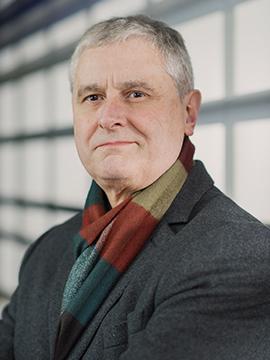
Margus Pärtlas is Professor of Music Theory and Vice Rector for Academic Affairs and Research at the Estonian Academy of Music and Theatre (EAMT). He earned his Doctorate from the St. Petersburg Conservatory in 1992 with a dissertation on Eduard Tubin's symphonies. His career includes positions as Associate Professor (1993-2003), Senior Teacher (1987-1993), and Fulbright Visiting Scholar at the University of North Texas (1999-2000). Pärtlas's research focuses on music analysis methodologies , specializing in the works of Eduard Tubin and Richard Strauss. Key areas include symphonic form, tonal transformation in Romantic music, semiotic analysis of choral works, and cultural identity in exile compositions. His publications consistently explore structural innovation in 19th-20th century European music. His recent articles reflect a thematic emphasis on Estonian musical heritage , institutional development of music academies, and analytical studies of concerti/symphonies. A significant trend involves examining how composers negotiate cultural identity through structural elements. Awards & Honors: Fulbright Visiting Scholar Grant (1999) Best Music Article Award from 'Teater. Muusika. Kino' (1992) Academic Leadership: Chaired accreditation committees internationally (Latvia, Lithuania, Russia, Armenia), serves on editorial boards of Res Musica and Eduard Tubin's Complete Works, and organized major conferences including 'Eduard Tubin 100'. Doctoral Supervision: Guided 4 PhD students in music analysis and interpretation, focusing on topics like Tubin's piano sonatas, Estonian song traditions, and analytical approaches to contemporary performance.
Professor Adam Yuet Chau is a Fellow and Director of Studies at St John's College and holds the Professor of the Anthropology of China position at the Faculty of Asian and Middle Eastern Studies, University of Cambridge . His academic journey includes training at Stanford University (PhD in Anthropology, 2001) and teaching roles at Oxford and SOAS before joining Cambridge in 2008. Focus on Chinese religions and their social dimensions Specializes in ritual theory and cultural transformations Develops comparative frameworks for understanding religious practices His research spans religion under socialism , hosting in political/religious contexts , and ritual polytropy . Recent projects include editing Chinese Religious Culture in 100 Objects and analyzing 'spheres' (界) in Chinese society . Publications like Miraculous Response (2006) and Religion in Contemporary China (2011) establish him as a key figure in religious anthropology. Current and past PhD/MPhil students explore topics from temple festivals in Taiwan to religious subjectification . He actively reviews for leading presses (Cambridge, Oxford, Harvard) and journals ( Ethnos , Modern China ), and participates in international academic workshops.
William S. Horton (Sid) is an Associate Professor in the Department of Psychology at Northwestern University , where he has taught since 2005 and directed the Cognition and Communication Lab (Cresap 108). Starting in September 2025, he will serve as Chair of the Department of Linguistics . His research focuses on socio-cognitive mechanisms in language use, particularly discourse pragmatics , perspective-taking , and non-literal language processing . Education: B.S. in Psychology/German from Duke University (1991), M.A. and Ph.D. in Cognitive Psychology from University of Chicago (1994/1999) Previous roles: Postdoctoral research at SUNY-Stony Brook, Cognitive Aging at Georgia Tech Research trends from his 20+ years of publications include common ground , memory processes , figurative language , and age-related communication changes . His work increasingly incorporates computational text analysis and real-time digital communication studies. Awards : Fellow, Society for Text and Discourse Students : Supervised Ph.D. theses on conversational alignment, common ground activation, and digital communication. Undergraduate honors projects explore inhibitory deficits, speech internalization, and perspective-taking in bilingualism. Cognition and Communication Lab investigates language processing in spoken/written contexts using experimental methods and computational models.
Professor Victor Fung is a leading academic in neurology and motor control at the Sydney Medical School , University of Sydney. He serves as Director of the Movement Disorders Unit at Westmead Hospital and holds prominent roles in the International Parkinson and Movement Disorder Society (President) and the Asia Pacific Affairs Committee of the Australian and New Zealand Association of Neurologists. His research focuses on Parkinson's disease , dystonia , tremor , and movement disorder genetics , with over 250 peer-reviewed publications and an h-index of 61. His work spans Clinical trials for Parkinson's treatments (e.g., foslevodopa/foscarbidopa infusion, incobotulinumtoxinA) Genetic studies on dystonia and Parkinsonism Neurophysiological assessments of tremor and balance Development of screening tools for dystonia and Parkinson's complications Key article trends highlight genetic diversity in dystonia, neuroinflammatory mechanisms in tremor, and behavioral neurology in Parkinson's disease. He contributes to editorial boards of npj Parkinson's Disease , Journal of Clinical Movement Disorders , and Faculty Opinions . While no explicit student lists are provided, his collaborations span global institutions. His clinical work at Westmead Hospital addresses device-assisted therapies and complex movement disorders.
Professor Fionnuala Dillane is a leading scholar in nineteenth-century British literature and culture, periodical studies, memory studies, and gender, based at the School of English, Drama and Film, University College Dublin. She holds the academic rank of Professor and is actively engaged in research, teaching, and academic leadership. She currently serves as Academic Director of the UCD Writing Centre and Chair of the UCD Press Editorial Board, and previously served as Associate Dean for Arts and Humanities (2017–2020). Her collaborative research spans institutions including Ghent University, Newcastle University, and the University of Iceland. Her research interests include: Nineteenth-century British literature and culture Periodical studies and media history George Eliot and Marian Evans Memory studies and trauma Gender and sexualities Contemporary crime fiction Her recent publications explore affect in periodical encounters, editorial identities, transnational periodical research, and the literary afterlives of George Eliot. The trends in her work reveal a sustained engagement with print culture, narrative form, emotional communities, and the politics of memory. She is currently editing the Handbook of Transnational Periodical Research (Brill, 2026). Her scientific awards include: University Award for Outstanding Contribution to Student Learning, UCD (2017) Shortlisted for European Award in Teaching Excellence (2017) College of Arts and Humanities Outstanding Contribution to Student Learning (2017) Dillane has secured significant research grants, including from the Irish Research Council for her project on George Eliot and the Periodical Press, 1846–60 , and on The Future of Data Humanities . She has supervised doctoral students such as David Mitchell and mentors emerging scholars in periodical studies and trauma fiction. She has pioneered innovative teaching initiatives, including the first internship programmes for UCD Arts and Humanities undergraduates and the development of the UCD Writing Centre, now permanently funded. She is also deeply involved in national and international advocacy for the humanities, serving on editorial and advisory boards such as the Journal of Victorian Culture , the Memory Studies Association, and the European Society for Periodical Research.
Nabil Alshurafa is an Associate Professor at Northwestern University, holding joint appointments in the McCormick School of Engineering (Computer Science and Electrical and Computer Engineering) and the Feinberg School of Medicine (Preventive Medicine). He directs the HABits Lab, which focuses on developing mHealth systems to address health behaviors such as overeating, stress, and UV exposure. His work integrates wearable sensors, machine learning, and behavioral science to create passive sensing solutions. Education: PhD in Computer Science and Wireless Health (UCLA), MS and BS in Computer Science (UCLA). Research Interests: Body sensor networks, activity recognition, embedded systems, and health informatics. His lab designs wearable devices (e.g., neck-worn sensors, UV patches) and AI frameworks to detect behaviors like eating patterns and stress levels. Collaborations include domain experts in medicine and engineering to translate technical innovations into clinical interventions. Recent Projects: Developing systems for stress monitoring via ECG-PPG patches, UV exposure tracking, and just-in-time interventions for overeating. The lab emphasizes ethical design, privacy preservation, and user-centered technology. Students and Lab Team: Supervises PhD, MS, and undergraduate researchers in areas like machine learning, embedded systems, and health data analytics. Notable advisees include Rawan Alharbi (PhD candidate), Shibo Zhang (PhD student), and Wilson Wang (MS student). Labs/Teams: HABits Lab collaborates with experts in Preventive Medicine, Psychiatry, and Dermatology to advance interdisciplinary health research. Current projects include predictive analytics for weight loss and interventions targeting maternal stress during pregnancy.
Elaine Treharne serves as the Roberta Bowman Denning Professor of Humanities at Stanford University, holding primary appointment in the Department of English with courtesy appointments in German Studies and Comparative Literature. She concurrently acts as Senior Associate Vice Provost for Undergraduate Education and Director of Curriculum, while directing Stanford Text Technologies—a major initiative exploring textual transmission across historical periods. Her leadership extends to co-directing SILICON and spearheading NEH-funded projects that redefine digital approaches to manuscript studies. Her academic foundation includes a B.A. in English Language and Literature (First Class Honors) from the University of Manchester (1986), a Master of Archive Administration from the University of Liverpool (1987), and a Ph.D. in English from the University of Manchester (1992). This archival training underpins her dual expertise in traditional manuscript scholarship and digital innovation. Treharne's research pioneers intersections between medieval materiality and contemporary technology, investigating the haptic experience of medieval books, AI applications for manuscript analysis, and the long history of text technologies. She challenges conventional periodization through projects like 'Disrupting Categories, 1050-1250' while developing computational frameworks for fragmentology and textual distortion. Her work consistently bridges paleography with digital methodology to examine how writing systems shape cultural memory. Recent publications reveal a decisive shift from foundational medieval scholarship toward integrative digital-humanities frameworks, with increasing emphasis on phenomenological approaches to both physical and digital texts. This trajectory culminates in current projects applying machine learning to manuscript transmission patterns and developing ethical guidelines for digital archival tools. Her scientific recognition includes: Fellow of the Society of Antiquaries Fellow of the Royal Historical Society Honorary Lifetime Fellow of the English Association (former Chair and President) Fellow of the Learned Society of Wales American Philosophical Society Franklin Fellow Princeton Procter Fellow Fellow of the Stanford Clayman Institute for Gender Studies Treharne actively supervises graduate students in early literature, Book History, and Digital Humanities while securing major grants including NEH funding for Stanford Global Currents, AHRC support for the Production and Use of English Manuscripts project, and Stanford Impact Labs fellowship for archival tool development. She maintains commitment to ethical scholarly environments through her leadership in VPUE initiatives and digital pedagogy. She directs the Stanford Text Technologies initiative hosting the annual Collegium series, co-directs SILICON for internet longevity research, and leads specialized projects including 'Digital Ker' for Anglo-Saxon manuscript cataloging and 'Medieval Networks of Memory' analyzing mortuary rolls. These interconnected efforts form a comprehensive ecosystem for advancing textual scholarship across temporal and technological boundaries.
Dr. Jon Gruda is an Assistant Professor and Lecturer in Organisational Behaviour at Maynooth University's School of Business. He holds a PhD in Management from emlyon Business School (France) and a joint Dr. rer. nat. in Psychology from Goethe University Frankfurt. His research focuses on relational leadership, dark leadership traits, anxiety in the workplace, and personality psychology, with a strong emphasis on integrating machine learning and AI methodologies. Gruda has been recognized with prestigious awards, including selection for the Lindau Nobel Laureates Meeting in Economic Sciences (2020). His interdisciplinary work includes predicting anxiety and personality traits via social media data analysis. He serves as an Associate Editor for journals like Personality and Individual Differences and Frontiers in Psychology . Education PhD in Management, emlyon Business School (2012–2017) Dr. rer. nat. in Psychology, Goethe University Frankfurt (2012–2017) MSc in Affective Neuroscience, Maastricht University (2018) MSc in Management Research, emlyon Business School (2012–2014) Triple MSc in Management, City University London/ESCP Europe (2010–2012) BSc in International Business & Management, University of Groningen (2007–2010) Research Interests Gruda’s work bridges leadership studies, personality psychology, and data science. Key areas include: Dark leadership traits (e.g., narcissism, Machiavellianism) and their organizational impacts Machine learning applications for detecting anxiety and personality traits via social media Cross-cultural studies on leadership perceptions and attachment orientations Impact of physiological/psychosocial factors on leadership effectiveness Publications & Projects Recent projects include predicting state-level health outcomes linked to narcissism and developing algorithms to track anxiety using Twitter data. Over 20 peer-reviewed articles since 2017 highlight his contributions to organizational behavior and computational social science. Awards 7th Lindau Nobel Laureates Meeting on Economic Sciences (2020) Benedictine University Award (Academy of Management, 2020) Wharton Global Faculty Development Program (2020) Grants & Collaborations Gruda leads projects on pro-environmental behavior and collaborates with the National Care Experience Programme on healthcare feedback analysis. Seed funding includes €301,930 for computational text analytics in healthcare. Labs & Teams Interdisciplinary research collaborations span psychology, data science, and public health, with a focus on applying machine learning to organizational challenges.
Raakel Plamper is a Doctoral Researcher at the Department of Education, University of Turku, with additional roles as Project Specialist in Geography and Development Specialist in Research Services. Her research focuses on higher education sociology, academic work dynamics, student roles in marketized systems, and university history. She teaches courses on social class and education, research methods, and multivariable analysis. Her work critically examines the marketization of universities, student-as-customer discourses, and managerialism in academic leadership. Key themes include tuition fee policies, institutional identity shifts, and equality in education systems. Recent publications analyze leadership rhetoric, writing retreats for researchers, and cross-country education strategies. Plamper actively contributes to interdisciplinary projects, such as the EU-funded Young Adulllt study on skill governance, and maintains a blog (Kas! blogi) discussing academic work and education policy. She holds an MA and is pursuing a PhD examining student roles in neoliberalized higher education.
Dr. Brady D. Lund is an Assistant Professor at the University of North Texas, focusing on interdisciplinary research at the intersection of information science, artificial intelligence, and ethics. His work addresses AI adoption in libraries, data privacy, academic integrity, and international development. He holds a Ph.D., M.S., and B.S. from Emporia State University and Wichita State University. Education: Ph.D., Emporia State University M.S., Emporia State University B.S., Wichita State University Research Interests: Dr. Lund explores how AI impacts information seeking behaviors, data privacy literacy, and library services. His work emphasizes ethical AI deployment in academic and clinical settings, with a focus on marginalized communities. Key areas include AI-driven library systems, blockchain applications for academic integrity, and the societal implications of generative AI. Research Trends: Recent publications analyze AI's role in health information, cybersecurity threat intelligence, and library leadership in minority-serving institutions. He critiques AI authorship policies, evaluates large language models, and advocates for equitable AI access in developing countries. Labs & Teams: Leads the Computational Humanities and Information Literacy Lab and the CyberCrews initiative, focusing on AI ethics, digital literacy, and interdisciplinary collaboration.
Maisha T. Winn serves as the Excellence in Learning Graduate School of Education Professor at Stanford University and is Faculty Director of the Stanford Accelerator for Learning's Equity in Learning Initiative. She leads the Futuring for Equity Lab as Principal Investigator and holds significant leadership positions including President-Elect of the American Educational Research Association and membership in the National Academy of Education. Dr. Winn's research examines how non-dominant youth and communities develop literate trajectories across historical and contemporary settings. As an ethnographer by training, she investigates how communities depicted as under-resourced create their own educational practices, processes, and institutions. Her scholarship bridges historical analysis with contemporary educational practice to build more just, collaborative, and equitable futures in education. Her work spans restorative justice in education, Black literacy studies, and transformative justice approaches, with particular attention to the school-to-prison pipeline, independent Black institutions, and futures-oriented educational frameworks. Dr. Winn analyzes how historical educational models can inform contemporary practices that center community knowledge and cultural identity. Andrew W. Mellon Fellow at CASBS (2022-23) American Educational Research Association Fellow Member of the National Academy of Education Dr. Winn advises doctoral students including Christina Hewko and Misbah Naseer, and leads research initiatives focused on educational equity. Her Futuring for Equity Lab develops frameworks for understanding how marginalized communities have historically created educational spaces that affirm their identities and knowledge systems, with direct implications for contemporary educational practice and policy. Her research team collaborates with community organizations and schools to translate scholarly insights into practical applications that promote educational justice, particularly in areas of school discipline reform and literacy education for marginalized youth.
Timothy Cheek is a Professor at the University of British Columbia with dual appointments in the School of Public Policy and Global Affairs and the Department of History. He holds the prestigious Louis Cha Chair in Chinese Research and serves as Co-Director of the Centre for Chinese Research at the Institute of Asian Research (IAR). Having joined UBC in 2002, Professor Cheek is a leading scholar of modern Chinese history with expertise in Chinese intellectual history and the Chinese Communist Party. Professor Cheek's educational background includes: Ph.D. in History and East Asian Languages from Harvard University (1986) M.A. in History from The University of Virginia (1980) B.A. in Asian Studies (Honours) from Australian National University (1978) His research focuses on three interconnected areas of modern Chinese history: the history of the Chinese Communist Party within China's twentieth-century revolutionary context; contemporary Chinese thought and society, particularly the role of intellectuals in public life; and Mao Zedong studies. Professor Cheek leads the "Revisiting the Revolution" collaborative translation project, bringing Chinese scholarship on revolutionary history to English-speaking audiences. He is also working on a major project mapping Chinese statecraft from the Ming Dynasty to the present. Professor Cheek's scholarly output reveals consistent engagement with Chinese intellectual history and political development. His recent work shows increasing focus on contemporary China under Xi Jinping, examining ideological governance and the reassertion of party control. He maintains strong interest in the historical roots of current political developments, particularly through the lens of Mao-era political practices and their legacy. Among his notable recognitions: Fellow of the Royal Society of Canada (RSC) in the Academy of Arts and Humanities (2023) Professor Cheek actively supervises graduate students, co-mentoring MA and PhD candidates in modern Chinese history with Dr. Jeremy Brown of Simon Fraser University. His research has been supported by multiple SSHRC grants, including a major 2014-2019 project on "Reading and Writing the Chinese Dream" examining public intellectuals in contemporary China. As Co-Director of the Centre for Chinese Research at UBC's Institute of Asian Research, Professor Cheek leads one of Canada's premier institutions for China studies, facilitating research collaborations between Canadian and Chinese scholars and supporting the "Revisiting the Revolution" translation project that brings Chinese historical scholarship to international audiences.
Professor Thomas Meier is a Visiting Professor at the Department of Life Sciences, Imperial College London (since 2015), and Director of the Centre for Structural Biology (2017–2021). He leads research on ATP synthase structure, drug targets for tuberculosis, and molecular mechanisms of disease. Previously, he was a Group Leader at the Max-Planck-Institute of Biophysics (2006–2015) and ETH Zurich's Institute of Microbiology. His work combines structural biology (X-ray crystallography, electron microscopy) with biochemical studies. Education: Dr. sc. nat. (2002) and Dipl. sc. nat. (1998) from ETH Zurich. Awards include the Wellcome Trust Investigator (2015–present). Research focuses on ATP synthase's role in energy conversion, drug development, and structural biology. His lab includes postdocs and students like Lisa Uhrig and Anthony Cheuk. Key affiliations: Centre for Structural Biology, Membrane Biology Group, and Bacterial Pathogenesis studies. Languages: German, English, French (fluent), Latin (read/write). Publications span structural biology, planetary science, and drug discovery. His work on ATP synthase inhibitors for TB has clinical implications, while astrophysical studies explore planetary formation via giant impacts.
Frédéric Kaplan serves as Director of the College of Humanities at École Polytechnique Fédérale de Lausanne (EPFL), where he holds the Chair of Digital Humanities. He also serves as President of the Time Machine Organisation, a nonprofit entity comprising over 600 institutions. His academic appointments span multiple departments including the Digital Humanities Laboratory (DHLAB), School of Architecture (SAR), and School of Humanities (SODH), demonstrating his interdisciplinary leadership across EPFL's academic structure. Dr. Kaplan's research focuses on the intersection of computational methods and humanities, particularly in historical urban analysis, cultural heritage digitization, and the development of the Mirror World concept. His work bridges computational techniques with historical scholarship, creating new methodologies for analyzing historical documents, maps, and urban structures through advanced digital tools. His research has significant implications for how we understand and reconstruct historical urban environments and cultural heritage. His publication record reveals a strong emphasis on computational approaches to historical data, with recent work focusing on LLM applications for historical cadastre navigation, historical map analysis through deformation patterns, 4D city modeling, and language technology applications for historical document processing. This research trajectory demonstrates an evolving focus from basic digitization toward sophisticated analytical frameworks that extract deeper historical insights from digital representations. Kaplan has supervised numerous doctoral students whose work spans digital heritage applications, historical document analysis, computational cartography, and language technology. His research has been supported through multiple institutional frameworks at EPFL and has resulted in practical applications demonstrated through exhibitions at major institutions including the Venice Architecture Biennale, Grand Palais, Centre Pompidou in Paris, and the Museum of Modern Art in New York. He leads the Digital Humanities Laboratory (DHLAB) which serves as a nexus for computational approaches to humanities research. The lab focuses on developing methodologies for historical data analysis, creating digital tools for cultural heritage institutions, and exploring the theoretical implications of computational approaches to historical scholarship. The lab's work with the Time Machine Organisation represents one of the most ambitious efforts to create comprehensive digital reconstructions of historical urban environments.
Dinah Ribard is a Director of Studies at the École des Hautes Études en Sciences Sociales (EHESS), working within the Centre de Recherches Historiques (CRH). She serves as Center Director for the GRIHL (Groupe de recherche interdisciplinaire sur l'histoire du libéralisme) research group. Her academic career has been dedicated to the historical study of work, intellectual practices, and cultural production from the early modern period through the 19th century. Ribard completed her thesis in December 2000 at the University of Paris III - Sorbonne Nouvelle under the direction of Alain Viala, entitled "Live Tell Think. Research on the literary status of the philosopher: the Lives of philosophers in France 1650-1766." She was formerly a student at the École Normale Supérieure (Ulm) and holds a degree in Modern Literature. Prior to her position at EHESS, she served as an ATER (Attaché Temporaire d'Enseignement et de Recherche) at Paris III University from 1999 to 2001 and taught at Lycée Jacques-Feyder in Epinay sur Seine from 2001 to 2003. Ribard's research focuses on the history of work from multiple perspectives - examining both intellectual work (1600-1900) and material labor. She investigates how work has been conceptualized, narrated, and institutionalized throughout history. Her work explores the relationship between knowledge production and labor, analyzing how different professions and social statuses have shaped intellectual and cultural practices. She examines the historical construction of disciplines, professions, and social classifications, with particular attention to how writing practices intersect with work identities. Her recent publications reveal a consistent focus on the relationship between writing, work, and social identity across the early modern and modern periods. Ribard's scholarship demonstrates how textual practices were embedded in specific work contexts, from artisanal workshops to academic institutions. Her work shows how literary forms were used to construct professional identities and how writing practices served as forms of political action. She has made significant contributions to understanding the historical relationship between intellectual labor and material production. Ribard has published extensively, including the notable 2023 book "Le Menuisier de Nevers. Poésie ouvrière, fait littéraire et classes sociales (XVIIe-XIXe siècle)" which examines how working-class poetry was historically constructed and marginalized. Her scholarship challenges traditional literary classifications and reveals how social categories have been historically produced through cultural practices. As Director of Studies at EHESS, Ribard supervises doctoral students and contributes to the academic training of historians. She co-responsible for the Grihl seminar and teaches courses at EHESS on topics including "Writings of the Past. Literature and History: Methods, Theories, Fields" and "History and stories of work." Her teaching reflects her research interests in the intersection of literary practices, historical methodology, and social analysis. Within the CRH, Ribard is affiliated with the GRIHL research group, which focuses on the interdisciplinary history of liberalism. Her work bridges historical, literary, and sociological approaches to understanding the development of social and intellectual categories. Through her research, teaching, and institutional leadership, Ribard has made significant contributions to the historical understanding of work, knowledge production, and cultural classification.