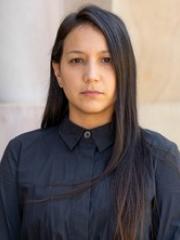
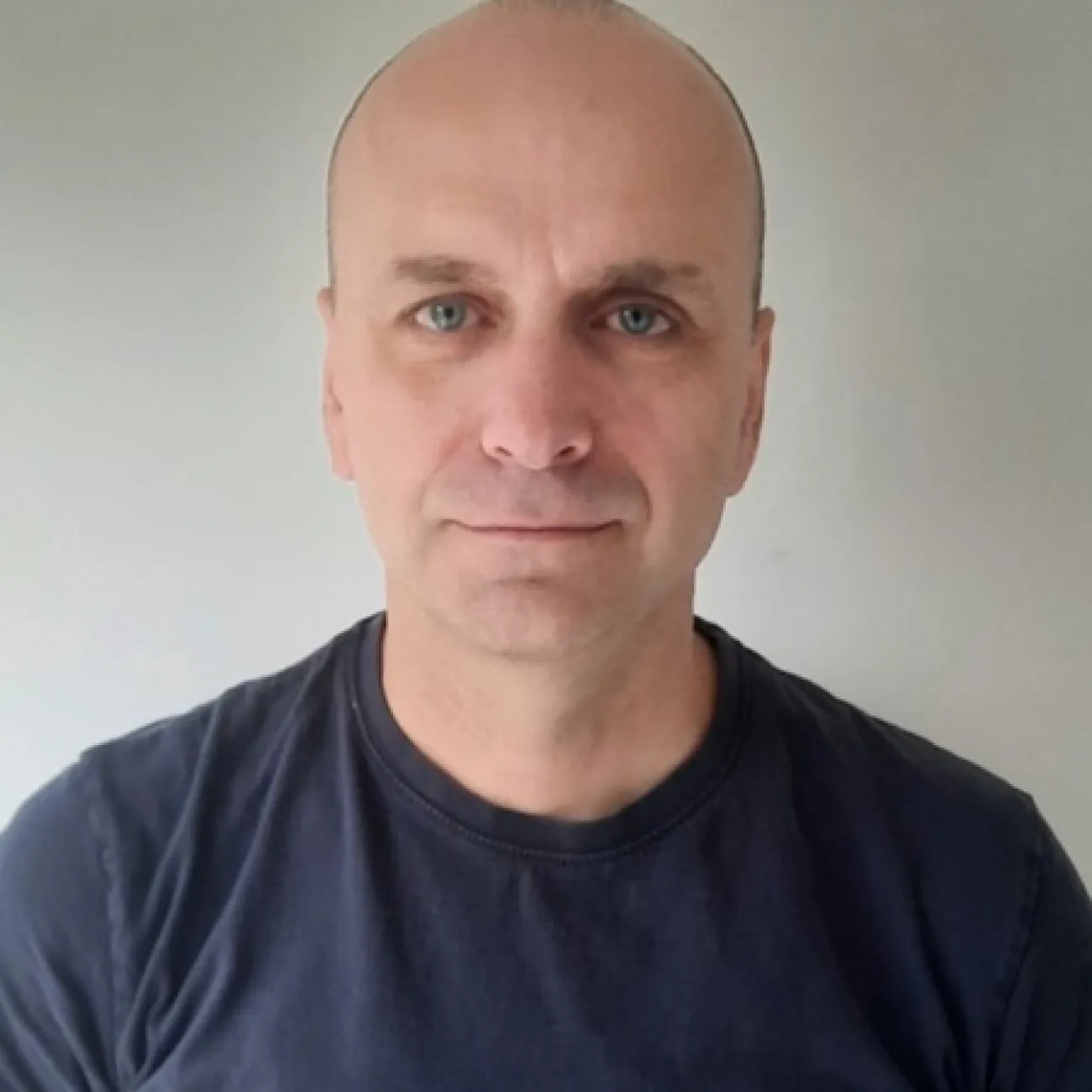
Shigehiro Oishi is the Marshall Field IV Professor of Psychology at the University of Chicago, a member of the American Academy of Arts and Sciences (2023). He holds a B.A. from International Christian University (Tokyo), Ed.M. from Columbia University, and Ph.D. from the University of Illinois at Urbana-Champaign. Prior to UChicago, he taught at the University of Minnesota (2000–2004), Columbia University (2018–2020), and the University of Virginia (2004–2018; 2020–2022). His research explores culture, social ecology, and well-being, focusing on questions like “What is a good life?” and how socio-ecological factors like income inequality and residential mobility impact well-being across cultures. His lab uses diverse data sources, including surveys, GIS, and experimental methods. Key awards include the 2017 Society of Experimental Social Psychology Career Trajectory Award, the 2018 Carol and Ed Diener Award, and the 2021 Outstanding Achievement Award for Advancing Cultural Psychology. His work bridges psychology, sociology, and cultural studies, with a global focus on understanding human thriving. The Oishi Lab at UChicago continues this mission, welcoming new Ph.D. students and hosting prominent social psychology talks.
Michael Kinski serves as Professor of Japanese History of Thought and Japanology at Goethe University Frankfurt within the Faculty of Languages and Cultural Studies, concurrently leading the Institute for East Asian Philologies as Acting Director since 2013. His academic trajectory spans prestigious German institutions including Humboldt University Berlin (1998-2009) and Tuebingen University (1991-1998), with prior research engagement at Japanese universities including Tokyo University and Ritsumeikan. He completed his doctoral studies at Tuebingen University in 1991 following an M.A. at Bochum University (1987), with formative research periods in Japan at Nagoya University, Tokyo University, and Ritsumeikan University. His scholarly foundation centers on Japanese intellectual history, particularly the Edo period. Kinski's research program systematically examines Japanese societal structures through interconnected domains: Historical conceptions of childhood and developmental frameworks Formalized etiquette systems as cultural expression Material culture studies focusing on food practices and consumption Scientific knowledge transmission via Rangaku (Dutch Studies) Social value systems reflected in travel literature Intellectual history of Early Modern Japan No scientific awards were documented in source materials. Information regarding student supervision, research grants, laboratory facilities, or collaborative teams was not provided in the available texts.
Hillard von Thiessen is a full Professor of Early Modern History at the Historisches Institut of Universität Rostock, where he has held the chair since Summer Semester 2013. He served as Dean of the Philosophischen Fakultät from Winter Semester 2018/19 to Summer Semester 2022 and was previously acting chair at Universität zu Köln (2007-2012) and Universität Rostock (2012-2013). Currently, he is also a Fellow at the Käte-Hamburger-Kolleg "Einheit und Vielfalt im Recht" at the University of Münster. Professor von Thiessen completed his Magister Artium in 1995 at Freiburg with a thesis on witch hunts in Freiburg (1632-1677), for which he received the Waldseemüllerpreis in 1997. He earned his doctorate in 2001 with research on Capuchin friars as a reform order between confessionalization and everyday culture. In 2007, he completed his habilitation at the University of Bern with a study on cross-border patronage and diplomacy between Spain and the Papal States during Pope Paul V's pontificate (1605-1621). His research focuses on European Early Modern History, particularly international relations, norm competition, corruption and patronage cultures in the pre-modern era, religiosity, and the political culture of Habsburg Spain. His work often employs actor-centered perspectives to examine how individuals navigated complex normative frameworks during the Early Modern period. Recent publications demonstrate his interest in ambiguity as a historical phenomenon and how societies managed competing values and norms. His scholarly output reveals a consistent trajectory examining power structures, diplomatic networks, and cultural frameworks in Early Modern Europe, with particular attention to the intersection of religious, political, and social norms. The publications show increasing sophistication in analyzing how ambiguity functioned as a productive force rather than merely a problem to be solved in Early Modern governance and social relations. Waldseemüllerpreis der Universität Freiburg (1997) Professor von Thiessen has supervised numerous doctoral candidates through his habilitation and professorial positions, though specific student names aren't listed in the available documentation. His research has been supported by prestigious grants including the Gerda-Henkel-Stiftung post-doc fellowship, THEORIA Kurt von Fritz Science Program funding from the Mecklenburg-Vorpommern Ministry, and Swiss National Science Foundation support for collaborative research projects. His current research activities are centered at the Historisches Institut of Universität Rostock, with additional collaborative work through the Käte-Hamburger-Kolleg at the University of Münster, where he explores legal frameworks and norm competition in historical perspective. His ongoing monograph project "Das Zeitalter der Ambiguität" represents a significant contribution to understanding how Early Modern societies managed conflicting norms and values.
Mohammad Saifur Rahman is the Daniels School Chair in Management and a Professor of Management Information Systems at the Mitch Daniels School of Business, Purdue University. Previously, he was an Associate Professor at the Haskayne School of Business, University of Calgary. His academic journey includes significant leadership roles such as co-chairing the Conference on Information Systems and Technology (CIST) in 2013 and serving as president of the INFORMS eBusiness Society in 2014. Currently, he serves as an associate editor for both Management Science and Information Systems Research (ISR). Ph.D. in Management Information Systems, Krannert School of Management, Purdue University (2008) MBA in Management Information Systems, Southern Illinois University (2004) BS in Computer Science, Southern Illinois University (2002) Rahman's research primarily focuses on the economic implications of digital transformations. His work examines how digitization affects consumer behavior, market structures, and business strategies across various industries. He investigates the value of digital traces in driving consumer behavior and improving decision-making, particularly in omnichannel retail environments. His research on the sharing economy has revealed important insights about economic disparities, showing how platforms like Airbnb provide economic benefits to predominantly white neighborhoods while failing to generate similar spillover effects in predominantly Black or Hispanic neighborhoods. His recent publications reveal a consistent focus on the intersection of technology, economics, and social impact. Rahman's work frequently examines how local market structures interact with digital platforms to create or exacerbate economic inequalities. His research spans multiple disciplines including information systems, economics, marketing, and operations management, with a particular emphasis on empirical studies using real-world data from major companies like Walmart and Cisco. CICP Faculty Commercialization Award (2020) INFORMS Sandy Slaughter Early Career Award (2018) World's Top 40 Business School Professors Under 40 by Poets and Quants (2017) Jay N. Ross Young Faculty Scholar Award (2015) Dean's Award for Outstanding Research Achievement (University of Calgary, 2014) Rahman has secured substantial research funding from organizations including Social Sciences and Humanities Research Council (SSHRC), Adobe Systems ($50,000 grants in 2017 and 2020), Trask Innovation Fund ($21,218), and NSF I-Corps ($50,000). He has advised numerous PhD students and collaborated with industry partners to translate research into practical applications. Rahman co-founded RightFit Analytics, a precision health analytics solution that utilizes AI to learn success patterns in healthcare. He has organized significant academic events including the Krannert-Walmart Data Dive (believed to be the first data dive on a college campus) and the Dawn or Doom Data Dive in cooperation with Cisco. Rahman actively engages with industry through consulting and collaborative research projects. His work with Walmart, Cisco, and other major corporations demonstrates his ability to bridge academic research with practical business applications. He has been particularly active in studying how AI and big data analytics can be leveraged to improve business decision-making while addressing potential negative consequences like algorithmic bias and economic inequality.
Min Yen Kan is an Associate Professor and Vice Dean of Undergraduate Studies at the National University of Singapore's School of Computing, Department of Computer Science. With a PhD from Columbia University (2002), he leads the Web Information Retrieval / Natural Language Processing Group (WING.NUS) and serves as ACL Ethics Committee co-chair. His research spans Natural Language Processing , Large Language Models , Digital Libraries , and Information Retrieval , with specific focus on scientific discourse analysis, fact verification, and multimodal systems. Current projects include Scholarly Document Information Extraction (TRL 6), Task-Oriented Dialogue Systems (TRL 4), and Recommendation Systems (TRL 5). Recent publications reveal strong trends in LLM limitations (bias, hallucination, evaluation), conversational recommendation systems , and misinformation detection . His work consistently bridges theoretical NLP with real-world applications in digital libraries and scientific communication. Award highlights include: CIKM 2019 Best Paper Award ACL Distinguished Service Awards Vannevar Bush Best Paper Award (JCDL 2012) ACM Distinguished Speaker designation Kan mentors PhD students with placements at Google and USTC, and serves as associate editor for Information Retrieval and survey editor for Journal of AI Research . His lab WING.NUS develops practical tools like SciWING for scientific document processing and FANG for fake news detection. Media engagements include commentary on AI regulations in Southeast Asia and workforce implications in the AI era.
Jianguo Wang is an Assistant Professor in the Department of Computer Science at Purdue University, joining in Spring 2021. His research focuses on database systems for the cloud and large language models, including disaggregated databases and vector databases. He holds a PhD from the University of California, San Diego, and has worked at Zilliz (Milvus) and Amazon Web Services (AWS). Education: PhD in Computer Science (UC San Diego, 2019), MPhil (Hong Kong Polytechnic University), BSc (Zhengzhou University) Research interests include Disaggregated Databases, Vector Databases for Large Language Models, and cloud-native systems. Notable work includes OpenAurora (an open-source Amazon Aurora prototype) and contributions to Milvus. He has received grants like the NSF CAREER Award and honors such as the IEEE TCDE Rising Star Award. Advising a team of students in database systems and teaching courses like CS592 (Disaggregated Database Systems) and CS440 (Large-scale Data Analytics). Serves on program committees for SIGMOD, VLDB, and ICDE.
Antonio Rangel is the Bing Professor of Neuroscience, Behavioral Biology, and Economics at the California Institute of Technology (Caltech), where he also serves as Head Faculty in Residence. He is a faculty member in the Division of Humanities and Social Sciences (HSS) with research focusing on the computational and neurobiological basis of value-based decision-making. Dr. Rangel received his educational training at prestigious institutions: B.Sc. from Caltech in 1993 M.S. from Harvard University in 1996 Ph.D. in 1998 Professor Rangel's research lies at the intersection of neuroscience, economics, and psychology, with a focus on understanding how the brain makes decisions. His work investigates the neural mechanisms underlying value computation, choice processes, self-control, and social decision-making. Using a multidisciplinary approach that combines functional magnetic resonance imaging (fMRI), eye-tracking, computational modeling, and behavioral experiments, his lab has made significant contributions to the field of neuroeconomics. His research has revealed how value signals are represented in the brain, how attention influences choice, and the neural basis of self-control failures. Professor Rangel has pioneered methods for studying decision processes with high temporal resolution using eye-tracking data, demonstrating how fixation patterns relate to value computations and choice outcomes. His work spans from theoretical frameworks of value-based decision-making to practical applications in behavioral public economics. Professor Rangel's work has been recognized with prestigious awards: 2019 NOMIS Distinguished Scientist Award 2018 Fellow of the Association for Psychological Science As an academic leader, Professor Rangel has mentored numerous students and researchers who have gone on to make their own contributions to neuroscience and economics. His lab, the Rangel Neuroeconomics Laboratory at Caltech, serves as a hub for interdisciplinary research, bringing together students and scholars from neuroscience, economics, psychology, and computer science. The lab has received significant funding to support its research on the neural basis of decision-making, including support from the NOMIS Foundation. The Rangel Neuroeconomics Laboratory is equipped with state-of-the-art facilities including fMRI analysis capabilities, eye-tracking systems, and computational resources for modeling decision processes. The lab fosters a collaborative environment where researchers apply methods from experimental economics and cognitive neuroscience to unravel the complexities of human decision-making.
Cheng Gao is an Assistant Professor of Strategy at the Ross School of Business, University of Michigan. He holds a DBA from Harvard Business School and an AB in Economics from Harvard University. His research focuses on innovation strategy, entrepreneurship, and nonmarket strategy, particularly in navigating regulatory uncertainty and disruptive industries. Gao teaches Advanced Competitive Strategy and has received multiple teaching excellence awards. Education: DBA in Strategy, Harvard Business School (2018) AB in Economics with High Honors, Harvard University (2008) Research interests emphasize how firms strategically manage institutional voids and political dependence while innovating in uncertain environments. His work appears in top journals like Administrative Science Quarterly and Strategic Management Journal. Articles often explore themes of corporate political spending, strategic pivots in new ventures, and reputation-based survival in emerging markets. Awards include the Academy of Management Best Dissertation Award (2018), Heizer Award (2018), and recognition as one of Poets & Quants' Top 50 Undergraduate Professors (2020). He advises students in strategy and entrepreneurship and previously worked as a management consultant at Oliver Wyman and as a policy researcher at CSIS. Labs/Teams: Active in Ross School of Business research networks focusing on innovation and institutional strategy. Serves on the board of directors at Barton Malow.
Professor Peter Boxall is a Chair in Human Resource Management at the University of Auckland Business School, Department of Management & International Business. He holds a PhD from Monash University and an MCom from the University of Auckland. His research focuses on strategic human resource management and work-related well-being, with notable contributions to understanding high-involvement work systems and HR analytics. He has held visiting professorships at Leeds, Tilburg, and Toulouse, among others. His roles include Associate Dean (Research and PBRF) and leadership in editorial boards for journals like Human Resource Management Journal . Notable awards include the 2023 Distinguished Fellow of HRNZ and multiple Emerald Awards. He teaches courses such as MGMT 304 HR Policy and Practice and supervises PhD students in HRM. His work emphasizes bridging HR practices with organizational and societal outcomes. Education: PhD (Monash), MCom (Auckland), Distinguished Fellow HRNZ Visiting Roles: Leeds, Tilburg, Toulouse, Bath Editorial Roles: Asia Pacific Journal of Human Resources, Human Resource Management Journal His research addresses strategic HRM’s role in organizational success and its impact on employee well-being. Recent studies explore HR analytics, lean production effects, and Industrie 4.0 implications. Awards highlight his scholarly contributions and industry impact. Administrative leadership includes overseeing research initiatives and PBRF evaluations at the Business School. Awards: 2023 Distinguished Fellow, 2020 Emerald Literati Award Teaching: MGMT 223, MGMT 304, GLMI 705
Elena Agapie is an Assistant Professor in the Department of Informatics at the Donald Bren School of Information & Computer Sciences, University of California, Irvine. Her research lies at the intersection of human-computer interaction (HCI), health, and behavior change, focusing on designing technologies that support individuals in adopting and maintaining healthy behaviors through human-centered approaches. She is affiliated with the Connected Learning Lab and the Institute for Future Health at UCI. Her educational background includes a PhD in Human Centered Design and Engineering from the University of Washington, an MS in Computer Science from Harvard University, and a BS in Computer Science from Jacobs University Bremen in Germany. She has also conducted research at Microsoft Research, FXPAL, Intel Labs, and NASA Jet Propulsion Lab. Elena's research focuses on designing tools that integrate evidence-based behavioral interventions with user needs, particularly in mental health, chronic disease management, and social support systems. She explores how technology can support therapist-client collaboration, enable tailored health interventions, and leverage crowd expertise for personalized behavior change plans. Her work often involves participatory design, qualitative studies, and prototyping of interactive systems for diverse populations, including youth, hospitalized patients, and underserved communities. Her recent publications, primarily in top-tier venues like CHI and CSCW, reflect a strong trend toward social computing in health, longitudinal behavior support, and the design of inclusive digital health tools. Key themes include goal setting, conversational agents, social sharing in health tracking, and cross-disciplinary collaboration in health technology development. Best Paper Award (top 1%) at CHI 2017 Honorable Mention Best Paper Award (top 5%) at CHI 2016 Best Paper Award (top 1%) at HCOMP 2015 Honorable Mention Best Paper Award (top 5%) at CHI 2013 Elena has been funded by the National Science Foundation, National Institutes of Health, and UCI internal grants. She actively mentors PhD students including Bruna Oewel, Meeshu Agnihotri, and Mehreen Masood, and is currently recruiting students interested in HCI, health, and behavior change. She previously led the outreach program in the HCDE department at the University of Washington, creating workshops that introduced K–12 students to engineering and human-centered design, reaching over 2,000 students across public schools and community events. She runs initiatives to broaden participation in computing and advises undergraduate students in outreach and curriculum development. Her lab collaborates with clinical partners and interdisciplinary teams to ensure real-world impact of her research.
Dr. Anna Dubiel is a Senior Lecturer in Marketing at King's Business School, King's College London. Her research focuses on the intersection of innovation and R&D management with international markets, particularly in emerging economies. She teaches a broad range of Marketing topics in postgraduate and executive programmes covering International Marketing and Digital Marketing. Dr. Dubiel obtained her PhD from WHU – Otto Beisheim School of Management, Vallendar, Germany, where she previously served as Assistant Professor of International Innovation Management. Her academic journey includes visiting researcher positions at Boston College, Judge Business School, and London Business School, as well as a Visiting College Research Associate position at Wolfson College, University of Cambridge in 2017. Her research expertise centers on Innovation Management , New Product Development , R&D Management , International Marketing , and Emerging Economies . Dr. Dubiel's work particularly examines how businesses can develop better products and services for consumers and businesses at the subsistence market ends. Her current research project focuses on 'Risk Management in Emerging Economies: A Marketing Perspective. The Context of Human-Wildlife Conflict (HWC) Insurance,' which studies how to reach buyers of complex new services in subsistence marketplaces and raise insurance literacy. Dr. Dubiel's publications reveal a consistent focus on innovation in emerging markets, with significant contributions to journals such as the Journal of Product Innovation Management, Industrial Marketing Management, Journal of Business Research, European Journal of Marketing, and International Marketing Review. Her work often explores frugal innovation, new product development strategies, and international market adaptation, demonstrating how businesses can succeed in resource-constrained environments while creating social impact. Her notable scientific achievements include: Highly Commended Paper Winner of the Journal of Indian Business Research (2014) Finalist for the Thomas P. Hustad Best Paper Award for the Journal of Product Innovation Management (2016) Academy of Marketing Teaching Excellence Award (2020) British Academy of Management Early Career Education Practice Award (2021) Finalist for the Academy of International Business Teaching Innovation Award (2021) HEA Fellowship (2019) Multiple Case Writing Competition awards from AESE Business School (2010, 2011) Dr. Dubiel has received research funding from several intramural grants as well as the British Academy/Leverhulme Trust. Her teaching methodology emphasizes practical application through managerial guest lectures and consulting projects conducted by students for real organizations. While she is not currently accepting new PhD students, her research group focuses on marketing financial services to first-time buyers in emerging markets, with evidence from Human-Wildlife Conflict (HWC) Micro-Insurance in Kenya.
Stephen S. Kudla is a Professor in the Department of Mathematics at the University of Toronto, located in the Bahen Centre for Information Technology. He holds the prestigious distinction of being a Fellow of the Royal Society of Canada (FRSC), reflecting his significant contributions to mathematical research. Professor Kudla's research focuses on the deep connections between number theory and geometry, with particular expertise in automorphic forms, arithmetic geometry, and theta functions. His work bridges abstract mathematical theory with concrete geometric structures, exploring how modular forms can encode arithmetic information about algebraic varieties. Analysis of Kudla's publication record reveals a sustained research program centered on the relationship between derivatives of Eisenstein series and arithmetic geometry. His work consistently explores how modular and automorphic forms can be used to study arithmetic cycles on Shimura varieties. A notable pattern in his research is the interplay between analytic objects (like Eisenstein series) and geometric structures (such as arithmetic cycles), with applications to understanding heights, intersection theory, and special values of L-functions. Fellow of the Royal Society of Canada (FRSC) While specific details about Kudla's advising activities aren't provided in the available materials, his extensive publication record with prominent collaborators like Michael Rapoport and Tonghai Yang suggests he has likely mentored numerous graduate students and postdoctoral researchers throughout his career. His participation in major mathematical conferences including the International Congress of Mathematicians (ICM) indicates recognition by the broader mathematical community. Kudla's research has clearly been supported by significant funding, as evidenced by his ability to maintain a sustained publication record in top mathematical journals.
Dr. Gloria Milena Monsalve Bravo is an Advanced Queensland Industry Research Fellow and lecturer at The University of Queensland's School of Chemical Engineering, where she develops novel multiscale simulation techniques combining molecular simulations with macroscopic physics-based modeling to solve complex energy and environmental problems. Her interdisciplinary work bridges applied mathematics and engineering to improve understanding of phenomena in complex systems across chemical, biomedical, and ecological applications. Her research focuses on: Multiscale simulation techniques for complex systems Molecular simulations coupled with macroscopic modeling Gas permeation and separation in mixed-matrix membranes Uncertainty and sensitivity analysis in mathematical models Applied mathematics for engineering problems Dr. Monsalve Bravo's publication record demonstrates a strong trajectory in membrane technology and computational modeling. Her recent work has advanced understanding of gas transport in novel membrane materials, particularly mixed-matrix membranes, with applications in carbon capture and hydrogen storage. She has made significant contributions to theoretical frameworks for modeling permeation in finite-sized composite systems and developed Bayesian approaches for analyzing parameter uncertainty in sorption predictions. Her research bridges fundamental science with practical applications in energy and environmental engineering. Her scientific contributions have been recognized through research funding including: ARC Research Hub for Value-Added Processing of Underutilised Carbon Wastes (2024-2029) Tailor-made composite membranes for greenhouse gas capture (2023-2026) through Advance Queensland Industry Research Fellowships Dr. Monsalve Bravo actively mentors PhD students on cutting-edge projects related to membrane technology, catalyst development, and waste conversion. She collaborates extensively across disciplines, as evidenced by her diverse publication record spanning chemical engineering, materials science, and environmental applications.
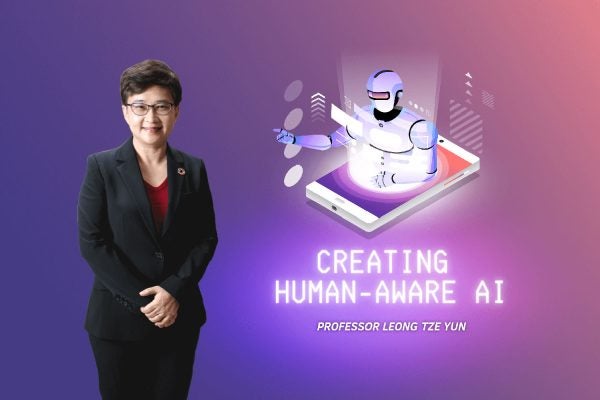
LEONG Tze Yun is a Professor in the Department of Computer Science at the School of Computing, National University of Singapore (NUS). She holds S.B., S.M., and Ph.D. degrees in Computer Science from the Massachusetts Institute of Technology (MIT). Her academic career spans both research and industry experience, with significant contributions to the fields of artificial intelligence and health informatics. Dr. Leong's educational background includes: Ph.D. in Electrical Engineering & Computer Science, Massachusetts Institute of Technology S.M. in Electrical Engineering & Computer Science, Massachusetts Institute of Technology S.B. in Computer Science & Engineering, Massachusetts Institute of Technology Her primary research interests focus on responsible AI, dynamic decision-making, neurocognitive modeling, reinforcement learning, artificial general intelligence, and biomedical and health informatics. Her work bridges the gap between theoretical AI development and practical healthcare applications, with an emphasis on ethical considerations and human-centered design. She directs the Medical Computing Laboratory at NUS, a multidisciplinary research program exploring human-aware decision modeling in complex environments. Analysis of her recent publications reveals a strong trend toward responsible AI development, with significant contributions to reinforcement learning techniques, causal inference methods, and applications of AI in healthcare. Her work increasingly integrates ethical considerations with technical AI development, particularly evident in her 2024 publications on medical AI and human values. Her scientific recognition includes: Fellow of the American College of Medical Informatics (ACMI) Founding Fellow of the International Academy of Health Sciences Informatics (IAHSI) Member of Eta Kappa Nu (Honor Society for Electrical Engineers) Dr. Leong has supervised numerous doctoral and master's students throughout her career, many of whom have gone on to prominent positions at institutions like Google, Netflix, Mayo Clinic, and academic institutions worldwide. Her advisory work extends to significant policy development, including contributions to WHO guidance on ethics and governance of AI for health. She currently serves on the World Health Organization (WHO) Expert Group on Ethics and Governance of AI for Health, the World Economic Forum (WEF) AI Governance Alliance, and the Advisory Council on AI in Uzbekistan. Her laboratory work focuses on developing adaptive systems that evolve with changing technical functionalities, system infrastructures, usage patterns, and operational contexts, with applications spanning prediction and decision analytics, human-aware robotics, game artificial intelligence, personalized education, and assistive care for elderly with neurocognitive disorders.
Dr. Max Kwiek is an Associate Professor in the Department of Economics at the University of Southampton and serves as Deputy Head of School (Education). His research focuses on applied microeconomic theory, political economy, committee design, and auctions. He teaches microeconomics modules, including principles, game theory, and advanced topics. His research interests include voting systems, game theory applications, and experimental economics. Key projects involve analyzing voting mechanisms, intermediary communication, and conclave dynamics. He has supervised PhD student Yanchi Zhang and led a project funded by the British Academy on experimental investigations of conclaves. Externally, he is a committee member of the Virtual Seminars in Economic Theory and Poleconuk Webinars. His work bridges theoretical models with real-world applications in political and economic decision-making processes.