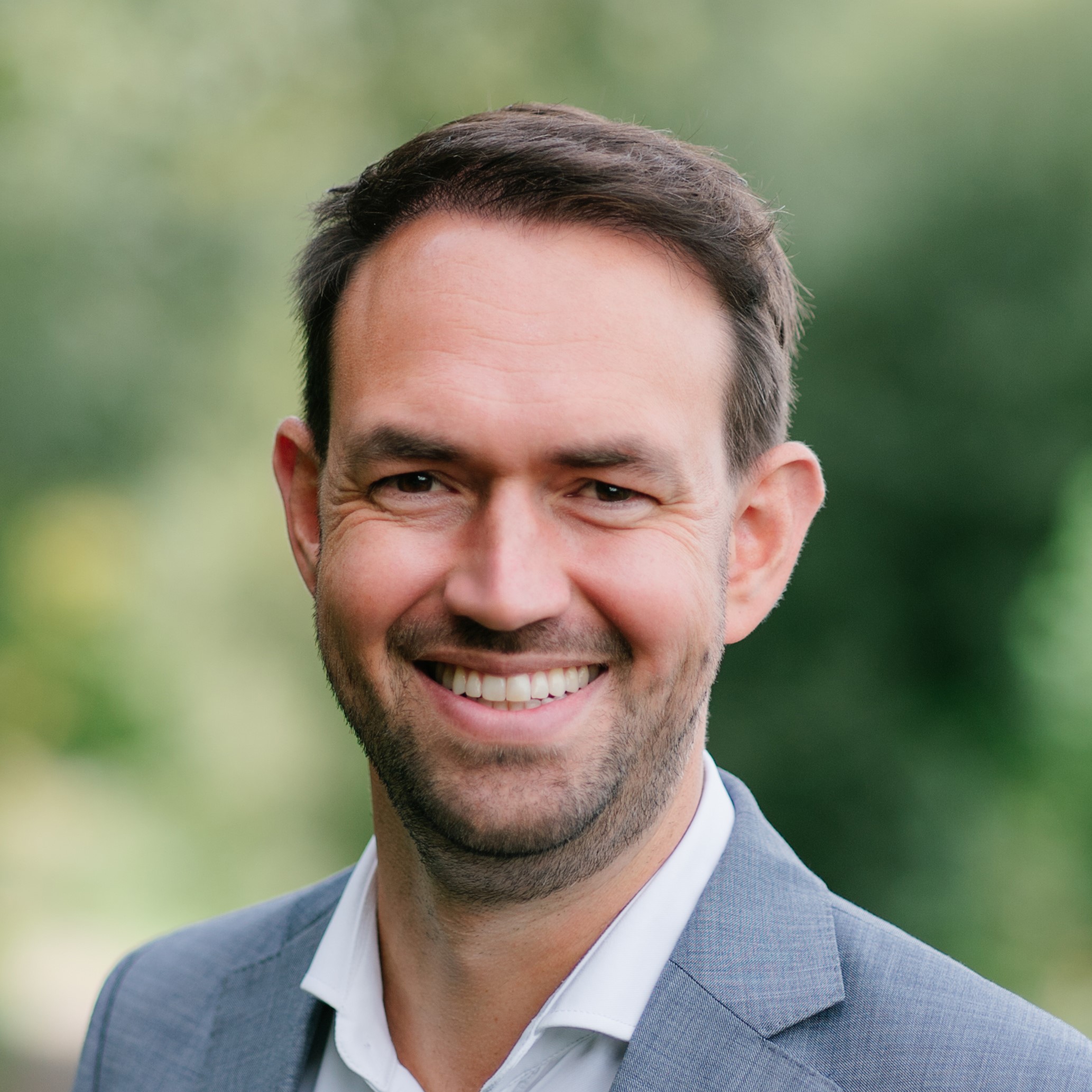
Assoc Prof Yong Tu is an Associate Professor of Real Estate at the National University of Singapore's NUS Business School since January 2022. He holds a PhD from Napier University and specializes in applied economics, urban planning, and housing policy. His research focuses on green building standards, urban sprawl, housing market dynamics, and post-pandemic urban living. He teaches with a focus on active learning, integrating real-world examples to enhance student engagement and lifelong learning skills. Research Interests: Aging-in-place, green building policies, urban housing economics, and sustainable development. Recent studies include the impact of minimum green building mandates in Singapore and institutional drivers of urban sprawl in China. Teaching Philosophy: Emphasizes updating professional knowledge, fostering enthusiasm for learning, and building lifelong learning habits. Strategies include contemporary materials, relevance to daily life, and nurturing rigorous research attitudes.
Helen Elizabeth Davis is an Assistant Professor at Arizona State University's School of Human Evolution and Social Change, and a Research Scientist at the Institute of Human Origins. She also holds an Associate position at Harvard University's Department of Human Evolutionary Biology. As President and co-founder of the One Pencil Project (a 501(c)(3) nonprofit), she champions engaged scholarship and community partnerships. Her work focuses on how cultural institutions like schooling shape cognitive development, with cross-cultural longitudinal studies in Bolivia and Namibia. Davis earned her PhD in 2015 and completed postdoctoral training at Harvard. Her research interests include cognitive development, spatial cognition, and the lifecourse impacts of socioecological factors. She has conducted extensive fieldwork with the Tsimane in the Bolivian Amazon and the Himba/Twa in Namibia, examining how environmental and cultural contexts influence learning, mobility, and aging. Key collaborations include the Tsimane Health and Life History Project and partnerships with indigenous rights organizations like HIZETJITWA. Awardees include the 2020 Leigh Mintrun Early Career Award and 2018 International Society for Intelligence Research Best Paper Award. Her grants include funding from the John Templeton Foundation for studies on cultural influences on child cognition. Davis actively mentors students in anthropological and cognitive science methodologies, emphasizing ethical community engagement in all research endeavors. Labs/Teams: Institute of Human Origins (ASU), One Pencil Project, SCAN Project (spatial cognition), Developing Belief Network (cognitive diversity), and the Tsimane Health Project.
Dr. James Baglin is a Senior Lecturer in Statistics at RMIT University's School of Science (Mathematical Sciences) and serves as Project Manager for Student and Graduate Feedback in the Office of Associate DVCE and RMIT Studios. He previously managed the Master of Analytics and Master of Statistics and Operations Research programs (2017). His research focuses on higher education, educational technology, statistics education, and data visualization. He has received multiple teaching awards, including the Outstanding Good Teaching Scale Award (2013-2017) and the RMIT Teaching Commendation (2014). His industry collaborations include projects with Victoria Legal Aid, Barwon Health, and La Trobe University. Research interests span statistics education, learning analytics, biostatistics, and sports statistics. He has extensive statistical consulting experience in community and health sectors, including evaluating legal education programs and predicting patient outcomes in clinical settings. Currently open to supervising postgraduate research students.
Raffaello Potestio is an Associate Professor in the Department of Physics at the University of Trento and serves as Coordinator of the Doctoral Course in Physics. His research focuses on molecular dynamics, soft matter physics, and computational modeling of biological systems. He teaches courses such as Physics 2 (electromagnetism fundamentals), Multi-scale Methods in Soft Matter Physics, and Statistical Mechanics, emphasizing theoretical and computational approaches. His work integrates advanced simulation techniques, including adaptive resolution methods, to study complex systems like proteins, DNA, and viral capsids. He has contributed to tools like EXCOGITO for coarse-grained modeling and explored topics ranging from knot interactions in polymers to chromatin mechanics in diseases. His research bridges theoretical physics with applications in biophysics, materials science, and epidemiology. Education details are not explicitly provided in the text. His teaching activities span undergraduate and graduate levels, with a focus on equipping students with analytical and computational skills for modern physics challenges. His publications highlight contributions to multiscale modeling frameworks, protein dynamics, and data-driven analysis of mobility patterns during the pandemic. Collaborations involve interdisciplinary teams addressing both fundamental and applied questions in physics and biology. Labs and teams associated with his work include computational physics groups at the University of Trento, though specific lab names are not mentioned. His research emphasizes the development of novel algorithms and their application to diverse systems, reflecting a commitment to advancing both methodological and applied aspects of theoretical and computational physics.
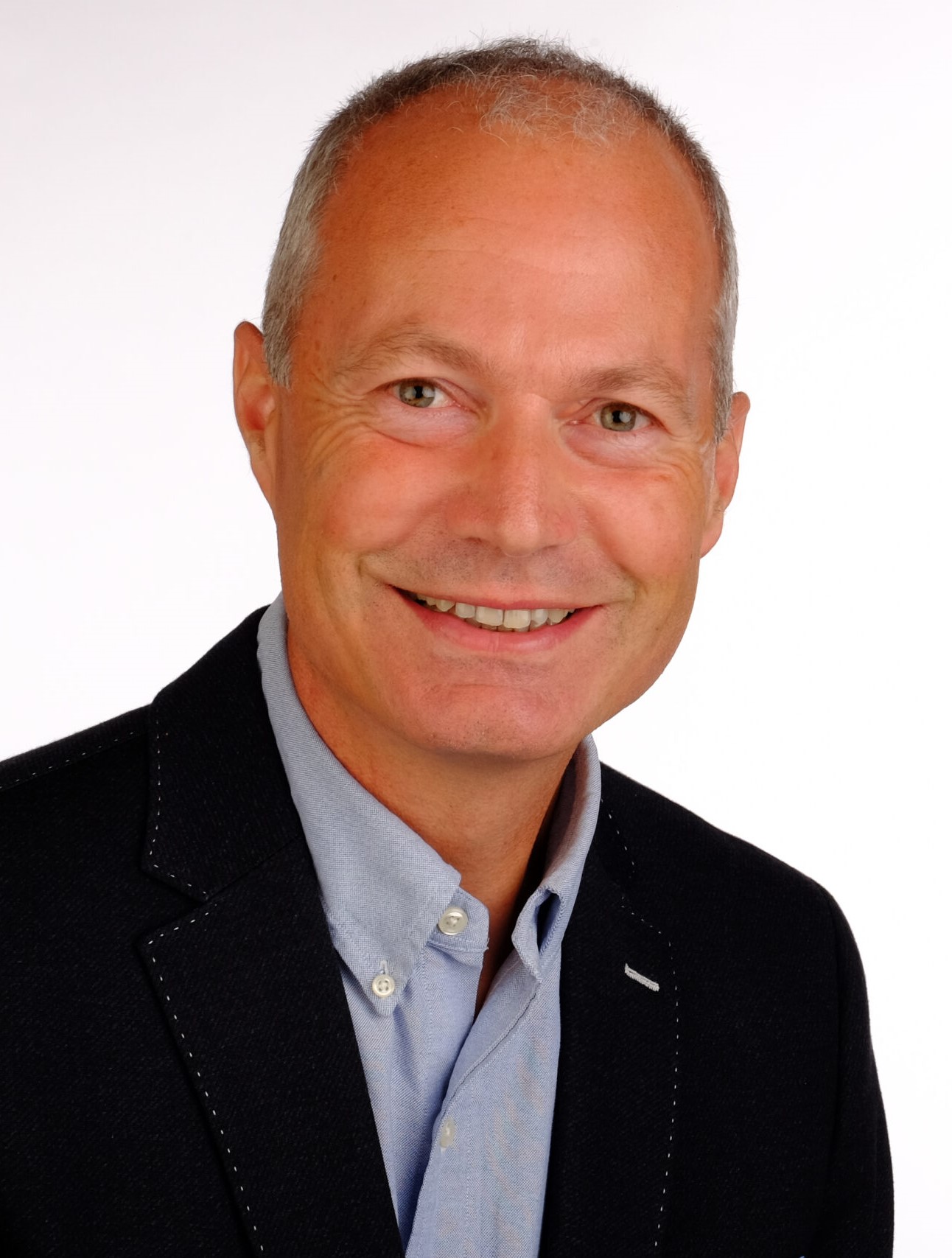
Niklas Kühl is a W3 Professor and Chairholder of Business Information Systems and Human-Centered Artificial Intelligence at the University of Bayreuth. He also serves as Director at the FIM Research Institute for Information Management and holds a Senior Expert role in Artificial Intelligence at IBM. His work bridges academia and industry, with affiliations at Fraunhofer FIT and extensive international collaborations including with Carnegie Mellon University, MIT-IBM Watson AI Lab, and the University of Warwick. His research lies at the intersection of machine learning and human factors, focusing on the development of socio-technical information systems. Key interests include explainable AI, fairness in algorithmic decisions, human-AI collaboration, trust calibration, and the application of AI in sustainability, healthcare, and digital business. He emphasizes data-centric AI and robust, scalable AI products, with a strong focus on ethical and societal implications. The 15 most recent publications highlight a consistent trend toward human-centered AI, with a focus on explainability, fairness, and appropriate reliance in human-AI teams. There is growing emphasis on generative AI, multi-agent systems, and AI applications in healthcare and sustainability. Publications span top venues in AI (AAAI, CHI), information systems (ECIS, ICIS, HICSS), and ethics (FAccT), reflecting interdisciplinary impact. Best Paper Awards (multiple) Summa Cum Laude, PhD, Karlsruhe Institute of Technology Niklas Kühl has advised numerous researchers and students, many of whom appear as co-authors in his publications, though specific advisees are not listed. He has led significant research projects in human-AI collaboration, inter-organizational analytics, and AI for sustainability, often funded by public and industrial partners. His work at IBM and Fraunhofer demonstrates strong industry engagement. He leads the Applied AI in Services Lab (formerly at KIT) and is deeply involved in the FIM Research Institute, contributing to digital transformation in business and society. His collaborations span global institutions, and he actively promotes digital education through initiatives like Education for Refugees, which he co-founded.
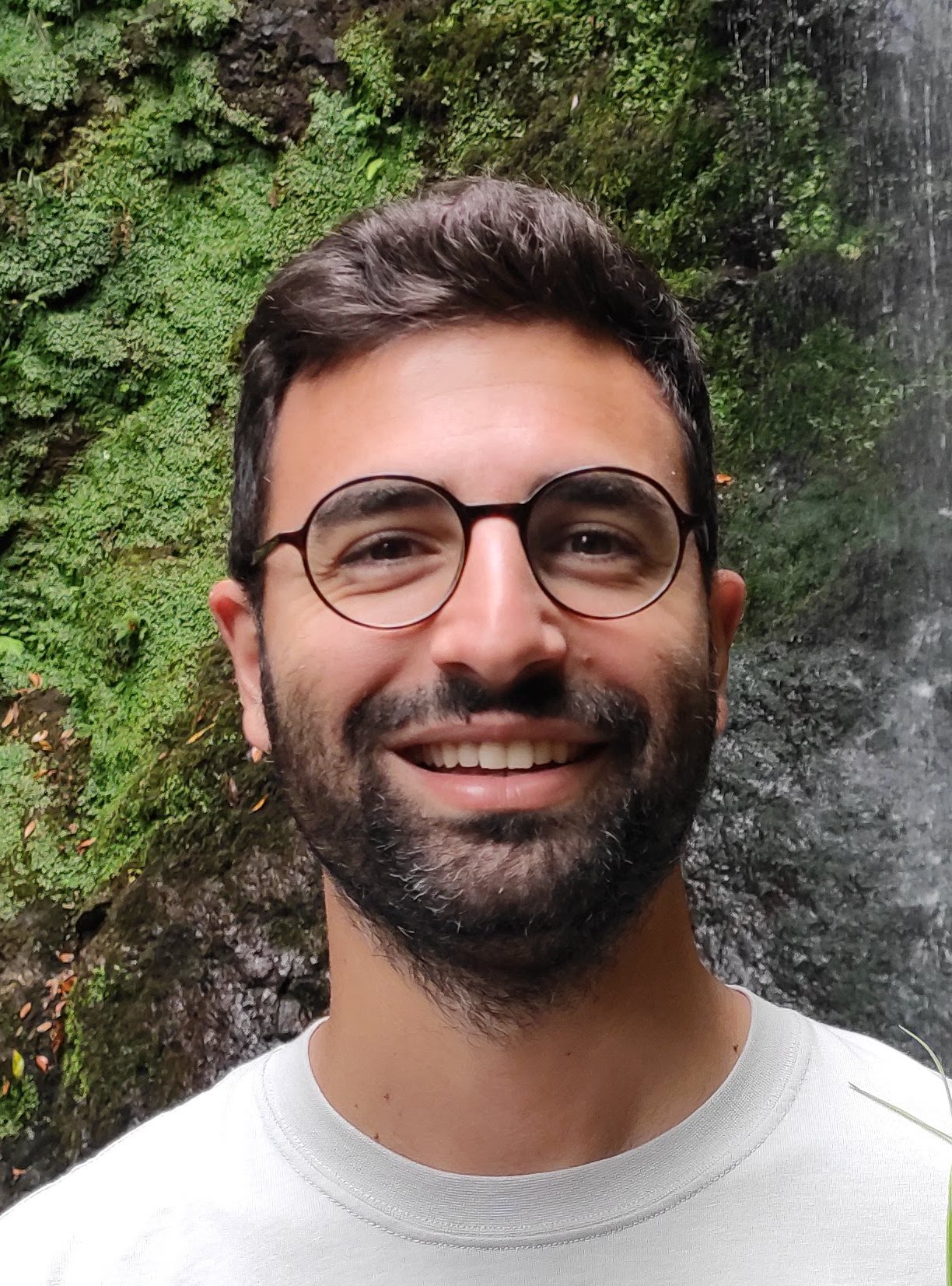
João Carvalho is a Postdoctoral Researcher at the Intelligent Autonomous Systems (IAS) group within the Technische Universität Darmstadt . He obtained his PhD in Computer Science from TU Darmstadt in 2025, advised by Jan Peters, following a MSc in Computer Science from Albert-Ludwigs-Universität Freiburg and a Master's in Electrical and Computer Engineering from Instituto Superior Técnico (University of Lisbon). His work focuses on developing machine learning and reinforcement learning algorithms for robot manipulation, particularly in motion planning, grasping, and contact-rich tasks like insertions. Education: PhD in Computer Science, TU Darmstadt (2025) MSc in Computer Science, Albert-Ludwigs-Universität Freiburg Master's in Electrical and Computer Engineering, Instituto Superior Técnico (University of Lisbon) His research integrates generative models for motion planning and grasping, reinforcement learning for contact-rich tasks, and policy gradient methods with variance reduction. Recent publications highlight applications of diffusion models and tensor planning in robotics, with a focus on spatial symmetry and efficient policy generation. Key contributions include work on Motion Planning Diffusion , Grasp Diffusion Networks , and Model Tensor Planning . He actively supervises thesis students in areas related to robot learning , generative models , and residual reinforcement learning .
Dr. Marieke Baaken is a Postdoctoral Researcher at the Department of Environmental Economics, School of Business Administration and Economics, University of Osnabrück. Her research focuses on behavioral and environmental economics, particularly in the context of sustainable agriculture and sustainability transformations. She investigates farmers' decision-making, behavioral policy instruments, and the role of inner development in fostering resilience and collective action. Her educational background includes an MA in International Economics from Georg-August University Göttingen, an MSc in International Economics and Business from the University of Groningen, and a bachelor's degree in Economics and Cultural Anthropology from the same institution. She completed her interdisciplinary PhD at the AGRI-TRANSFORM graduate school at the Helmholtz Centre for Environmental Research (UFZ) and Philipps University Marburg. Dr. Baaken’s research integrates qualitative and quantitative methods, including economic experiments, content analysis, and regression analyses. Her recent publications explore topics such as farmers’ risk preferences, agri-environmental scheme adoption, and the use of behavioral insights for sustainability. She is actively involved in international research networks and has presented her work at major conferences including EAERE, EGU, and REECAP. The trend in her publications reflects a growing emphasis on interdisciplinary, policy-relevant research that combines behavioral science with environmental economics to address real-world sustainability challenges. Her work increasingly focuses on cognitive plasticity, visioning, and inner growth as drivers of sustainability transformation. International Society for Ecological Economics (ISEE) European Society for Ecological Economics (ESEE) Research network on Economic Experiments for the Common Agricultural Policy (REECAP) Society for Economic and Social Sciences of Agriculture (GEWISOLA) European Association of Environmental and Resource Economists (EAERE) European Association of Agricultural Economists (EAAE) Dr. Baaken has contributed to research projects such as the KfW project on wastewater connections and is currently leading work on the 'Inner Growth for Sustainability Transformation' project, which investigates cognitive and behavioral drivers of pro-environmental action. She has no listed grants or students in the provided text. She has been a visiting scientist at the James Hutton Institute in Scotland and worked as a freelance consultant. She is associated with the Institute for Environmental Economics at the University of Osnabrück and collaborates with researchers across Europe on agricultural and environmental policy topics. Her work is published in journals such as Land Use Policy , Applied Economic Perspectives and Policy , and Sustainability Science .
Sema Alaçam is an Associate Professor at Istanbul Technical University , affiliated with the Department of Architecture . She has active research in computational design , artificial intelligence in architectural education , and sustainable materials like rammed earth and reused wind turbine blades . Her work focuses on: Architectural heritage (e.g., Sinan mosques, Harran houses) Environmental comfort (thermal, natural ventilation) Digital tools (BIM, VR, AI-assisted design) Recent publications include machine learning models for heritage analysis and AI literacy in design education. She leads projects on robotic fabrication and digital stereotomy . Scientific recognition: Multiple İTÜ Academic Performance Awards (2021–2023) Sigradi Best Reviewer Award CAADRIA Best Presentation Award (2014) FABFEST Prizes (2017–2018)
Atousa Hajshirmohammadi serves as a Senior Lecturer at Simon Fraser University's School of Engineering Science, where she has taught since 2004 after returning from industry experience at LSI Logic Inc. in Silicon Valley. Her academic journey includes B.Sc. and M.Sc. degrees in Electrical and Computer Engineering from Isfahan University of Technology and a Ph.D. in Communications Engineering from the University of Waterloo. Her research spans two primary domains: technical communications and engineering pedagogy. In digital communications, she focused on multimedia transmission, cognitive radio networks, and unequal error protection until approximately 2015. Her pedagogical research, which dominates recent work, investigates experiential learning, student wellbeing, time management strategies, and innovative teaching methods in engineering education. Her publication trend shows a clear shift from wireless communications research (2000-2015) to educational scholarship (2015-present), with significant contributions to IEEE Communications Magazine and Frontiers in Education conferences. Supported by multiple SFU Teaching and Learning Development Grants, she has developed tangible lab assignments, interactive online quizzes, and wellbeing-focused learning environments. Her outreach includes workshops like the Insect-Robot program for K-7 students and collaborations with SFU's Health Promotion unit. While her technical research involved graduate students, her primary role as teaching faculty emphasizes curriculum innovation rather than traditional graduate supervision.
Allison Goedde serves as a Teaching Professor at Bowling Green State University within the College of Education & Human Development, specifically affiliated with the School of Inclusive Teacher Education. She has maintained continuous faculty service since 2004, contributing to both undergraduate and graduate teacher preparation programs through course instruction and professional development initiatives. Her academic preparation includes: Ed.D. in Educational Administration & Supervision from Bowling Green State University (2006) M.A. in Educational Technology from the University of Findlay (1997) B.A. in Adapted Physical Education & Exercise Science from the University of Toledo (1990) Dr. Goedde specializes in the integration of educational technology within active learning environments, with particular expertise in designing online and blended professional development for educators. Her scholarly focus examines how perceptions of active and blended learning environments influence the development of higher-order thinking skills across K-16 educational settings, emphasizing practical applications for classroom implementation. Analysis of her 2012-2013 publications and presentations reveals consistent thematic concentration on technology leadership in educational contexts. Key scholarly trends include management strategies for 1:1 device classrooms, cloud-based learning environment design, and STEM integration through initiatives like the Video Game Challenge. Her work demonstrates a strong practitioner orientation, bridging theoretical research with actionable frameworks for teacher professional development and student engagement. No scientific awards or major honors are documented in the current professional profile. While Dr. Goedde actively participates in Student Teacher Capstone Days and delivers professional development for school districts like St. John's Jesuit, specific details regarding graduate student advising or externally funded research grants are not provided in available materials. Her service contributions include conference presentations at the Ohio Educational Technology Conference and media collaborations with WBGU/PBS. The professional profile does not reference any dedicated research laboratories, specialized teams, or ongoing collaborative research groups associated with Dr. Goedde's current academic work.
Antonio Castells-Delgado is a Senior Lecturer in Music Technology (Acoustics) at the University of West London's London College of Music. He also lectures at Imperial College London in Sound Technology, with expertise spanning acoustics, composition, and electronic music. A cum laude Electronic Engineering graduate from La Salle Barcelona and holder of an MA in Music Business Management from the University of Westminster, he employs a student-centric teaching approach to develop critical skills in diverse educational contexts. Education: BEng/MEng in Electronic Engineering (1999), MA in Music Business Management (2006), Certificate in Teaching and Learning (Imperial College) Teaching: MA Advanced Music Technology, MA Record Production, MMus Electronic Music Composition, BA Electronic Music Production, BMus Performance and Recording His research and artistic practice explores universal human themes through compositions like '2045: The Year Man Becomes Immortal' and 'Life from Light,' blending technology with classical motifs. He has performed at iconic UK venues and received international media acclaim, including a Guardian 2016 feature. Key trends in his 15 most recent works include interdisciplinary fusion of acoustics and digital audio, exploration of futurism and ethics in '2045'-themed projects, and emotionally resonant sound design in pieces like 'Forgiveness V6' and 'Syria V8.' His output spans studio/live albums, video documentation, and venue-specific performances. Scientific Awards: The Guardian's 'Five of the Best Classical Concerts' (2016) He contributes to open-access repositories and collaborates with artists like Cyril De Commarque (Saatchi Gallery 2019) and Tereza Duchlevova (LSO St Luke's 2019). His work bridges music technology, acoustic engineering, and conceptual art.
Günter Maresch is a full Professor at the University of Salzburg's Department of Mathematics within the Faculty of Natural and Life Sciences, where he leads the research group 'Mathematics Education and Technology'. He currently serves as Vice Dean of the Faculty of Digital and Analytical Sciences (2022-2024). Previously, he held positions at the university's School of Education as Associate Professor and Assistant Professor for Mathematics and Geometry Didactics. His research focuses on: Mathematics and geometry education pedagogy Spatial intelligence development (creator of the RIF learning platform) Curriculum design for STEM subjects Integration of digital tools like CAD in mathematics teaching Strategies for solving geometric problems He coordinates the €4.12M EU-funded Sell-STEM project, training 15 PhD researchers across Europe to develop spatial skills interventions for students. He also edits two academic journals: Informationsblätter der Geometrie and Mathematik im Unterricht .
Sarah D Castle serves as Assistant Professor of Mathematics Education at the University of Idaho with dual appointments in the Department of Mathematical and Statistical Sciences (College of Science) and Curriculum and Instruction Department (College of Education, Health and Human Sciences). Her research bridges computational methods and mathematics education to advance equity and foster creativity in undergraduate STEM contexts. Her educational background includes: B.A. in Mathematics, Whitworth University (2012-2016) B.S. in Engineering Physics, Whitworth University (2012-2016) M.S. in Mathematics, Michigan State University (2019-2022) Ph.D. in Mathematics Education, Michigan State University (2018-2023) Castle's research centers on computational approaches to uncover systemic inequities in STEM education while creating environments that nurture mathematical creativity, particularly for marginalized students. She investigates how computational modeling—such as Jupyter Notebook implementations in linear algebra—can transform mathematical engagement and understanding. Her work critically examines power structures in educational spaces and develops pedagogical frameworks that leverage coding to deepen conceptual learning and promote equitable participation. Analysis of her 13 publications (2020-2024) reveals three dominant trends: (1) computational tools as catalysts for mathematical creativity and conjecture, (2) quantitative critical analyses of systemic advantages in STEM courses, and (3) investigations of student agency development in proof-based mathematics. These works span ACM computer science education conferences, mathematics education research forums, and interdisciplinary learning sciences venues. Castle actively contributes to major research initiatives: SEISMIC Project: Multi-institutional analysis of equity in introductory STEM courses Transition to Proof Project: Studying sense-making in advanced mathematics Computational Education Research Lab: Developing computational modules for mathematics learning Her teaching portfolio includes Secondary Mathematics Methods (EDCI 434), Proof and Viable Argumentation (MTHE 410), and Calculus I (MTH 132), reflecting her dual expertise. She has extensive experience as instructor of record, teaching assistant, and developer of STEM curricula including high-altitude balloon launch modules for K-12 students.
Dr. Ülkü Tuğçe Çal Pektaş is a researcher and assistant editor at Akdeniz University's Faculty of Education, specializing in Social Studies Education. Her work bridges gifted education, teacher training, and geographic literacy. PhD in Social Studies Education (2019–Present, Akdeniz University) Master’s in Social Studies Education (2016–2018, Akdeniz University) Bachelor’s in Social Studies Teaching (2012–2016, Ondokuz Mayıs University) Her research focuses on: Gifted students' creativity and environmental perceptions Spatial literacy in geography education Educational technology integration Teacher training for high-intelligence children Special education applications Recent publications span 2017–2025, emphasizing interdisciplinary approaches, digital tools, and critical thinking. She collaborates extensively with Prof. Dr. Halil Demirkaya and peers on projects funded by higher education institutions.
Prof. Dr. Hasan Hüseyin TAYLAN is an Associate Professor at Sakarya University's Faculty of Humanities and Social Sciences, Department of Social Work. With a strong background in Sociology from Selcuk University, he has dedicated his career to social work education and research, focusing on critical social issues in Turkish society. His educational journey includes a Doctorate in Sociology (2009-2011) with a thesis on television violence effects on students, a Master's degree in Sociology (2000-2003) focusing on village family relations, and a Bachelor's degree in Sociology (1995-1999). His academic career progressed from Research Assistant at Selcuk University (2001-2011) to Doctor Lecturer positions at Sakarya University (2016-2020) and Üsküdar University (2016-2019), before becoming an Associate Professor at Sakarya University in 2020. His research interests span social work, family studies, media effects, substance abuse, Roma communities, domestic violence, and social policy. He teaches courses including Family Problems, Analysis in Social Work Environments, Research Methods and Techniques in Social Work, Disadvantaged Groups and Social Work, and Media Effects and Social Work. His extensive publication record demonstrates expertise across multiple domains of social work practice and research. His recent publications (2022-2025) show a consistent focus on social work with disadvantaged groups, family issues, media effects, and substance abuse. The articles reveal a methodological diversity including quantitative studies, qualitative analyses, and mixed-methods research addressing contemporary social challenges in Turkey. Prof. Taylan has supervised numerous master's theses on topics ranging from family counseling to social work with Roma communities and substance abuse. His research projects include significant contributions to understanding social issues among vulnerable populations and developing evidence-based social work interventions. He actively contributes to social work practice through research projects addressing real-world social problems, including studies on Roma communities, substance abuse, elderly care, and family dynamics. His work bridges academic research with practical social work applications, influencing both education and practice in the field.