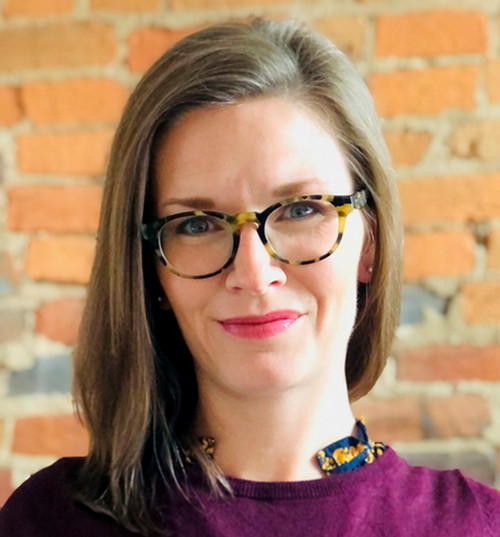
Emily Buehler is an Assistant Professor of Interpersonal Communication and Social Media at the Brian Lamb School of Communication, Purdue University. Her work bridges interpersonal communication and computer-mediated communication, focusing on how personal and social media influence social support processes in relationships. Education: Ph.D. in Interpersonal Communication and Relationships (University of Iowa, 2018), M.A. in Communication (Wake Forest University, 2014), B.A. in English (Ohio Northern University, 2007). Her research explores online support-seeking, social media’s role in relationships, and the interplay between communication technologies and emotional support. Recent studies examine anonymity in digital support, contextual factors shaping message provision, and mediated communication’s impact on family well-being. Publications appear in Communication Monographs , Journal of Social and Personal Relationships , and Computers in Human Behavior . Awards: Purdue College of Liberal Arts Outstanding Undergraduate Teacher (2023). She teaches courses on interpersonal communication, relationship technology, and privacy practices. As a mentor, she advises the Association for Women in Communication at Purdue and volunteers with HOBY leadership programs, fostering high school students’ leadership and community impact initiatives.
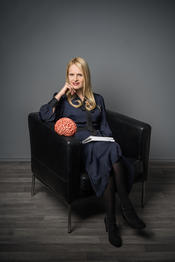
Univ.-Prof. Dr. Michaela Sambanis is a Professor of English Didactics at the Institute of English Philology within the Department of Philosophy and Humanities at Freie Universität Berlin. She has held this position since 2011 and previously served as the managing director of the Institute from Winter semester 2017/2018 to October 2019. Her academic journey includes research work at the Transfer Center for Neuroscience and Learning at the University of Ulm (2008-2011), completion of her habilitation in 2006, and her promotion in 2001. Professor Sambanis's research centers on the innovative intersection of educational neuroscience and language teaching methodology. Her work pioneers the field of Positive Foreign Language Didactics, connecting positive psychology with language education. She investigates embodied cognition approaches, particularly movement-based learning, and explores theater methods and arts integration in language instruction. Her research also addresses teacher well-being and health, multilingualism in educational settings, and the application of neuroscience findings to practical classroom situations. The k2teach project represents her current focus on teaching-learning labs in English teacher education. Her scholarly output demonstrates a consistent trajectory toward integrating neuroscience with language pedagogy, with recent publications increasingly addressing mental health, digital transformation in education, and positive psychology applications. The evolution of her work shows a progression from practical teaching methods to increasingly sophisticated neurodidactic frameworks that bridge scientific evidence with classroom practice. Professor Sambanis serves on multiple scientific advisory boards including the Goethe Institut in Munich, the Transfer Center for Neuroscience and Learning at the University of Ulm, and the Schlözer Program for Teacher Education. She is also the founding chair of the cross-state E&M Berlin-Brandenburg section and a member of the German Society for Foreign Language Research (DGFF). Her editorial work includes the SELT book series on English Language Teaching. Her teaching responsibilities include supervising master's theses in English teaching, and she has developed numerous teaching-learning laboratories that connect theoretical knowledge with practical application in teacher education. Her work demonstrates a strong commitment to evidence-based foreign language didactics that incorporates insights from neuroscience, psychology, and educational research.
Susanne Schötz is an Associate Professor of Phonetics at Lund University's Centre for Languages and Literature and a Researcher at the Lund University Humanities Lab. She is also the project manager for Cat-human communication research and a member of the LU Profile Area: Natural and Artificial Cognition. Her research focuses on phonetic variation in three main areas: dialectal variation in Swedish and other languages, paralinguistic variation related to age, emotion, attitude and health condition, and phonetic variation in human-animal communication, particularly cat-human communication. She has led several research projects including Melody in human–cat communication (Meowsic), Cat–Human Communication, and studies on Estonian Swedish and Swedish vowel articulation using articulography. Dr. Schötz teaches courses at the speech and language pathology and audiology programs at Lund University. Her work with cats has gained significant attention, including winning the Ig Nobel Prize in Biology in 2021 for research on cat-human communication. Her research output demonstrates strong trends in animal communication, particularly focusing on the acoustic properties of cat vocalizations and how humans perceive and interpret these sounds. She combines traditional phonetic analysis with innovative approaches to study cross-species communication, making significant contributions to both linguistics and animal behavior studies. Scientific Awards: The Ig Nobel Prize in Biology (2021) Årets Mäster (Master of the Year) (2020) Vetenskapssocieteten Lunds universitet (2016) Vetenskapssocieteten i Lund: Stipendium för betydande insats inom humanistisk forskning (2007) Dr. Schötz has supervised research projects and students in phonetics and human-animal communication. Her work has been supported by various research funds including MAW, SKK och Agrias forskningsfond, and the Pufendorf IAS. She is in charge of the articulographs in the Humanities Lab, which are essential for her research on speech production and articulation. She is actively involved in the Lund University Humanities Lab, contributing to its mission of interdisciplinary research in the humanities through her expertise in phonetics and communication studies.
Ian Quinn is the Allen Forte Professor of Music Theory and Director of Graduate Studies (DGS) at Yale University, within the Department of Music in the College of Arts and Science. He holds a B.A. from Columbia University (1993), M.A. and Ph.D. from the Eastman School of Music (1998, 2004). Prior to Yale, he taught at the University of Chicago and University of Oregon, and was a CASBS Residential Fellow at Stanford (2008-09). His research focuses on tonal harmony, corpus studies, music cognition, and the intersections of mathematics and computation in music theory. He edited the Journal of Music Theory (2004–2011) and co-organized the 2009 Society for Mathematics and Computation in Music conference. He leads the Yale-New Haven Regular Singing (YNHRS) shape-note singing group and serves on editorial boards for Journal of Mathematics and Music and the Northeast Music Cognition Group (NEMCOG). Quinn’s work has earned awards from the Society for Music Theory, including the Emerging Scholar Award (2004) and Outstanding Publication Award (2006/2007). His research spans analytical frameworks for harmonic function, corpus-based studies of tonal systems, and empirical investigations of music perception. He has advised over 15 doctoral students, many now in academic and industry roles. Key collaborations include co-authoring the Oxford Handbook of Corpus Studies in Music (2023) and developing the Yale-Classical Archives Corpus. His work bridges theoretical, computational, and historical approaches to music analysis, with contributions to Science , Music Theory Spectrum , and Perspectives of New Music .
Ju Lu serves as an Assistant Professor at Lehigh University with office location in Iacocca Hall (room 0111), contactable via phone (610.758-3687) and email (jul724@lehigh.edu). Her academic position reflects active engagement in neuroscience research and education within the university's life sciences framework. Education Background: Ph.D. in Neurobiology from Harvard University (2008) B.Eng. in Microelectronics from Tsinghua University (2002) Research Focus: Dr. Lu's work pioneers investigations into neural circuit dynamics and synaptic plasticity mechanisms using advanced optical imaging technologies. Her research spans: Cortical circuit reorganization during motor skill acquisition across species Stress-induced synaptic alterations mediated by microglia in prefrontal circuits Therapeutic applications of psychedelic compounds for neural circuit restoration Development of three-photon microscopy for deep-brain imaging Genetically-encoded neurotransmitter sensors for in vivo studies This multidisciplinary approach bridges molecular neuroscience, systems-level circuit analysis, and translational mental health applications. Publication Trends: Analysis of Dr. Lu's 15 most recent publications (2016-2023) reveals an evolving trajectory from foundational studies on dendritic spine plasticity toward translational neuroscience. Early work emphasized optical imaging methodology and basic plasticity mechanisms, while her 2021-2023 publications increasingly focus on stress-related circuit disruptions and psychedelic therapeutics. A consistent thread involves combining high-resolution in vivo imaging with behavioral models to establish causal links between neural circuit dynamics and cognitive functions. Honors and Awards: No scientific awards or fellowships were documented in the provided materials. Mentorship and Funding: While specific student mentees and grant funding details are not specified in the source text, her extensive collaborative publication record indicates active supervision of research personnel and successful acquisition of research support. Research Infrastructure: Her methodological expertise in advanced microscopy suggests utilization of specialized imaging facilities, though no dedicated laboratory or research team is explicitly identified in the available documentation.
Matt Denny is a Teaching Fellow in Film & Television Studies at the University of Warwick's Faculty of Arts, where he also serves as Widening Participation and Outreach Officer. He convenes core modules including Visual Cultures, Transnational Action Cinema, and Film Analysis and Methods for both undergraduate and postgraduate students, while acting as primary contact for SMLC Joint Honours students. He earned his First Class BA, MA for Research, and PhD (2016) all in Film and Television Studies from Warwick. His doctoral thesis examined film authorship and postmodern cinema, establishing foundations for his ongoing research trajectory. Denny's research centers on Film Theory with emphasis on authorship and representation, Contemporary Hollywood Cinema specializing in action genres, British Horror Cinema including folk horror and gothic traditions, and Film-Philosophy exploring post-structuralism and posthumanism. His work consistently examines intersections between genre conventions, philosophical frameworks, and contemporary socio-technological concerns. His 15 most recent publications reveal strong thematic continuity in folk horror studies, posthuman representations, and genre theory. Denny frequently analyzes how horror and science fiction reflect contemporary anxieties about technology, identity, and temporality, with recurring focus on folk horror's resurgence and AI's philosophical implications in cinema. Denny actively contributes to academic communities through memberships in The Fear Network, British Association of Film, Television and Screen Studies (BAFTSS), and International Gothic Association. His public engagement includes podcast appearances on Gender and AI, Eavesdropping at the Movies, and TRT World discussions about Scorsese and Marvel cinema. Though previously conducting research primarily in personal time without institutional funding, Denny now benefits from 10% research allocation under Warwick's new workload model. He has presented at numerous international conferences while maintaining significant teaching responsibilities across multiple course levels. Denny leads departmental outreach initiatives and collaborates with Warwick's Institute of Advanced Studies through The Fear Network. His interdisciplinary approach connects film studies with philosophy, gender studies, and emerging technologies through projects like the Genetics: Science and Society module with IATL.
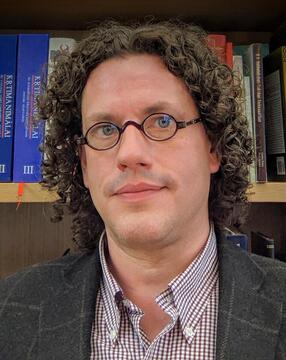
Professor Philip Armstrong is a distinguished academic and poet at the University of Canterbury, where he has served in the English Department within the Faculty of Arts since February 1998. His work bridges scholarly research and creative practice, establishing him as a significant voice in contemporary literary studies and poetry. PhD in Critical and Cultural Theory, University of Wales (1992-1995) MA(Hons), University of Auckland (1990-1991) Armstrong's research centers on literary representations of the natural world, with particular expertise in human-animal studies, Shakespearean scholarship, and environmental humanities. His interdisciplinary approach connects literary theory with ecological concerns, examining how cultural narratives shape our relationship with non-human entities. His scholarly publications span from analyses of Shakespeare to contemporary explorations of human-animal relations, including his acclaimed book Sheep (2016) and the forthcoming Disturbing Nature in Narrative Literature (2025). As a creative writer, Armstrong has published two award-winning poetry collections: Sinking Lessons (2020), which won the Kathleen Grattan Award for Poetry, and Touch Screen (2025). His poetry often explores the intersection of human experience with natural and technological environments, demonstrating his consistent thematic concern with boundaries between human and non-human worlds. Kathleen Grattan Award for Poetry (2019) Landfall Essay Prize (2011) Caselberg Trust International Poetry Prize (runner-up) Armstrong actively supervises graduate students in both scholarly and creative writing projects, mentoring the next generation of literary scholars and poets. His teaching encompasses literary studies, with a focus on Shakespeare, and graduate-level creative writing. He has also contributed significantly to public discourse through essays, interviews, and literary criticism published in major journals and media outlets across New Zealand, Australia, the UK, and the USA. His creative and scholarly work frequently appears in prominent literary journals including Landfall , Sport , PN Review , and JAAM , reflecting his standing in the international literary community. Living in Lyttelton, New Zealand, Armstrong's work remains deeply engaged with both local and global literary traditions.
Kamal A. Alsharif is an Associate Professor in the School of Geosciences at the University of South Florida. He specializes in interdisciplinary water resources policy, watershed management, and sustainable domestic water policy. His research focuses on water scarcity, hydropolitics, urban water management, and environmental benchmarks using Data Envelopment Analysis. He holds a Ph.D. (2004), M.S. (1996), and B.S. (1992) from the University of Minnesota, Minnesota State University, and St. Cloud State University, respectively. Education: Ph.D., University of Minnesota (2004) M.S., Minnesota State University (1996) B.S., St. Cloud State University (1992) His research interests span stormwater management, lawn irrigation policy, non-point source pollution, decision support systems, and climate change impacts. Notable projects include the Connor Park Project , Water Management in Arid Areas , and RET in Engineering and Computer Science Site . He has received awards such as the 2017 Editor’s Choice Paper Award and recognition in Who's Who in America (2011). Alsharif teaches courses including Introduction to Environmental Science , Environmental Science , and Water Quality Policy/Management . He has secured grants from the National Science Foundation and the Tampa Bay Environmental Restoration Fund. He advises students and serves on committees like the Graduate Committee and Water Institute Advisory Group . Awards: Multi-Cluster TeamWork Award (1996) Minnesota Project Wet Facilitator of the Year (1999) Outstanding TeamWork Award (1999) Who's Who in America (2011) Editor’s Choice Paper Award (2017) His work integrates policy, education, and community engagement, exemplified by initiatives like the Make A Splash Festival and collaborations with organizations such as the Tampa Estuary Program.
Hilary Nelson is an Assistant Professor in the Department of Fine Art at Maharishi International University (MIU), where she teaches courses such as Art of the Self, Color Theory, Sculpture I, and graduate-level seminars. She has also served as an Adjunct Instructor at MIU and Santa Fe Community College, and as a Visiting Lecturer at Grinnell College. Her academic journey includes an MFA and MA in Painting from the University of Iowa and a BFA in Painting and BS in Environmental Science from MIU. University of Iowa, MFA Painting, 2017 University of Iowa, MA Painting, 2016 Maharishi International University, BFA Painting, 2013 Maharishi International University, BS Environmental Science, 2007 Hilary Nelson's research and creative practice focus on the intersection of art, sustainability, and regenerative design. Her fields of interest include painting, drawing, sculpture, and curatorial practice, with a strong emphasis on environmental consciousness. She has developed and taught courses like 'Regenerative Art: Sustainability in Practice and Concept,' reflecting her commitment to ecological themes in art education. The 15 most recent articles highlight her active exhibition history, spanning solo and group shows across the U.S. and internationally. These works reflect trends in contemporary visual art, including installation, public art, conceptual practice, and interdisciplinary exploration. Her exhibitions often engage with themes of space, materiality, perception, and social critique, demonstrating a consistent evolution in her artistic voice. Scientific and Artistic Awards: Mildred Pelzer Lynch Fellowship, University of Iowa (2015–2017) Graduate Teaching Assistant Scholarship, University of Iowa (2014–2016) Faculty Research and Teaching Grants, Wege Foundation (2022, 2024) Artist Residencies at Yaddo, Vermont Studio Center, and international locations (2019–2024) Arts and Environmental Sciences Honors Awards from MIU (2007, 2013) Hilary Nelson has been actively involved in academic advising, curriculum development, and grant-funded research. She has led projects supported by the Wege Foundation, focusing on regenerative art and sustainability. Her teaching spans foundational to advanced levels, and she has mentored students through studio courses and graduate seminars. She has also curated exhibitions and organized artist talks, contributing to the broader academic and artistic community. She is co-founder of the Nelson Project, a collaborative art initiative with Trilby Nelson, and previously co-founded The Beauty Shop in Fairfield, IA—a non-profit gallery and music venue. She has also served as Gallery Curator at The Times Club in Iowa City and co-directed Unity Gallery at MIU, demonstrating strong leadership in curatorial and collaborative art environments.
Courtney N. Reed is a Lecturer in Digital Technologies at Loughborough University London, where she joined in November 2023. She maintains a dual role as a visiting research fellow at the Max Planck Institute for Informatics. Her academic journey includes a BMus in Electronic Production and Design from Berklee College of Music (2016), followed by an MSc (2018) and PhD (2023) in Computer Science from Queen Mary University of London. Prior to her current position, she completed postdoctoral research at both the Max Planck Institute for Informatics and King's College London. Bachelor of Music: Electronic Production and Design, Berklee College of Music (2016) Master of Science: Computer Science, Queen Mary University of London (2018) Doctor of Philosophy: Computer Science, Queen Mary University of London (2023) Dr. Reed's research explores the entangled relationships between humans, bodies, instruments, and technology in music interaction, with particular focus on vocal electromyography (VoxEMG) and the vocalist-voice relationship. Her work incorporates feminist and post-human theories to examine sociopolitical contexts within arts technology, aiming to design for creativity while acknowledging individual, messy bodies in artistic practice. She has developed an open-source platform for vocal electromyography to investigate how biosignal feedback changes understanding and perception of the body in vocal performance. Her interdisciplinary approach bridges music technology, human-computer interaction, and embodied interaction studies. Analysis of Dr. Reed's recent publications (2023-2025) reveals a strong thematic focus on embodied interaction in music technology, with particular emphasis on vocal performance, biosignal feedback, and the philosophical underpinnings of digital instrument design. Her work consistently integrates theoretical frameworks like Karen Barad's agential realism with practical applications in digital musical instruments. Key trends include the exploration of ambiguity in data representation, the sociocultural dimensions of timbre in instrument design, and the development of novel methodologies for understanding embodied musical experiences through micro-phenomenology and ethnographic approaches. ACM SIGCHI Outstanding Dissertation Award (2024) for her thesis 'Imagining & Sensing: Understanding and Extending the Vocalist-Voice Relationship Through Biosignal Feedback' Best Newcomer Award at Loughborough University London's Community Awards Celebration (2024) Dr. Reed actively contributes to the academic community through conference organization and leadership roles. She serves as Member-at-Large on the NIME Board, previously chaired papers for NIME 2024, and co-organized the IBM SkillsBuild Sprint at Loughborough London. She has also chaired sessions at the ACM TEI Conference and co-chaired the Student Design Competition. Her collaborative work spans multiple institutions and includes significant contributions to interdisciplinary projects that bridge music, technology, and human experience. She has been instrumental in developing the senSInt research group and the RaveNET wearable network project. Dr. Reed leads the senSInt research group which focuses on sensorimotor interaction in music and performance contexts. The group develops innovative technologies including the VoxEMG platform for vocal electromyography, the Bones anti-corset for vocal performance, and the RaveNET network of wearable biosensing nodes. These projects explore the intersection of biosignals, embodied interaction, and musical expression, creating novel frameworks for understanding how technology mediates human creativity and performance. The group frequently collaborates with musicians, technologists, and theorists to develop and test these systems in real-world performance contexts.
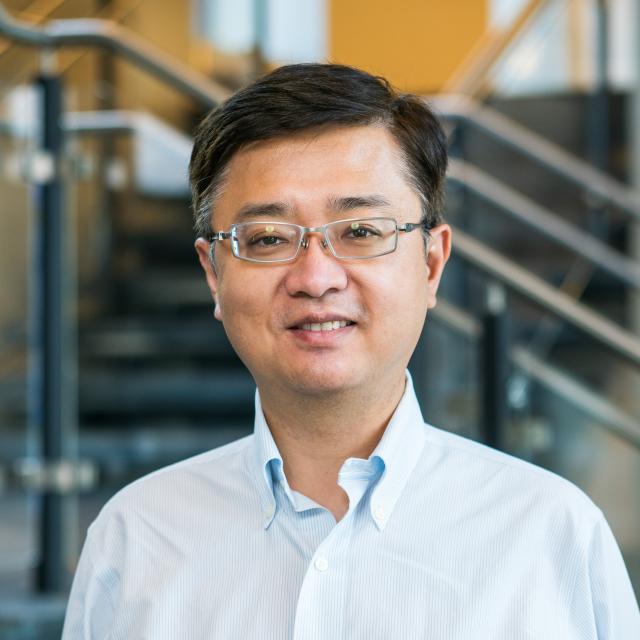
Mohamed Hefeeda is a Professor in the School of Computing Science at Simon Fraser University (SFU), Canada. He leads the Network and Multimedia Systems Lab (NMSL) and previously served as Director of the School from 2018 to 2023. His research focuses on multimedia networking, mobile computing, cloud systems, and hyperspectral imaging. He holds an ACM Distinguished Member designation and has received prestigious awards including the NSERC Discovery Accelerator Supplements (2011) and multiple best paper awards at top conferences like ACM MM and IEEE Infocom. Education: Ph.D., Purdue University, 2004 M.Sc., University of Connecticut, 2001 B.Sc., Mansoura University, Egypt, 1994 Research Interests: Design of efficient multimedia systems and protocols for wired/wireless networks Cloud gaming optimization and video encoding techniques Hyperspectral imaging for healthcare and mobile applications AI-driven multimedia systems and mobile computing innovations Grants & Industry Collaborations: Funded by NSERC, CFI, and companies like AMD, Huawei, and CBC Co-founded Video Semantics (acquired by tech firm) Partnered with CBC on peer-assisted content distribution systems Awards Highlights: 2025: ACM Distinguished Member 2019: Best Student Paper Award at ACM MMSys 2015: NSERC Discovery Accelerator Supplements Labs & Leadership: Network and Multimedia Systems Lab (NMSL) at SFU Contributed to creation of Qatar Computing Research Institute (QCRI)
Marlene Behrmann is the Thomas S. Baker University Professor of Psychology and Cognitive Neuroscience at Carnegie Mellon University (CMU), affiliated with the Dietrich College of Humanities and Social Sciences. She leads the Behrmann Lab, which moved to the University of Pittsburgh in 2023. Her research focuses on visual cognition, object recognition, and neural mechanisms of perception, with a particular emphasis on face and word recognition. Behrmann holds a B.A. and M.A. in Speech and Hearing Therapy and a Ph.D. in Psychology from the University of Toronto. She is a leader in her field, recognized by her induction into the National Academy of Sciences (2015) and the American Academy of Arts and Sciences (2019). Her work combines neuropsychological studies of patients with brain damage, neuroimaging, and computational modeling to explore visual processing. Recent research highlights include studies on dorsal-ventral pathway interactions, functional reorganization post-hemispherectomy, and autism-related sensory processing differences. Behrmann has advised numerous graduate students and postdocs, contributing to their academic and professional development. Key awards include her National Academy of Sciences membership and American Academy of Arts and Sciences fellowship. Her lab collaborates widely, publishing in top journals like Cerebral Cortex , PNAS , and Trends in Cognitive Sciences . She also engages in translational research to improve interventions for perceptual and cognitive disorders.
Dr. John O'Sullivan is a Professor in the School of Communications at Dublin City University (DCU), part of the Faculty of Humanities and Social Sciences. He has been teaching since 1996, specializing in journalism, media theory, and technology's societal impact. His research focuses on journalism practice, digital media, news audiences, and media ethics, particularly through projects like the EU-funded ReMED initiative examining news media in Ireland. He has held leadership roles, including Chair of the MA in Journalism program and Vice-President of the Journalism Studies Section at ECREA. His academic background includes extensive experience in newspaper editing and digital media initiatives. Research interests span media formats/platforms, participatory journalism, and the interplay between technology and democracy. He has supervised PhD students exploring digital news strategies, Southeast Asian journalism norms, and social media's democratic role. O'Sullivan's work bridges traditional and digital media, emphasizing post-digital journalism's challenges and opportunities. Publications span peer-reviewed journals like Journalism and Digital Journalism , addressing topics such as news consumption, algorithmic impact, and participatory methodologies. He has contributed to international conferences and research networks, including COST Actions on audience transformations and Eastern European media studies. His teaching emphasizes professional journalistic values in evolving media landscapes.
Carita Paradis is a Professor Emerita at Lund University's Centre for Languages and Literature, specializing in English Linguistics. She holds a PhD from Lund University (1997) and has held leadership roles including Chair of the Swedish Research Council's Linguistics panel (2010–2015). She coordinates the Language, Cognition and Discourse@Lund (LCD@L) research group, focusing on discourse meaning, language acquisition, and sociocultural variation. Her research spans cognitive linguistics, discourse analysis, semantics, and sensory language. She has authored/co-authored over 100 refereed publications, 5 books, and edited 10 journal volumes. Awards include membership in Academia Europaea (2016) and leadership roles in Scandinavian linguistic associations. She has supervised 14 PhD students and 8 postdocs, taught at all academic levels, and participated in numerous national/international research projects. Her editorial roles include serving on Cognitive Semantics, Languages, and Human Cognitive Processing series.
Albert H. Titus is a Professor in the Department of Biomedical Engineering and an Adjunct Professor in the Department of Electrical Engineering at the University at Buffalo, State University of New York. He serves as Associate Vice President for Regulatory Support in the Office of the Vice President for Research and Economic Development. His research focuses on analog VLSI design for neuromorphic visual processing, biosensors, wearable devices, optoelectronic systems, and neural networks. Education: PhD in Electrical and Computer Engineering, Georgia Institute of Technology (1997) MS in Electrical Engineering, University at Buffalo (1991) BS in Electrical Engineering, University at Buffalo (1989) Research Interests: His work spans wearable and implantable sensors, bioinstrumentation, neural network-based visual processing, analog VLSI implementations, optoelectronics, and electronic packaging. He pioneered CMOS-based neuromorphic systems and developed patented technologies for glare sensing and RF power calorimetry. Publication Trends: His recent articles emphasize CMOS-integrated sensors, machine learning for bioimpedance analysis, implantable medical devices, and xerogel-based optical biosensors. These works bridge biomedical engineering and microelectronics. Scientific Recognition: He is a Fellow of the National Academy of Inventors and has received the SUNY Chancellor’s Award for Excellence in Service (2017), NSF CAREER award, and Western New York Inventor of the Year (2010). His inventions include a patented low-power glare sensor (U.S. Patent 7,586,079) featured in Popular Science’s 2011 Top Ten Inventions. Academic Leadership: As a faculty member, he has supervised nearly 20 PhD and over 40 MS students, while teaching courses in circuits, IC design, sensors, and signal processing across electrical and biomedical engineering disciplines.