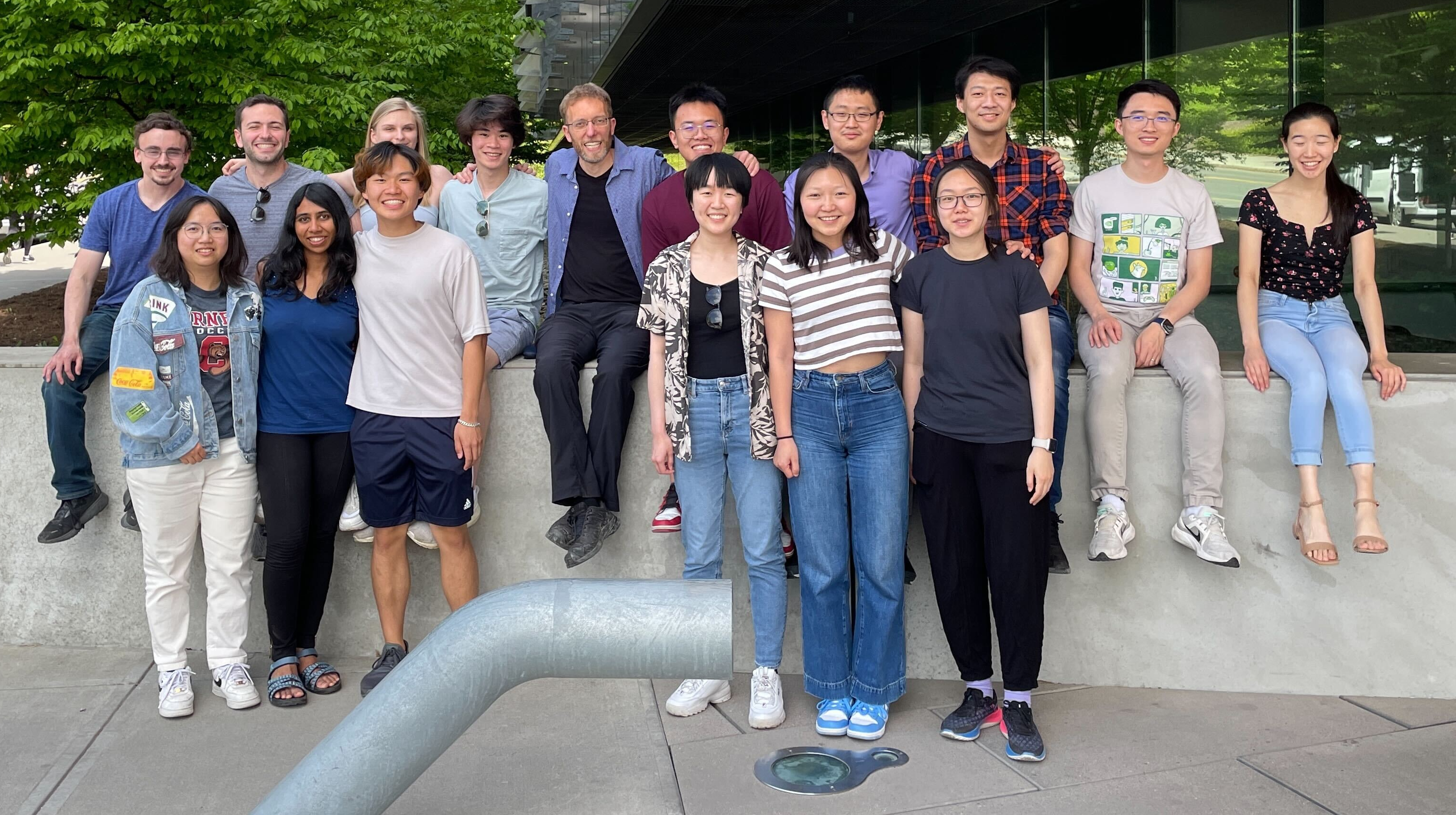
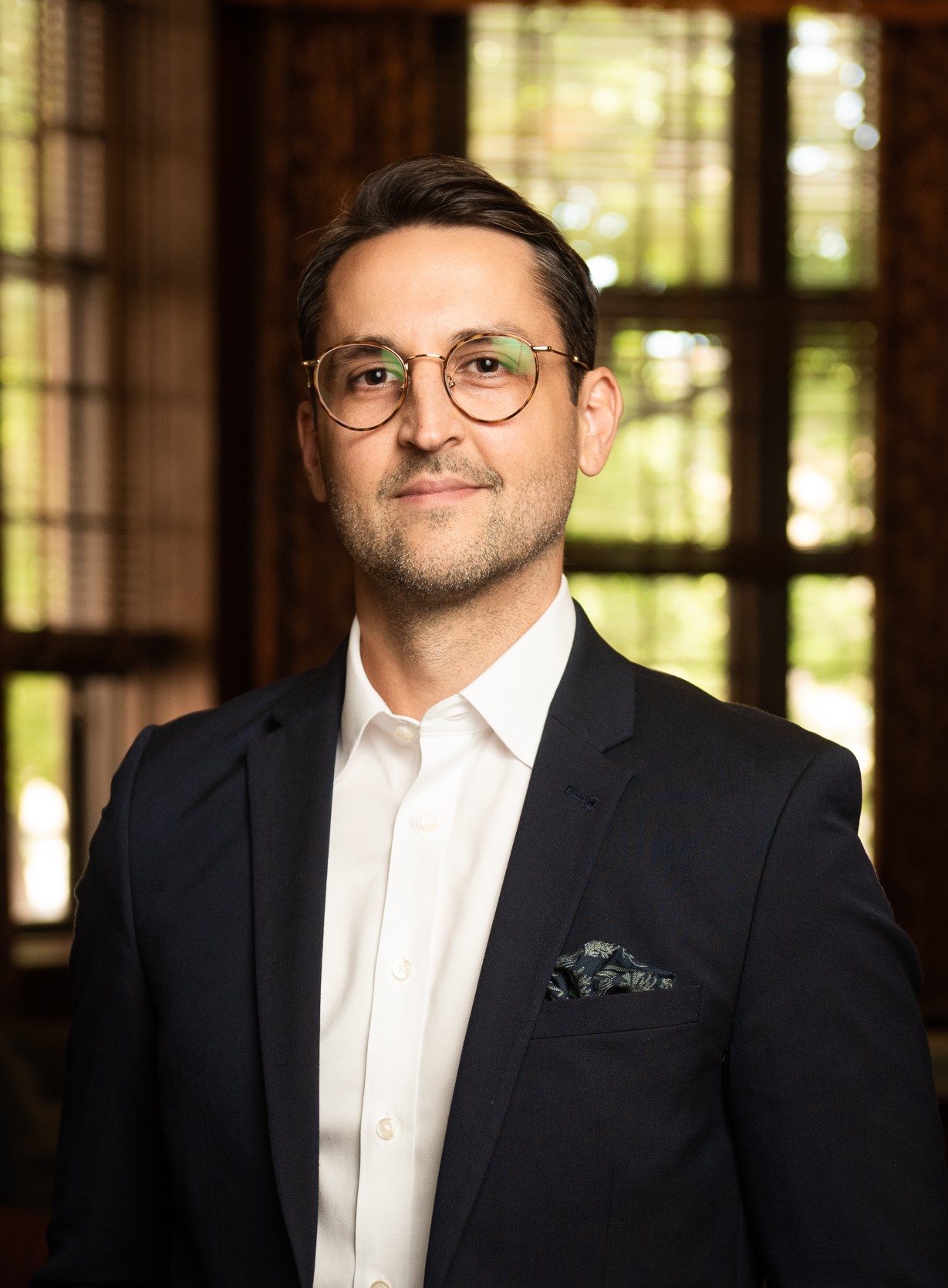
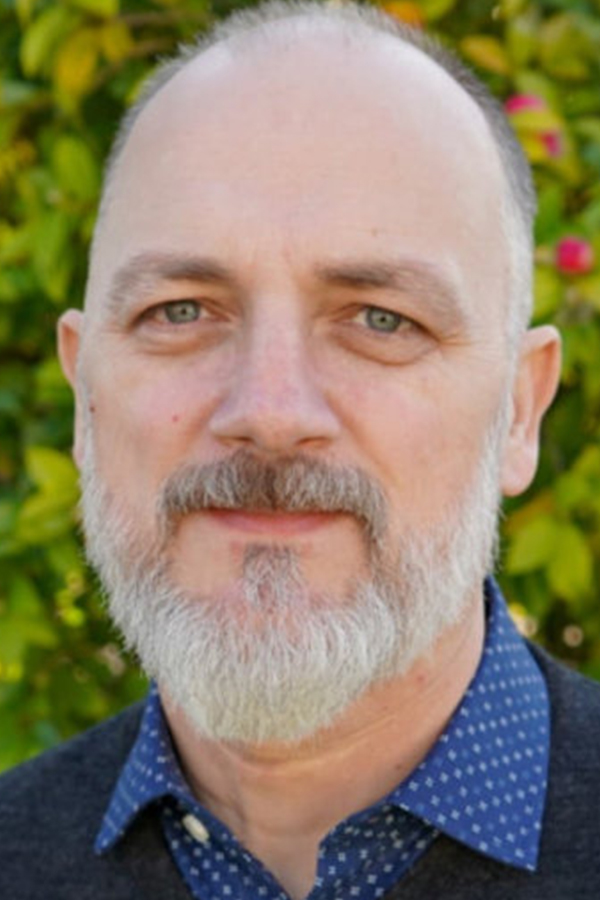
Kilian Q. Weinberger is a Professor of Computer Science at Cornell University's College of Engineering, focusing on Machine Learning, Deep Learning, and AI applications. He has held previous roles as Associate Professor at Washington University in St. Louis and Research Scientist at Yahoo! Research. His research spans metric learning, resource-constrained learning, Gaussian Processes, and advancements in 3D perception for autonomous systems. Education : Ph.D. in Machine Learning (University of Pennsylvania), BA in Mathematics and Computing (University of Oxford) Key Research Areas : AI in Science, Computer Vision, Autonomous Vehicles, and Neural Network Efficiency His recent work emphasizes interpretable machine learning, large language models, and multimodal applications. Awards include NSF CAREER (2012) Daniel M Lazar '29 Teaching Award (2016) Ann S. Bowers Excellence Award (2024) ACM and AAAI Fellow (2024) He teaches advanced courses like CS6784 (Cornell) and has mentored numerous PhD students across institutions. Current affiliations include the Sloan Research Fellowships Selection Committee since 2024.
James D. Ivory is a Professor of Media Studies in the Department of English at Virginia Tech's College of Liberal Arts and Human Sciences. He has been a faculty member at Virginia Tech since 2005, initially in the Communication department before transitioning to the English department. His work bridges the humanities and digital media studies, focusing on the social and psychological impacts of interactive technologies. Ivory directs research in the VT G.A.M.E.R. Lab, part of the university's Digital Media Research Facility, and has established himself as a leading scholar in game studies and digital media effects research. Dr. Ivory's educational background includes: Ph.D. in Mass Communication from the University of North Carolina at Chapel Hill (2005) M.A. in Communication from the University of Wyoming (2002) B.S. in Communication from the University of Wyoming (2000) Dr. Ivory's primary research focuses on the social, behavioral, and cultural dimensions of interactive digital media, particularly video games, simulations, and virtual environments. His work examines how technological features of new entertainment media affect users' experiences and behaviors. He also investigates research practices and how scientific findings are communicated to both scholarly communities and the public. His interdisciplinary approach spans communication, psychology, human-computer interaction, and media studies, addressing critical questions about digital media's role in society, including issues of representation, ethics, and mental health impacts. His recent publications demonstrate a growing emphasis on methodological rigor in digital media research, with increasing attention to open science practices and research reproducibility. While maintaining his focus on video games and virtual environments, his work has expanded to address broader questions about scientific communication, research ethics, and the translation of findings to policy contexts. His scholarship shows a trajectory from examining specific media effects toward more meta-scientific concerns about how research in this field is conducted and communicated. Dr. Ivory has received recognition through media coverage of his expertise in major outlets including USA Today and The Washington Post, particularly regarding video games and digital communication. His work has been cited extensively across multiple disciplines. As an educator, Dr. Ivory has mentored numerous students through course instruction and curriculum development. He has been instrumental in developing innovative programs including the Digital Game Design/Analysis curriculum and Communicating Science initiatives. His teaching spans research methods, communication technology, media effects, and digital media production. Dr. Ivory leads the VT G.A.M.E.R. Lab (Games, Applied Media, and Experimental Research), which serves as a hub for interdisciplinary research on interactive media. The lab supports both faculty and student research projects examining various aspects of digital gaming and virtual environments. Through this facility, he fosters collaboration between humanities scholars and technologists to advance understanding of digital media's societal impacts.
Ronny Scherer is Center Director and Professor at CEMO (Center for Educational Measurement) and Deputy Director at CREATE (Center for Research on Equality in Education) at the University of Oslo's Faculty of Educational Sciences. His work bridges educational measurement, assessment, and evaluation with a focus on research syntheses and complex sampling surveys. Dr. Scherer's research spans two interconnected domains: substantive areas including digital divides, equity and equality in education, and measurement of complex cognitive skills (such as complex problem solving, adaptability, computational thinking, and executive functioning); and methodological areas focusing on advanced meta-analytic techniques, multilevel structural equation modeling, and spatial analysis of complex survey data. His work frequently utilizes international large-scale assessment data from PISA, ICILS, TIMSS, PIRLS, PIAAC, and TALIS. His publication record demonstrates a clear trajectory toward increasingly sophisticated meta-analytic approaches, with recent work focusing on second-order meta-analyses, AI-assisted screening methods, and advanced techniques for handling complex survey data. His research consistently addresses critical educational challenges related to equity, digital literacy, and measurement of 21st century skills. Dr. Scherer has secured significant research funding for projects including ARISE (Academic resilience in mathematics and science among vulnerable students), DiDiRes (Digital inequalities in education), and ADAPT21 (Educational assessments of the 21st century: Measuring and understanding students' adaptability in complex problem solving situations). Co-director of CREATE (Centre for Research on Equality in Education) since 2023 Professor of Educational Assessment and Measurement at CEMO since 2019 Extensive experience with international large-scale assessments including ICILS, TALIS, and PIAAC As an educator, Dr. Scherer teaches advanced courses in measurement models, multilevel models, meta-analysis, and equity in education. He actively supervises graduate students interested in his research areas and has developed numerous workshops on structural equation modeling and meta-analytic methods for international audiences.
Scott Fraundorf is an Associate Professor in the Department of Psychology at the University of Pittsburgh , where he leads the MAPLE (Memory And Psycholinguistics in Learning & Education) Lab . He combines cognitive science and data science to study human behavior prediction, educational program evaluation, and psycholinguistics . His research focuses on student learning and metacognition language processing and educational technology interventions statistical modeling using regression , machine learning , and mixed-effects models as well as open-source tool development for cognitive science. Key technical skills include Python , R , and SQL programming, with 3 patents for intelligent tutoring systems in English grammar. He has mentored over 70 graduate students and faculty in quantitative methods.
John D. Dunne is a Professor and Distinguished Chair in Contemplative Humanities at the University of Wisconsin–Madison, holding an endowed position through the Center for Healthy Minds. He is affiliated with the Department of Asian Languages & Cultures and has served as its department chair. Dunne's research bridges Buddhist philosophy, contemplative practices, and cognitive science, focusing on mindfulness and compassionate training. He is a Fellow of the Mind and Life Institute and advises the Ranjung Yeshe Institute. His work includes translating Buddhist texts and collaborating on interdisciplinary projects. Education: PhD in Buddhist Studies from Harvard University (1999). Research emphasizes dialogues between Buddhist thought and modern science, with public engagement through organizations like the Upaya Zen Center and Gomde centers. Dunne teaches courses on flourishing, Buddhist philosophy, and contemplative practices, including ASIAN/PSYCH 120. His publications span academic journals (e.g., Mindfulness , Frontiers in Psychology ) and books like Foundations of Dharmakīrti’s Philosophy and translations of Nagarjuna’s Ratnāvalī . Scientific contributions include studies on meditation’s neurological effects, compassion cultivation, and mindfulness-based interventions. Awards include his Mind and Life Fellowship. He collaborates with institutions like the Center for Healthy Minds, exploring human flourishing and mental health. Recent work addresses psychedelic research and postmortem meditation states in Tibetan practitioners.
Ramona Bobocel is a Professor specializing in organizational justice and social psychology. Her work focuses on workplace fairness, employee well-being, and the mitigation of social inequalities. She leads the Fairness at Work Lab and holds fellowships from SIOP, APS, and CPA. Her research spans organizational behavior, leadership, and developmental psychology, emphasizing practical solutions for equitable workplaces. Education: B.Sc. (University of Alberta), MA and PhD (Western University). She has received multiple awards including the Ontario Premier’s Research Excellence Award (2002) and Arts Faculty Excellence awards (2019, 2022). Research interests include psychological distance effects on forgiveness, age-related justice perceptions, and gender pay gap dynamics. Her work integrates cognitive and social psychology to address real-world organizational challenges. Teaching focuses on psychological measurement, research methods, and workplace justice. She advises students on empirical projects and collaborates internationally on justice-related research. Key contributions include editing the Psychology of Justice and Legitimacy (2010) and pioneering studies on perspective-taking in conflict resolution. Her labs explore moral reasoning and leadership’s role in fostering fair environments.
Jeffrey Kennedy is an Assistant Professor at the Faculty of Law, McGill University. His research focuses on criminal law and theory, emphasizing democratic ideals in criminal justice, judicial ethics, punishment, and victim participation. He also explores democracy in legal education and academic governance, supported by grants and recognized with awards like the 2021 Stan Marsh Award and 2024 John W. Durnford Excellence in Teaching Award. Education: D.C.L. (McGill, 2020), LL.M. (McGill, 2014), LL.B. (Leicester, 2012), B.A. (Queen’s, 2010). Former roles include Senior Lecturer at Queen Mary University of London (2018–2023) and Director of the Criminal Justice Centre. Research spans criminal sentencing, democratic legitimacy, and institutional reform. Key works include Deliberative Sentencing (under contract) and articles in Criminal Justice Ethics and Studies in Higher Education . Teaching excellence awards highlight his impactful pedagogy. Awards include national recognition for teaching and contributions to democratic innovations in universities. His work bridges theory and practice, influencing criminal justice reform and academic governance policies.
Robert S. Allison is a Professor in the Department of Electrical Engineering & Computer Science at York University's Lassonde School of Engineering. His research focuses on human perceptual responses in virtual environments, stereoscopic vision, and eye movement analysis. He is affiliated with the York Centre for Vision Research, Sensorium (Digital Arts & Technology), and the Centre for Innovation in Computing at Lassonde. His research interests include depth perception in natural and virtual environments, human-computer interface design for VR, machine vision applications, and the measurement of human motion. He has supervised multiple graduate students and contributed to over 260 publications. His work spans topics like cybersickness mitigation, display lag effects, and perceptual adaptation in VR. Key grants include NSERC-funded projects on perception in virtual environments and collaborations with institutions like the Australian Research Council. His teaching includes courses on human perception in human-computer interaction and digital logic design. Recent articles highlight advancements in understanding motion perception, VR-induced sickness, and multisensory integration. He collaborates widely, with affiliations including the VISTA program and York's Connected Minds initiative.
Jamie Collins is a Professor in the Department of Management at Texas Tech University's Rawls College of Business. He holds a PhD in Strategy & Entrepreneurship from Texas A&M University, along with an MBA and BS in Finance. Prior roles include Professor and UC Chair of Strategy at the University of Canterbury (New Zealand) and Director of Sam Houston State University's Center for Entrepreneurship. His research focuses on strategic leadership perceptions, innovation investments, and teaching approaches' impact on student success. He has taught at Clemson, Texas A&M, and Baylor, with visiting roles in Belgium and Italy. Collins teaches strategic management, entrepreneurship, and international management courses. Key research areas include entrepreneurial intuition, venture creation, and the intersection of gender/equality in business programs. His 2020-2024 publications emphasize innovation strategies, educational methodologies, and behavioral skills development. He has collaborated across disciplines from military training to sports performance optimization.
Professor Sarah Bate is an academic at Bournemouth University, currently serving as Interim Associate Pro Vice-Chancellor (Research and Knowledge Exchange). She leads the Centre for Face Processing Disorders and authored the seminal book *Face Recognition and its Disorders*. Her work focuses on face-processing impairments in developmental and acquired prosopagnosia (face blindness), employing eye-movement technology to explore theoretical and remediation strategies. Education: Completed a BSc (2004), MSc (2005), and PhD (2009) in Psychology at the University of Exeter, followed by postdoctoral research before joining Bournemouth in 2010. Research Interests: Prosopagnosia sub-classification, face recognition disorders, neuropsychological assessment tools, and applications in forensic and clinical settings. Her studies span cognitive mechanisms, rehabilitation techniques, and individual differences in face perception. Recent articles emphasize taxometric analysis of prosopagnosia subtypes, familial transmission patterns, and the role of birthweight in face recognition. Collaborations include work on oxytocin’s effects and the development of diagnostic tools like the Oxford Face Matching Test. Grants and Affiliations: Active in grants such as the *Face Blindness Awareness Campaign* and affiliated with the British Psychological Society and Experimental Psychology Society. Supervises PhD students like Anna Bobak, focusing on neuropsychological and developmental aspects of face recognition.
Rubén Lluc Comas Forgas is a Full Professor at the University of the Balearic Islands (UIB) in the Department of Applied Pedagogy and Educational Psychology . He holds a European PhD in Educational Sciences from UIB (2009) and has served as a visiting researcher at institutions including the University of East Anglia, Liverpool John Moores University, Panteion University, Autonomous University of Yucatán, and Stockholm University. Current research focuses on Academic Integrity , Research Integrity , Scientific Communication , Educational Uses of ICT , and Environmental Education . He leads multiple EU-funded projects (e.g., AI-UpskillED , CHARLIE ) and national initiatives like Academic Integrity in Initial Teacher Training (MCI-AEI-ERDF). His recent publications analyze the impact of generative AI on academic writing, predatory journals in education sciences, and plagiarism trends among Spanish students. He collaborates with the Research Group on Academic Integrity (GRIAC) and Education for Sustainability (GREAS) .
Dongwook Kim is affiliated with the Korea Advanced Institute of Science & Technology (KAIST) as a faculty member in the Department of Business and Technology Management under the College of Business. His research spans multiple domains including machine learning, robotics, signal processing, and biomedical engineering. Key contributions in Computer Vision (CNN-based semantic segmentation, 3D point cloud analysis) Significant work in Hardware Design (energy-efficient processors, neuromorphic computing) Interdisciplinary expertise in Medical Imaging (bone age assessment, retinal biomarkers) and Cybersecurity (attack detection, network analytics) Publications since 2015 demonstrate sustained innovation in AI applications , Signal Processing , and Smart City Governance . His work often integrates theoretical advances with practical implementations in real-world systems. No scientific awards or student mentorship details are explicitly documented in the provided records.
Dr. Carol Tan is a Senior Lecturer and Program Manager of the Master of Fashion Entrepreneurship at RMIT University's School of Fashion and Textiles. Her research focuses on fast-growth small-to-medium enterprises (SMEs), sustainable fashion practices, consumer behavior, and luxury fashion. She has been actively researching since 2003 and has contributed to peer-reviewed journals, media commentary, and industry reports. Dr. Tan holds six teaching awards, including the RMIT University Program Award for Innovation in Curricula (2013) and the 2011 Three-Minute Presentation Award. She currently supervises five PhD students. Research Highlights: Circular economy in fashion, virtual fashion consumption, blockchain in supply chains, and SME resilience. Media Engagement: Featured in ABC National Radio, The Age, Sydney Morning Herald, and industry reports on Australian fashion industry challenges. Committees: Member of RMIT's Learning and Teaching Committee (2024).
Dr. Isabella Kasselstrand is a Senior Lecturer in the Department of Sociology at the University of Aberdeen, part of the School of Social Science. She holds a PhD in Sociology from the University of Edinburgh (2014) and has prior faculty roles at California State University, Bakersfield (Associate Professor) and Pitzer College (Visiting Position). Her research focuses on secularization, secularity, and nonreligious identities, employing quantitative and mixed-methods approaches with a regional emphasis on Northern Europe, particularly Scandinavia and Scotland. Key research areas include religious indifference, immigration impacts on religiosity, social trust dynamics, and cultural religion practices. She co-authored the book Beyond Doubt: The Secularization of Society (2023) and serves as Co-Editor of Secularism & Nonreligion , and on editorial boards of Sociology of Religion and Journal for the Scientific Study of Religion . She also holds the role of Publications Officer for the British Sociological Association's Sociology of Religion Study Group. Teaching expertise includes research methods, social inequality, and introductory sociology courses at both undergraduate and postgraduate levels. Her recent publications analyze trends in secular spirituality, public perceptions of women's empowerment, and comparative secularization patterns. She actively supervises PhD students focusing on quantitative methods and secularization themes.
Professor Alister Miskimmon is a faculty member at Queen's University Belfast, affiliated with the School of History, Anthropology, Philosophy and Politics. His research focuses on strategic narratives in international relations, public diplomacy, security studies, and German foreign policy. He has authored influential books such as Strategic Narratives: Communication Power and the New World Order (2013), which received the 2016 Best Book Award in International Communication from the International Studies Association, and Forging the World: Strategic Narratives in International Relations (2017). His current projects include the Jean Monnet-funded E-YOUTH project, examining youth narratives and EU perceptions in Ukraine and Baltic states. He supervises PhD students in areas like European security, German foreign policy, and strategic narratives. Awards include the 2016 Best Book Award and a post-doctoral fellowship from the European Foreign and Security Policy Studies Programme. His work bridges theoretical frameworks with empirical studies on global governance, emerging powers, and transatlantic relations.