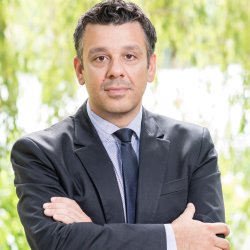
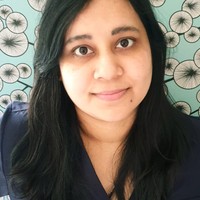
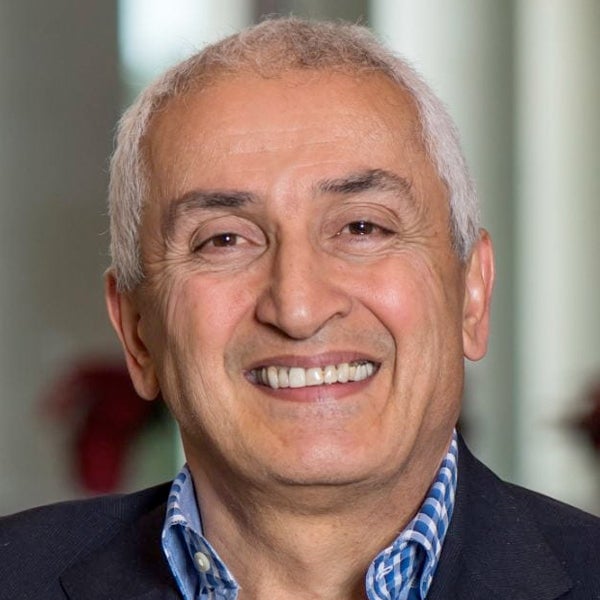
Dr Anastasios Siampos is the Associate Head of Surrey Business School (Education) and Senior Lecturer in Marketing at the University of Surrey. Since joining in 2015, he has contributed to teaching, programme leadership, and strategic initiatives. He served as Director of Studies for Undergraduate Business Programmes (2020–2025) and was part of the senior management team (2020–2024), focusing on curriculum innovation and industry alignment. Education: PhD, MSc (Hons), BSc, and a Senior Fellow of the Higher Education Academy (SFHEA). Research interests include Strategic Marketing, market orientation, and adaptive marketing capabilities. His work bridges academic theory with practical industry challenges, particularly in strategic decision-making and resource-based approaches. Publications include case studies and strategic analyses in leading business journals. He has advised on educational strategy and contributed to enhancing student engagement at both undergraduate and postgraduate levels.
Mustafa B. Ozturk is a Professor of Human Resource Management at Queen Mary University of London's School of Business and Management, affiliated with the Department of People and Organisations. He holds roles as Programme Director for the MSc International Human Resource Management and coordinator for the International Foundation Programme and Pre-Masters. His academic journey includes a BA in Economics and Politics from New York University, followed by MA and PhD studies at the University of Chicago, focusing on the political economy of human capital. Dr. Ozturk's research emphasizes workplace equality, diversity, and inclusion, particularly addressing systemic disadvantages related to gender identity, sexual orientation, race, and ethnicity. He is a member of the Centre for Research in Equality and Diversity (CRED) and actively supervises doctoral students exploring themes like gender inequality in finance, ethnic minority entrepreneurship, and global diversity management. His teaching includes BUS269: Organisational Behaviour. Research interests span both developed and developing regions, including Turkey, China, and the UK. He has published widely on topics such as racialized incivility, LGBTQ+ workplace inclusion, and gender equality in global contexts. Supervision expertise includes doctoral projects on intersectionality in talent management, corporate socio-political activism, and gender disparities in finance.
Fariya Sharmeen is an Associate Professor of Mobility and Urban Planning at KTH Royal Institute of Technology's School of Architecture and the Built Environment (ABE), affiliated with the Digital Futures Faculty. She holds a PhD from Eindhoven University of Technology and has previously served as Assistant Professor at Radboud University, Lecturer at Bangladesh University of Engineering and Technology (BUET), and research fellow at institutions including TU Delft and Imperial College London. Her research focuses on sustainable mobility transitions, social network dynamics in travel behavior, and policy responses to emerging transport technologies like MaaS and cycling innovations. Notable honors include the 2017 Piet Rietveld Award for transport research and a 2013 Royal Geographic Society award for transport geography. Sharmeen advises doctoral and master’s students on topics such as urban transformation and mobility governance. She coordinates courses like Sustainable Mobility (FAG3187) and leads projects like Bicification and ENCom. Her work integrates quantitative methods with policy analysis, addressing challenges in both global north and south contexts.
Behnaam Aazhang is the J.S. Abercrombie Professor of Electrical and Computer Engineering at Rice University and Director of the Rice Neuroengineering Initiative (NEI). He holds a B.S., M.S., and Ph.D. from the University of Illinois at Urbana-Champaign. His roles include leading the multi-university Rice Neuroengineering Initiative and directing the Center for Neuroengineering. He has held an Academy of Finland Distinguished Visiting Professorship (FiDiPro) at the University of Oulu (2006-2014) and received an Honorary Doctorate from the University of Oulu in 2017. Education: Ph.D. in Electrical Engineering, University of Illinois at Urbana-Champaign (1986) M.S. in Electrical Engineering, University of Illinois at Urbana-Champaign (1983) B.S. in Electrical Engineering, University of Illinois at Urbana-Champaign (1981) Research Interests: Dr. Aazhang’s work focuses on signal/data processing, information theory, and neuroengineering applications. Key areas include: Neuronal circuit connectivity and learning impacts Real-time closed-loop neuromodulation for neurological disorders (epilepsy, Parkinson’s, depression) Patient-specific cardiac pacing systems Cybersecurity in cloud computing Awards & Honors: 2022 Rice Outstanding Doctoral Thesis Advisor Award 2019 SIGMOBILE Test of Time Award 2017 Honorary Doctorate (University of Oulu) 2013 IEEE Communication Society Advances in Communication Award AAAS and IEEE Fellowships (2012 and 1999) Grants & Advising: His research is supported by multi-university collaborations and grants. He has advised numerous graduate students in electrical engineering and neuroengineering, though specific names are not listed here. Labs & Teams: Leads the Aazhang Lab and the Rice Neuroengineering Initiative, focusing on translational technologies for neurological and cardiac disorders, including non-invasive neuromodulation and cloud security systems.
Thomas Smith is an Associate Professor in Environmental Geography at the London School of Economics (LSE), specializing in wildland fires, tropical environmental change, and peatland management. He joined LSE in 2018 after lecturing at King’s College London and has held visiting fellowships at institutions including the National University of Singapore and Monash University Malaysia. His research focuses on biomass burning’s role in the Earth system, particularly greenhouse gas emissions from tropical peatlands and savannas. Smith’s expertise includes infrared spectroscopy, wildfire modeling, and land management decision support. He emphasizes interdisciplinary approaches to address fire emissions, agricultural practices, and their environmental impacts. Notable awards include being Highly Commended for Research Guidance & Support at the LSESU Teaching Excellence Awards 2019. His recent work involves field experiments (e.g., GAMBUT project) and citizen science initiatives to measure air pollution. Collaborative research spans global wildfire dynamics, climate change impacts, and policy interventions in Southeast Asia’s haze season. Smith contributes to both academic discourse and practical solutions for sustainable land use and climate resilience.
Sudha Ram is the Anheuser-Busch Endowed Professor of MIS, Entrepreneurship & Innovation at the Eller College of Management, University of Arizona. She holds joint faculty appointments as Professor of Computer Science and is a member of the BIO5 Institute and the Institute for the Environment. She is also the Director of INSITE: Center for Business Intelligence and Analytics, a leading research center in data-driven decision-making. Her research focuses on Big Data Analytics , Business Intelligence , Large Scale Network Science , and Machine Learning , with applications in healthcare, smart cities, environmental policy, and social media. She has pioneered methods in explainable AI, conceptual modeling, and multimodal data fusion, integrating statistical, ontological, and machine learning approaches. Recent publications demonstrate a strong trend in healthcare analytics (e.g., asthma, diabetes, fracture prediction), explainable AI (ROLEX, argumentation-based models), and urban/smart systems (mobility, wearables, environmental impact). Her work consistently appears in top-tier journals and conferences, reflecting sustained scholarly impact. AIS Fellow (2018) INFORMS ISS Distinguished Fellow IBM Faculty Award Peter Chen Award Best Paper Award, IEEE Smart Cities (2016) Best Paper Award, ACM Digital Health (2016) Woman of Impact Award, University of Arizona (2023) Dr. Ram has secured over $70 million in research funding from agencies like NSF, NASA, CIA, and corporations including IBM, Intel, and SAP. She has mentored numerous students and leads a multidisciplinary research team at INSITE. She has held editorial leadership roles in Information Systems Research , Journal of AIS , and is founding co-editor of the Journal of Business Analytics . She directs the INSITE Center, which fosters collaboration across business, computer science, and health domains, enabling large-scale data synthesis and knowledge discovery. The center supports projects in healthcare innovation, smart cities, and environmental policy analytics.
Monica Lam is the Kleiner Perkins, Mayfield, Sequoia Capital Professor in Stanford University's School of Engineering and holds a courtesy professorship in Electrical Engineering. She leads the Stanford Open Virtual Assistant Laboratory and has pioneered work in virtual assistants, privacy protection, and compiler design. Her research includes the Almond virtual assistant, privacy-preserving IoT systems, and the ThingTalk programming language. She co-authored the seminal 'dragon book' on compilers and co-founded Tensilica (now part of Cadence). Education: Bachelor of Science (Honors), Computer Science, University of British Columbia, 1980 Master of Science, Computer Science, Carnegie Mellon University, 1982 Doctor of Philosophy (PhD), Computer Science, Carnegie Mellon University, 1987 Research Interests: Dr. Lam's work focuses on conversational AI with privacy guarantees, compiler optimization for parallel computing, and open-source virtual assistant ecosystems. She is a leader in decentralized systems, having developed frameworks like SociaLite for large-scale graph analysis and Musubi for mobile social networking without centralized platforms. Article Trends: Recent publications emphasize multimodal interactions, multilingual dialogue systems, and LLM-driven applications in areas like question answering, persuasive chatbots, and adaptive assistants. Her work bridges foundational AI research (e.g., semantic parsing) with real-world deployments (e.g., privacy-compliant IoT). Awards & Honors: Member of the National Academy of Engineering ACM Fellow Popular Science's Best of What's New Award (Security, 2019) Advising & Grants: Lam oversees the Open Virtual Assistant Initiative, a collaborative project to build open-source semantic models. Her NSF CNS grant (CNS Core) focuses on federated privacy systems. She has advised over 50 students in AI and systems research, though specific names are not listed in the provided texts. Labs & Teams: Directs the Stanford Open Virtual Assistant Laboratory, collaborates with the Stanford NLP group, and maintains ties to industry through former startup Tensilica's legacy in embedded processors.
Jerelle A. Joseph is an Assistant Professor at Princeton University , affiliated with the Department of Chemical and Biological Engineering and the Omenn-Darling Bioengineering Institute . They also hold associated faculty roles in the Department of Chemistry , Andlinger Center for Energy and the Environment , Princeton Institute for Computational Science and Engineering , and the Biophysics Graduate Program . Research Interests : The Joseph Group investigates the physicochemical principles governing biomolecular condensate formation, dissolution, and misregulation . Their work focuses on phase separation mechanisms , computational modeling of protein-RNA interactions , and engineering condensates for biomedical and sustainability applications , including therapeutic targeting of neurodegenerative diseases and design of synthetic microreactors . Scientific Awards : NIGMS MIRA (R35) Award (2024) Biophysical Society Award Lecture (2024) Chan Zuckerberg Initiative Investigator (2023) Postdoctoral Award, Biophysical Society IDP Subgroup (2022) Rising Star in Soft and Biological Matter (University of Chicago, 2020) Advising : Dr. Joseph advises graduate students including Ananya Chakravarti , Dominic Curtis , and Pablo Garcia . The group develops chemically-specific coarse-grained models using molecular dynamics , Monte Carlo sampling , and machine learning to study condensate microstructure , aging dynamics , and surface electrostatics .
Dr. Matloob Khushi serves as a Senior Lecturer in Computer Science at Brunel University London's College of Engineering, Design and Physical Sciences. With over 25 years of combined academic and industry experience, his work bridges theoretical AI advancements with practical applications in finance, healthcare, and public health domains. His research has established significant collaborations with international banks, healthcare institutions, and technology startups. Dr. Khushi earned his PhD in AI and Data Science from the University of Sydney, developing novel algorithms for genomic data analysis. His postdoctoral research at the Children's Medical Research Institute (2014-2017) pioneered AI-based diagnostic tools for medical condition detection. More recently, he developed bioinformatics tools for environmental assessment under a UKRI NEC grant. Research Focus FinTech Innovation : Creator of the SS Ratio (incorporating volatility and drawdown sensitivities), advanced portfolio optimization models, and synthetic data generation techniques for fraud detection and credit risk assessment Bioinformatics Leadership : Developer of AI tools for genomic analysis and early cancer detection, featured in SBS News and The Daily Telegraph Public Health NLP : Architect of systems for vaccine misinformation detection, mental health monitoring, and health surveillance on social media His publication portfolio shows consistent growth from foundational bioinformatics work to current multimodal AI applications, with increasing interdisciplinary collaboration across finance and healthcare sectors. Awards and Recognition Ranked among Stanford/Elsevier's top 2% of global AI scientists Recipient of Best Paper Awards from IEEE Transactions on Computational Social Systems and PeerJ Media recognition for cancer detection research by major news outlets Mentorship and Teaching Dr. Khushi has supervised six PhD candidates to completion and over 100 postgraduate dissertations. He teaches CS3002 Artificial Intelligence and mentors students in Final Year Projects. His supervision focuses on Deep Learning/NLP for FinTech prediction and Public Health Surveillance applications, emphasizing practical implementation of theoretical concepts.
Markus Schmidt is a Professor of Fiber Optics at Friedrich Schiller University Jena and serves as Head of the Research Department of Fiber Photonics at the Leibniz Institute for Photonic Technologies (IPHT), where he leads the Hybrid Fibers work group. He previously held a team leadership position at the Max Planck Institute for the Science of Light (2006–2012) and conducted research at Imperial College London (2011). His research integrates fiber optics and photonics for applications in biophotonics, optofluidics, plasmonics, and nonlinear optics. Key innovations include 3D nanoprinted holograms for remote focus control, liquid-core fibers for stable supercontinuum generation, and fiber-integrated platforms for nanorheology and quantum spectroscopy. His work bridges materials science and applied photonics , enabling advancements in telecommunications, environmental monitoring, and bioanalytics. Scientific awards and student mentorship details are not explicitly mentioned in the provided texts. His email is markus.schmidt@leibniz-ipht.de .
Saurabh Amin is a Professor in the Department of Civil and Environmental Engineering at the Massachusetts Institute of Technology (MIT), where he also serves as the Edmund K. Turner Professor and Undergraduate Officer. He is a Principal Investigator at the Laboratory of Information and Decision Systems and holds affiliations with the Operations Research Center and the Center for Computational Science and Engineering. His educational background includes: B.Tech. 2002, Indian Institute of Technology (IIT) Roorkee M.S. 2004, University of Texas (UT) Austin Ph.D. 2011, University of California (UC) Berkeley Saurabh Amin's research focuses on the design and control of infrastructure systems using game theory and optimization in networks. His work spans three main areas: resilient network control, information systems and incentive design, and optimal resource allocation in large-scale infrastructure systems. By concentrating on critical infrastructure domains including highway transportation, electric power distribution, and urban water networks, his research develops innovative theory and tools to enhance system performance against both stochastic and adversarial disruptions. His approach involves modeling cyber-physical interactions in infrastructures to assess vulnerabilities, developing detection and response tools for failures at various scales, and designing economic incentive schemes that improve aggregate public good while accounting for dependencies and private information among strategic entities. Amin's work bridges mathematical systems theory with practical civil engineering applications, creating a rigorous theoretical foundation for infrastructure resilience that addresses diverse failure mechanisms from natural disasters to deliberate malicious actions. His recent publications demonstrate a strong focus on decarbonization of energy systems, resilient infrastructure planning under climate uncertainty, optimization methods for complex networked systems, and game-theoretic approaches to sustainable infrastructure management. His work increasingly integrates artificial intelligence and machine learning techniques with traditional control theory to address contemporary challenges in infrastructure resilience and sustainability. The research shows a clear trajectory toward addressing climate change impacts on infrastructure systems while maintaining economic efficiency and operational reliability. Professor Amin has received numerous prestigious awards and honors: Common Ground Excellence in Teaching Award, 2025 HSCC Test-of-Time Award, 2024 MIT CEE, Distinguished Service and Leadership Award, 2023 Samuel M. Seegal Prize (SoE) – inspiring students in pursuing and achieving excellence, 2022 Earll M. Murman for Excellence in Undergraduate Advising, 2022 C3.ai Digital Transformation Institute Research Award, 2020 MIT, Ole Madsen Mentoring Award, 2020 MIT, Energy Initiative Research Award, 2020 National Academy of Engineering, China-America Frontiers of Engineering Symposium speaker, 2019 MIT, Robert N. Noyce Career Development Professor, 2015-2018 Google Faculty Research Award, 2015 National Science Foundation CAREER Award, 2015 Siebel Energy Institute Research Award, 2015 MIT, Solomon Buchsbaum AT&T Research Fund Award, 2012 Professor Amin has been actively involved in significant research projects including the C3.ai DTI project on Causal Reasoning for Real-Time Attack Identification in Cyber-Physical Systems and another on Learning in Routing Games for Sustainable Electromobility. He serves as the chief scientist on multi-institutional NSF grants, including the $9 million Foundations of Resilient Cyber-Physical Systems (CPS) project. His teaching portfolio includes courses such as 1.008 Engineering for a Sustainable World, 1.104 Sensing and Intelligent Systems, 1.020 Engineering Sustainability: Analysis and Design, and 1.208 Resilient Networks. As Undergraduate Officer, he plays a key role in shaping the educational experience for civil and environmental engineering students at MIT. Professor Amin leads the Resilient Infrastructure Networks Lab at MIT, where his team develops theoretical foundations and practical tools for infrastructure resilience. The lab focuses on the intersection of control theory, game theory, and optimization applied to cyber-physical infrastructure systems. Current research directions include pandemic-resilient urban mobility and hurricane-resilient smart grid operations, reflecting the lab's commitment to addressing pressing societal challenges through rigorous systems engineering approaches.
Brett Laursen is a Professor of Psychology at Florida Atlantic University's Charles E. Schmidt College of Science, with additional Docent Professor appointments in Educational Psychology at the University of Helsinki and in Social Developmental Psychology at the University of Jyväskylä in Finland. His research focuses on developmental psychology, particularly adolescent development, peer relationships, and social dynamics. Dr. Laursen earned his Ph.D. and M.A. in Child Psychology from the Institute of Child Development at the University of Minnesota and his B.A. in Psychology from Nebraska Wesleyan University. He also holds an Honorary Ph.D. from Örebro University in Sweden. His research program examines influence within close relationships, with particular focus on peer relationships during childhood and adolescence. Current projects include longitudinal studies of elementary and middle school children in Florida, Lithuanian youth transitioning from middle to secondary school, and child characteristics affecting parent engagement in literacy activities. His work consistently explores how social dynamics shape development, with special attention to friendship formation, dissolution, and influence processes. Analysis of his recent publications reveals a strong focus on peer relationships, social status, and developmental transitions. His research employs sophisticated longitudinal and genetically informed designs to examine how social contexts shape development across childhood and adolescence, with particular emphasis on the mechanisms through which peer influence operates. Fellow, American Psychological Association (Division 7, Developmental; Division 8, Social) Fellow and Charter Member, Association for Psychological Science Fellow, International Society for the Study of Behavioural Development Distinguished Alumnus, College of Education and Human Development, University of Minnesota Florida Atlantic University Scholar of the Year (2023-24 and 2016-17) Dr. Laursen has mentored numerous doctoral and master's students who have gone on to successful careers in academia and research. His research has been supported by major funding sources including the US National Institute of Child Health and Human Development, the US National Institute of Mental Health, the US National Science Foundation, Trygfonden, the Jacobs Foundation, and the European Social Fund. As Editor-in-Chief of Merrill Palmer Quarterly and Founding Editor of Cambridge Elements in Research Methods for Developmental Science, he plays a significant role in shaping the field's scholarly discourse. The Laursen Lab operates as a collaborative research team involving current students, alumni, and international collaborators including Professors Goda Kaniušonytė and Rita Žukauskienė of Mykolas Romeris University in Lithuania. The lab regularly presents research at major conferences including the Society for Research on Child Development.
Claus Thustrup Kreiner is a Professor of Economics and Director of the Center for Economic Behavior and Inequality (CEBI) at the University of Copenhagen's Faculty of Social Sciences, Department of Economics. He also serves as Area Director of Public Economics in the CESifo network and was co-editor of the Journal of Public Economics from 2014 to 2020. Kreiner has held various leadership positions including Director of the Economic Policy Research Unit (EPRU) since 2005 and Director of the Center of Excellence WEST from 2011-2013. Education: Ph.D. in Economics, University of Copenhagen, 1998 Visiting Ph.D. student, University of York, 1996 M.Sc. in Economics, University of Copenhagen, 1994 B.Sc. in Economics, University of Copenhagen, 1991 Claus Thustrup Kreiner's research primarily focuses on Public Economics , with secondary specializations in Labor Economics, Household Finance, Applied Microeconometrics, and Experimental Economics. His work examines inequality in income, wealth and health, optimal redistribution policy, and behavioral responses to public policy. Kreiner has conducted significant research using Danish administrative data to analyze tax compliance, labor supply responses, and inequality dynamics. His research often involves collaborations with institutions like Columbia University, London School of Economics, and UC Berkeley. His recent publications reveal a strong focus on inequality across multiple dimensions (income, wealth, health, life expectancy), tax policy design and compliance, labor market responses to policy changes, and the intersection of behavioral economics with public policy. Kreiner frequently employs high-frequency administrative data from Denmark to provide empirical evidence on how individuals and households respond to economic policies and shocks. Scientific Awards and Recognition: Appointed Knight of The Order of Dannebrog by Queen Margrethe II (2018) The Invisible Hand Award from the Society of Social Economics (2006, 2001) Best Teacher Award from the Study Board of Economics at University of Copenhagen (2002) Research Fellow at Centre for Economic Policy Research (CEPR), London (2009-) Kreiner has supervised numerous students primarily in Public Economics and has received multiple research grants including from the Danish Social Science Research Council (2003, 2006, 2009), International Growth Center (2009), and Danish National Research Foundation (1998-2003). He has served on important policy bodies including as co-chair of the Danish Economic Council (2010-2014) and member of the Danish Tax Commission (2008-2009). As Director of CEBI (Center for Economic Behavior and Inequality), Kreiner leads a major research center funded by the Danish National Research Foundation. He also directs the Economic Policy Research Unit (EPRU) and has been instrumental in establishing research collaborations through networks like CESifo. His work bridges academic research and policy application, as evidenced by his practical policy experience with government commissions.
Brice Kuhl is a Professor in the Department of Psychology at the University of Oregon , where he leads the Kuhl Lab. His research focuses on the cognitive neuroscience of memory formation, retrieval, and forgetting , utilizing advanced neuroimaging techniques like fMRI and EEG combined with machine learning algorithms to analyze distributed neural activity patterns. His work explores mechanisms of memory interference resolution , forgetting , and neural representation transformation . Recent publications emphasize spaced learning , temporal memory dynamics , and memory-cognitive control interactions . The lab has received attention for decoding perceptual content from neural activity and reconstructing face images based on brain states. Current lab members include graduate students Anisha Babu , Tongle Cai , and America Romero , alongside postdocs like Soroush Mirjalili and Yoonjung Lee . The lab frequently presents at conferences like CNS and SFN , and maintains active collaborations in memory research and neuroimaging methodology . Notable projects include investigations into hippocampal pattern differentiation and parietal cortex roles in memory . The lab also contributes to open science initiatives with publicly available experimental codes and data .
Paul Pu Liang is an Assistant Professor at the Massachusetts Institute of Technology (MIT) Media Lab and Department of Electrical Engineering and Computer Science (EECS). He directs the Multisensory Intelligence research group, focusing on building AI systems that integrate diverse sensory inputs to enhance human-AI symbiosis. His work spans theoretical foundations, large-scale resources, and neural architectures for multisensory learning. Education: PhD in Machine Learning (Carnegie Mellon University), MS in Machine Learning (Carnegie Mellon), BS with University Honors in Computer Science and Neural Computation (Carnegie Mellon) Research Interests: Multimodal machine learning, human-AI interaction, clinical AI, generative models, and responsible deployment of AI systems Key Contributions: MultiBench, HEMM evaluation framework, CLIMB clinical data foundations, and multimodal transformer architectures Recent publications emphasize multimodal foundation models , clinical applications , and socially responsible AI . His work has been recognized with multiple best paper awards and fellowships from Siebel, Facebook, and other institutions. Scientific Awards Siebel Scholars Award Waibel Presidential Fellowship Facebook PhD Fellowship Center for ML and Health Fellowship Rising Stars in Data Science Four best paper awards Paul teaches courses on machine learning and multimodal AI at MIT and CMU. He mentors students across multiple programs including Media Arts & Sciences, EECS, and IDSS, with former advisees now at institutions like OpenAI, UC Berkeley, and Princeton.