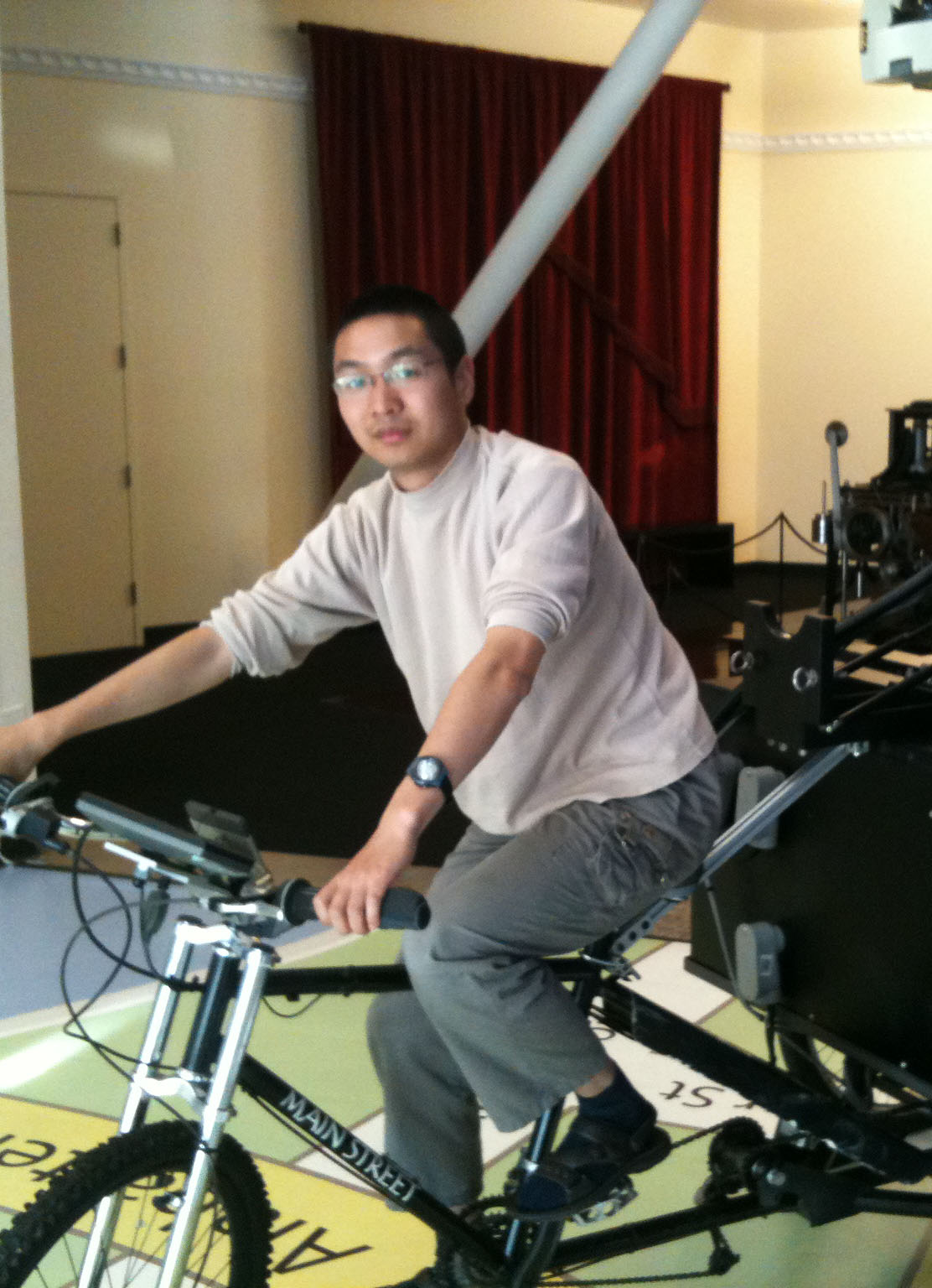
Peter Richtarik is a Professor at the King Abdullah University of Science and Technology (KAUST), specializing in Machine Learning, Optimization, and Federated Learning. He actively teaches courses such as Stochastic Gradient Descent Methods and mentors PhD and MS students like Konstantin Burlachenko, Kai Yi, and Lukang Sun. His research spans distributed optimization, parameter-efficient fine-tuning, and theoretical frameworks for non-convex and non-smooth problems. Recent work includes 2025 contributions to Bernoulli-LoRA (theoretical PEFT) and Gluon (LMO-based optimizers). He co-developed Thanos (block-wise pruning) and BurTorch (CPU-optimized training framework). His publications focus on communication efficiency ( ATA , LoCoDL ), differential privacy ( DP-RBCD ), and stochastic proximal methods. Richtarik received the Charles Broyden Prize for his work on quasi-Newton methods. He frequently presents at workshops like MLSS in Senegal and FLOW seminars.
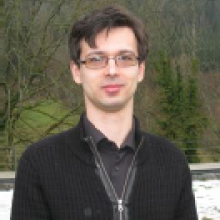
Enno Mammen is a Professor of Mathematical Statistics at Heidelberg University, leading the Institute for Applied Mathematics. His career includes roles as Chair for Mathematical Statistics at Heidelberg (2014–present), Chair for Statistics at the University of Mannheim (2003–2014), and various academic positions since 1986. He holds a PhD (1983) and habilitation (1992) from Heidelberg University. Research interests focus on nonparametric statistics, bootstrap methods, additive models, high-dimensional data, and statistical theory. Key contributions include foundational work on the wild bootstrap, penalized nonparametric estimators, and nonparametric diffusion models. He has authored over 150 papers in top journals like the Annals of Statistics and Biometrika. Current research spans Hawkes processes, neural network statistics, and non-Euclidean data analysis. He has supervised 12 PhD students since 2010, with many progressing to academic roles. Awards include the Heinz Maier Leibnitz Prize (1989) and IMS Fellowship (1998). Active in editorial roles for journals like the Annals of Statistics and Bernoulli. Major funding includes leadership of the DFG-funded Research Training Group 'Statistical Modeling of Complex Systems' (2013–2022) and collaborations with Russian institutions on stochastic differential equations.
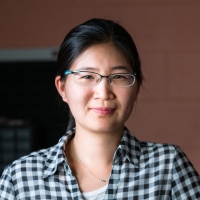
Zhengyuan Zhou is an Assistant Professor in the Department of Technology, Operations, and Statistics at the Leonard N. Stern School of Business, New York University. He is also associated faculty at the Department of Computer Science and Engineering, Tandon School of Engineering, and affiliated with the NYU Center for Data Science. He joined NYU Stern in 2020 after serving as an IBM Goldstine Research Fellow and a Visiting Scholar at NYU Stern during 2019–2020. Education: Ph.D., Electrical Engineering, Stanford University, 2019 Master’s in Computer Science, Stanford University Master’s in Statistics, Stanford University Master’s in Economics, Stanford University B.A., Mathematics, UC Berkeley B.S., Electrical Engineering and Computer Sciences, UC Berkeley His research centers on the intersection of machine learning, stochastic optimization, control theory, and game theory, with a focus on data-driven decision-making. He develops algorithms for reinforcement learning, contextual bandits, and policy learning under uncertainty, with applications in inventory control, revenue management, and auction bidding. His work emphasizes sample efficiency, computational tractability, and robustness. The recent publications reflect a strong trend in distributionally robust learning , offline reinforcement learning , and multi-agent systems , particularly in settings with delayed feedback, adversarial environments, and adaptive data collection. His articles span top journals in operations research, machine learning, and control theory. Scientific Awards and Honors: IBM Goldstine Fellowship (2019–2020) INFORMS Nicholson Award Finalist (2017, 2018) NSF and ONR grants (multiple, 2021–2027) NYU Research Catalyst Prize (2023) Horizon Robotics, Bain, and JP Morgan faculty awards (2021) CRA Outstanding Undergraduate Researcher (2013) Zhou advises PhD students in operations management and has served on dissertation committees at Georgia Tech and Tsinghua University. He has received over $1.8 million in research funding from NSF, ONR, and industry partners. He is actively involved in editorial roles as Associate Editor for Management Science , Operations Research , and Mathematics of Operations Research , and as Area Chair for NeurIPS, ICML, and ICLR. He also mentors high school students through logic and cryptography programs at Stanford’s Pre-Collegiate Summer Institute.
Dr. Sinno Jialin Pan is a leading researcher in machine learning and artificial intelligence at Nanyang Technological University, Singapore. His work focuses on domain adaptation, sentiment analysis, and efficient neural network optimization. Key research areas: Machine Learning, Domain Adaptation, Reinforcement Learning, Sentiment Analysis Recent publications demonstrate expertise in time-series classification (2025) using hierarchical domain adaptation, LLM efficiency (2025) through expert pruning, and graph generation (2024) via spectral diffusion. His work spans both theoretical advancements and practical applications in neural architecture optimization and adversarial learning. Scientific contributions include: 2025: Virtual-label hierarchical domain adaptation 2024: Spectral diffusion for graph generation 2024: Multilingual jailbreak analysis in LLMs Current trends show increasing focus on large language model optimization and robust neural architectures , with applications in fault diagnosis, recommender systems, and misinformation detection.
Ross J. Kang is a Canadian mathematician currently serving as an Associate Professor at the Korteweg–de Vries Institute for Mathematics within the Faculty of Science at the University of Amsterdam since 2022. He is an active member of the Discrete Mathematics and Quantum Information group and the NETWORKS consortium. Previously, he held positions as Assistant/Associate Professor at Radboud University Nijmegen (2014-2022), Assistant Professor at Utrecht University (2013), and Researcher at Centrum Wiskunde & Informatica (2012-2013). His academic journey includes postdoctoral positions at Durham University (2010-2012) and McGill University (2008-2010), where he was advised by Bruce Reed and Louigi Addario-Berry. DPhil in Mathematics, University of Oxford (2008) - Thesis: 'Improper colourings of graphs', advised by Colin McDiarmid BSc (Hons) in Mathematics and Computer Science, University of Victoria (2003) - Governor General's Silver Academic Medal recipient Ross J. Kang's research focuses on probabilistic and extremal combinatorics, random discrete structures, graph coloring, geometric graphs, and algorithms. His work bridges theoretical mathematics with practical applications, exploring fundamental questions in discrete mathematics. He has made significant contributions to understanding graph coloring problems, particularly in the contexts of list coloring, distance coloring, and strong coloring. His research often employs probabilistic methods to establish bounds and structural properties in graph theory. Kang's work on the hard-core model, local occupancy method, and triangle-free graphs has advanced our understanding of the interplay between local constraints and global structure in discrete systems. Analysis of his recent publications reveals a strong emphasis on graph coloring problems, particularly list coloring variants and their extensions. His work frequently explores the relationship between graph structure (such as degree constraints, girth, or forbidden subgraphs) and coloring properties. A notable trend is his development and application of the local occupancy method to establish improved bounds for chromatic numbers in various graph classes. His research also demonstrates a consistent interest in extremal problems, seeking optimal configurations under specific constraints, particularly in the context of triangle-free graphs and geometric representations. NWO Open Competition M-1 grant entitled 'Asymptotic triangle-free structure (3Free)', 2022-2026 NWO Vidi grant entitled 'On the edge: theory and techniques at the frontiers of edge-colouring', 2017-2023 NWO Veni grant entitled 'Generalised colouring for random graph models', 2012-2015 Van Gogh travel grants (2020-2021 with Marthe Bonamy; 2016-2017 with Louis Esperet) Governor General's Silver Academic Medal (2003) Ross J. Kang has successfully supervised multiple PhD students including Eoin Hurley (defending May 2025), Stijn Cambie (defended April 2022), and François Pirot (winner of 2020 prix Charles Delorme). His research is supported by significant grants from the Netherlands Organisation for Scientific Research (NWO), including the prestigious Open Competition M-1 grant. Kang is actively involved in the academic community through his editorial role at Combinatorial Theory, co-organization of conferences like the Dutch Days of Combinatorics, and leadership in initiatives such as Innovations in Graph Theory, a diamond open access journal he helped launch in August 2023. As a member of the Discrete Mathematics and Quantum Information group at the University of Amsterdam and the NETWORKS consortium, Kang collaborates with researchers across various institutions. He has established strong international connections through his Van Gogh travel grants and participation in collaborative projects like the Sparse (Graphs) Coalition sessions. His research group focuses on theoretical aspects of discrete mathematics with connections to quantum information science, and he maintains active collaborations with researchers across Europe and North America.
Piotr Micek is a professor in the Theoretical Computer Science Department at the Faculty of Mathematics and Computer Science, Jagiellonian University , Kraków, Poland. He is an active researcher in combinatorics, particularly in structural graph theory and poset combinatorics, and maintains extensive international collaborations. University: Jagiellonian University School: Faculty of Mathematics and Computer Science Department: Theoretical Computer Science Department Email: firstname.lastname@gmail.com Office: Room 3151, Łojasiewicza Street 6, 30-348 Kraków Phone: +48 12 664 7594 Duty hours: Wednesdays 11:00–13:00 His main research interests include structural graph theory, combinatorics of partially ordered sets (posets), geometric intersection graphs, graph coloring and choosability, and the entropy compression method. He also works on approximation and on-line algorithms and combinatorial geometry. His work often bridges deep theoretical insights with algorithmic applications. The recent publications highlight a strong focus on graph structure and coloring problems. Key themes include product structure of planar graphs, poset dimension and its relation to height and planarity, weak coloring numbers, and adjacency labelling. His work frequently appears in top venues such as Journal of the ACM , Combinatorica , SIAM Journal on Discrete Mathematics , and SODA, indicating sustained high-impact contributions. Associate Editor, SIAM Journal on Discrete Mathematics (2025–) Former Associate Editor, Discrete Mathematics (2010–2022) Former Associate Editor, Discrete Mathematics & Theoretical Computer Science (2012–2020) He has supervised numerous students at all levels, including PhD candidates Jędrzej Hodor , Marcin Briański , and Michał T. Seweryn , and has led major research grants such as OPUS 24 and WEAVE-UNISONO funded by NCN. He has also been involved in significant trilateral projects with researchers from Belgium and Germany. His recent talks include tutorials on product structure theory and centered colorings, reflecting his leadership in these areas. He actively participates in the academic community, having served on program committees (e.g., SODA 2021, WG 2022) and organized workshops such as the Order & Geometry series. His research is supported by substantial funding, including over 900,000 PLN for current projects.
Anders C. Hansen is Professor of Mathematics at the University of Cambridge (Faculty of Mathematics, Department of Applied Mathematics and Theoretical Physics) and Professor II at the University of Oslo. He leads the Applied Functional and Harmonic Analysis group and holds a Royal Society University Research Fellowship. His research bridges pure mathematics and cutting-edge applications in AI, computational harmonic analysis, inverse problems, and compressed sensing. Education: PhD from the University of Cambridge, MA from UC Berkeley, and BA from the Norwegian University of Science and Technology. Research Interests: Hansen's work centers on foundational challenges in computational mathematics, including the Solvability Complexity Index hierarchy for classifying computational problems, instability phenomena in deep learning, and theoretical advances in compressed sensing. His group develops rigorous frameworks for high-dimensional data analysis, medical imaging, and AI safety, often exposing paradoxes in algorithmic reliability. Publication Trends: Recent articles focus on the limits of deep learning (e.g., Smale's 18th problem, instability in image reconstruction), mathematical foundations of AI (trustworthiness, feature selection, LLMs), and advanced compressed sensing (asymptotic incoherence, spectral computations). His work consistently intersects functional analysis with computational feasibility. Awards: PROSE Award Finalist (2022) Whitehead Prize (2019) IMA Prize in Mathematics and Applications (2018) Leverhulme Prize (2017) Royal Society University Research Fellow (2012) Advising & Leadership: Hansen has supervised 17 PhD students and 8 postdocs. He leads the Applied Functional and Harmonic Analysis group, coordinating interdisciplinary projects in mathematical data science. His editorial roles include SIAM Journal on Imaging Sciences and Proceedings of the Royal Society A .
Elizaveta Rebrova is an Assistant Professor in the Department of Operations Research and Financial Engineering (ORFE) at Princeton University. She is also associated with the Program in Applied and Computational Mathematics (PACM) and the Center for Statistics and Machine Learning (CSML). Education: Specialist degree from Moscow State University (2012), PhD in Mathematics from University of Michigan (2018 under Roman Vershynin) Prior Appointments: Postdoctoral Scholar at Lawrence Berkeley National Lab (2021), Assistant Adjunct Professor at UCLA Mathematics Department (2018-2021) Her research focuses on randomized numerical linear algebra , mathematics of data science , and high-dimensional probability . Key interests include developing algorithms for large-scale data with non-trivial structure, robust and interpretable learning, and stochastic optimization. Her recent work analyzes algorithmic convergence in structured settings, tensor-based data compression, and nonnegative matrix/tensor factorization under constraints. Recent publications span topics in randomized NLA , robust solvers , tensor methods , and nonnegative matrix factorization . Notable trends include improving convergence rates for iterative methods, handling adversarial noise in linear systems, and leveraging tensor structures for efficient data recovery. She supervises Ph.D. students including Jackie Lok, Shambhavi Suryanarayanan, and Sofiia Shvaiko. Her teaching at Princeton covers graduate probability theory (ORF526), convex optimization (ORF523), and network science (ORF387), with prior teaching roles at UCLA and University of Michigan.
Jean F. Honorio Carrillo is an Adjunct Professor at Purdue University's Department of Computer Science and a Senior Lecturer at the University of Melbourne's School of Computing and Information Systems. He specializes in machine learning theory, optimization, and their applications to combinatorial and non-convex problems. His research focuses on developing algorithms with theoretical guarantees for structured prediction, robustness, fairness, and federated learning. He has advised numerous students across multiple institutions and holds adjunct roles at Purdue's Statistics Department and MIT CSAIL. Roles: Senior Lecturer (Melbourne), Adjunct Professor (Purdue), Adjunct at MIT CSAIL Research Areas: ML Theory, Non-Convex Optimization, Fairness, Federated Learning Key contributions include breakthroughs in exact inference for structured prediction, optimization frameworks for NP-hard problems, and theoretical foundations for modern ML challenges. His work has been published in top venues like NeurIPS, ICML, and JMLR. He has secured grants from NSF and industry partners, including a 2021 NSF DMS grant for deep learning research. His students have gone on to postdoctoral roles at NUS and UChicago/CMU.
Sergey Norin is an Associate Professor in the Department of Mathematics and Statistics at McGill University, specializing in Graph Theory and Combinatorics. His research focuses on structural graph theory, extremal problems, and combinatorial optimization, with a particular emphasis on graph minors, Ramsey numbers, and graph coloring. He contributes to theoretical advancements in discrete mathematics and their algorithmic applications. Recent work includes studies on sparse graphs, graph minors, and properties of hereditary families. His articles address topics like twin-width in random graphs, defective coloring, and asymptotic dimensions. Norin holds no listed awards but is active in publishing cutting-edge research in top-tier journals. No specific advising or grants are detailed in the provided information. His academic profile reflects a strong commitment to advancing combinatorial theory through rigorous mathematical analysis.
Sharmistha Guha is an Assistant Professor in the Department of Statistics at Texas A&M University, part of the College of Arts & Sciences. Her research focuses on Bayesian methods for analyzing complex, high-dimensional data, with applications in neuroscience, network security, and social sciences. She develops techniques for supervised network data analysis, causal inference, and data privacy preservation. Education: Ph.D. in Statistical Science (Duke University, implied by dissertation recognition). Research Interests: Bayesian high-dimensional regression, object-oriented regression, causal inference in randomized trials, probabilistic record linkage, Bayesian nonparametric mixture models, and integration of heterogeneous data types like networks and functional data. Her work addresses challenges in neuroimaging (dMRI/fMRI) and big data analytics. Recent Contributions: Her articles span Bayesian methodologies for network analysis, differential privacy in treatment effect estimation, and applications in environmental health (e.g., PM2.5 exposure studies). Notable trends include leveraging Bayesian hierarchical models for complex data structures and advancing causal inference frameworks. Awards: 2022 Blackwell-Rosenbluth Award (ISBA) 2021 Savage Award Honorable Mention 2024 NSF-DMS Grant 2413721 Grants & Advising: Secured NSF funding for heterogeneous data integration research. Mentored students like Jose Rodriguez-Acosta (NSF GRFP Fellow) and Jacob Pagel (NIH-funded CoSIBS participant). Lab/Team: Leads a research group integrating statistical method development with domain collaborations in neuroscience and network security. Active in organizing workshops and serving on panels to foster academic engagement.
Vivienne Sze is a Professor at MIT's Department of Electrical Engineering and Computer Science (EECS), part of the School of Engineering. Her research focuses on energy-efficient computing systems for machine learning, computer vision, and video compression, with applications in autonomous systems, healthcare, and IoT. She leads projects integrating algorithmic innovations with hardware design to achieve low-power solutions for embedded and mobile devices. Her work has been recognized through prestigious awards, including the Primetime Engineering Emmy Award for co-developing the HEVC video compression standard and multiple faculty awards from tech giants like Google and Qualcomm. She co-authored the book *Efficient Processing of Deep Neural Networks*, emphasizing practical hardware-software co-design strategies. Research Interests: Energy-Efficient Machine Learning Accelerators Video Coding and Compression Standards Embedded Systems and Mobile Computing Processing-in-Memory (PIM) Architectures AI for Health Monitoring and Digital Health Sustainability in AI Infrastructure Publications highlight trends in: Optimizing DNNs for edge devices Innovations in entropy coding and CABAC Memory-efficient Gaussian-based algorithms Energy-aware design for photonic computing Awards include IEEE conference best paper awards and industry recognitions for her contributions to video coding and hardware acceleration. Her lab's collaborative efforts span academia and industry, aiming to bridge theoretical research with real-world deployable systems.
Manuel Penschuck is a Research Fellow at the Institute of Computer Science , Goethe University Frankfurt, Germany. His research focuses on algorithm engineering, graph theory, and scalable network generation, with emphasis on parallel computing, I/O-efficient algorithms, and random graph models. He actively contributes to conferences like ESA, SEA, and IPDPS, and has co-authored publications in top venues including LIPIcs , IEEE Transactions , and SIAM . His work includes engineering algorithms for non-linear preferential attachment , parallel shuffling , and hyperbolic graph generation . He has co-organized program committees for ESA, EuroPar, and SEA, and his collaborations span institutions such as MPI-INF, TU Darmstadt, and Australian National University. Recent publications highlight advances in uniform graph sampling, geometric network models, and distributed systems. His research integrates theoretical rigor with practical implementation, addressing challenges in big data and high-performance computing. He is a key contributor to the Networkit toolkit for large-scale network analysis.
Bin Han is a Professor of Mathematics at the Department of Mathematical and Statistical Sciences , University of Alberta, Canada. He holds a PhD (1998), MSc (1994), and BSc (1991) in Mathematics from the University of Alberta, Chinese Academy of Sciences, and Fudan University, respectively. Research Interests: Computational Mathematics: High-order finite difference methods, numerical solutions of PDEs (Helmholtz, elliptic interface, Burgers' equations), and Fourier/wavelet-based algorithms. Applied Harmonic Analysis: Framelets/wavelets with applications in image processing, data sciences, and deep learning, focusing on directional and quasi-tight properties. Wavelet Theory: Construction of wavelets on bounded intervals for boundary value problems, Gibbs phenomenon analysis, and stability of refinable functions. Computer Aided Geometric Design (CAGD): Subdivision schemes, spline approximation, and isogemetric analysis. Article Trends: His recent work (2021-2022) emphasizes high-order finite difference methods for Helmholtz and interface problems, directional tensor product complex tight framelets for image processing, and quasi-tight framelets with balancing orders for robustness and sparsity. Scientific Awards: NSERC Postdoctoral Fellowship (1999-2000) Advising & Grants: He has supervised PhD students Qiwei Feng, Michelle Michelle, Ran Lu, and Chenzhe Diao. His research is supported by NSERC, Westgrid, Compute Canada, and MITACS.
Jason R. Green is a Professor in the Department of Chemistry at the University of Massachusetts Boston. With a PhD from Purdue University (2007) and postdoctoral experience at the Universities of Chicago, Cambridge, and Northwestern University, his research bridges theoretical chemistry, physics, and data science to explore nonequilibrium systems. His work focuses on transforming chemical energy into dynamically functional materials through interdisciplinary approaches. Education: B.S., Case Western Reserve University (cum laude, 2002) Ph.D., Purdue University (2007) with NASA Graduate Fellowship NSF Postdoctoral Fellow at University of Chicago and University of Cambridge Research Interests: Theoretical chemical physics Nonequilibrium statistical mechanics Data science applications in chemical systems His recent publications analyze electrochemical material dynamics (ACS Nano 2024), chemically driven self-assembly (Chemical Science 2024), and thermodynamic speed limits across disciplines (Nature Physics 2020, Physical Review X 2022). He has received prestigious fellowships including NASA's Graduate Student Researchers Program and NSF Postdoctoral Fellowship. The Green Research Group at UMB applies theory, computation, and data science to understand energy transformation in synthetic and biological materials.