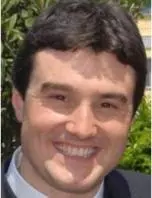
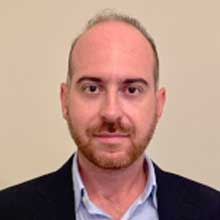
Matteo Cagnoni is a Researcher at the Department of Electronics and Telecommunications (DET) of Politecnico di Torino . His research focuses on Density Functional Theory , Quantum Chemistry , and Thermoelectric Materials for Solar Cells . He is actively involved in the European Union’s MIRACLE project , developing photonic meta-concrete for radiative cooling solutions. Research Interests: Development of cement-based radiative coolers for solar cell thermal management Computational discovery of intermediate-band solar cell materials Electronic properties of semiconductors and insulators Teaching: Electronic transport in crystalline and organic semiconductors Advanced experimental physics Scientific Contributions: Matteo has published extensively on radiative cooling, perovskite/silicon tandem solar cells, and thermoelectric materials. His work spans journals like Nature Communications , Advanced Functional Materials , and Progress in Photovoltaics , with a focus on simulation engineering , photonic devices , and energy-efficient materials . Labs & Collaborations: He works within the Microwave and Optoelectronics Group (MOG) at DET, collaborating with international institutions on EU-funded projects.
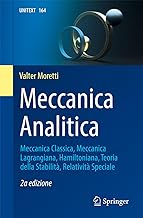
Valter Moretti is a Full Professor in the Department of Mathematics at the University of Trento. His academic career spans roles from Research Fellow to Full Professor, focusing on Mathematical Physics and Quantum Field Theory (QFT) in curved spacetime. He earned an MSc in Physics from Genova University and a PhD in Theoretical Physics from Trento University. Research Interests : Algebraic QFT, General Relativity, Quantum Mechanics, Operator Algebras, and Spectral Theory. His work bridges mathematical rigor with physical applications, particularly in quantum localization, entanglement, and curved spacetime phenomena. Publications : Authored 15+ recent papers on topics like quantum particle localization, entanglement certification, and QFT on curved backgrounds. Collaborated on a 2022 patent for generating entangled photon states. Awards : Holds a patent for a quantum-certified random number generator (2022). Supervision : Advised 8 PhD students, including N. Pinamonti, L. Franceschini, and C. van de Ven. Coordinated national and international research projects (e.g., H2020-MSCA-COFUND-2015). Labs & Collaborations : Affiliated with INFN, TIFPA-INFN, and Q@TN (Quantum@Trento). Organized conferences like Quantum Physics and Geometry (2014) and Quantum Machine Learning (2023). Teaching : Lectures on Analytical Mechanics, Quantum Relativistic Theories, and Special Relativity. Authored textbooks on Spectral Theory and Quantum Mechanics.
Bianca Basciano is an Associate Professor at the Department of Asian and North African Studies , Ca' Foscari University of Venice, where she has held the Director's Delegate for Research role since 2023. Her work focuses on Chinese linguistics , particularly Mandarin morphology, syntax, and second language acquisition. Research Areas: Chinese compounding, reduplication, causative constructions, resultative compounds, and language teaching methodologies. Teaching: Offers BA/MA courses in Chinese language and linguistics at Ca' Foscari University. Editorial Roles: Member of the editorial boards for Sinica Venetiana and Lingue e Linguaggio . Research Projects: Principal investigator for the PRIN 2020 project on Italian learners' acquisition of Chinese resultative verbs, with extensive corpus-based analysis. Collaborates with Giorgio Arcodia and other international scholars. Key Themes: Event structure delimitation, Vendlerian verb classes, micro-parametric syntactic variation. Publications: Over 40 works including monographs with Oxford University Press and Bologna University Press. Her methodological approach combines theoretical linguistics with corpus analysis, contributing to the understanding of Chinese as both a linguistic system and a second language acquisition challenge. She has also organized international conferences like the 31st IACL Annual Meeting.
Dr. Emanuele Marino is a Researcher in the Department of Physics and Chemistry at the University of Palermo , affiliated with the School of Basic and Applied Sciences . His work bridges quantum physics and nanotechnology, focusing on nanocrystal superparticles, photonic materials, and fluctuation-driven assembly processes. Current research areas include quantum dot lasing, Casimir effects, and 3D nanoparticle superlattices Teaches courses like Modern Physics Laboratory (2024, School of Basic and Applied Sciences) and Physics II (Polytechnic School) Recent publications highlight trends in: Tunable photonic properties via nanocrystal emulsion systems Quantum-excitonic coupling in heterostructures Critical Casimir forces for nanoparticle control Dynamic phase transformations in colloidal superlattices Microlaser fabrication and chirality engineering Based in the Emilio Segrè Physics and Chemistry Department , he conducts experimental and theoretical studies from nanoscale fabrication to quantum optical phenomena.
Giuliano Bianchi is an Associate Professor of Economics at EHL Hospitality Business School, specializing in law and economics, corporate governance, and forecasting. He holds a PhD in Economics from the University of Bologna, a Master's in Economics from the University of Edinburgh, and a Master in Law from the University of Fribourg. His research focuses on hospitality economics, asset-light business models, and macroeconomic forecasting in the Swiss hotel sector. Education: PhD in Economics, University of Bologna (Italy) Master's Degree in Economics, University of Edinburgh (UK) Bachelor's in Economics, University of Lugano (Switzerland) Bachelor in Law (BLaw), UniDistance Master in Law (MLaw), University of Fribourg His research interests include empirical analysis of hotel industry dynamics, regulatory frameworks affecting hospitality operations, and corporate governance mechanisms. He pioneered the Swiss Hospitality Macroeconomics Forecasting Index (2018-2020), a project funded by HES-SO to develop demand forecasting tools for Swiss hotels. Recent work explores legal aspects of hotel rate parity, brand affiliation impacts on asset values, and the socio-economic implications of hospitality employment. Awards: Wertheim Fellowship, Harvard Law School Bologna University Economics Department Scholarship Marco Polo Fellowship Program Dr. Bianchi serves on EHL's academic board and teaches Macroeconomics and Microeconomics in the BSc International Hospitality Management program. His research has been published in Tourism Economics, Journal of Property Research, and Applied Economics.
Armando Ricciardi is an Associate Professor at the Department of Engineering (DING) , Università degli Studi del Sannio , focusing on Photonics , Optical Engineering , and Nanotechnology . His work bridges Photonic Materials and Lab-on-Fiber Technology , with a strong emphasis on Biosensing and Sensor Technology . University: Università degli Studi del Sannio Department: Department of Engineering (DING) Academic Rank: Associate Professor Research Interests include: Photonics and Plasmonics for advanced sensor design Microgel-based optical systems and tunable filters Lab-on-Fiber platforms for biomedical and environmental monitoring Hybrid Metallo-Dielectric Quasicrystals for resonance engineering Near-Infrared (NIR) optical devices and sub-wavelength structures Recent Publications highlight his contributions to Microgel Photonics , Thermo-plasmonic Probes , and Cavity-Enhanced Biosensors , with a focus on tunable photonic systems and ultrasensitive detection. His collaborations span institutions in Italy , UK , and International Networks . Lab-on-Fiber Technology is a recurring theme, addressing applications in Ultra-high Dose Monitoring , Ultrasound Detection , and Thin Film Solar Cells . While no formal scientific awards are listed, his prolific publication record (112+ items) underscores sustained impact in Optical Materials and Nanophotonic Devices .
Laura Di Nicola is Associate Professor of Contemporary Italian Literature at Sapienza University of Rome, Department of Modern Literature and Culture. She is an active faculty member with scheduled office hours through 2025 and is currently leading multiple international research projects. Her research follows three main lines of interest: 1) The question of the "canon" and the "classic" in both national and international perspectives; 2) The critical-theoretical debate and the role of intellectuals in the second half of the twentieth century, with particular emphasis on journals in the immediate aftermath of the Second World War; 3) Narrative forms in the second half of the twentieth century. More broadly, her work encompasses twentieth-century historiographical issues, literary canons, twentieth-century classics from European and international perspectives, political and cultural debates between the Resistance and the new Republic, construction of research sources and tools, author libraries and literary archives, and the interdisciplinary intersection of psychoanalysis and literature. Professor Di Nicola's recent publications (2020-2025) demonstrate a strong focus on Italo Calvino studies, with numerous articles examining his work through spatial narratives, international reception, literary archives, and urban literature. Her work also extends to studies of other Italian authors like Alba de Céspedes, with particular attention to gender, exile, and transnational literary connections, especially between Italy and Cuba/Latin America. She has published in both specialized Italian journals and international publications. She has coordinated and participated in numerous research projects, including Italian classics Research Sources, Tools, and Methods (2016-2020) and Alle origini della Repubblica (2018-2021). She currently directs several Calvino-related projects including Enciclopedia Calvino, Biblic, and Calvino qui e altrove, and is Director of the Laboratorio Calvino which coordinates activities between Sapienza University and other international institutions. Member of Teaching and Scientific Council for Master's in Publishing, Journalism and Cultural Management Membres Associés of CRIX - Études Romanes (Université Paris Nanterre) since 2023 Scientific coordinator for Letteratura e psicoanalisi project (since 2017) Member of Research Committee for journals "Bollettino di italianistica" and "Narrativa" Coordinator of PhD curriculum in Historical Literary and Gender Studies (2016-2023) Member of PhD program in Italian Studies (since 2023) Professor Di Nicola is also responsible for international agreements including the cultural agreement with the University of Havana and Erasmus+ agreements with several European universities. She has established research collaborations with institutions worldwide including universities in Tokyo, Paris, New York, Australia, Brazil, Spain, Poland, and the UK. She coordinates cultural enhancement activities for the Ministry of Foreign Affairs and International Cooperation in the network of Italian Cultural Institutes worldwide.
Simone Salvadori is an Associate Professor at the Department of Energy (DENERG) of Politecnico di Torino, specializing in Computational Fluid Dynamics, Heat Transfer, and Turbomachinery. His research intersects Aerospace Engineering , Propulsion , and Energy Sustainability (SDG 7 & 9). He leads the EnaTech-RDE project on CO2-Free Rotating Detonation Engines and contributes to H2POWRD for hydrogen propulsion systems. Editorial roles: Guest Editor for Frontiers in Aerospace Engineering and Applied Sciences , Member of Energies Editorial Board. Organizing Committee Member for 8th ART Summer School (2024) and multiple international conferences including Aerospace Europe Conference 2023. His research focuses on pressure gain combustion , film cooling optimization , and machine learning-driven turbine design . He employs advanced computational tools to analyze unsteady flows, cavity dynamics, and exhaust systems in gas turbines, with applications to hydrogen/natural gas blends and rotating detonation engines . Salvadori supervises PhD students in projects related to high-pressure turbine vane coupling , cooling channel optimization , and exhaust flow control . He collaborates with the TEP Research Group and networks like ETN Global (Energy & Turbomachinery Network).
Marco Farina is a Full Professor in Electromagnetics at the Department of Information Engineering, College of Engineering, Polytechnic University of Marche, Italy. His research spans electromagnetic modeling, scanning microwave microscopy, and nanotechnology, with applications in 2D materials, biosensors, and advanced measurement systems. He is a Senior Member of IEEE and actively contributes to Technical Committees on RF Nanotechnology. Laurea and Ph.D. in Electronic Engineering from University of Ancona Research interests focus on quantitative scanning microwave microscopy, electromagnetic analysis of active/passive components, and nanoscale characterization techniques. His work bridges theoretical modeling with practical implementation, including the development of the EM3DS software suite and novel inverted SMM systems. Recent publications highlight interdisciplinary applications in biomedical analysis and semiconductor physics. Scientific recognition includes the 3M-Nano Best Conference Paper Award and grants from US Army Research Laboratory and US Air Force Office of Scientific Research. He holds an ESA-funded patent for VNA calibration and has co-authored a book on planar structure analysis. Collaborative projects emphasize RF device optimization and biological imaging.
Marco Consales is an Associate Professor at the Department of Engineering, University of Sannio. His research focuses on fiber optic sensors, with applications in structural health monitoring, radiation detection, and biomedical sensing. He has collaborated with CERN on projects involving radiation-tolerant sensors and beam pipe structural monitoring. Key areas include lab-on-fiber technology for cancer biomarker detection, soil moisture sensing, and aerospace structural monitoring. Education: Formal degrees not explicitly listed, but his academic position implies doctoral qualifications in Engineering/Electronics. Research Interests: Fiber optic sensors, nanotechnology integration, biomedical applications, environmental monitoring, and aerospace engineering. His work spans over 250 publications, with notable contributions in optical fiber meta-tips, radiation dosimetry, and soil water content monitoring. He has developed innovative sensors for CERN experiments and precision agriculture. His lab's work includes lab-on-fiber platforms for point-of-care diagnostics and advanced materials characterization.
Elena Korchmina is a tenure-track Assistant Professor in the Department of Economics at the University of Bologna. Her research focuses on the Economic History of Early Modern Europe, particularly the Fiscal History of European Elites and the Economic History of Eastern Europe. She holds a PhD in Russian History and has specialized in Russian economic history, analyzing topics such as serfdom, taxation, and elite behavior. Her work explores the interplay between fiscal systems, social structures, and economic development in historical contexts. Notable research areas include the impact of serfdom on economic growth, tax compliance mechanisms among aristocrats, and the conceptual evolution of terms like 'profit' and 'luxury' among Russian elites. Korchmina has received multiple awards from the Higher School of Economics (HSE), including recognitions for academic excellence in publications and teaching. Her research has been published in leading journals such as The Journal of Economic History, The Economic History Review, and The Journal of the History of Economic Thought. She has also contributed to collaborative projects comparing historical agricultural policies between Denmark and Russia, and analyzing corruption dynamics in the Russian Empire. Her recent studies include groundbreaking work on income inequality in Moscow Province during the early 19th century and the role of gender in wealth accumulation among Russian nobility. Korchmina's interdisciplinary approach combines archival research with quantitative methods to shed light on long-term economic and social processes.
Andrea Nardini is a Full Professor at the University of Trieste , Department of Environmental Biology, specializing in Plant Physiology and ecophysiological responses to environmental stressors. He serves as Coordinator for the Environmental Biology Board of Studies and member of multiple doctoral college boards (XXIX–XXXIX cycles). His research group focuses on Plant Physiological Ecology , investigating hydraulic strategies, drought tolerance, and xylem functionality across diverse species. University of Trieste, Department of Environmental Biology Full Professor of Plant Physiology Coordinator, SM56 - Environmental Biology Board of Studies Research areas: Plant Hydraulics, Drought Adaptation, Ecophysiology His recent work analyzes climate extremes' impacts on grasslands, xylem embolism reversal mechanisms, and green roof plant water relations. Collaborative projects include the H2020 Graphene Flagship and national grants on drought-resistant crops. Students in his group (Agnese Cometto, Giada Caorsi, et al.) explore topics from lichen symbiosis to biomonitoring applications. While no explicit awards are listed, his 15+ recent publications highlight leadership in plant stress physiology and environmental adaptation.
Cristina Anna Colombo is a Full Professor of Psychiatry at Vita-Salute San Raffaele University’s School of Medicine. She holds leadership positions including Head of the Mood Disorders Unit at San Raffaele Hospital in Milan. Her career spans over three decades, with expertise in neurobiology, psychopharmacology, and chronotherapeutics. Colombo earned her medical degree from the University of Milan in 1985, completing residencies in Psychiatry and specializing in clinical neurosciences. Her research focuses on mood disorders, particularly bipolar disorder, schizophrenia, and the neurobiological mechanisms underlying depression. She pioneered studies on sleep deprivation therapy, light therapy, and genetic factors influencing treatment responses. Her work integrates neuroimaging (MRI, PET), pharmacogenetics, and chronobiology to understand mental health disorders. Colombo has authored over 125 peer-reviewed articles and book chapters, with notable contributions on serotonin transporter gene polymorphisms and lithium’s neuroprotective effects. She directs postgraduate courses in forensic psychopathology and security professions at her university. Her clinical and academic roles emphasize translational research, bridging neurobiological insights with clinical practice. Her awards and honors include board certifications in Psychiatry and Criminology (cum laude), and her leadership in international congresses highlights her global impact. Colombo’s work continues to advance treatment strategies for mood disorders, emphasizing personalized medicine and non-pharmacological interventions.
Riccardo Piccoli is a Researcher at the Department of Molecular Sciences and Nanosystems, Ca' Foscari University of Venice. He serves as a Laboratory Supervisor at the Research Institute for Complexity Safety and teaches courses such as Fundamentals of Electronics in the Physical Engineering degree program. PhD in Electronic, Computer, and Electrical Engineering (University of Pavia, 2014) Master's in Electronic Engineering (University of Pavia, 2011) Bachelor's in Electronic and Telecommunications Engineering (University of Pavia, 2009) His research focuses on ultrafast lasers and terahertz technology, particularly in quantum matter-light interactions and hollow-core fiber applications . Recent work includes terahertz imaging techniques and high-power laser pulse compression. He collaborates with institutions across Europe, North America, and the Middle East. Dr. Piccoli's publications highlight advancements in terahertz coherent detection , nonlinear photonics , and microfluidic waveguides . He leads research projects involving quantum optics, nanocavity interactions, and biomedical imaging applications. He is affiliated with the Research Institute for Complexity Safety and has held research roles at Polytechnic University of Milan, Weizmann Institute of Science, Max-Planck-Institut für Kernphysik, and INRS-EMT. His expertise spans terahertz spectroscopy, ultrafast phenomena, and photonic material design.
Alice Sciortino is a Researcher at the Department of Physics and Chemistry - Emilio Segrè within the School of Science at the University of Palermo. Her position code PHYS-03/A indicates a research-focused academic track in the Italian university system. She maintains regular office hours on Tuesdays from 11:30 to 12:30 through the university's student portal system. Her research centers on advanced photonic nanomaterials with particular expertise in carbon nanodots , quantum dot superstructures , and metal-organic frameworks . Key research themes include: Nanoscale light emission and lasing phenomena Design of optical sensors for environmental and biomedical applications Photocatalytic systems for environmental remediation Hybrid nanomaterial interfaces for energy transfer Ultrafast photophysical characterization of nanomaterials Analysis of her recent publications (2023-2025) reveals a strong trajectory toward multifunctional nanoplatforms combining optical, magnetic, and catalytic properties. Her work increasingly bridges fundamental photophysics with practical applications in environmental monitoring and biomedicine, particularly in heavy metal detection (Hg²⁺, Ni²⁺) and tissue engineering. The publication record shows consistent high-output research with frequent collaborations across Italian institutions. While no formal scientific awards are documented in the provided materials, her extensive publication record in high-impact journals demonstrates significant scholarly contributions to nanophotonics and materials science. Dr. Sciortino's research program appears to focus on experimental nanomaterials development with strong emphasis on optical characterization techniques. Her work on carbon dot-MOF hybrids and quantum dot superparticles suggests leadership in designing next-generation photonic nanomaterials with tunable properties. The consistent funding evident from her publication output likely supports laboratory infrastructure for nanomaterials synthesis and advanced optical spectroscopy.